
Recovery Focused Mental Health provision Introduction to workshop



- Slides: 54
Recovery Focused Mental Health provision.
• Introduction to workshop – Gordon King • Developments since previous development day in 2013 – Primary care – Integration of community Services – Crisis concordat – Acute Liaison / Crisis Cafes – Third sector and first for wellbeing. – Recovery – “getting to a better place”
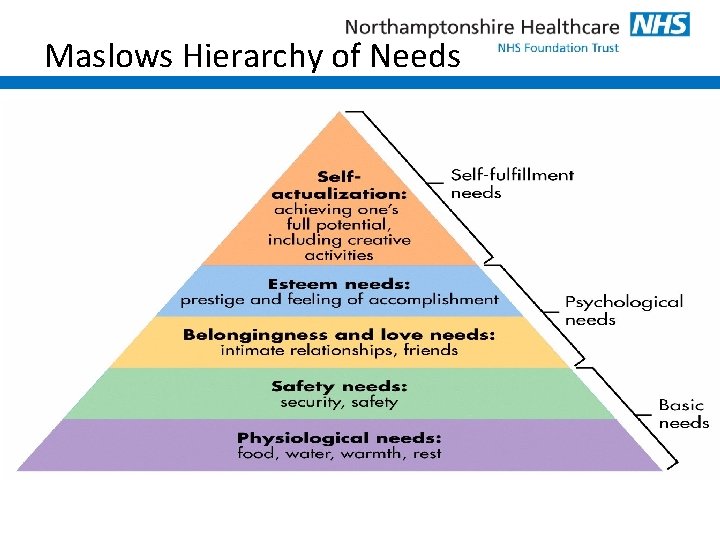
Maslows Hierarchy of Needs
Paul Flecknoe (Head of Psychological Therapies) and James Durban (Service User) • What recovery means to me…
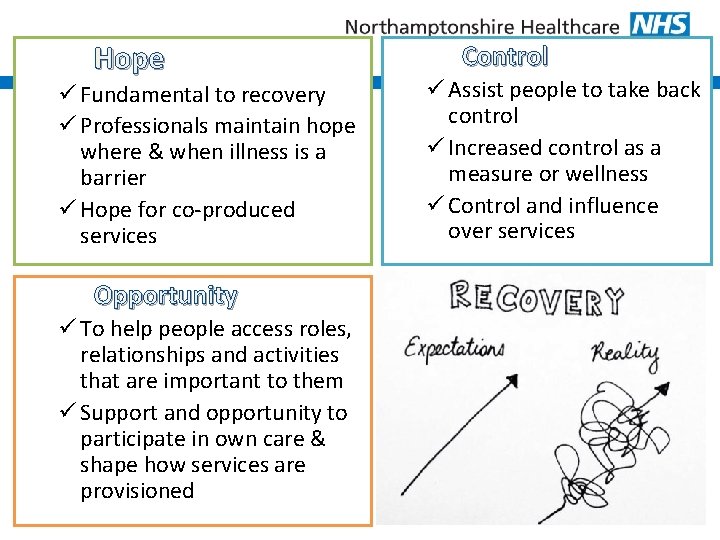
Hope ü Fundamental to recovery ü Professionals maintain hope where & when illness is a barrier ü Hope for co-produced services Opportunity ü To help people access roles, relationships and activities that are important to them ü Support and opportunity to participate in own care & shape how services are provisioned Control ü Assist people to take back control ü Increased control as a measure or wellness ü Control and influence over services
• Facilitated workshop activity • 3 discussion groups: – What gives you a sense of Hope / belief that things can improve? – What gives you a sense of control? – What types of opportunities have made a difference in your life?
• Feedback on groups – led by Anne Rackham (Assistant Director) and Sharon Gibbard (Carer) • What would happen if those things were taken away from you – how would this feel…. .
• For our service users this is a common feeling • How do we as services respond to these basic needs, we all have the right to as humans? Recovery – hope, control and opportunity The vehicle for this is co production….
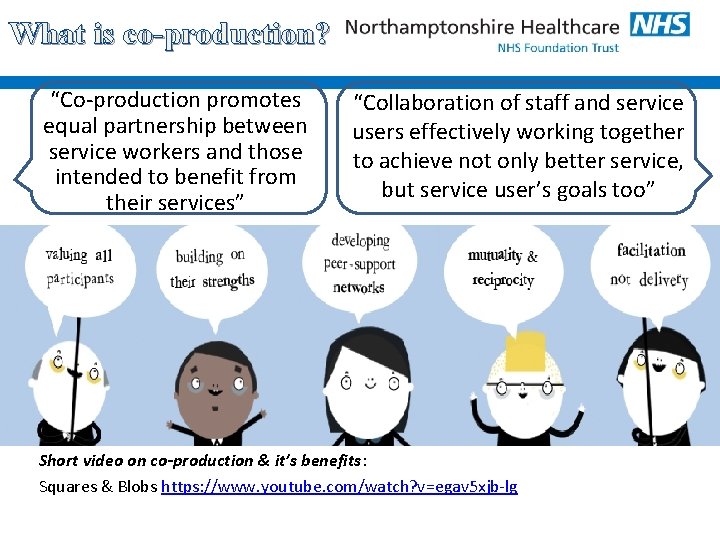
What is co-production? “Co-production promotes equal partnership between service workers and those intended to benefit from their services” “Collaboration of staff and service users effectively working together to achieve not only better service, but service user’s goals too” Short video on co-production & it’s benefits: Squares & Blobs https: //www. youtube. com/watch? v=egav 5 xjb-lg
Individual Placement Support Employment Service NHFT Providing service users with hope, control and employment opportunities
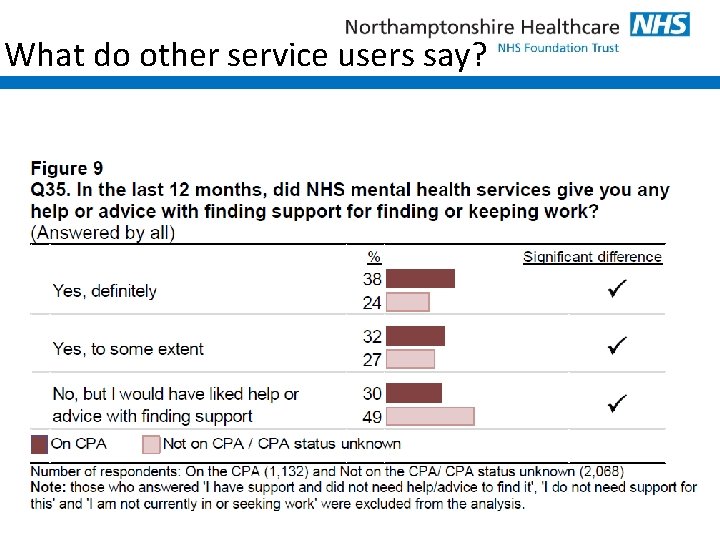
What do other service users say?
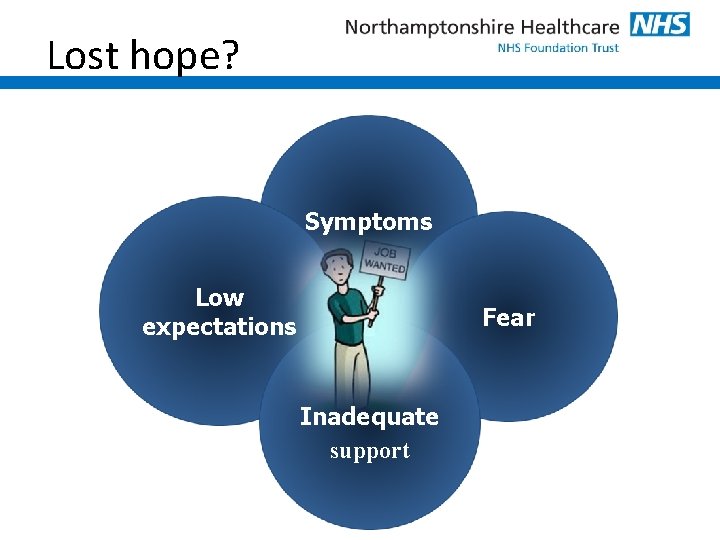
Lost hope? Symptoms Low expectations Fear Inadequate support
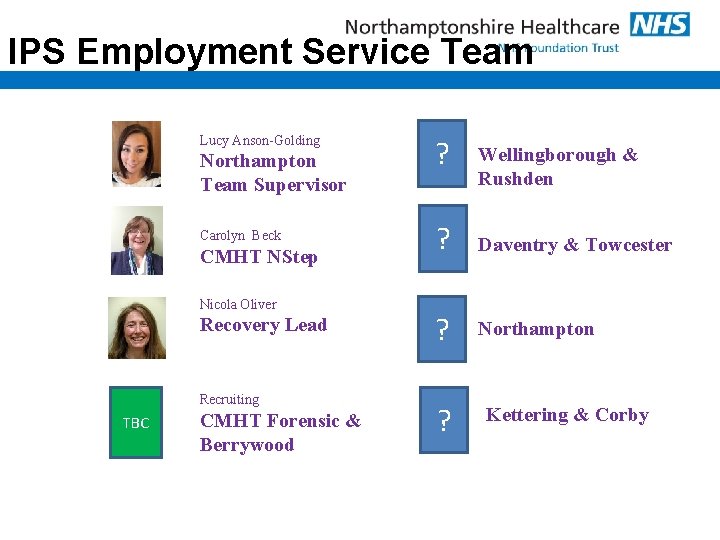
IPS Employment Service Team Lucy Anson-Golding Northampton Team Supervisor Carolyn Beck CMHT NStep Nicola Oliver Recovery Lead Recruiting TBC CMHT Forensic & Berrywood ? Wellingborough & Rushden ? Daventry & Towcester ? Northampton ? Kettering & Corby
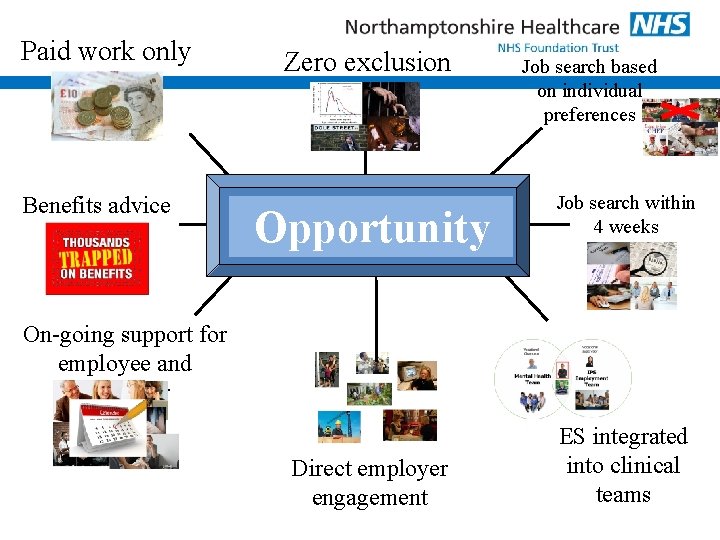
Paid work only Benefits advice Zero exclusion What is IPS? Opportunity Hope Job search based on individual preferences Job search within 4 weeks On-going support for employee and employer Direct employer engagement ES integrated into clinical teams
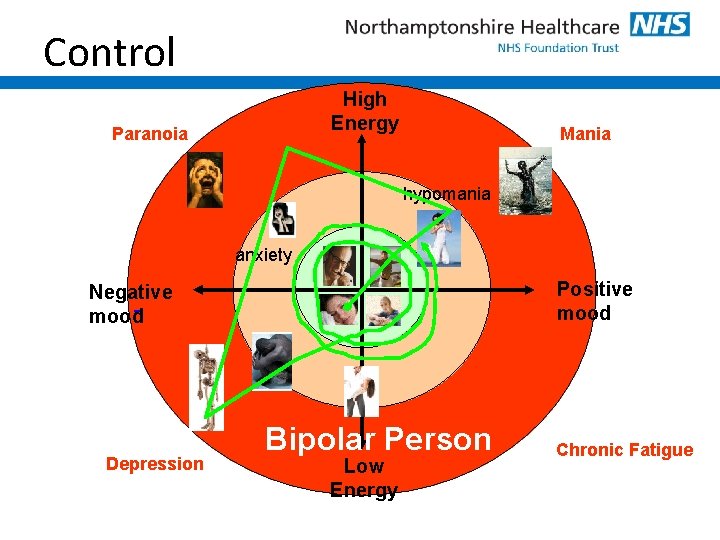
Control High Energy Paranoia Mania hypomania anxiety Positive mood Negative mood Depression Bipolar Person Low Energy Chronic Fatigue www. bipolaruk. org. uk
IPS Employment services can save money
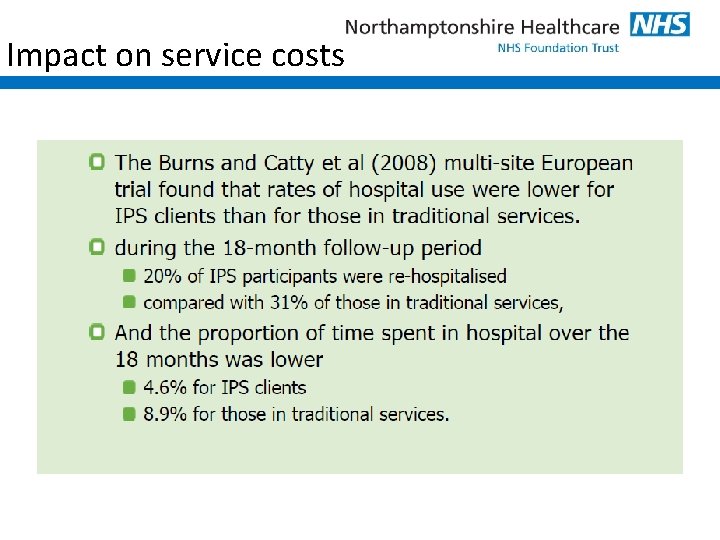
Impact on service costs
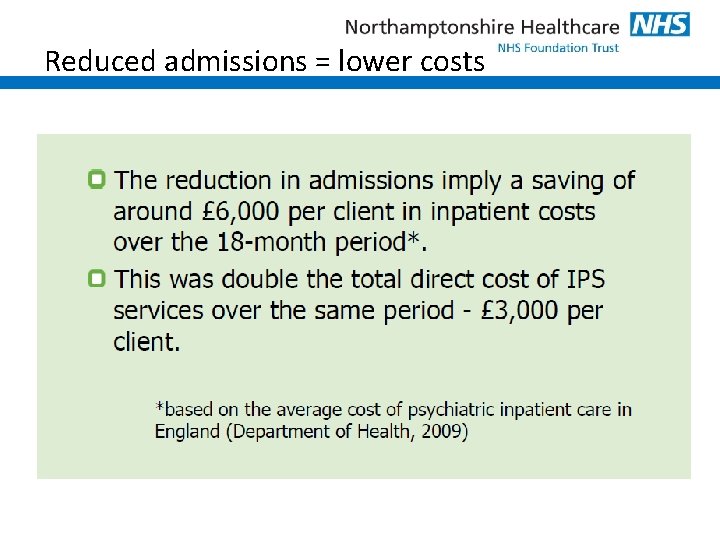
Reduced admissions = lower costs
Shared focus shared responsibility
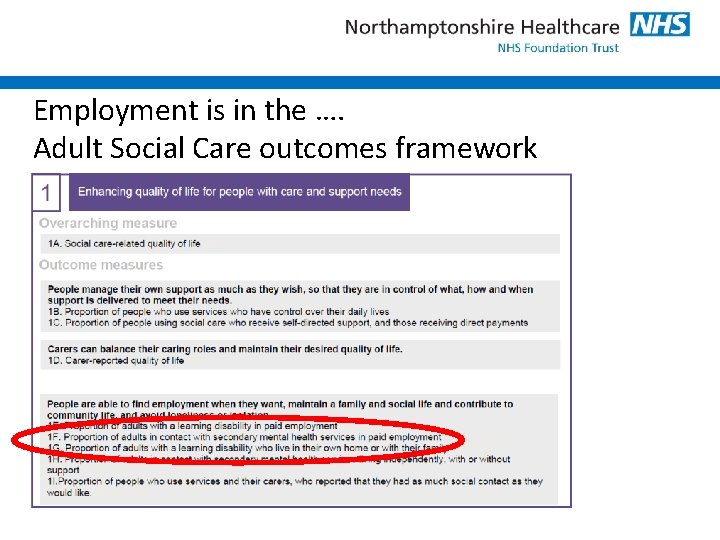
Employment is in the …. Adult Social Care outcomes framework
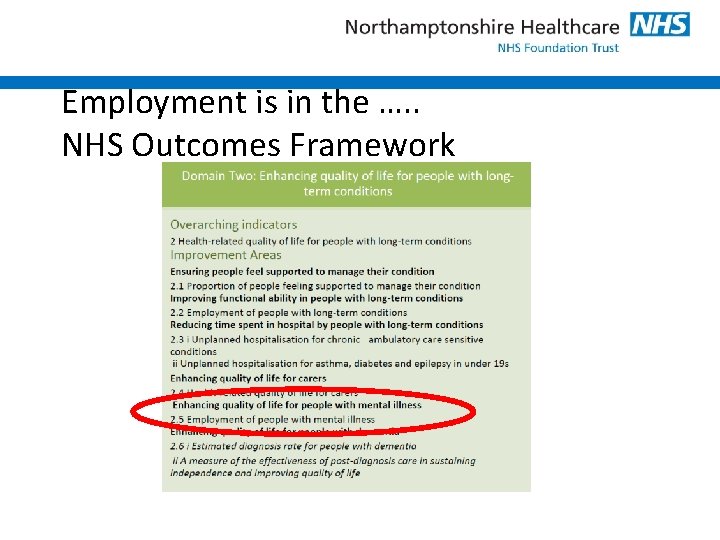
Employment is in the …. . NHS Outcomes Framework
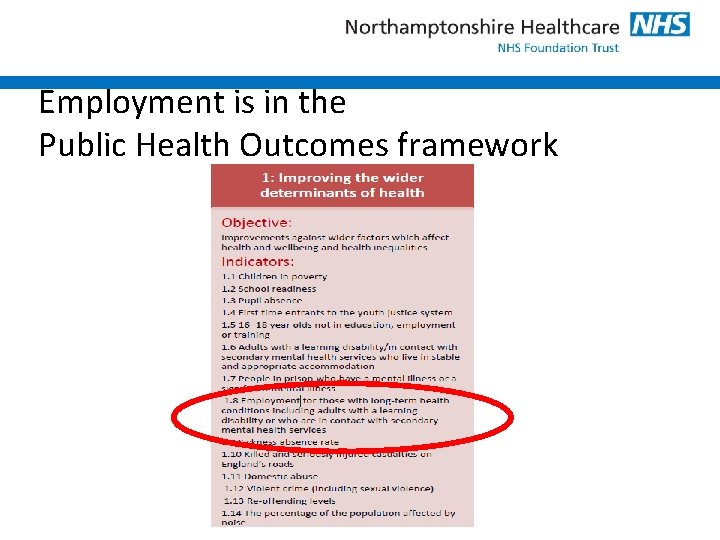
Employment is in the Public Health Outcomes framework
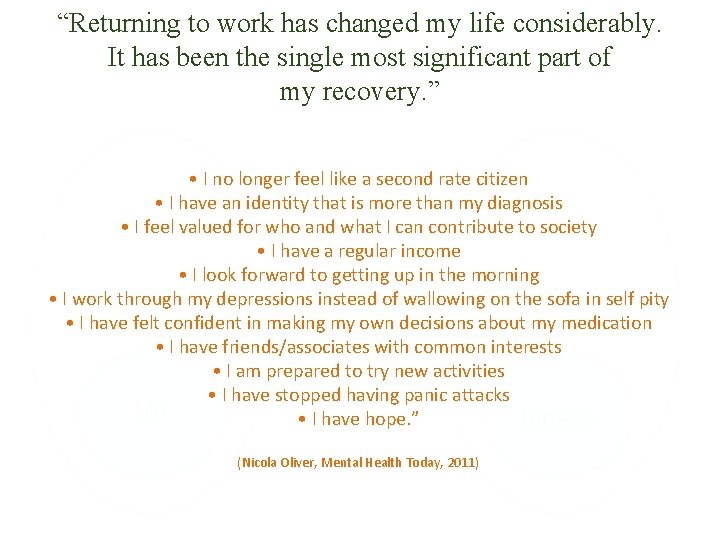
“Returning to work has changed my life considerably. It has been the single most significant part of my recovery. ” • I no longer feel like a second rate citizen • I have an identity that is more than my diagnosis • I feel valued for who and what I can contribute to society • I have a regular income • I look forward to getting up in the morning • I work through my depressions instead of wallowing on the sofa in self pity • I have felt confident in making my own decisions about my medication • I have friends/associates with common interests • I am prepared to try new activities • I have stopped having panic attacks • I have hope. ” (Nicola Oliver, Mental Health Today, 2011)
LEAPs in Co-production Experts by Experience: Cherie Cargill, Sophie Green, Lisa West Expert by training: Chris Berry and Isabel Rous Northants Personality Disorder Hub NHFT
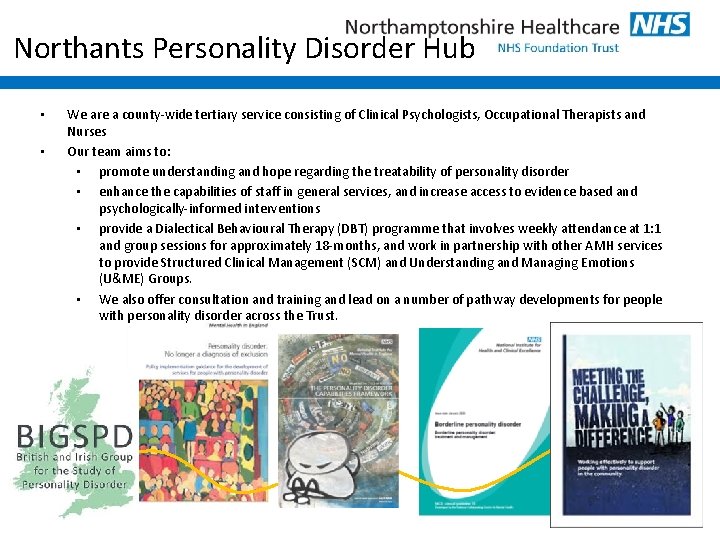
Northants Personality Disorder Hub • • We are a county-wide tertiary service consisting of Clinical Psychologists, Occupational Therapists and Nurses Our team aims to: • promote understanding and hope regarding the treatability of personality disorder • enhance the capabilities of staff in general services, and increase access to evidence based and psychologically-informed interventions • provide a Dialectical Behavioural Therapy (DBT) programme that involves weekly attendance at 1: 1 and group sessions for approximately 18 -months, and work in partnership with other AMH services to provide Structured Clinical Management (SCM) and Understanding and Managing Emotions (U&ME) Groups. • We also offer consultation and training and lead on a number of pathway developments for people with personality disorder across the Trust.
Lived Experience Advisory Panel (LEAP) WHAT: • Group of staff and service users working together to : – Develop recovery-oriented services, and inspire hope and optimism about the diagnosis – Challenge stigma and promote understanding of Personality Disorder (aiming for cultural change in services and the world!) HOW: • Co-produce and deliver training • Co-produce leaflets and educational materials (https: //youtu. be/9 Azos. E-huv. Q) • Share recovery stories and promote recovery-oriented practise across services • Co-deliver orientation sessions within the Dialectical Behaviour Therapy programme • Routinely review I Want Great Care (IWGC) feedback and co-develop solutions (e. g. clearer and faster access to services is an important outcome) • Co-develop and deliver an 8 -week education and skills training course for carers/supporters
Achievements So Far… • Changes to the Hub have been implemented based on LEAP feedback (e. g. extended ending/discharge phase within DBT, provision of other treatment groups to promote access for people across a stepped-care pathway) • A variety of resources have been developed on Borderline Personality Disorder (BPD), treatment options, and guidance for carers • Treatment programme modules start with a co-delivered session to promote hope, clarify expectations, and promote openness/honesty about the “lived experience” of attending DBT • 2 1 -day co-produced Personality Disorder Awareness courses have been delivered • Delivered a co-produced session to the Oxford Doctoral Course in Clinical Psychology and received excellent feedback
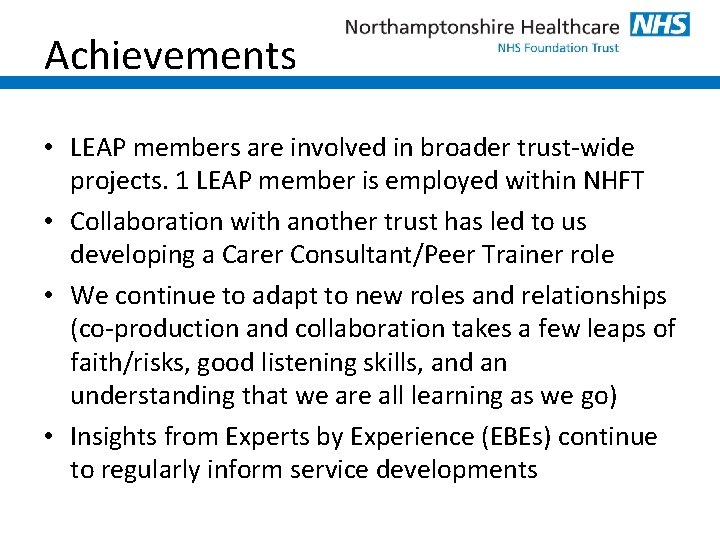
Achievements • LEAP members are involved in broader trust-wide projects. 1 LEAP member is employed within NHFT • Collaboration with another trust has led to us developing a Carer Consultant/Peer Trainer role • We continue to adapt to new roles and relationships (co-production and collaboration takes a few leaps of faith/risks, good listening skills, and an understanding that we are all learning as we go) • Insights from Experts by Experience (EBEs) continue to regularly inform service developments
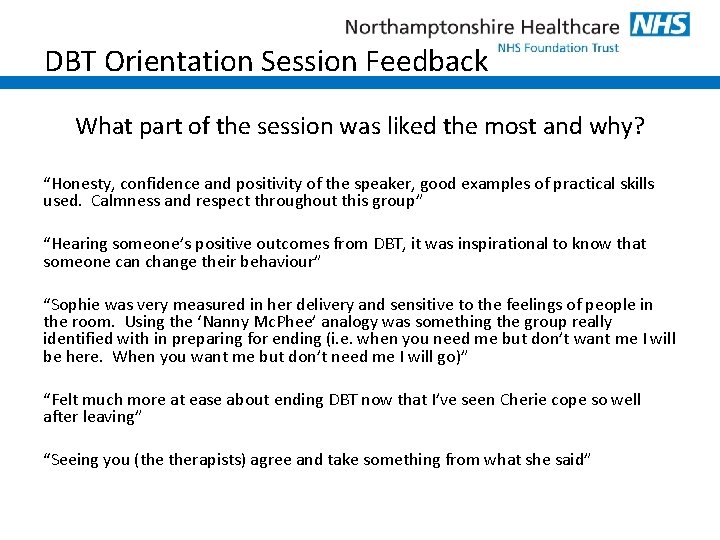
DBT Orientation Session Feedback What part of the session was liked the most and why? “Honesty, confidence and positivity of the speaker, good examples of practical skills used. Calmness and respect throughout this group” “Hearing someone’s positive outcomes from DBT, it was inspirational to know that someone can change their behaviour” “Sophie was very measured in her delivery and sensitive to the feelings of people in the room. Using the ‘Nanny Mc. Phee’ analogy was something the group really identified with in preparing for ending (i. e. when you need me but don’t want me I will be here. When you want me but don’t need me I will go)” “Felt much more at ease about ending DBT now that I’ve seen Cherie cope so well after leaving” “Seeing you (the therapists) agree and take something from what she said”
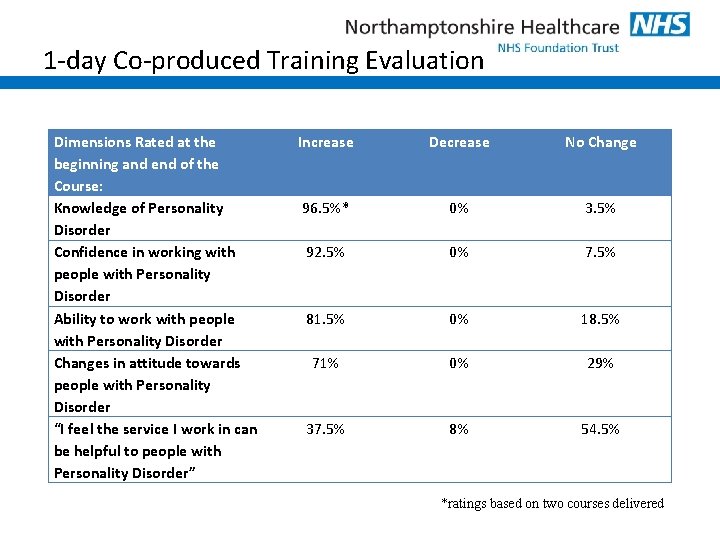
1 -day Co-produced Training Evaluation Dimensions Rated at the beginning and end of the Course: Knowledge of Personality Disorder Confidence in working with people with Personality Disorder Ability to work with people with Personality Disorder Changes in attitude towards people with Personality Disorder “I feel the service I work in can be helpful to people with Personality Disorder” Increase Decrease No Change 96. 5%* 0% 3. 5% 92. 5% 0% 7. 5% 81. 5% 0% 18. 5% 71% 0% 29% 37. 5% 8% 54. 5% *ratings based on two courses delivered
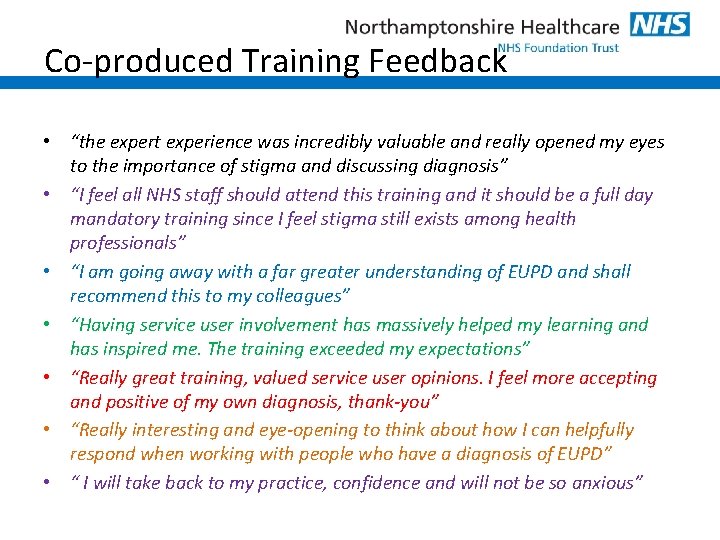
Co-produced Training Feedback • “the expert experience was incredibly valuable and really opened my eyes to the importance of stigma and discussing diagnosis” • “I feel all NHS staff should attend this training and it should be a full day mandatory training since I feel stigma still exists among health professionals” • “I am going away with a far greater understanding of EUPD and shall recommend this to my colleagues” • “Having service user involvement has massively helped my learning and has inspired me. The training exceeded my expectations” • “Really great training, valued service user opinions. I feel more accepting and positive of my own diagnosis, thank-you” • “Really interesting and eye-opening to think about how I can helpfully respond when working with people who have a diagnosis of EUPD” • “ I will take back to my practice, confidence and will not be so anxious”
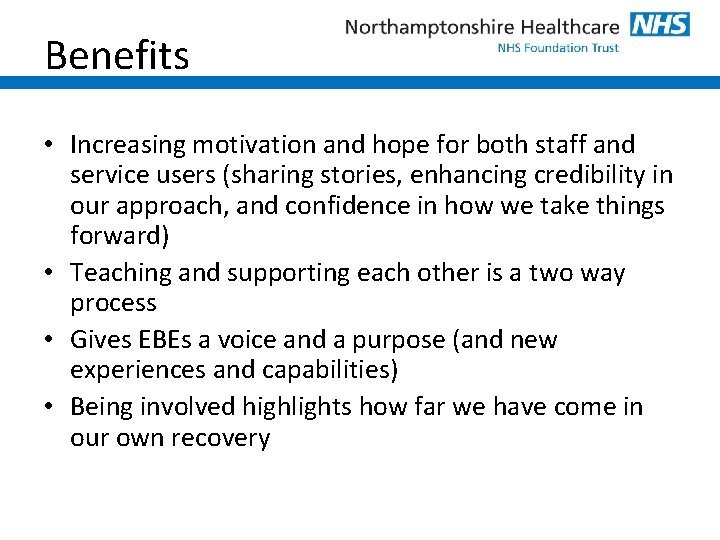
Benefits • Increasing motivation and hope for both staff and service users (sharing stories, enhancing credibility in our approach, and confidence in how we take things forward) • Teaching and supporting each other is a two way process • Gives EBEs a voice and a purpose (and new experiences and capabilities) • Being involved highlights how far we have come in our own recovery
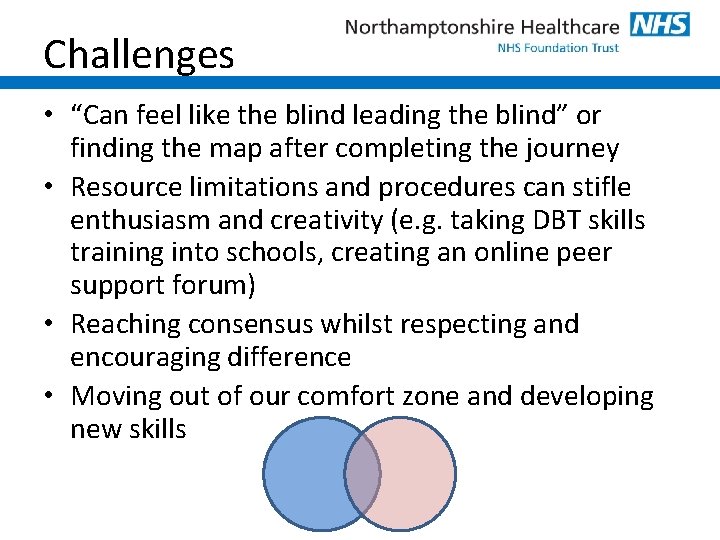
Challenges • “Can feel like the blind leading the blind” or finding the map after completing the journey • Resource limitations and procedures can stifle enthusiasm and creativity (e. g. taking DBT skills training into schools, creating an online peer support forum) • Reaching consensus whilst respecting and encouraging difference • Moving out of our comfort zone and developing new skills
Learning Points • Highly useful to link in with others and resources (e. g. Im. ROC) • Having spaces to talk about and review the process. We now have a TOR that includes: – Shared aims – Protocols for working together and participating – Shared expectations and responsibilities • Beneficial for EBEs to have access to their own support and training • Writing a personal “recovery story” has been a useful starting point for EBEs
Long-term Co-production Goals • Increase LEAP members • For the majority of the Personality Disorder Hub’s training to be co-produced and co-delivered • Greater integration of EBEs (e. g. paid peer trainer and supporter roles, involvement in business meetings) and people with lived experience having professional roles within the team • We are also developing co-produced courses for A&E staff and the Recovery College
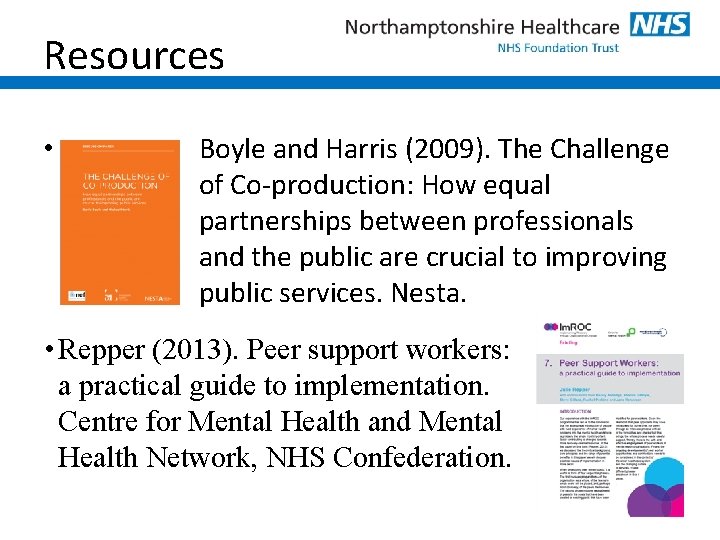
Resources • Boyle and Harris (2009). The Challenge of Co-production: How equal partnerships between professionals and the public are crucial to improving public services. Nesta. • Repper (2013). Peer support workers: a practical guide to implementation. Centre for Mental Health and Mental Health Network, NHS Confederation.
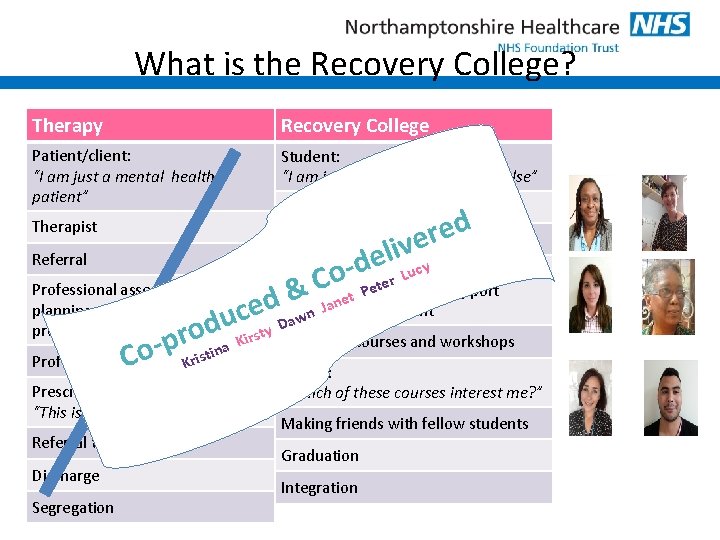
What is the Recovery College? Therapy Recovery College Patient/client: “I am just a mental health patient” Student: “I am just the same as everyone else” Therapist Tutor/Trainer Enrolment Referral l e d Co- d e r ive cy Co-production of, a. Lupersonal learning r e Professional assessment, care plan, including Pet learning support , t ne Jaby planning, clinical notes and review agreed , the student n aw D y process irst Education courses and workshops K , tina s i r Professionally facilitated groups K Choice: Prescription: “Which of these courses interest me? ” “This is the treatment you need” Making friends with fellow students Referral to social groups Graduation Discharge Integration Segregation & d ce Co u d o -pr
What are the courses about? HOPE • Spirituality and mental health • Creating positive relationships • Exploring hopes and dreams • Recovery – an introduction
What are the courses about? CONTROL • Understanding Psychosis • Living well with ADHD • Managing Anger • Taking back control
What are the courses about? OPPORTUNITY • Job applications and interview skills • Volunteering and service user involvement in NHFT • Telling my story
Telling my story
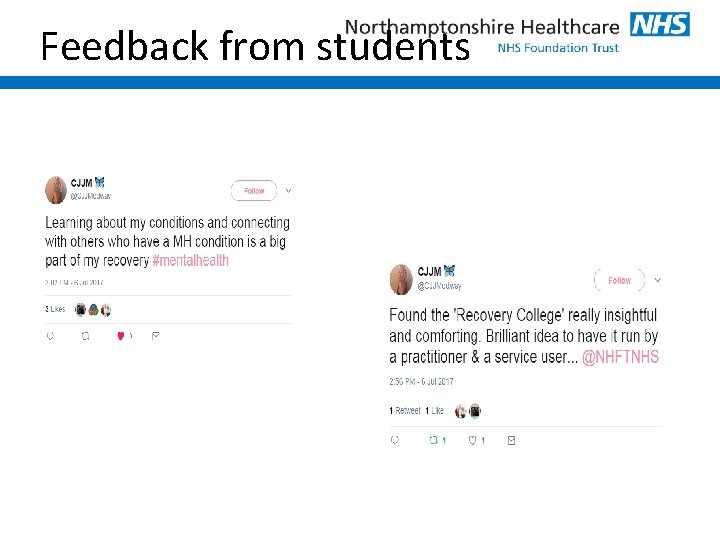
Feedback from students
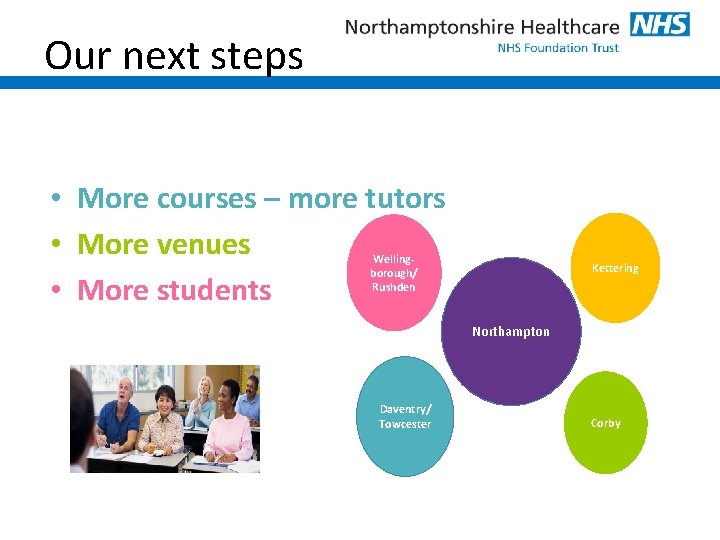
Our next steps • More courses – more tutors • More venues • More students Wellingborough/ Rushden Kettering Northampton Daventry/ Towcester Corby
Questions/Queries/Enrolments Contact: • recovery. college@nhft. nhs. uk (Hannah) • 01933 235449 (Open Mon-Fri, 09: 30 am to 4 pm) • www. nhft. nhs. uk/recovery-college
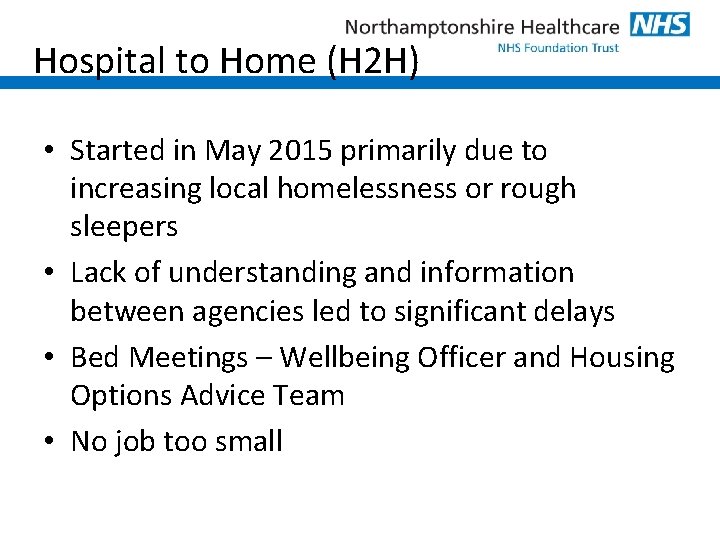
Hospital to Home (H 2 H) • Started in May 2015 primarily due to increasing local homelessness or rough sleepers • Lack of understanding and information between agencies led to significant delays • Bed Meetings – Wellbeing Officer and Housing Options Advice Team • No job too small
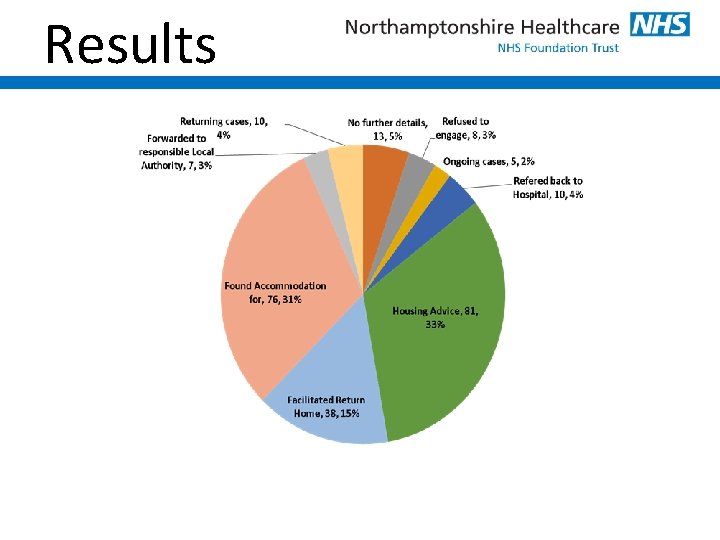
Results
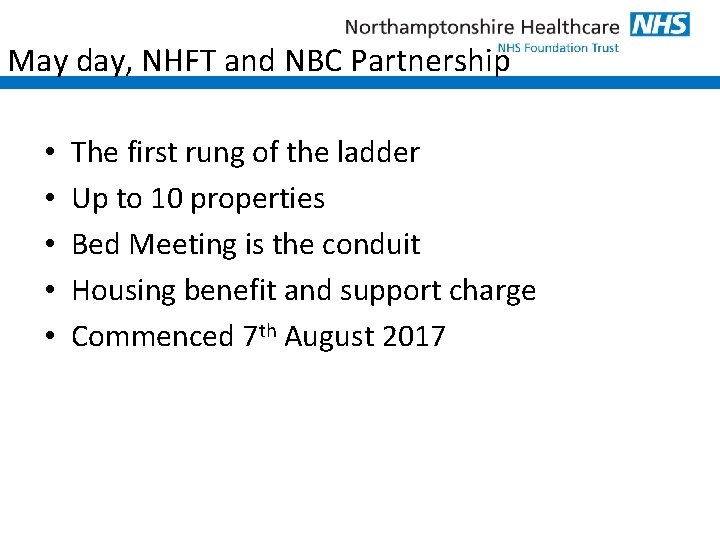
May day, NHFT and NBC Partnership • • • The first rung of the ladder Up to 10 properties Bed Meeting is the conduit Housing benefit and support charge Commenced 7 th August 2017