
Recovery Coach Commission Executive Office of Health Human

- Slides: 46
Recovery Coach Commission Executive Office of Health & Human Services Marylou Sudders, Secretary January 23, 2019 3: 00 -5: 00 pm One Ashburton Place Boston, MA 1 1
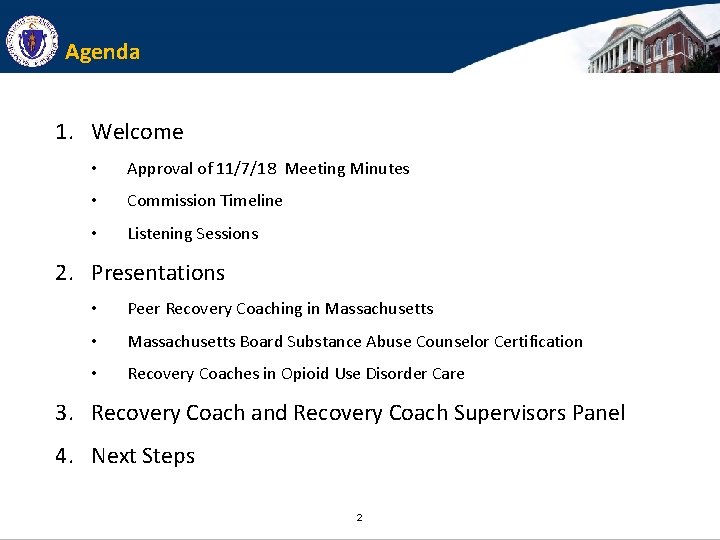
Agenda 1. Welcome • Approval of 11/7/18 Meeting Minutes • Commission Timeline • Listening Sessions 2. Presentations • Peer Recovery Coaching in Massachusetts • Massachusetts Board Substance Abuse Counselor Certification • Recovery Coaches in Opioid Use Disorder Care 3. Recovery Coach and Recovery Coach Supervisors Panel 4. Next Steps 2
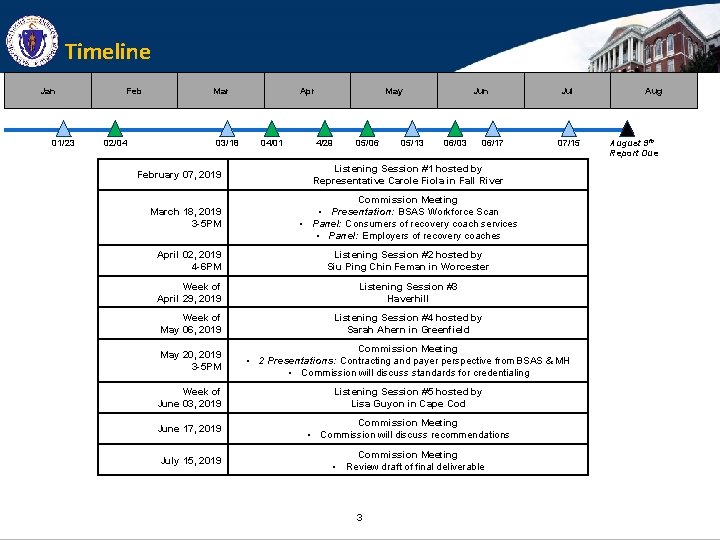
Timeline Jan 01/23 Feb 02/04 Mar 03/18 February 07, 2019 March 18, 2019 3 -5 PM Apr 04/01 May 4/29 05/06 05/13 Jun 06/03 06/17 Jul 07/15 Listening Session #1 hosted by Representative Carole Fiola in Fall River Commission Meeting • Presentation: BSAS Workforce Scan • Panel: Consumers of recovery coach services • Panel: Employers of recovery coaches April 02, 2019 4 -6 PM Listening Session #2 hosted by Siu Ping Chin Feman in Worcester Week of April 29, 2019 Listening Session #3 Haverhill Week of May 06, 2019 Listening Session #4 hosted by Sarah Ahern in Greenfield May 20, 2019 3 -5 PM Commission Meeting • 2 Presentations: Contracting and payer perspective from BSAS & MH • Commission will discuss standards for credentialing Week of June 03, 2019 Listening Session #5 hosted by Lisa Guyon in Cape Cod June 17, 2019 Commission Meeting • Commission will discuss recommendations July 15, 2019 Commission Meeting • Review draft of final deliverable 3 August 9 th Report Due
Peer Recovery Coaching in Massachusetts Recovery Coach Commission Meeting Wednesday, January 23, 2019 Department of Public Health Bureau of Substance Addiction Services Julia Ojeda, Recovery Support Services Coordinator 4
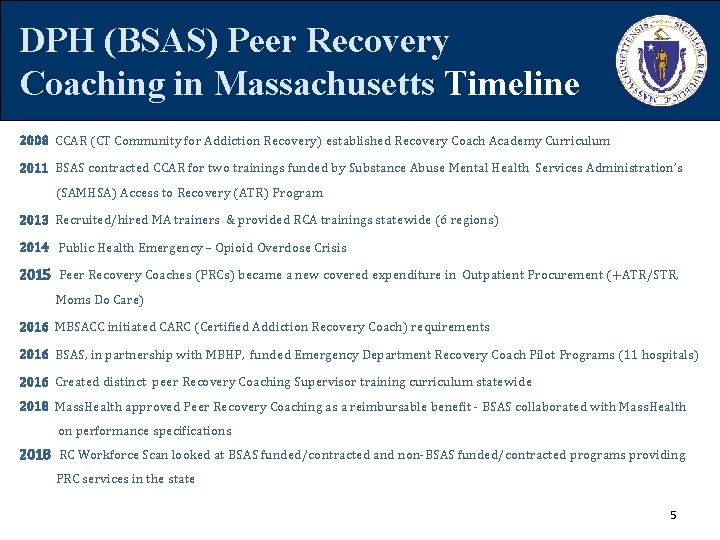
DPH (BSAS) Peer Recovery Coaching in Massachusetts Timeline 2008 CCAR (CT Community for Addiction Recovery) established Recovery Coach Academy Curriculum 2011 BSAS contracted CCAR for two trainings funded by Substance Abuse Mental Health Services Administration’s (SAMHSA) Access to Recovery (ATR) Program 2013 Recruited/hired MA trainers & provided RCA trainings statewide (6 regions) 2014 Public Health Emergency – Opioid Overdose Crisis 2015 Peer Recovery Coaches (PRCs) became a new covered expenditure in Outpatient Procurement (+ATR/STR, Moms Do Care) 2016 MBSACC initiated CARC (Certified Addiction Recovery Coach) requirements 2016 BSAS, in partnership with MBHP, funded Emergency Department Recovery Coach Pilot Programs (11 hospitals) 2016 Created distinct peer Recovery Coaching Supervisor training curriculum statewide 2018 Mass. Health approved Peer Recovery Coaching as a reimbursable benefit - BSAS collaborated with Mass. Health on performance specifications 2018 RC Workforce Scan looked at BSAS funded/contracted and non-BSAS funded/contracted programs providing PRC services in the state 5
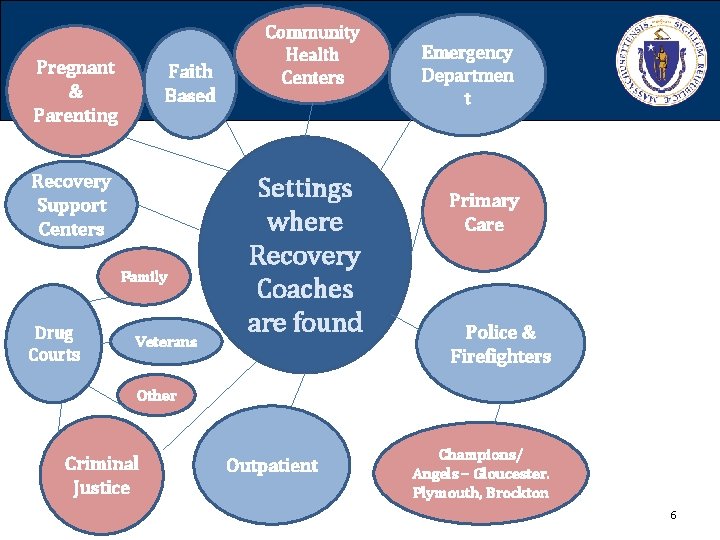
Pregnant & Parenting Faith Based Recovery Support Centers Family Drug Courts Veterans Community Health Centers Settings where Recovery Coaches are found Emergency Departmen t Primary Care Police & Firefighters Other Criminal Justice Outpatient Champions/ Angels – Gloucester. Plymouth, Brockton 6
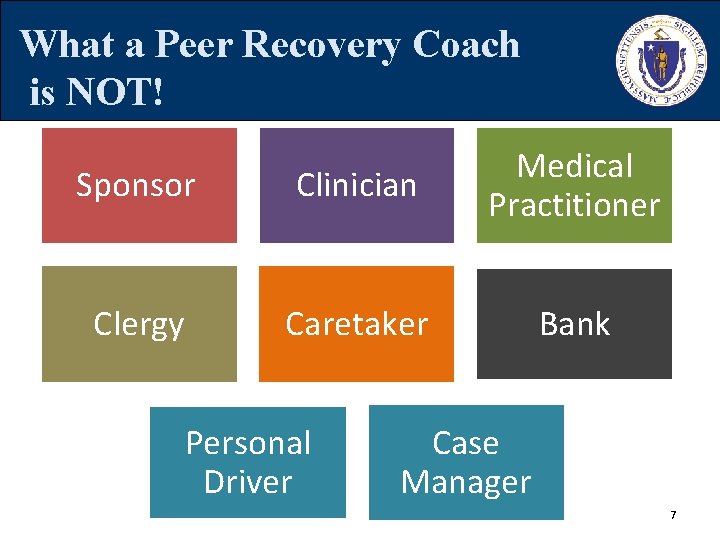
What a Peer Recovery Coach is NOT! Sponsor Clinician Medical Practitioner Clergy Caretaker Bank Personal Driver Case Manager 7
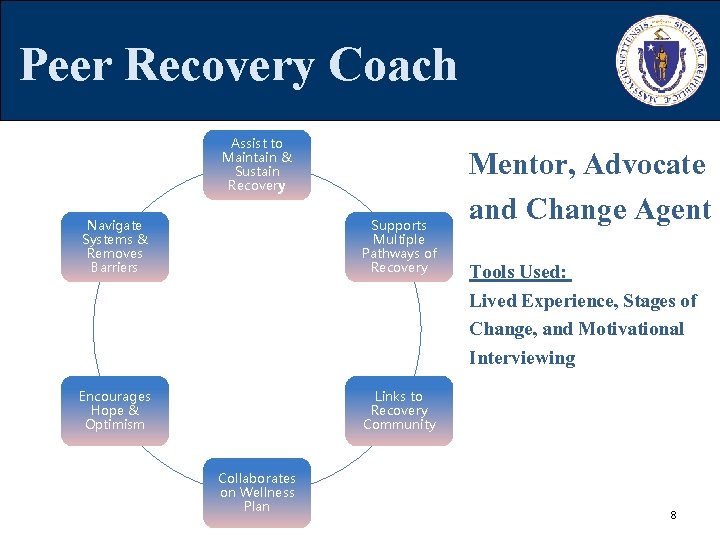
Peer Recovery Coach Assist to Maintain & Sustain Recovery Navigate Systems & Removes Barriers Supports Multiple Pathways of Recovery Encourages Hope & Optimism Links to Recovery Community Collaborates on Wellness Plan Mentor, Advocate and Change Agent Tools Used: Lived Experience, Stages of Change, and Motivational Interviewing 8
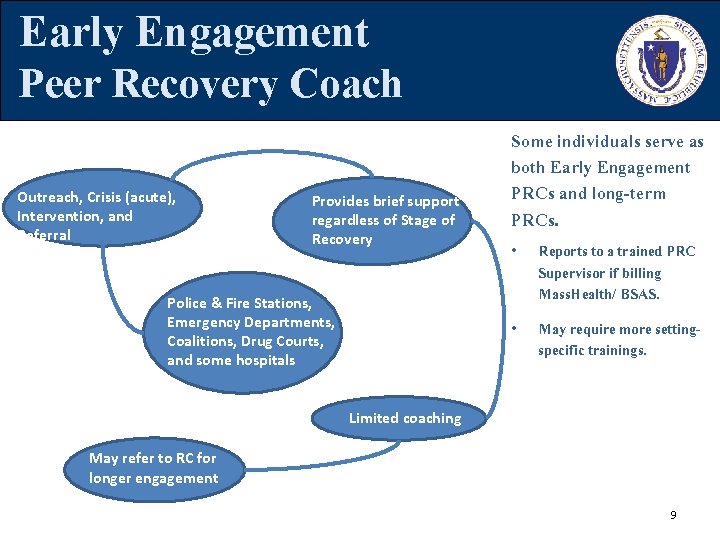
Early Engagement Peer Recovery Coach Outreach, Crisis (acute), Intervention, and Referral Provides brief support regardless of Stage of Recovery Police & Fire Stations, Emergency Departments, Coalitions, Drug Courts, and some hospitals Some individuals serve as both Early Engagement PRCs and long-term PRCs. • Reports to a trained PRC Supervisor if billing Mass. Health/ BSAS. • May require more settingspecific trainings. Limited coaching May refer to RC for longer engagement 9
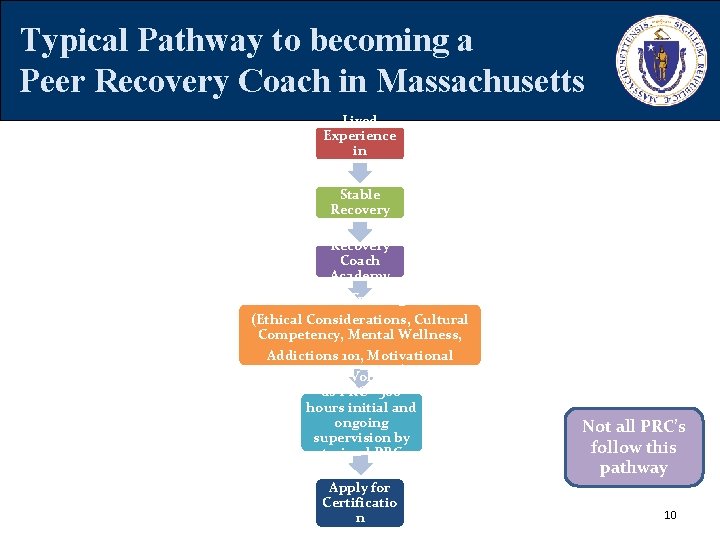
Typical Pathway to becoming a Peer Recovery Coach in Massachusetts Lived Experience in Addiction Stable Recovery Coach Academy Other Trainings (Ethical Considerations, Cultural Competency, Mental Wellness, Addictions 101, Motivational Interviewing ) Work/Volunteer as PRC - 500 hours initial and ongoing supervision by trained PRC Supervisor Apply for Certificatio n Not all PRC’s follow this pathway 10
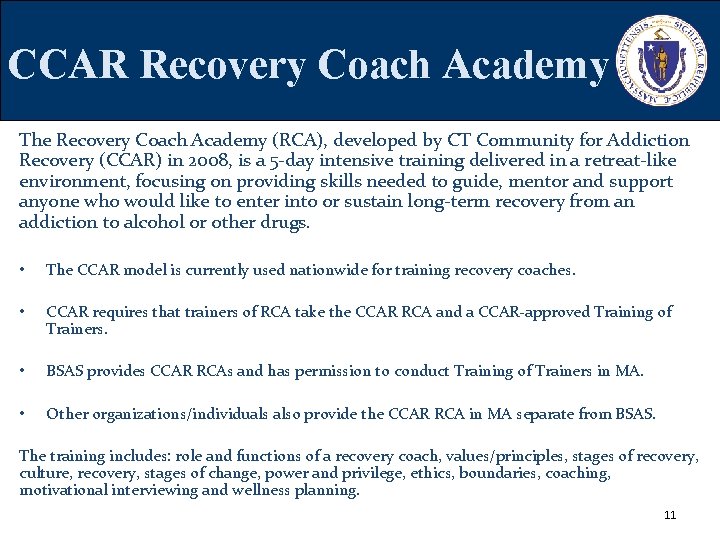
CCAR Recovery Coach Academy The Recovery Coach Academy (RCA), developed by CT Community for Addiction Recovery (CCAR) in 2008, is a 5 -day intensive training delivered in a retreat-like environment, focusing on providing skills needed to guide, mentor and support anyone who would like to enter into or sustain long-term recovery from an addiction to alcohol or other drugs. • The CCAR model is currently used nationwide for training recovery coaches. • CCAR requires that trainers of RCA take the CCAR RCA and a CCAR-approved Training of Trainers. • BSAS provides CCAR RCAs and has permission to conduct Training of Trainers in MA. • Other organizations/individuals also provide the CCAR RCA in MA separate from BSAS. The training includes: role and functions of a recovery coach, values/principles, stages of recovery, culture, recovery, stages of change, power and privilege, ethics, boundaries, coaching, motivational interviewing and wellness planning. 11
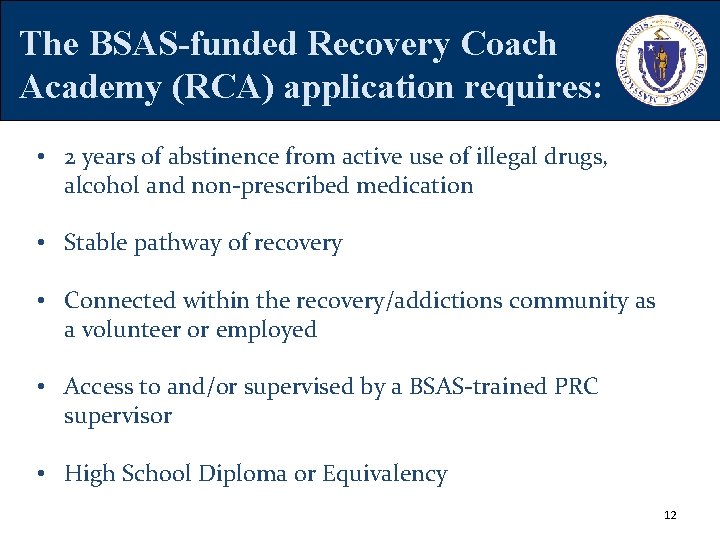
The BSAS-funded Recovery Coach Academy (RCA) application requires: • 2 years of abstinence from active use of illegal drugs, alcohol and non-prescribed medication • Stable pathway of recovery • Connected within the recovery/addictions community as a volunteer or employed • Access to and/or supervised by a BSAS-trained PRC supervisor • High School Diploma or Equivalency 12
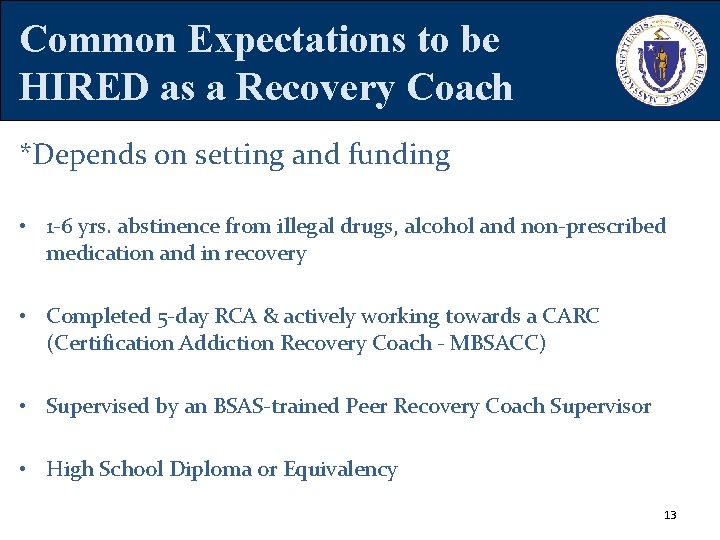
Common Expectations to be HIRED as a Recovery Coach *Depends on setting and funding • 1 -6 yrs. abstinence from illegal drugs, alcohol and non-prescribed medication and in recovery • Completed 5 -day RCA & actively working towards a CARC (Certification Addiction Recovery Coach - MBSACC) • Supervised by an BSAS-trained Peer Recovery Coach Supervisor • High School Diploma or Equivalency 13
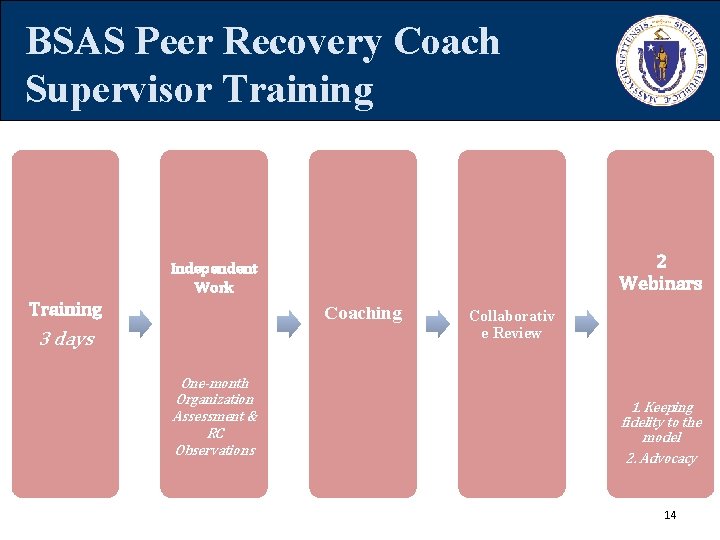
BSAS Peer Recovery Coach Supervisor Training 2 Webinars Independent Work Training Coaching 3 days One-month Organization Assessment & RC Observations Collaborativ e Review 1. Keeping fidelity to the model 2. Advocacy 14
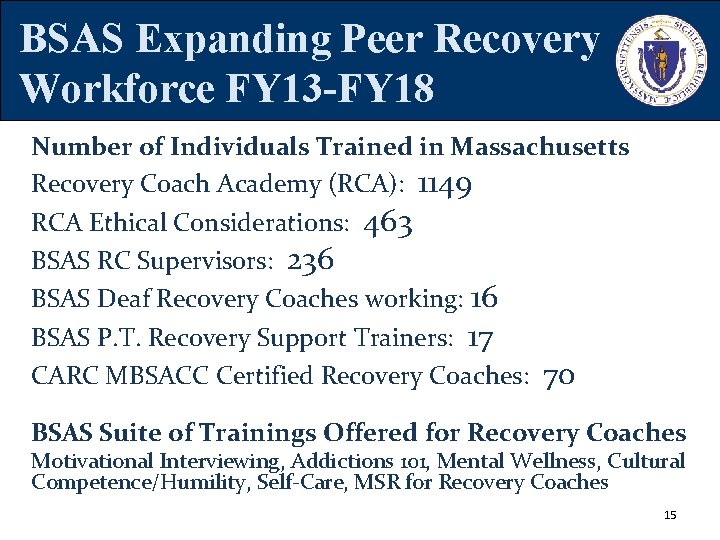
BSAS Expanding Peer Recovery Workforce FY 13 -FY 18 Number of Individuals Trained in Massachusetts Recovery Coach Academy (RCA): 1149 RCA Ethical Considerations: 463 BSAS RC Supervisors: 236 BSAS Deaf Recovery Coaches working: 16 BSAS P. T. Recovery Support Trainers: 17 CARC MBSACC Certified Recovery Coaches: 70 BSAS Suite of Trainings Offered for Recovery Coaches Motivational Interviewing, Addictions 101, Mental Wellness, Cultural Competence/Humility, Self-Care, MSR for Recovery Coaches 15
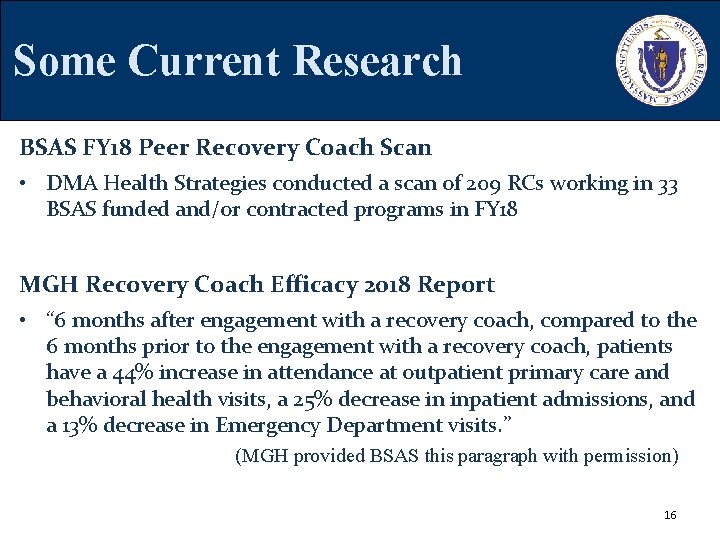
Some Current Research BSAS FY 18 Peer Recovery Coach Scan • DMA Health Strategies conducted a scan of 209 RCs working in 33 BSAS funded and/or contracted programs in FY 18 MGH Recovery Coach Efficacy 2018 Report • “ 6 months after engagement with a recovery coach, compared to the 6 months prior to the engagement with a recovery coach, patients have a 44% increase in attendance at outpatient primary care and behavioral health visits, a 25% decrease in inpatient admissions, and a 13% decrease in Emergency Department visits. ” (MGH provided BSAS this paragraph with permission) 16
Careers of Substance Website • Recovery Coach/ Peer Worker Main Page • Recovery Coach and Recovery Coach Supervisor Training Calendar (with dates and locations) • Full Statewide Substance Use Training Calendar • Job Postings – post and search positions and resumes 17
Department of Public Health Bureau of Substance Addiction Services Thank You Gracias Any Questions? 18
Massachusetts Board Substance Abuse Counselor Certification (MBSACC) Certified Addiction Recovery Coach (CARC) Credential Haner Hernandez, Ph. D. , CPS, CADCII, LADCI hanerhernandez@aol. com 413 -627 -1601 19
History of the MBSACC Board • Established over 36 Years Ago • Independent Organization • 1 Full time Staff, 9 Board Members, Small Budget (Certification Fees) • International Certification and Reciprocity Consortium (IC&RC) Member Board since 1985 20
MBSACC Functions • Work Collaboratively with IC&RC • Set and Implement Standards for MA • Review and Assess Applications • Implement Testing • Award and Oversee Credentials • Assess Ethical Complaints and Address Violations • Work Collaboratively with Partners 21
Certified Addiction Recovery Coach (CARC) Development Process • Certification Board worked with MDPH-BSAS to review minimum requirements; • Working group developed and summited recommendations to the Certification Board in Spring and Summer of 2015; • Certification Board reviewed recommendations, refined them, and made final decisions in August 2015. • CARC available in MA in 2016 22
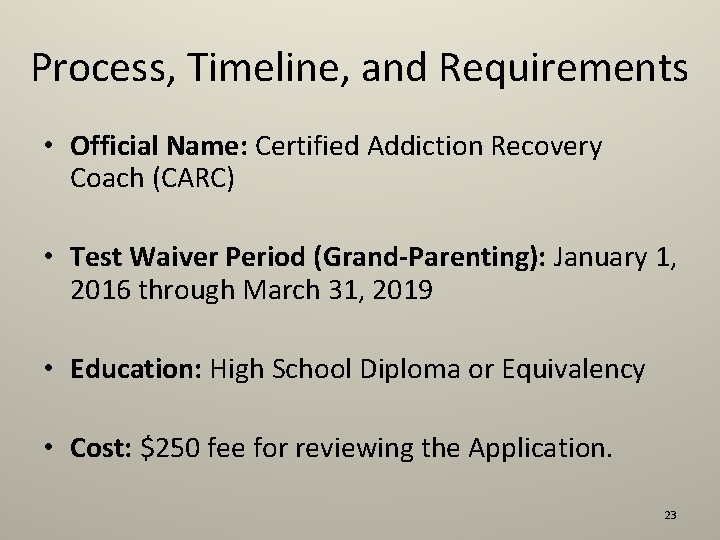
Process, Timeline, and Requirements • Official Name: Certified Addiction Recovery Coach (CARC) • Test Waiver Period (Grand-Parenting): January 1, 2016 through March 31, 2019 • Education: High School Diploma or Equivalency • Cost: $250 fee for reviewing the Application. 23
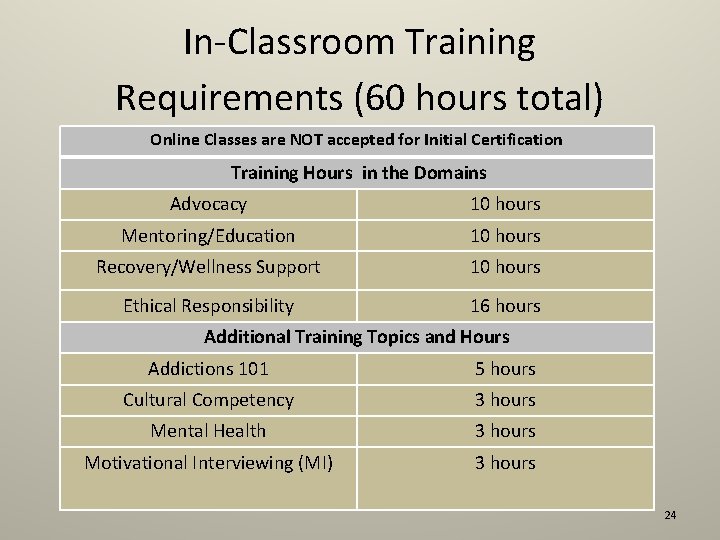
In-Classroom Training Requirements (60 hours total) Online Classes are NOT accepted for Initial Certification Training Hours in the Domains Advocacy 10 hours Mentoring/Education 10 hours Recovery/Wellness Support 10 hours Ethical Responsibility 16 hours Additional Training Topics and Hours Addictions 101 5 hours Cultural Competency 3 hours Mental Health 3 hours Motivational Interviewing (MI) 3 hours 24
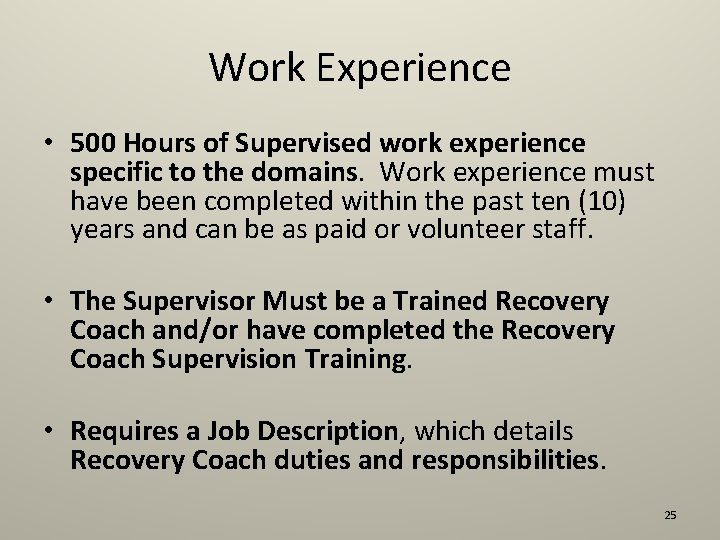
Work Experience • 500 Hours of Supervised work experience specific to the domains. Work experience must have been completed within the past ten (10) years and can be as paid or volunteer staff. • The Supervisor Must be a Trained Recovery Coach and/or have completed the Recovery Coach Supervision Training. • Requires a Job Description, which details Recovery Coach duties and responsibilities. 25
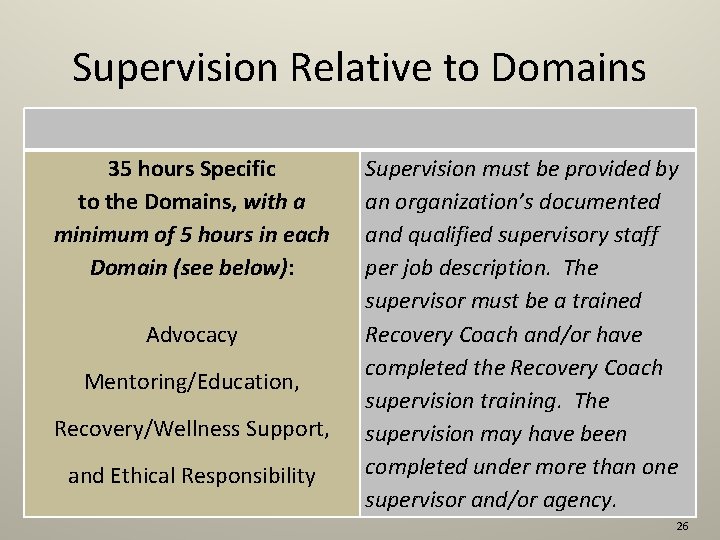
Supervision Relative to Domains 35 hours Specific to the Domains, with a minimum of 5 hours in each Domain (see below): Advocacy Mentoring/Education, Recovery/Wellness Support, and Ethical Responsibility Supervision must be provided by an organization’s documented and qualified supervisory staff per job description. The supervisor must be a trained Recovery Coach and/or have completed the Recovery Coach supervision training. The supervision may have been completed under more than one supervisor and/or agency. 26
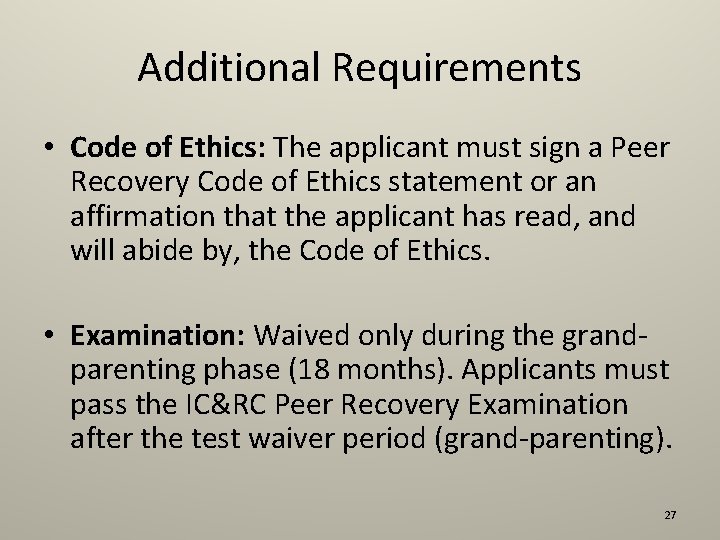
Additional Requirements • Code of Ethics: The applicant must sign a Peer Recovery Code of Ethics statement or an affirmation that the applicant has read, and will abide by, the Code of Ethics. • Examination: Waived only during the grandparenting phase (18 months). Applicants must pass the IC&RC Peer Recovery Examination after the test waiver period (grand-parenting). 27
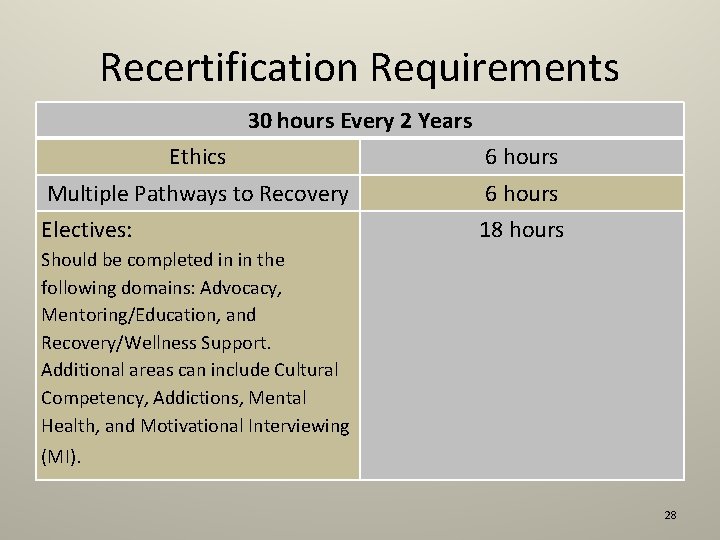
Recertification Requirements 30 hours Every 2 Years Ethics 6 hours Multiple Pathways to Recovery 6 hours Electives: 18 hours Should be completed in in the following domains: Advocacy, Mentoring/Education, and Recovery/Wellness Support. Additional areas can include Cultural Competency, Addictions, Mental Health, and Motivational Interviewing (MI). 28
CARC Benefits • Standards, Uniformity and Accountability; • Improved Outcomes; • Increased Skills and Employability; • Reimbursement and Sustainability; • Reciprocity with other IC&RC-Member Boards. 29
Areas of Concern • Workforce Crisis (Disparities and Equity) • Who Doesn’t Gain Access and Why? • Costs Related to Training, Credentialing, etc. • Supports and Supervision • Push and Pull in Relation to “Staying in Your Lane. ” 30
Thanks! іGracias! 31
Recovery Coaches in Opioid Use Disorder Care Presented by: Katharine London Principal – Health Law & Policy January 23, 2019 Prepared for:
Overview • Goal and Approach • Findings • Policy Recommendations 33
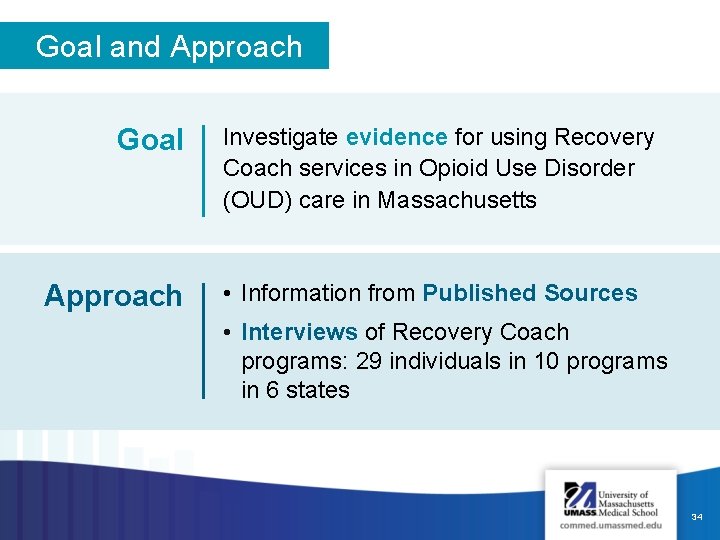
Goal and Approach Goal Approach Investigate evidence for using Recovery Coach services in Opioid Use Disorder (OUD) care in Massachusetts • Information from Published Sources • Interviews of Recovery Coach programs: 29 individuals in 10 programs in 6 states 34
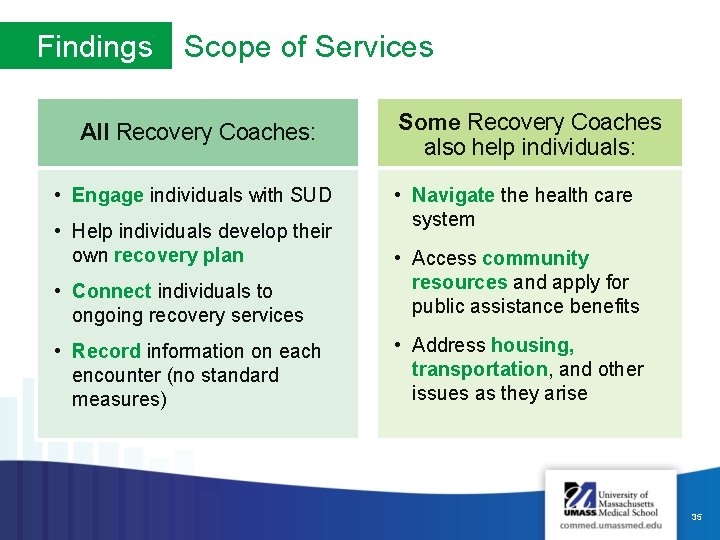
Findings Scope of Services All Recovery Coaches: • Engage individuals with SUD • Help individuals develop their own recovery plan Some Recovery Coaches also help individuals: • Navigate the health care system • Connect individuals to ongoing recovery services • Access community resources and apply for public assistance benefits • Record information on each encounter (no standard measures) • Address housing, transportation, and other issues as they arise 35
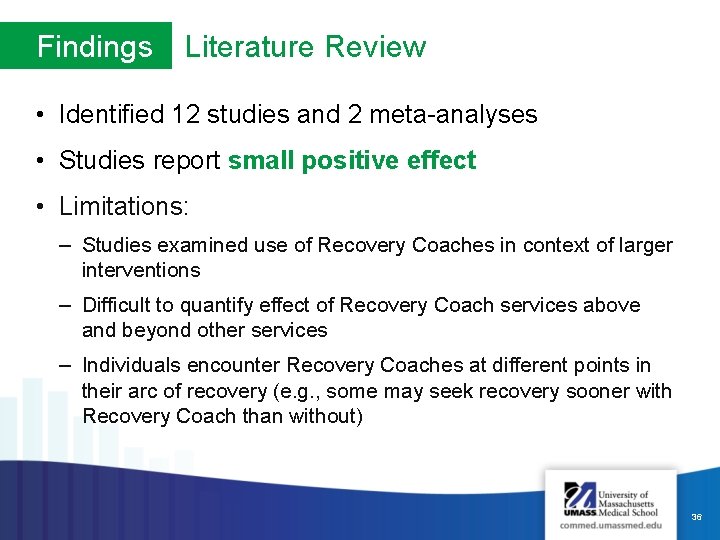
Findings Literature Review • Identified 12 studies and 2 meta-analyses • Studies report small positive effect • Limitations: – Studies examined use of Recovery Coaches in context of larger interventions – Difficult to quantify effect of Recovery Coach services above and beyond other services – Individuals encounter Recovery Coaches at different points in their arc of recovery (e. g. , some may seek recovery sooner with Recovery Coach than without) 36
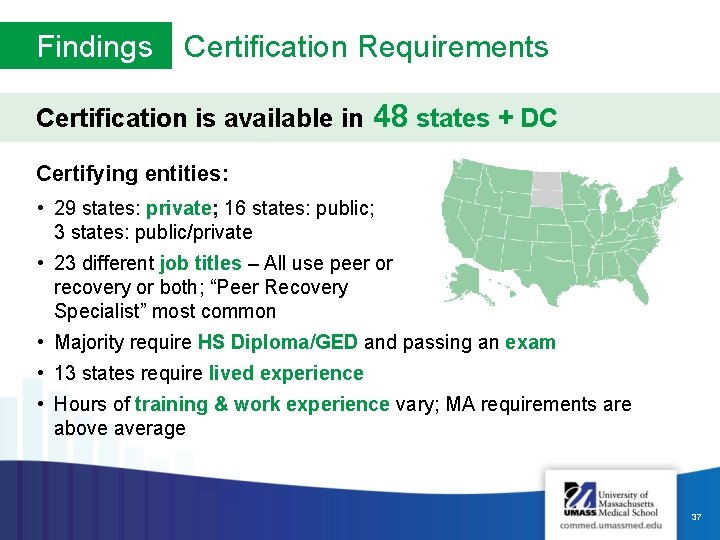
Findings Certification Requirements Certification is available in 48 states + DC Certifying entities: • 29 states: private; 16 states: public; 3 states: public/private • 23 different job titles – All use peer or recovery or both; “Peer Recovery Specialist” most common • Majority require HS Diploma/GED and passing an exam • 13 states require lived experience • Hours of training & work experience vary; MA requirements are above average 37
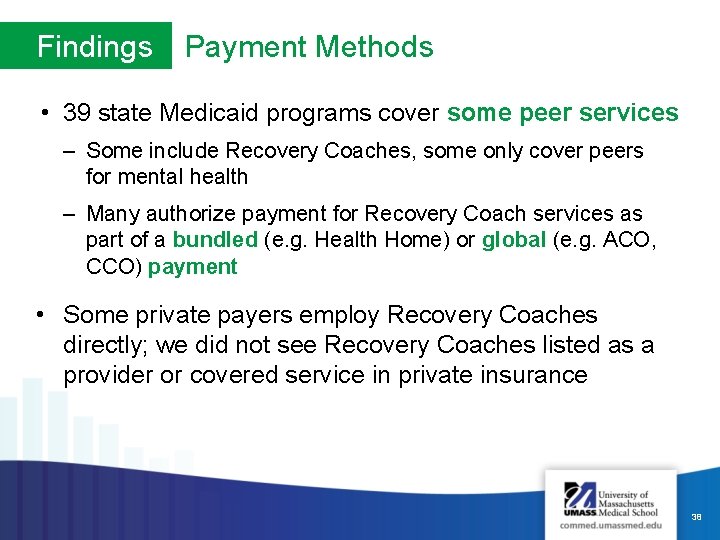
Findings Payment Methods • 39 state Medicaid programs cover some peer services – Some include Recovery Coaches, some only cover peers for mental health – Many authorize payment for Recovery Coach services as part of a bundled (e. g. Health Home) or global (e. g. ACO, CCO) payment • Some private payers employ Recovery Coaches directly; we did not see Recovery Coaches listed as a provider or covered service in private insurance 38
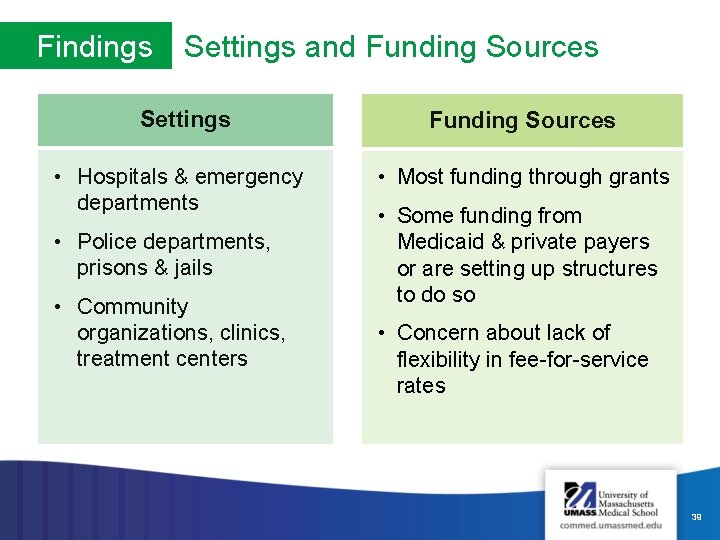
Findings Settings and Funding Sources Settings Funding Sources • Hospitals & emergency departments • Most funding through grants • Police departments, prisons & jails • Community organizations, clinics, treatment centers • Some funding from Medicaid & private payers or are setting up structures to do so • Concern about lack of flexibility in fee-for-service rates 39
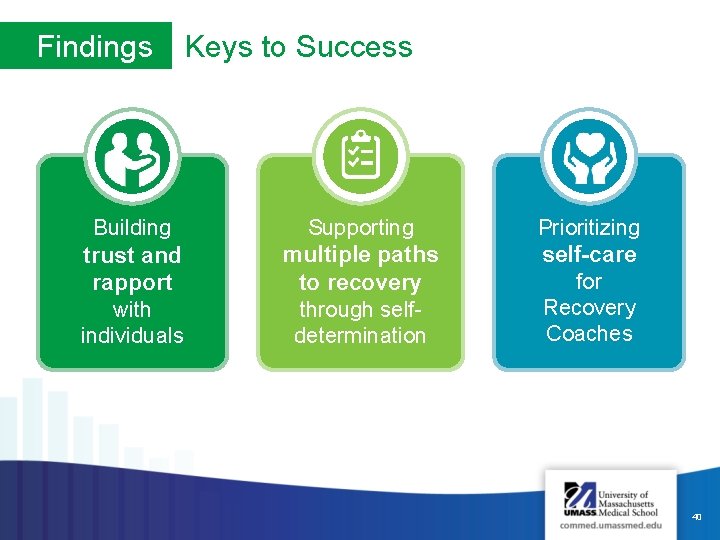
Findings Building trust and rapport with individuals Keys to Success Supporting multiple paths to recovery through selfdetermination Prioritizing self-care for Recovery Coaches 40
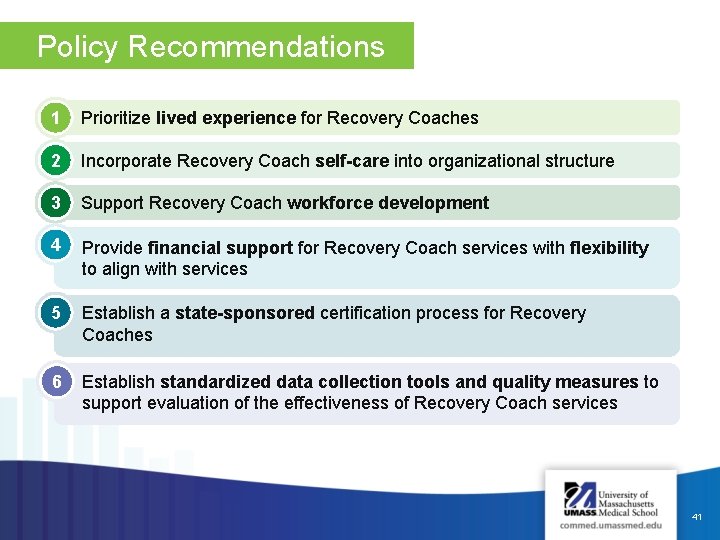
Policy Recommendations 1 Prioritize lived experience for Recovery Coaches 2 Incorporate Recovery Coach self-care into organizational structure 3 Support Recovery Coach workforce development 4 Provide financial support for Recovery Coach services with flexibility to align with services 5 Establish a state-sponsored certification process for Recovery Coaches 6 Establish standardized data collection tools and quality measures to support evaluation of the effectiveness of Recovery Coach services 41
For more information – Appendices A. Recovery Coach literature review – summary of studies B. Recovery Coach certification requirements by state C. Recovery Coach program descriptions – services, staffing & requirements (10 programs) D. Recovery Coach program benefit data – hours, caseload, training, benefits (7 programs) E. Sample Recovery Coach job descriptions 42
Acknowledgements HEALTH LAW & POLICY STAFF ADVISORS Katharine London, Principal Haner Hernandez Jeffrey L. Walter Marybeth Mc. Caffrey, Principal Lisa Mc. Dowell, Senior Consultant Matthew Maughan, Senior Policy Analyst Jeremy Tourish, Policy Analyst This report is funded by a grant from RIZE Massachusetts, a foundation committed to ending the opioid epidemic and reducing its devastating impact on people, families, and communities For additional information, visit http: //umassmed. edu/hlp or email Katharine. London@umassmed. edu 43
Recovery Coach & Recovery Coach Supervisors Panel • Windia Rodriguez • Steve Lesnikoski • Katie O’Leary • Laura Peters • Rebecca Zwicker • Patrick Kent 44
Next Steps Fall River Listening Session: February 7, 2019 2 -4 PM Commission Meeting: March 18, 2019 3 -5 PM • Presentation: BSAS Workforce Scan • Panel: Consumers of recovery coach services • Panel: Employers of recovery coaches 45
Commission Staff Contact Please direct any questions and materials to: Anny Domercant Anny. Domercant@Mass. Mail. State. MA. US Vivian Pham Vivian. Pham@Mass. Mail. State. MA. US General Public Comments and Questions EHSRecovery. Coach. Commission@Mass. Mail. State. MA. US 46