
Recovery Capital What is it and why do
- Slides: 40
Recovery Capital: What is it and why do you need it? Maximizing Recovery Using the Steps Wendy Coughlin, Ph. D A person in long term recovery
Recovery Capital Term attributed to William Cloud and Robert Granfield. Refers to “the quantity and quality of internal and external resources that one can bring to bear to initiate and sustain recovery from addiction” Four types: Personal, Family/Social, Community, and Cultural Granfield, R. , & Cloud, W. (1999). Coming clean: Overcoming addiction without treatment New York: New York University Press.
Shifting paradigms Addiction was: 1 st a moral dilemma; alcohol somehow different from (aka better than) drug addiction Then an acute disease -> 28 day treatment model Now, a chronic brain disease requiring extended care, physical and psychosocial treatment ALL THESE DEFINITIONS FOCUS ON PATHOLOGY
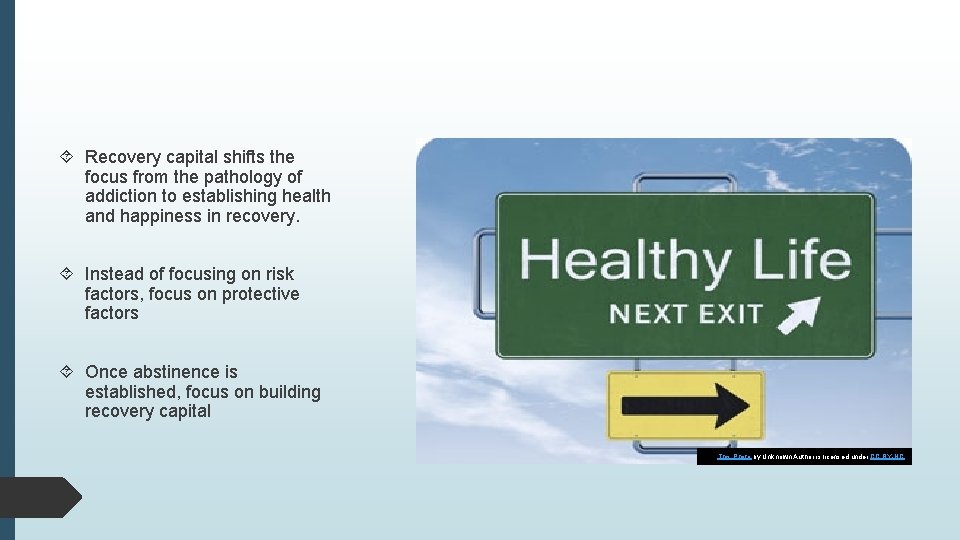
Recovery capital shifts the focus from the pathology of addiction to establishing health and happiness in recovery. Instead of focusing on risk factors, focus on protective factors Once abstinence is established, focus on building recovery capital This Photo by Unknown Author is licensed under CC BY-NC
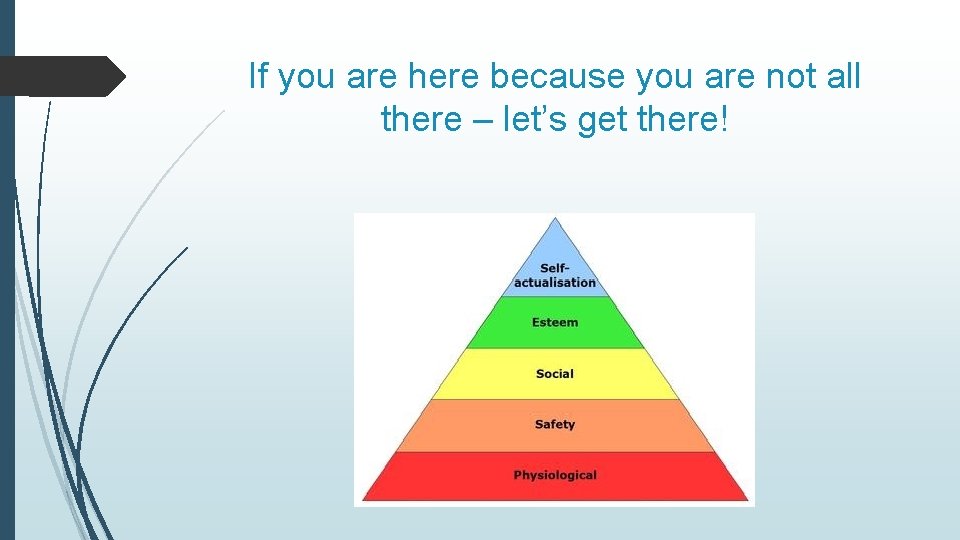
If you are here because you are not all there – let’s get there!
It doesn’t take much to start building recovery capital Basic recovery capital (i. e. life, food, shelter) is a prerequisite to stabilizing recovery. Jail secures all 3! Everything is relative.
Personal Recovery Capital Physical capital: Physical Health Financial Assets, includes health insurance and a line of credit Food and clothing Access to recovery support (bus passes and bicycles count) Safe, recovery-conducive shelter This Photo by Unknown Author is licensed under CC BY-NC-ND
Human Capital Sense of purpose, hope, and meaning in life Resurrection of values and morals Education and vocational skills Intelligence & problem-solving abilities This Photo by Unknown Author is licensed under CC BY-NC-SA
Family/Social Capital Support from and obligations to groups and family Sobriety based fellowship and leisure outlets Connections to social institutions: work, school, church, synagogues, Kiwanas, etc.
Importance of Social Capital Our relationships are often all we have when we first get into recovery. If we have lost important relationships they can be the trigger to intensify treatment in the hopes of recovering those relationships (e. g. parents who have lost their parental rights) Granfield and Cloud (2001) suggested that “Those who possess larger amounts of social capital, perhaps even independently of the intensity of use, will be likely candidates for less intrusive forms of treatment”.
Community Capital A society which promotes recovery and works to end the stigma of addiction Visible and diverse recovery role models A continuum of treatment resources Recovery support, intervention and reintervention – includes drug testing, drug court, PRN & IPN This Photo by Unknown Author is licensed under CC BY-SA
BY-NC-ND Cultural Capital Community capital which provides culturally-prescribed pathways to recovery: Native American concepts of wellbriety Latin meetings, African American meetings Gay meetings, women’s meetings, men’s meetings Young peoples’ meetings IDAA and FMPG
Why do we need recovery capital? The quality and quantity of our recovery capital plays a major role in our success or failure in maintaining abstinence Recovery capital may spark a determination to remain clean The potential of losing recovery capital (spouse, professional license, life) may increase determination to overcome the challenges of early recovery (e. g. endure discomfort, monitoring, the 4 & 5 th steps)
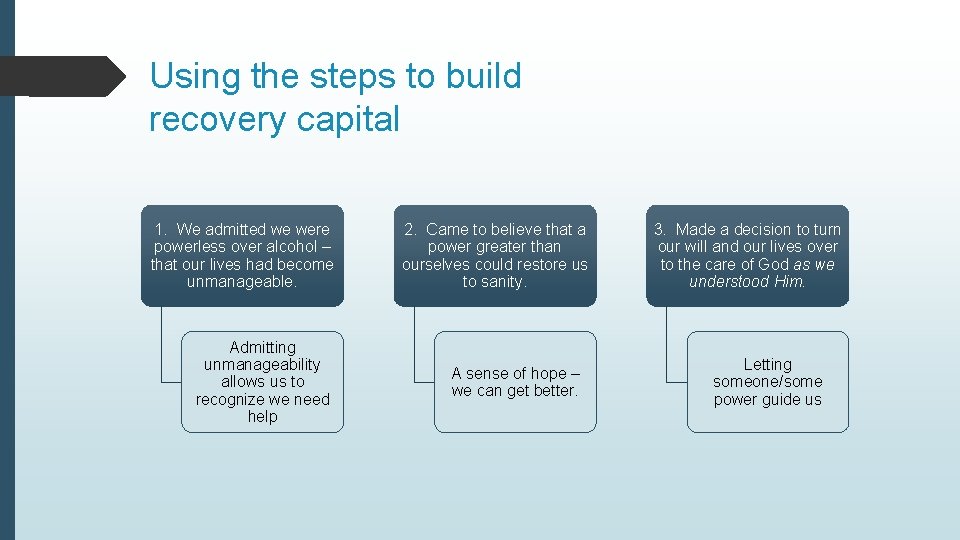
Using the steps to build recovery capital 1. We admitted we were powerless over alcohol – that our lives had become unmanageable. Admitting unmanageability allows us to recognize we need help 2. Came to believe that a power greater than ourselves could restore us to sanity. A sense of hope – we can get better. 3. Made a decision to turn our will and our lives over to the care of God as we understood Him. Letting someone/some power guide us
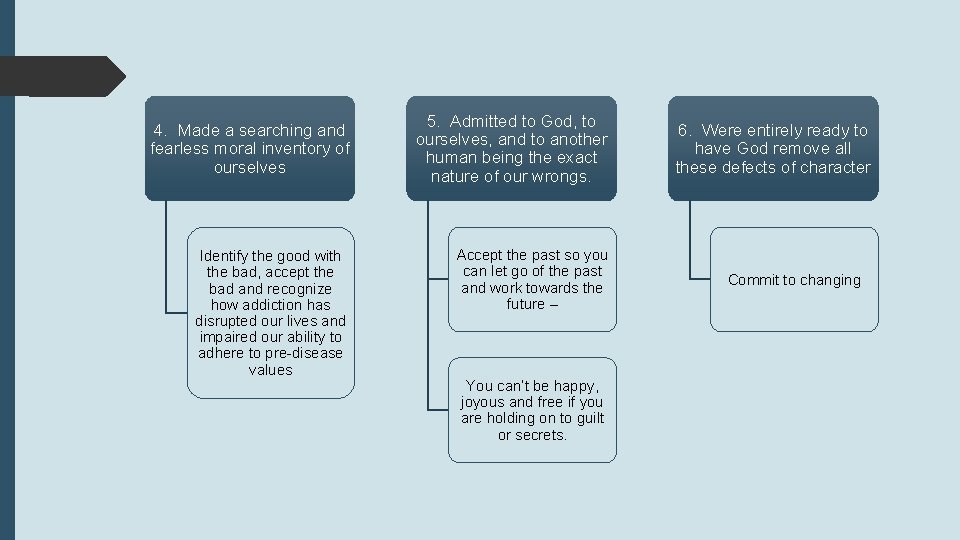
4. Made a searching and fearless moral inventory of ourselves Identify the good with the bad, accept the bad and recognize how addiction has disrupted our lives and impaired our ability to adhere to pre-disease values 5. Admitted to God, to ourselves, and to another human being the exact nature of our wrongs. Accept the past so you can let go of the past and work towards the future – You can’t be happy, joyous and free if you are holding on to guilt or secrets. 6. Were entirely ready to have God remove all these defects of character Commit to changing
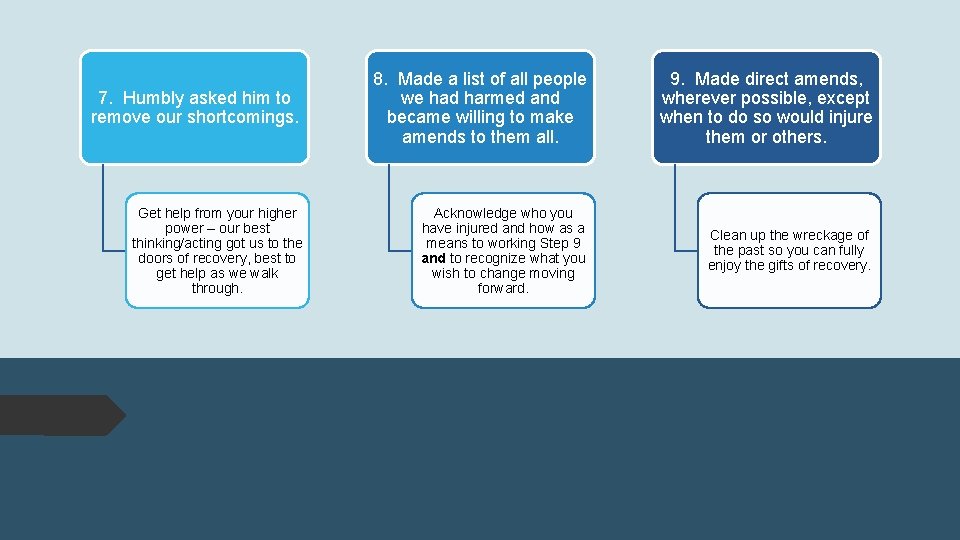
7. Humbly asked him to remove our shortcomings. 8. Made a list of all people we had harmed and became willing to make amends to them all. 9. Made direct amends, wherever possible, except when to do so would injure them or others. Get help from your higher power – our best thinking/acting got us to the doors of recovery, best to get help as we walk through. Acknowledge who you have injured and how as a means to working Step 9 and to recognize what you wish to change moving forward. Clean up the wreckage of the past so you can fully enjoy the gifts of recovery.
10. Continued to take personal inventory and when we were wrong promptly admitted it. Stay focused on being your best self – it promotes recovery and eliminates having to repeat a 5 th step
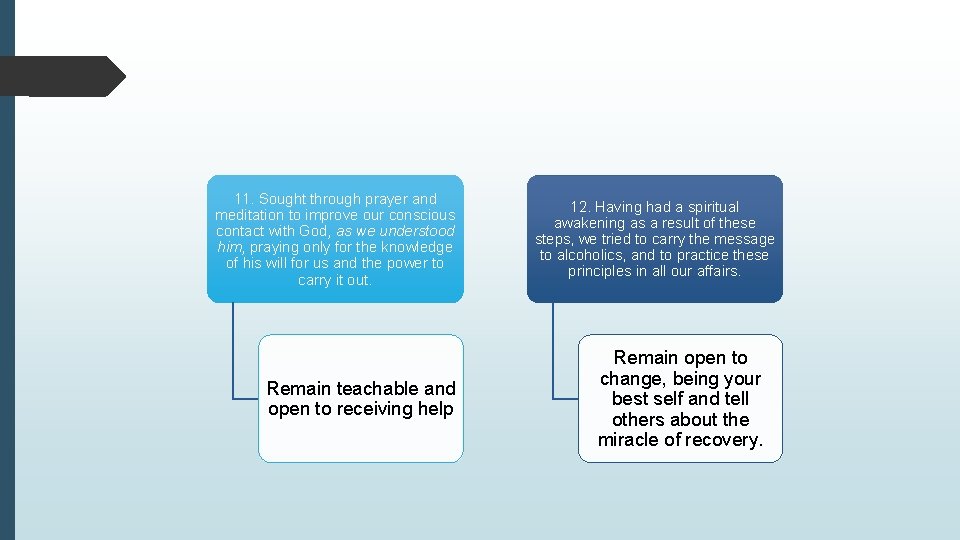
11. Sought through prayer and meditation to improve our conscious contact with God, as we understood him, praying only for the knowledge of his will for us and the power to carry it out. Remain teachable and open to receiving help 12. Having had a spiritual awakening as a result of these steps, we tried to carry the message to alcoholics, and to practice these principles in all our affairs. Remain open to change, being your best self and tell others about the miracle of recovery.
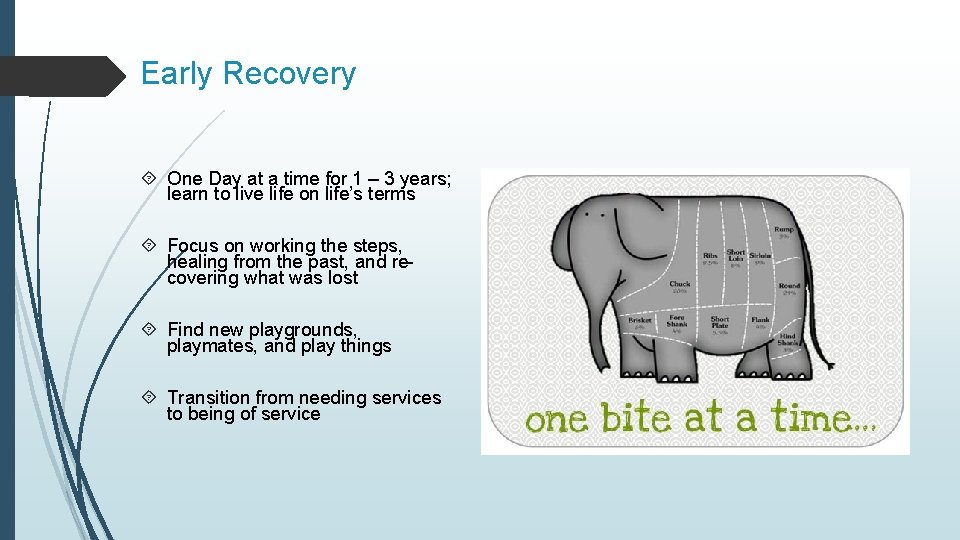
Early Recovery One Day at a time for 1 – 3 years; learn to live life on life’s terms Focus on working the steps, healing from the past, and recovering what was lost Find new playgrounds, playmates, and play things Transition from needing services to being of service
Intermediate recovery (3 – 10 years) What do I do now? Begin planning the rest of your life. It’s okay to plan but not to project Building sustainable recovery capital Credibility re-established Trust-worthy and able to trust
Stable/longterm Recovery (10+) Able to achieve health: WHO = a state of complete physical, mental and social wellbeing = role models for others Financial stability likely Self-actualizing and selffulfilment can be realistic goals Happy, joyous, and free
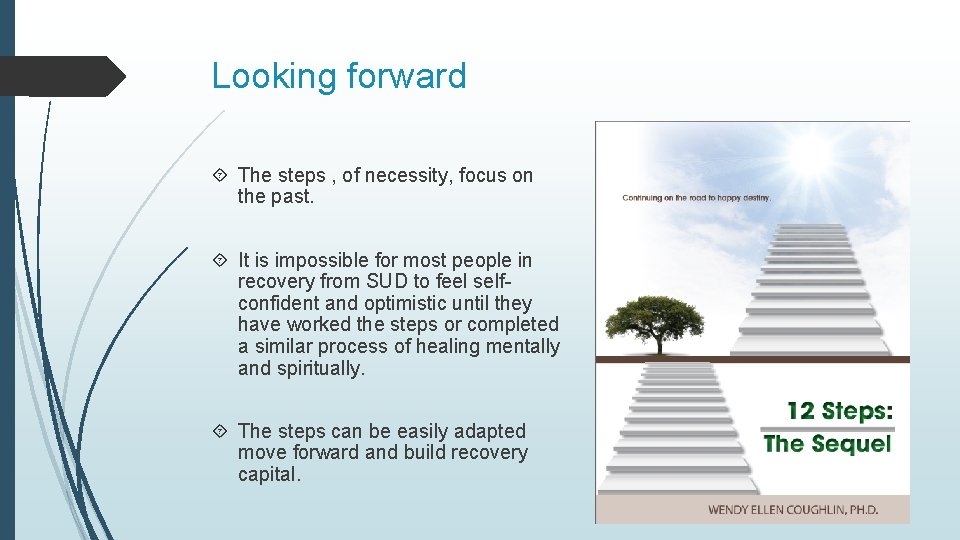
Looking forward The steps , of necessity, focus on the past. It is impossible for most people in recovery from SUD to feel selfconfident and optimistic until they have worked the steps or completed a similar process of healing mentally and spiritually. The steps can be easily adapted move forward and build recovery capital.
The Sequel Steps Simply a suggested way of continuing to use the steps Not endorsed by any recovery program To be considered after completing the 12 Steps and establishing stable (2+ years) recovery No need to re-invent the wheel, use the same steps just shift to strengthen recovery after establishing recovery. This Photo by Unknown Author is licensed under CC BY-SA
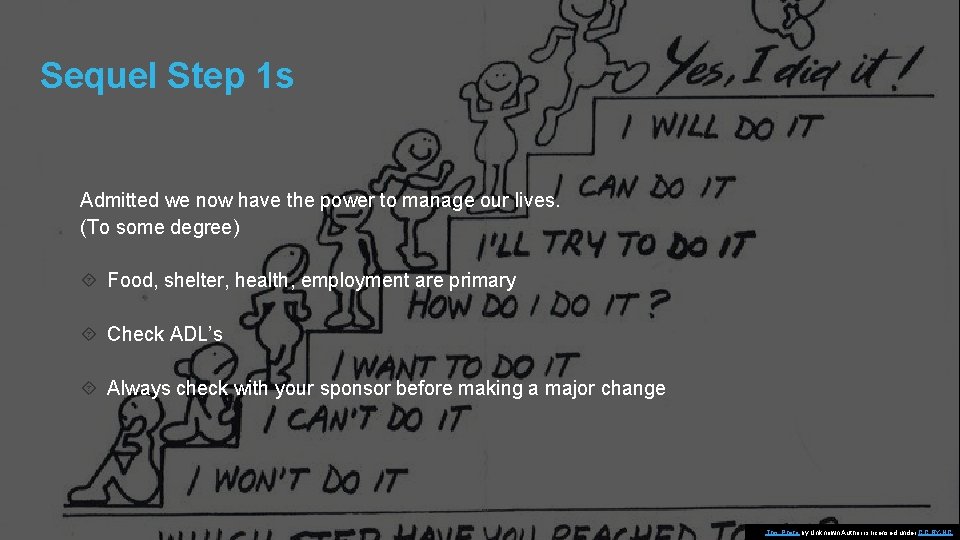
Sequel Step 1 s Admitted we now have the power to manage our lives. (To some degree) Food, shelter, health, employment are primary Check ADL’s Always check with your sponsor before making a major change This Photo by Unknown Author is licensed under CC BY-NC
Sequel Step 2 s Having been restored to sanity we continued to improve our lives. Past is not prologue if you’ve completed the steps What are your dreams? Personal goals? What areas of your life do you need to improve to achieve those goals and dreams?
Sequel Step 3 s Made a decision to turn our will and our lives over to the care of God as we understand God. Continuing to develop your spiritual connection with affirmative prayer Look around for the winners. Be inspired by what a Group of drunks/drug addicts can become in recovery Follow Good orderly direction.
Sequel Step 4 s Took a searching inventory of our assets, talents, and capabilities. Inventory your assets – what do you already have going for you? What are your resources? Identify your talents, specific & general, professional & recreational/personal What are you capable of now that you are in recovery?
Admitted to God, to ourselves, and another human Sequel Step being the exact nature of our potential as sober 5 s individuals. If you could do anything in the world, what would it be? What excites your passion? Tell someone else -> no longer a secret -> accountability & an inferred commitment to develop your potential
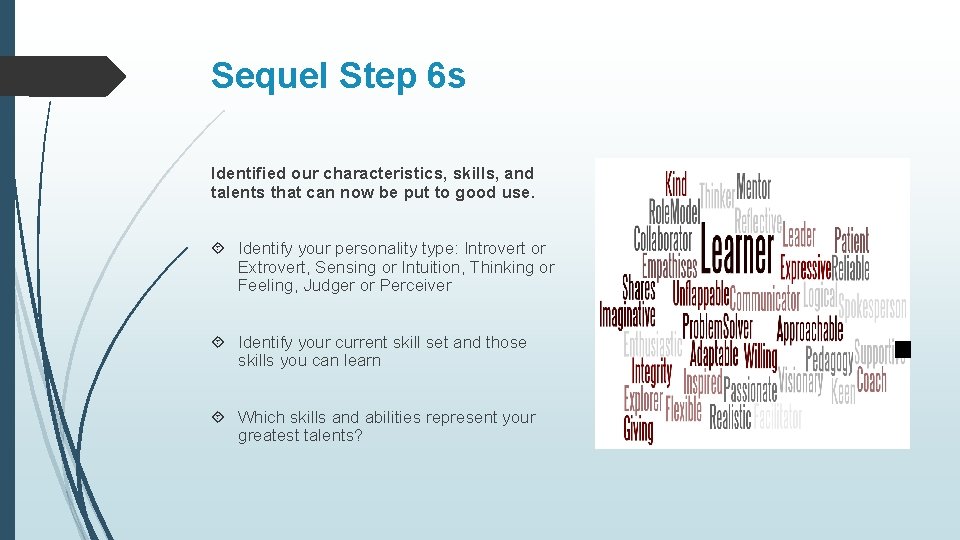
Sequel Step 6 s Identified our characteristics, skills, and talents that can now be put to good use. Identify your personality type: Introvert or Extrovert, Sensing or Intuition, Thinking or Feeling, Judger or Perceiver Identify your current skill set and those skills you can learn Which skills and abilities represent your greatest talents?
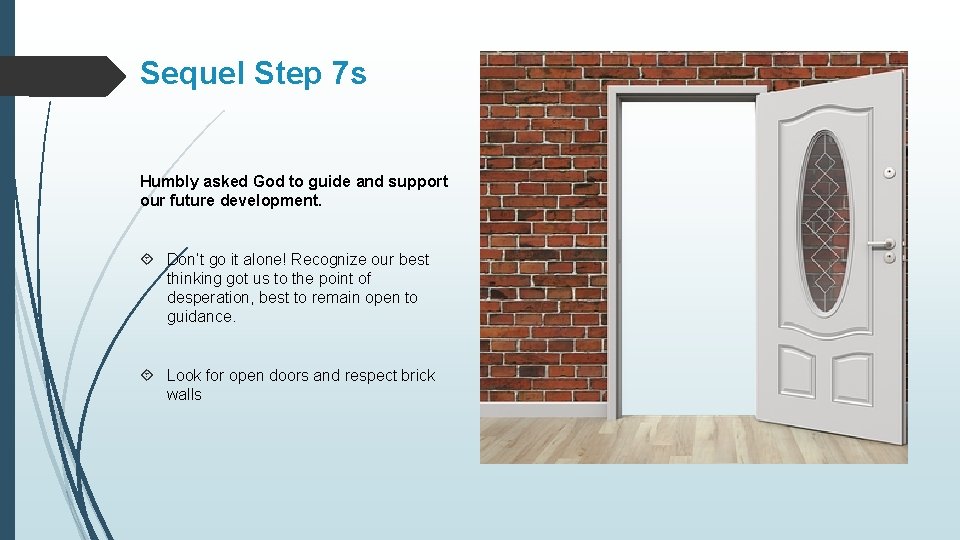
Sequel Step 7 s Humbly asked God to guide and support our future development. Don’t go it alone! Recognize our best thinking got us to the point of desperation, best to remain open to guidance. Look for open doors and respect brick walls
Sequel Step 8 s Made a list of goals and plans we envision for the future. Immediate goals: Do right away e. g. stabilize daily routine Short-term goals: To be completed in the next 5 years Long term/Lifetime goals: You’ll see it when you believe it!
Sequel Step 9 s Became willing to execute those plans whenever possible, except when to do so might interfere with our recovery. Evaluate the practicality of each goal Check to make sure it is protective of your recovery Make sure you stay in touch with sponsor, friends, family, and God of your understanding,
Sequel Step 10 s Continued to monitor our progress, making adjustments as needed to assure maximum benefit for ourselves and others. Develop a checklist and review weekly (short-term goals, monthly for long-term goals. Just for today make sure you stay grounded, remain of service to others, practice restraint, remain sociable and dignified, avoid hurry, relax, replace fear with faith.
Sequel Step 11 s Sought through prayer and meditation to improve our conscious contact with God as we understood God, praying only for the knowledge of his will for us and the power to carry that out. Integrate prayer & meditation into your daily schedule. Listen! Watch for signposts. Remember, if you are praying for specifics, add “if it be thy will” or a similar caveat. This Photo by Unknown Author is licensed under CC BY-NC-SA
Sequel Step 12 s Having had a spiritual experience as the result of these steps, we carried this message to others so they might continue to grow and improve their lives. Sing the praises of the program and the gifts of recovery. Tell your story. Sponsor others. Let the newcomer know this works!!