
Recover the Potentially Lost Customer Chapter 9 Objectives
Recover the Potentially Lost Customer Chapter 9
Objectives 1. 2. 3. 4. 5. 6. Understand customer recovery Maintain healthy attitudes Apply techniques Handle a nasty complaint letter Develop skills Understand the difference between assertive and aggressive behavior
Second Life Customers 1. 2. 3. 4. Already familiar with the products/services Company has more data about likes/dislikes Customer may feel flattered by your efforts Customer quicker to do business
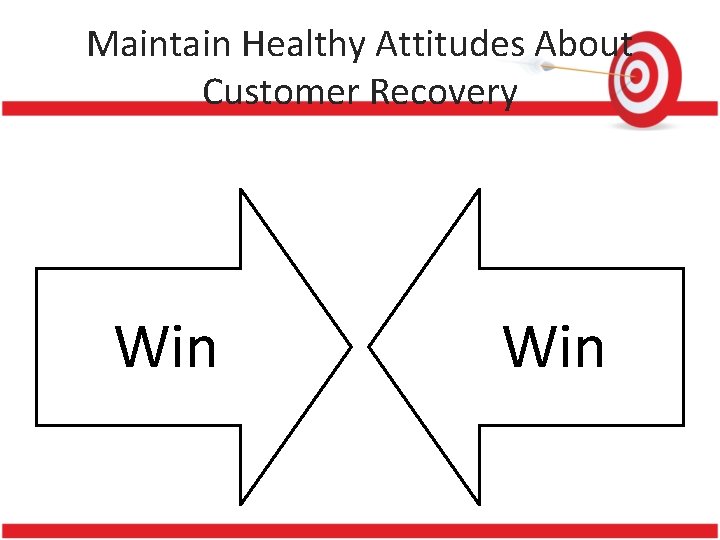
Maintain Healthy Attitudes About Customer Recovery Win
Develop Your Recovery Skills
Feel Their Pain • • Listen to their concerns Understand their problem Share their sense of urgency Compensate them Eliminate further inconvenience Treat them with respect Assure them the problem will not happen again
Do All You Can to Resolve the Problem • Have a clear understanding of the problem • Ask appropriate questions to clarify • Fix it as soon as possible
Go Beyond: Offer « Symbolic Atonement » • Offer to pick up or deliver the goods to be replaced or repaired • Give a gift of merchandise to repay for the inconvenience • Reimburse for costs of returning merchandise such as parking fees, etc. • Acknowledge the customer’s inconvenience and thank him/her for giving you the opportunity to try to make it right • Follow up to see that the problem was handled
Look Back and Learn from Each Situation • What was the nature of the customer’s complaint? • Was it generated primarily by value, systems, or people? • How did the customer see the problem? • Who was to blame; what irritated the customer most; why was he/she angry or frustrated? • How did you see the problem? • What did you say that seemed to aggravate the situation?
Understand What Happens if the Customer is Still Not Satisfied • If you try your best to satisfy the customer, you have done all that you can do. • Don’t take it personally. • Don’t rehash the experience with your coworkers or in your own mind.
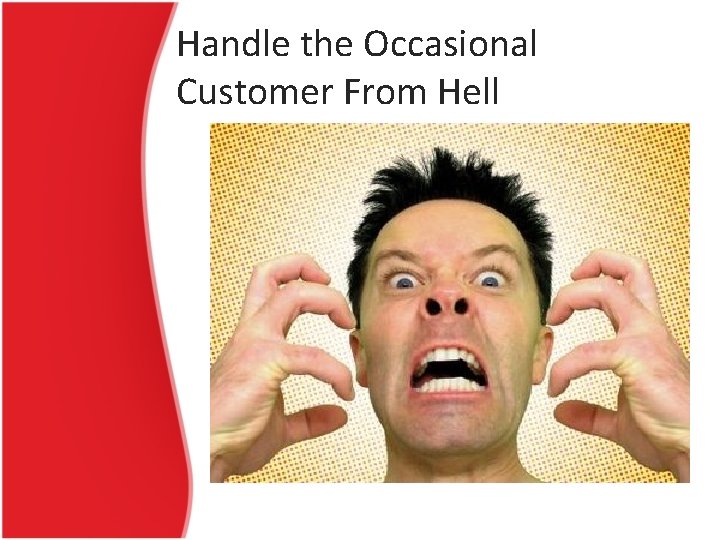
Handle the Occasional Customer From Hell
Action Tip 1 - Be Sure This Really is a Chronic Complainer • They always look for someone to blame. • They never admit any degree of fault. • They have strong ideas about what others should do. • They complain at length.
Action Tip 2 - Know What to Do with This Guy (or Girl) • • Actively listen to identify the grievance Establish the facts to reduce exaggeration Resist the temptation to apologize Force the complainer to pose a solution
Action Tip 3 - Take a Break, Cool Off, Reflect
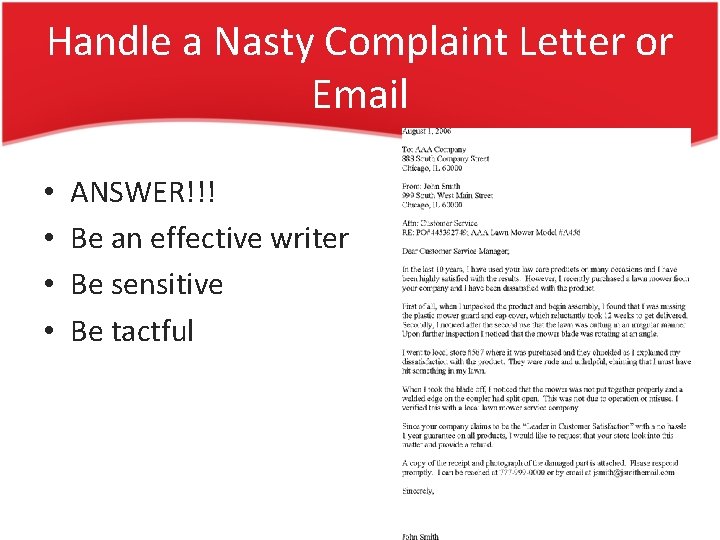
Handle a Nasty Complaint Letter or Email • • ANSWER!!! Be an effective writer Be sensitive Be tactful
People Are Strongly Interest in Themselves • “What’s in it for me? ”
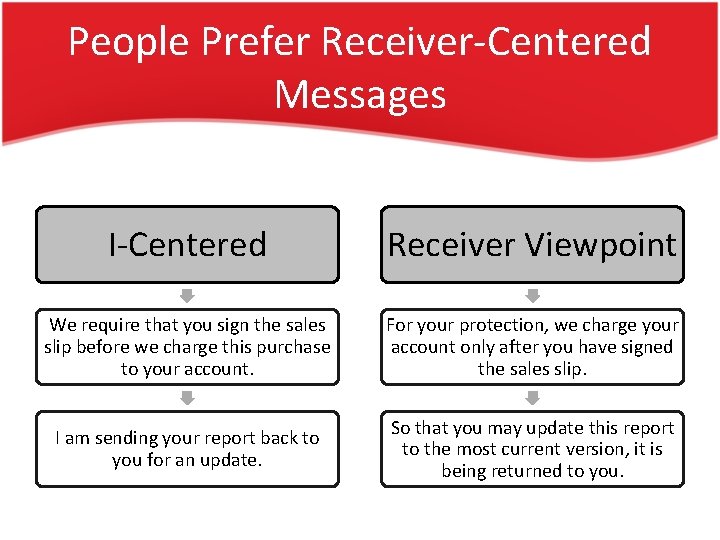
People Prefer Receiver-Centered Messages I-Centered Receiver Viewpoint We require that you sign the sales slip before we charge this purchase to your account. For your protection, we charge your account only after you have signed the sales slip. I am sending your report back to you for an update. So that you may update this report to the most current version, it is being returned to you.
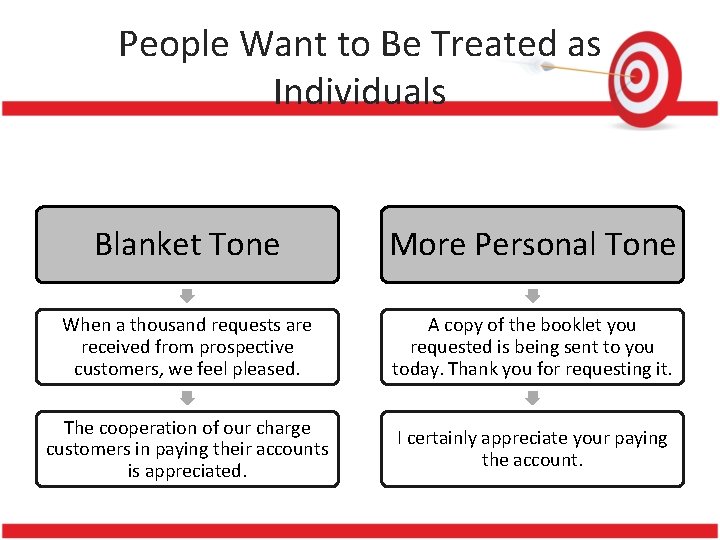
People Want to Be Treated as Individuals Blanket Tone More Personal Tone When a thousand requests are received from prospective customers, we feel pleased. A copy of the booklet you requested is being sent to you today. Thank you for requesting it. The cooperation of our charge customers in paying their accounts is appreciated. I certainly appreciate your paying the account.
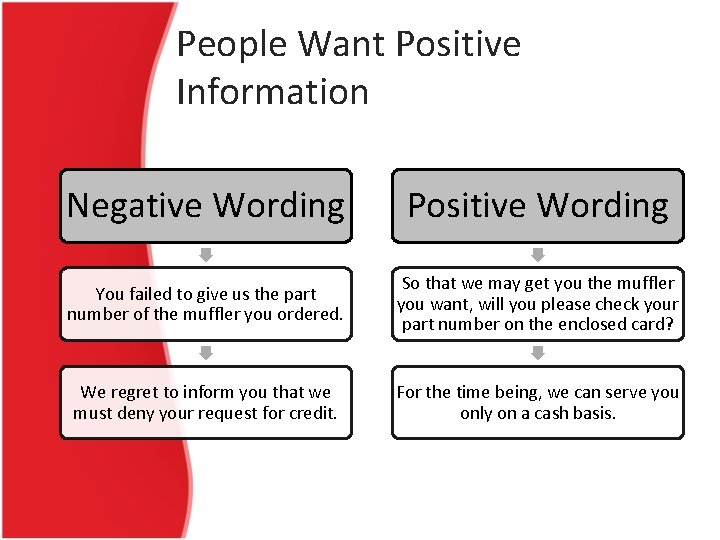
People Want Positive Information Negative Wording Positive Wording You failed to give us the part number of the muffler you ordered. So that we may get you the muffler you want, will you please check your part number on the enclosed card? We regret to inform you that we must deny your request for credit. For the time being, we can serve you only on a cash basis.
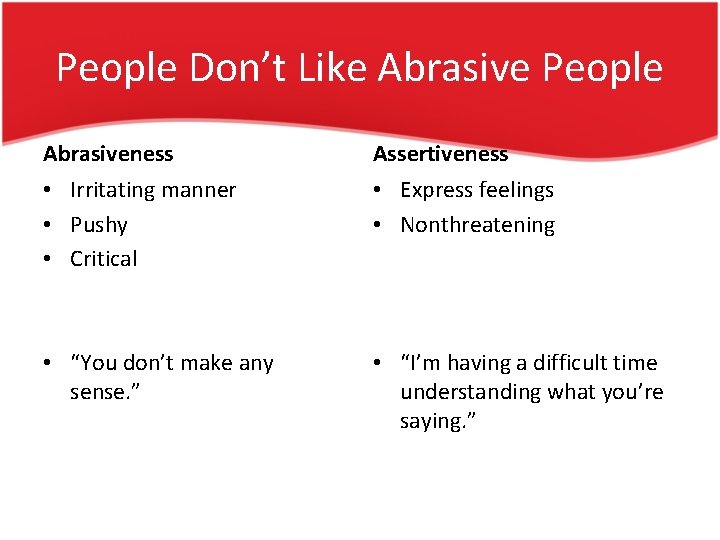
People Don’t Like Abrasive People Abrasiveness Assertiveness • Irritating manner • Pushy • Critical • Express feelings • Nonthreatening • “You don’t make any sense. ” • “I’m having a difficult time understanding what you’re saying. ”
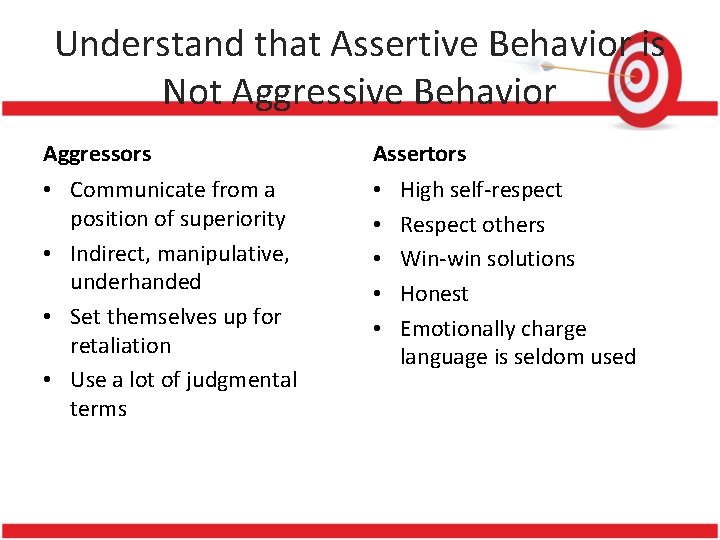
Understand that Assertive Behavior is Not Aggressive Behavior Aggressors Assertors • Communicate from a position of superiority • Indirect, manipulative, underhanded • Set themselves up for retaliation • Use a lot of judgmental terms • • • High self-respect Respect others Win-win solutions Honest Emotionally charge language is seldom used
- Slides: 21