
Records Management in the 4 th Industrial Revolution
- Slides: 13
Records Management in the 4 th Industrial Revolution South African Society of Archivists Annual Conference 2019 Paul Mullon paulm@corconcepts. co. za 0832736087
Agenda • • Previous Industrial Revolutions What is the 4 th Industrial Revolution Changing dynamics in the “information age” Records management responsibilities (and challenges) • Paradigm shifts
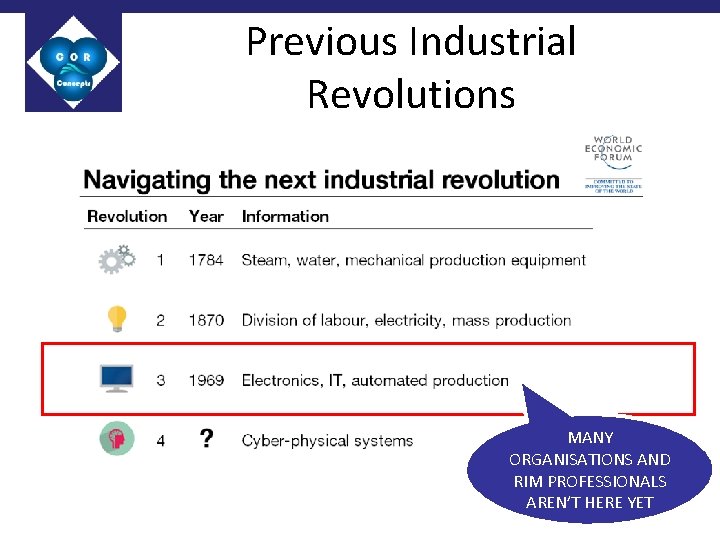
Previous Industrial Revolutions MANY ORGANISATIONS AND RIM PROFESSIONALS AREN’T HERE YET
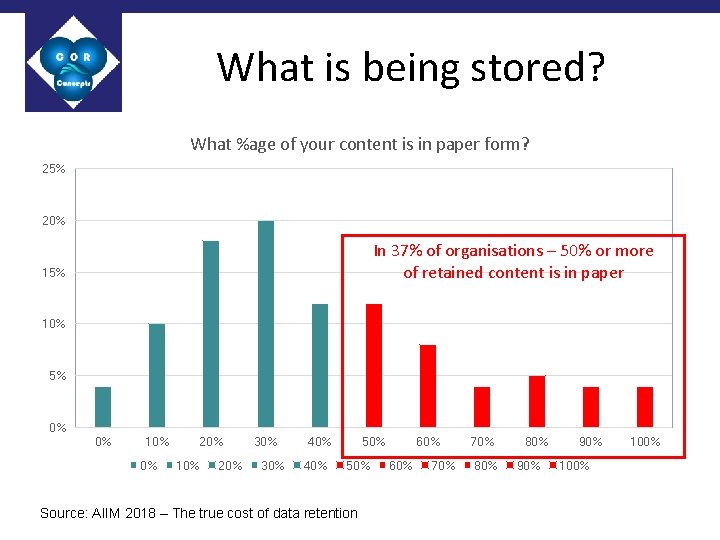
What is being stored? What %age of your content is in paper form? 25% 20% In 37% of organisations – 50% or more of retained content is in paper 15% 10% 5% 0% 0% 10% 0% 20% 10% 20% 30% 40% 50% Source: AIIM 2018 – The true cost of data retention 60% 70% 80% 90% 100%
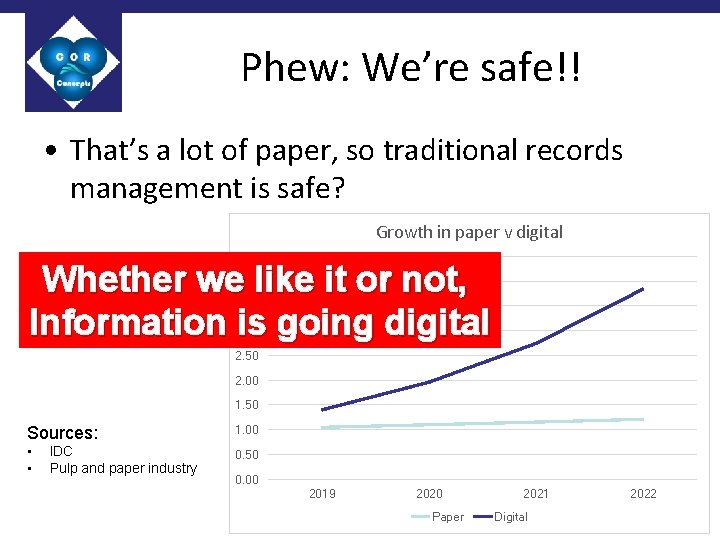
Phew: We’re safe!! • That’s a lot of paper, so traditional records management is safe? Growth in paper v digital 4. 50 Whether we like it or not, Information is going digital 4. 00 3. 50 3. 00 2. 50 2. 00 1. 50 Sources: 1. 00 • • 0. 50 IDC Pulp and paper industry 0. 00 2019 2020 Paper 2021 Digital 2022
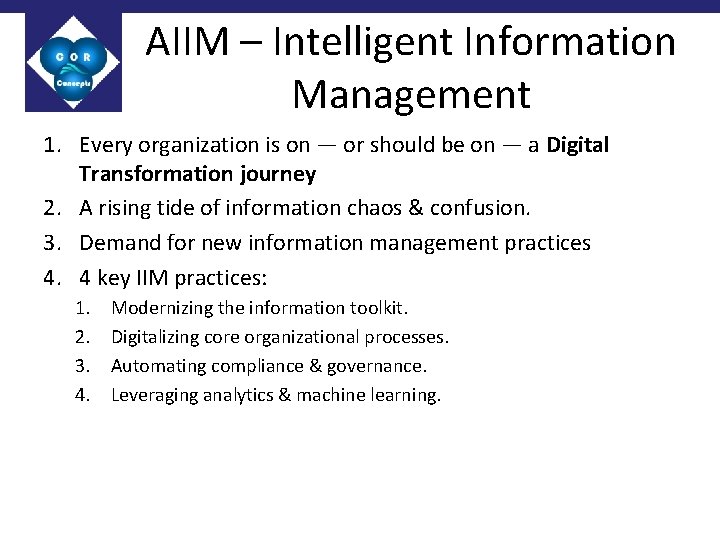
AIIM – Intelligent Information Management 1. Every organization is on — or should be on — a Digital Transformation journey 2. A rising tide of information chaos & confusion. 3. Demand for new information management practices 4. 4 key IIM practices: 1. 2. 3. 4. Modernizing the information toolkit. Digitalizing core organizational processes. Automating compliance & governance. Leveraging analytics & machine learning.
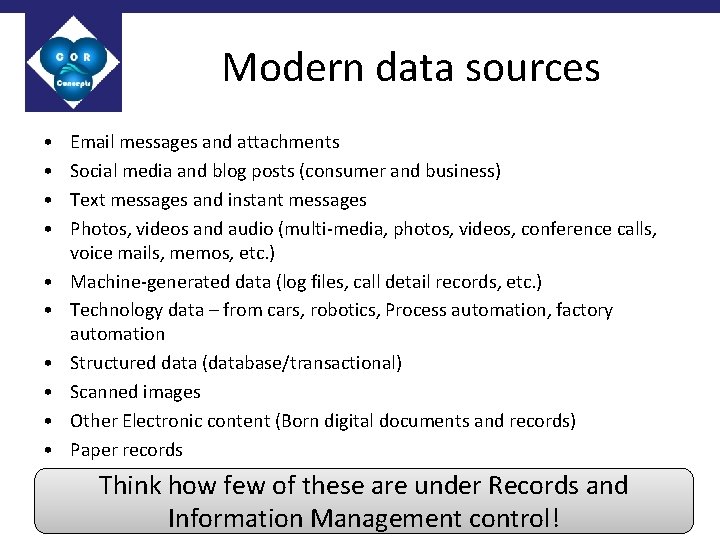
Modern data sources • • • Email messages and attachments Social media and blog posts (consumer and business) Text messages and instant messages Photos, videos and audio (multi-media, photos, videos, conference calls, voice mails, memos, etc. ) Machine-generated data (log files, call detail records, etc. ) Technology data – from cars, robotics, Process automation, factory automation Structured data (database/transactional) Scanned images Other Electronic content (Born digital documents and records) Paper records Think how few of these are under Records and Information Management control!
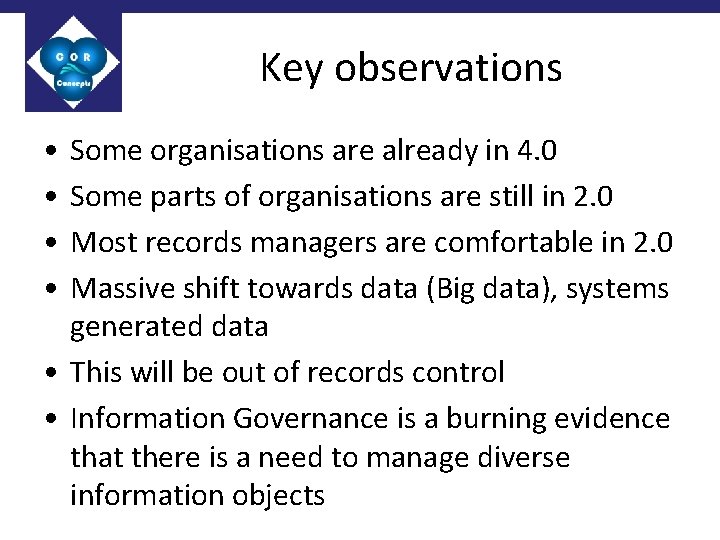
Key observations • • Some organisations are already in 4. 0 Some parts of organisations are still in 2. 0 Most records managers are comfortable in 2. 0 Massive shift towards data (Big data), systems generated data • This will be out of records control • Information Governance is a burning evidence that there is a need to manage diverse information objects
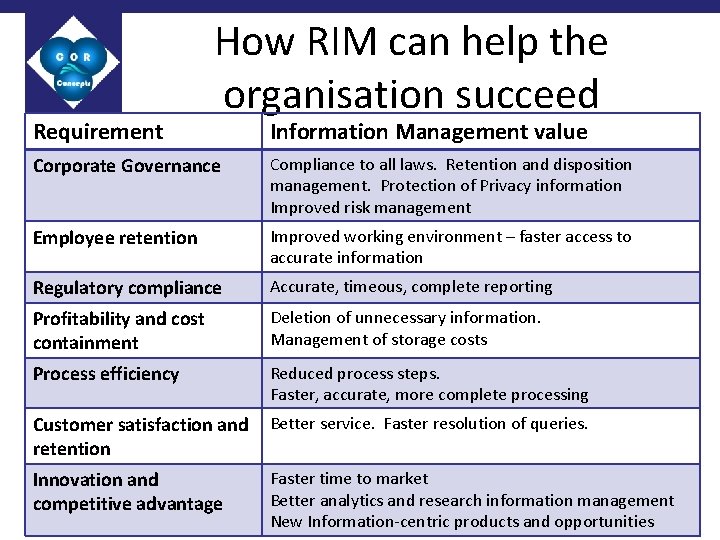
Requirement How RIM can help the organisation succeed Information Management value Corporate Governance Compliance to all laws. Retention and disposition management. Protection of Privacy information Improved risk management Employee retention Improved working environment – faster access to accurate information Regulatory compliance Accurate, timeous, complete reporting Profitability and cost containment Deletion of unnecessary information. Management of storage costs Process efficiency Reduced process steps. Faster, accurate, more complete processing Customer satisfaction and retention Better service. Faster resolution of queries. Innovation and competitive advantage Faster time to market Better analytics and research information management New Information-centric products and opportunities
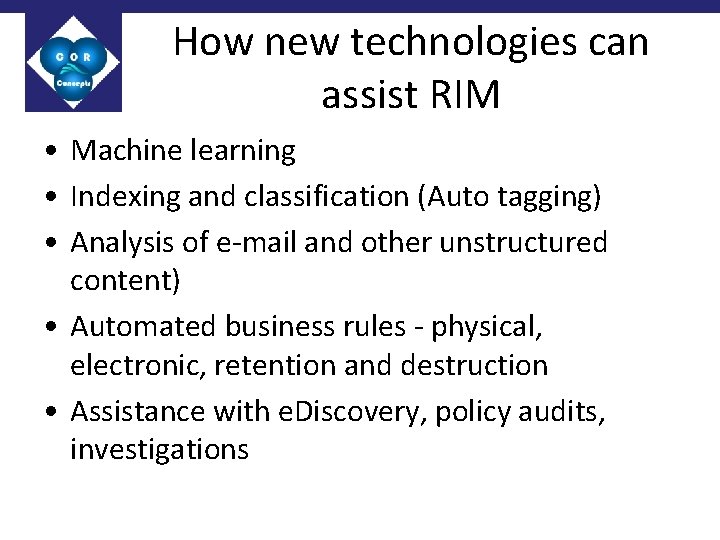
How new technologies can assist RIM • Machine learning • Indexing and classification (Auto tagging) • Analysis of e-mail and other unstructured content) • Automated business rules - physical, electronic, retention and destruction • Assistance with e. Discovery, policy audits, investigations
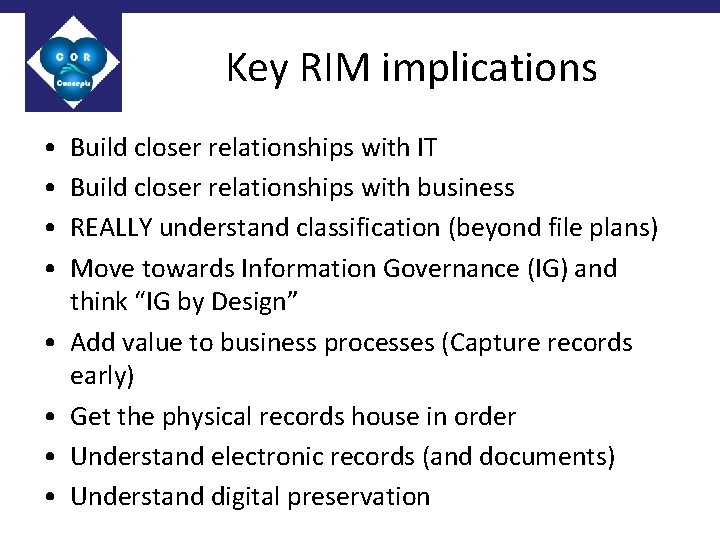
Key RIM implications • • Build closer relationships with IT Build closer relationships with business REALLY understand classification (beyond file plans) Move towards Information Governance (IG) and think “IG by Design” Add value to business processes (Capture records early) Get the physical records house in order Understand electronic records (and documents) Understand digital preservation
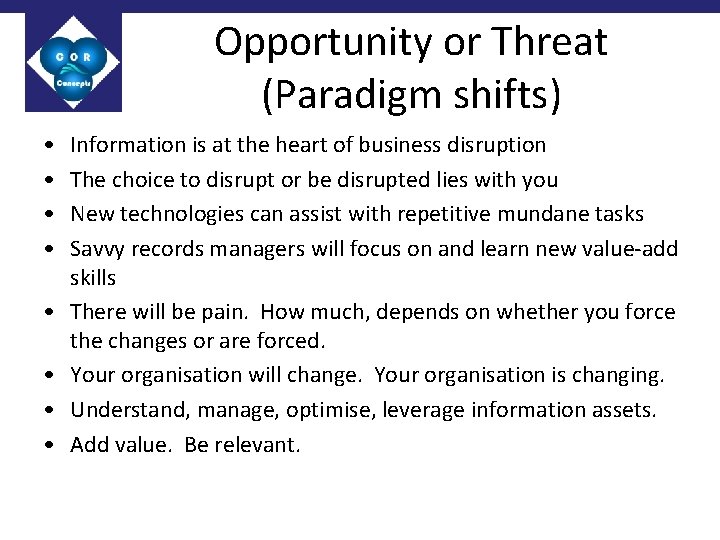
Opportunity or Threat (Paradigm shifts) • • Information is at the heart of business disruption The choice to disrupt or be disrupted lies with you New technologies can assist with repetitive mundane tasks Savvy records managers will focus on and learn new value-add skills There will be pain. How much, depends on whether you force the changes or are forced. Your organisation will change. Your organisation is changing. Understand, manage, optimise, leverage information assets. Add value. Be relevant.
Thank you Paul Mullon paulm@corconcepts. co. za 0832736087