
Records Management and Open Government PRESENTED BY ANDREW
Records Management and Open Government PRESENTED BY ANDREW GLASS, GOVERNMENT INFORMATION ANALYST DECEMBER 2019
https: //www. tsl. texas. gov/slrm 512 -463 -7610 slrminfo@tsl. texas. gov

Three Pillars of Open Government Public Information Act (Gov. Code Chapter 552) Open Meetings Act (Gov. Code Chapter 551) Local Government Records Act (Local Gov. Code Chapters 201205)
“The application of management techniques to the creation, use, maintenance, retention, preservation, and disposal of records for the purposes of reducing the costs and improving the efficiency of recordkeeping. ” LGC § 201. 003 Gov. Code § 441. 180
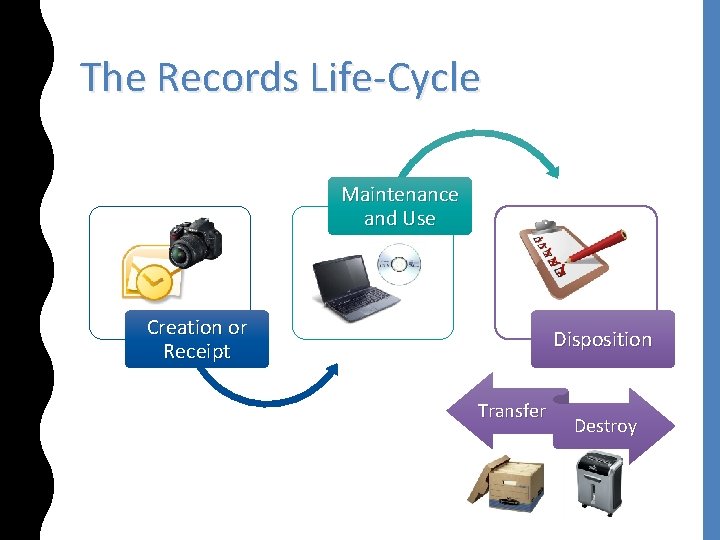
The Records Life-Cycle Maintenance and Use Creation or Receipt Disposition Transfer Destroy
Benefits of Records Management • Legal requirement and protection • Workflow efficiency • Timely disposition • Cost reduction • Protection of essential records
Some Consequences of Not Managing Records • Legal risk • Longer retrieval times • Higher costs • Ongoing obligation to protect records • Potential criminal penalties • Negative perception
State Records Management Laws • Definitions • Roles & responsibilities – TSLAC • State Records Administrator • State Archivist – State Agency • Agency Head • Records Management Officer
Local Government Records Act • Definitions • Local authority • Role of RMO • Compliance requirements
COMPLIANCE Local Governments are required by law to file with TSLAC: • A records management policy • Designation of a Records Management Officer (RMO) • Declaration of Compliance
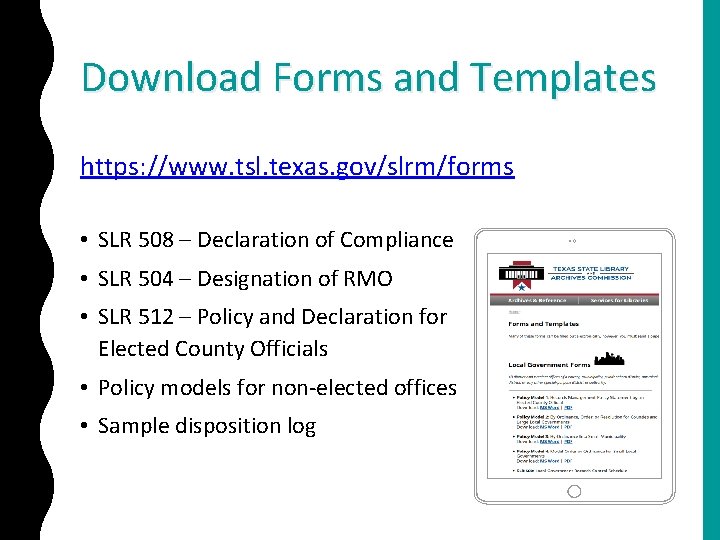
Download Forms and Templates https: //www. tsl. texas. gov/slrm/forms • SLR 508 – Declaration of Compliance • SLR 504 – Designation of RMO • SLR 512 – Policy and Declaration for Elected County Officials • Policy models for non-elected offices • Sample disposition log
A Government Record: • Documents the transaction of public business • Is created or received by a local government • Is a record whether it is open or closed • May exist in any medium LGC § 201. 003 Gov. Code § 441. 180
Non-Records Convenience Copies Blank Forms and Stocks of Publications Library or Museum Materials Alternative Dispute Resolution Working Files
A Retention Schedule: • Lists all records series with mandatory minimum retention periods. • Schedules are media-neutral. • Benefits: o Comply with laws and provide legal protection. o Convey retention rules to agency staff. o Identify, secure, and protect vital records.
TSLAC Local Retention Schedules CC Records of County Clerks DC Records of District Clerks EL Records of Elections and Voter Registration GR Records Common to All Local Governments HR Records of Public Health Agencies JC Records of Public Junior Colleges LC Records of Justice and Municipal Courts PS Records of Public Safety Agencies (Police, Fire, EMS, ME, etc. ) PW Records of Public Works and Other Government Services SD Records of Public School Districts TX Records of Property Taxation UT Records of Utility Services
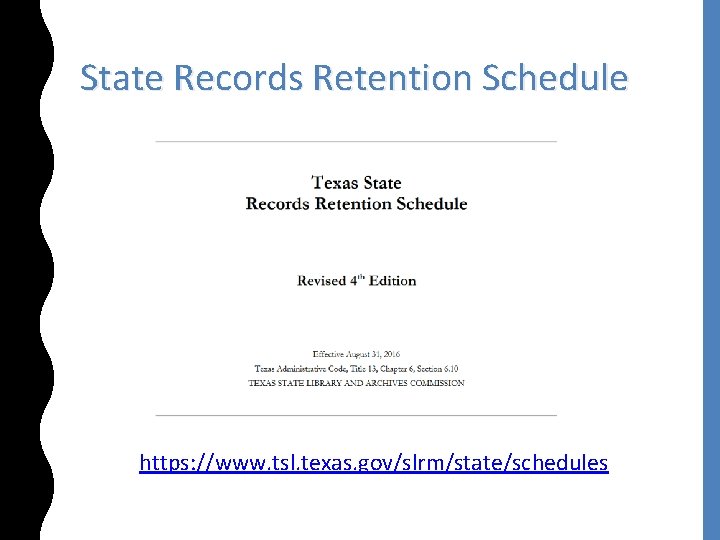
State Records Retention Schedule https: //www. tsl. texas. gov/slrm/state/schedules
Managing Email Records • Email is a format, not a type of record. • Determine retention by the content of the email. – Same criteria as paper records. • Includes email sent on personal devices or in personal accounts if they document the transaction of government business.
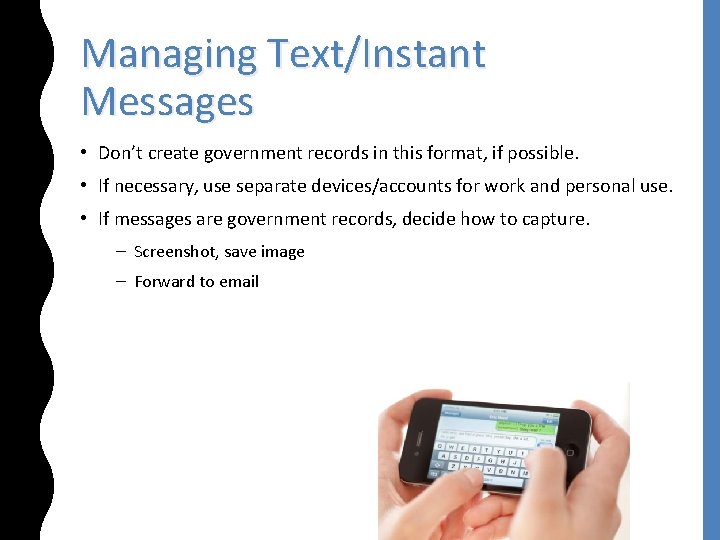
Managing Text/Instant Messages • Don’t create government records in this format, if possible. • If necessary, use separate devices/accounts for work and personal use. • If messages are government records, decide how to capture. – Screenshot, save image – Forward to email
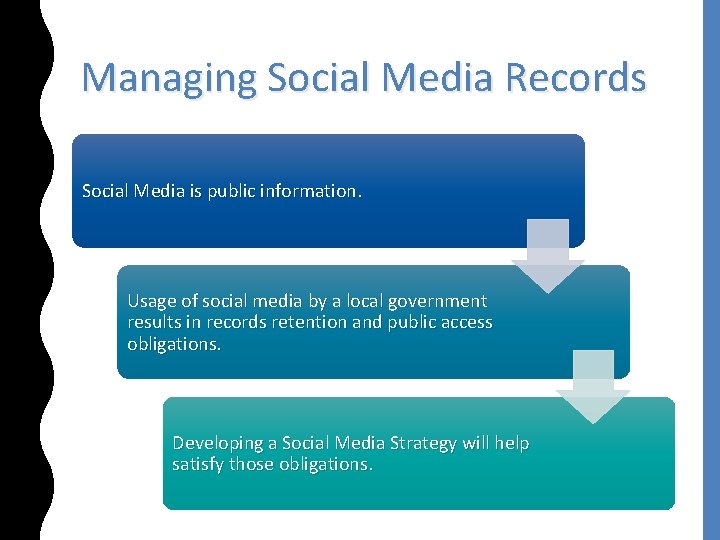
Managing Social Media Records Social Media is public information. Usage of social media by a local government results in records retention and public access obligations. Developing a Social Media Strategy will help satisfy those obligations.
Electronic Records Standards and Procedures Bulletins • Minimum requirements for all e-records. • Additional requirements for archival, permanent and vital e-records. For state agencies • Bulletin 1: Electronic Records Standards and Procedures (TAC 6. 91 -6. 98) – Guidance and resources for fulfilling requirements: https: //www. tsl. texas. gov/slrm/pubs/bulletin 1 resources For local governments • Bulletin B: Electronic Records Standards and Procedures – Laws (LGC Chapter 205) + Rules (13 TAC §§ 7. 71 -7. 79)
DISPOSITION “A comprehensive term that includes destruction as well as other actions, such as the transfer of permanent records. ” – National Archives and Records Administration (NARA)
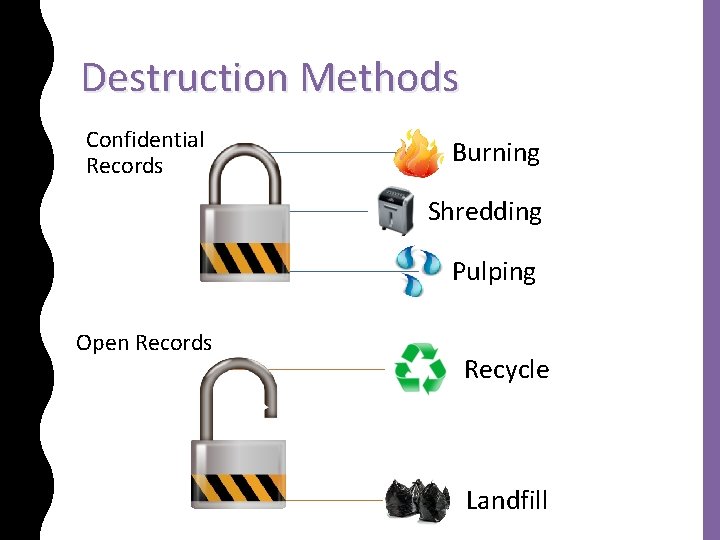
Destruction Methods Confidential Records Burning Shredding Pulping Open Records Recycle Landfill
Before Destroying Records • Has the record met the retention period? • Are there any copies? • Is there a destruction hold? • Did I receive internal approval? • Do I have a disposition log? Ask yourself…
Types of Destruction Holds • Litigation • Public Information Request • Audit • Claim • Negotiation
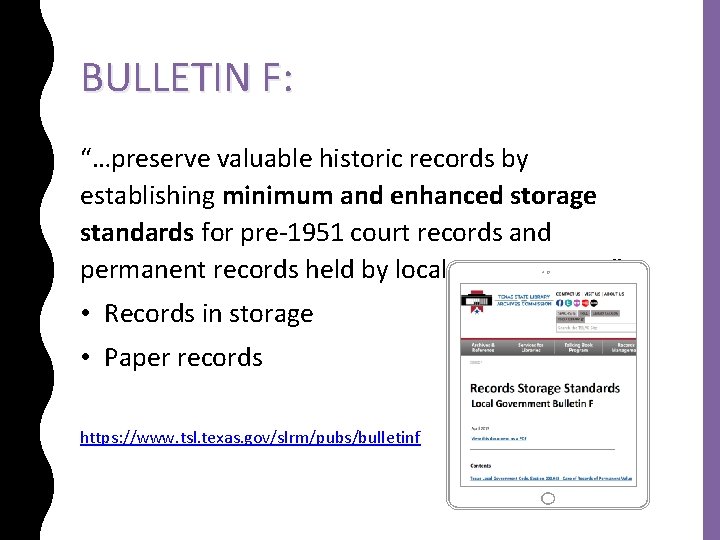
BULLETIN F: “…preserve valuable historic records by establishing minimum and enhanced storage standards for pre-1951 court records and permanent records held by local governments. ” • Records in storage • Paper records https: //www. tsl. texas. gov/slrm/pubs/bulletinf
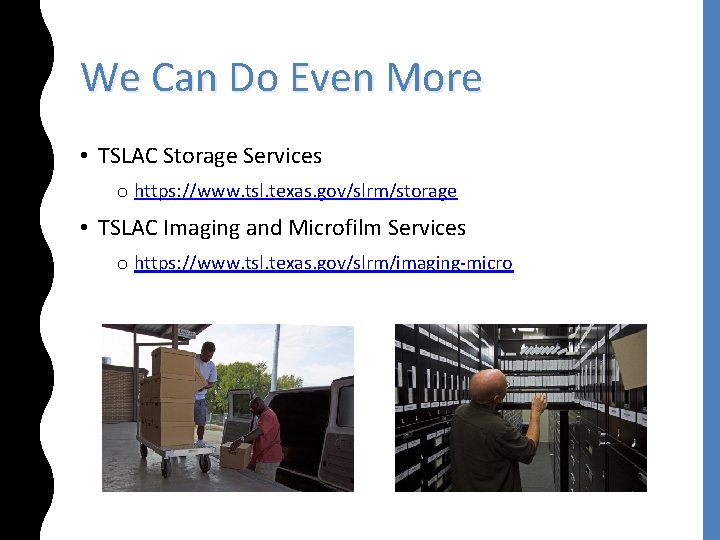
We Can Do Even More • TSLAC Storage Services o https: //www. tsl. texas. gov/slrm/storage • TSLAC Imaging and Microfilm Services o https: //www. tsl. texas. gov/slrm/imaging-micro
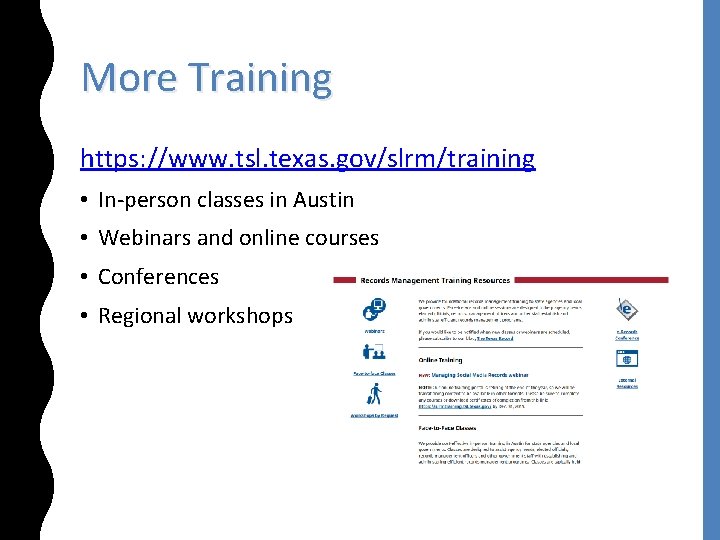
More Training https: //www. tsl. texas. gov/slrm/training • In-person classes in Austin • Webinars and online courses • Conferences • Regional workshops
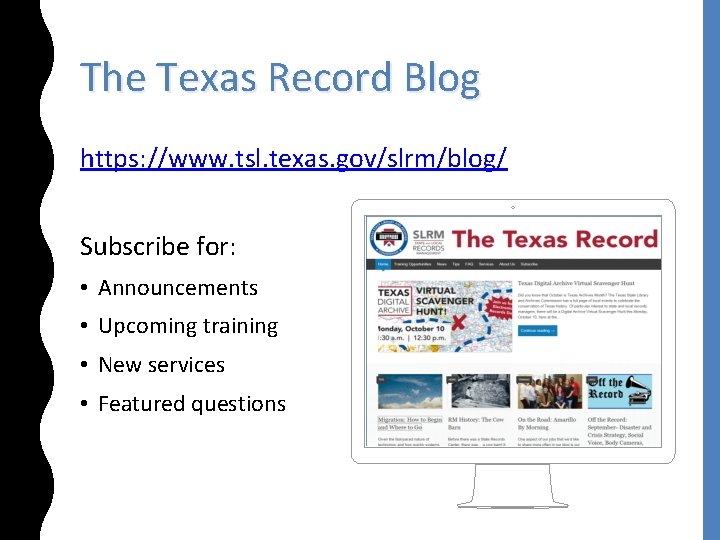
The Texas Record Blog https: //www. tsl. texas. gov/slrm/blog/ Subscribe for: • Announcements • Upcoming training • New services • Featured questions
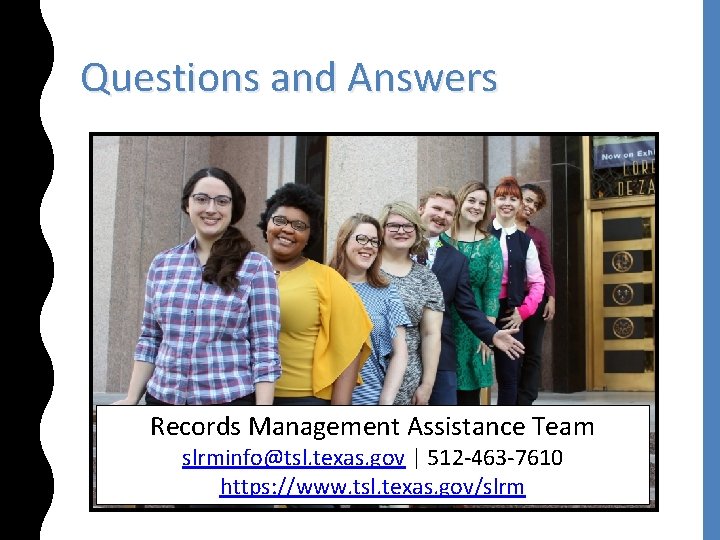
Questions and Answers Records Management Assistance Team slrminfo@tsl. texas. gov | 512 -463 -7610 https: //www. tsl. texas. gov/slrm
- Slides: 29