
Record Use in the Medical Expenditure Panel Survey
- Slides: 23
Record Use in the Medical Expenditure Panel Survey Jeffrey Rhoades, Ph. D AHRQ/CFACT/DSO jeffrey. rhoades@ahrq. hhs. gov
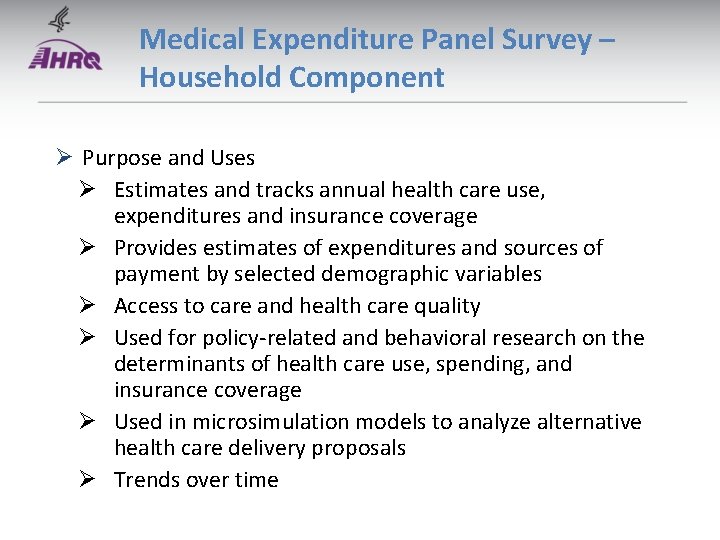
Medical Expenditure Panel Survey – Household Component Ø Purpose and Uses Ø Estimates and tracks annual health care use, expenditures and insurance coverage Ø Provides estimates of expenditures and sources of payment by selected demographic variables Ø Access to care and health care quality Ø Used for policy-related and behavioral research on the determinants of health care use, spending, and insurance coverage Ø Used in microsimulation models to analyze alternative health care delivery proposals Ø Trends over time
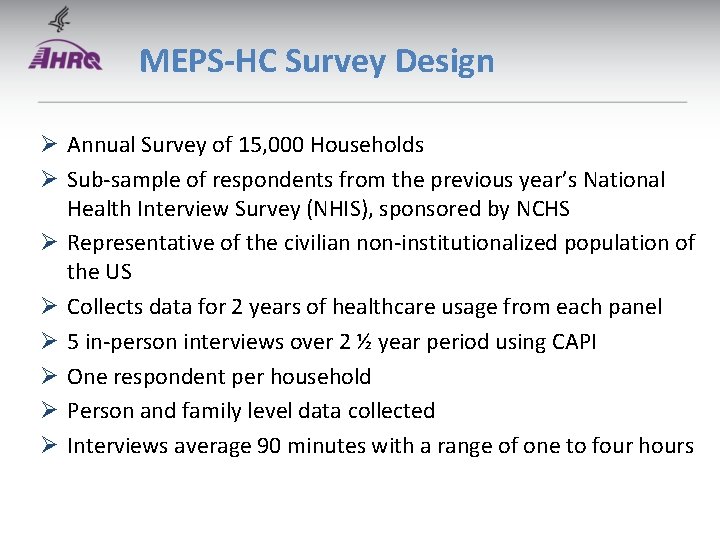
MEPS-HC Survey Design Ø Annual Survey of 15, 000 Households Ø Sub-sample of respondents from the previous year’s National Health Interview Survey (NHIS), sponsored by NCHS Ø Representative of the civilian non-institutionalized population of the US Ø Collects data for 2 years of healthcare usage from each panel Ø 5 in-person interviews over 2 ½ year period using CAPI Ø One respondent per household Ø Person and family level data collected Ø Interviews average 90 minutes with a range of one to four hours
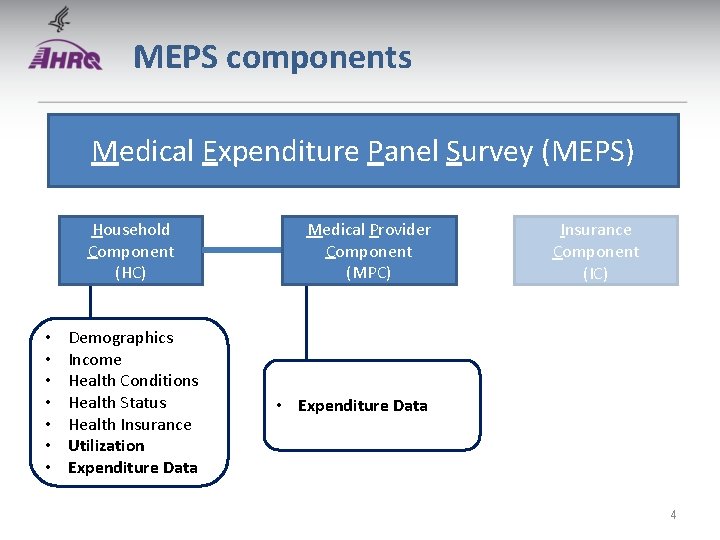
MEPS components Medical Expenditure Panel Survey (MEPS) Household Component (HC) • • Demographics Income Health Conditions Health Status Health Insurance Utilization Expenditure Data Medical Provider Component (MPC) Insurance Component (IC) • Expenditure Data 4
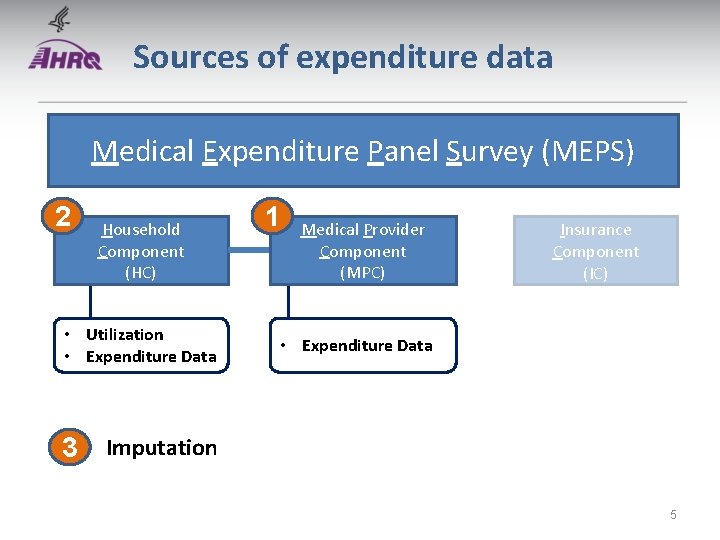
Sources of expenditure data Medical Expenditure Panel Survey (MEPS) 2 Household Component (HC) • Utilization • Expenditure Data 3 1 Medical Provider Component (MPC) Insurance Component (IC) • Expenditure Data Imputation 5
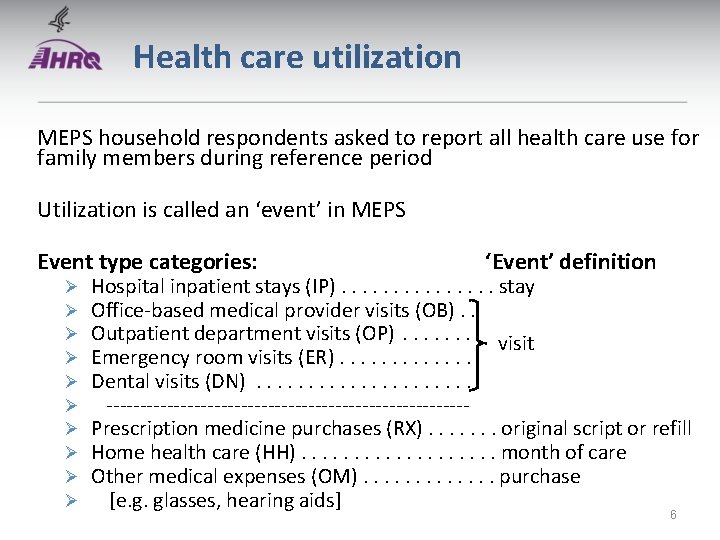
Health care utilization MEPS household respondents asked to report all health care use for family members during reference period Utilization is called an ‘event’ in MEPS Event type categories: Ø Ø Ø Ø Ø ‘Event’ definition Hospital inpatient stays (IP). . . . stay Office-based medical provider visits (OB). . Outpatient department visits (OP). . . . visit Emergency room visits (ER). . . Dental visits (DN). . . . . ---------------------------Prescription medicine purchases (RX). . . . original script or refill Home health care (HH). . . . . month of care Other medical expenses (OM). . . purchase [e. g. glasses, hearing aids] 6
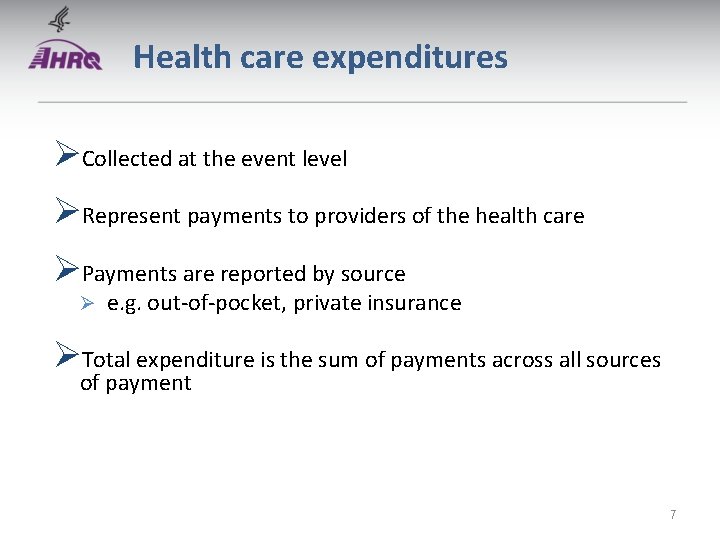
Health care expenditures ØCollected at the event level ØRepresent payments to providers of the health care ØPayments are reported by source Ø e. g. out-of-pocket, private insurance ØTotal expenditure is the sum of payments across all sources of payment 7
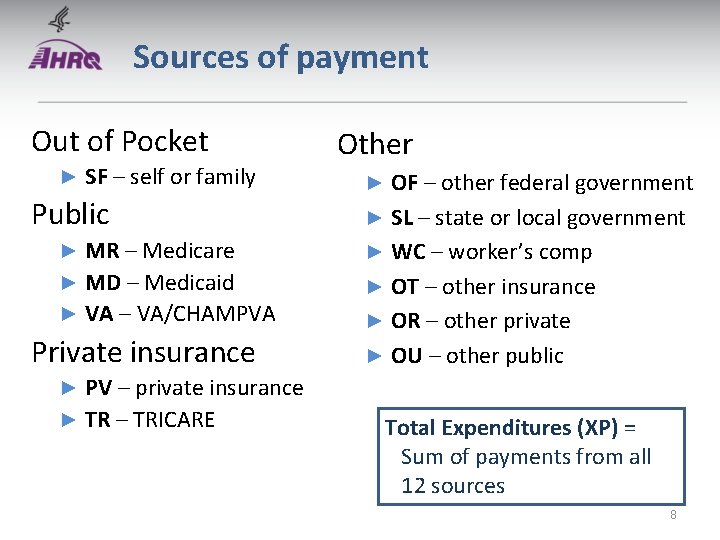
Sources of payment Out of Pocket ► SF – self or family Public MR – Medicare ► MD – Medicaid ► VA – VA/CHAMPVA ► Private insurance PV – private insurance ► TR – TRICARE Other OF – other federal government ► SL – state or local government ► WC – worker’s comp ► OT – other insurance ► OR – other private ► OU – other public ► ► Total Expenditures (XP) = Sum of payments from all 12 sources 8
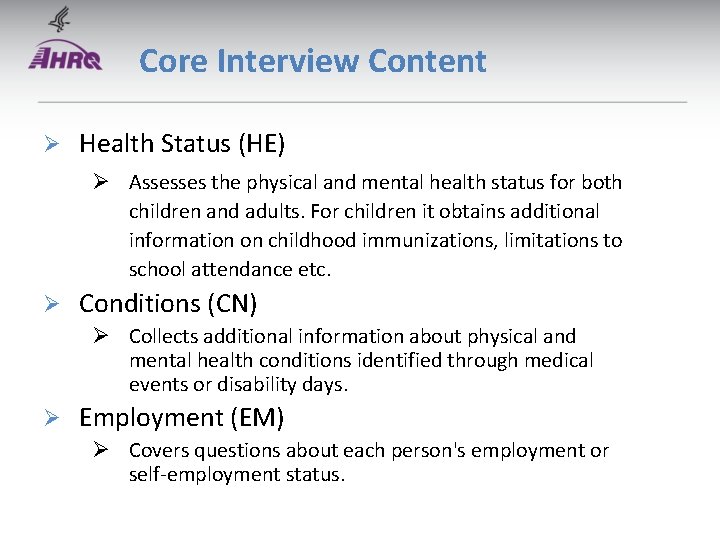
Core Interview Content Ø Health Status (HE) Ø Assesses the physical and mental health status for both children and adults. For children it obtains additional information on childhood immunizations, limitations to school attendance etc. Ø Conditions (CN) Ø Collects additional information about physical and mental health conditions identified through medical events or disability days. Ø Employment (EM) Ø Covers questions about each person's employment or self-employment status.
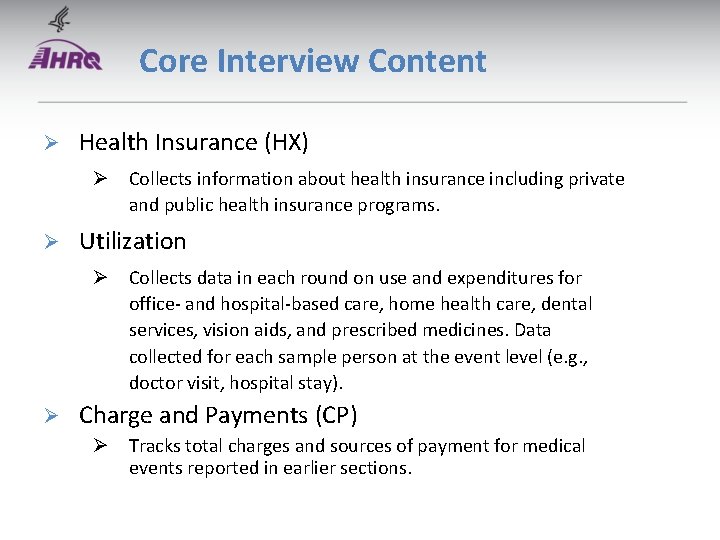
Core Interview Content Ø Health Insurance (HX) Ø Collects information about health insurance including private and public health insurance programs. Ø Utilization Ø Collects data in each round on use and expenditures for office- and hospital-based care, home health care, dental services, vision aids, and prescribed medicines. Data collected for each sample person at the event level (e. g. , doctor visit, hospital stay). Ø Charge and Payments (CP) Ø Tracks total charges and sources of payment for medical events reported in earlier sections.
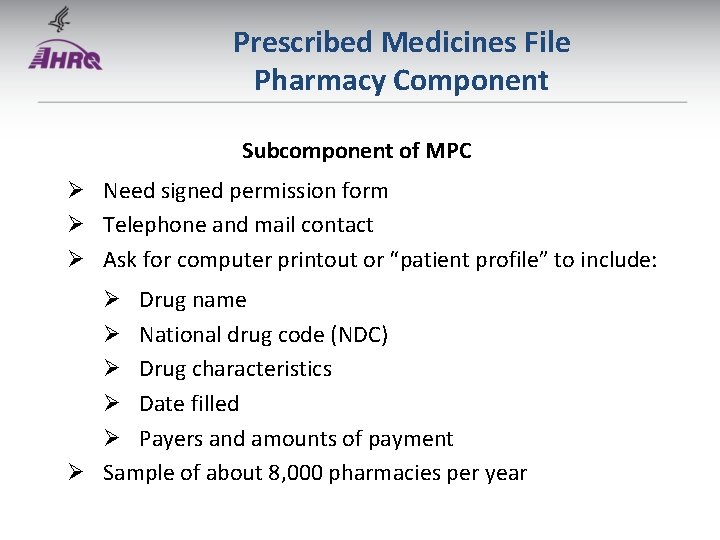
Prescribed Medicines File Pharmacy Component Subcomponent of MPC Ø Need signed permission form Ø Telephone and mail contact Ø Ask for computer printout or “patient profile” to include: Ø Drug name Ø National drug code (NDC) Ø Drug characteristics Ø Date filled Ø Payers and amounts of payment Ø Sample of about 8, 000 pharmacies per year
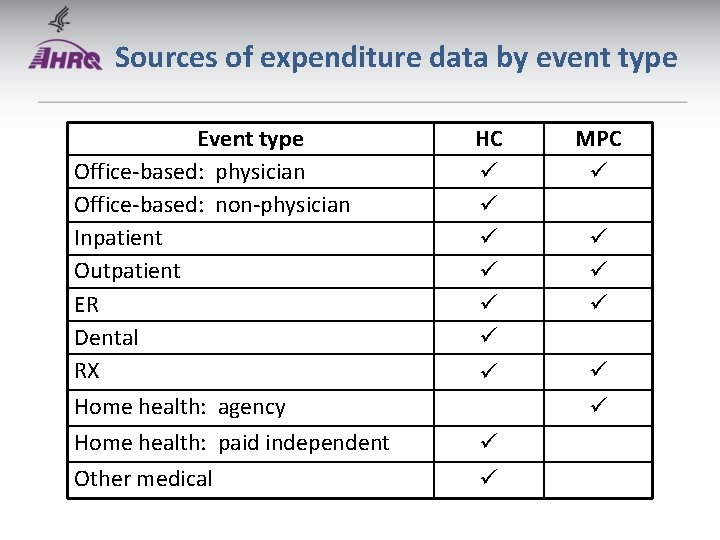
Sources of expenditure data by event type Event type Office-based: physician Office-based: non-physician Inpatient Outpatient ER Dental RX Home health: agency Home health: paid independent Other medical HC MPC
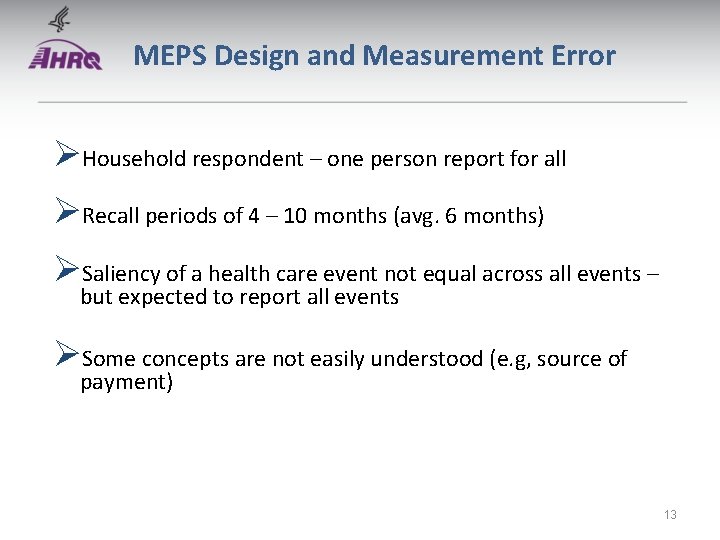
MEPS Design and Measurement Error ØHousehold respondent – one person report for all ØRecall periods of 4 – 10 months (avg. 6 months) ØSaliency of a health care event not equal across all events – but expected to report all events ØSome concepts are not easily understood (e. g, source of payment) 13
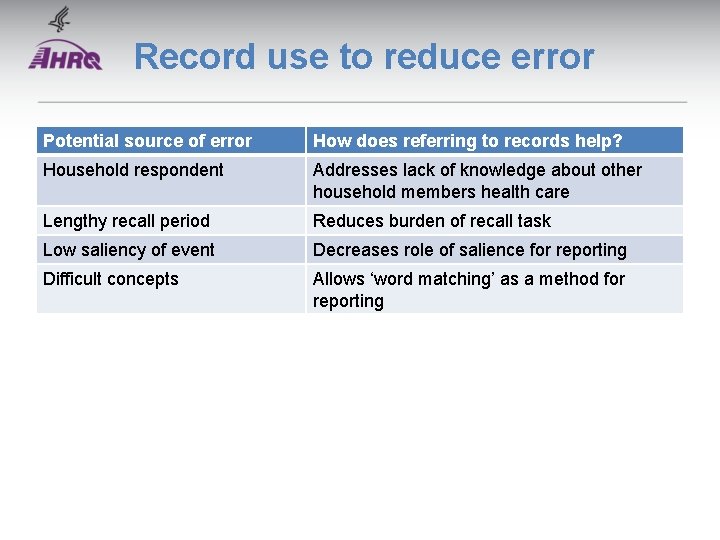
Record use to reduce error Potential source of error How does referring to records help? Household respondent Addresses lack of knowledge about other household members health care Lengthy recall period Reduces burden of recall task Low saliency of event Decreases role of salience for reporting Difficult concepts Allows ‘word matching’ as a method for reporting
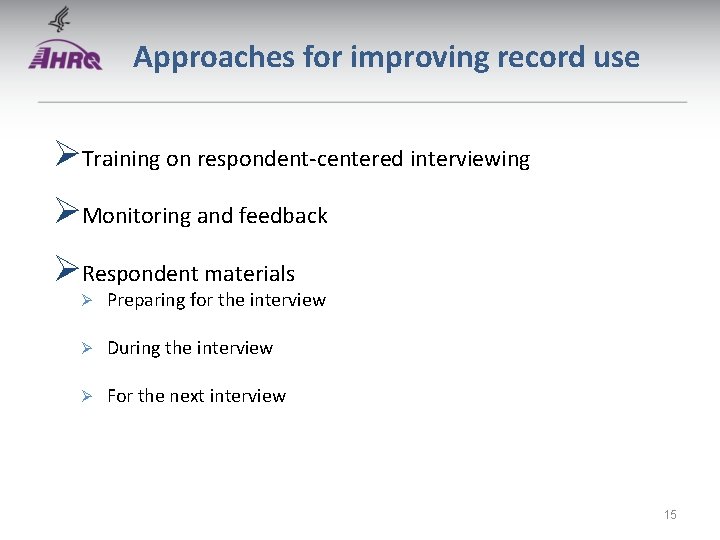
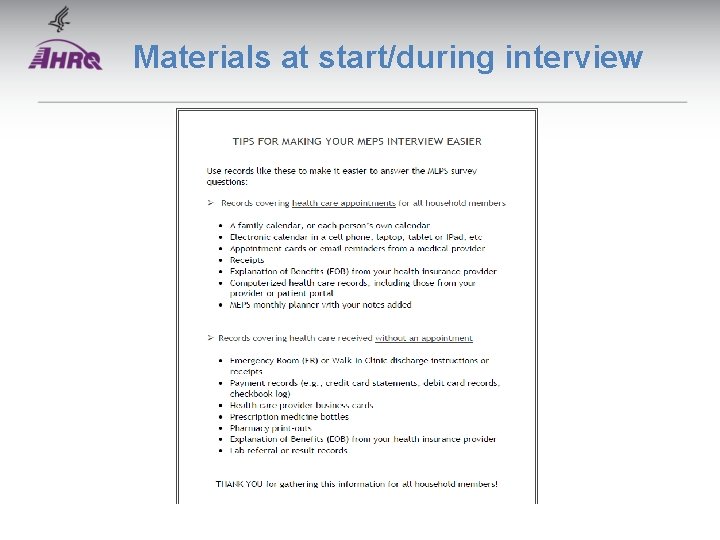
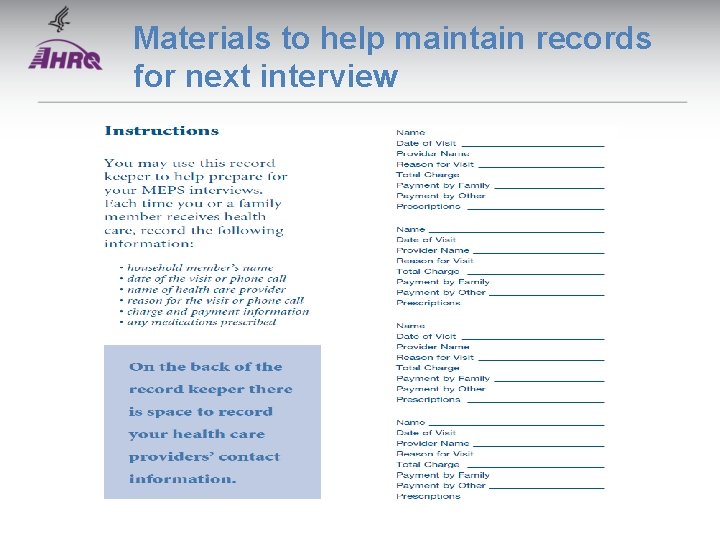
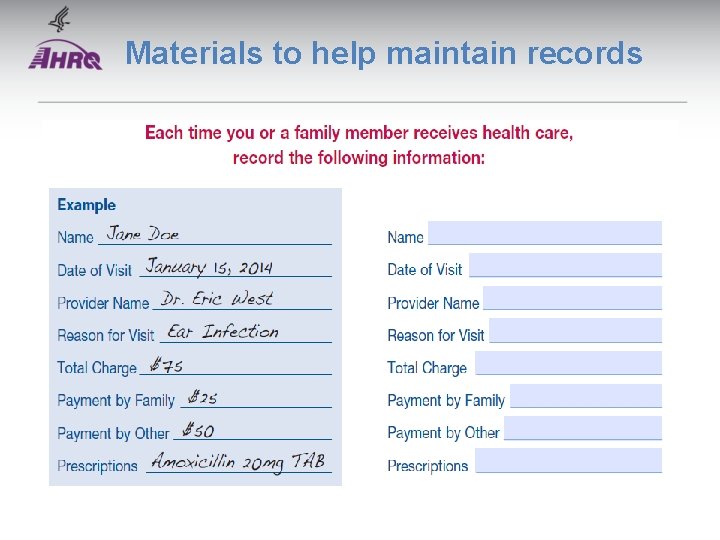
Approaches for improving record use ØTraining on respondent-centered interviewing ØMonitoring and feedback ØRespondent materials Ø Preparing for the interview Ø During the interview Ø For the next interview 15
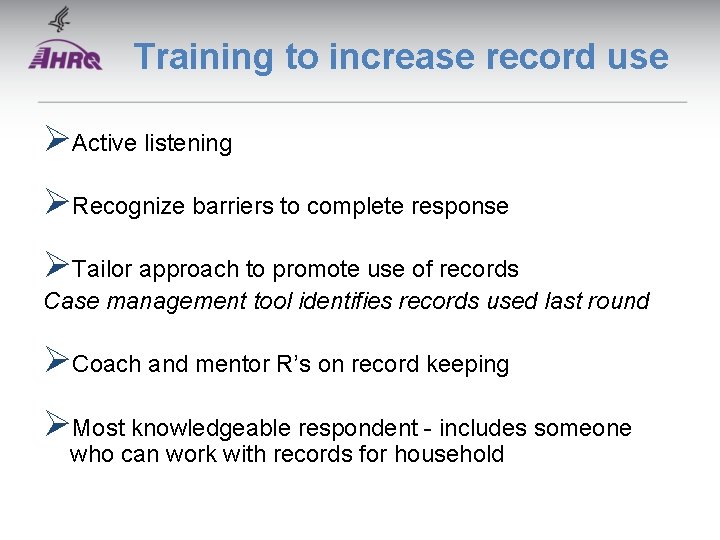
Training to increase record use ØActive listening ØRecognize barriers to complete response ØTailor approach to promote use of records Case management tool identifies records used last round ØCoach and mentor R’s on record keeping ØMost knowledgeable respondent - includes someone who can work with records for household
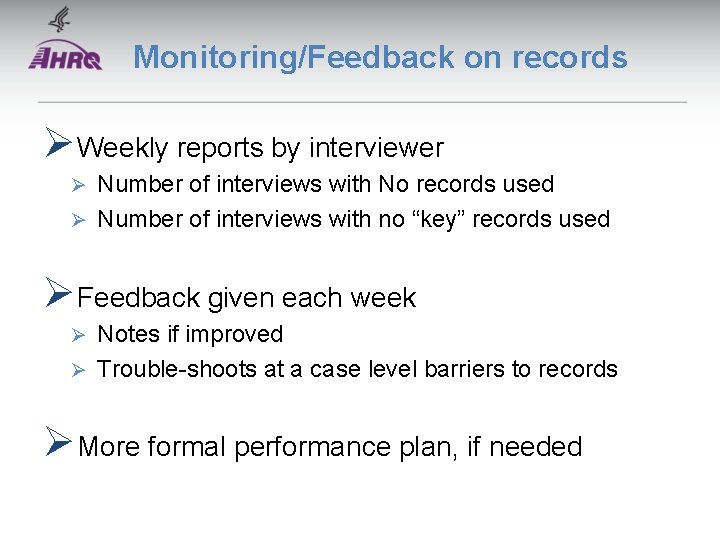
Monitoring/Feedback on records ØWeekly reports by interviewer Number of interviews with No records used Ø Number of interviews with no “key” records used Ø ØFeedback given each week Notes if improved Ø Trouble-shoots at a case level barriers to records Ø ØMore formal performance plan, if needed
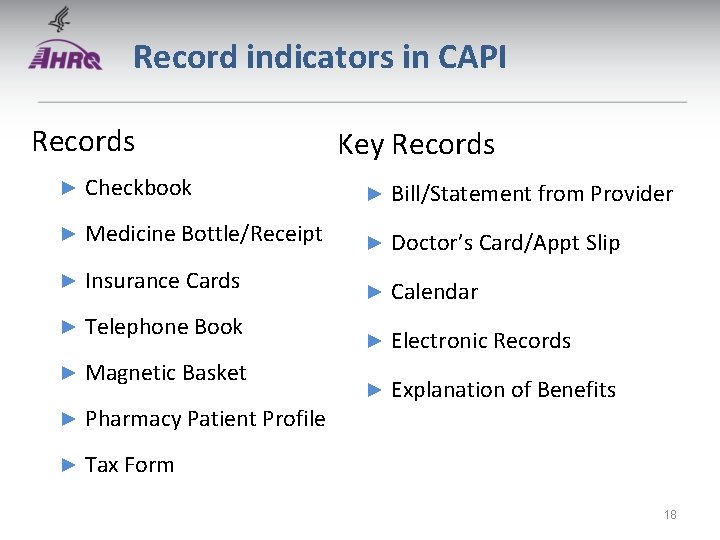
Record indicators in CAPI Records Key Records ► Checkbook ► Bill/Statement from Provider ► Medicine Bottle/Receipt ► Doctor’s Card/Appt Slip ► Insurance Cards ► Calendar ► Telephone Book ► Electronic Records ► Magnetic Basket ► ► Pharmacy Patient Profile Explanation of Benefits ► Tax Form 18
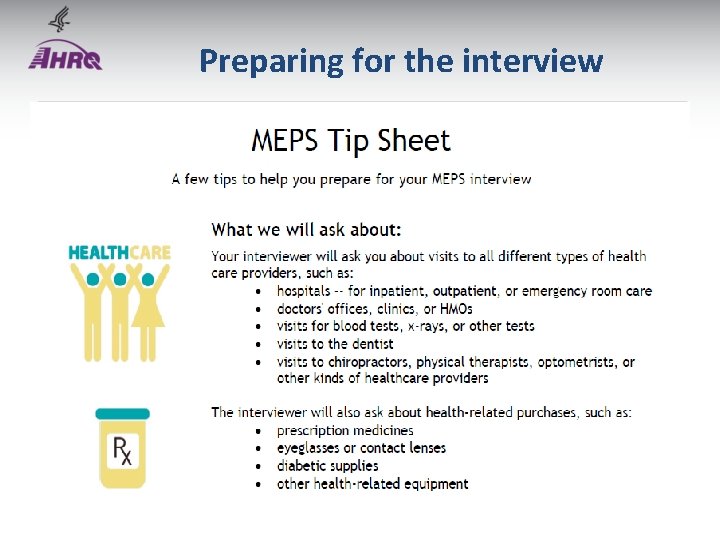
Preparing for the interview
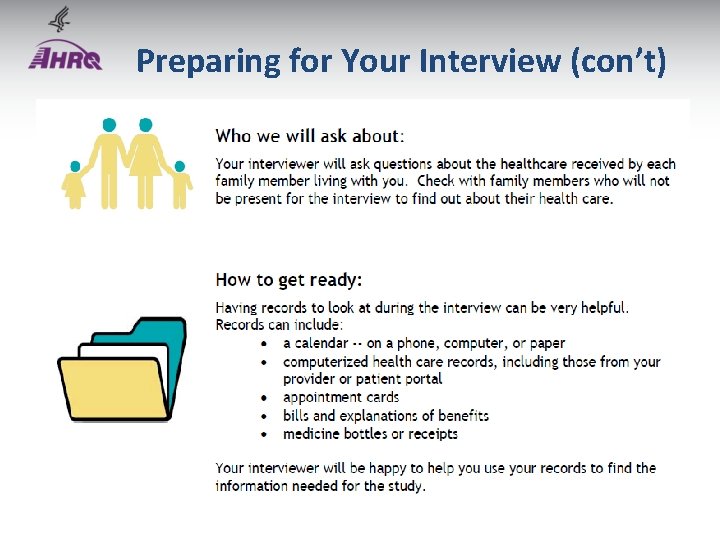
Preparing for Your Interview (con’t)
Materials at start/during interview
Materials to help maintain records for next interview
Materials to help maintain records