
Reconstruction of the 1755 Earthquake Mc Gill University







- Slides: 25
Reconstruction of the 1755 Earthquake Mc. Gill University 2011 F-X Capelle – Eric Munro – Adrien Iredale
Table of Content • 1) Reconstruction based on geophysical data • Tectonic setting • Generated tsunami wave • 2) Local destruction and aftershocks • Post 1755 earthquakes • 1 st interests in seismology • 3) Impact on European culture and society • Colonial ambitions restricted • Cultural repercussions
Part 1 – Reconstruction of 1755 earthquake based on geophysical data
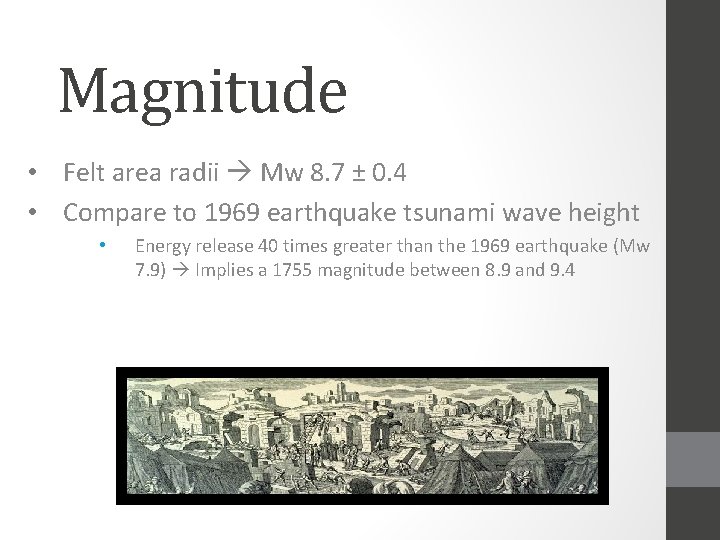
Magnitude • Felt area radii Mw 8. 7 ± 0. 4 • Compare to 1969 earthquake tsunami wave height • Energy release 40 times greater than the 1969 earthquake (Mw 7. 9) Implies a 1755 magnitude between 8. 9 and 9. 4
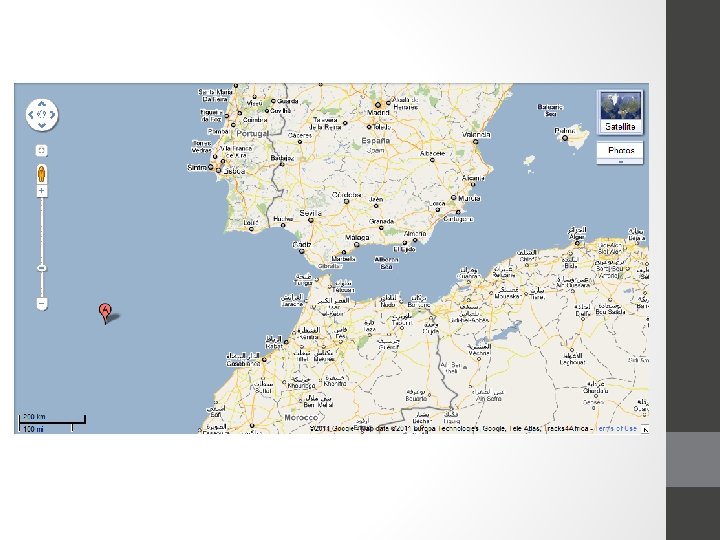
The Tectonic Setting
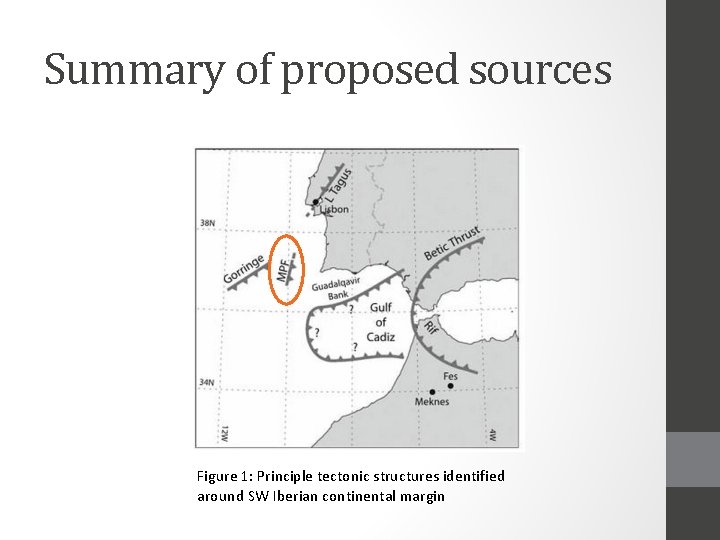
Summary of proposed sources Figure 1: Principle tectonic structures identified around SW Iberian continental margin
Duration and Complexity – Ground Motion Figure 2 – Reported Durations of the 1755 mainshock
Macroseismic Field Figure 3 – Macroseismic MSK intensities of the 1755 mainshock
Farfield long period affects • Malaga: “tops of high buildings fell” • Milan and Amsterdam: “oscillating chandeliers from cathedral roofs” • Across Holland Germany: “many rivers and canals were sent into pronounced oscillation” • Scotland: “water levels rose and fell 0. 8 m for a period of 10 minutes”… “so violent to threaten destruction to some houses built on lake shores”
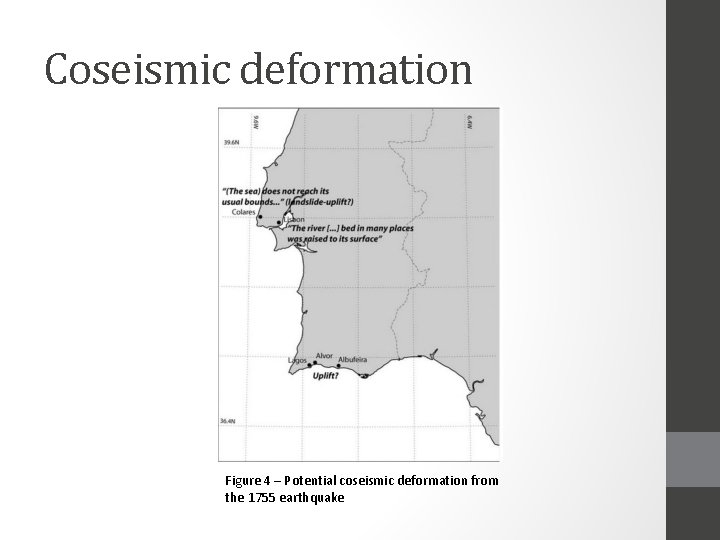
Coseismic deformation Figure 4 – Potential coseismic deformation from the 1755 earthquake
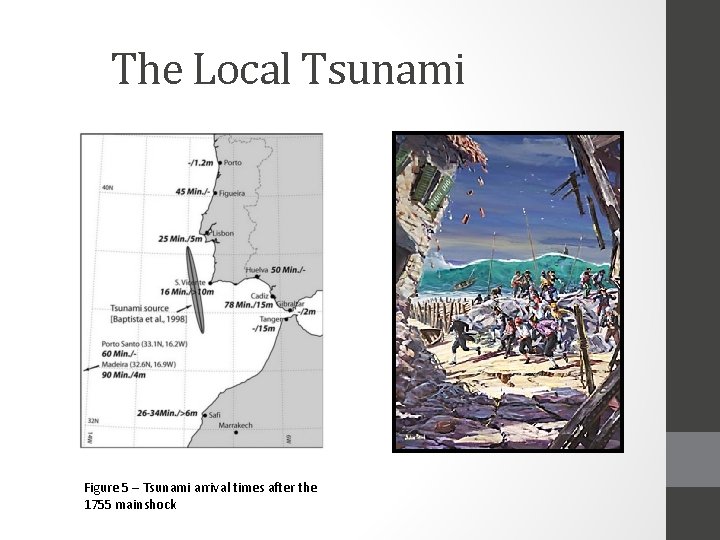
The Local Tsunami Figure 5 – Tsunami arrival times after the 1755 mainshock
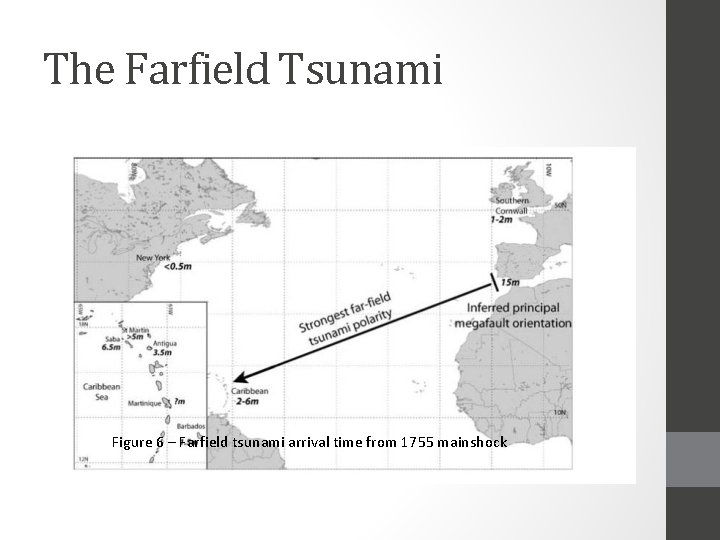
The Farfield Tsunami Figure 6 – Farfield tsunami arrival time from 1755 mainshock
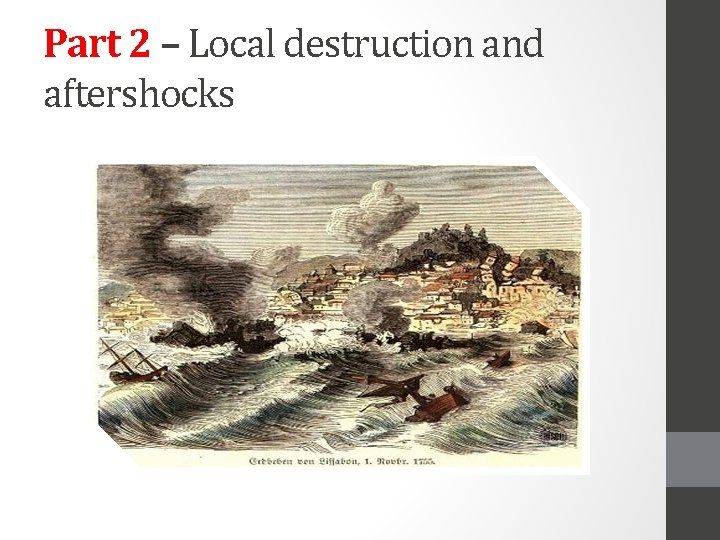
Part 2 – Local destruction and aftershocks
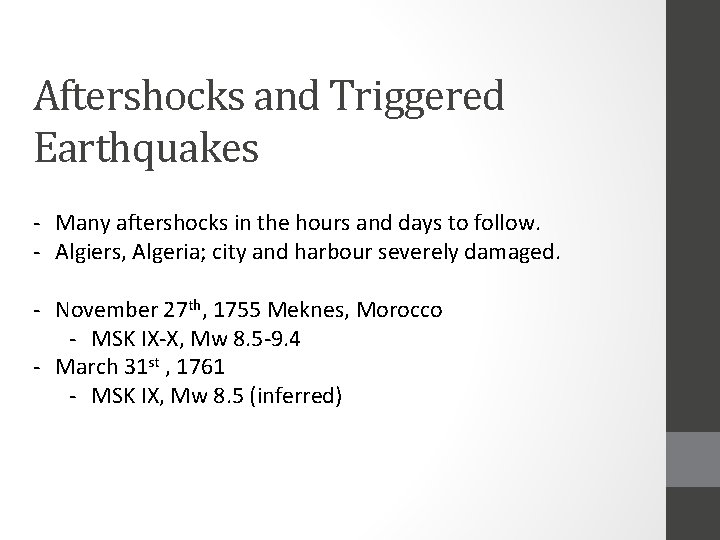
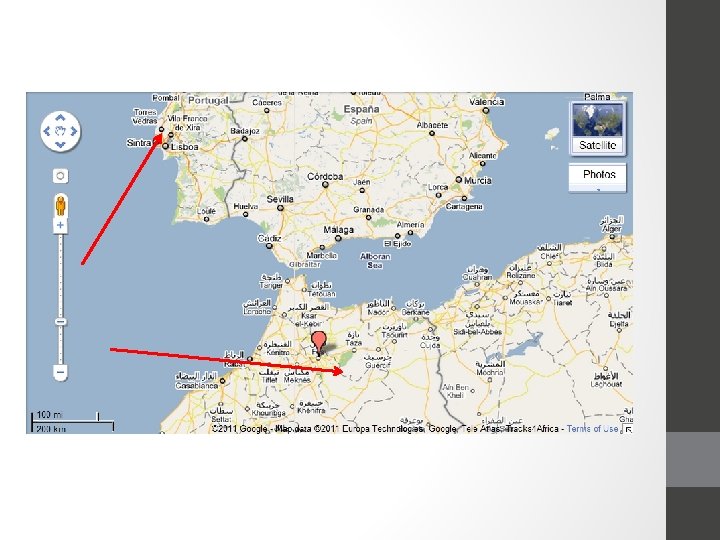
Aftershocks and Triggered Earthquakes - Many aftershocks in the hours and days to follow. - Algiers, Algeria; city and harbour severely damaged. - November 27 th, 1755 Meknes, Morocco - MSK IX-X, Mw 8. 5 -9. 4 - March 31 st , 1761 - MSK IX, Mw 8. 5 (inferred)
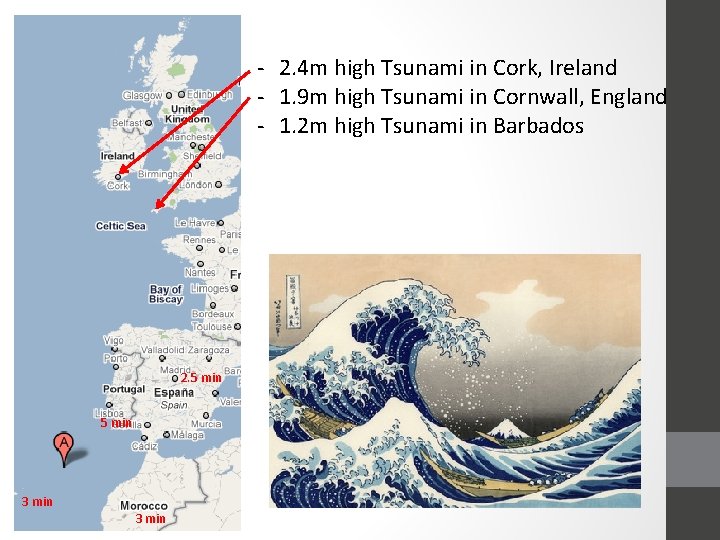
- 2. 4 m high Tsunami in Cork, Ireland - 1. 9 m high Tsunami in Cornwall, England - 1. 2 m high Tsunami in Barbados 2. 5 min 3 min
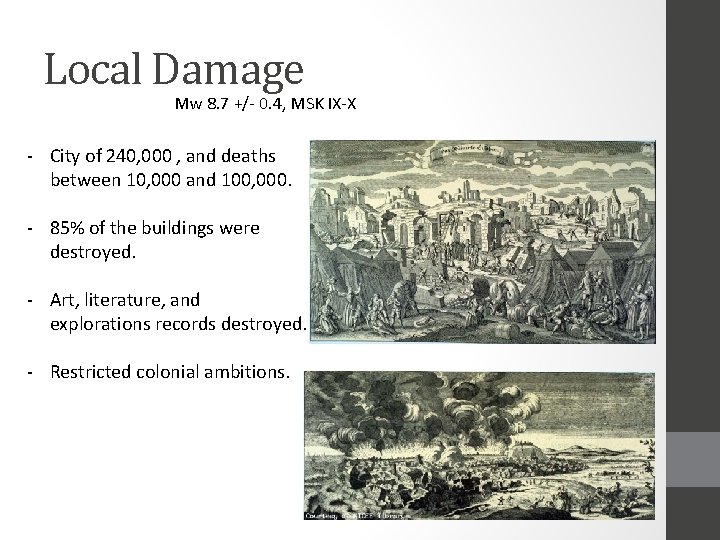
Local Damage Mw 8. 7 +/- 0. 4, MSK IX-X - City of 240, 000 , and deaths between 10, 000 and 100, 000. - 85% of the buildings were destroyed. - Art, literature, and explorations records destroyed. - Restricted colonial ambitions.
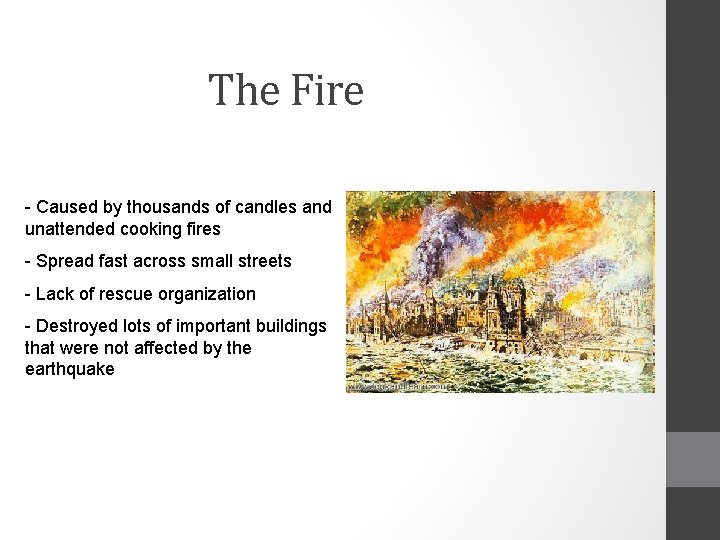
The Fire - Caused by thousands of candles and unattended cooking fires - Spread fast across small streets - Lack of rescue organization - Destroyed lots of important buildings that were not affected by the earthquake
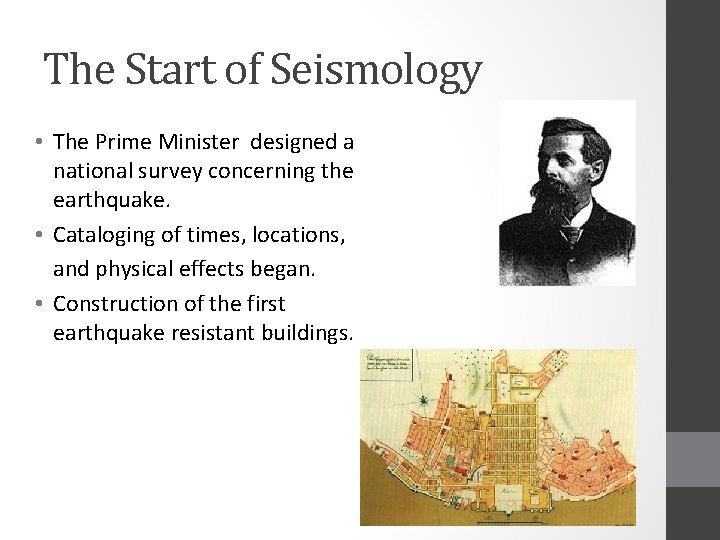
The Start of Seismology • The Prime Minister designed a national survey concerning the earthquake. • Cataloging of times, locations, and physical effects began. • Construction of the first earthquake resistant buildings.
Part 3 – Impact on European culture and society
Loss of Colonial Presence - Economic effort went to re-building coastal cities, not colonies. - Loss of grounds in colonies, later defeats against Spain.
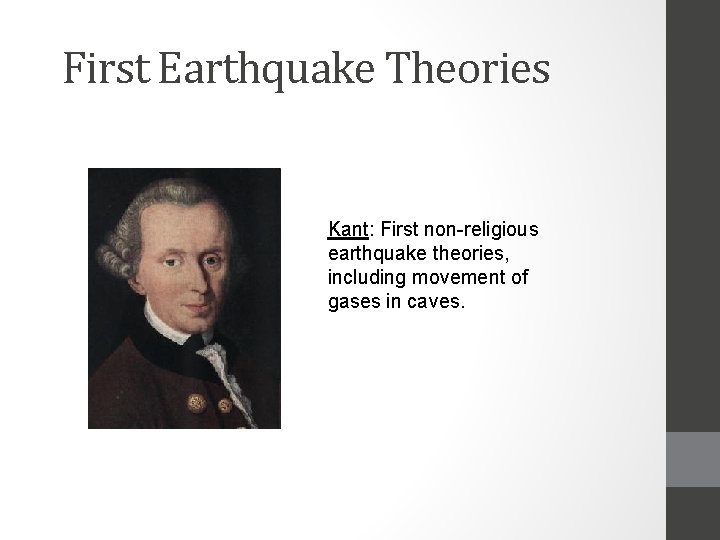
First Earthquake Theories Kant: First non-religious earthquake theories, including movement of gases in caves.
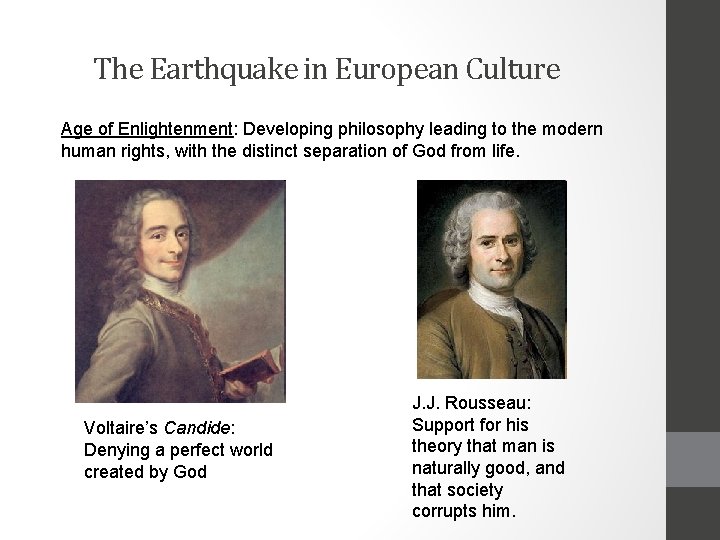
The Earthquake in European Culture Age of Enlightenment: Developing philosophy leading to the modern human rights, with the distinct separation of God from life. Voltaire’s Candide: Denying a perfect world created by God J. J. Rousseau: Support for his theory that man is naturally good, and that society corrupts him.
References - R. A. Hindson, C. Andrade (1999), Sedimentation and hydrodynamicprocesses associated with the tsunami generated by the 1755 Lisbon earthquake, Quaternary International, Vol. 56, pp 27 -38 • - A. C. Johnson (1996), Seismic moment assessment of earthquakes in stable continental regions —III. New Madrid 1811 -1812, Charleston 1886 and Lisbon 1755, Geophysical Journal International, Vol. 126, pp. 314 -344 • - J. T. Kozak, C. D. James (1998), Historical depictions of the 1755 Lisbon Earthquake, NISEE, University of Berkeley. • - N. Zitinelli, F. Chierici, R. Sartori and L. Torelli (1999), The tectonic source of the 1755 Lisbon earthquake and tsunami, Annali de geofisica, Vol. 42, pp. 49 -55