
Reconstruction Era 1865 1870s The name of the

- Slides: 29
Reconstruction Era 1865 -1870’s • The name of the post Civil War years where the Southern States were admitted back into the Union and the Federal Government looked for ways to enfranchise newly freed slaves th • 13 Amendment (1865) prohibits slavery in the US
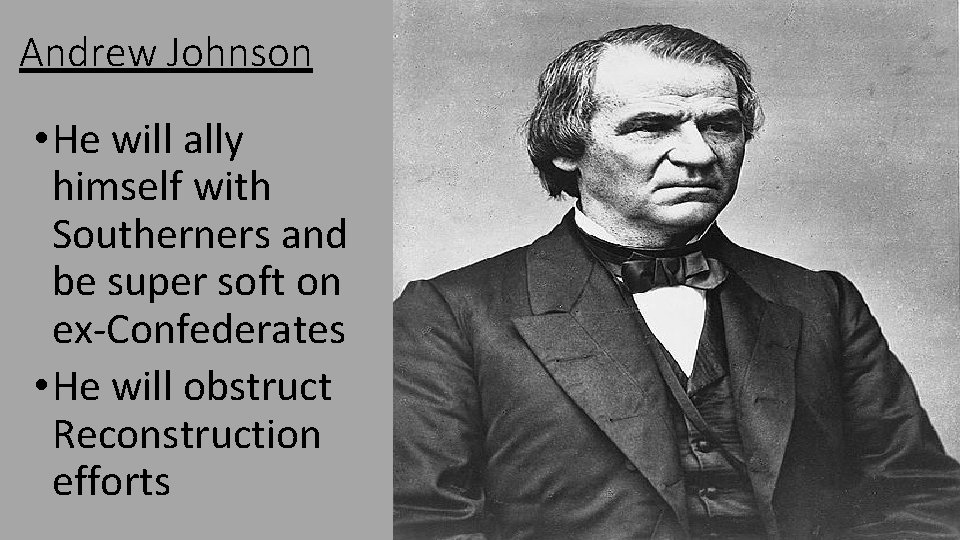
Andrew Johnson • Becomes President after Lincoln is assassinated in 1865 • Johnson is not a Republican like Lincoln, and tries to obstruct Reconstruction efforts to enfranchise newly freed slaves • Under Johnson’s plan (doesn’t happen), most ex. Confederate leaders are pardoned, and states that seceded can come back when 10% of the voters take an oath of loyalty, and the state approves the 13 th amendment
Andrew Johnson • He will ally himself with Southerners and be super soft on ex-Confederates • He will obstruct Reconstruction efforts
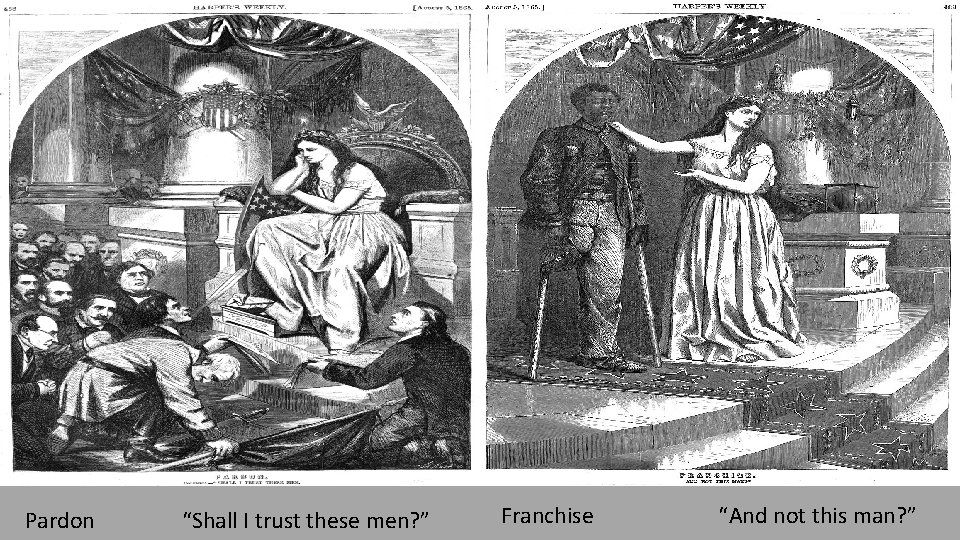
Pardon “Shall I trust these men? ” Franchise “And not this man? ”
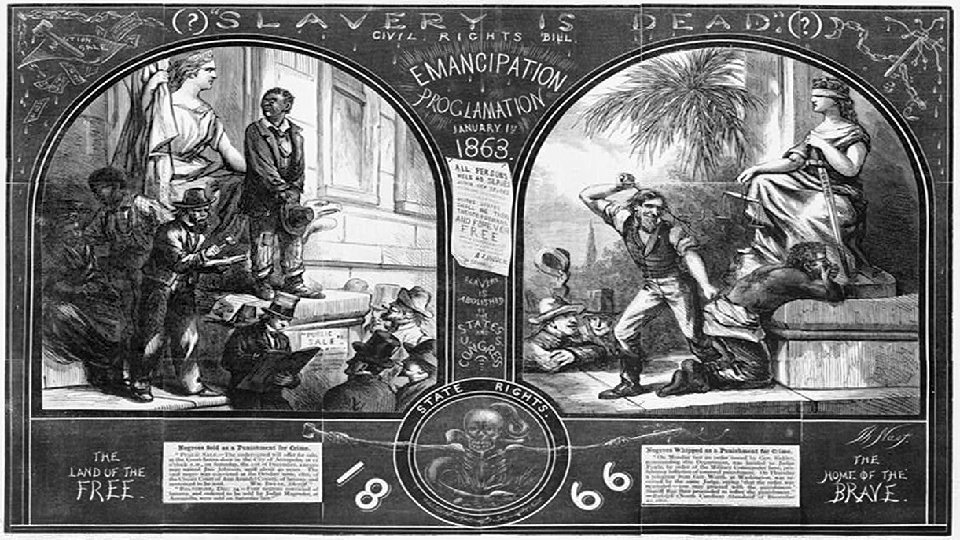
Black Codes • Southern States try to do whatever they can to prevent blacks from becoming politically and socially enfranchised • They enact “Black Codes” or laws meant to prevent blacks from exercising their rights, and keep them in a state of near slavery • These codes allowed blacks to be arrested for “Vagrancy”, it created an “Apprenticeship Program” where the children of blacks were taken and forced to serve as “apprentices” until age 21
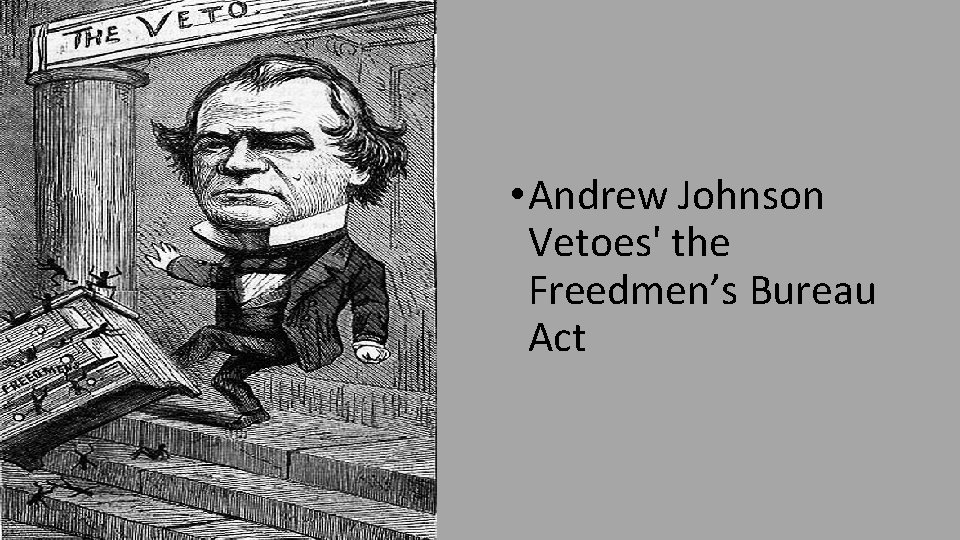
• Freedman’s Bureau 1866 Government agency designed to provide financial aid to blacks and other war refugees • Civil Rights Act of 1866 Stated former enslaved people are citizens and granted them full political rights • Both of these pieces of legislation are passed by the Republican Congress, then Vetoed by Andrew Johnson • Republicans in Congress respond by getting the 2/3 majority they need to overrule his veto
• Andrew Johnson Vetoes' the Freedmen’s Bureau Act
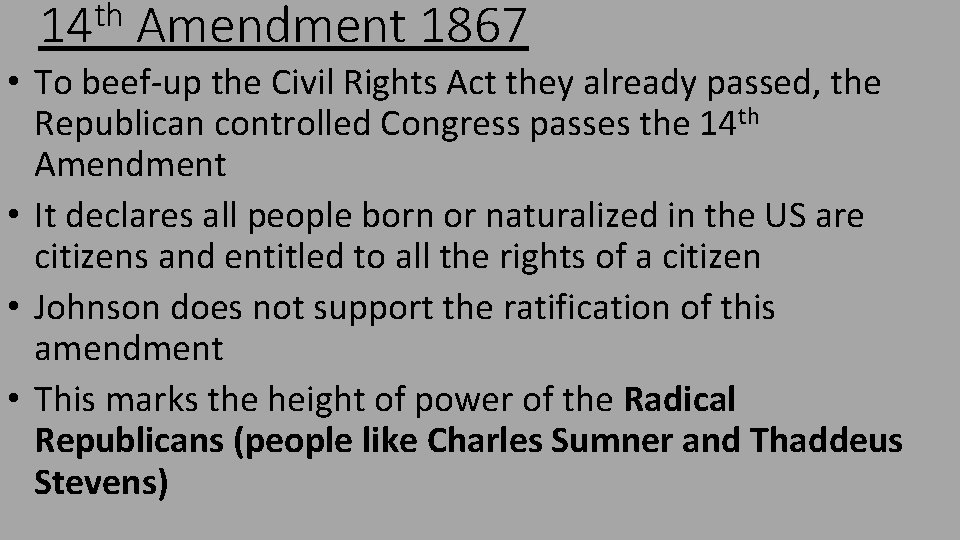
th 14 Amendment 1867 • To beef-up the Civil Rights Act they already passed, the Republican controlled Congress passes the 14 th Amendment • It declares all people born or naturalized in the US are citizens and entitled to all the rights of a citizen • Johnson does not support the ratification of this amendment • This marks the height of power of the Radical Republicans (people like Charles Sumner and Thaddeus Stevens)
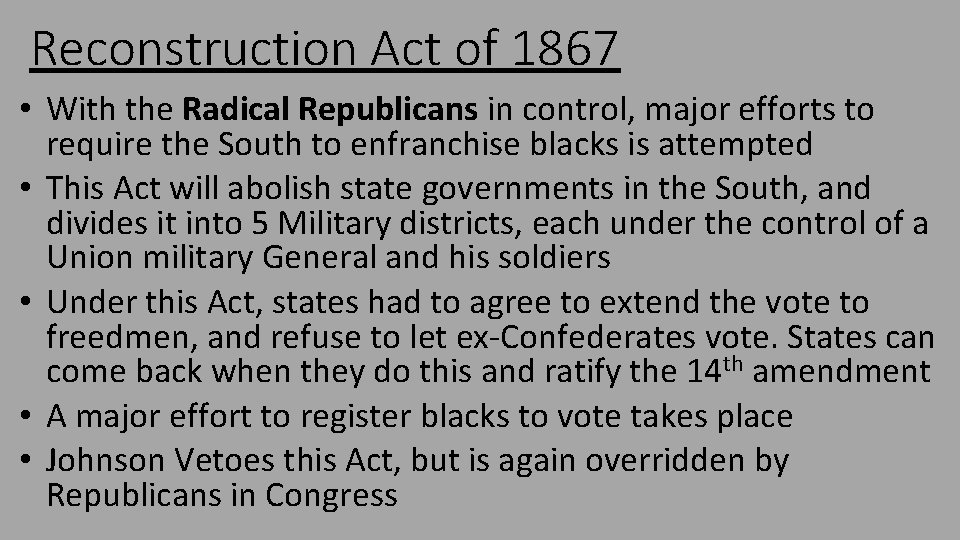
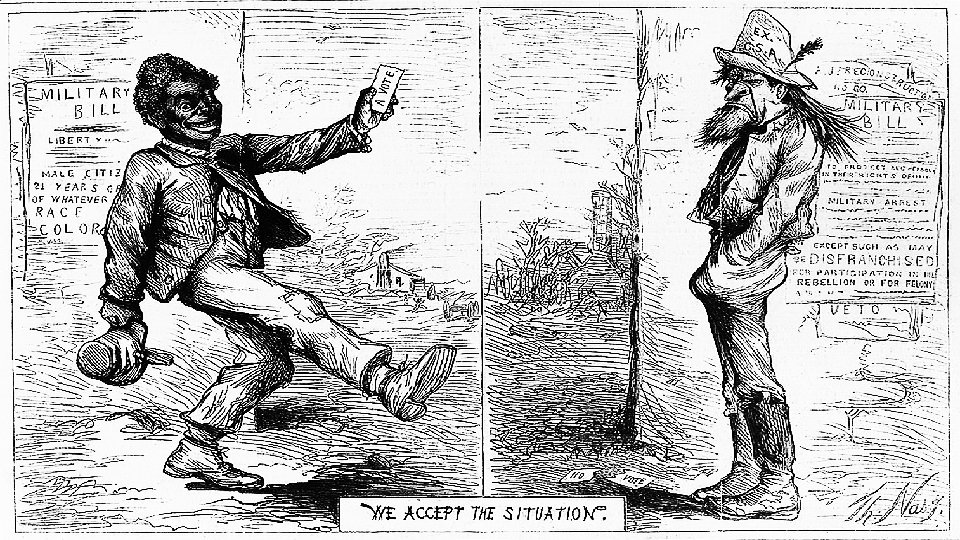
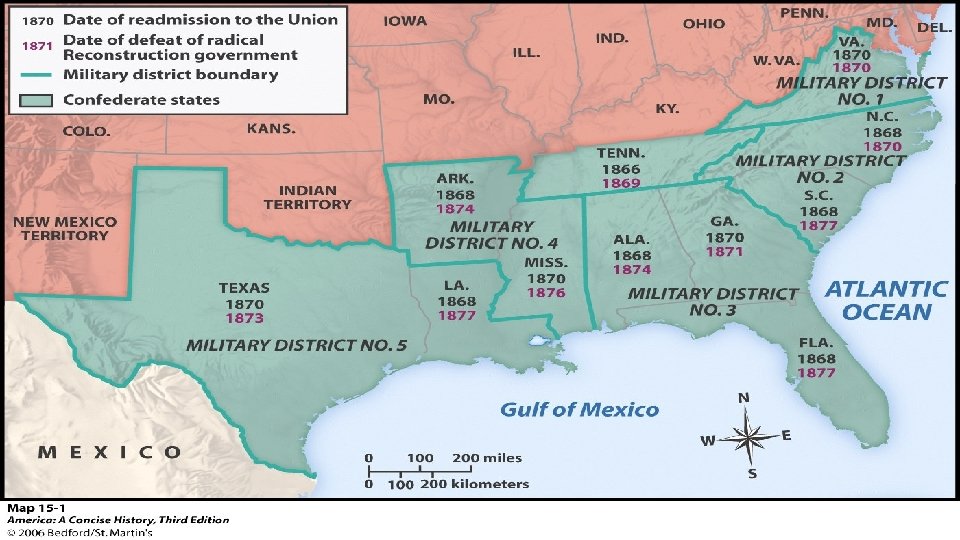
Reconstruction Act of 1867 • With the Radical Republicans in control, major efforts to require the South to enfranchise blacks is attempted • This Act will abolish state governments in the South, and divides it into 5 Military districts, each under the control of a Union military General and his soldiers • Under this Act, states had to agree to extend the vote to freedmen, and refuse to let ex-Confederates vote. States can come back when they do this and ratify the 14 th amendment • A major effort to register blacks to vote takes place • Johnson Vetoes this Act, but is again overridden by Republicans in Congress
Impeachment of Andrew Johnson 1868 • For the first time in history, Congress attempts to impeach (remove) a sitting President • He is charged with 11 counts of misconduct by Republicans • After an 11 week trial, the attempt to impeach him fails by one vote • There a few months left in Johnson’s Presidency, and he is not re-elected to a second term
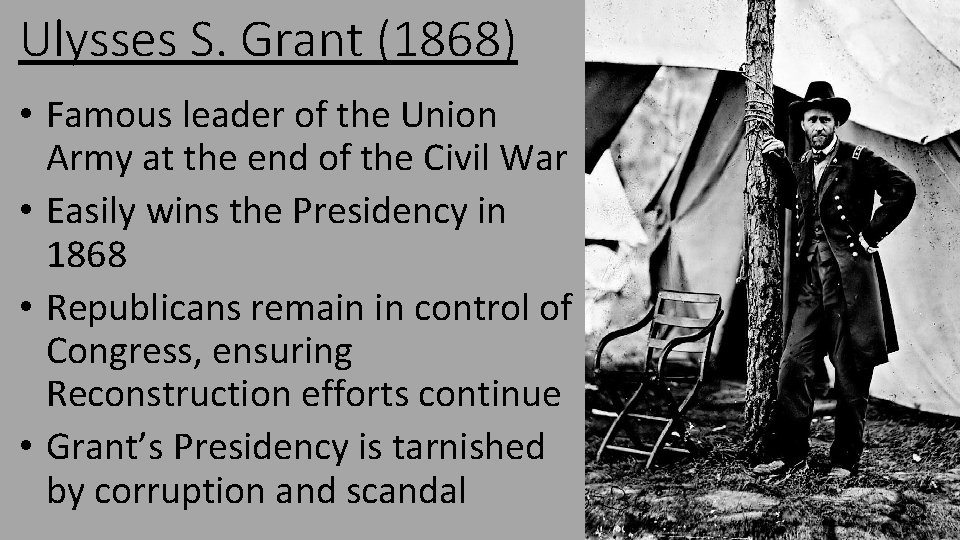
Ulysses S. Grant (1868) • Famous leader of the Union Army at the end of the Civil War • Easily wins the Presidency in 1868 • Republicans remain in control of Congress, ensuring Reconstruction efforts continue • Grant’s Presidency is tarnished by corruption and scandal
th 15 Amendment • Guarantees male citizen’s right to vote regardless of color or race • However it had a major flaws: • It still allowed states to regulate voting laws, which allowed Southern States to make poll taxes and literacy tests requirements for voting • In the 1870 mid term elections over 250, 000 blacks voted
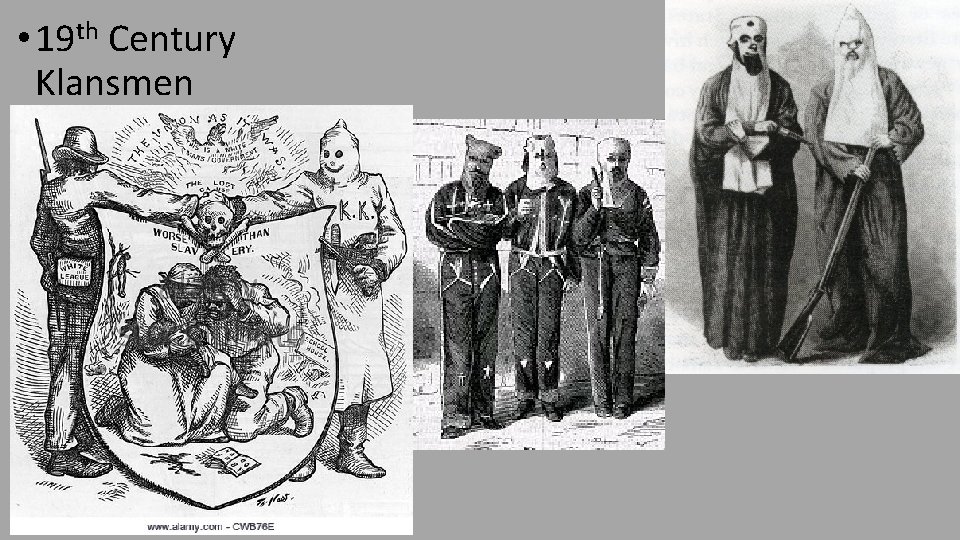
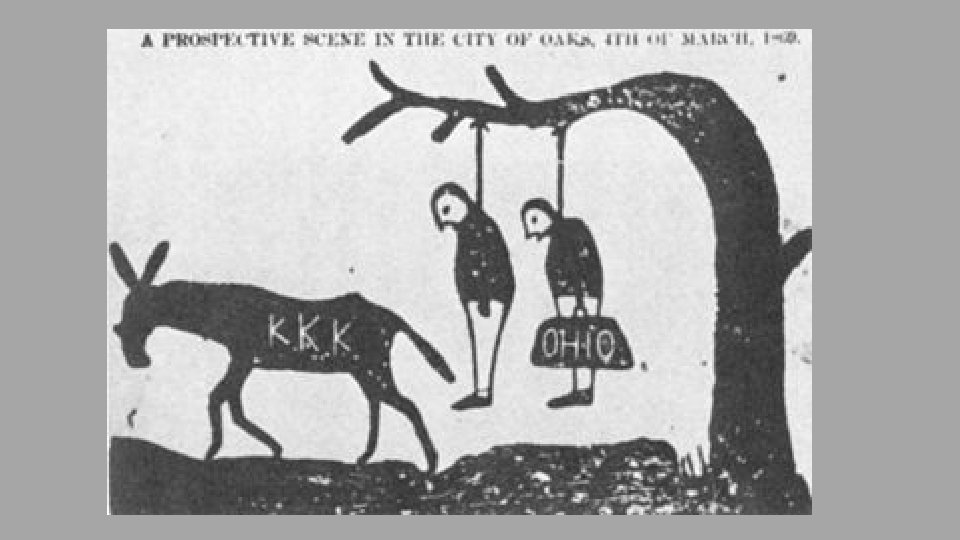
Ku Klux Klan • Terrorist organization created by ex-confederate soldiers in 1865 • Purpose of the Klan is to intimidate newly freed slaves and Republicans, and keep them from exercising their rights or voting • The Klan spreads throughout the South, and is responsible for many episodes of violence, intimidation, and murder • Members of the Klan were heavily involved in Southern politics and social affairs
• 19 th Century Klansmen
https: //www. youtube. com/watch? v=cay. CYpxt. Iyo • 9: 48 -17: 50
Land translates to wealth • Since there is not a large scale program that provides land to newly freed slaves, it is very difficult for them to obtain land improve their economic situation • Most Americans, including many Republicans are not in favor of giving freedmen land, and most former slave owners retain their land • Without owning their own land, most ex-slaves find no option but to continue to work for a landlord as a laborer
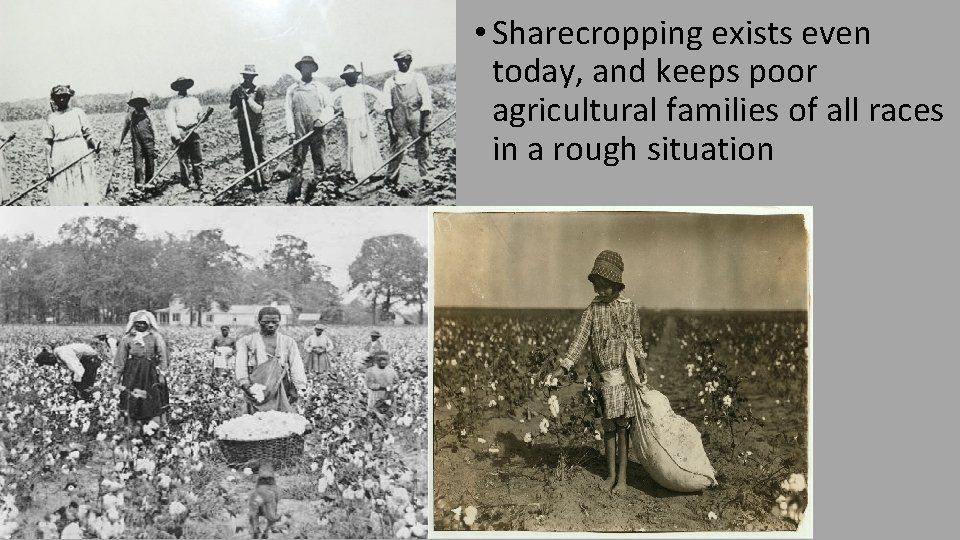
Sharecroppers • The system known as Sharecropping is not slavery, but it is designed to keep most of the ex-slaves in a cycle of poverty and debt • Ex-slaves act as renters and pay a portion of the crop as rent • They had to typically borrow money for food and supplies from the landlord going further into debt • Some state laws governing sharecropping allows the landlord to use Corporal Punishment • By 1890, 3 out of 4 blacks in the South works as a sharecropper
• Sharecropping exists even today, and keeps poor agricultural families of all races in a rough situation
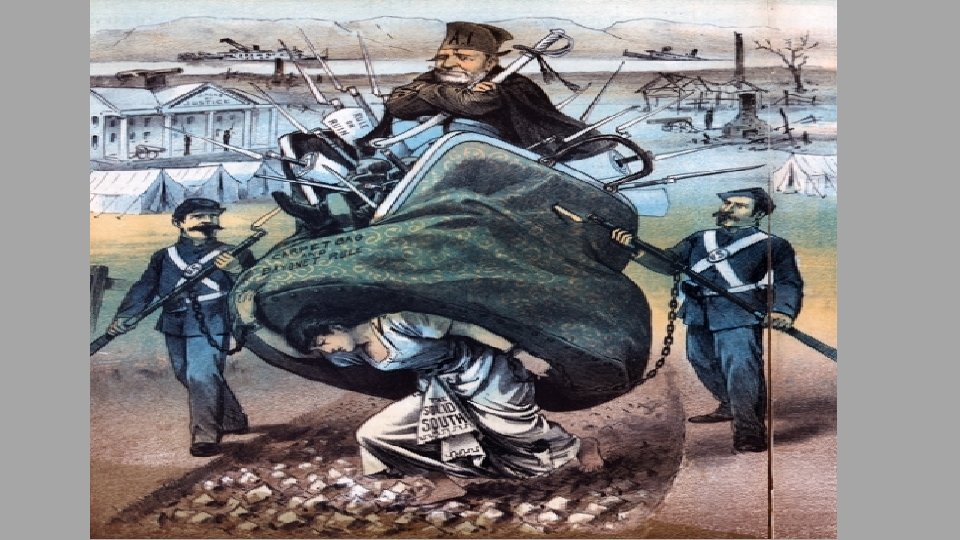
Carpetbaggers • Northern businessmen and speculators who flood into the South in efforts to invest in the rebuilding of the South and get rich • Meant to be a derogatory name for Northerners/Republicans used by Southerners • Most are motivated by profit and are looked at negatively, but they provide the money needed to rebuild the South
Scalawags • Name used by Southerners for Northern Republicans, Freedmen’s Bureau Officials, School Teachers, Social/Aid Workers, and Reconstructionist Politicians • All of these people were looked at negatively by Southerners • Southerners felt that these Scalawags were meddling in Southern affairs, and they did not appreciate their attempts to enfranchise and empower blacks • Many became targets for the KKK
Black Achievements during Reconstruction • Dozens of black men are elected to political office throughout the South • Creation of several Black Colleges (Fisk, Hampton) • Greatly improved literacy rates among ex-slaves • Registered hundreds of thousands of ex-slaves to vote • Creation of black media outlets and newspapers as well as social service/fraternal organizations
Civil Rights Act of 1875 • Passed by Congress without Charles Sumner's lines about integrated churches and schools • States that people must have equal access to public transportation, hotels, and jury service regardless of race • This law will be stricken in 1883 when anti. Reconstruction Democrats gain control of the Congress
The End of Reconstruction • By 1873, there is a massive economic panic in the US, and Reconstruction efforts take a back seat • Reconstruction is very expensive. Lots of money is spent rebuilding the South and funding efforts to enfranchise exslaves. Much of this will now stop because of the Panic of 1873 • Many important banks and railroad companies collapse, manufacturing is hurt badly, and farm prices plunge down • Many Republicans lose their seats to Democrats (usually anti. Reconstruction)
The End of Reconstruction • Add economic Panic, to numerous scandals and charges of corruption in Ulysses S. Grants Presidency, to anger over Reconstruction and you can see why by the mid 1870’s Reconstruction is wavering • As we will see, the Federal Government takes a very passive role in Southern affairs regarding race for the next 90 years • States will pass incredibly harsh and restrictive laws and the Supreme Court will rule that “Separate but Equal” is a legitimate thing in the South • Conditions in the South are better than slavery, but most ex-slaves and their descendants will remain poverty and be treated as secondclass citizens