
Reconstruction and its Effects Triumph of Race Politics
- Slides: 25
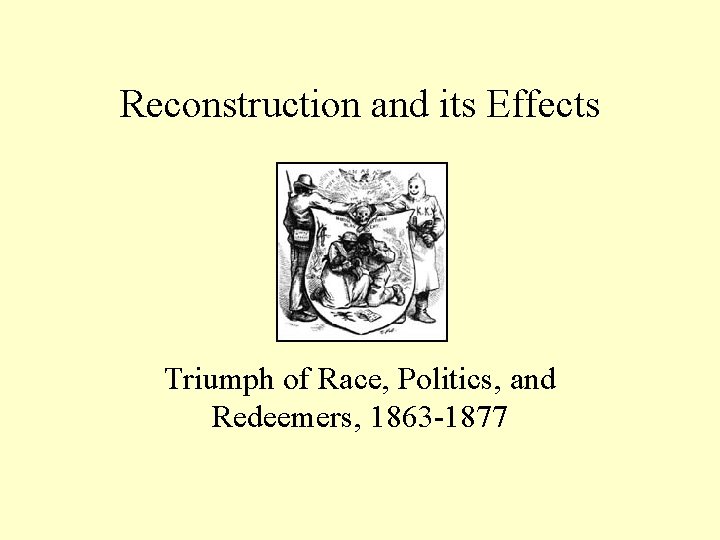
Reconstruction and its Effects Triumph of Race, Politics, and Redeemers, 1863 -1877
What was “Reconstruction”? • The period during which the United States began to rebuild after the Civil War • The process of readmission of the defeated Confederate states to the Union • Some favored lenient terms, others wanted harsher terms for readmission • Lasted from 1865 -1877
Lincoln’s Second Inaugural With malice toward none; with charity for all; with firmness in the right, as God gives us to see the right, let us strive on to finish the work we are in; to bind up the nation's wounds; to care for him who shall have borne the battle, and for his widow, and his orphan--to do all which may achieve and cherish a just and lasting peace, among ourselves, and with all nations.
Lincoln’s Proclamation of Amnesty and Reconstruction (The 10% Plan) • All Confederates would be pardoned if they would swear allegiance • High-ranking officials and those accused of crimes against prisoners of war excepted • When 10% of Southern state voters pledged allegiance, state could form new government and send representatives to Congress • Four Southern states go along with plan • 13 th Amendment passes- Forbids slavery in the U. S.
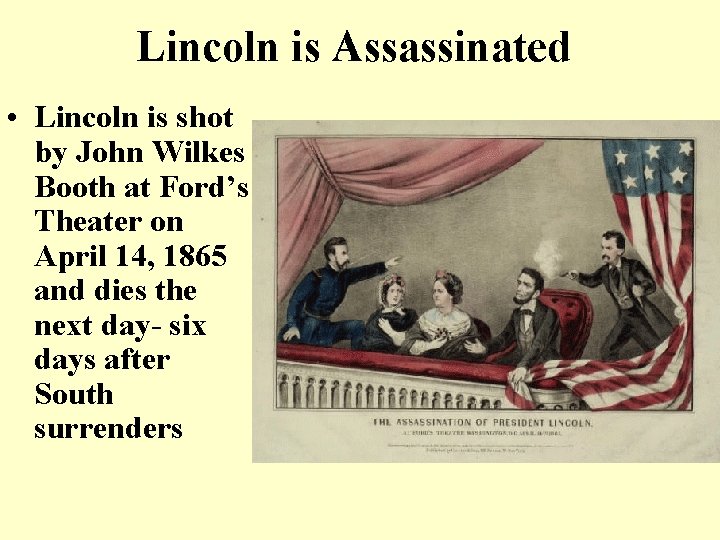
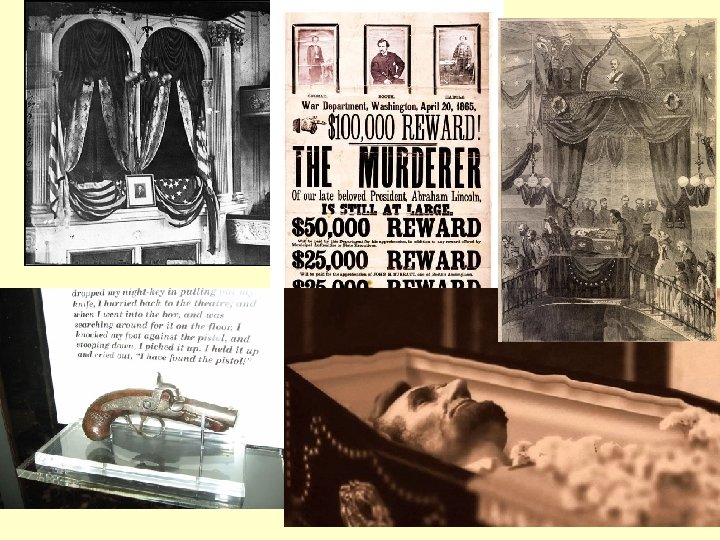
Lincoln is Assassinated • Lincoln is shot by John Wilkes Booth at Ford’s Theater on April 14, 1865 and dies the next day- six days after South surrenders
The Civil War was over, but… • Two unresolved questions… 1. How to restore the Southern state to the Union 2. How to integrate 4 million new freed African Americans into national life
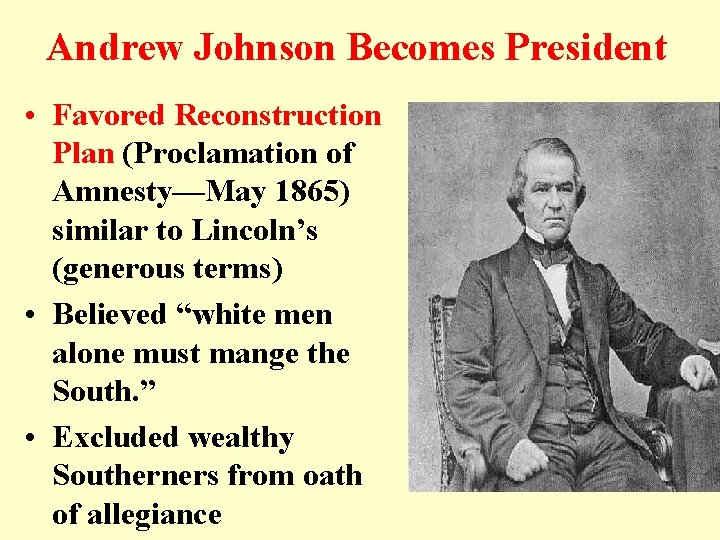
Andrew Johnson Becomes President • Favored Reconstruction Plan (Proclamation of Amnesty—May 1865) similar to Lincoln’s (generous terms) • Believed “white men alone must mange the South. ” • Excluded wealthy Southerners from oath of allegiance
President Johnson v. Congress on Reconstruction • Seven remaining Southern states agree to Johnson’s plan for readmission • New laws enacted to remedy weaknesses in Reconstruction plan • Congress votes to enlarge Freedmen’s Bureau • Congress passes the Civil Rights Act of 1866 forbids States passing discriminatory laws“Black Codes” that severely limits African Americans lives • President Johnson vetoes bill and expansion of Freedman’s Bureau
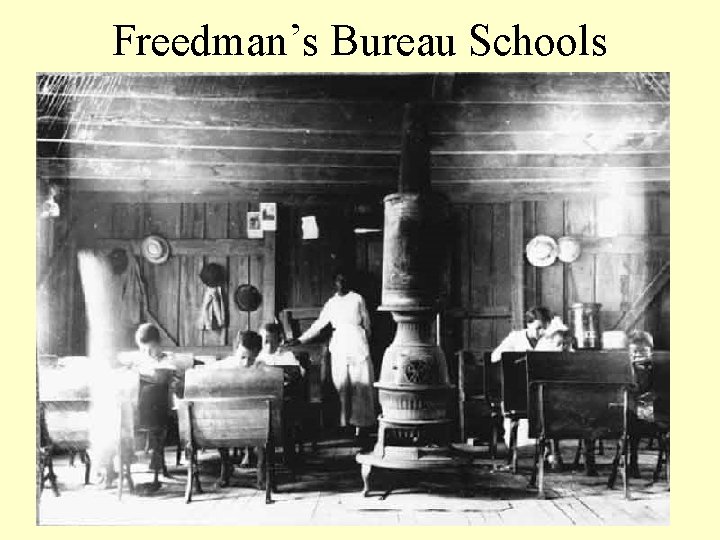
Freedman’s Bureau • The Bureau of Refugees, Freedmen, and Abandoned Land, often referred to as the Freedmen's Bureau, was established in the War Department on March 3, 1865. • The Bureau supervised all relief and educational activities relating to refugees and freedmen, including issuing rations, clothing and medicine. • Built Schools—many of whom were forerunners of the “Historically Black Colleges” in the South.
Freedman’s Bureau Schools
Radical Republicans React • Congressional Republicans try to shift control of Reconstruction from the Executive to Legislative branch • Override president’s vetoes • Draft 14 th Amendment which prevented states from denying rights to any U. S. citizen to include “all persons born or naturalized in the U. S. - designed to nullify Dred Scott decision
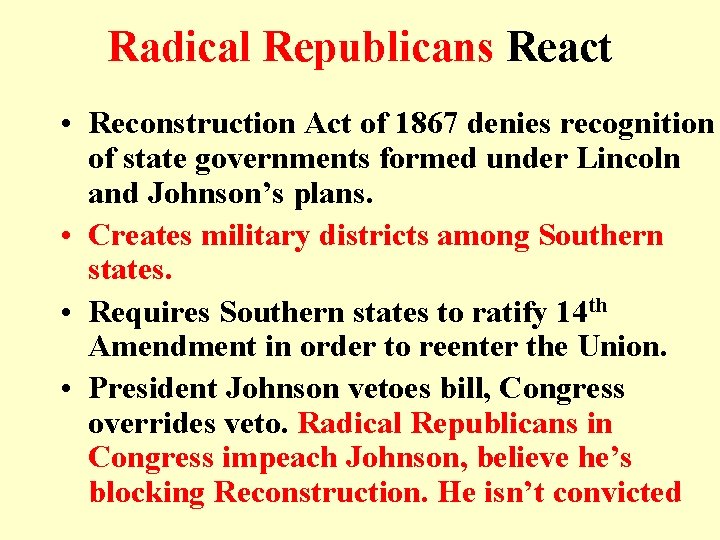
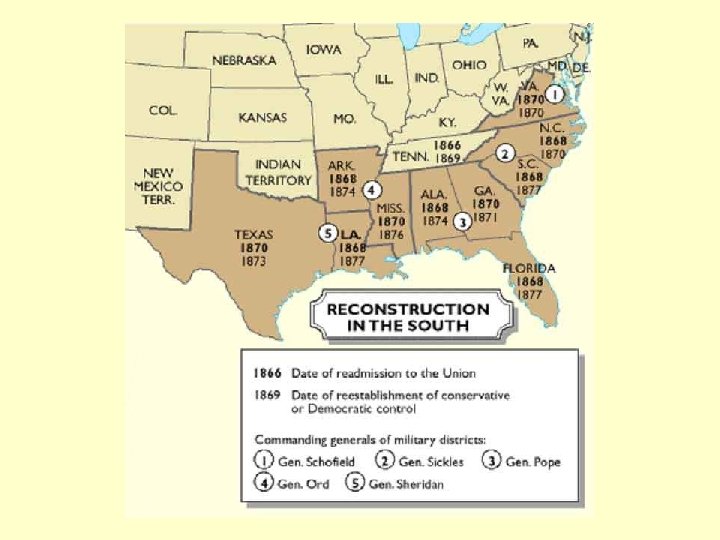
Radical Republicans React • Reconstruction Act of 1867 denies recognition of state governments formed under Lincoln and Johnson’s plans. • Creates military districts among Southern states. • Requires Southern states to ratify 14 th Amendment in order to reenter the Union. • President Johnson vetoes bill, Congress overrides veto. Radical Republicans in Congress impeach Johnson, believe he’s blocking Reconstruction. He isn’t convicted
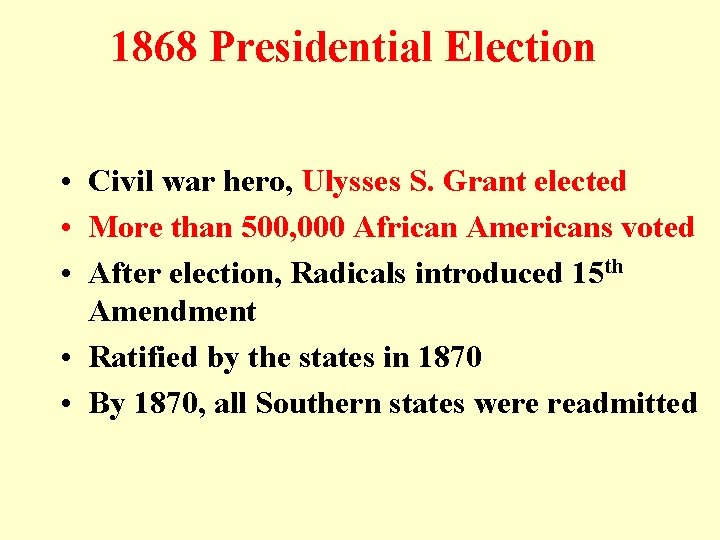
1868 Presidential Election • Civil war hero, Ulysses S. Grant elected • More than 500, 000 African Americans voted • After election, Radicals introduced 15 th Amendment • Ratified by the states in 1870 • By 1870, all Southern states were readmitted
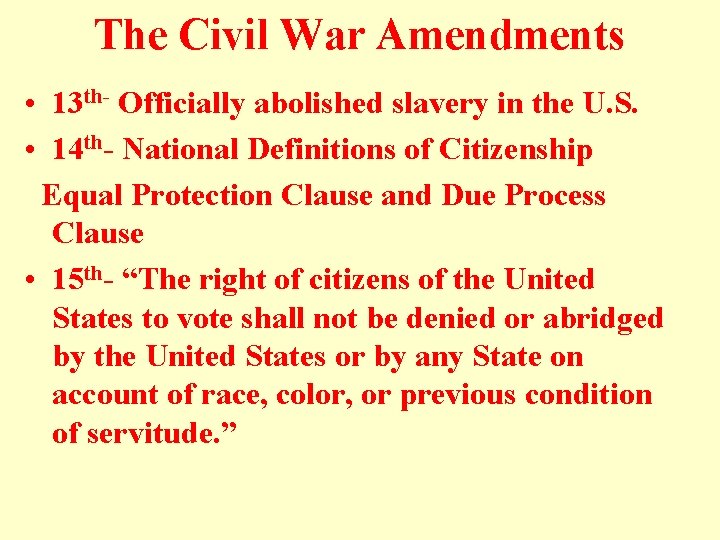
The Civil War Amendments • 13 th- Officially abolished slavery in the U. S. • 14 th- National Definitions of Citizenship Equal Protection Clause and Due Process Clause • 15 th- “The right of citizens of the United States to vote shall not be denied or abridged by the United States or by any State on account of race, color, or previous condition of servitude. ”
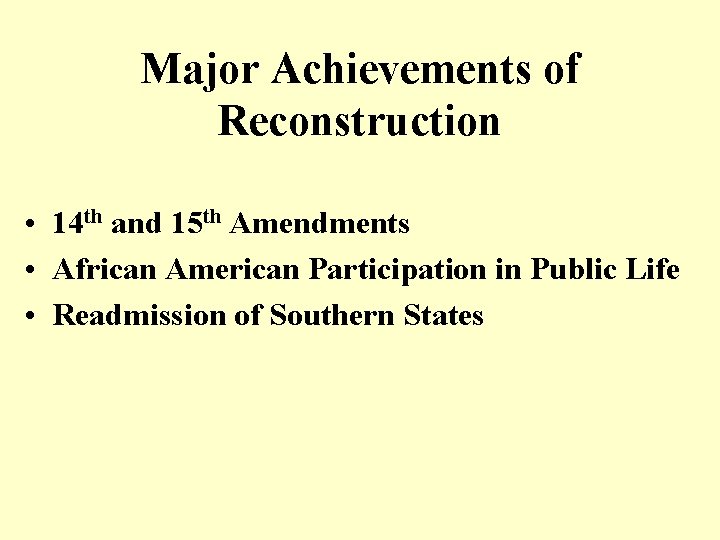
Major Achievements of Reconstruction • 14 th and 15 th Amendments • African American Participation in Public Life • Readmission of Southern States
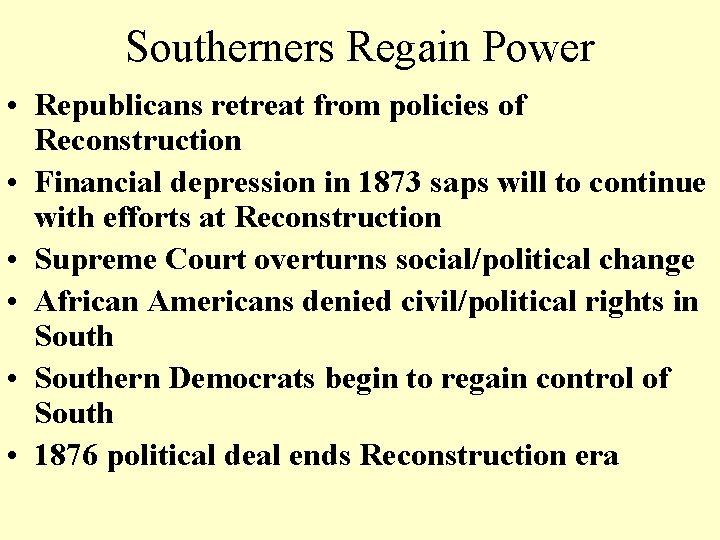
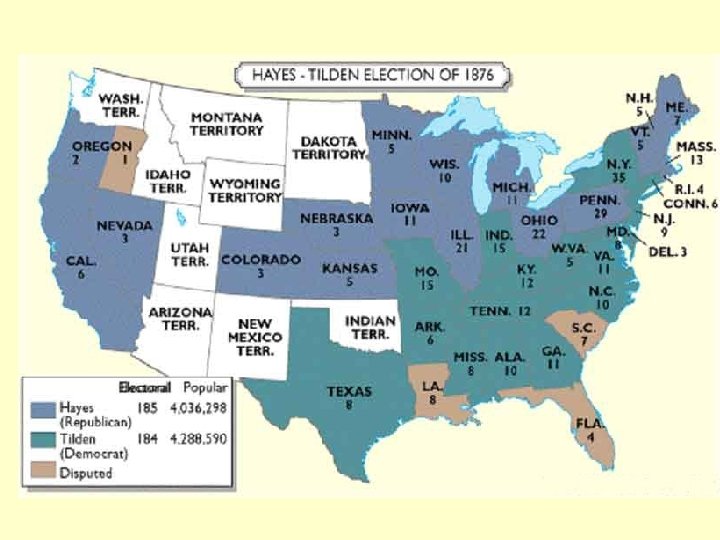
Southerners Regain Power • Republicans retreat from policies of Reconstruction • Financial depression in 1873 saps will to continue with efforts at Reconstruction • Supreme Court overturns social/political change • African Americans denied civil/political rights in South • Southern Democrats begin to regain control of South • 1876 political deal ends Reconstruction era
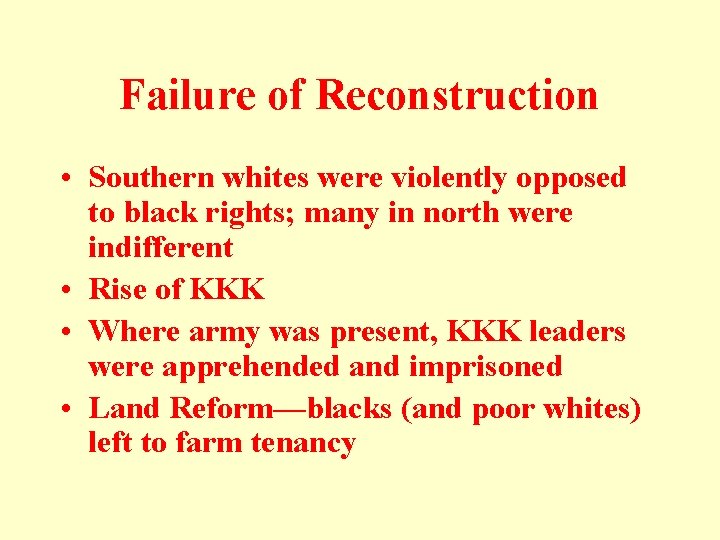
Failure of Reconstruction • Southern whites were violently opposed to black rights; many in north were indifferent • Rise of KKK • Where army was present, KKK leaders were apprehended and imprisoned • Land Reform—blacks (and poor whites) left to farm tenancy
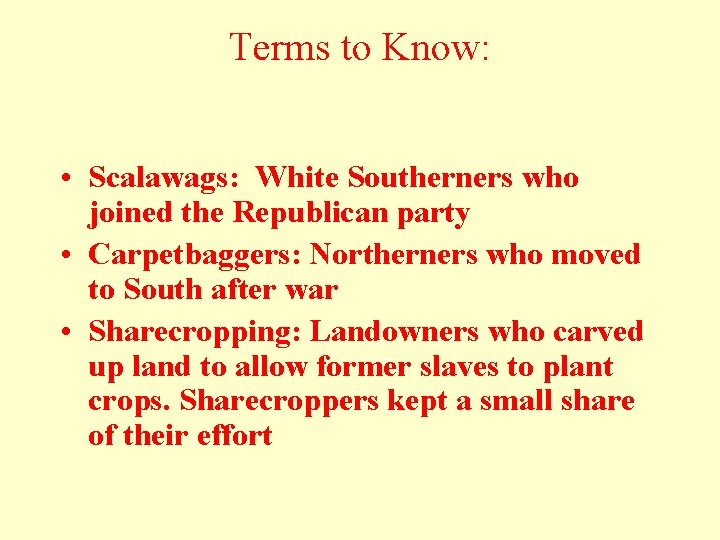
Terms to Know: • Scalawags: White Southerners who joined the Republican party • Carpetbaggers: Northerners who moved to South after war • Sharecropping: Landowners who carved up land to allow former slaves to plant crops. Sharecroppers kept a small share of their effort
Post Mortem • Reconstruction ended without much real progress in the battle against discrimination • 14 th and 15 th Amendments provided necessary constitutional foundation for important, future civil rights legislation • 14 th Amendment under attack today as a result of illegal immigration/”anchor babies”
African Americans in Reconstruction • • • 95% of former slaves illiterate Public schools built for first time in South Split up families could finally reunite Finally able to enter politics Economic necessity results in “Sharecropping” Southern whites still deeply racist and set up a two-tied society to keep elite status
Grant Presidency • Did attempt to enforce Reconstruction • Presidency clouded by scandals • Republican party divided between Stalwart and Liberal Republicans—little energy left to devote to Reconstruction.
1876 Presidential Election • Disputed results between Hayes and Tilden • Democrats accept result of Wormsley Hotel Conference • Southerner named to cabinet, army withdrawn from south, southern pacific railway