
Reconstruction 1865 1877 Chapter 12 President Lincolns Plan
- Slides: 18
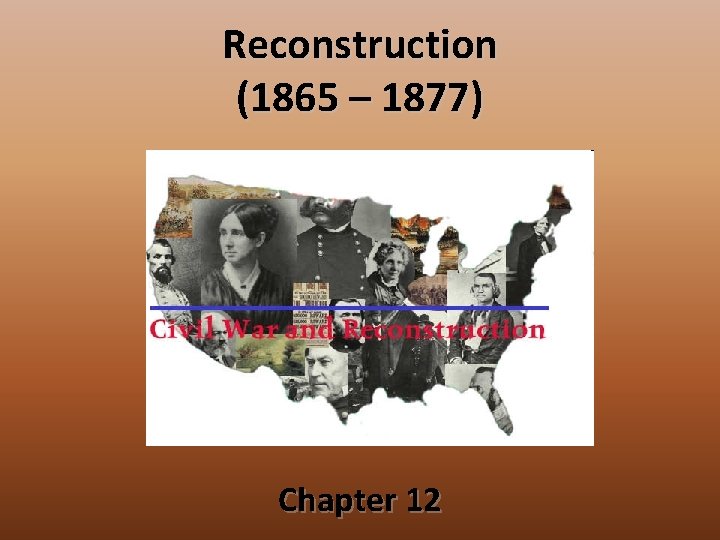
Reconstruction (1865 – 1877) Chapter 12
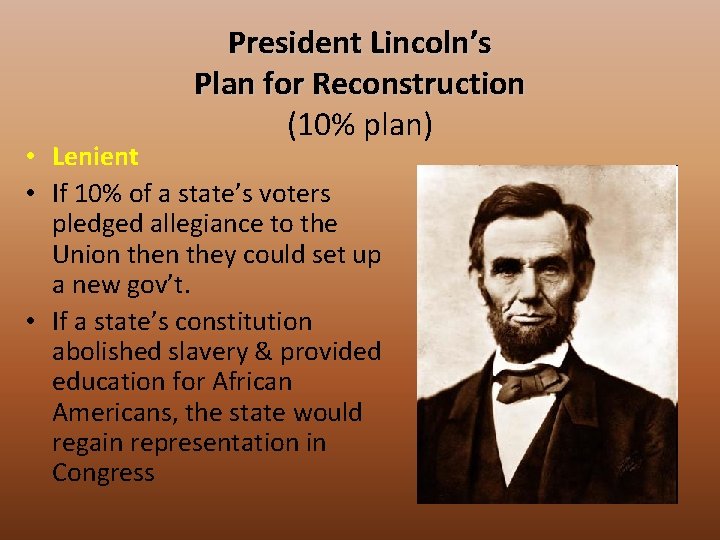
President Lincoln’s Plan for Reconstruction (10% plan) • Lenient • If 10% of a state’s voters pledged allegiance to the Union they could set up a new gov’t. • If a state’s constitution abolished slavery & provided education for African Americans, the state would regain representation in Congress
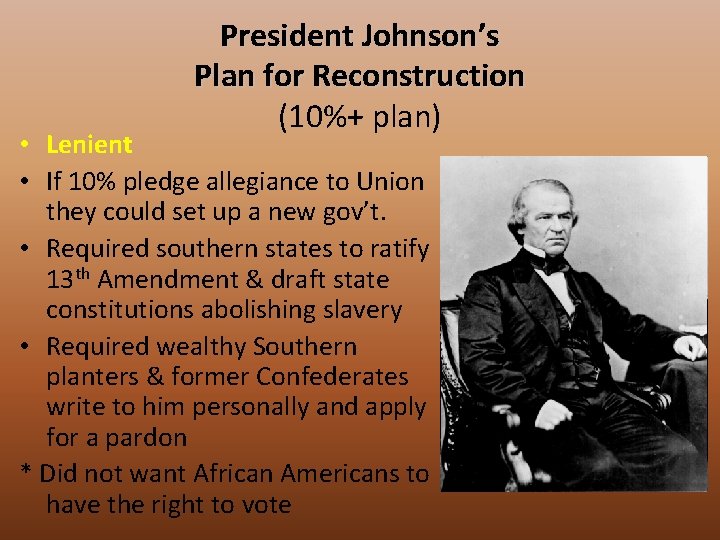
President Johnson’s Plan for Reconstruction (10%+ plan) • Lenient • If 10% pledge allegiance to Union they could set up a new gov’t. • Required southern states to ratify 13 th Amendment & draft state constitutions abolishing slavery • Required wealthy Southern planters & former Confederates write to him personally and apply for a pardon * Did not want African Americans to have the right to vote
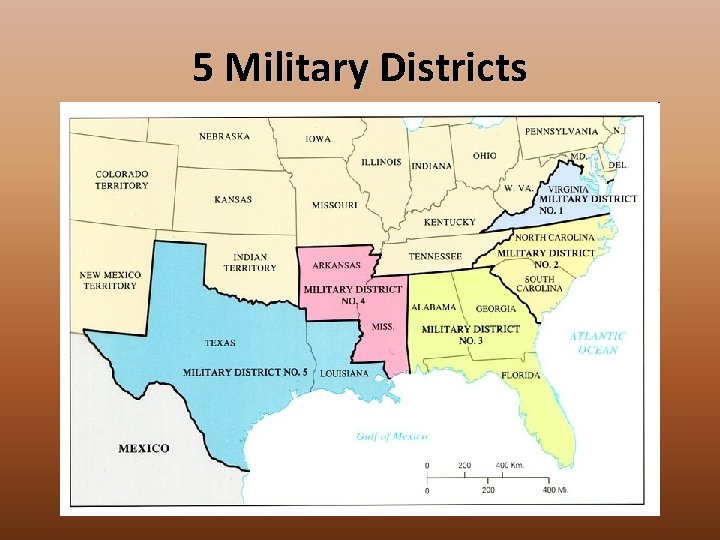
Congressional Reconstruction (Radical Republican) • Harsh First Attempt • 1864 - Wade-Davis Bill – 50% must pledge allegiance to the Union (vetoed by Lincoln) • Required Southerners to take an iron-clad oath saying they had never aided the Confederacy Second Attempt • Military Reconstruction Act of 1867 – Divided 10 states into 5 military districts – governed by former Union Generals – Required southern states to pass the 14 th Amendment – citizenship ***********WON*************
5 Military Districts
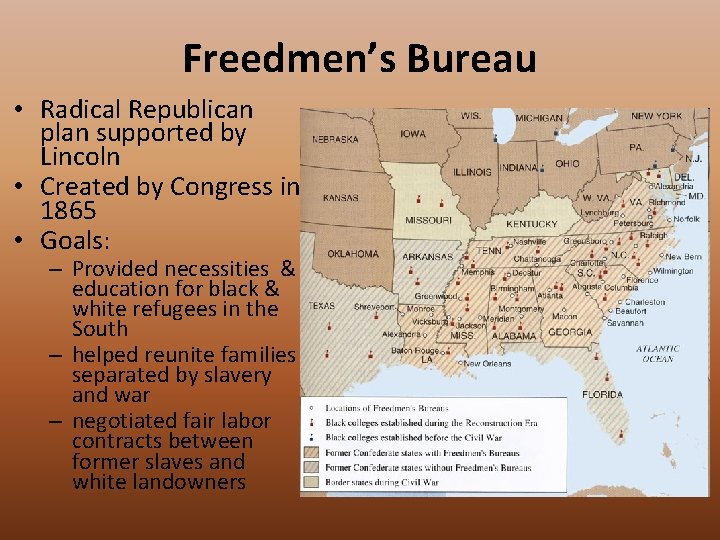
Freedmen’s Bureau • Radical Republican plan supported by Lincoln • Created by Congress in 1865 • Goals: – Provided necessities & education for black & white refugees in the South – helped reunite families separated by slavery and war – negotiated fair labor contracts between former slaves and white landowners
Black Codes • issued by all southern states • laws that sought to limit the rights of African Americans and keep them as landless workers • African Americans could only work in a limited number of occupations: servants or farm laborers • Angered Republicans in Congress Black Code Examples Curfew - Generally, black people could not gather after sunset. Vagrancy laws - Freedmen convicted of vagrancy (not having a job) could be fined, whipped, or sold for a year’s labor. Labor contracts - Freedmen had to sign agreements in January for a year of work. Those who quit in the middle of a contract often lost all that wages they had earned. Limits on women’s rights - Mothers who wanted to stay home and care for their families were forced instead to do farm labor. Land restrictions - Freed people could rent land or homes only in rural areas.
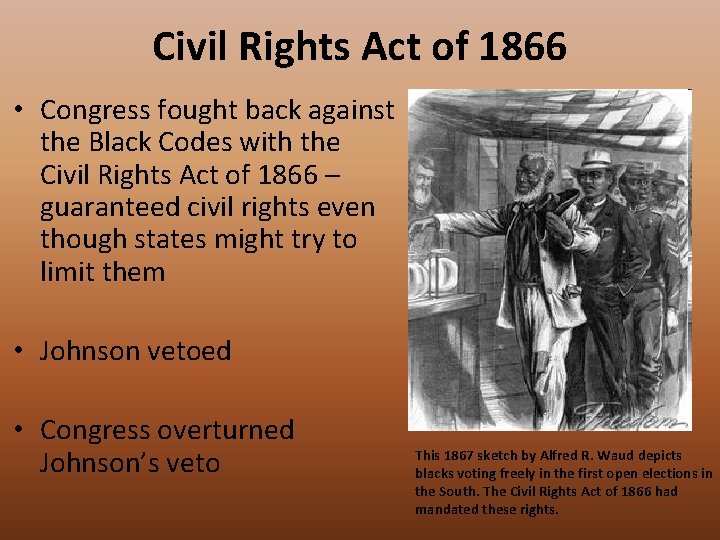
Civil Rights Act of 1866 • Congress fought back against the Black Codes with the Civil Rights Act of 1866 – guaranteed civil rights even though states might try to limit them • Johnson vetoed • Congress overturned Johnson’s veto This 1867 sketch by Alfred R. Waud depicts blacks voting freely in the first open elections in the South. The Civil Rights Act of 1866 had mandated these rights.
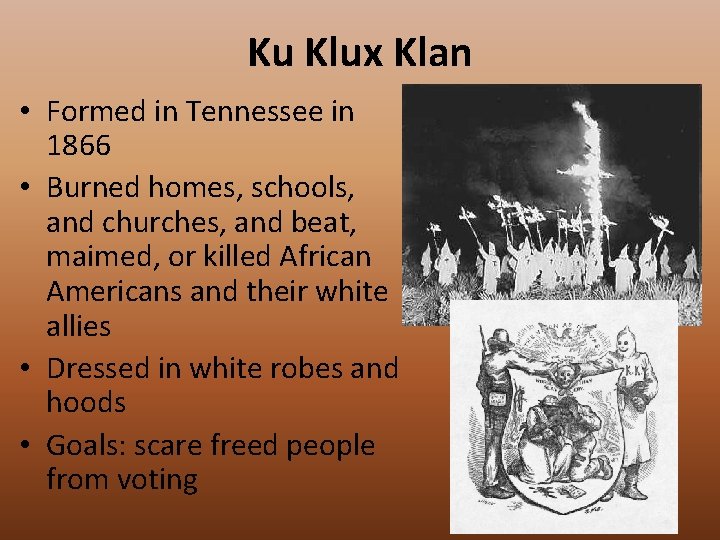
Ku Klux Klan • Formed in Tennessee in 1866 • Burned homes, schools, and churches, and beat, maimed, or killed African Americans and their white allies • Dressed in white robes and hoods • Goals: scare freed people from voting
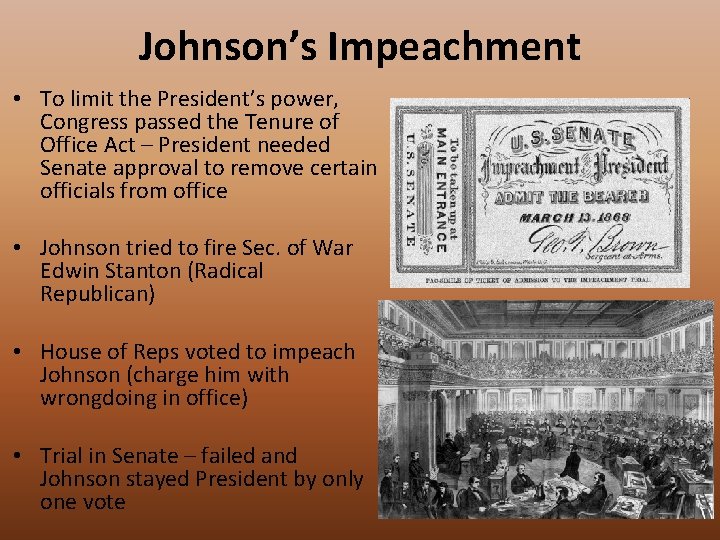
Johnson’s Impeachment • To limit the President’s power, Congress passed the Tenure of Office Act – President needed Senate approval to remove certain officials from office • Johnson tried to fire Sec. of War Edwin Stanton (Radical Republican) • House of Reps voted to impeach Johnson (charge him with wrongdoing in office) • Trial in Senate – failed and Johnson stayed President by only one vote
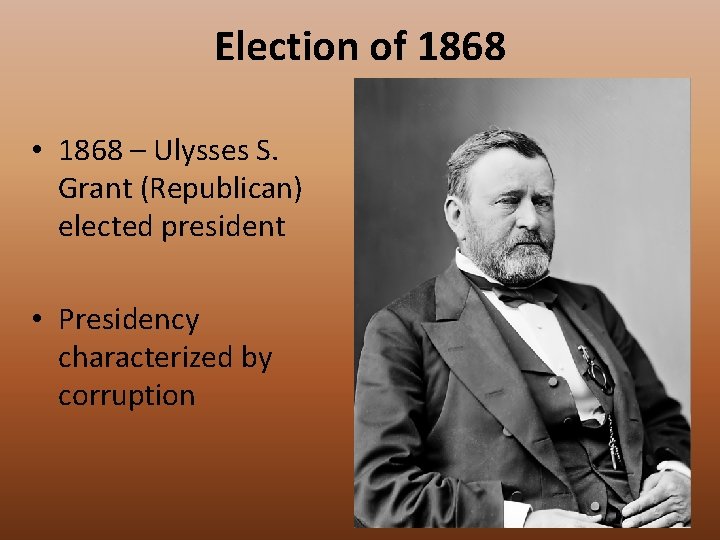
Election of 1868 • 1868 – Ulysses S. Grant (Republican) elected president • Presidency characterized by corruption
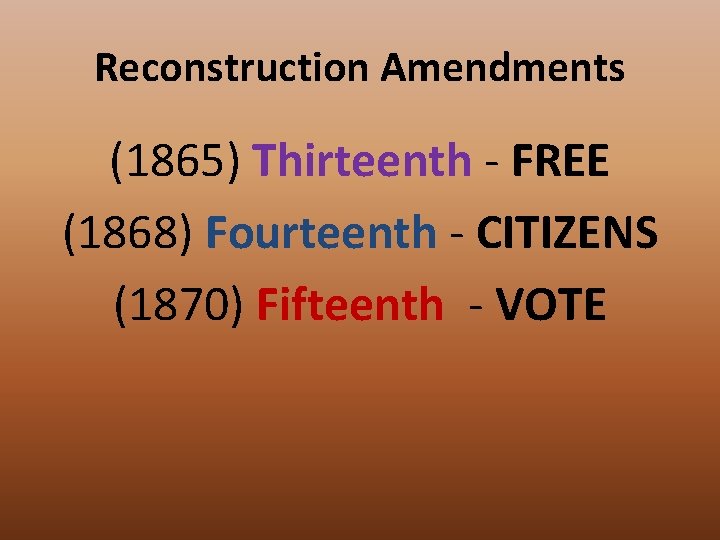
Reconstruction Amendments (1865) Thirteenth - FREE (1868) Fourteenth - CITIZENS (1870) Fifteenth - VOTE
Reasons for the end of Reconstruction: • North turned attention to other things: reforming politics and the economy • Cost of military operations worried many
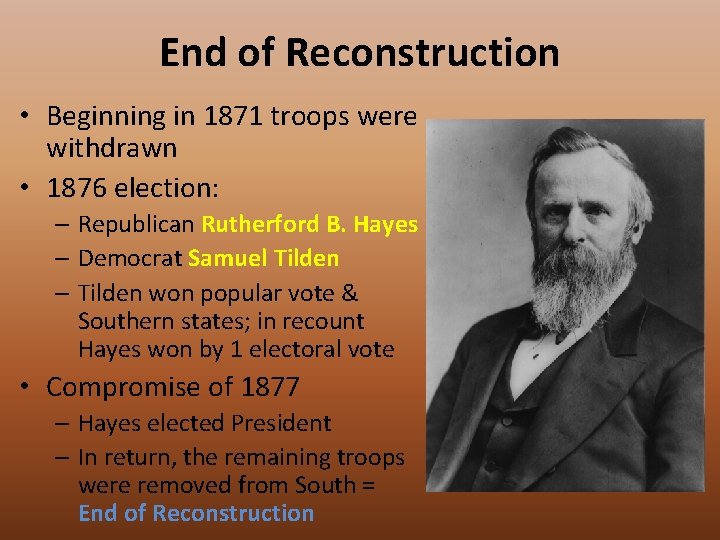
End of Reconstruction • Beginning in 1871 troops were withdrawn • 1876 election: – Republican Rutherford B. Hayes – Democrat Samuel Tilden – Tilden won popular vote & Southern states; in recount Hayes won by 1 electoral vote • Compromise of 1877 – Hayes elected President – In return, the remaining troops were removed from South = End of Reconstruction
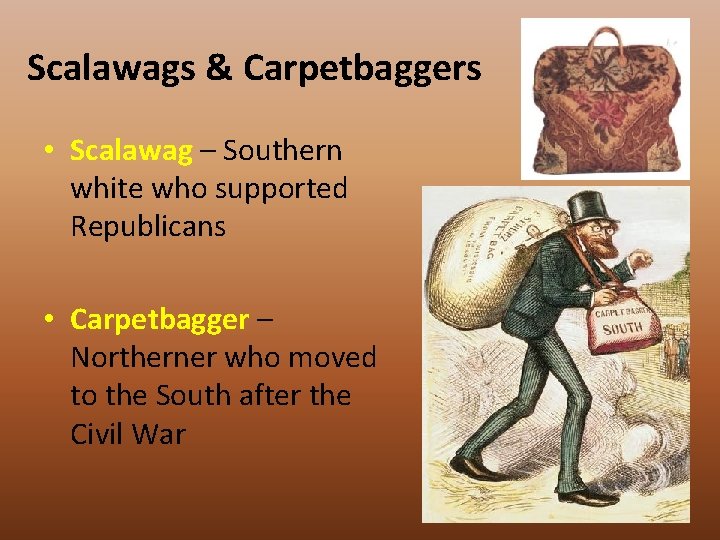
Scalawags & Carpetbaggers • Scalawag – Southern white who supported Republicans • Carpetbagger – Northerner who moved to the South after the Civil War
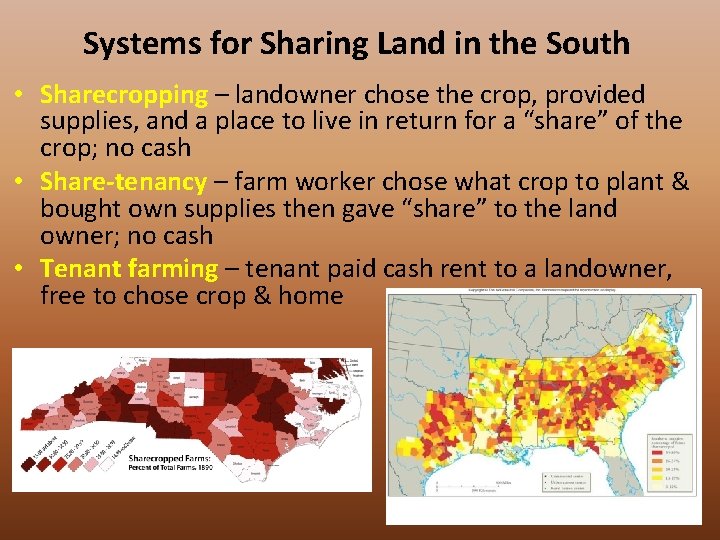
Systems for Sharing Land in the South • Sharecropping – landowner chose the crop, provided supplies, and a place to live in return for a “share” of the crop; no cash • Share-tenancy – farm worker chose what crop to plant & bought own supplies then gave “share” to the land owner; no cash • Tenant farming – tenant paid cash rent to a landowner, free to chose crop & home
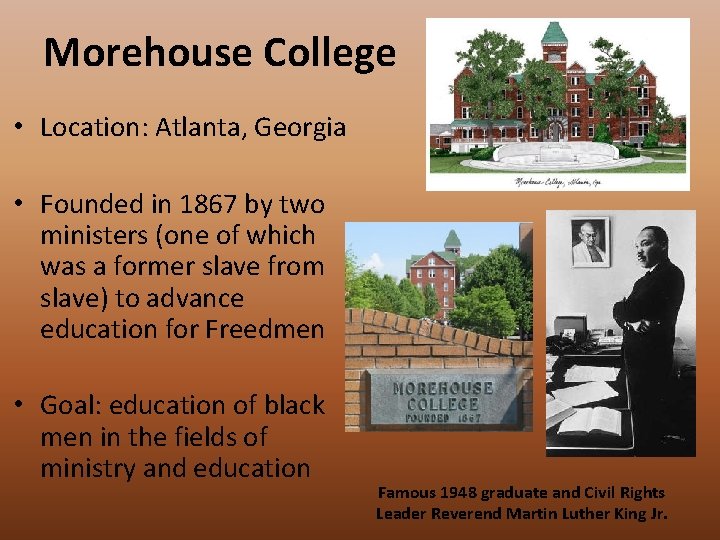
Morehouse College • Location: Atlanta, Georgia • Founded in 1867 by two ministers (one of which was a former slave from slave) to advance education for Freedmen • Goal: education of black men in the fields of ministry and education Famous 1948 graduate and Civil Rights Leader Reverend Martin Luther King Jr.
Reconstruction Evaluation – What do you think? • Read “Evaluating Reconstruction’s Effects” (pages 424 – 427) • On a blank sheet of paper, list the success and failures of Reconstruction. • Overall, do you think Reconstruction was a success? Explain your answer in one paragraph.