
Reconciling the Pigovian and Sandmo Principles of Emission
- Slides: 25
Reconciling the Pigovian and Sandmo Principles of Emission Pricing Ross Mc. Kitrick Department of Economics and Finance University of Guelph IAEE 2021
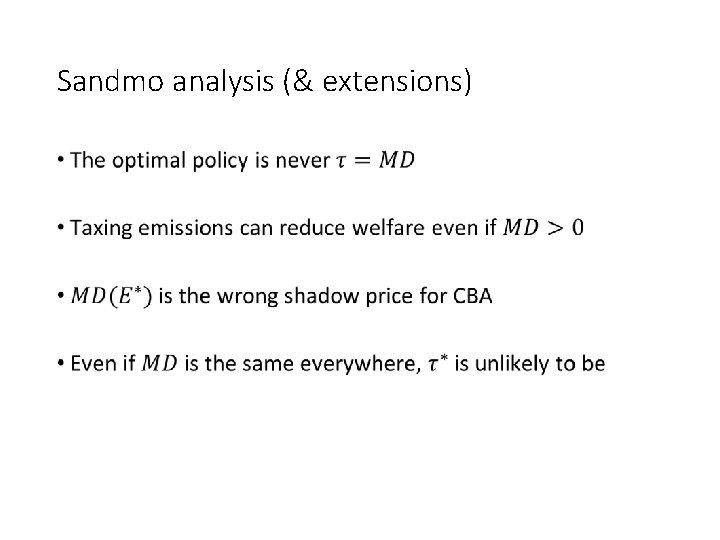
Pigovian pricing • Most economists know just enough about the Pigovian principle of pollution pricing to get it sort of right, but still wrong • As a result some major policy applications are mishandled, including: • Cost-Benefit Analysis • Carbon border tax adjustments • Implications of combining emission charges and regulations • The key to getting Pigou right is to connect it to Sandmo’s (1975) analysis
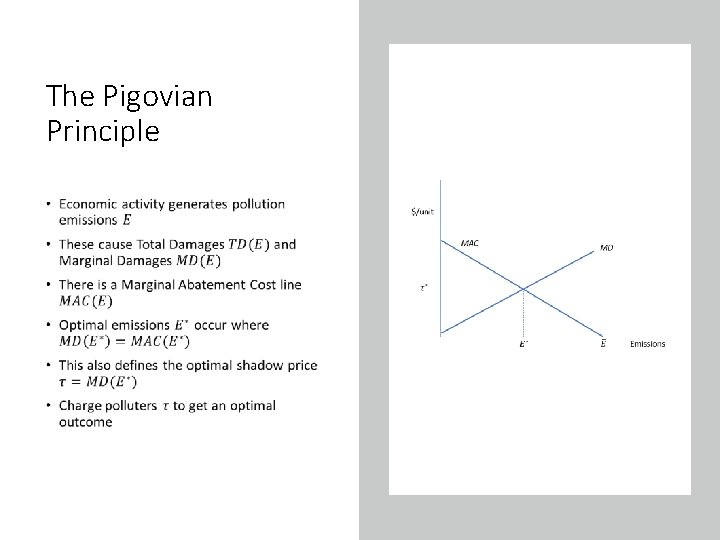
The Pigovian Principle •
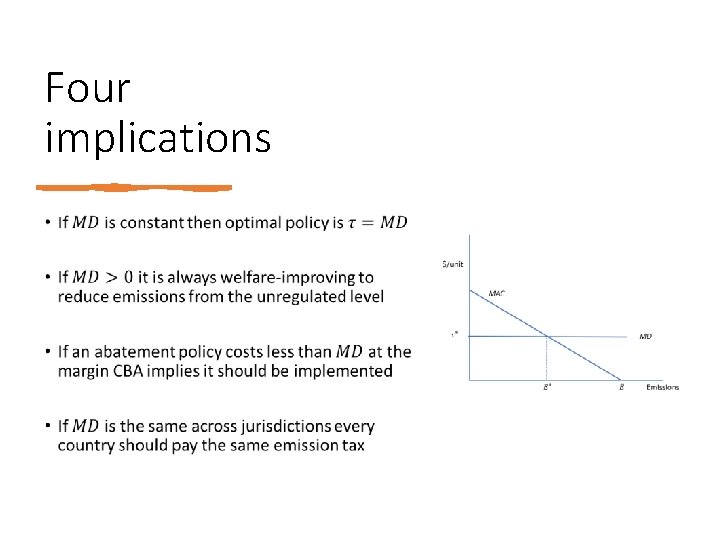
Four implications •
Sandmo analysis (& extensions) •
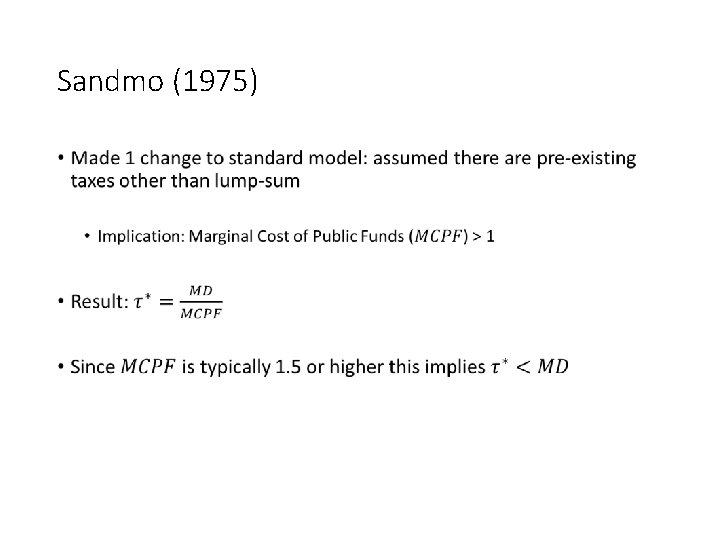
Sandmo (1975) •
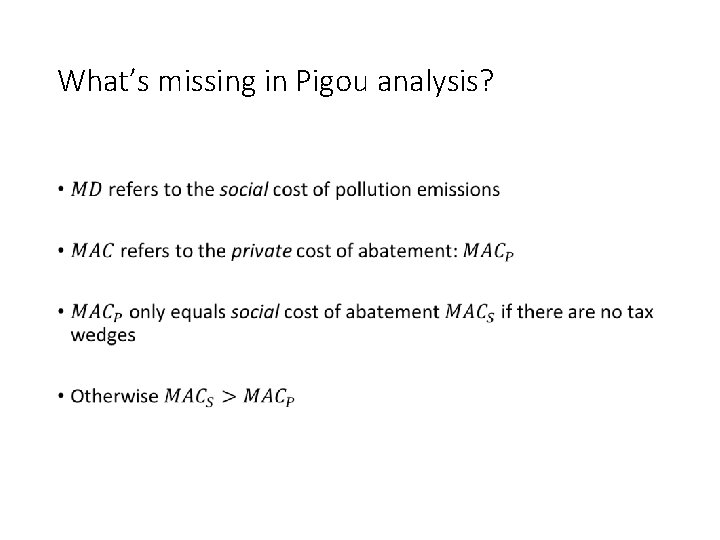
What’s missing in Pigou analysis? •
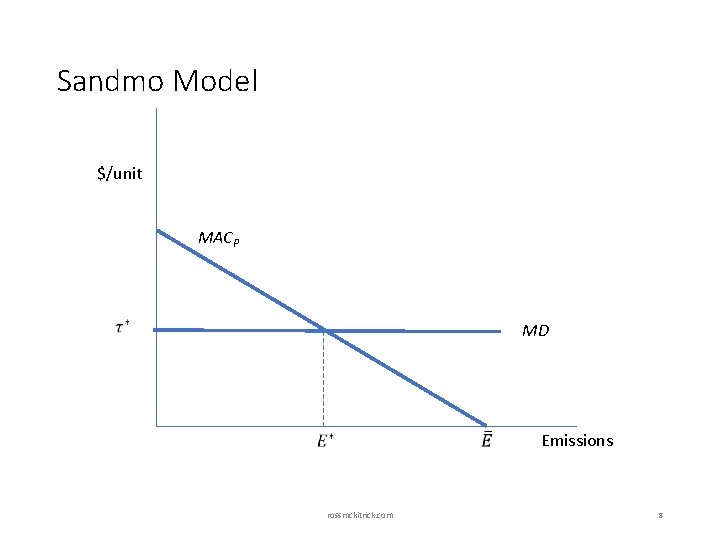
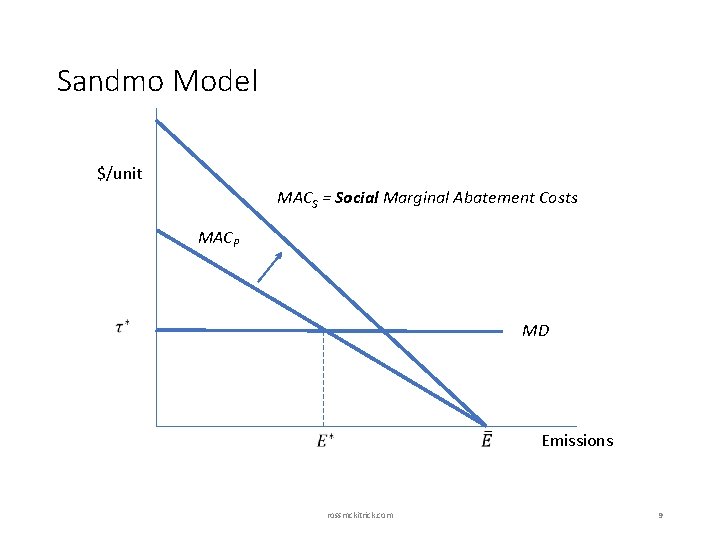
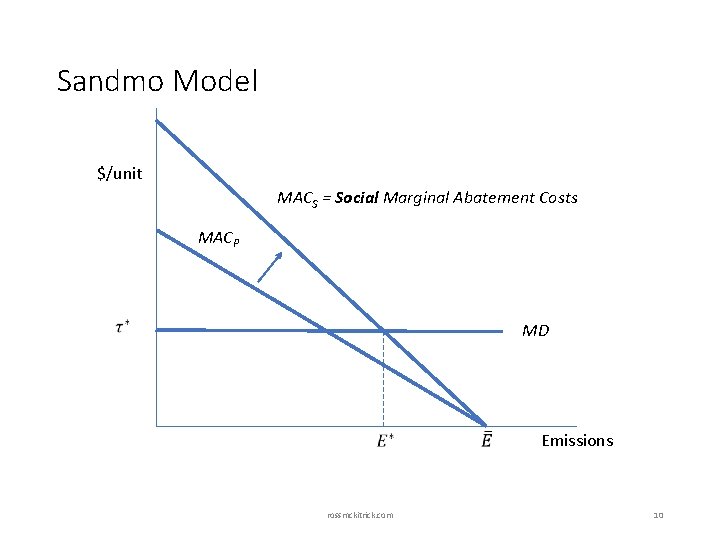
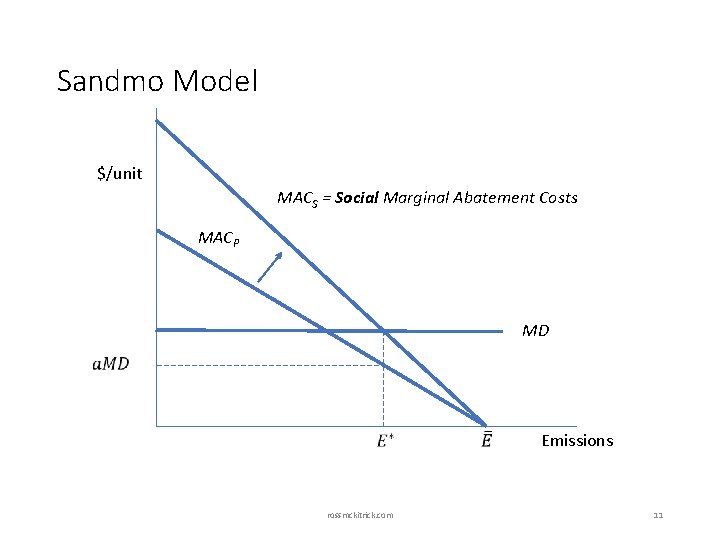
Sandmo Model $/unit MACP MD Emissions rossmckitrick. com 8
Sandmo Model $/unit MACS = Social Marginal Abatement Costs MACP MD Emissions rossmckitrick. com 9
Sandmo Model $/unit MACS = Social Marginal Abatement Costs MACP MD Emissions rossmckitrick. com 10
Sandmo Model $/unit MACS = Social Marginal Abatement Costs MACP MD Emissions rossmckitrick. com 11
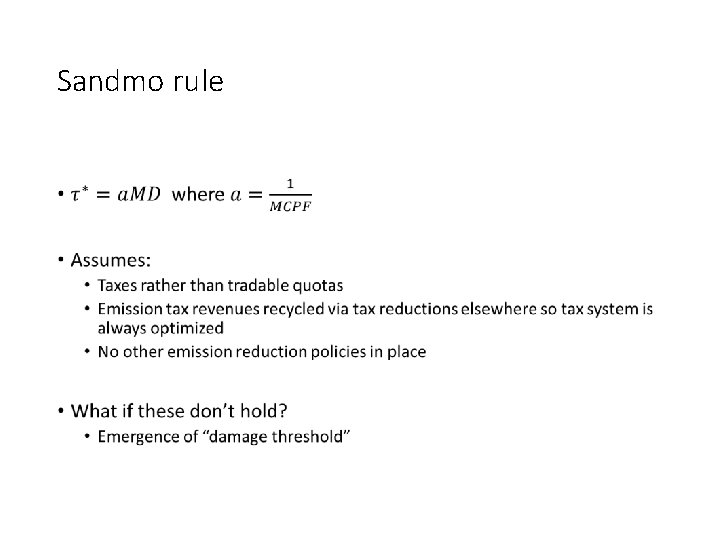
Sandmo rule •
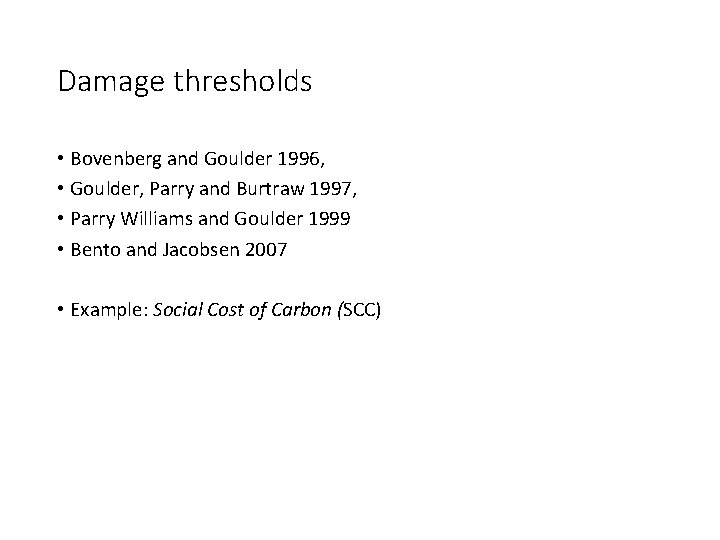
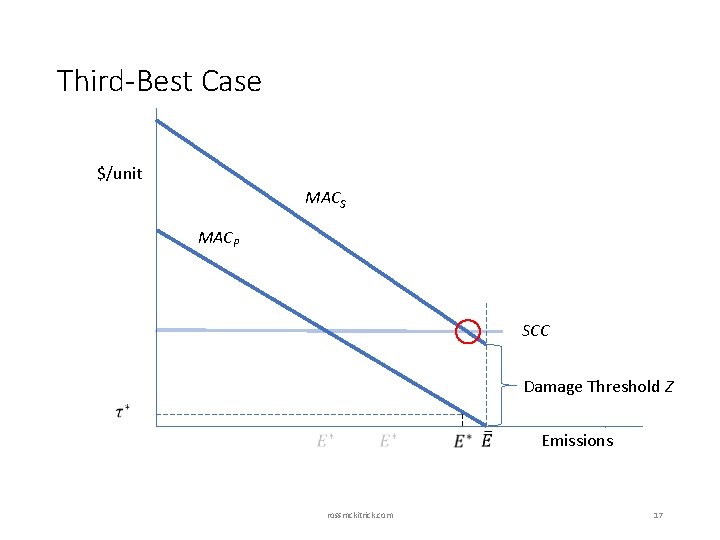
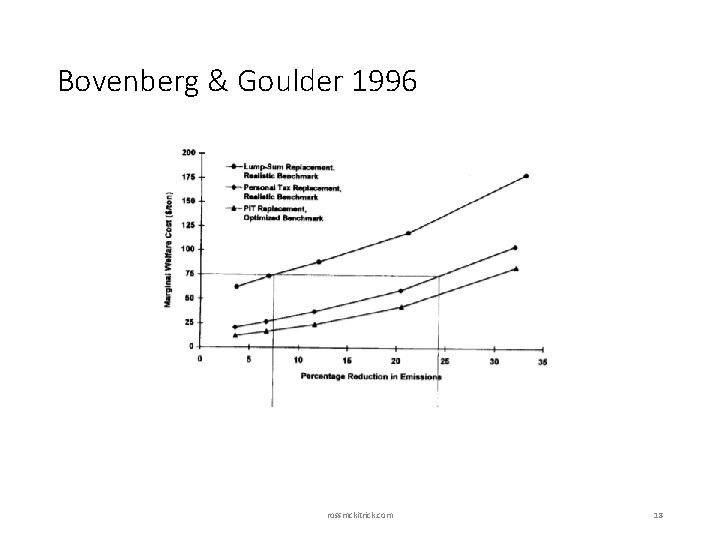
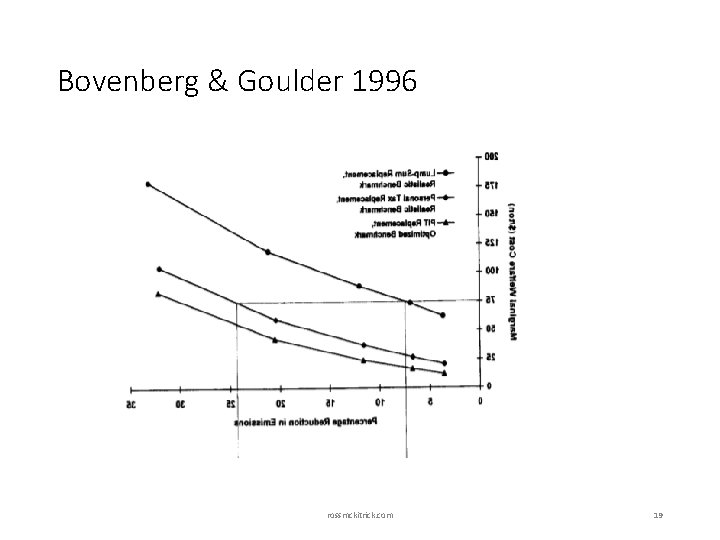
Damage thresholds • Bovenberg and Goulder 1996, • Goulder, Parry and Burtraw 1997, • Parry Williams and Goulder 1999 • Bento and Jacobsen 2007 • Example: Social Cost of Carbon (SCC)
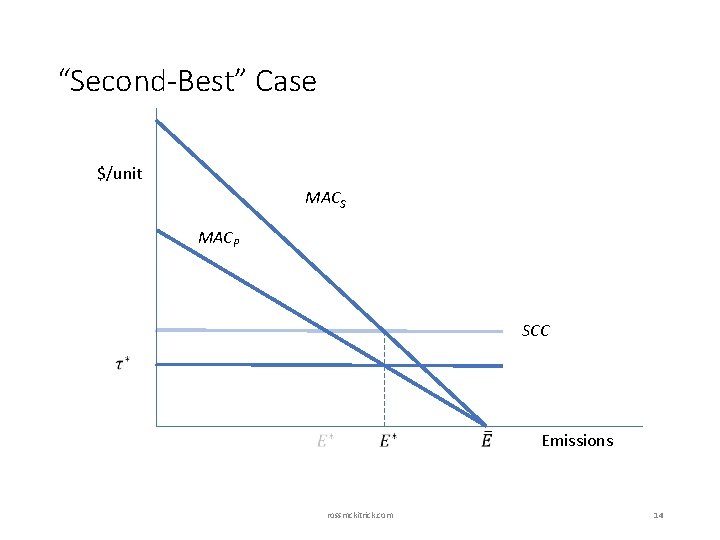
“Second-Best” Case $/unit MACS MACP SCC Emissions rossmckitrick. com 14
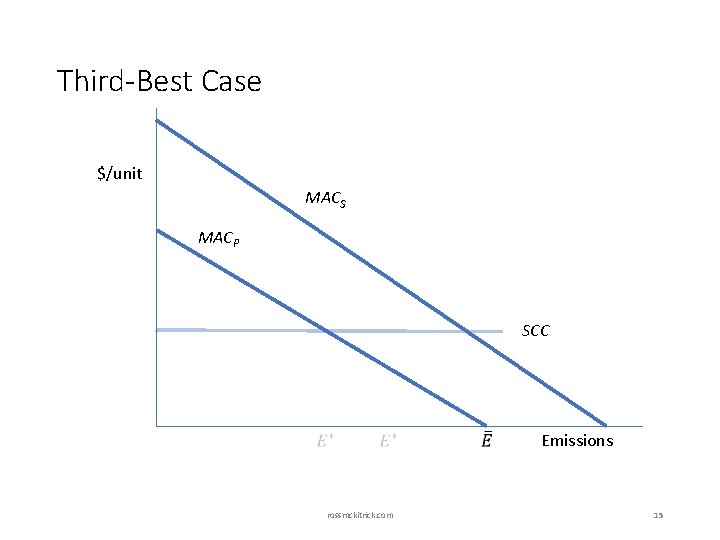
Third-Best Case $/unit MACS MACP SCC Emissions rossmckitrick. com 15
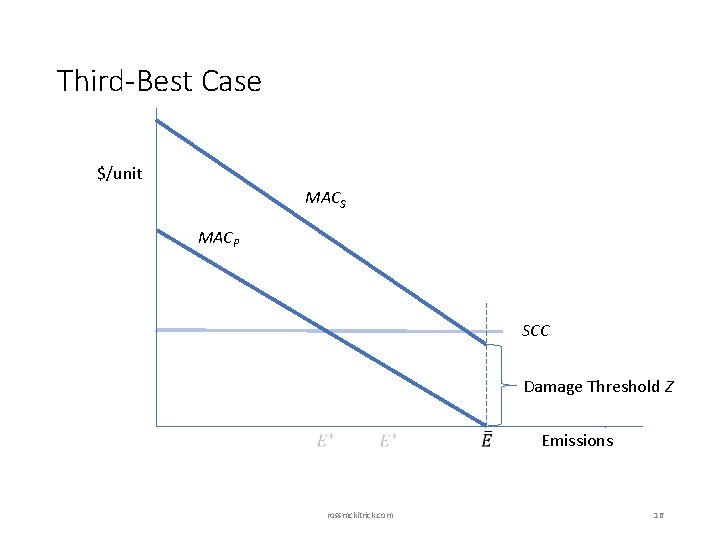
Third-Best Case $/unit MACS MACP SCC Damage Threshold Z Emissions rossmckitrick. com 16
Third-Best Case $/unit MACS MACP SCC Damage Threshold Z Emissions rossmckitrick. com 17
Bovenberg & Goulder 1996 rossmckitrick. com 18
Bovenberg & Goulder 1996 rossmckitrick. com 19
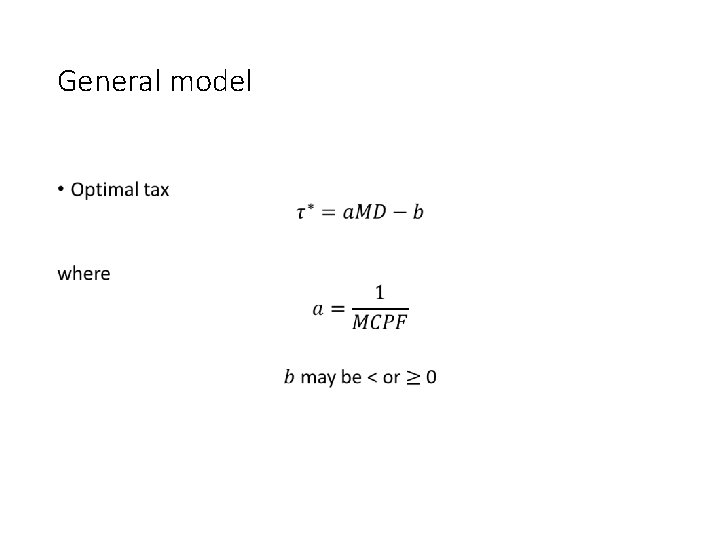
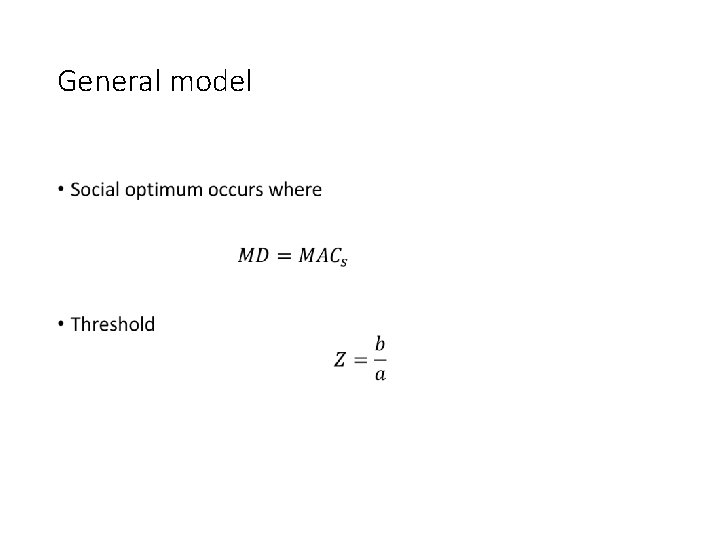
General model •
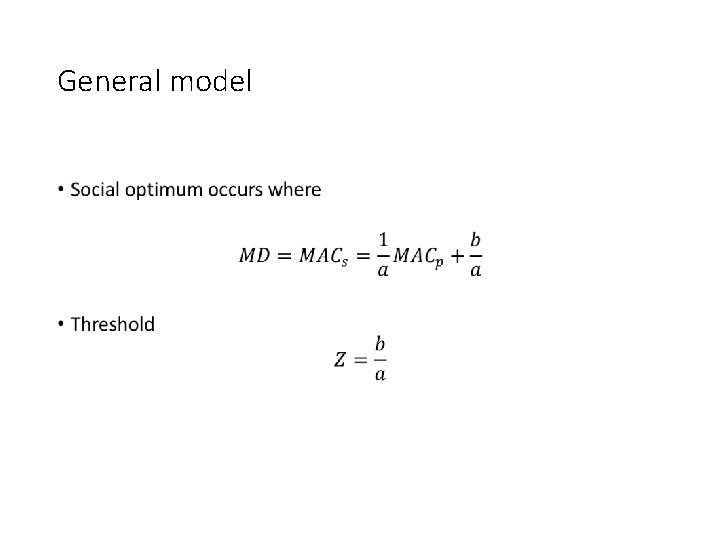
General model •
General model •
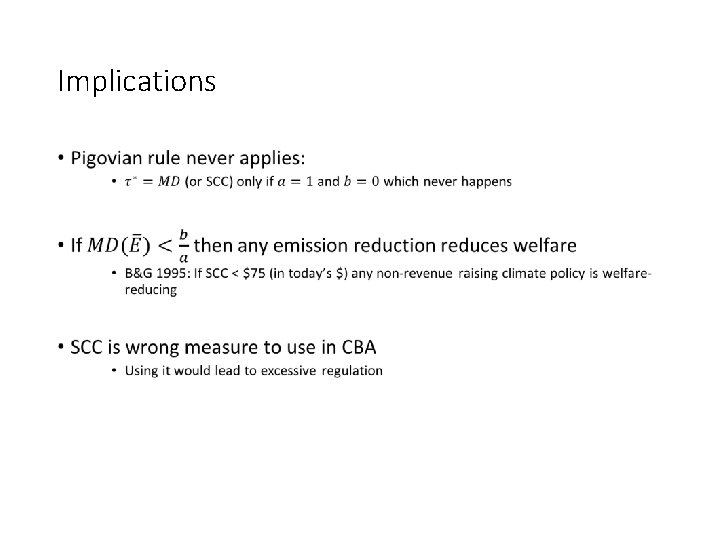
Implications •
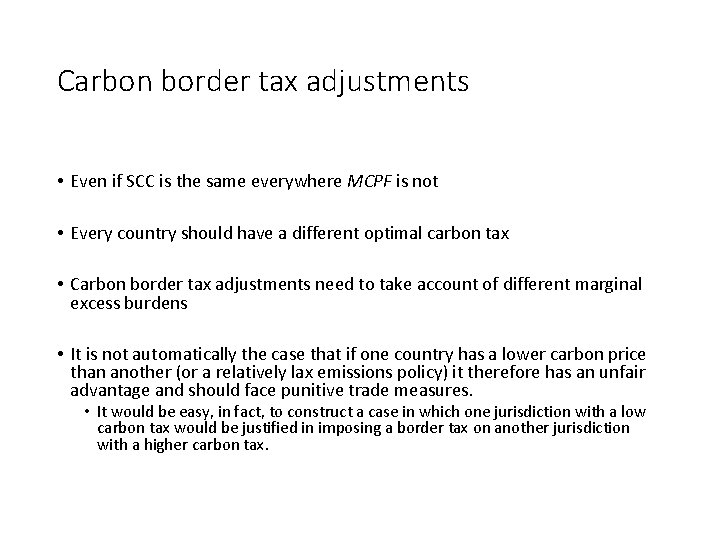
Carbon border tax adjustments • Even if SCC is the same everywhere MCPF is not • Every country should have a different optimal carbon tax • Carbon border tax adjustments need to take account of different marginal excess burdens • It is not automatically the case that if one country has a lower carbon price than another (or a relatively lax emissions policy) it therefore has an unfair advantage and should face punitive trade measures. • It would be easy, in fact, to construct a case in which one jurisdiction with a low carbon tax would be justified in imposing a border tax on another jurisdiction with a higher carbon tax.
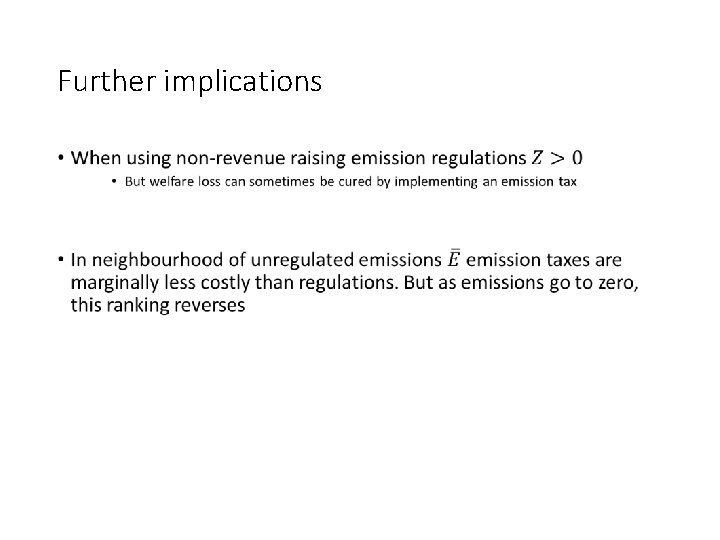
Further implications •