
Reconceptualising the Welfare State Model The Rise of

- Slides: 22
Reconceptualising the Welfare State Model: The Rise of a ‘Selective Welfare State’ in the United Kingdom? Nasrul Ismail Visiting Research Fellow School of Law, University of Bristol Nasrul. ismail@bristol. ac. uk @na 5 ru 1 | #PP 2013
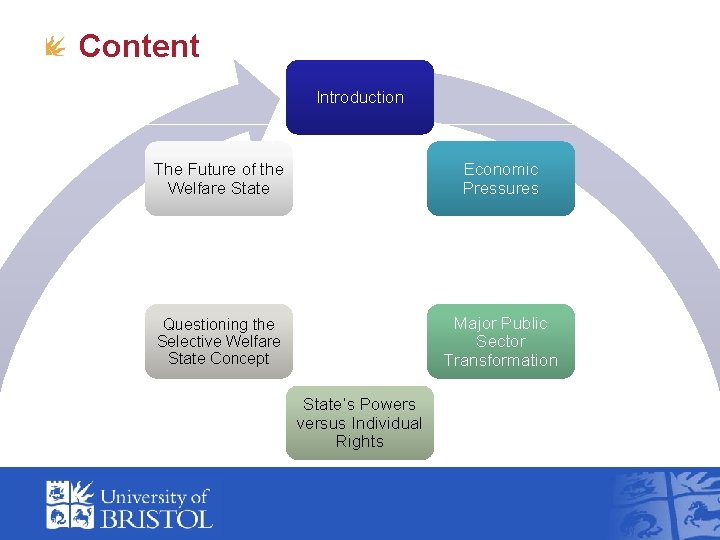
Content Introduction The Future of the Welfare State Economic Pressures Questioning the Selective Welfare State Concept Major Public Sector Transformation State’s Powers versus Individual Rights
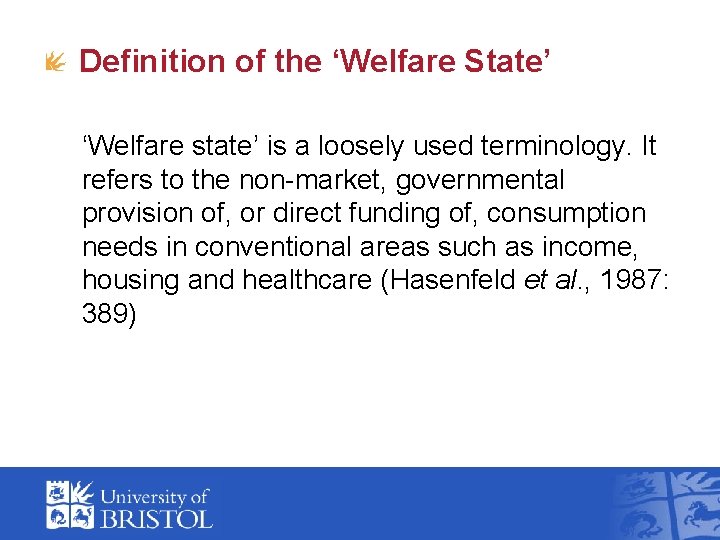
Definition of the ‘Welfare State’ ‘Welfare state’ is a loosely used terminology. It refers to the non-market, governmental provision of, or direct funding of, consumption needs in conventional areas such as income, housing and healthcare (Hasenfeld et al. , 1987: 389)
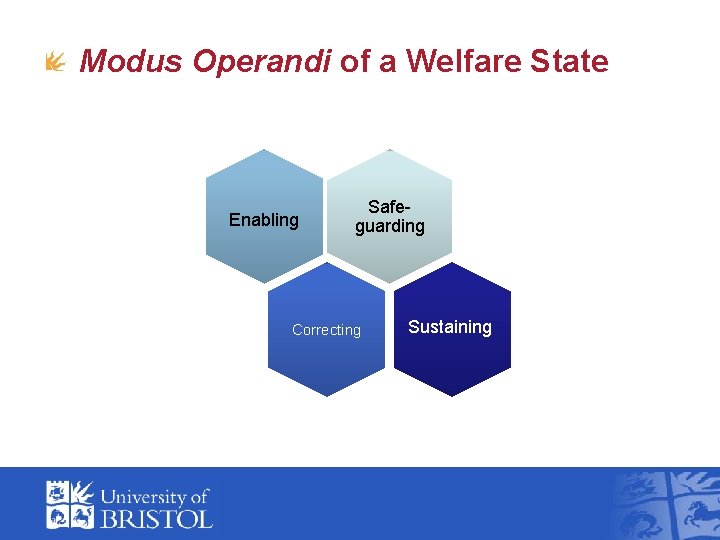
Modus Operandi of a Welfare State Enabling Safeguarding Correcting Sustaining
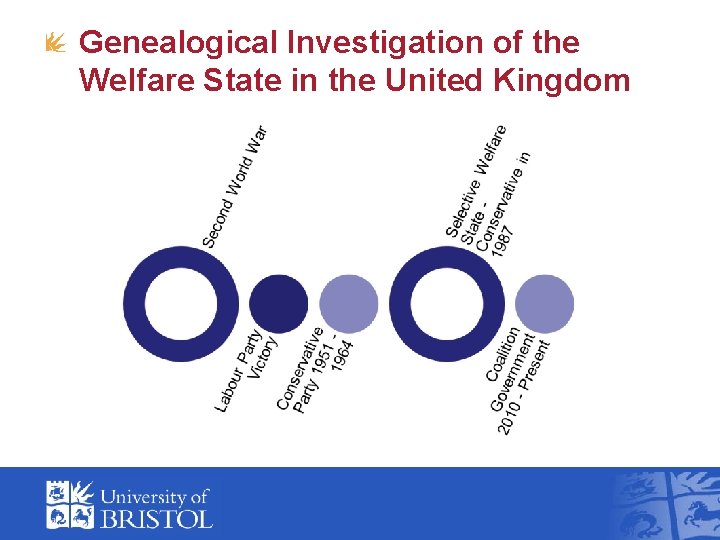
Genealogical Investigation of the Welfare State in the United Kingdom Sustaining
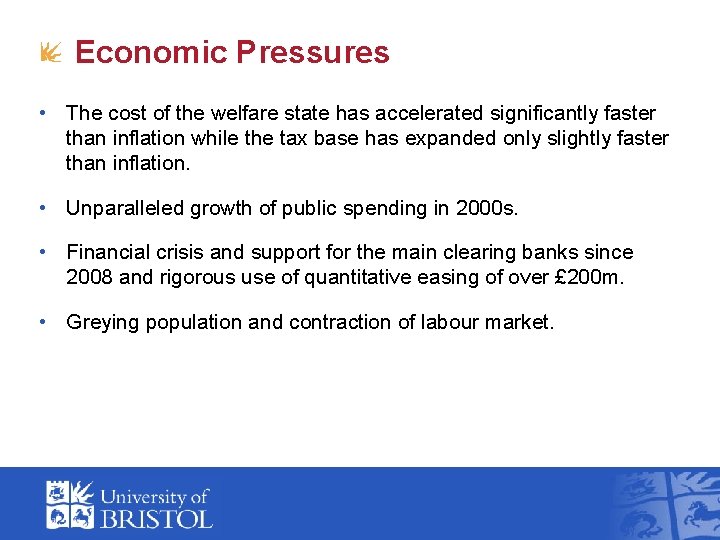
Economic Pressures • The cost of the welfare state has accelerated significantly faster than inflation while the tax base has expanded only slightly faster than inflation. • Unparalleled growth of public spending in 2000 s. • Financial crisis and support for the main clearing banks since 2008 and rigorous use of quantitative easing of over £ 200 m. • Greying population and contraction of labour market.
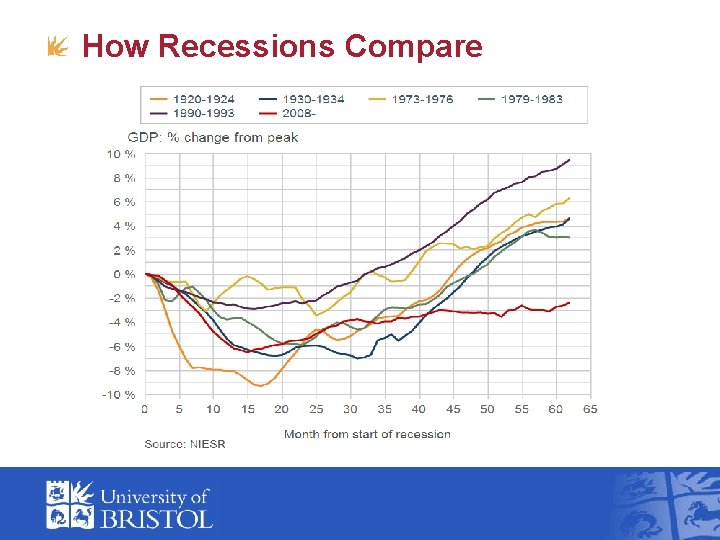
How Recessions Compare
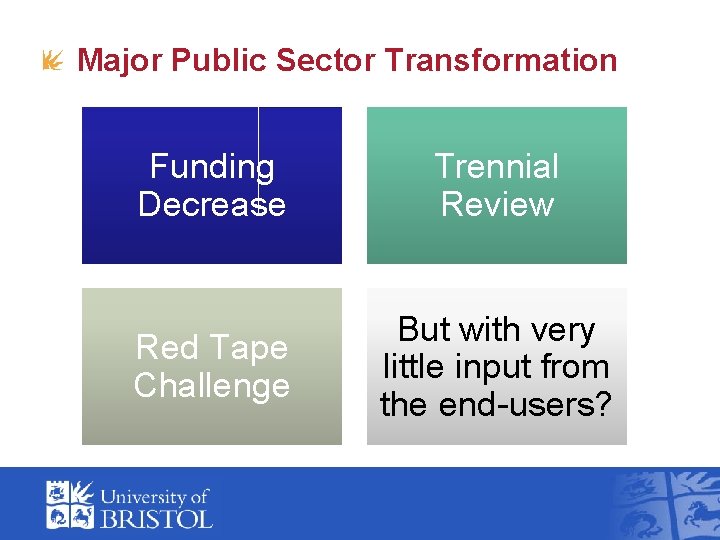
Major Public Sector Transformation Funding Decrease Trennial Review Red Tape Challenge But with very little input from the end-users?
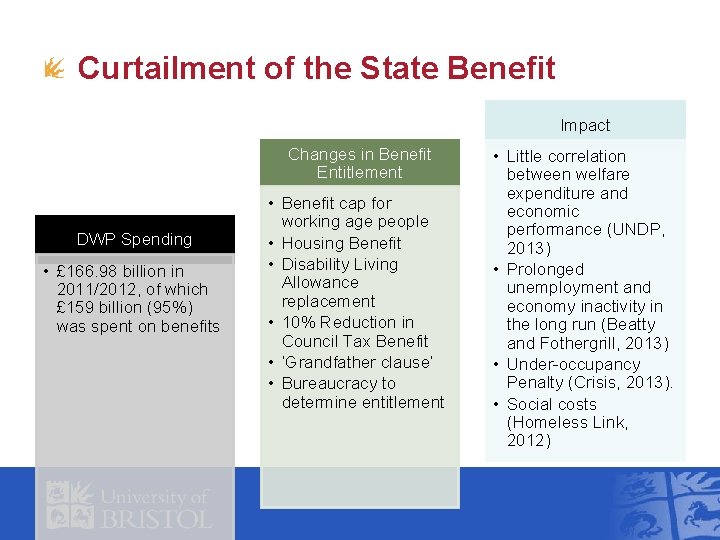
Curtailment of the State Benefit Impact Changes in Benefit Entitlement DWP Spending • £ 166. 98 billion in 2011/2012, of which £ 159 billion (95%) was spent on benefits • Benefit cap for working age people • Housing Benefit • Disability Living Allowance replacement • 10% Reduction in Council Tax Benefit • ‘Grandfather clause’ • Bureaucracy to determine entitlement • Little correlation between welfare expenditure and economic performance (UNDP, 2013) • Prolonged unemployment and economy inactivity in the long run (Beatty and Fothergrill, 2013) • Under-occupancy Penalty (Crisis, 2013). • Social costs (Homeless Link, 2012)
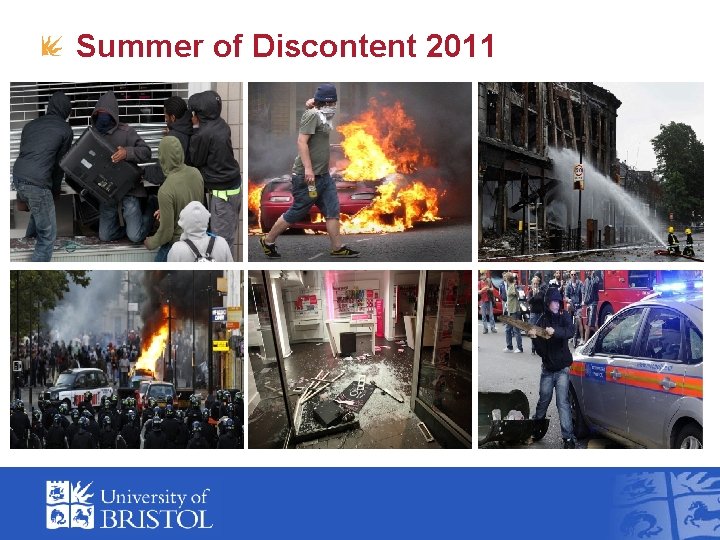
Summer of Discontent 2011
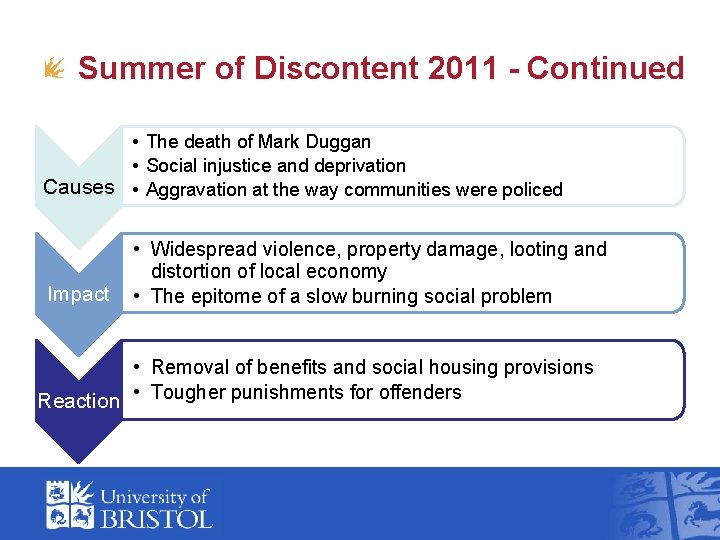
Summer of Discontent 2011 - Continued • The death of Mark Duggan • Social injustice and deprivation Causes • Aggravation at the way communities were policed Impact • Widespread violence, property damage, looting and distortion of local economy • The epitome of a slow burning social problem • Removal of benefits and social housing provisions Reaction • Tougher punishments for offenders
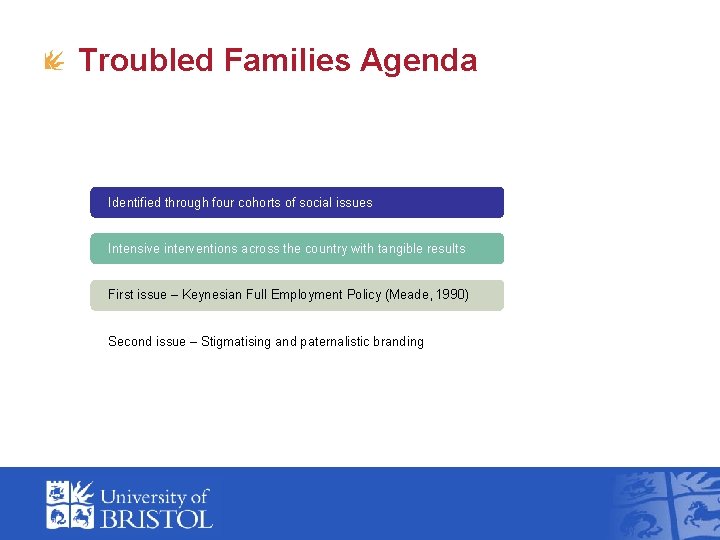
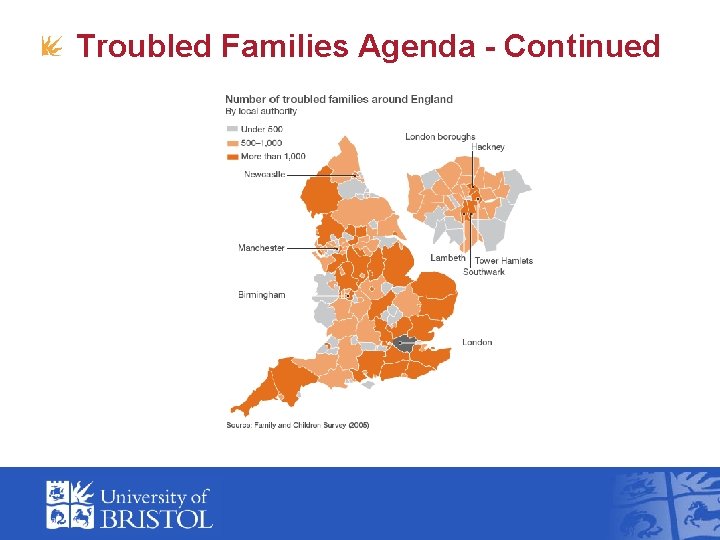
Troubled Families Agenda Identified through four cohorts of social issues Intensive interventions across the country with tangible results First issue – Keynesian Full Employment Policy (Meade, 1990) Second issue – Stigmatising and paternalistic branding
Troubled Families Agenda - Continued
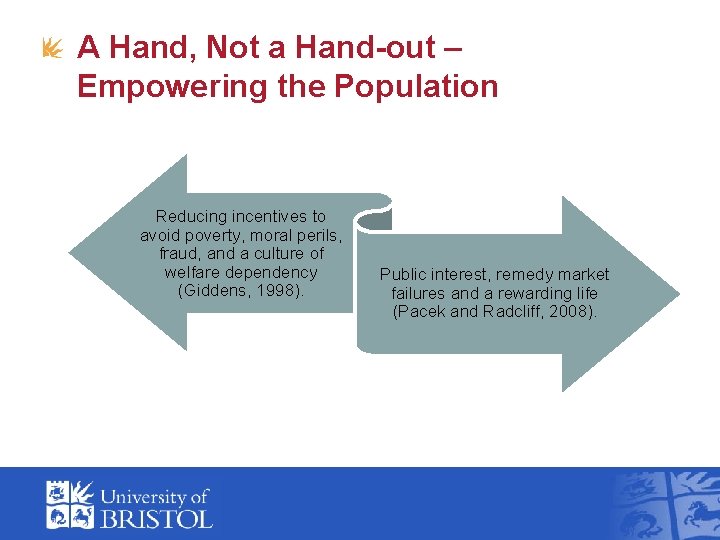
A Hand, Not a Hand-out – Empowering the Population Reducing incentives to avoid poverty, moral perils, fraud, and a culture of welfare dependency (Giddens, 1998). Public interest, remedy market failures and a rewarding life (Pacek and Radcliff, 2008).
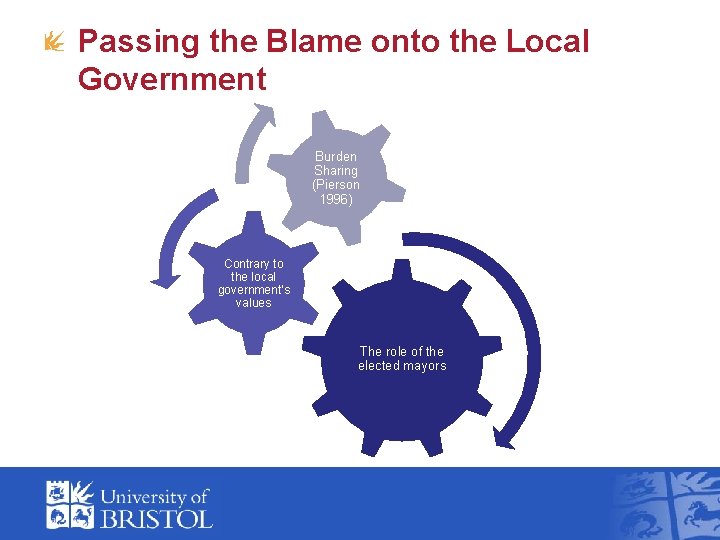
Passing the Blame onto the Local Government Burden Sharing (Pierson 1996) Contrary to the local government’s values The role of the elected mayors
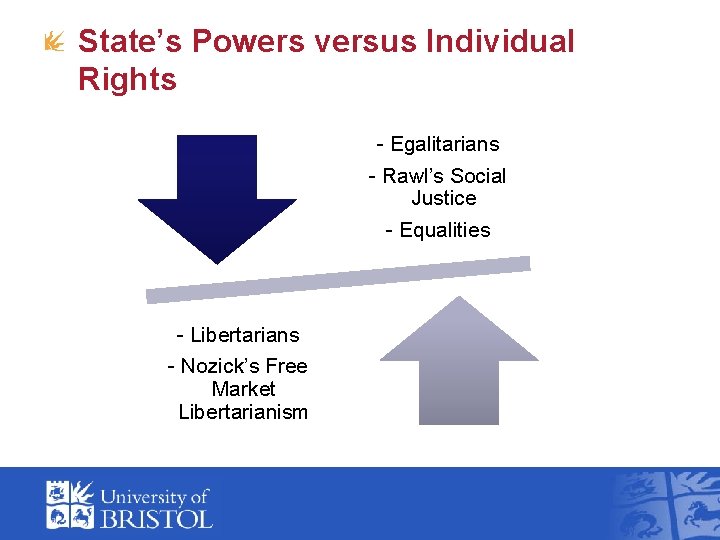
State’s Powers versus Individual Rights - Egalitarians - Rawl’s Social Justice - Equalities - Libertarians - Nozick’s Free Market Libertarianism
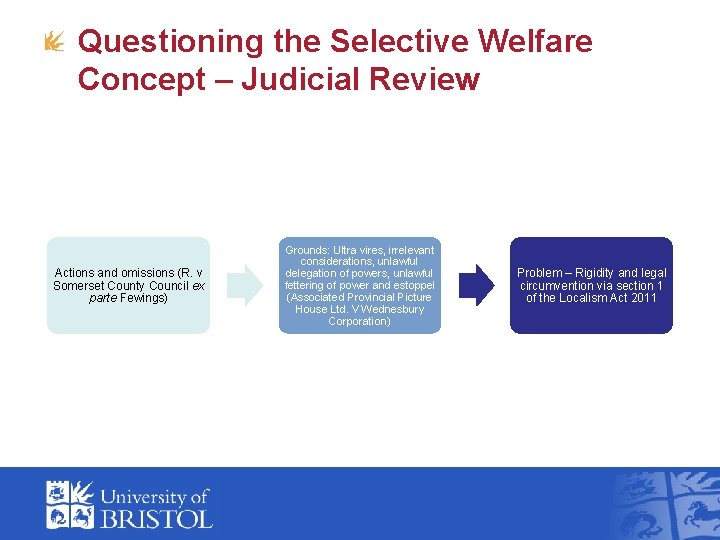
Questioning the Selective Welfare Concept – Judicial Review Actions and omissions (R. v Somerset County Council ex parte Fewings) Grounds: Ultra vires, irrelevant considerations, unlawful delegation of powers, unlawful fettering of power and estoppel (Associated Provincial Picture House Ltd. V Wednesbury Corporation) Problem – Rigidity and legal circumvention via section 1 of the Localism Act 2011
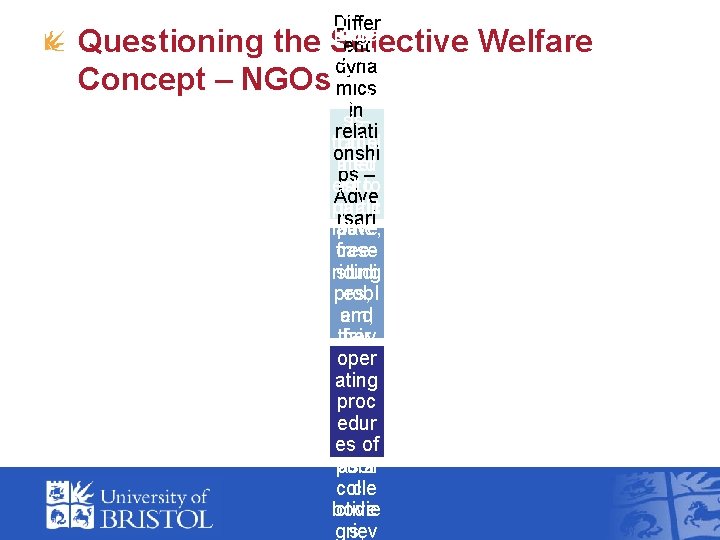
el – Differ Indivi Enga ent dual gem dyna case ent mics work issue in sis– relati transl Little onshi ated inter ps – intoto est Adve qualit partic rsari ative ipate, al or case free. Colla studi riding borat es, probl ive and em, they fair are oper furth ating er proc adva edur nced es of as a publi colle c ctive bodie griev s, Questioning the Selective Welfare Concept – NGOs
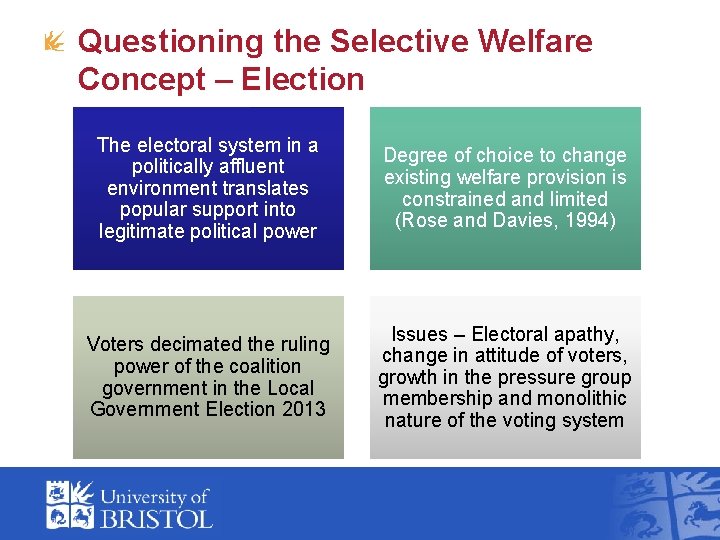
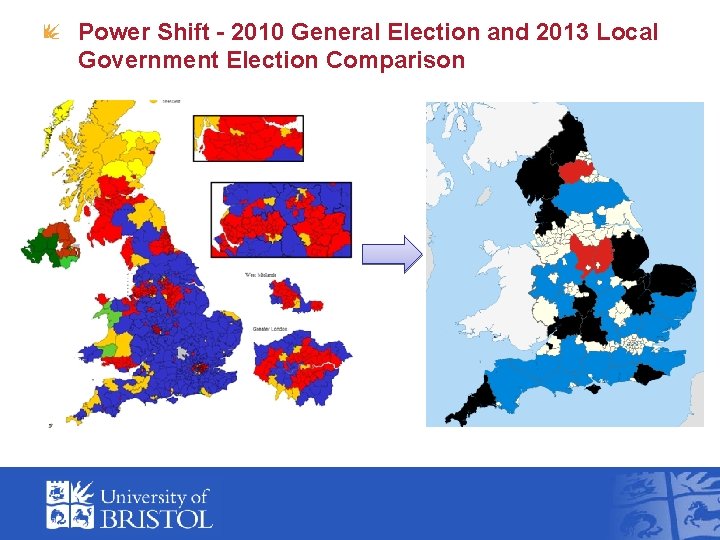
Questioning the Selective Welfare Concept – Election The electoral system in a politically affluent environment translates popular support into legitimate political power Degree of choice to change existing welfare provision is constrained and limited (Rose and Davies, 1994) Voters decimated the ruling power of the coalition government in the Local Government Election 2013 Issues – Electoral apathy, change in attitude of voters, growth in the pressure group membership and monolithic nature of the voting system
Power Shift - 2010 General Election and 2013 Local Government Election Comparison
Concluding Remarks
Any Questions?