
Recommended Literacy Practices for Preschool English Learners Resource



- Slides: 49
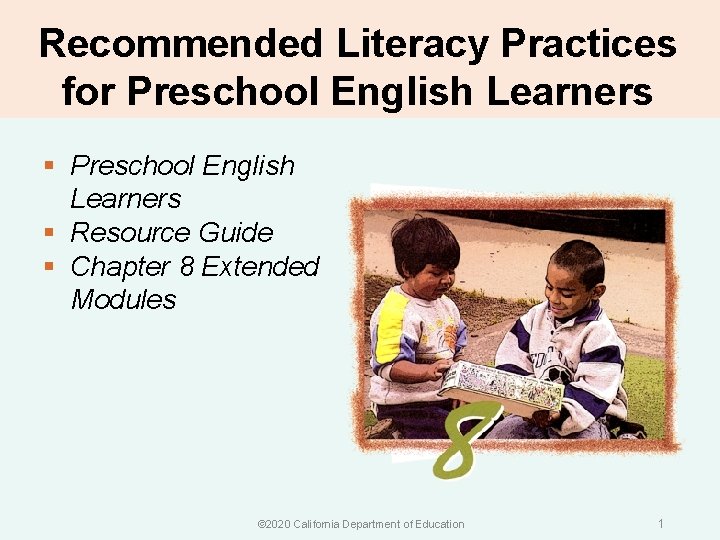
Recommended Literacy Practices for Preschool English Learners § Resource Guide § Chapter 8 Extended Modules © 2020 California Department of Education 1
Arrival Activity: KWL § Look at your completed Handout 1: Early Literacy KWL. § Share one of your statements to: - Already know about early literacy for English learners - Want to know about early literacy for English learners § Wait until the end to add a statement about something you: - Learned about early literacy for English learners © 2020 California Department of Education 2
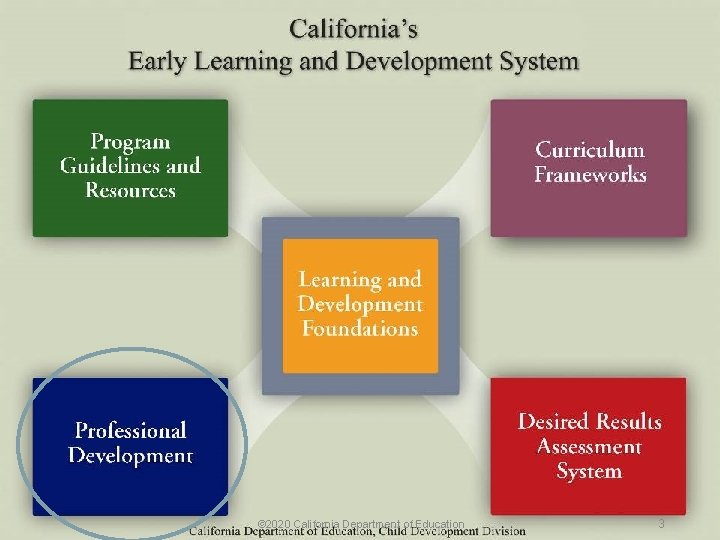
California's Early Learning and Development System: Professional Development © 2020 California Department of Education 3
Today’s Focus What children should know and do Teacher strategies to support children’s learning © 2020 California Department of Education 4
Training Outcomes § Review key points from Chapter Eight of the PEL Resource Guide. § Explore practices forming meaningful partnerships with families to promote language and literacy development. § Connect the PLF with the PCF and with effective practices for preschool English learners. § Practice recommended strategies for fostering preschool English learners’ language and literacy development. © 2020 California Department of Education 5
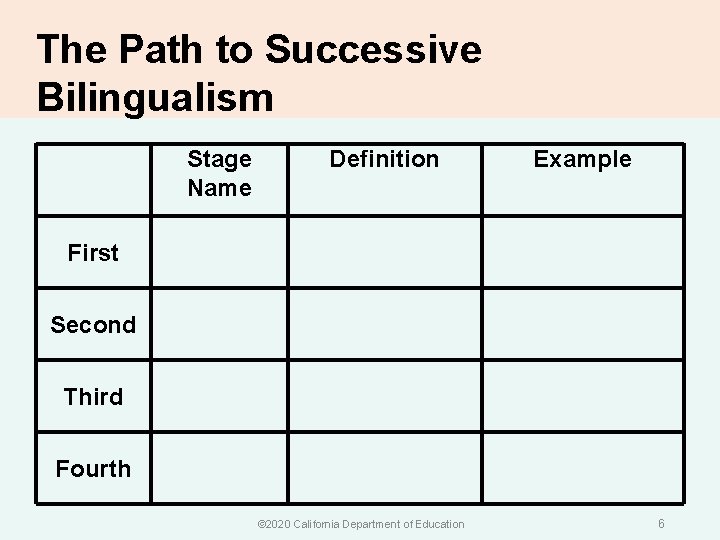
The Path to Successive Bilingualism Stage Name Definition Example First Second Third Fourth © 2020 California Department of Education 6
Educators Need to Know Early childhood educators need to be knowledgeable about: § The role of the home language § The influence of cultural values § The stages of second language development PCF, Vol. 1, p 179 © 2020 California Department of Education 7
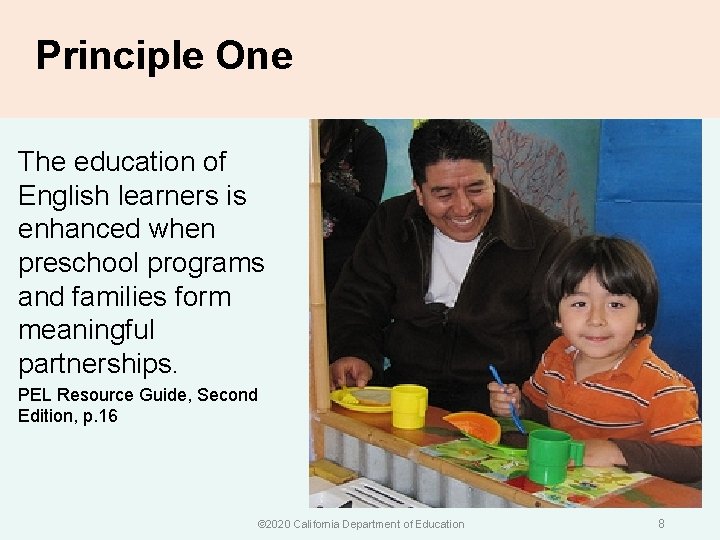
Principle One The education of English learners is enhanced when preschool programs and families form meaningful partnerships. PEL Resource Guide, Second Edition, p. 16 © 2020 California Department of Education 8
Principle One: Debrief § Ask a family member or knowledgeable community resource to share appropriate social conventions for child’s language and culture. § Invite parents or other family members to share cultural practices. § Identify stories that build upon children’s backgrounds. PCF, Vol. 1, pp. 200 -208 © 2020 California Department of Education 9
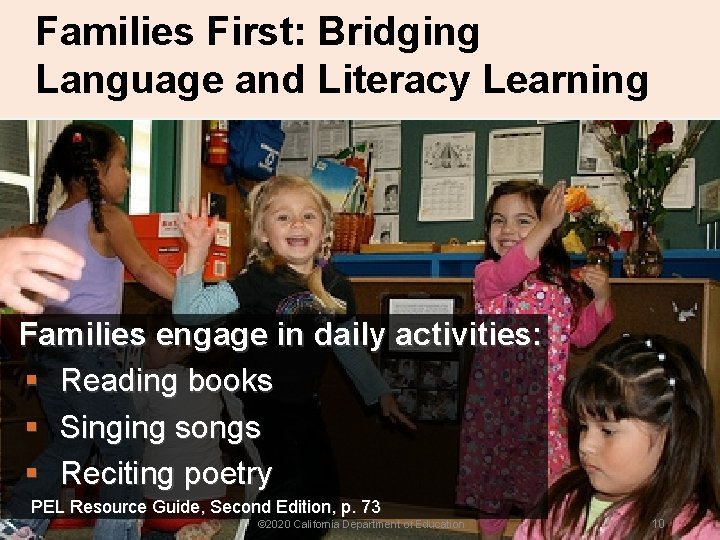
Families First: Bridging Language and Literacy Learning Families engage in daily activities: § Reading books § Singing songs § Reciting poetry PEL Resource Guide, Second Edition, p. 73 © 2020 California Department of Education 10
Connecting Home and School Literacy Practices § Principle Nine: Engaging in multiple literacy practices, such as reading books, singing songs, and reading poetry, is part of the daily life of most families. PEL Resource Guide, Second Edition, p. 73 § HO 8 E: Identifying the Early Literacy Skills Found in Songs, Books, and Rhymes Used by Families © 2020 California Department of Education 11
Family Language & Literacy Activities § § § § Poems, rhymes, verses Fingerplays Music, songs Art Dance Catalogs Recipe books, menus Museums, parks § § § Board games Family stories Mealtime conversations Car/plane games Magazines Newspapers/Comics © 2020 California Department of Education 12
Connections to the Preschool Learning Foundations Children are first introduced to language and literacy in the home language and these experiences provide an important foundation for success in learning literacy in English. PLF, Vol. 1, p. 103 © 2020 California Department of Education 13
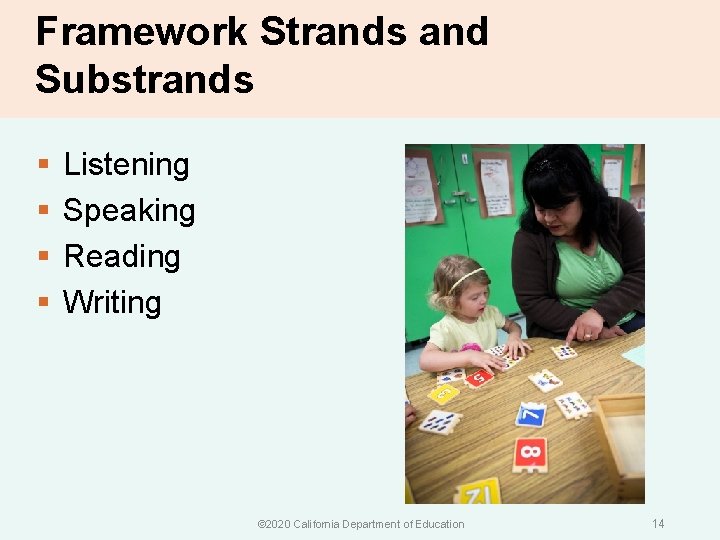
Framework Strands and Substrands § § Listening Speaking Reading Writing © 2020 California Department of Education 14
Making Connections: Language and Literacy Foundations Language Literacy § Language Use and Conventions § Vocabulary § Grammar § Concepts about Print § Phonological Awareness § Alphabetics / Print Recognition § Comprehension and Analysis § Literacy Interest and Response Writing § Writing Strategies © 2020 California Department of Education 15
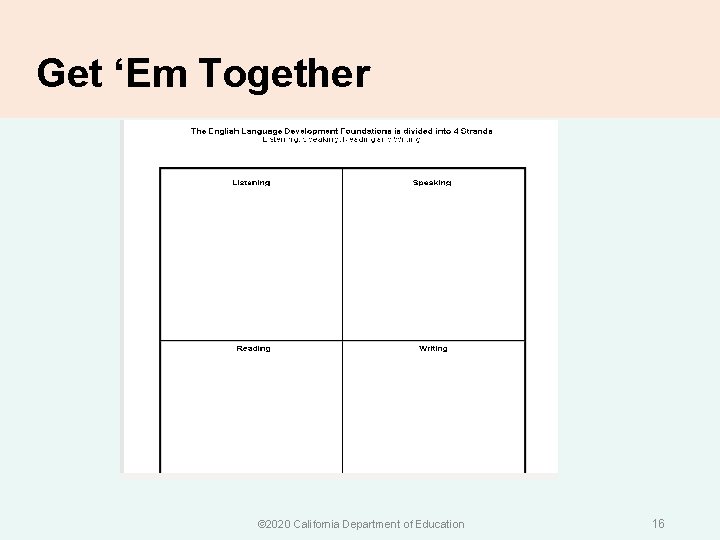
Get ‘Em Together © 2020 California Department of Education 16
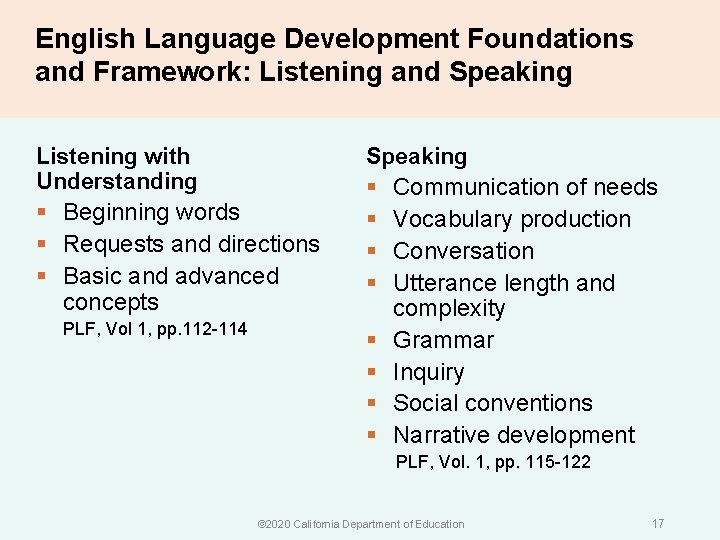
English Language Development Foundations and Framework: Listening and Speaking Listening with Understanding § Beginning words § Requests and directions § Basic and advanced concepts PLF, Vol 1, pp. 112 -114 Speaking § Communication of needs § Vocabulary production § Conversation § Utterance length and complexity § Grammar § Inquiry § Social conventions § Narrative development PLF, Vol. 1, pp. 115 -122 © 2020 California Department of Education 17
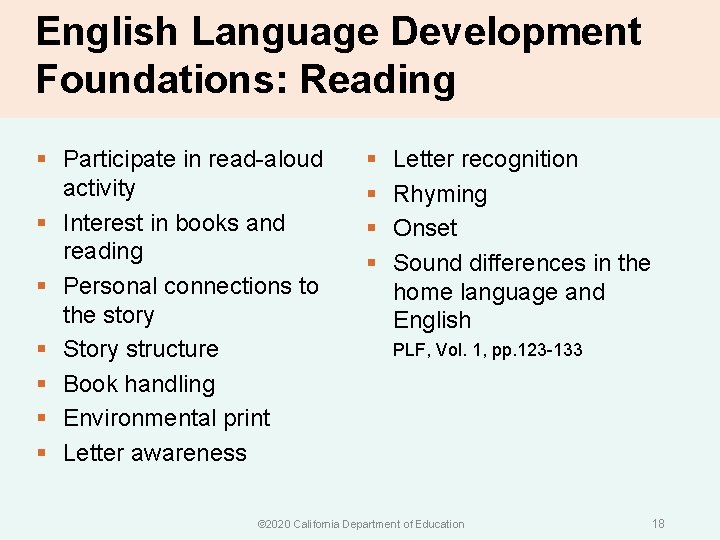
English Language Development Foundations: Reading § Participate in read-aloud activity § Interest in books and reading § Personal connections to the story § Story structure § Book handling § Environmental print § Letter awareness § § Letter recognition Rhyming Onset Sound differences in the home language and English PLF, Vol. 1, pp. 123 -133 © 2020 California Department of Education 18
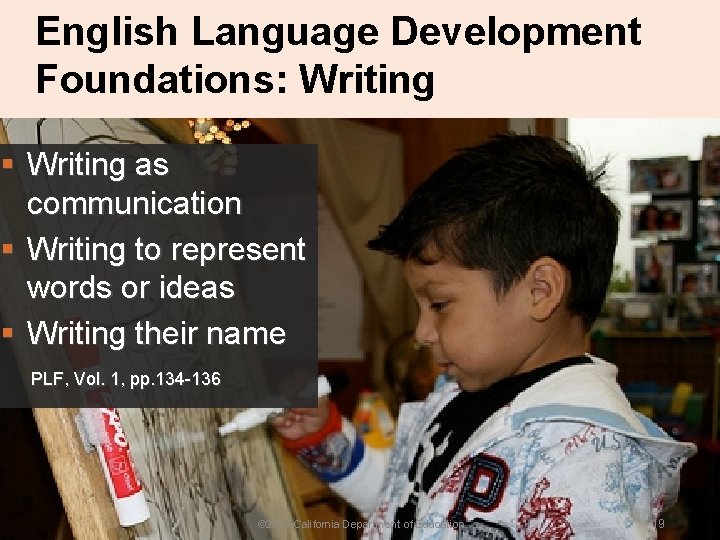
English Language Development Foundations: Writing § Writing as communication § Writing to represent words or ideas § Writing their name PLF, Vol. 1, pp. 134 -136 © 2020 California Department of Education 19
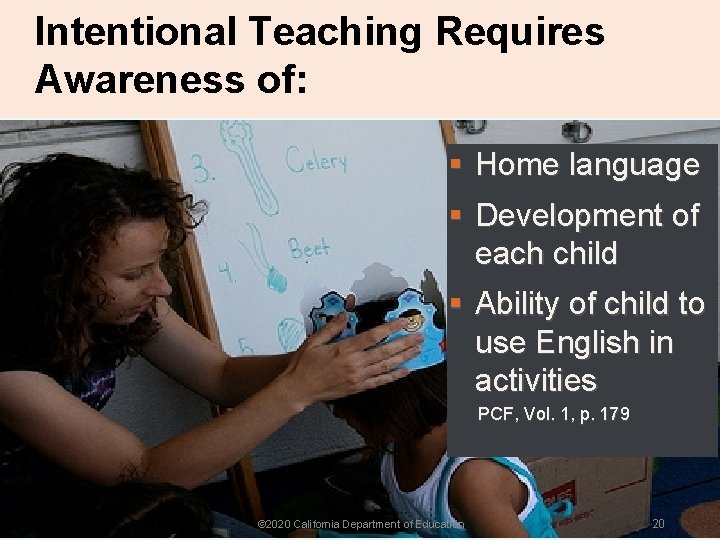
Intentional Teaching Requires Awareness of: § Home language § Development of each child § Ability of child to use English in activities PCF, Vol. 1, p. 179 © 2020 California Department of Education 20
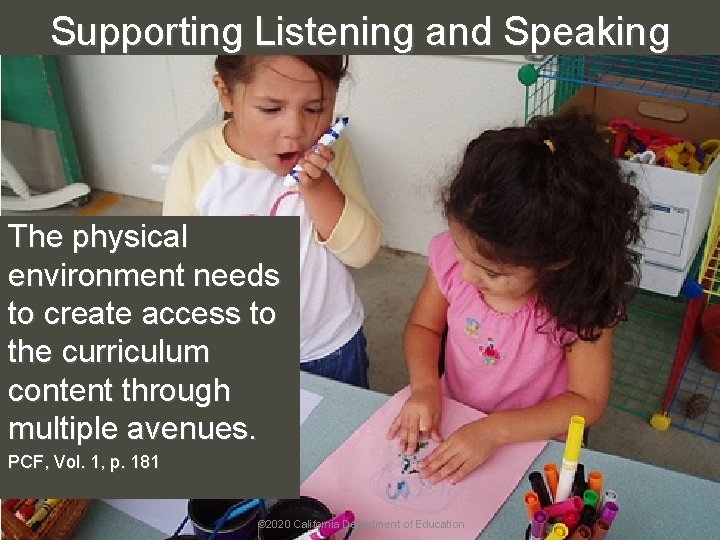
Supporting Listening and Speaking The physical environment needs to create access to the curriculum content through multiple avenues. PCF, Vol. 1, p. 181 © 2020 California Department of Education 21
Recognize Where Each Child Is and Respond 1. Review your at-home reading: pages 5455 of the PEL Guide. 2. Join a breakout room with your assigned second language learning state stage. 3. Identify a recorder and reporter. 4. Each group will record and teach on their strategy. © 2020 California Department of Education 22
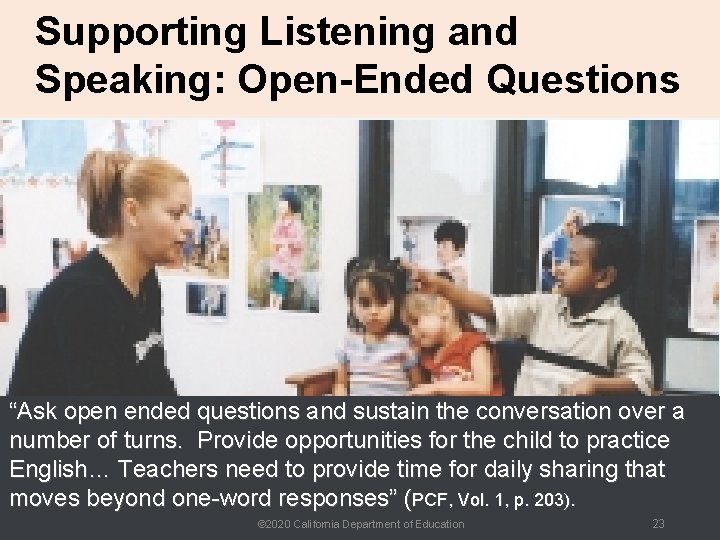
Supporting Listening and Speaking: Open-Ended Questions “Ask open ended questions and sustain the conversation over a number of turns. Provide opportunities for the child to practice English… Teachers need to provide time for daily sharing that moves beyond one-word responses” (PCF, Vol. 1, p. 203). © 2020 California Department of Education 23
Known-Answer or Closed-Ended Questions § Teacher knows the answer to the question - Example: What color is my shirt? § Can serve as: - A quick assessment of a child’s knowledge of a simple concept - A way to include English learners at the oneword stage © 2020 California Department of Education 24
Open-Ended Questions § Encourage oral language use and development. § Create an opening for children to draw from their life experiences. § Responses usually elicit: - longer phrases or sentences - more complex language - active participation § Example: What do you like about going to the county fair? © 2020 California Department of Education 25
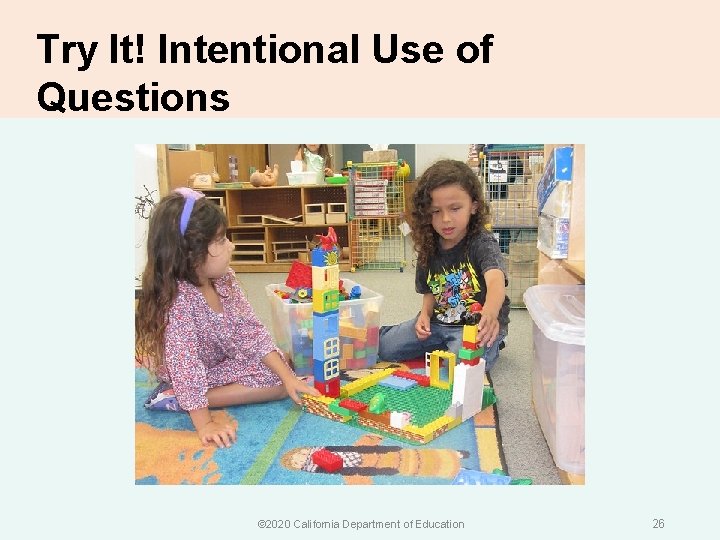
Try It! Intentional Use of Questions © 2020 California Department of Education 26
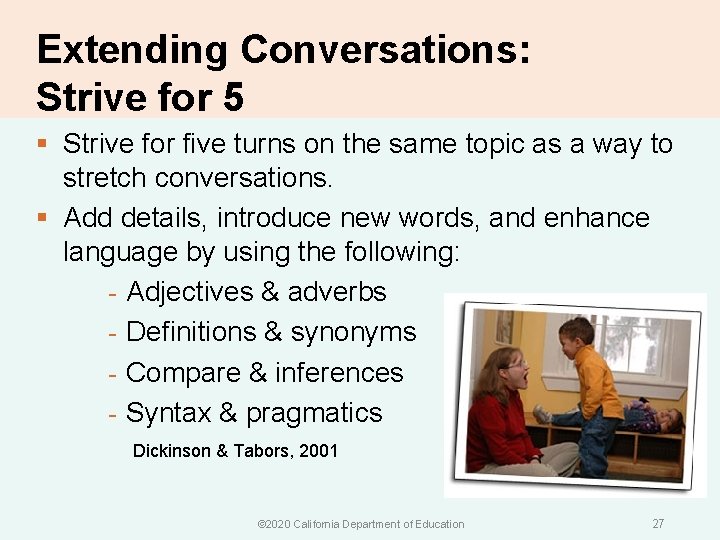
Extending Conversations: Strive for 5 § Strive for five turns on the same topic as a way to stretch conversations. § Add details, introduce new words, and enhance language by using the following: - Adjectives & adverbs - Definitions & synonyms - Compare & inferences - Syntax & pragmatics Dickinson & Tabors, 2001 © 2020 California Department of Education 27
Example of Strive for 5 § Teacher: What would you do if you found a giraffe outside? (Turn 1) § Child: I would leave it alone. (Turn 2) § What might the teacher add next? Adapted from: Dickinson & Tabors (2001)
Example of Strive for 5 § Teacher: Why would you leave it alone? (Turn 3) § Child: ‘Cause I don’t want to bring it home. (Turn 4) § What might the teacher add next? Adapted from: Dickinson & Tabors (2001)
Example of Strive for 5 § Teacher: No? (Turn 5) § Child: They would have to make a really big house. (Turn 6) § Teacher: A gigantic house. (Turn 7) This “Strive for 5” example helps build language for a lifetime and would take less than 30 seconds.
Try It! Strive for 5 1. 2. 3. 4. What have you been doing lately? What did you do this weekend? Where have you been recently? What is something to which you are looking forward? 5. Who are some of the people you enjoy? © 2020 California Department of Education 31
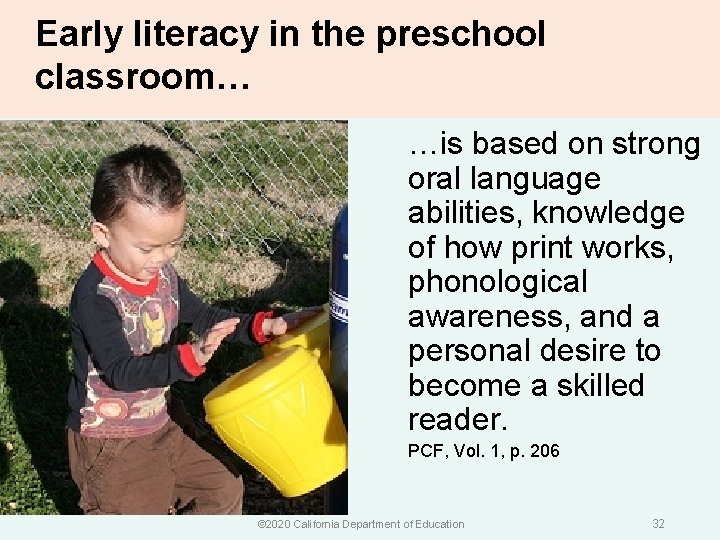
Early literacy in the preschool classroom… …is based on strong oral language abilities, knowledge of how print works, phonological awareness, and a personal desire to become a skilled reader. PCF, Vol. 1, p. 206 © 2020 California Department of Education 32
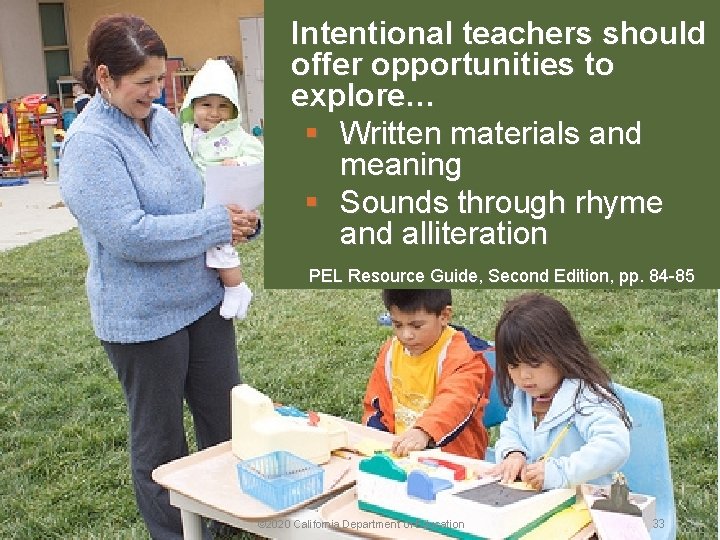
Principle Ten Intentional teachers should offer opportunities to explore… § Written materials and meaning § Sounds through rhyme and alliteration PEL Resource Guide, Second Edition, pp. 84 -85 © 2020 California Department of Education 33
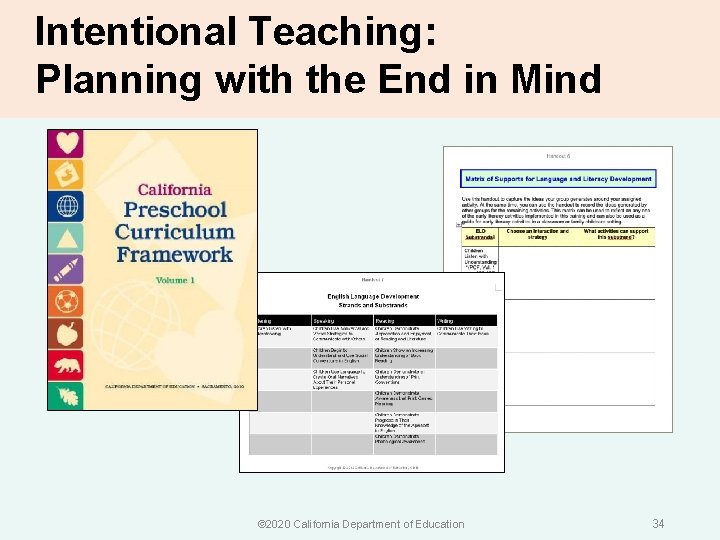
Intentional Teaching: Planning with the End in Mind © 2020 California Department of Education 34
Try It! Supports for Language and Literacy Development Participant Instructions: 1. Each breakout room will be assigned one substrand from Handout 7. 2. Each group will identify a recorder and a reporter. 3. Please read the interactions and strategies for your assigned substrand on the PCF pages indicated on handout 7. 4. Recorder will record your findings on Handout 6. 5. We will invite you back to the main room for a large group share out. © 2020 California Department of Education 35
Listening Substrand: Children Listen with Understanding § Chose an interaction and strategy from the Preschool Curriculum Framework. § What activities can support the substrand? © 2020 California Department of Education 36
Speaking Substrand: Children Use Nonverbal and Verbal Strategies to Communicate with Others • Chose an interaction and strategy from the Preschool Curriculum Framework. • What activities can support the substrand? © 2020 California Department of Education 37
Speaking Substrand: Children Begin to Understand Use Social Conventions in English • Chose an interaction and strategy from the Preschool Curriculum Framework. • What activities can support the substrand? © 2020 California Department of Education 38
Speaking Substrand: Children Use Language to Create Oral Narratives About Their Personal Experiences • Chose an interaction and strategy from the Preschool Curriculum Framework. • What activities can support the substrand? © 2020 California Department of Education 39
Reading Substrand: Children Demonstrate Appreciation and Enjoyment of Reading and Literature • Chose an interaction and strategy from the Preschool Curriculum Framework. • What activities can support the substrand? © 2020 California Department of Education 40
Reading Substrand: Children Show an Increasing Understanding of Book Reading • Chose an interaction and strategy from the Preschool Curriculum Framework. • What activities can support the substrand? © 2020 California Department of Education 41
Reading Substrand: Children Demonstrate an Understanding of Print Conventions • Chose an interaction and strategy from the Preschool Curriculum Framework. • What activities can support the substrand? © 2020 California Department of Education 42
Reading Substrand: Children Demonstrate Awareness that Print Carries Meaning • Chose an interaction and strategy from the Preschool Curriculum Framework. • What activities can support the substrand? © 2020 California Department of Education 43
Reading Substrand: Children Demonstrate Progress in Their Knowledge of the Alphabet in English • Chose an interaction and strategy from the Preschool Curriculum Framework. • What activities can support the substrand? © 2020 California Department of Education 44
Reading Substrand: Children Demonstrate Phonological Awareness • Chose an interaction and strategy from the Preschool Curriculum Framework. • What activities can support the substrand? © 2020 California Department of Education 45
Writing Substrand: Children Use Writing to Communicate Their Ideas • Chose an interaction and strategy from the Preschool Curriculum Framework. • What activities can support the substrand? © 2020 California Department of Education 46
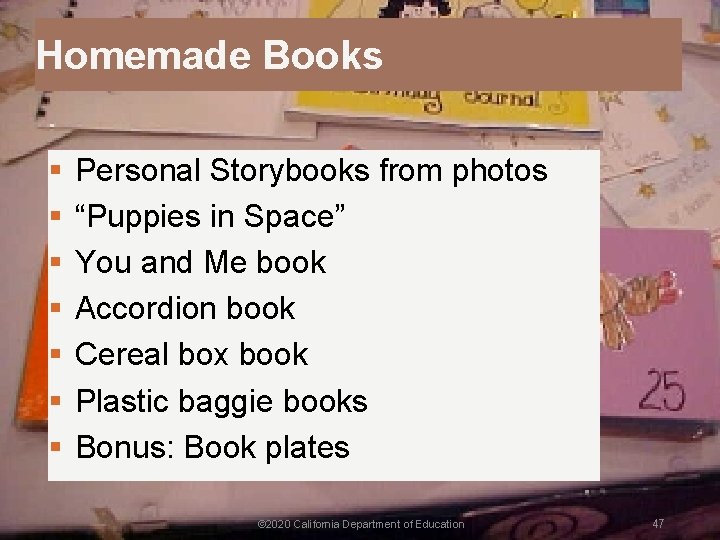
Homemade Books § § § § Personal Storybooks from photos “Puppies in Space” You and Me book Accordion book Cereal box book Plastic baggie books Bonus: Book plates © 2020 California Department of Education 47
Closing Activity: KWL § At the beginning of this training, we requested that you use Handout 1: KWL to record one statement about what you: - Already know about early literacy for preschool English learners. - Want to know about early literacy for preschool English learners. § Add a statement about something you learned about early literacy for preschool English learners. © 2020 California Department of Education 48
Thank you for Zooming with us! © 2020 California Department of Education 49