
Recommendations for Infant and Young Child Feeding n
- Slides: 15
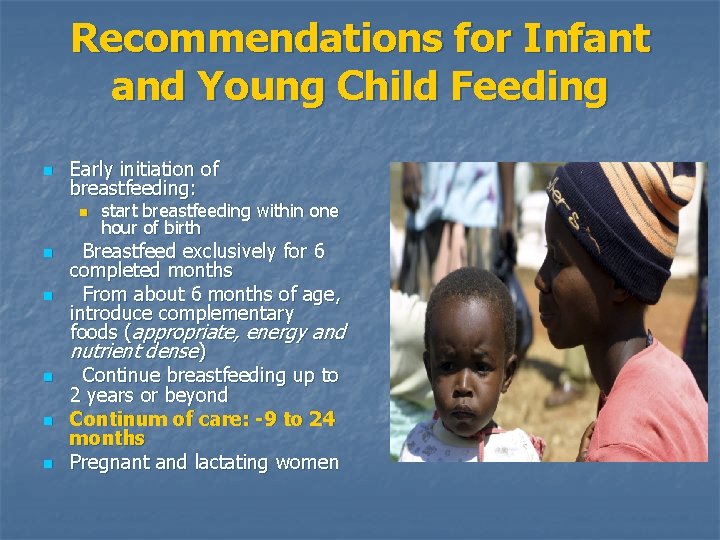
Recommendations for Infant and Young Child Feeding n Early initiation of breastfeeding: n n n start breastfeeding within one hour of birth Breastfeed exclusively for 6 completed months From about 6 months of age, introduce complementary foods (appropriate, energy and nutrient dense) Continue breastfeeding up to 2 years or beyond Continum of care: -9 to 24 months Pregnant and lactating women
Key policy guidance on IFE n n Global Strategy on IYCF (WHO/UNICEF, 2003) WHO Guiding Principles: on breastfed, nonbreastfed, in emergencies, complementary feeding, HIV and infant feeding The International Code of the Marketing of Breastmilk Substitutes (WHA 1981) and subsequent WHA Resolutions (‘The Code’). The Operational Guidance on IFE (IFE Core Group)
Breastfeeding ‘support’ in emergencies Needs to be active and operate on many levels n Protect and remove obstacles create a supportive/enabling environment for caregivers to make informed decisions on infant and young child feeding. This frontline defence includes: n Protection from marketing practices that violate the International Code n Prevention of donations, inappropriate distribution and use of breastmilk substitutes in emergencies. n Handling donations that do arrive. n Timely access to breastfeeding and infant feeding support in the form of skilled counselling by appropriately trained staff. n Structural support for breastfeeding, e. g. (e. g. slings, shelter, privacy) - keep mothers and babies together. n
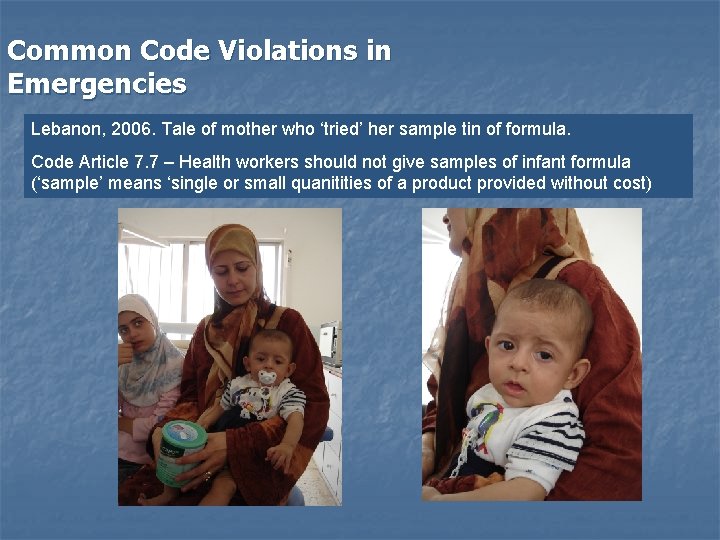
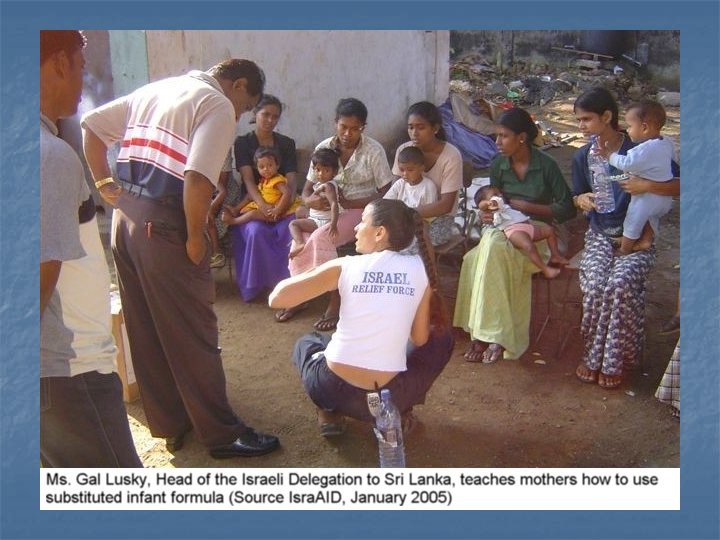
Common Code Violations in Emergencies Lebanon, 2006. Tale of mother who ‘tried’ her sample tin of formula. Code Article 7. 7 – Health workers should not give samples of infant formula (‘sample’ means ‘single or small quanitities of a product provided without cost)
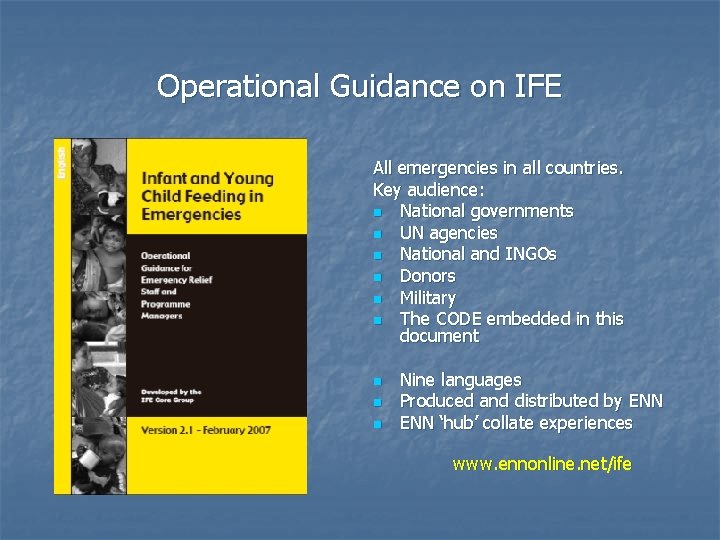
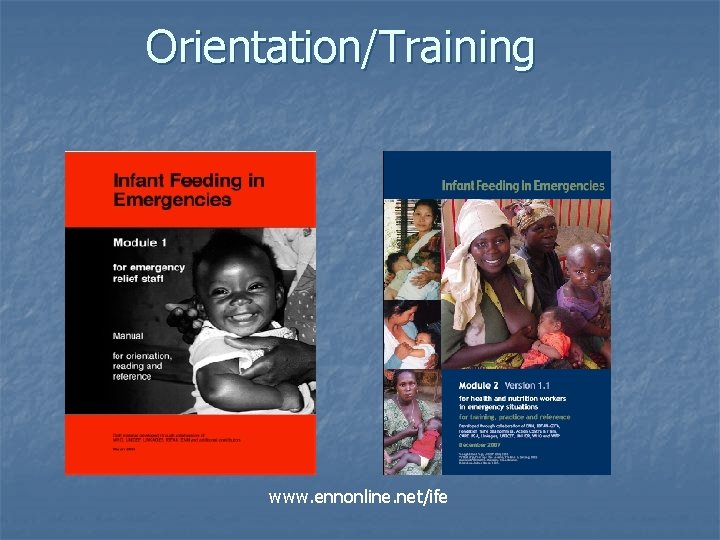
Operational Guidance on IFE All emergencies in all countries. Key audience: n National governments n UN agencies n National and INGOs n Donors n Military n The CODE embedded in this document n n n Nine languages Produced and distributed by ENN ‘hub’ collate experiences www. ennonline. net/ife
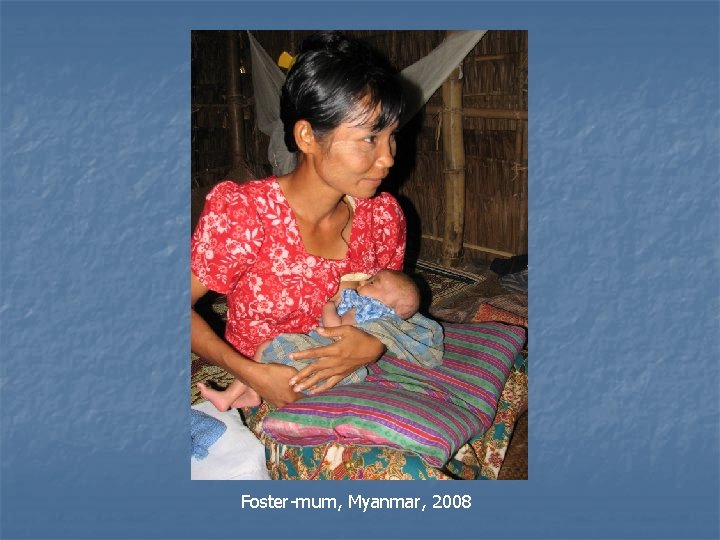
Foster-mum, Myanmar, 2008
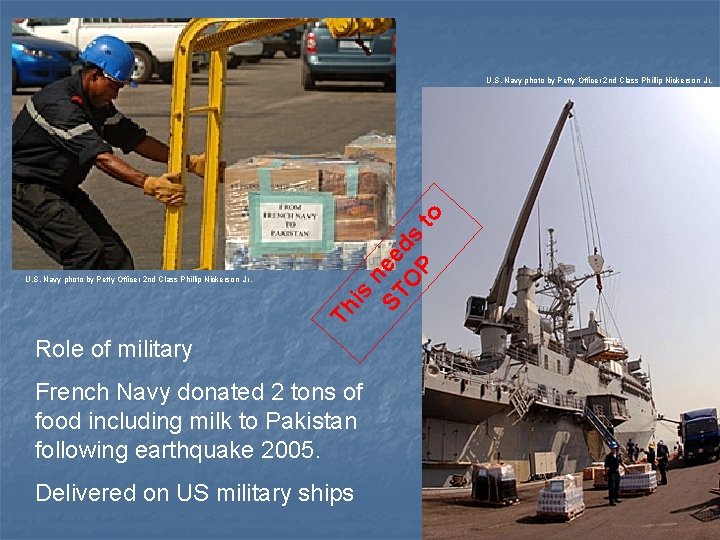
Th U. S. Navy photo by Petty Officer 2 nd Class Phillip Nickerson Jr. is ne ST e O ds P to U. S. Navy photo by Petty Officer 2 nd Class Phillip Nickerson Jr. Role of military French Navy donated 2 tons of food including milk to Pakistan following earthquake 2005. Delivered on US military ships
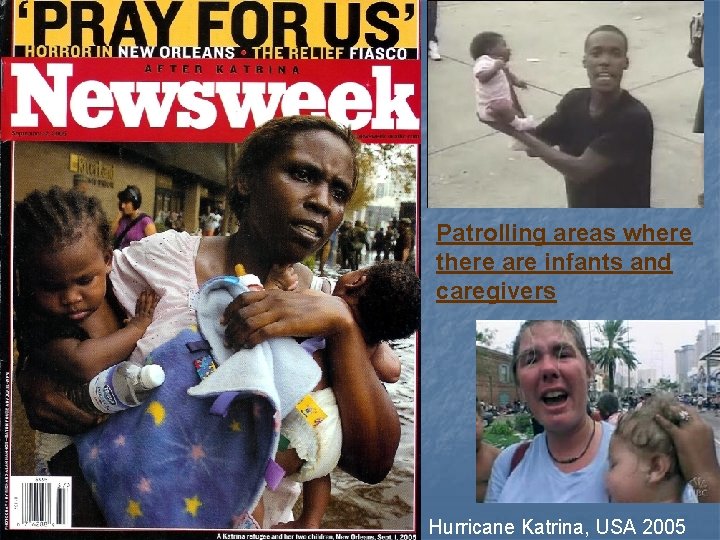
Patrolling areas where there are infants and caregivers Hurricane Katrina, USA 2005
Orientation/Training www. ennonline. net/ife
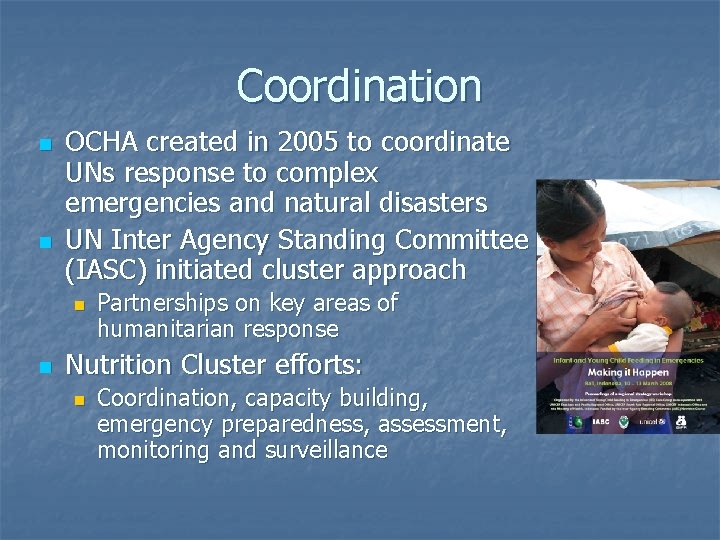
Coordination n n OCHA created in 2005 to coordinate UNs response to complex emergencies and natural disasters UN Inter Agency Standing Committee (IASC) initiated cluster approach n n Partnerships on key areas of humanitarian response Nutrition Cluster efforts: n Coordination, capacity building, emergency preparedness, assessment, monitoring and surveillance
Standards, monitoring, evaluation n Sphere nutrition, food security and food aid standards Stricter and improved procedures for monitoring interventions, strengthen accountability n Yet to be defined for newer areas, eg cash programming n No organisation with overall mandate to oversee effectiveness, impact, cost Ongoing challenges – impartiality, operational environment, lack of evidence base, lack of staff skills and expertise, HIV/AIDS and nutiriton
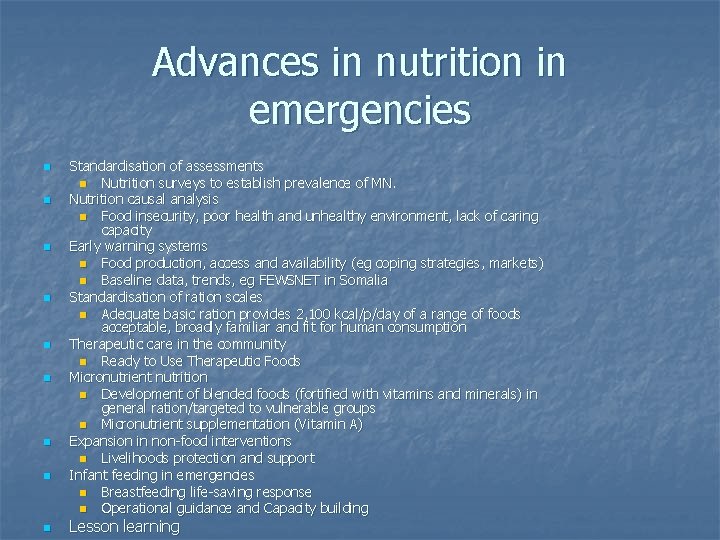
Advances in nutrition in emergencies n n n n n Standardisation of assessments n Nutrition surveys to establish prevalence of MN. Nutrition causal analysis n Food insecurity, poor health and unhealthy environment, lack of caring capacity Early warning systems n Food production, access and availability (eg coping strategies, markets) n Baseline data, trends, eg FEWSNET in Somalia Standardisation of ration scales n Adequate basic ration provides 2, 100 kcal/p/day of a range of foods acceptable, broadly familiar and fit for human consumption Therapeutic care in the community n Ready to Use Therapeutic Foods Micronutrient nutrition n Development of blended foods (fortified with vitamins and minerals) in general ration/targeted to vulnerable groups n Micronutrient supplementation (Vitamin A) Expansion in non-food interventions n Livelihoods protection and support Infant feeding in emergencies n Breastfeeding life-saving response n Operational guidance and Capacity building Lesson learning
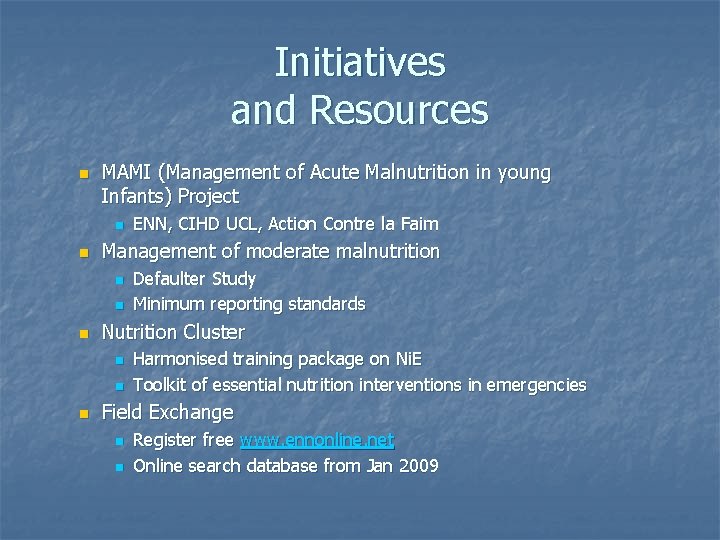
Initiatives and Resources n MAMI (Management of Acute Malnutrition in young Infants) Project n n Management of moderate malnutrition n Defaulter Study Minimum reporting standards Nutrition Cluster n n n ENN, CIHD UCL, Action Contre la Faim Harmonised training package on Ni. E Toolkit of essential nutrition interventions in emergencies Field Exchange n n Register free www. ennonline. net Online search database from Jan 2009
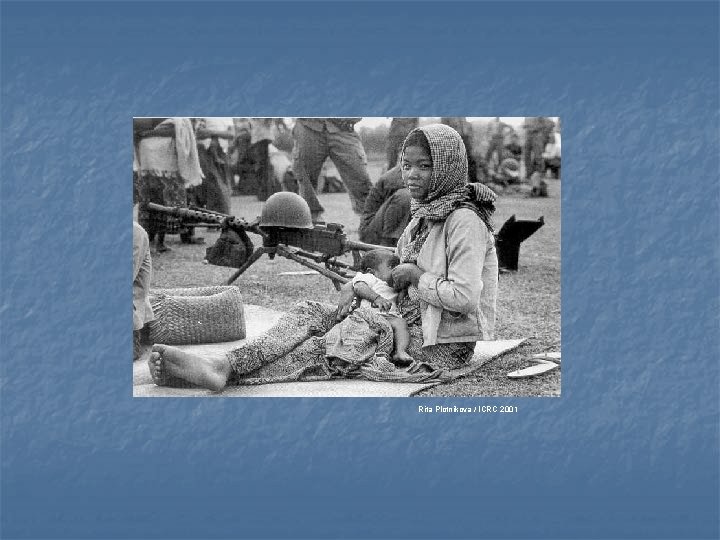
Rita Plotnikova / ICRC 2001