
Recoil Reduction in the Barrett Model 82 A
Recoil Reduction in the Barrett Model 82 A 1/XM 107 and XM 109 Frank Dindl U. S. Army TACOM-ARDEC AMSTA-AR-CCL-A; Bldg 7 Picatinny Arsenal, NJ 07806 (973) 724 -6761 <fdindl@pica. army. mil> May 2003 Sergio Aponte U. S. Army TACOM-ARDEC AMSTA-AR-CCL-A; Bldg 7 Picatinny Arsenal, NJ 07806 (973) 724 -3445 <saponte@pica. army. mil> Committed Excellence. COMmand Tank-automotive & Atormaments COM 1

Photo courtesy. Committed Barrettto. Firearms Excellence Manufacturing May 2003 2
Objective: Discuss options for reducing recoil energy from firing the Barrett. 50 caliber Model 82 A 1/XM 107 and 25 mm XM 109 rifles. May 2003 Committed to Excellence 3
Background: The. 50 caliber Barrett Model 82 A 1/XM 107 produces modest recoil energy. The weapon operating mechanism combined with an efficient muzzle brake reduce recoil energy to about 36 foot-pounds. The 25 mm XM 109 fires ammunition with essentially the same impulse as. 50 caliber ammunition. However, the 25 mm launches a much heavier projectile and uses much less propellant. The small amount of propellant limits the muzzle brake effects. The recoil energy of the XM 109 exceeds 60 foot pounds. The suppressed version of the Model 82 A 1/XM 107 produces significantly greater recoil energy than the muzzle brake variant of the 82 A 1/XM 107, and is also a good candidate for recoil reduction efforts. May 2003 Committed to Excellence 4
• Several Options For Reducing Recoil May Be Considered: § § May 2003 Reduce Muzzle Velocity Increase Recoiling Mass Increase Muzzle Brake Effects Modify Weapon Operating Mechanism Committed to Excellence 5

• Reduced Muzzle Velocity: § Reducing the Muzzle Velocity Reduces the Ammunition Impulse to Produce Less Recoil Energy § Trade Off is Reduced Effective Range • Increased Recoiling Mass: § Increasing the Recoiling Mass Reduces the Recoiling Velocity and Produces Less Recoil Energy § Trade Off is Increase System Weight May 2003 Committed to Excellence 6

• Increased Muzzle Brake Effects: § Increasing the Muzzle Brake Effects Reduces the Net Recoil Impulse and Produces Less Recoil Energy. • Muzzle brake effects may be increased by § Increasing the Propellant Charge and Reducing the Barrel Length to Maintain the Same Muzzle Velocity While Increasing Propellant Gas Mass and Pressure Acting on the Muzzle Brake § Altering the propellant characteristics to increase the gas pressure at the muzzle § Improving the efficiency of the muzzle brake Not an Option for Suppressed Weapon Variants May 2003 Committed to Excellence 7
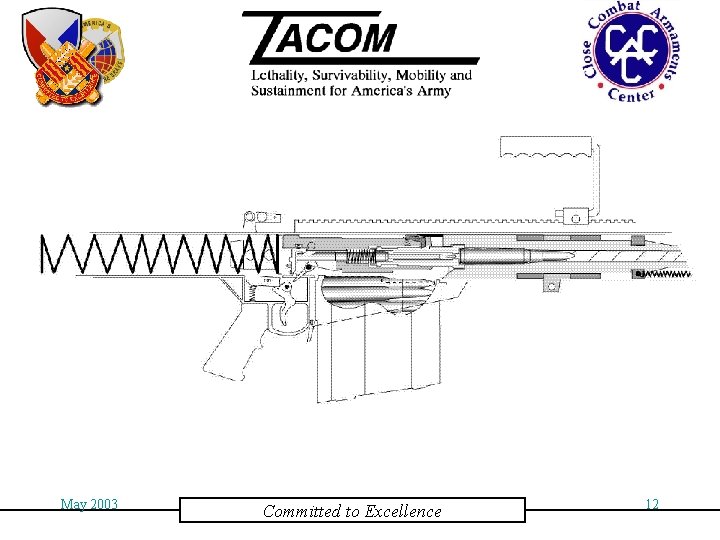
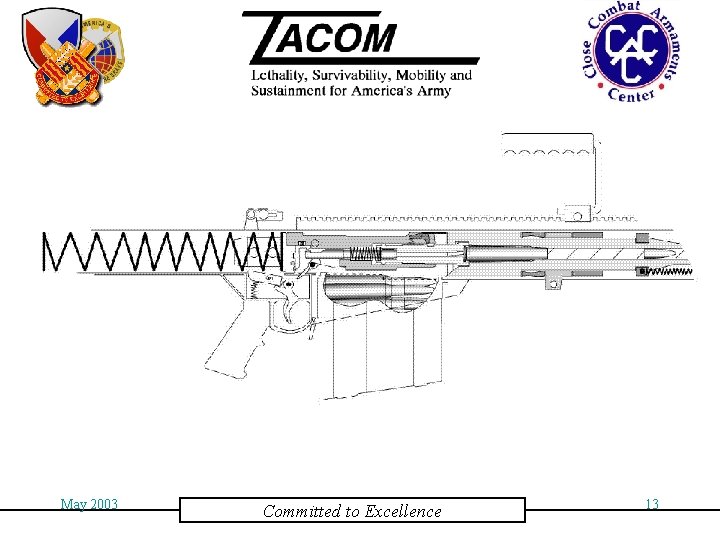
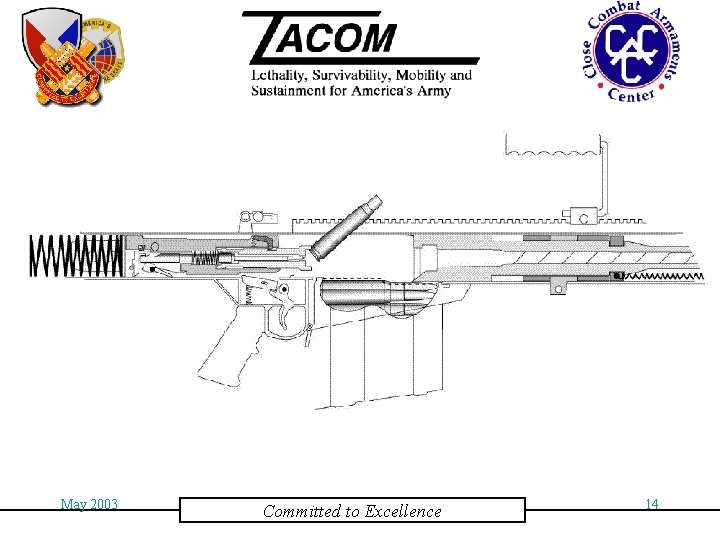
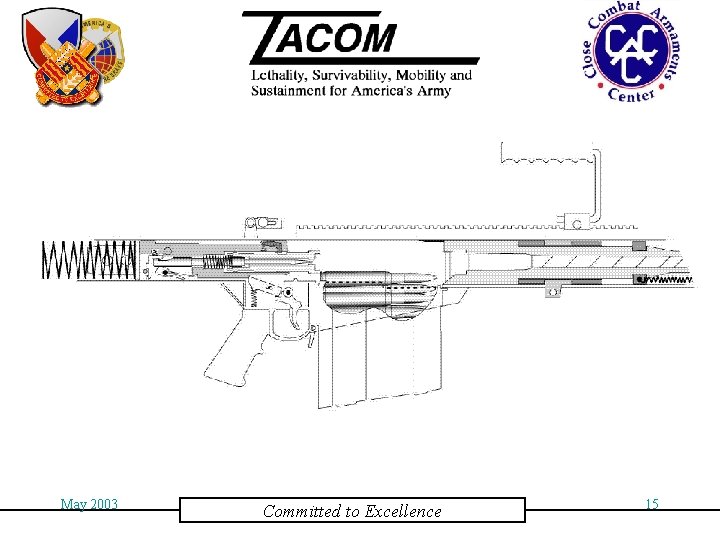
• Modify the Weapon Mechanism: § Changing the weapon mechanism to fire from the open bolt to produce significant forward momentum at the moment of firing cancels some of the recoil impulse from firing, reducing recoil energy. § Firing in this manner may adversely affect accuracy, reducing effective range. May 2003 Committed to Excellence 8
“Historically, the most important single attribute of any military system - whether it is a rifle, tank, aircraft or ship - is its capability to be modified and improved to meet evolving operational requirements. ” Charles Q. Cutshaw, Emergence of the ‘payload rifle’, Jane’s International Defense Review, August 2002. May 2003 Committed to Excellence 9
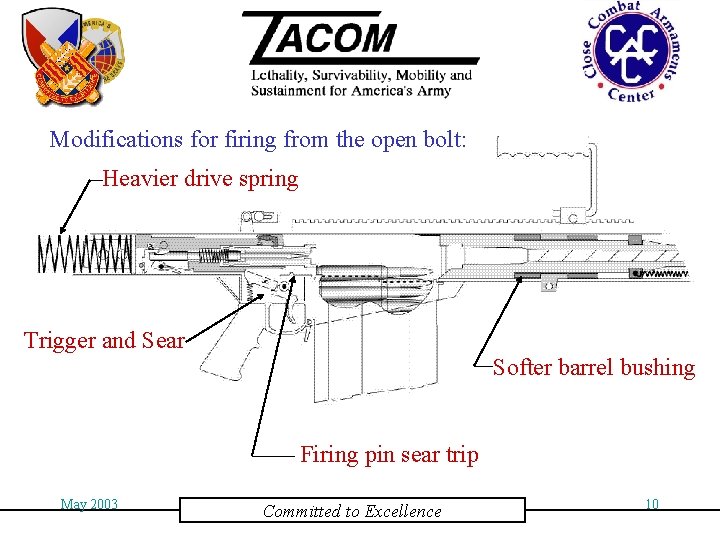
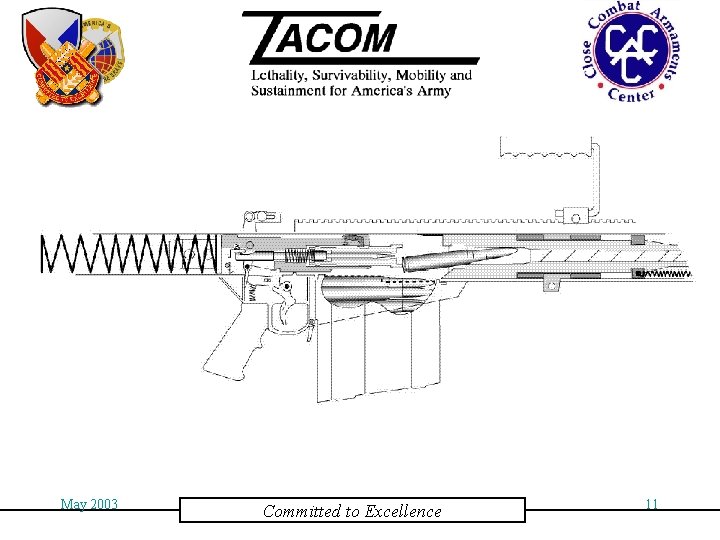
Modifications for firing from the open bolt: Heavier drive spring Trigger and Sear Softer barrel bushing Firing pin sear trip May 2003 Committed to Excellence 10
May 2003 Committed to Excellence 11
May 2003 Committed to Excellence 12
May 2003 Committed to Excellence 13
May 2003 Committed to Excellence 14
May 2003 Committed to Excellence 15
Prototype testing will measure accuracy and dispersion firing from the open and closed bolt. Results will quantify the trade off between firing from the open bolt and closed bolt, where hit probability and recoil energy are the key metrics of interest. May 2003 Committed to Excellence 16
Conclusions: The Barrett Model 82 A 1/XM 107 and XM 109 rifles offer tremendous flexibility to meet emerging operational needs. The design of the rifle lends itself to simple modifications to tailor weapon performance to meet specific requirements. May 2003 Committed to Excellence 17
- Slides: 17