
Recognizing Treating Depression In Primary Care Lolwa ALMaslamani



- Slides: 39
Recognizing & Treating Depression In Primary Care Lolwa AL-Maslamani, M. D Post – doctoral fellowship in Mental Health, UK Consultant Family Medicine, PHCC Manager of Al-Rayyan Health Center Assistant Prof. WCMQ
Agenda of Today v. CASE discussion v. Epidemiology of depression v. PHCC guidelines algorithms v. Screening v. Management
Case 1 v. You are seeing a 48 -year-old obese male, who presents with a 3 -month history of low mood, low energy, poor concentration, and irritability. he has lost interest in most things he had enjoyed and has also noticed a 20 -pound weight gain. he has been having frequent headaches, has been short tempered, and has noticed that it is hard to wake up in the morning. he reports no thoughts of suicide but has wondered if death would be a relief. he says she felt restless for a while and feels that he is a bad person. His mother suffered from depression. he does not consume alcohol or any other substances. he is divorced and has no children.
The burden of depression • Depression is a common disorder, affecting over 120 million people worldwide. Epidemiological surveys conducted in general populations have found that the lifetime prevalence of depression is in the range of 10% to 15%. • Worldwide projections by the World Health Organization for the year 2030 identify unipolar major depression as the leading cause of disease burden.
• The Qatar Global Burden of Disease 2010 profile revealed that major depressive disorder is the most burdensome disease in Qatar (as per disability adjusted life years- DALYs)
• Depression can happen at all ages • Mean age of onset 27 years (between 24 to 35 years), becoming increasingly younger in both men and women • Depression is more frequent in women than in men • The observed ratio is generally 2: 1
Contin…. • Depression also contributes significantly to disability • 1. 3 -4. 4% of all disability and premature death worldwide. • The suicide risk in depressed patients is up to 30 -times higher than in the general population 30 to 50 % of suicide attempts are due to depression • •
CVD and Depression • Patients with cardiovascular disease (CVD) more likely to • • • experience depression Patients with depression 1. 6 times more likely to develop coronary artery disease (CAD); even more likely with MDD Also 4 times more likely to experience a myocardial infarction (MI) Post-MI patients with depression less likely to follow lifestyle changes
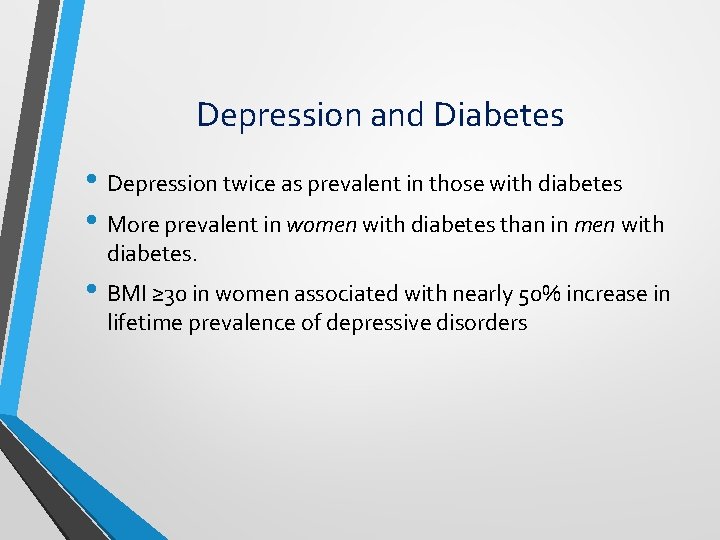
Depression and Diabetes • Depression twice as prevalent in those with diabetes • More prevalent in women with diabetes than in men with diabetes. • BMI ≥ 30 in women associated with nearly 50% increase in lifetime prevalence of depressive disorders
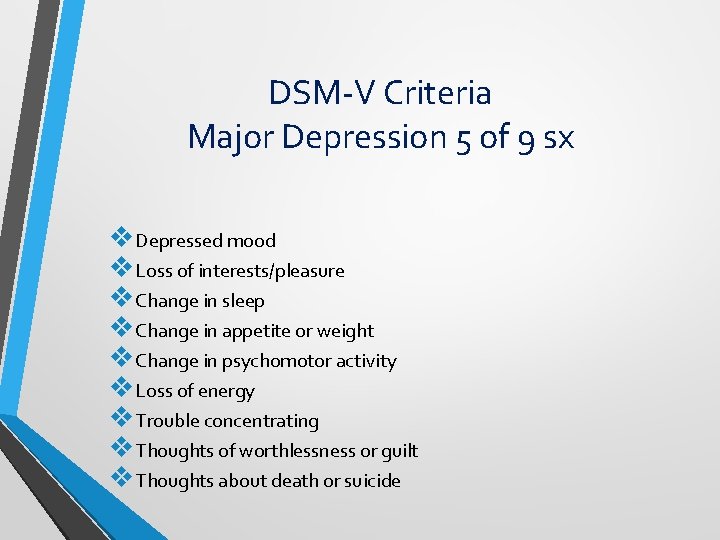
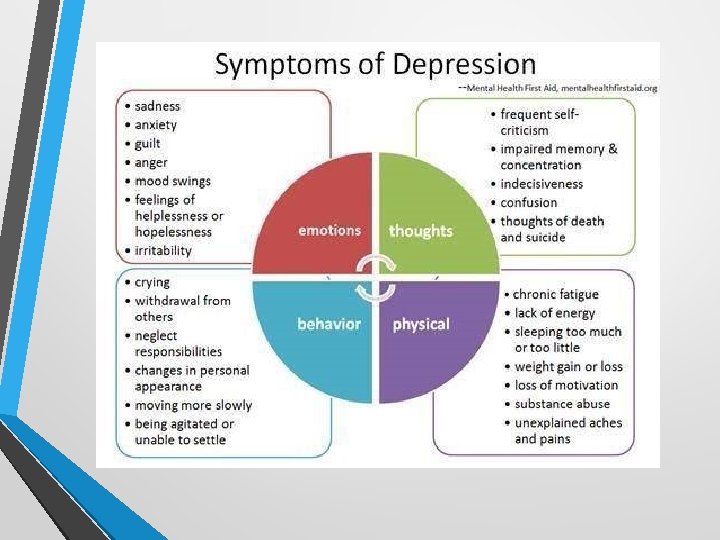
DSM-V Criteria Major Depression 5 of 9 sx v. Depressed mood v. Loss of interests/pleasure v. Change in sleep v. Change in appetite or weight v. Change in psychomotor activity v. Loss of energy v. Trouble concentrating v. Thoughts of worthlessness or guilt v. Thoughts about death or suicide
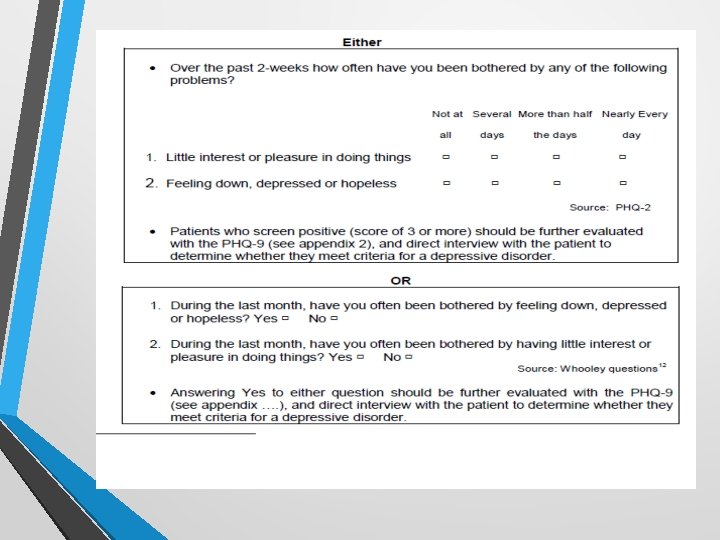
Screening
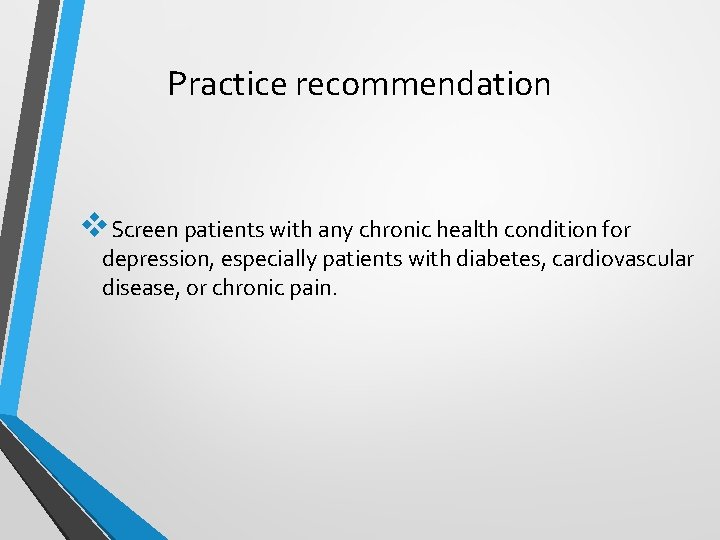
Practice recommendation v. Screen patients with any chronic health condition for depression, especially patients with diabetes, cardiovascular disease, or chronic pain.
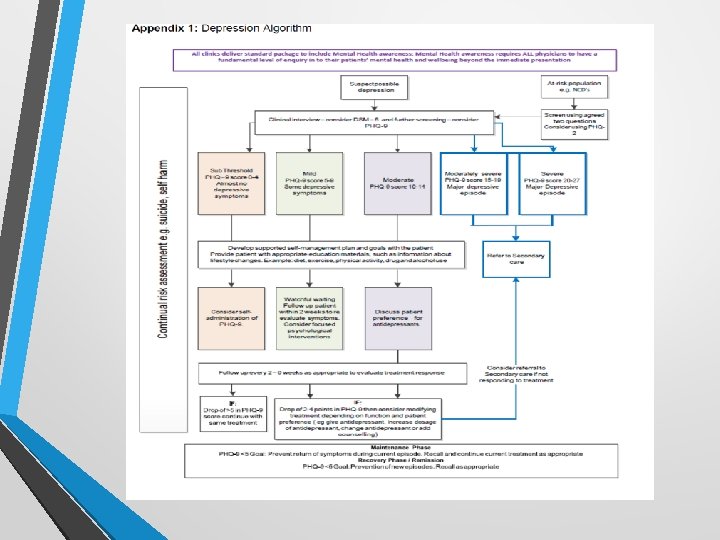
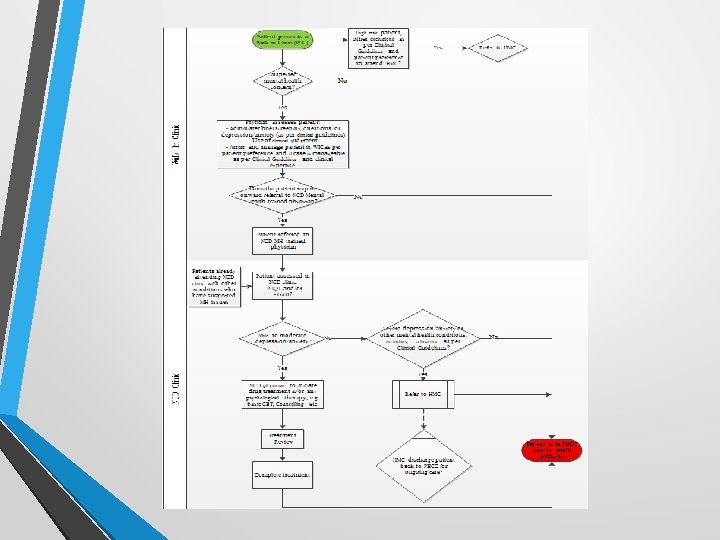
PHCC Guideline
Continue… v. You believe that your patient is suffering from an episode of major depression, and you decide to initiate treatment with an antidepressant. v. You choose serotonin reuptake inhibitors (SSRIs) and tell your patient to contact you if she suffers from adverse effects. v Your patient returns to see you 2 weeks after starting her SSRI and reports that she has noticed any benefit from medication.
v. You increase the medication dose, and the patient returns to see you in another 2 weeks. This time, she is feeling better and more energetic. People at work are beginning to notice her improved attitude, and her sleep has become more refreshing now. She wants to know how long she should stay on the medication.
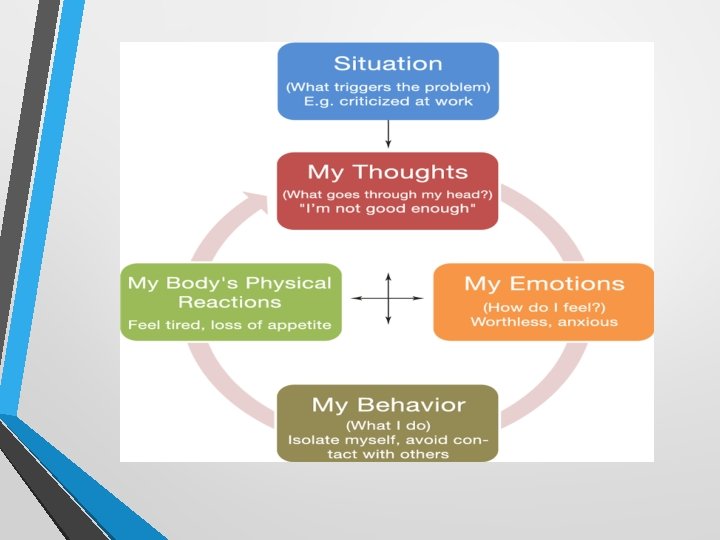
Management of Depression v. Psychotherapy v. Is commonly used to treat mild to moderate depression v. Psychotherapy= counseling v. A commonly used types of therapy, cognitive behavior therapy, which was designed to treat depression. v. CBT is first line treatment of depression in all ages.
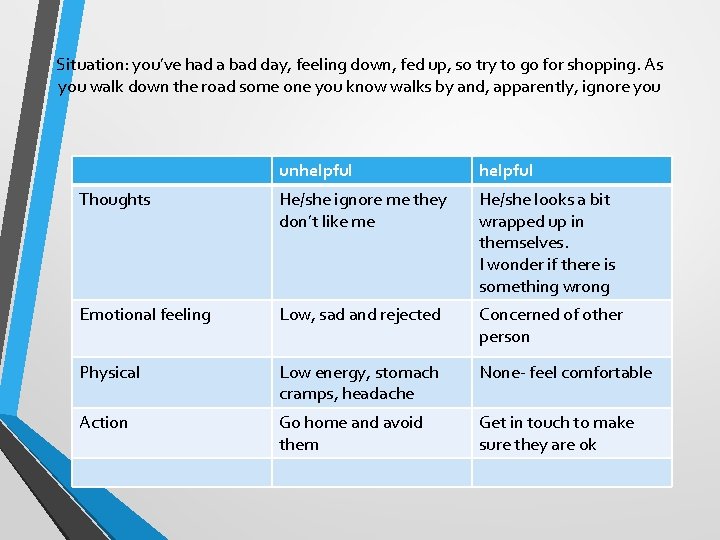
Situation: you’ve had a bad day, feeling down, fed up, so try to go for shopping. As you walk down the road some one you know walks by and, apparently, ignore you unhelpful Thoughts He/she ignore me they don’t like me He/she looks a bit wrapped up in themselves. I wonder if there is something wrong Emotional feeling Low, sad and rejected Concerned of other person Physical Low energy, stomach cramps, headache None- feel comfortable Action Go home and avoid them Get in touch to make sure they are ok
Pharmacological treatment Be careful
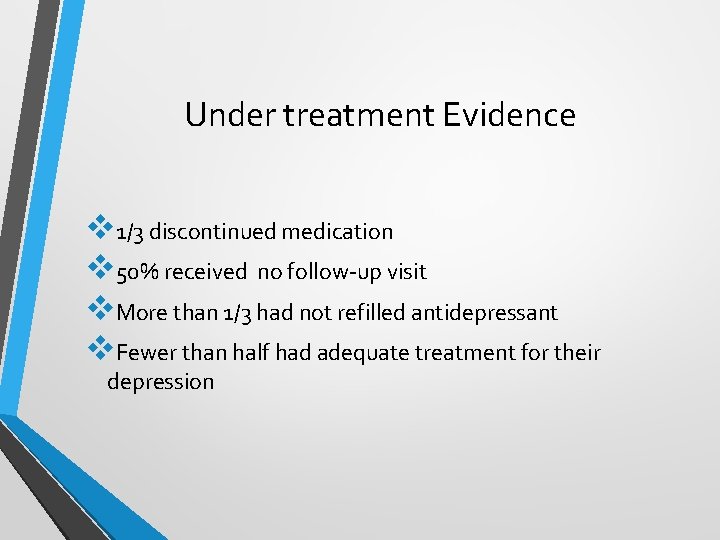
Under treatment Evidence v 1/3 discontinued medication v 50% received no follow-up visit v. More than 1/3 had not refilled antidepressant v. Fewer than half had adequate treatment for their depression
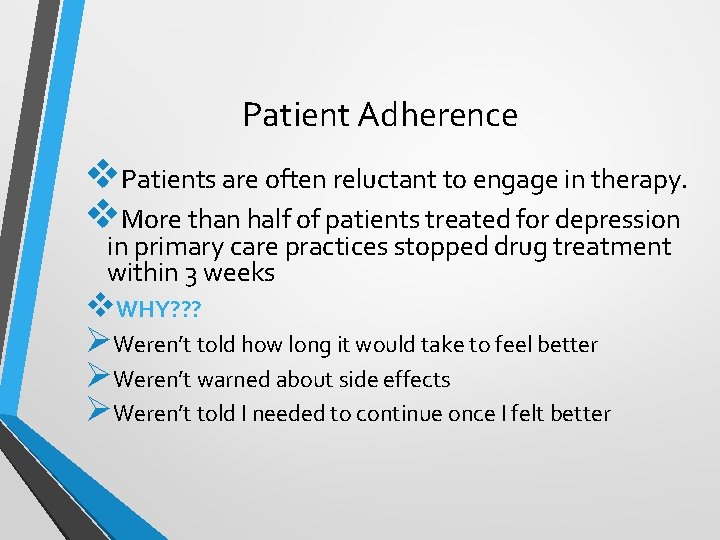
Patient Adherence v. Patients are often reluctant to engage in therapy. v. More than half of patients treated for depression in primary care practices stopped drug treatment within 3 weeks v. WHY? ? ? ØWeren’t told how long it would take to feel better ØWeren’t warned about side effects ØWeren’t told I needed to continue once I felt better
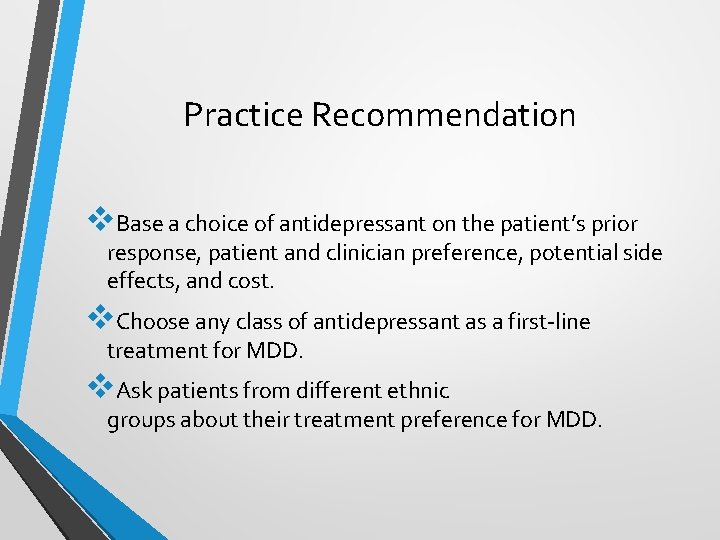
Practice Recommendation v. Base a choice of antidepressant on the patient’s prior response, patient and clinician preference, potential side effects, and cost. v. Choose any class of antidepressant as a first-line treatment for MDD. v. Ask patients from different ethnic groups about their treatment preference for MDD.
Phases of treatment v. Acute phase-aims at maximum reduction of symptoms to achieve remission. v. Continuation of phases-after remission of an acute episodes-aims to prevent relapse of symptoms, move to recovery. v. Maintenance phases-after recovery in high risk patients-aims to prevent recurrence.
Special consideration v Following remission of patient’s symptoms, the physician should consider stopping antidepressant medication: a) 9 – 12 months after complete remission of depressive symptoms and has been able to carry out routine activities for that time period. v Discontinue/terminate medications as follows: a) Discuss about ending treatment with the patient in advance b) Reduce the dosage gradually over at least a 4 -week period for most SSRIs. Some patients may require a longer period. c) Remind the patient about the possibility of discontinuation / withdrawal symptoms on stopping or reducing the dose, and that these symptoms are usually mild and self-limiting but can occasionally be severe, particularly if the medication is stopped abruptly. d) Advise about early symptoms of relapse (e. g. alteration in sleep or appetite for more than 3 days) and when to come for routine follow-up. e) Repeat psycho-educational messages as relevant.
Continue v. Monitor and manage antidepressant withdrawal symptoms a) Mild withdrawal symptoms: reassure the patient and monitor symptoms. b) Severe withdrawal symptoms: consider reintroducing the original antidepressant (or one from the same class with a longer half-life) and then continue to reduce more gradually. c) CONSULT A SPECIALIST
Relapsing v. Major depression is a relapsing, remitting illness in most patients. v Following a first episode, there is a greater than 40 percent rate of recurrence over a two-year period vafter two episodes, the risk of recurrence within five years is approximately 75 percent. v Ten to 30 percent of patients treated for a major depressive episode become Dysthymic
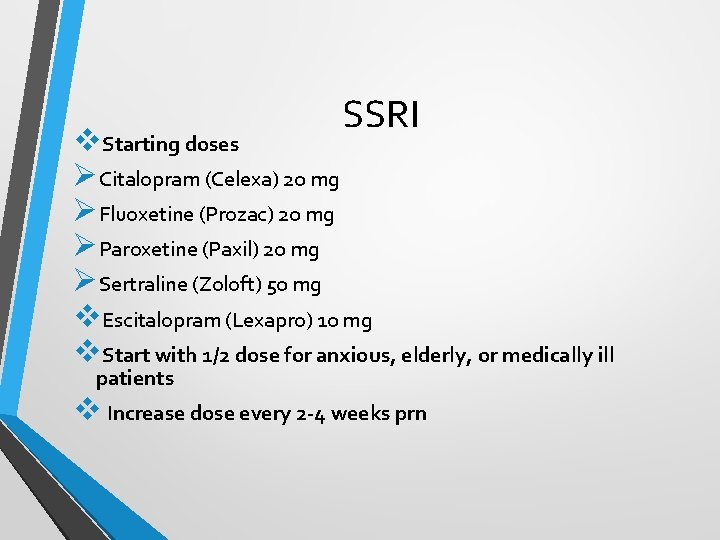
SSRI v. Starting doses ØCitalopram (Celexa) 20 mg ØFluoxetine (Prozac) 20 mg ØParoxetine (Paxil) 20 mg ØSertraline (Zoloft) 50 mg v. Escitalopram (Lexapro) 10 mg v. Start with 1/2 dose for anxious, elderly, or medically ill patients v Increase dose every 2 -4 weeks prn
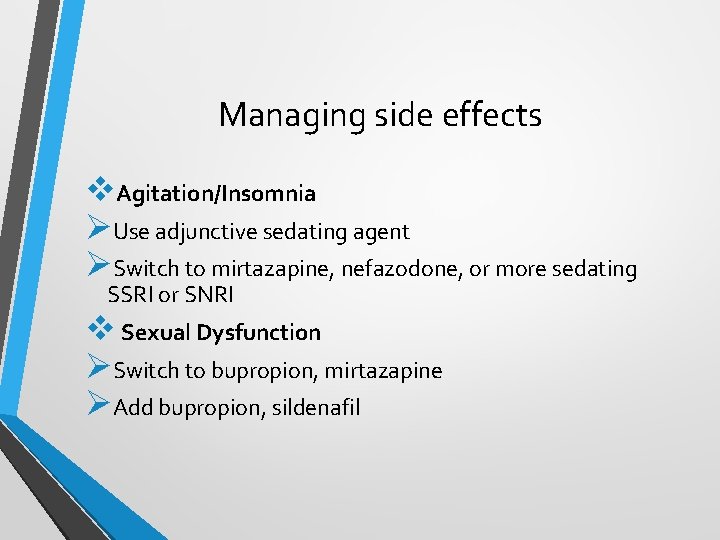
Managing side effects v. Agitation/Insomnia ØUse adjunctive sedating agent ØSwitch to mirtazapine, nefazodone, or more sedating SSRI or SNRI v Sexual Dysfunction ØSwitch to bupropion, mirtazapine ØAdd bupropion, sildenafil
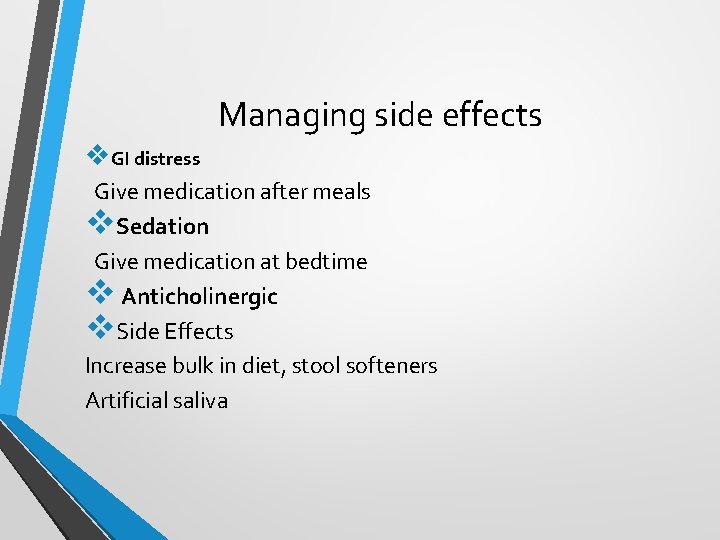
Managing side effects v. GI distress Give medication after meals v. Sedation Give medication at bedtime v Anticholinergic v. Side Effects Increase bulk in diet, stool softeners Artificial saliva
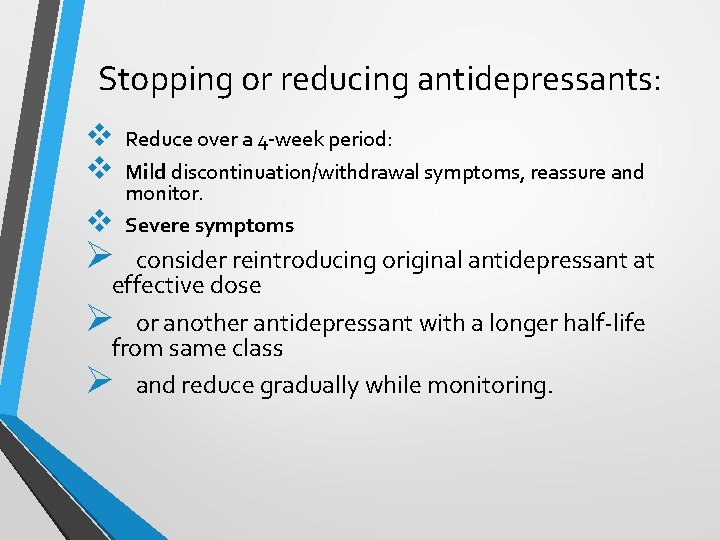
Stopping or reducing antidepressants: v v v Reduce over a 4 -week period: Mild discontinuation/withdrawal symptoms, reassure and monitor. Severe symptoms Ø consider reintroducing original antidepressant at effective dose Ø or another antidepressant with a longer half-life from same class Ø and reduce gradually while monitoring.
Limited response to initial v. Choices for a second antidepressant: different SSRI Consider other TCA and venlafaxine, for severe depression. v Switching • Gradual, modest, incremental increases of dose • risk of interaction • risk of serotonin syndrome • Features: confusion, delirium, shivering, sweating, changes in blood pressure, and myoclonus
Special considerations when switching to venlafaxine v. Take into account: • likelihood of patients stopping because of side effects • higher cost • Control pre-existing hypertension. • Do not prescribe for patients with uncontrolled HTN v. Only prescribe at 300 mg per day • more under supervision of a specialist mental health doctor v. Monitor: • BP at initiation • Regularly during treatment (particularly during titration) • Reduce dose or consider discontinuation if sustained increase BP. v. Check for signs and symptoms of cardiac dysfunction.
When to refer v. Severe depression that is threaten the life of the patient (i. e. , suicidality or inability to care for self) or others. v. Depression that has failed to respond to initial treatment trials, whether due to patient adherence or perceived side effects. v. Desire to treat with psychotherapy, light therapy, electroconvulsive therapy, or other modalities requiring specialty expertise.
When to refer v. Psychotic depression. v. Depression that is part of the course of bipolar disorder, schizoaffective disorder, or another major psychiatric illness. v. Depression whose presentation or management is complicated by significant psychiatric comorbidity.
Thank you