
Recognizing Stroke FAST Face Arms Speech Time You
- Slides: 26
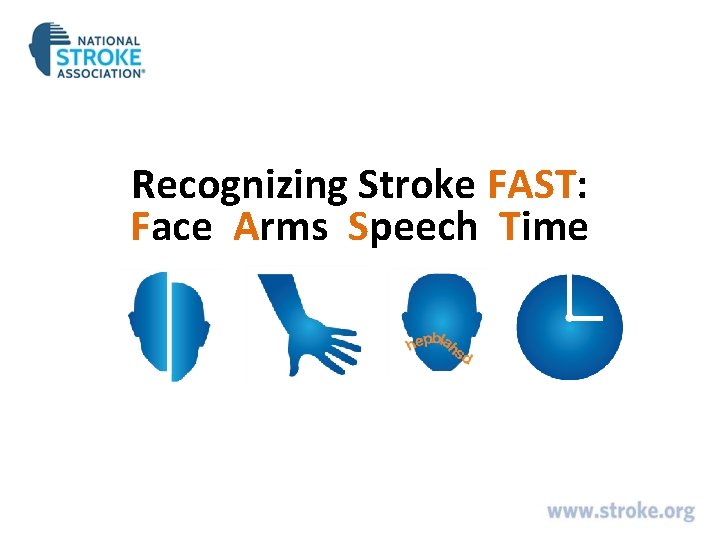
Recognizing Stroke FAST: Face Arms Speech Time
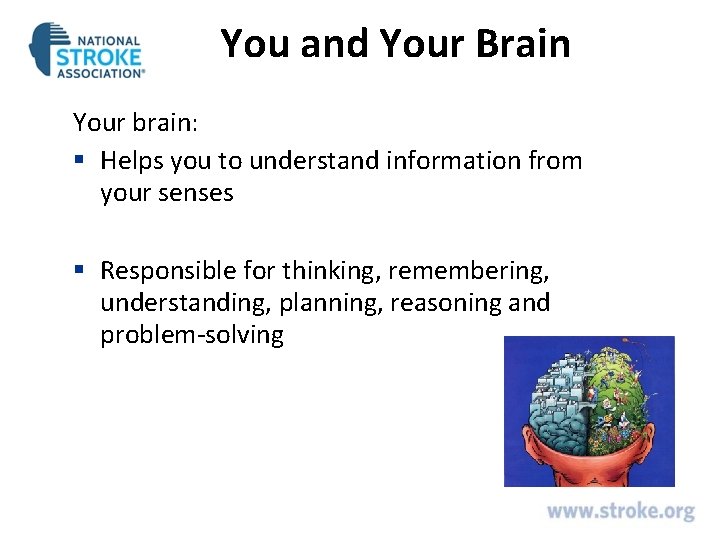
You and Your Brain Your brain: § Helps you to understand information from your senses § Responsible for thinking, remembering, understanding, planning, reasoning and problem-solving
Your Brain § One of the largest and most complex organs in your body § Made up of more than 100 billion nerves § All parts of the brain must work together to keep you functioning properly
FAST Stroke Facts § Stroke is a “brain attack” § Stroke can happen to anyone, at any age, and at anytime § Two million brain cells die every minute during a stroke § Stroke is the 5 th leading cause of death in the U. S. (3 rd cause of death in women) § Leading cause of adult disability
FAST Stroke Facts § About 55, 000 more women than men have a stroke each year § African-Americans are twice as likely as whites to have a first-time stroke § 80% of strokes are preventable (lifestyle changes) § Medical options exist that may reduce the effects of stroke is administered soon after the onset of symptoms
What is a Stroke? § A stroke occurs when one of the blood vessels that carry blood to the brain is blocked or bursts § That part of the brain does not get the blood that it needs causing brain cells to die § Stroke is an emergency! Act FAST and call 9 -1 -1 IMMEDIATELY!
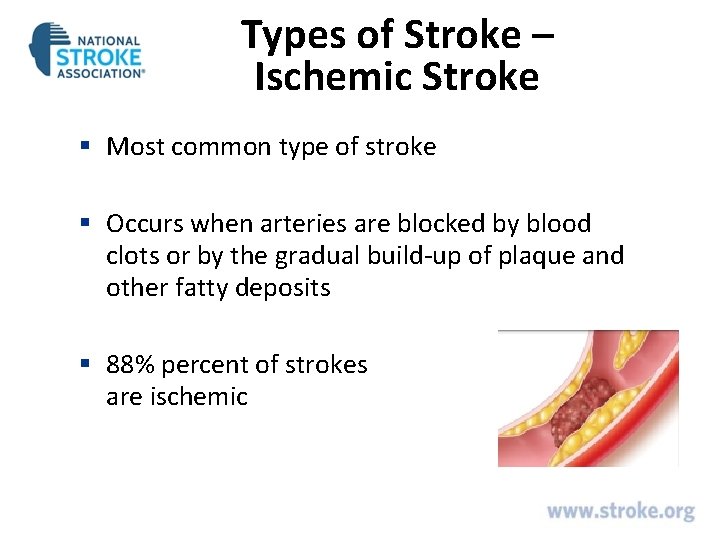
Types of Stroke – Ischemic Stroke § Most common type of stroke § Occurs when arteries are blocked by blood clots or by the gradual build-up of plaque and other fatty deposits § 88% percent of strokes are ischemic
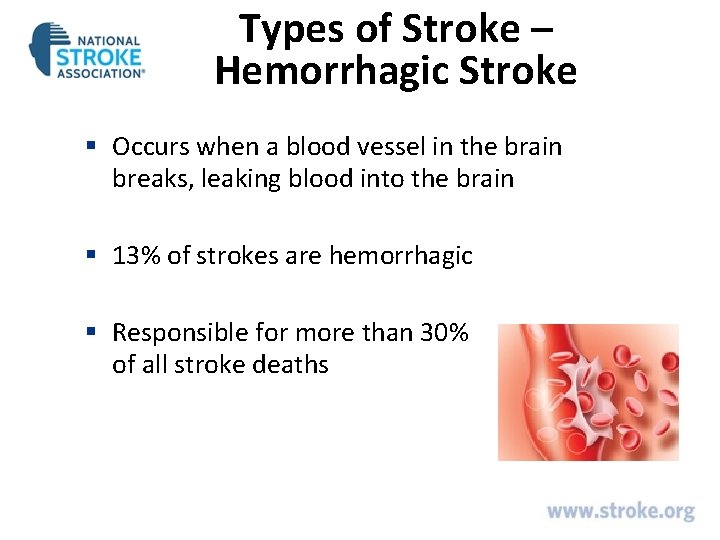
Types of Stroke – Hemorrhagic Stroke § Occurs when a blood vessel in the brain breaks, leaking blood into the brain § 13% of strokes are hemorrhagic § Responsible for more than 30% of all stroke deaths
Why Learn FAST? § To save lives § Easy to remember § Easy to teach § Requires quick action
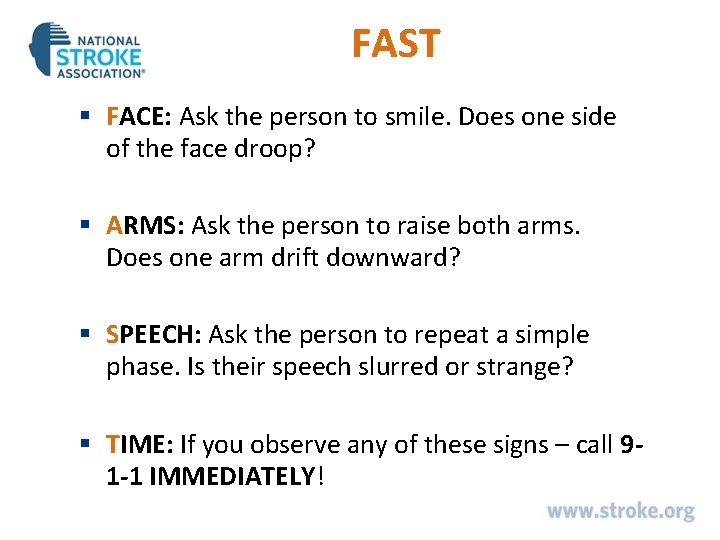
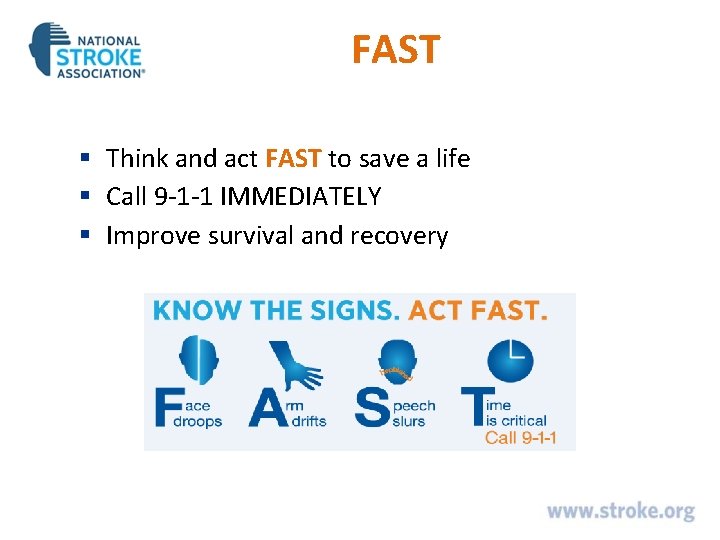
FAST § FACE: Ask the person to smile. Does one side of the face droop? § ARMS: Ask the person to raise both arms. Does one arm drift downward? § SPEECH: Ask the person to repeat a simple phase. Is their speech slurred or strange? § TIME: If you observe any of these signs – call 91 -1 IMMEDIATELY!
Other Symptoms of Stroke (Suddens) § Numbness or weakness of the face, arm or leg, especially on one side of the body § Confusion, trouble speaking or understanding § Trouble seeing in one or both eyes § Trouble walking, dizziness or loss of balance § Severe headache with no known cause
Act FAST § If you experience one or more of these symptoms or notice them in someone else, even for a short time, call 9 -1 -1 § Medical options exist that may reduce the effects of stroke - Time is of importance, as treatment must be administered soon after the onset of symptoms § Stroke strikes FAST. You should too!
Transient Ischemic Attack (TIA) § An episode, sometimes called a mini-stroke § Symptoms can be temporary or may come and go § TIA generally does not cause permanent brain damage § TIA can be a serious warning sign of stroke and should not be ignored § Symptoms of TIA and stroke are basically the same
Effects of Stroke The effects of stroke depend on various factors: § The region of the brain that was affected § The size of the area that was damaged by the stroke § The functions that the damaged area controlled
Risk factors that cannot be controlled § Age: while strokes can occur at any age, risk increases over 55 years of age most § Family History: strokes appear to have a genetic link; you are at a higher risk if an immediate family member has had a stroke have § Race and Ethnicity
Risk factors that cannot be controlled § Gender: women have a lower risk than men before menopause; but, more women than men die of stroke § Prior Stroke or TIA: 5 to 14% of the people who had a prior stroke are more likely to have another stroke within 5 years of the first stroke
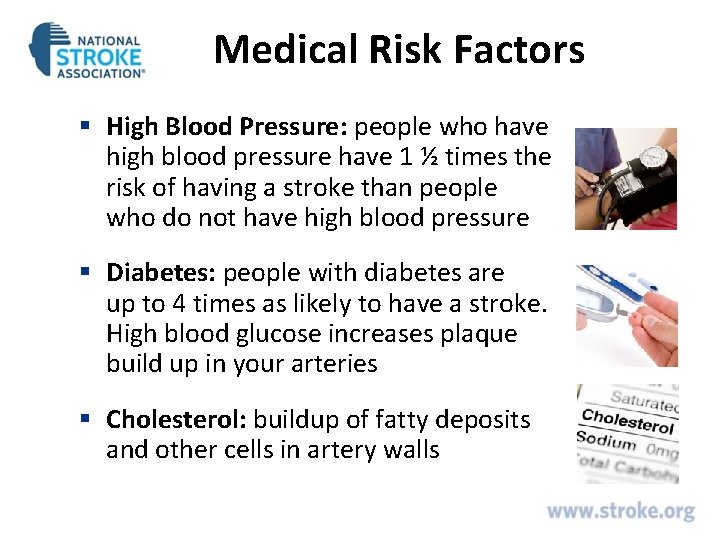
Medical Risk Factors § High Blood Pressure: people who have high blood pressure have 1 ½ times the risk of having a stroke than people who do not have high blood pressure § Diabetes: people with diabetes are up to 4 times as likely to have a stroke. High blood glucose increases plaque build up in your arteries § Cholesterol: buildup of fatty deposits and other cells in artery walls
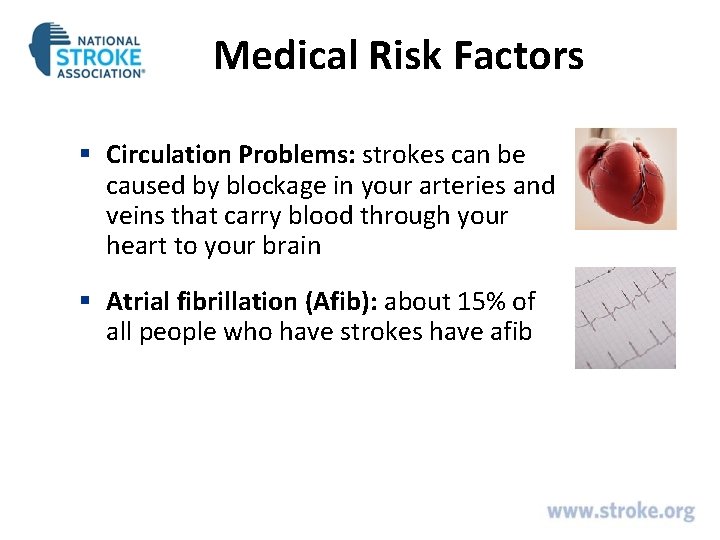
Medical Risk Factors § Circulation Problems: strokes can be caused by blockage in your arteries and veins that carry blood through your heart to your brain § Atrial fibrillation (Afib): about 15% of all people who have strokes have afib
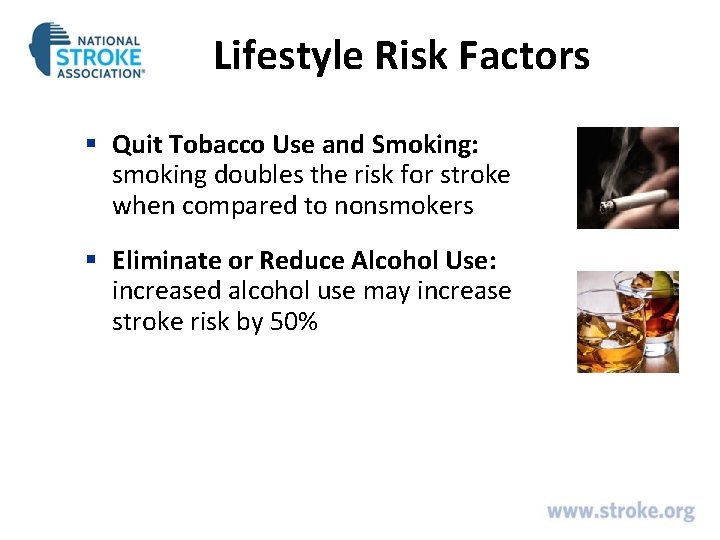
Lifestyle Risk Factors § Quit Tobacco Use and Smoking: smoking doubles the risk for stroke when compared to nonsmokers § Eliminate or Reduce Alcohol Use: increased alcohol use may increase stroke risk by 50%
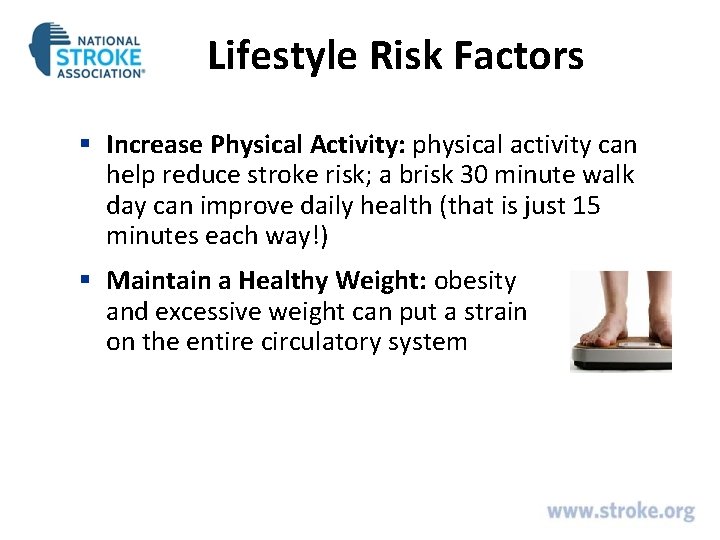
Lifestyle Risk Factors § Increase Physical Activity: physical activity can help reduce stroke risk; a brisk 30 minute walk day can improve daily health (that is just 15 minutes each way!) § Maintain a Healthy Weight: obesity and excessive weight can put a strain on the entire circulatory system
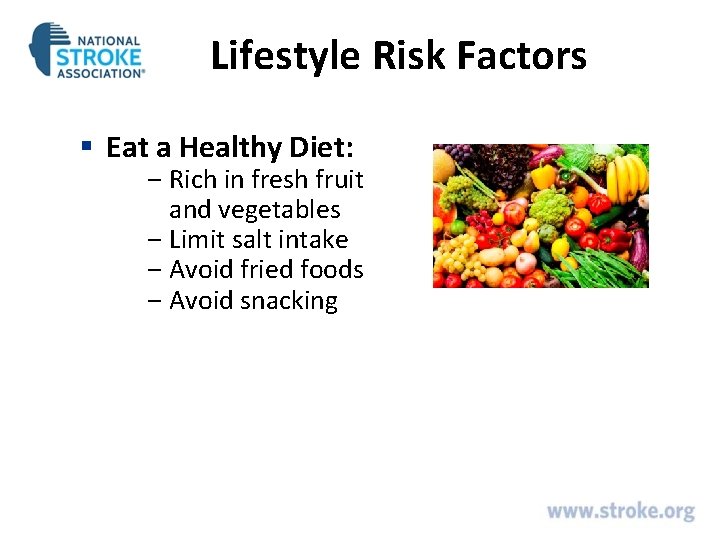
Lifestyle Risk Factors § Eat a Healthy Diet: ‒ Rich in fresh fruit and vegetables ‒ Limit salt intake ‒ Avoid fried foods ‒ Avoid snacking
FAST § Think and act FAST to save a life § Call 9 -1 -1 IMMEDIATELY § Improve survival and recovery
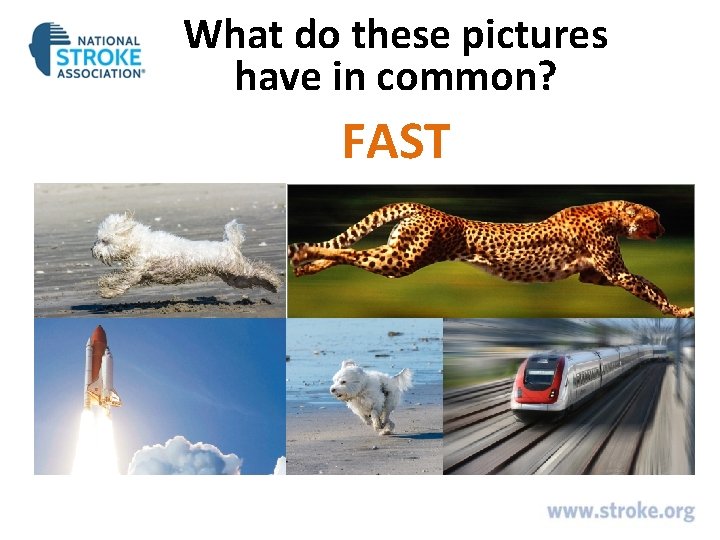
What do these pictures have in common? FAST
Why Teach FAST? § The medical team can act fast § Once you reach the hospital the team will determine what type of stroke it is § If you are diagnosed with a stroke caused by a blood clot you may receive treatment § The medication can only be given soon after the onset of symptoms
Discussion Questions § Do you know someone who has survived a stroke? § How can you recognize stroke when it happens? § Why is timing so important when responding to and treating stroke? § What percentage of strokes can be prevented? § Which medical conditions should be treated in order to reduce the risk of stroke? § What types of small changes can you implement in your life to reduce your risk for primary or secondary stroke?
For more information visit www. stroke. org