
Recognizing some of the modern CAPTCHAs Dmitry Nikulin

- Slides: 25
Recognizing some of the modern CAPTCHAs Dmitry Nikulin LCME, Saint-Petersburg, 2011
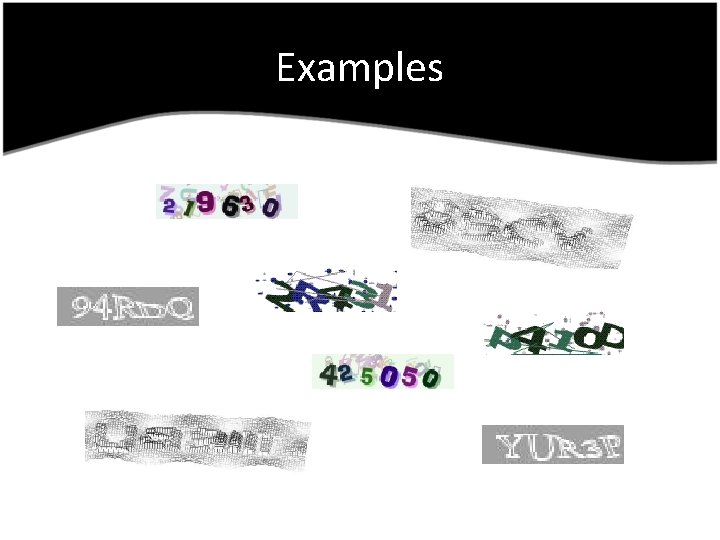
Examples
Stands for • • Completely Automated Public Turing test to tell Computers and Humans Apart
Turing test • Introduced by the mathematician Alan Turing in 1950 • Aimed to distinguish between a machine and a human • The classic version is carried out by a human • Loebner Prize has not been won yet
Reverse Turing Test • Carried out by a computer • A widespread example is CAPTCHA - Checks for human presence - Protects against spam and automated registrations - Uses human ability to recognize distorted text (Google re. CAPTCHA)
Requirements for a CAPTCHA • Simple for a human • Difficult for a machine • Does not require large computational resources Let us call a CAPTCHA efficient if a machine can successfully bypass it in no more than 1% of attempts.
Objectives • Study the efficience of the widespread CAPTCHAs • CAPTCHAs from the largest Russian mobile network operators web sites were chosen
Reasons of choice • Operators have enough money to hire a programmer of any qualification • Operators need to minimize the amount of spam in order to safeguard their reputation
Recognition method overview • Preprocessing • Segmentation • Recognition In the following slides details on these stages will be given.
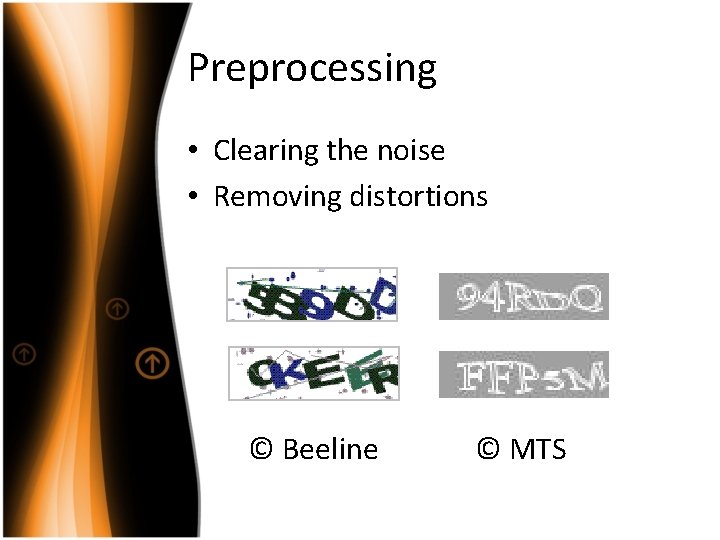
Preprocessing • Clearing the noise • Removing distortions © Beeline © MTS
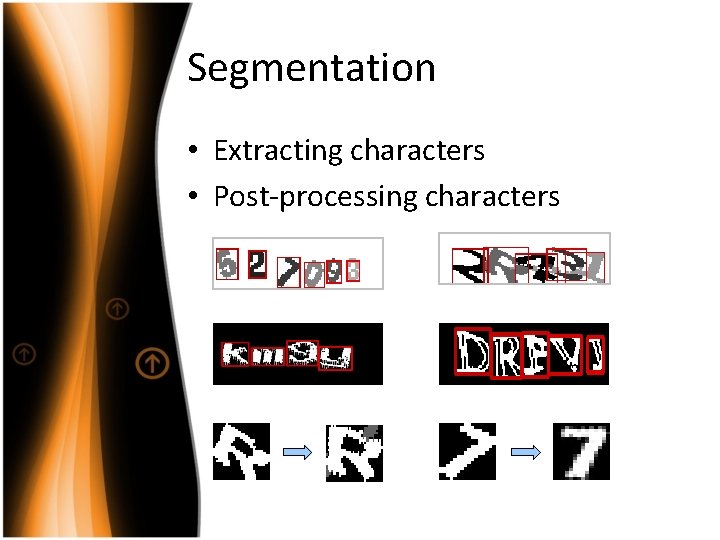
Segmentation • Extracting characters • Post-processing characters
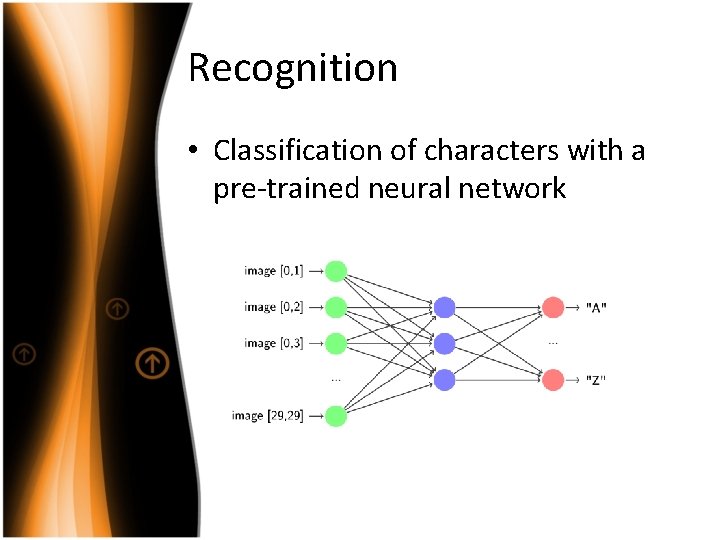
Recognition • Classification of characters with a pre-trained neural network
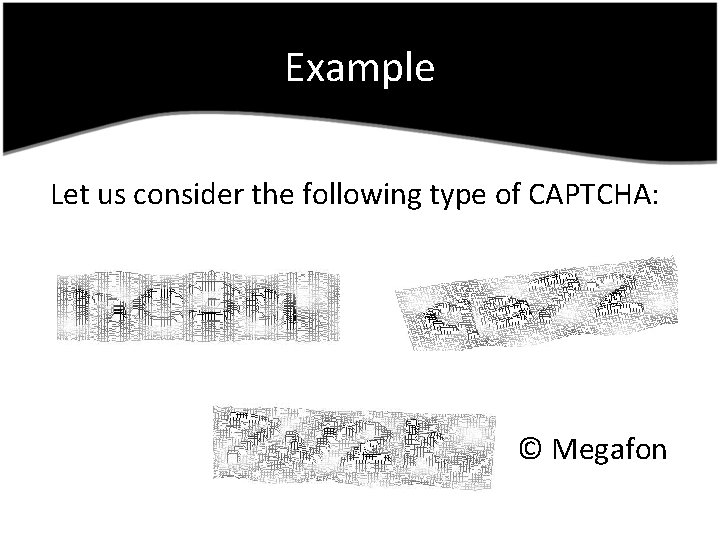
Example Let us consider the following type of CAPTCHA: © Megafon
Analyzing the problem • Characters lie on a 3 D wireframe • The wireframe is rotated and moved • The brightness is inconsistent • Seems to be quite bad : (
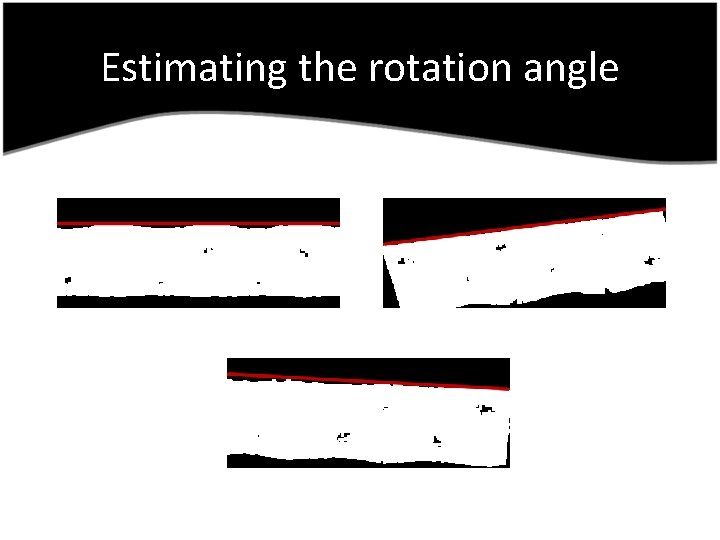
Ideas of the solution • Ignore three-dimensionality and use classic methods • The characters are generally darker than the background and can be separated by brightness • The upper side of the wireframe is clearly seen – this can be used for the reverse rotation
Estimating the rotation angle
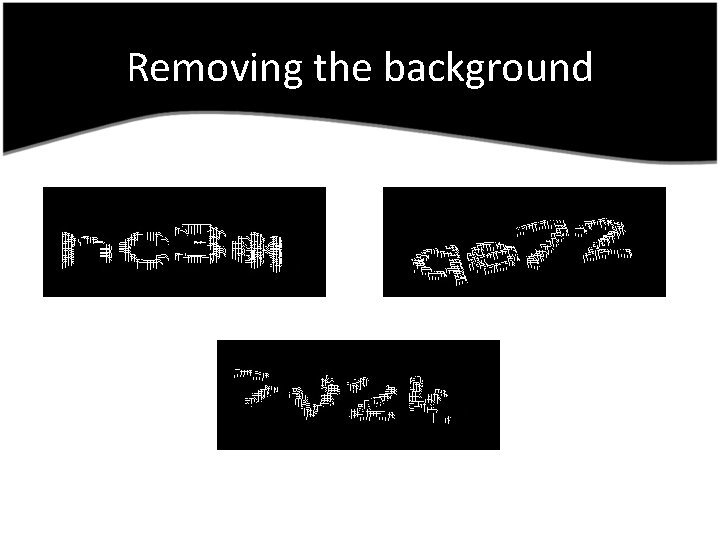
Removing the background
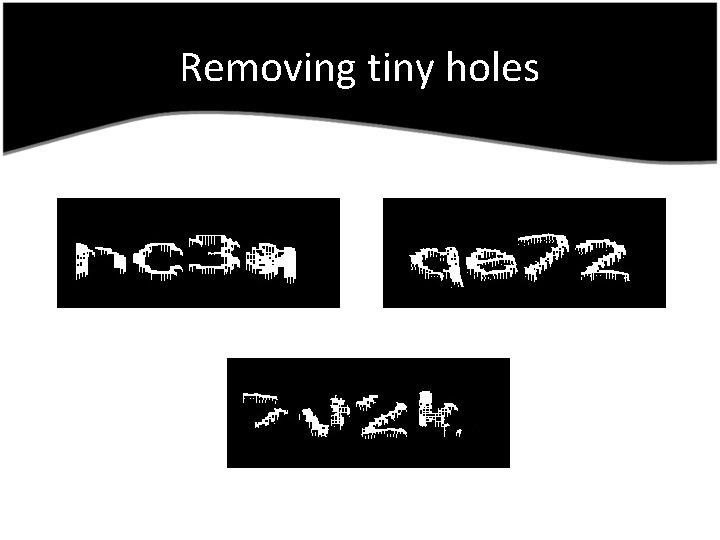
Removing tiny holes
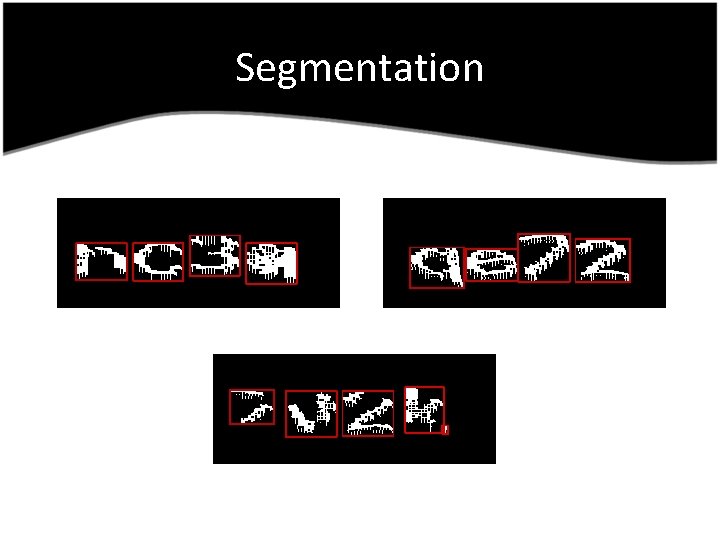
Segmentation
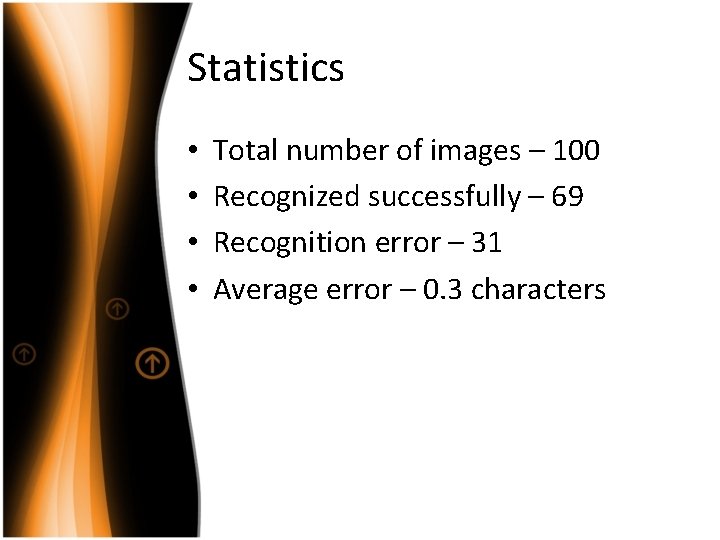
Statistics • • Total number of images – 100 Recognized successfully – 69 Recognition error – 31 Average error – 0. 3 сharacters
Other types of CAPTCHAs • Preprocessing varies greatly • Segmentation is quite similar • Almost identical recognition Conclusion — the more transformations are applied to the original image, the more general methods can be used.
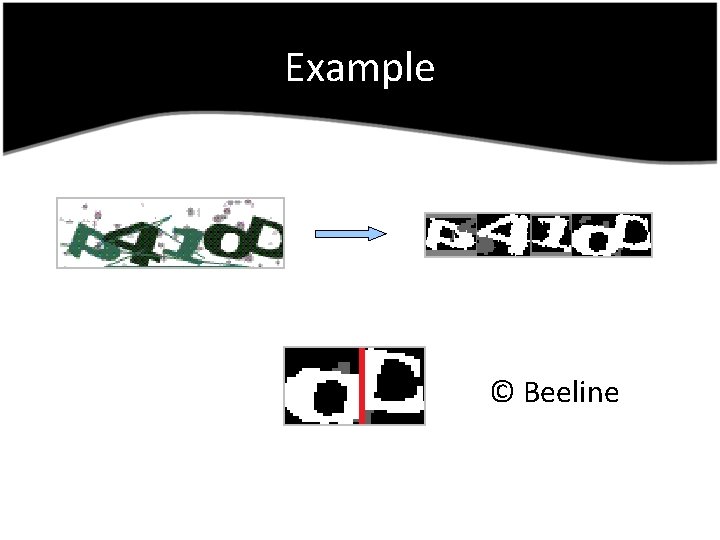
Neural network segmentation • In Beeline's CAPTCHA, the classic method did not show satisfactory results • A new method which combines the segmentation and recognition was developed
Example © Beeline
Conclusion • Only preprocessing varies significantly • All considered types of CAPTCHAs proved to be inefficient reverse Turing tests
Questions?