
RECOGNIZING MEDIA BIAS bias can manipulate and blind
RECOGNIZING MEDIA BIAS bias can manipulate and blind us
1. SPIN BIAS • Spin is vague, dramatic or sensational language. When journalists put a “spin” on a story, they push it away from objective, measurable facts. Spin is a form of media bias that clouds a reader’s view, preventing them from getting a precise take on what happened. • In the early 20 th century, Public Relations and Advertising executives were referred to as “spin doctors. ” They would use vague language and make unsupportable claims in order to promote a product, service or idea, downplaying any alternative views in order to make a sale. Increasingly, these tactics are appearing in journalism.
Examples of Spin Words and Phrases: • • • Emerge Refuse High-stakes Landmark Major Critical Offend Wary of offending Meaningful Monumental High-stakes • • • Serious Crucial Tirade Latest in a string of. . . Turn up the heat Decrying Stern talks Facing calls to… Even though Significant
Spin words and phrases used to imply bad behavior: These words are often used without providing hard facts, direct quotes, or witnessed behavior: • Finally • Acknowledged • Refusing to say • Dodged • Came to light • Surfaced • Emerged • Conceded • Admission • Admit to
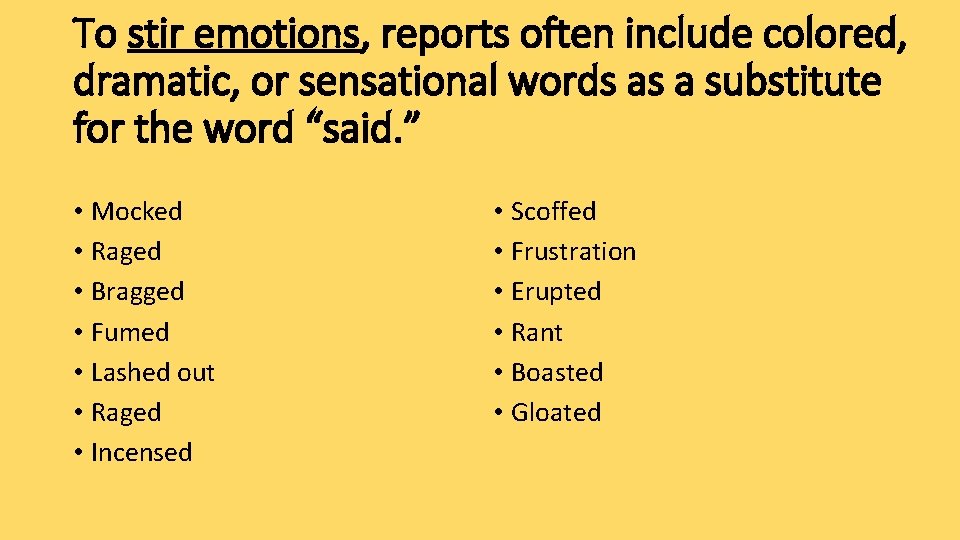
To stir emotions, reports often include colored, dramatic, or sensational words as a substitute for the word “said. ” • Mocked • Raged • Bragged • Fumed • Lashed out • Raged • Incensed • Scoffed • Frustration • Erupted • Rant • Boasted • Gloated
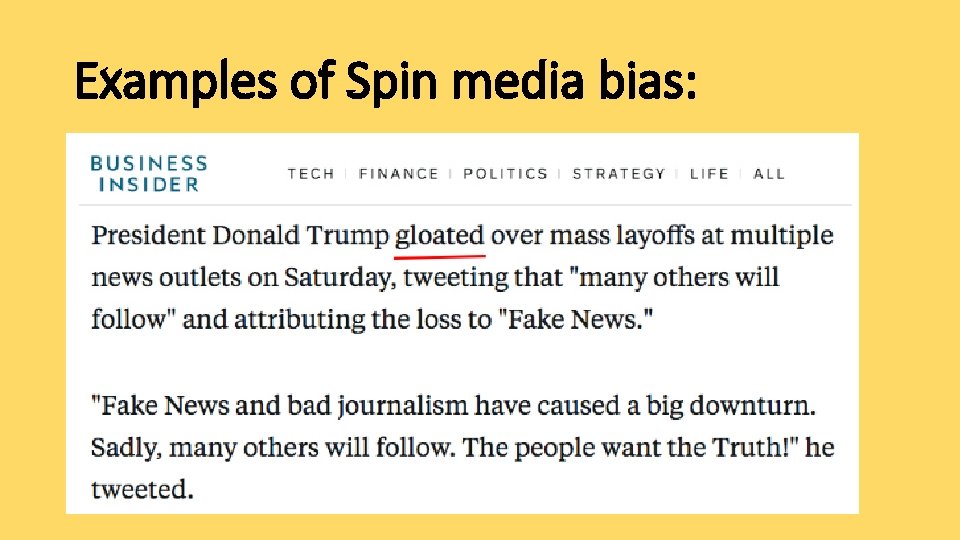
Examples of Spin media bias:
2. UNSUBSTANTIATED CLAIM BIAS • Journalists sometimes make claims in their reporting without including evidence to back them up. This can occur in the headline of an article, or in the body. • Statements that appear to be fact, but do not include specific evidence, are a key indication of this type of media bias.
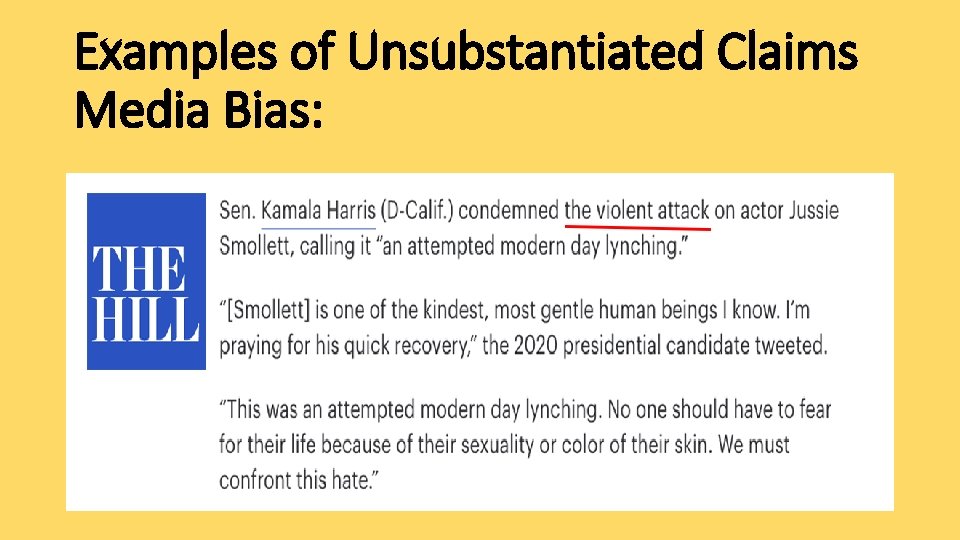
Examples of Unsubstantiated Claims Media Bias:
3. OPINION STATEMENTS PRESENTED AS FACTS BIAS • Sometimes journalists use subjective language or statements under the guise of reporting objectively. • A subjective statement is one that is based on personal opinions, assumptions, beliefs, tastes, preferences, or interpretations. • It is a statement colored by their specific perspective or lens and cannot be verified using concrete facts and figures within the article. • An objective statement, on the other hand, is an observation of observable facts. It is not based on emotions or personal opinion and is based on empirical evidence — what is quantifiable and measurable.
Words that signal subjective statements include: • Good/better/best • Bad/worse/worst • Is considered to be • It’s likely that • Seemingly • Dangerous • Extreme • Suggests • May mean that • Would seem • Could • Possibly • Apparently
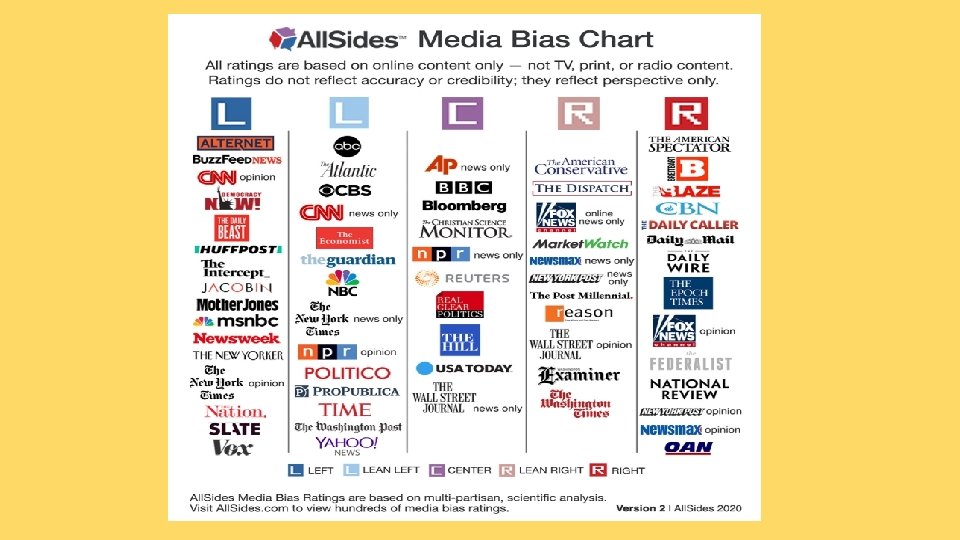
Editorial reviews by All. Sides found that some media outlets blur the line between subjective statements and objective statements, leading to potential confusion for readers, in two key ways: • Including subjective statements in their writing and not attributing them to a source. • Placing opinion or editorial content on the homepage next to hard news, or otherwise not clearly marking opinion content as “opinion. ”
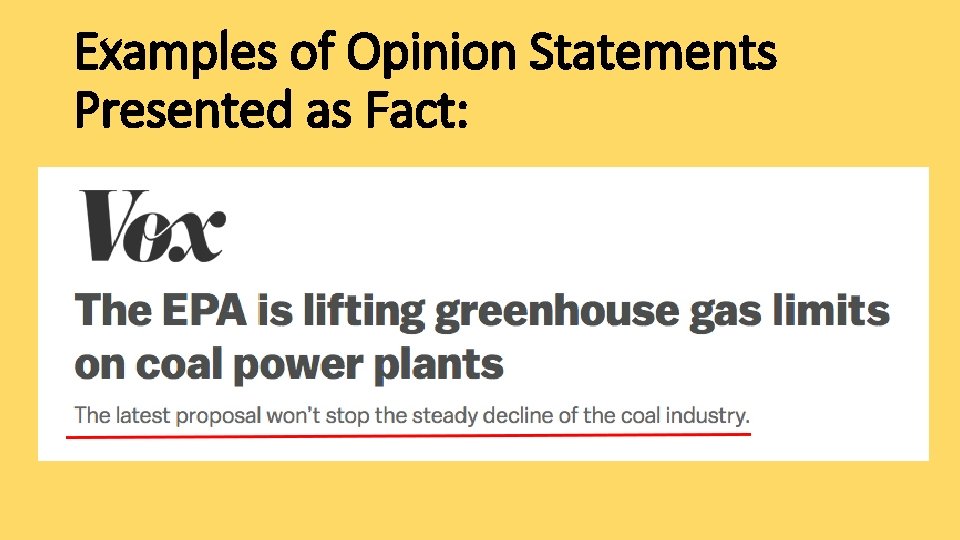
Examples of Opinion Statements Presented as Fact:
4. SENSATIONALISM/EMOTIONALISM • Sensationalism the presentation of information in a way that gives a shock or makes a deep impression. • Sensationalist language is often dramatic, yet vague. • In recent years, some media outlets have been criticized for overusing the term “breaking” or “breaking news, ” which historically was reserved for stories of deep impact or wide-scale importance.
Words and phrases used by the media that signal sensationalism/emotionalism include: • Shocking • Explosive • Remarkable • Slams • Rips • Forcing • Chaotic • Warning • Lashed out • Embroiled in. . . • Onslaught • Torrent of tweets • Scathing • Desperate • Showdown
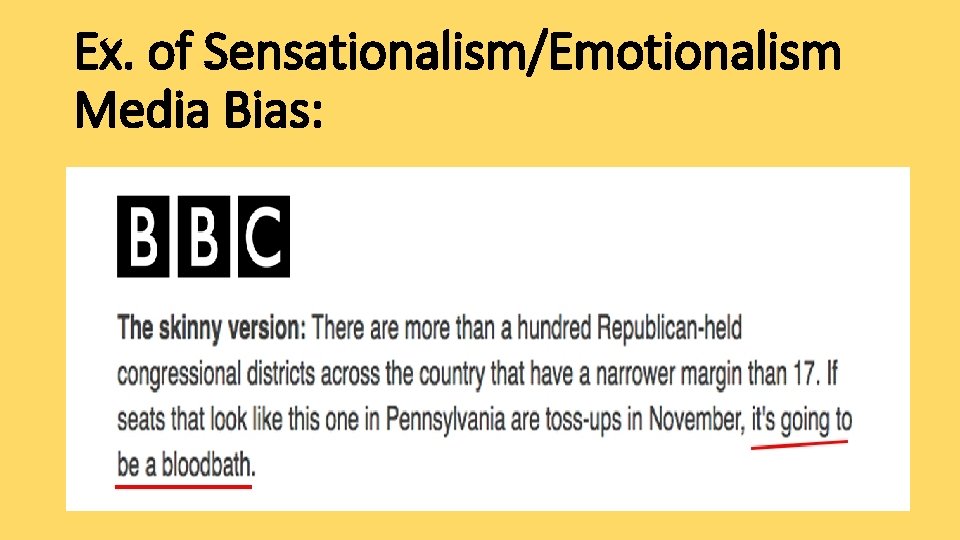
Ex. of Sensationalism/Emotionalism Media Bias:
5. MUDSLINGING/Ad Hominem BIAS • Mudslinging is a type of media bias when unfair or insulting things are said about someone in order to damage their reputation. • Ad hominem (Latin for “to the person”) attacks are attacks on a person’s motive or character traits instead of the content of their argument or idea.
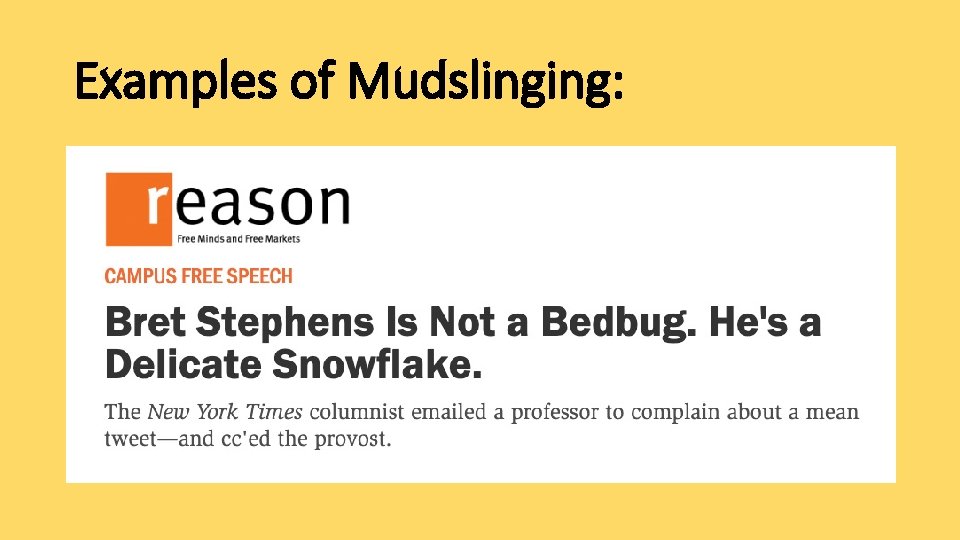
Examples of Mudslinging:
6. MIND READING BIAS • Mind reading occurs in journalism when a writer assumes they know what another person thinks, or thinks that the way they see the world reflects the way the world really is.
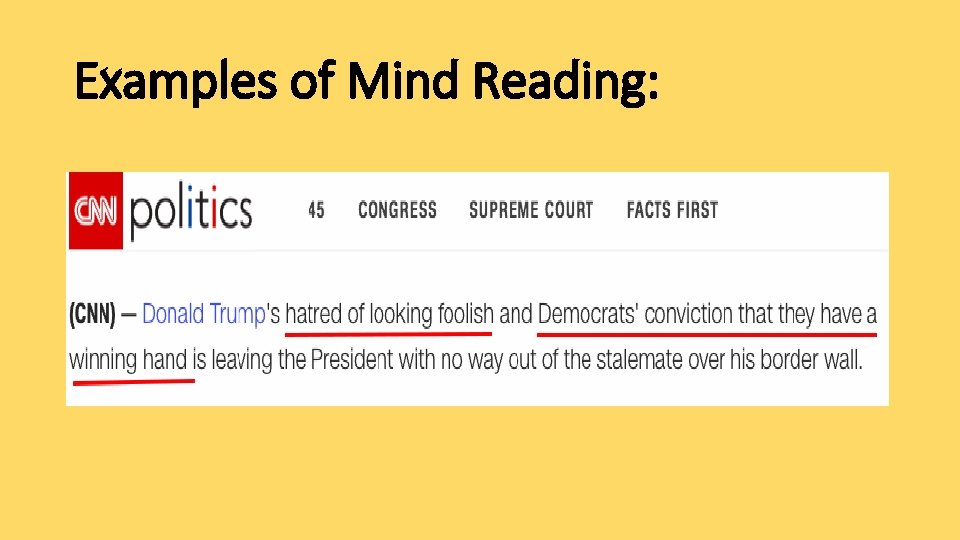
Examples of Mind Reading:
7. SLANT BIAS • Slant occurs when journalists tell only part of a story. • Includes cherry-picking information or data to support one side. • Slant prevents readers from getting the full story, and narrows the scope of our understanding.
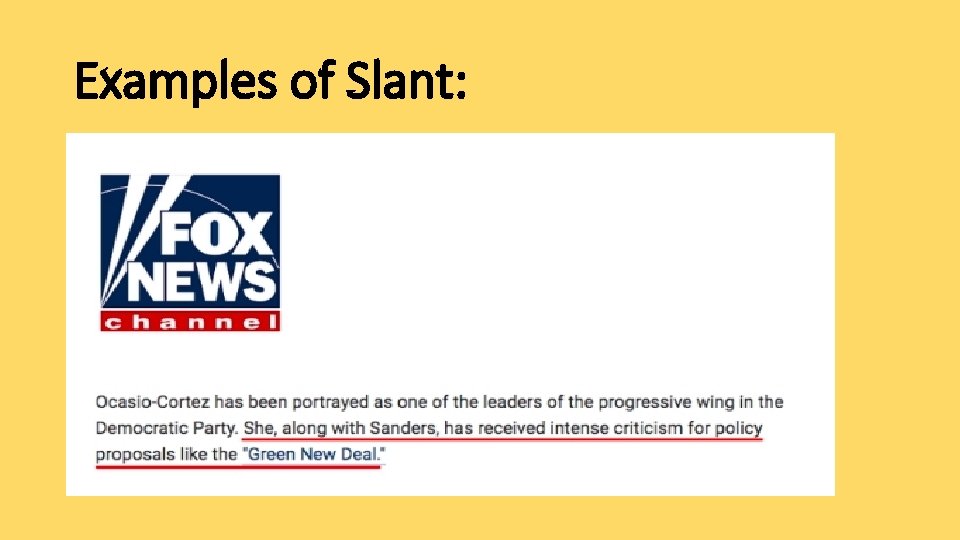
Examples of Slant:
8. FLAWED LOGIC BIAS • Flawed logic or faulty reasoning is a way to misrepresent people’s opinions or to arrive at conclusions that are not justified by the given evidence. • Flawed logic can involve jumping to conclusions or arriving at a conclusion that doesn’t follow from the premise.
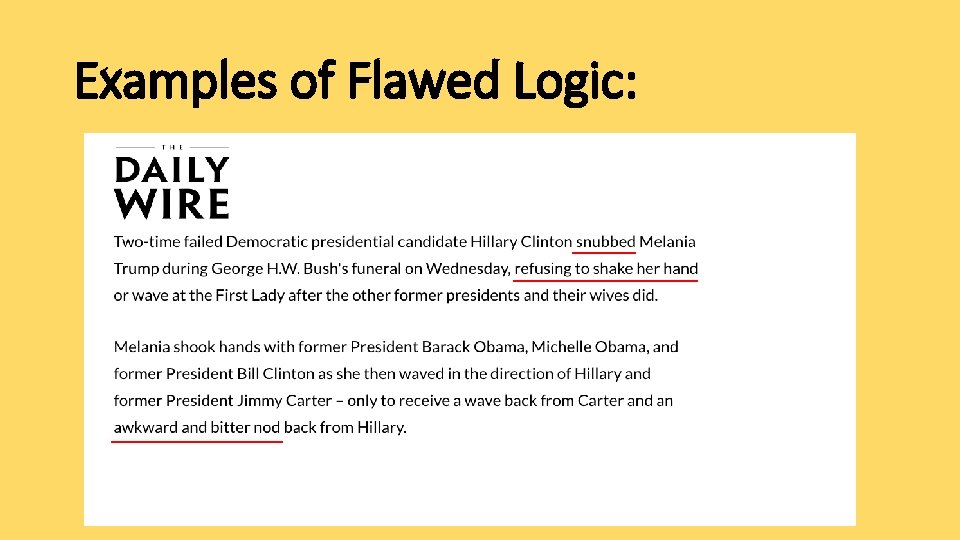
Examples of Flawed Logic:
9. BIAS BY OMISSION • Bias by omission is a type of media bias in which media outlets choose not to cover certain stories or omit information that would support an alternative viewpoint. • Media outlets sometimes omit stories in order to serve a political agenda. Sometimes, a story will only be covered by media outlets on a certain side of the political spectrum. • LEFT NOT cover military, such as attack in Ben Gazi • RIGHT NOT cover climate change, such as the Paris Agreement
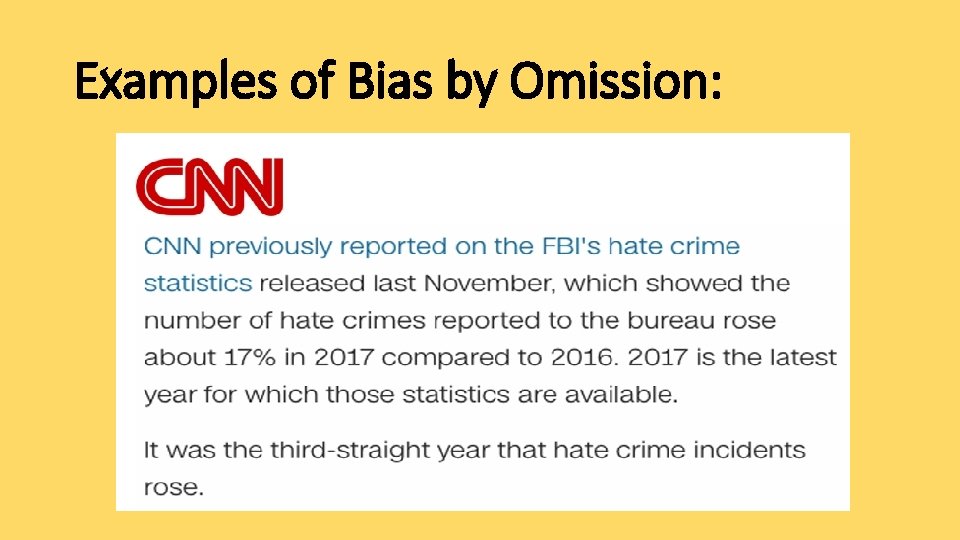
Examples of Bias by Omission:
10. Omission of Source Attribution • An informative, balanced article should provide the background or context of a story, including naming sources (publishing “on-therecord” information). • It is sometimes useful or necessary to use unnamed sources, because insider information is only available if the reporter agrees to keep their identity secret. • Journalists should make it clear that they are offering second-hand information on sensitive matters. • This fact doesn’t necessarily make the statements false, but it does make them less than reliable.
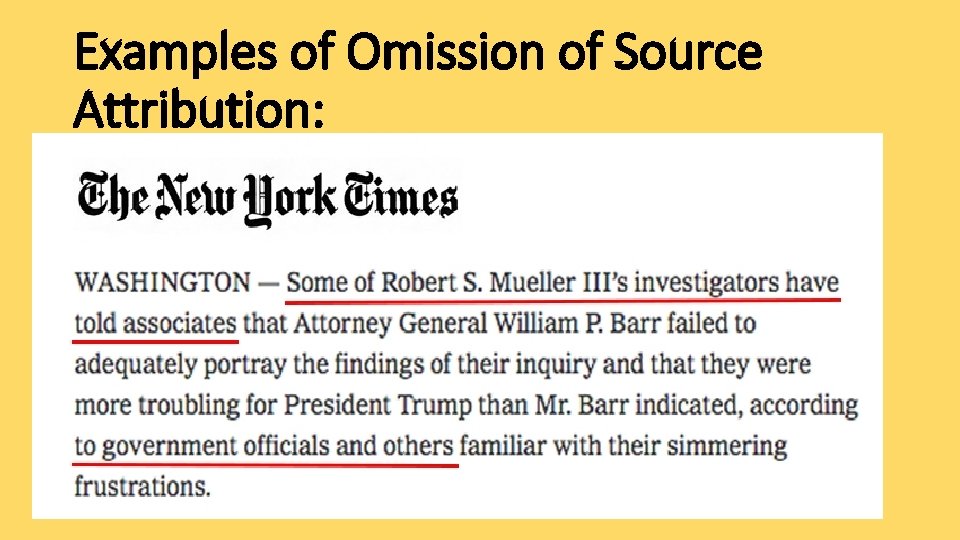
Examples of Omission of Source Attribution:
11. BIAS BY PLACEMENT • Bias by story placement is one type of bias by placement. • The stories that a media outlet features "above the fold" or prominently on its homepage and in print show which stories they really want you to read, even if you read nothing else on the site or in the publication. • Many people will quickly scan a homepage or read only a headline, so the stories that are featured first can reveal what the editor hopes you take away or keep top of mind from that day. • Bias by viewpoint placement is a related type of bias by placement. • This can often be seen in political stories. • A balanced piece of journalism will include perspectives from both the left and the right in equal measure.
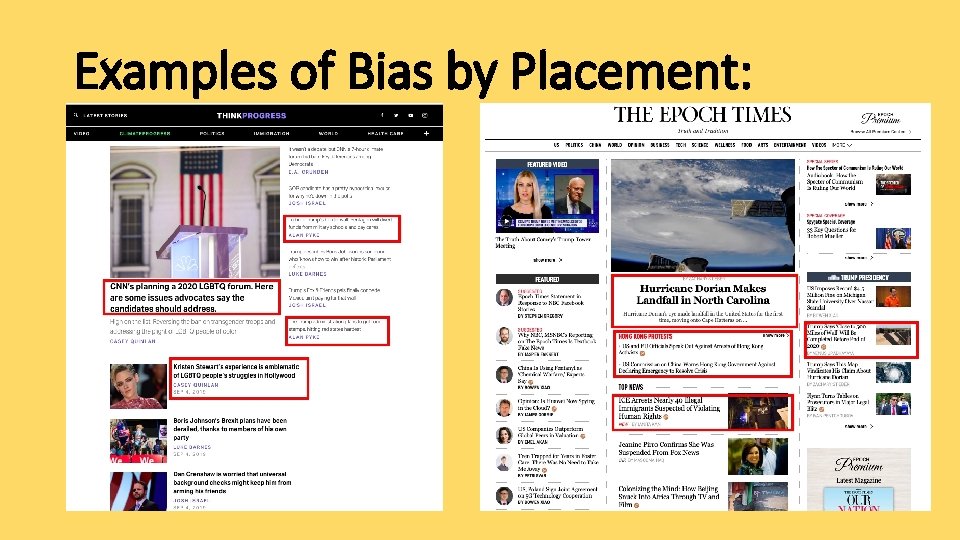
Examples of Bias by Placement:
- Slides: 30