
Recognizing Child Abuse What You Should Know North
Recognizing Child Abuse: What You Should Know North Dakota State University Center for 4 -H Youth Development
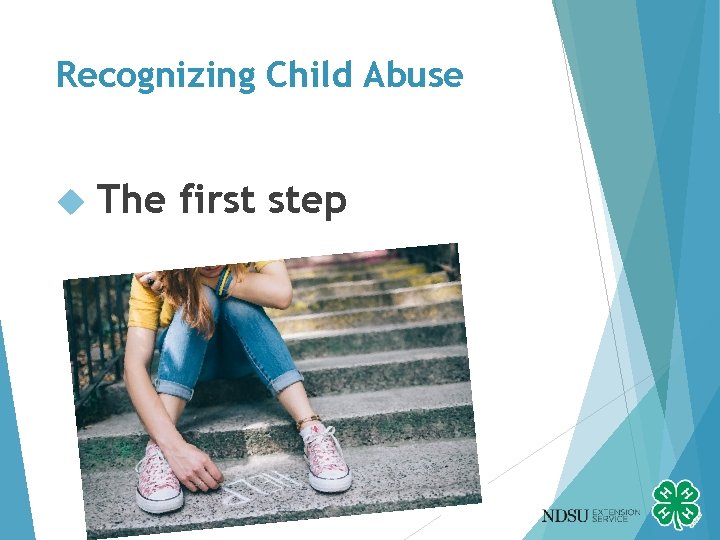
Recognizing Child Abuse The first step

Recognizing Child Abuse The child: Shows sudden changes in behavior Has not received help for physical or medical problems Has learning problems that cannot be attributed to specific physical or psychological causes Is always watchful Lacks adult supervision Is overly compliant, an overachiever or too responsible Comes to school early, stays late and does not want to go home
Recognizing Child Abuse The parent: Shows little concern for the child Denies the existence of the child's problems Asks the classroom teacher to use harsh physical discipline Sees the child as entirely bad, worthless or burdensome Demands perfection the child cannot achieve Looks primarily to the child for care
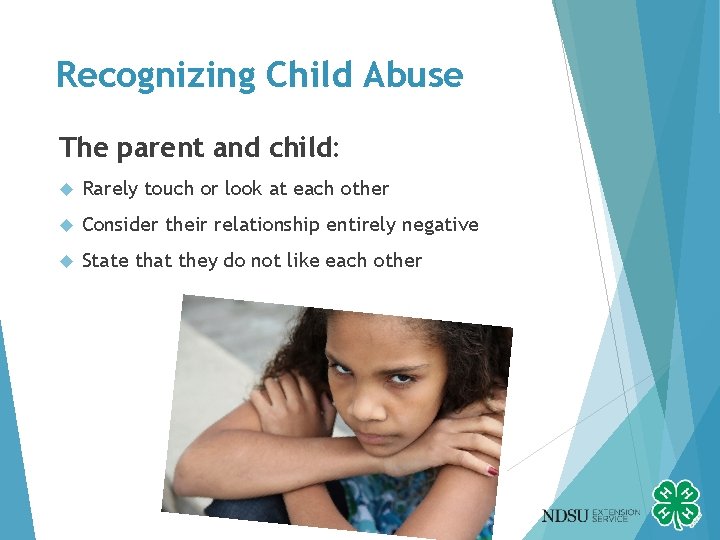
Recognizing Child Abuse The parent and child: Rarely touch or look at each other Consider their relationship entirely negative State that they do not like each other
Signs of Physical Abuse Consider the possibility of physical abuse when the child: Has unexplained burns, bites or bruises Has fading bruises or other marks Seems frightened of the parents Shrinks at the approach of adults Reports injury by a parent or another adult caregiver
Signs of Neglect Consider the possibility of neglect when the child: Is frequently absent from school and activities Begs or steals food or money from peers Lacks needed medical or dental care Is consistently dirty Lacks sufficient clothing for the weather Abuses alcohol or other drugs States that no one is at home to provide care
Signs of Sexual Abuse Consider the possibility of sexual abuse when the child: Has difficulty walking or sitting Suddenly refuses to change for gym Demonstrates sophisticated or unusual sexual knowledge or behavior Becomes pregnant or contracts a venereal disease, particularly if under age 14 Runs away Reports sexual abuse
Signs of Emotional Maltreatment Consider the possibility of emotional maltreatment when the child: Shows extremes in behavior Is inappropriately adult or infantile Is delayed in physical or emotional development Has attempted suicide Reports a lack of attachment to the parent
Reporting Child Maltreatment How to report: Reports of suspicion of child maltreatment are made to county social services offices. Details will be required. A written statement may be requested.
Prevent Child Abuse North Dakota

Reporting Child Maltreatment Who reports? Mandatory reporters Permissive reporters
Reporting Child Maltreatment What happens to a report?
Reporting Child Maltreatment North Dakota Child Abuse Index
Reporting Child Maltreatment Liability Unauthorized disclosure
Reporting Child Maltreatment Suspension of a volunteer or paid staff member
Reporting Child Maltreatment Within Extension Youth Programs Reporting child maltreatment is a professional and mandatory legal obligation for paid staff. Extension paid staff will be familiar with and follow the reporting guidelines.
Reporting Child Maltreatment Within Extension Youth Programs A designated Extension staff person receiving the report is responsible for documenting the facts as reported. If the reported incident involves a program volunteer or paid staff member, the responsible Extension administrator shall, without exception, suspend the person from all activities involving the supervision of children. Regardless of where or under what circumstances the alleged incident takes place, if a paid staff person is involved, it will be considered job-related and affecting job performance.
Reporting Child Maltreatment Within Extension Youth Programs Paid and volunteer staff must be sensitive to the need for confidentiality in the handling of information on suspected child abuse or neglect. Paid and volunteer staff may not contact the parent(s) or guardian(s) of children if they are involved in an alleged child abuse incident without the permission of Extension administrators.
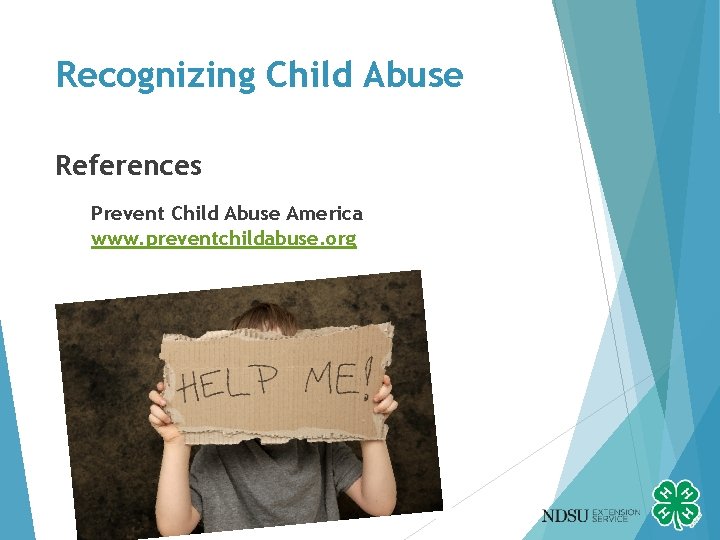
Recognizing Child Abuse References Prevent Child Abuse America www. preventchildabuse. org
- Slides: 20