
Recognizing Appeals and Claims z Adapted from Understanding




- Slides: 27
Recognizing Appeals and Claims z. Adapted from “Understanding Mass Media” by Jeffery Schrank z. Ads from www. adflip. com and scriptorium. lib. duke. edu/adaccess/
Important note z. Don’t forget to fill out the worksheet entitled “Recognizing Appeals and Claims” as you complete this activity. z. I will be looking for you to show that you thought about the questions and gave meaningful answers.
Advertisers use claims and appeals to convince us to purchase their products. Let’s take a closer look at each and view some samples ads.
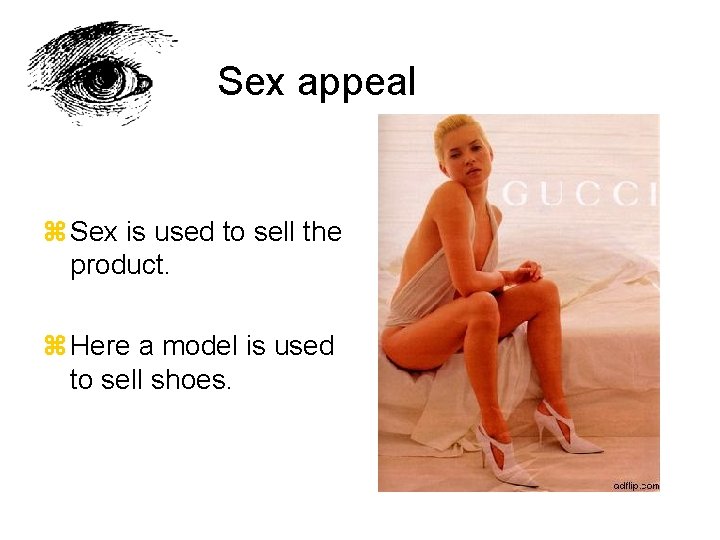
Sex appeal z Sex is used to sell the product. z Here a model is used to sell shoes.
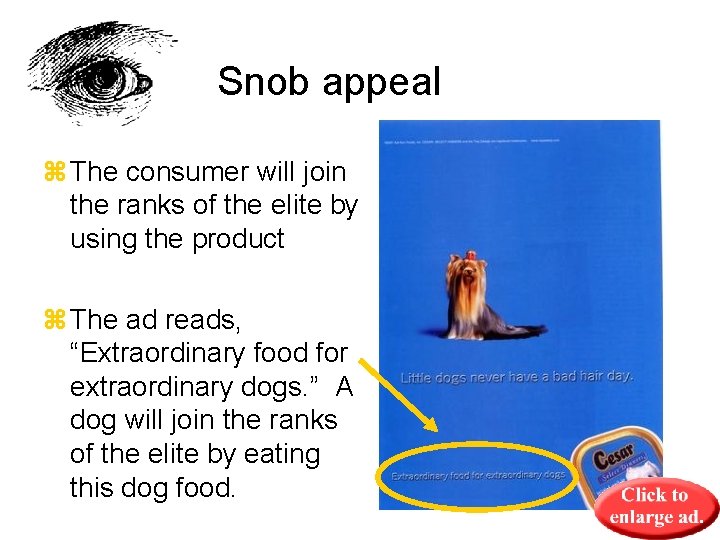
Snob appeal z The consumer will join the ranks of the elite by using the product z The ad reads, “Extraordinary food for extraordinary dogs. ” A dog will join the ranks of the elite by eating this dog food.
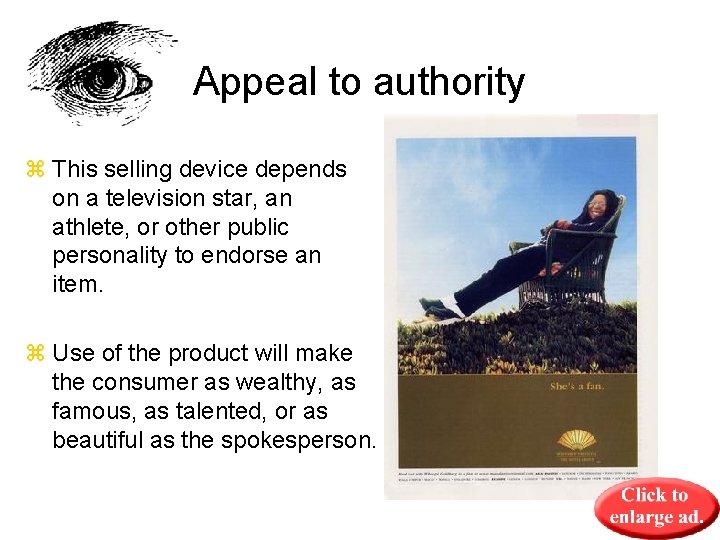
Appeal to authority z This selling device depends on a television star, an athlete, or other public personality to endorse an item. z Use of the product will make the consumer as wealthy, as famous, as talented, or as beautiful as the spokesperson.
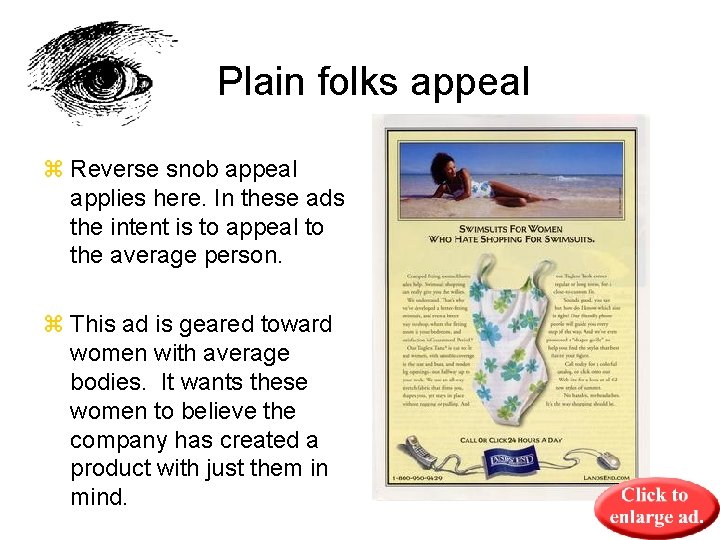
Plain folks appeal z Reverse snob appeal applies here. In these ads the intent is to appeal to the average person. z This ad is geared toward women with average bodies. It wants these women to believe the company has created a product with just them in mind.
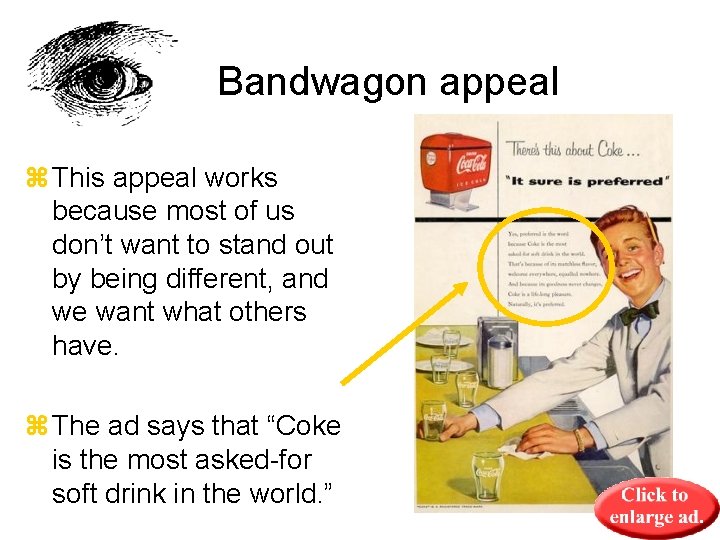
Bandwagon appeal z This appeal works because most of us don’t want to stand out by being different, and we want what others have. z The ad says that “Coke is the most asked-for soft drink in the world. ”
And now for the claims. . .
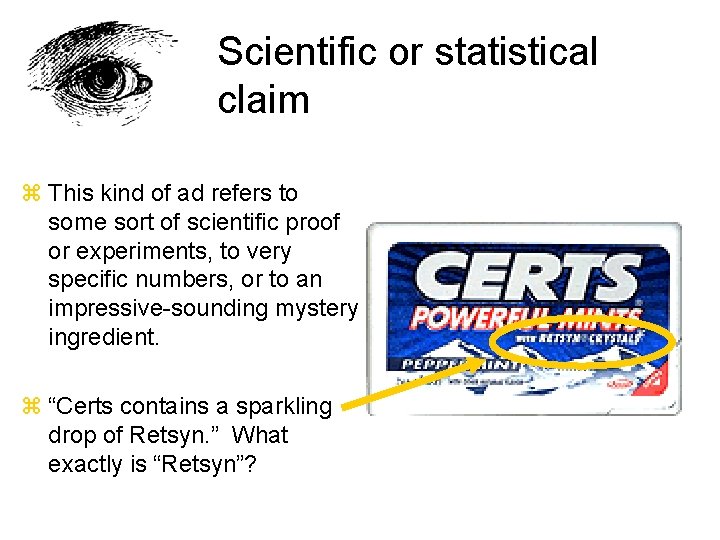
Scientific or statistical claim z This kind of ad refers to some sort of scientific proof or experiments, to very specific numbers, or to an impressive-sounding mystery ingredient. z “Certs contains a sparkling drop of Retsyn. ” What exactly is “Retsyn”?
Scientific or statistical claim z What scientific or statistical claim is being made here?
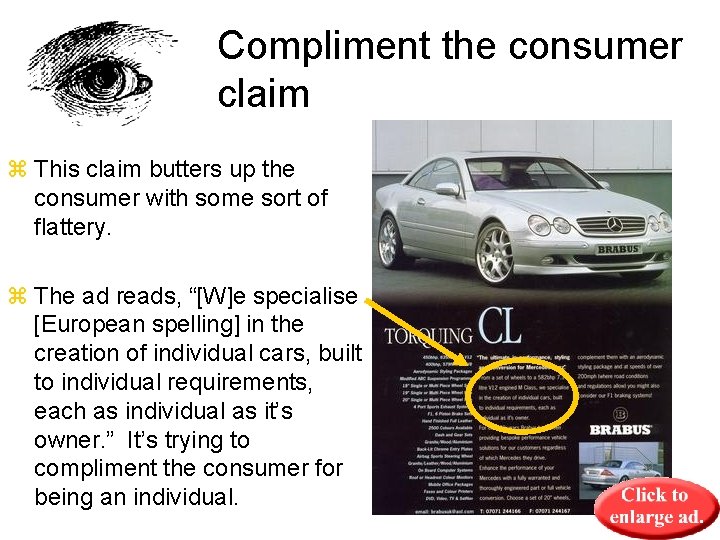
Compliment the consumer claim z This claim butters up the consumer with some sort of flattery. z The ad reads, “[W]e specialise [European spelling] in the creation of individual cars, built to individual requirements, each as individual as it’s owner. ” It’s trying to compliment the consumer for being an individual.
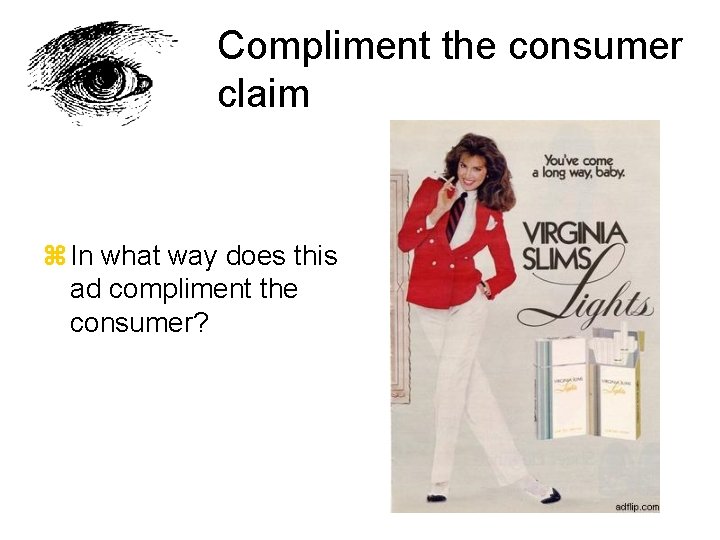
Compliment the consumer claim z In what way does this ad compliment the consumer?
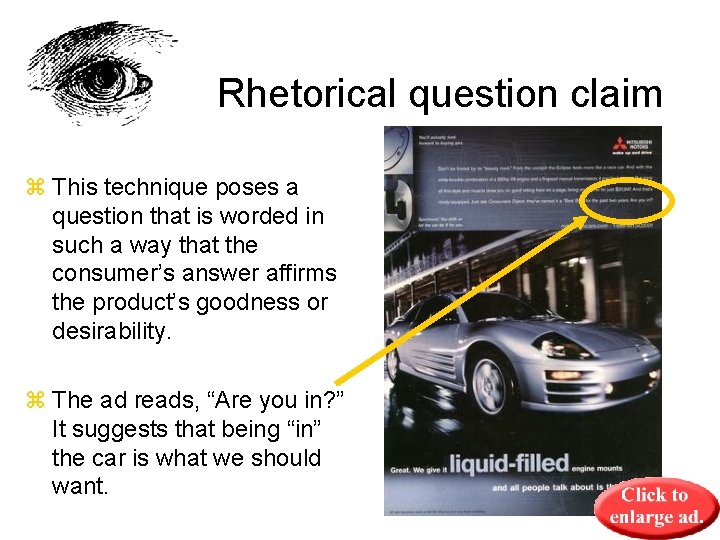
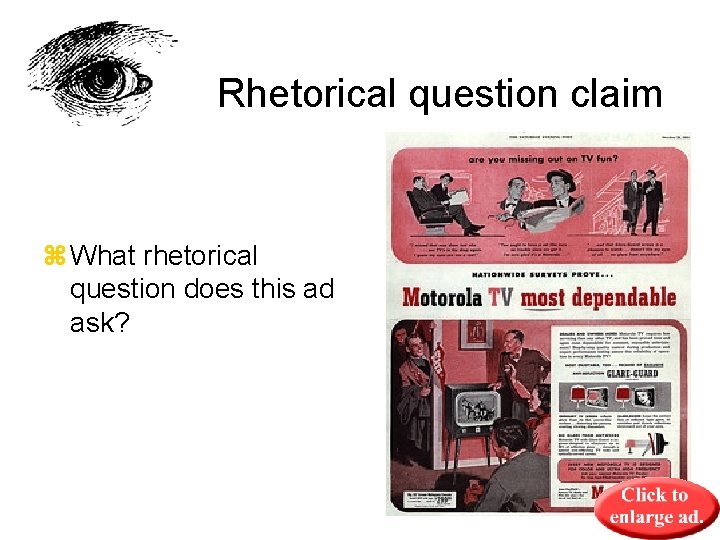
Rhetorical question claim z This technique poses a question that is worded in such a way that the consumer’s answer affirms the product’s goodness or desirability. z The ad reads, “Are you in? ” It suggests that being “in” the car is what we should want.
Rhetorical question claim z What rhetorical question does this ad ask?
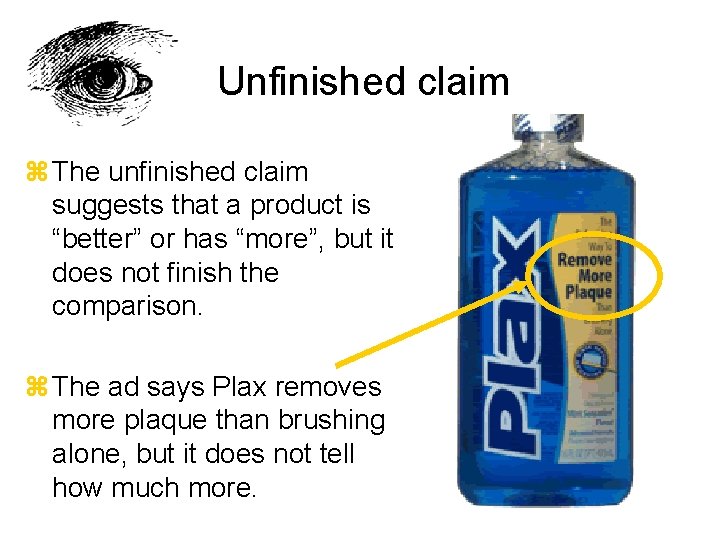
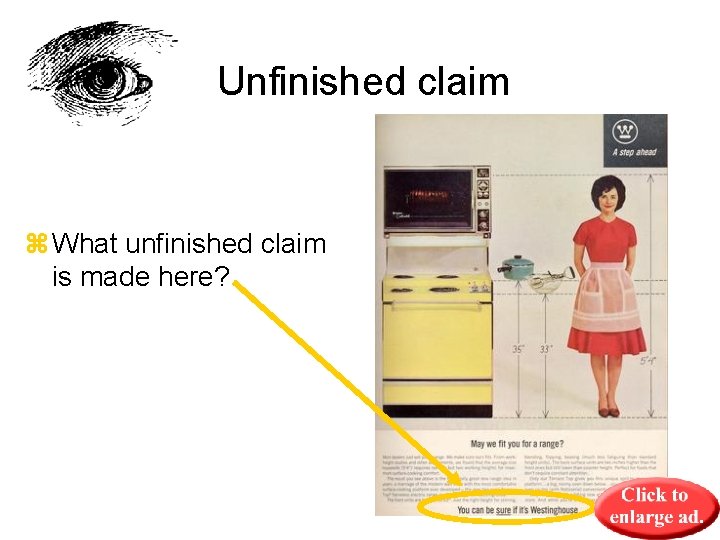
Unfinished claim z The unfinished claim suggests that a product is “better” or has “more”, but it does not finish the comparison. z The ad says Plax removes more plaque than brushing alone, but it does not tell how much more.
Unfinished claim z What unfinished claim is made here?
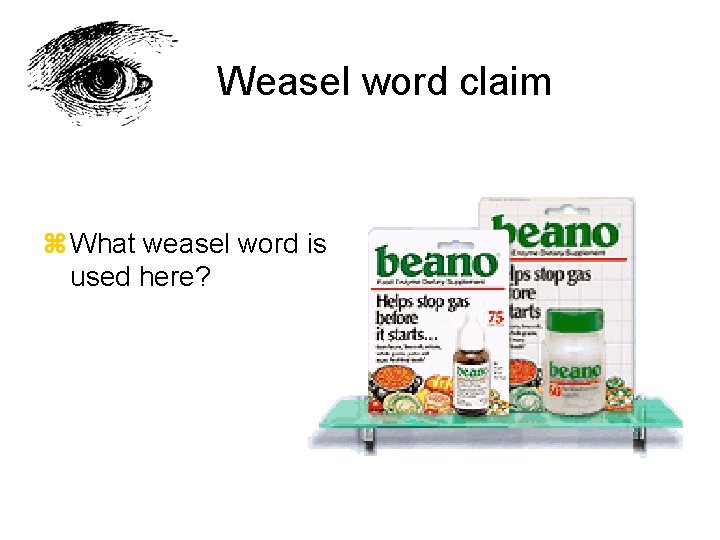
Weasel word claim z Weasel words are used to make products seem special or unique. z Some of the most common weasel words are listed to the right.
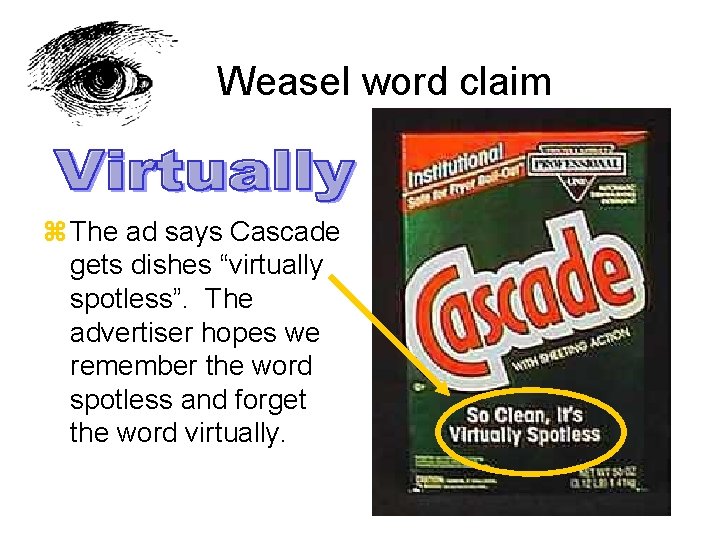
Weasel word claim z The ad says Cascade gets dishes “virtually spotless”. The advertiser hopes we remember the word spotless and forget the word virtually.
Weasel word claim z What weasel word is used here?
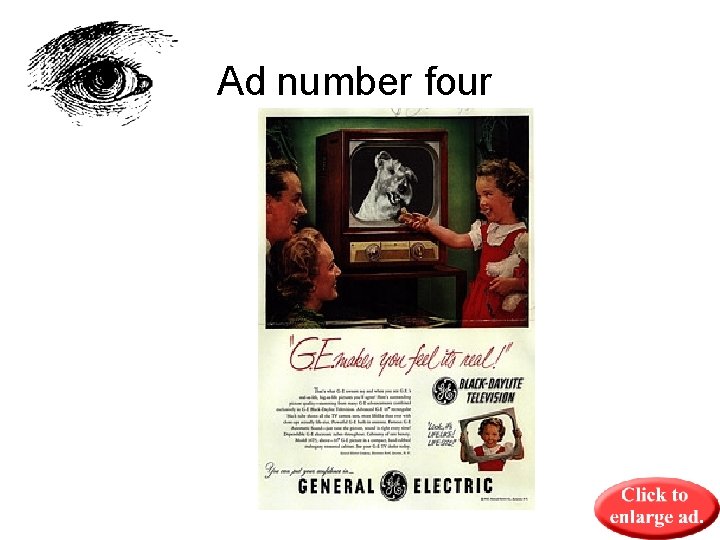
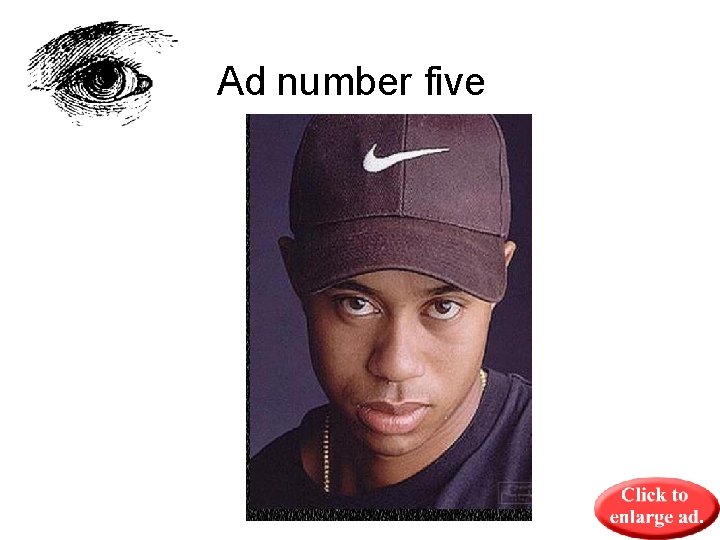
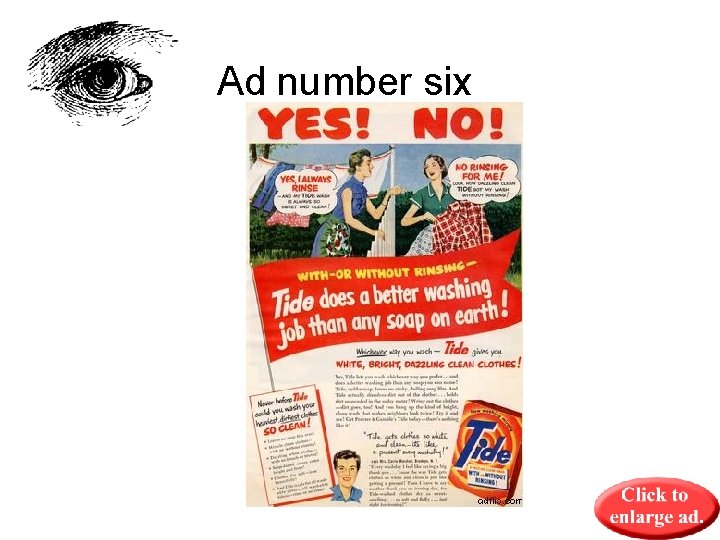
Is that all? z. Advertisers do employ more than just the appeals and claims listed, and they frequently use more that one appeal or claim in each advertisement. z. Use what you learned to figure out the different appeals and claims used in each of the following six ads. Some ads have more than one appeal or claim. Find at least one claim or appeal for each ad.
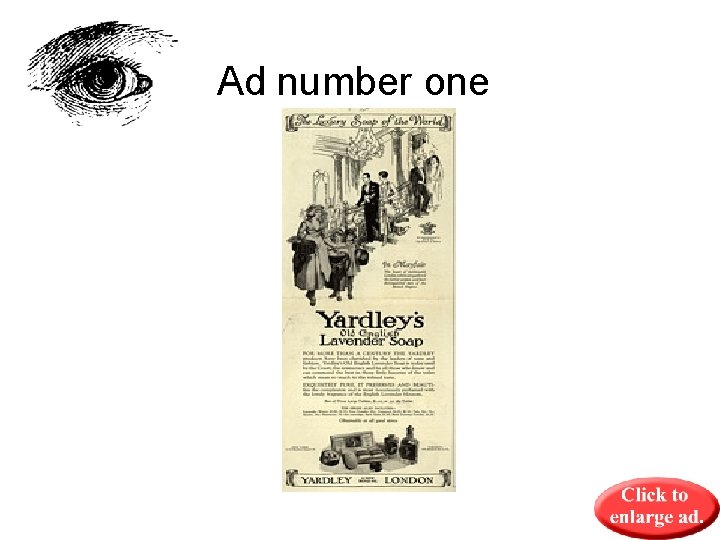
Ad number one Ad for sunglasses
Ad number two Ad for sunglasses
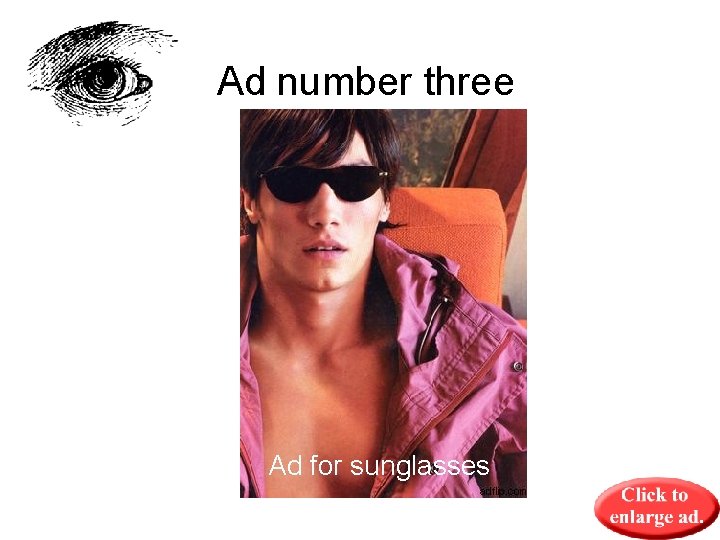
Ad number three Ad for sunglasses
Ad number four
Ad number five
Ad number six