
RECOGNITION OF PRIOR LEARNING THE CIT MODEL Phil


- Slides: 37
RECOGNITION OF PRIOR LEARNING THE CIT MODEL Phil O’Leary MSc MA Extended Campus Cork Institute of Technology phil. oleary@cit. ie 4335132
RECOGNITION OF PRIOR LEARNING 1. 2. 3. 4. 5. 6. What is RPL ? Various terms How RPL can be used Explain CIT model My research Issues arising
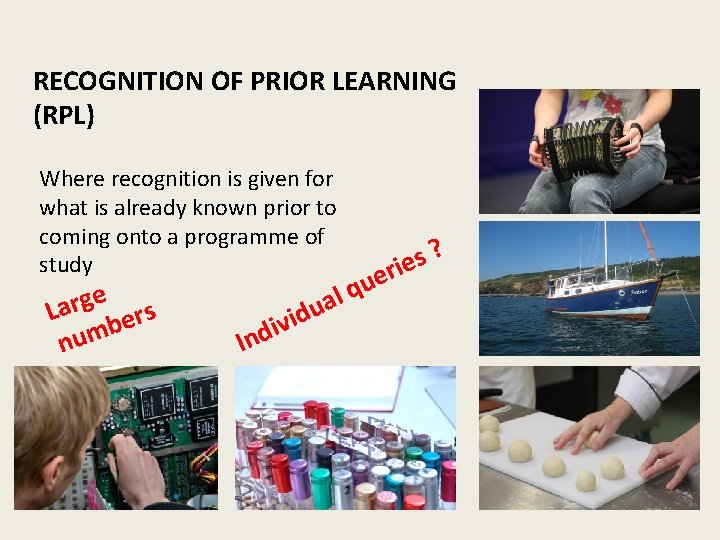
RECOGNITION OF PRIOR LEARNING (RPL) Where recognition is given for what is already known prior to coming onto a programme of study e g r a L rs e b num Ind u q l a u ivid ? s erie
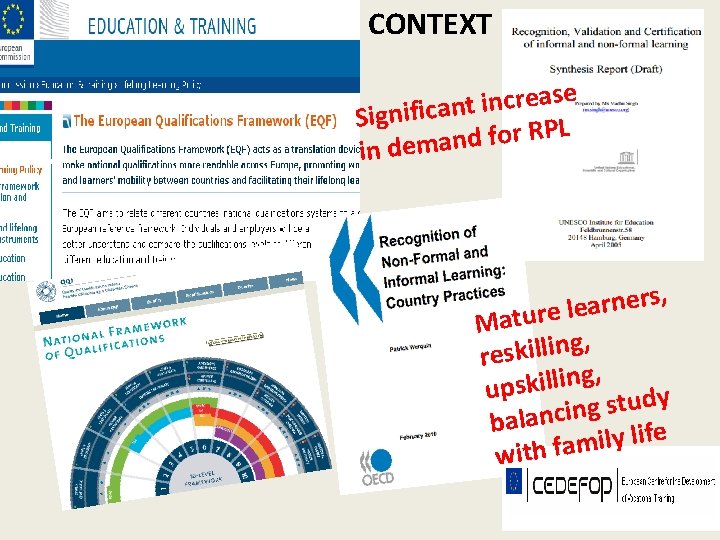
CONTEXT e s a e r c n i t n Significa PL R r o f d n a in dem , s r e n r a le e r u t a M , g n i l l i k s re , g n i l l i k s up y d u t s g n balanci fe i l y l i m a with f
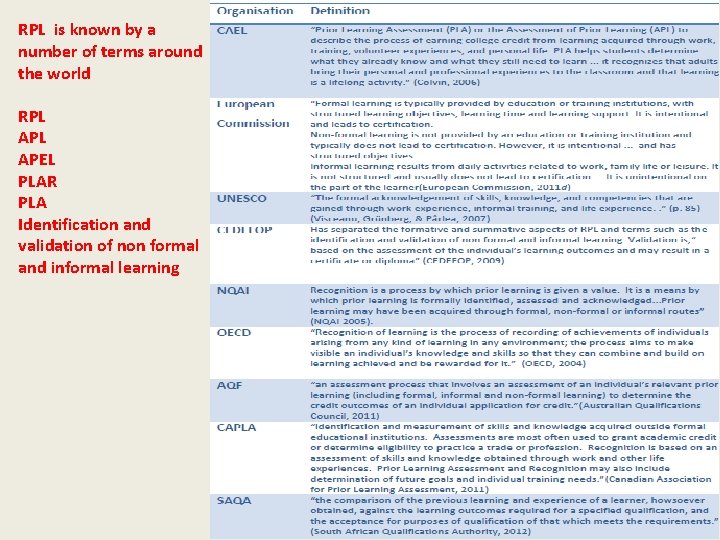
RPL is known by a number of terms around the world RPL APEL PLAR PLA Identification and validation of non formal and informal learning
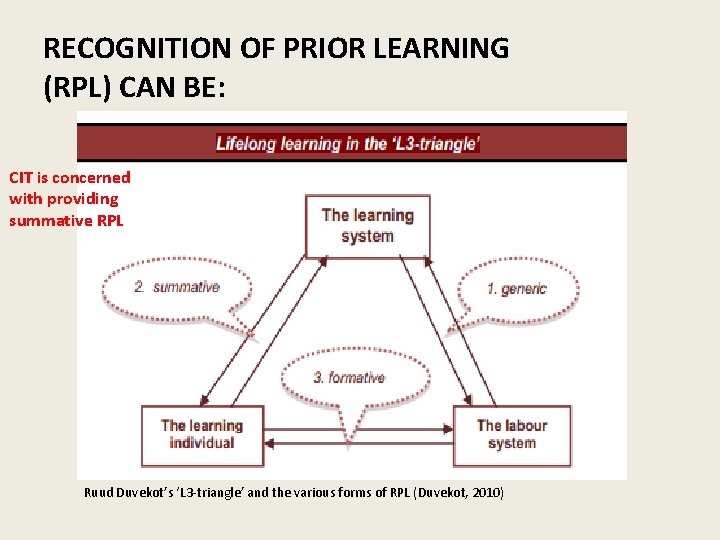
RECOGNITION OF PRIOR LEARNING (RPL) CAN BE: CIT is concerned with providing summative RPL Ruud Duvekot’s ‘L 3 -triangle’ and the various forms of RPL (Duvekot, 2010)
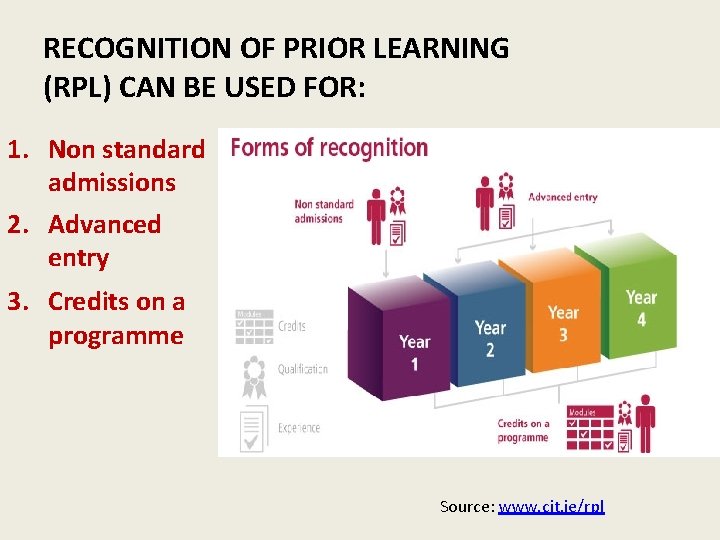
RECOGNITION OF PRIOR LEARNING (RPL) CAN BE USED FOR: 1. Non standard admissions 2. Advanced entry 3. Credits on a programme Source: www. cit. ie/rpl
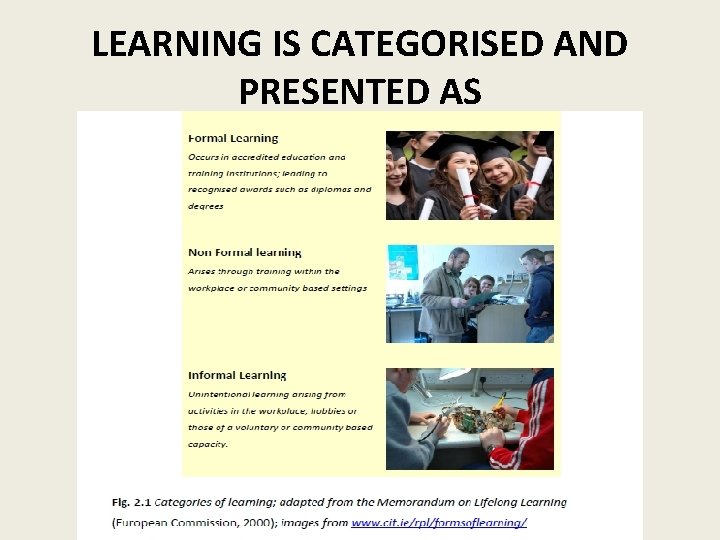
LEARNING IS CATEGORISED AND PRESENTED AS
SUPPORTING RECOGNITION OF PRIOR LEARNING; Is it possible to create a service that can handle high demand still maintain the flexibility to address the needs of the individual ?
MY ROLE Deliver RPL for CIT, students, systems in place. MY STUDIES MA through research. Looking at ways to support the student with RPL case preparation.
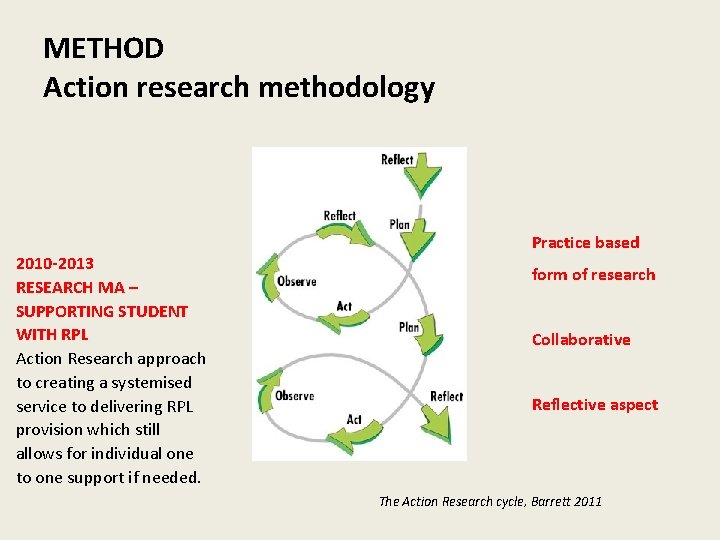
METHOD Action research methodology 2010 -2013 RESEARCH MA – SUPPORTING STUDENT WITH RPL Action Research approach to creating a systemised service to delivering RPL provision which still allows for individual one to one support if needed. Practice based form of research Collaborative Reflective aspect The Action Research cycle, Barrett 2011
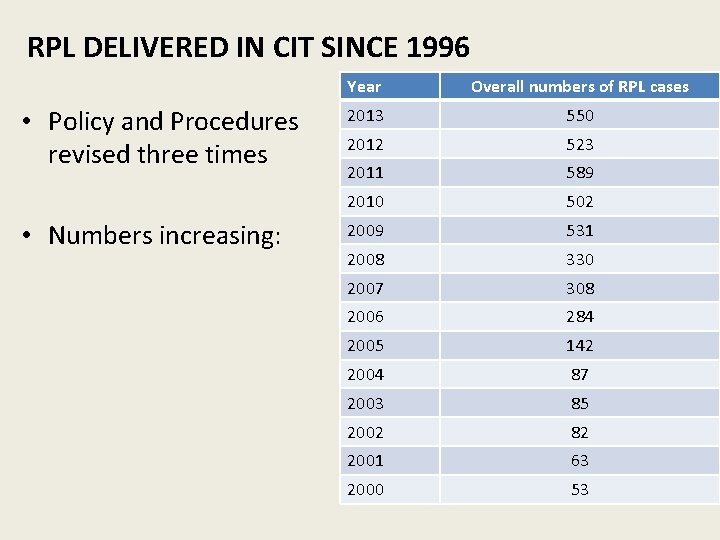
RPL DELIVERED IN CIT SINCE 1996 • Policy and Procedures revised three times • Numbers increasing: Year Overall numbers of RPL cases 2013 550 2012 523 2011 589 2010 502 2009 531 2008 330 2007 308 2006 284 2005 142 2004 87 2003 85 2002 82 2001 63 2000 53
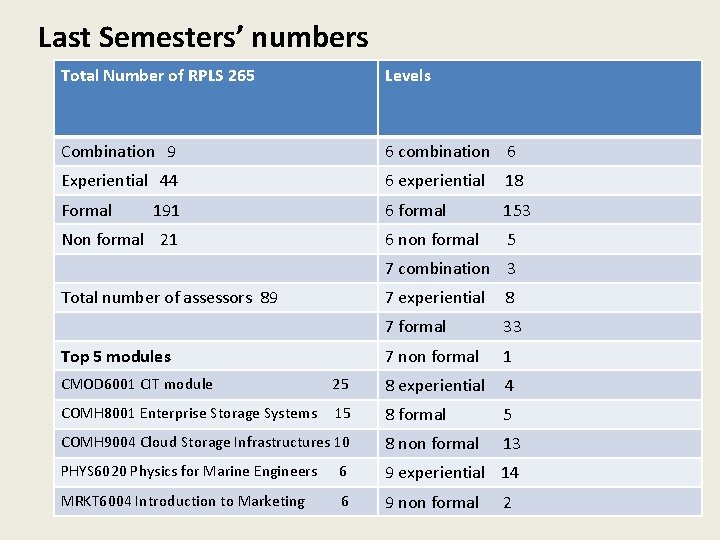
Last Semesters’ numbers Total Number of RPLS 265 Levels Combination 9 6 combination 6 Experiential 44 6 experiential 18 Formal 6 formal 153 6 non formal 5 191 Non formal 21 7 combination 3 Total number of assessors 89 Top 5 modules 7 experiential 8 7 formal 33 7 non formal 1 CMOD 6001 CIT module 25 8 experiential 4 COMH 8001 Enterprise Storage Systems 15 8 formal 5 COMH 9004 Cloud Storage Infrastructures 10 8 non formal 13 PHYS 6020 Physics for Marine Engineers 6 9 experiential 14 MRKT 6004 Introduction to Marketing 6 9 non formal 2
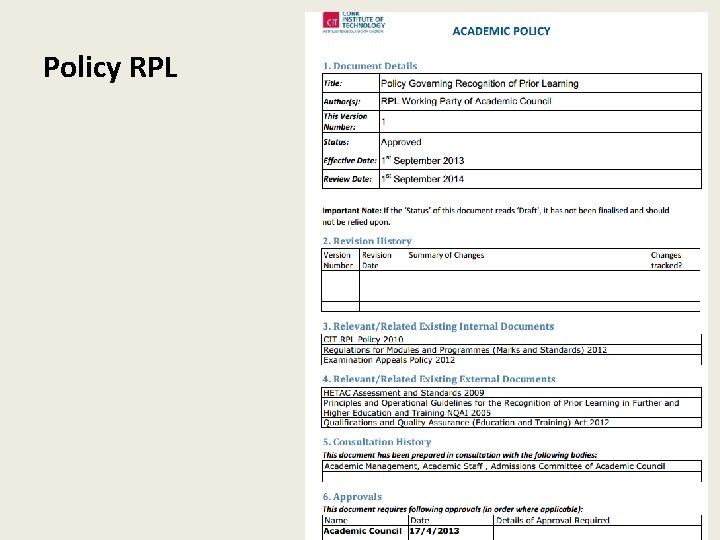
Policy RPL
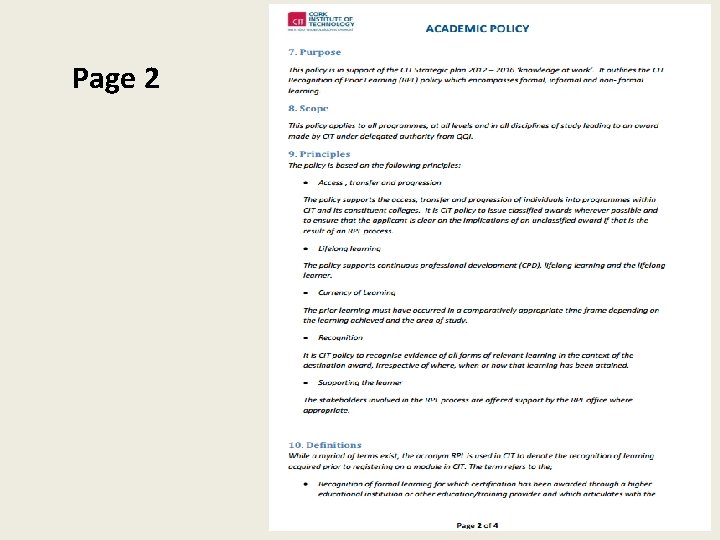
Page 2
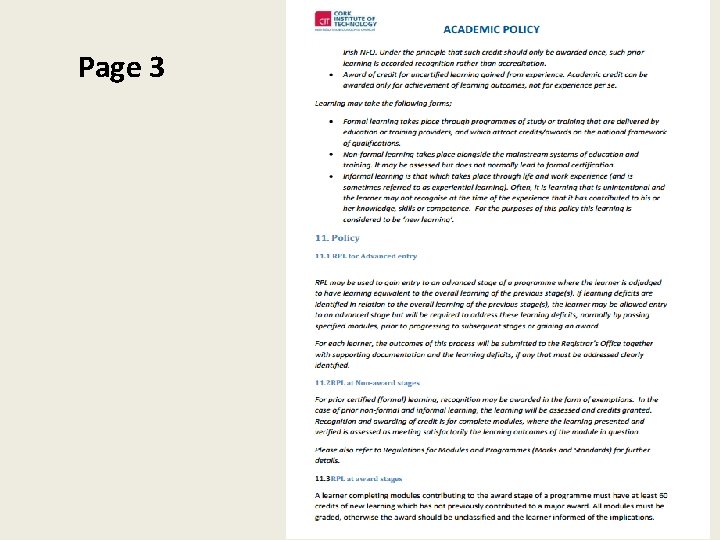
Page 3
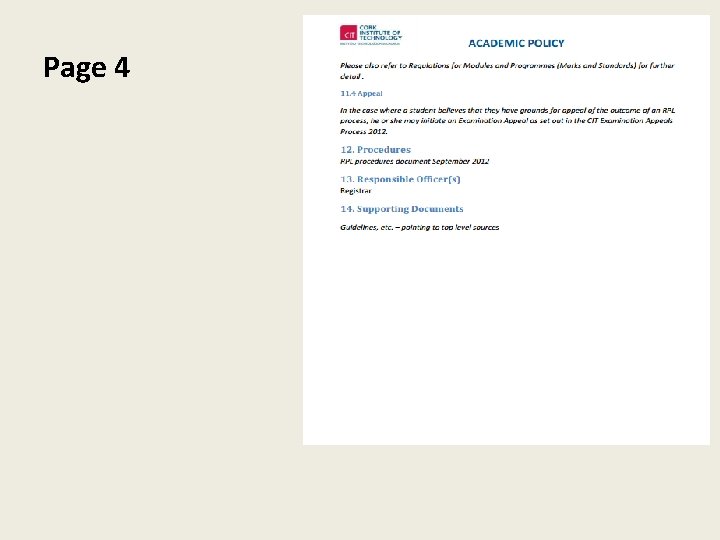
Page 4
CIT MODEL FOR RPL PROVISION 1. Website 2. Workshops 3. Individual mentoring
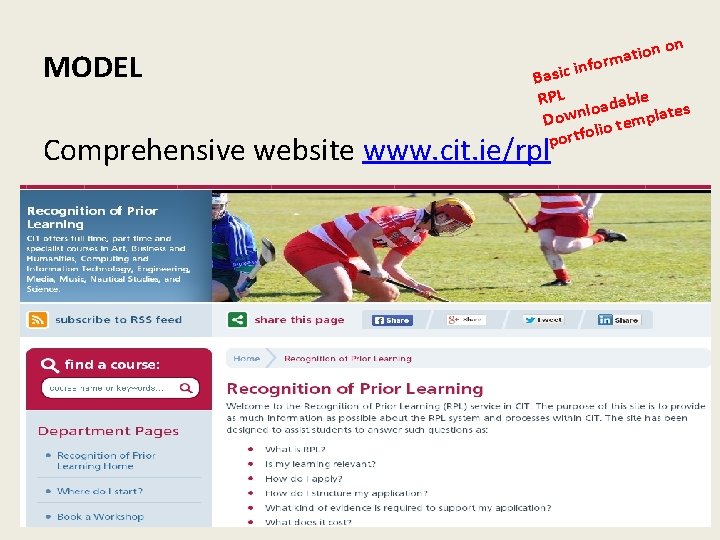
MODEL tion a m r info on Basic RPL able es d a o l Down io templat l portfo Comprehensive website www. cit. ie/rpl
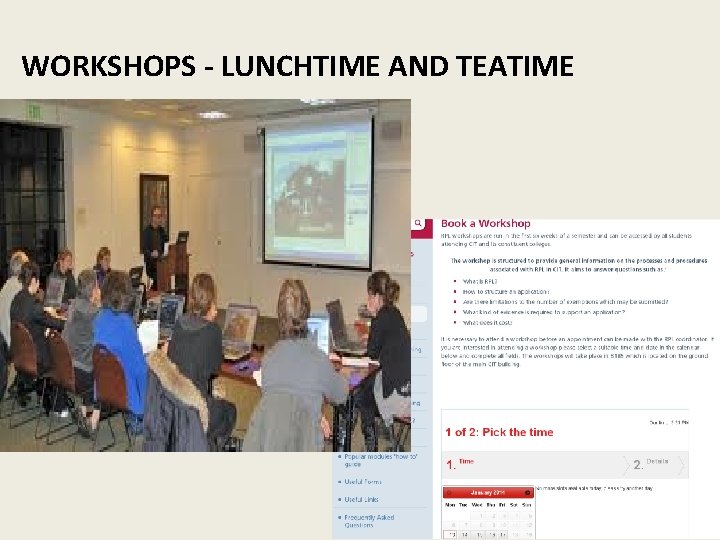
WORKSHOPS - LUNCHTIME AND TEATIME
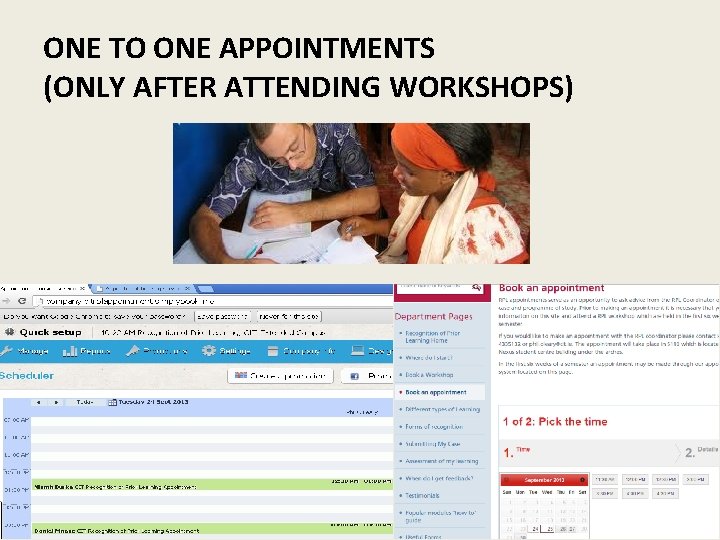
ONE TO ONE APPOINTMENTS (ONLY AFTER ATTENDING WORKSHOPS)
WHY I FINALLY CHOSE THIS MODEL • Research explained 2008 - 2009 numbers increasing
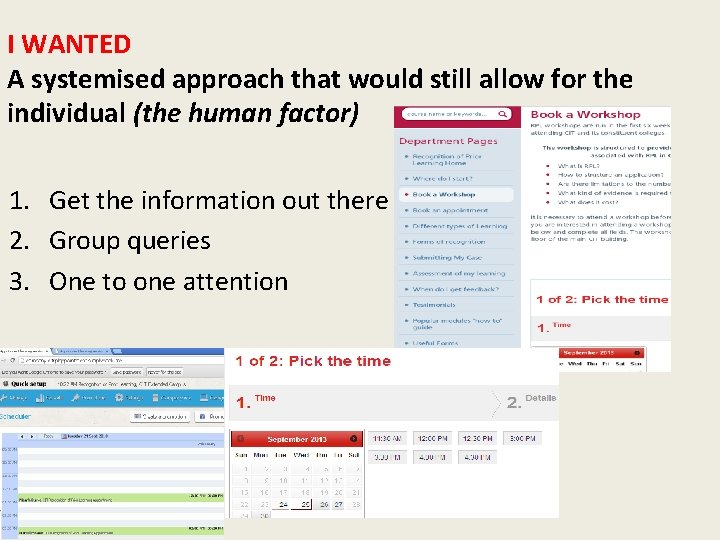
I WANTED A systemised approach that would still allow for the individual (the human factor) 1. Get the information out there 2. Group queries 3. One to one attention
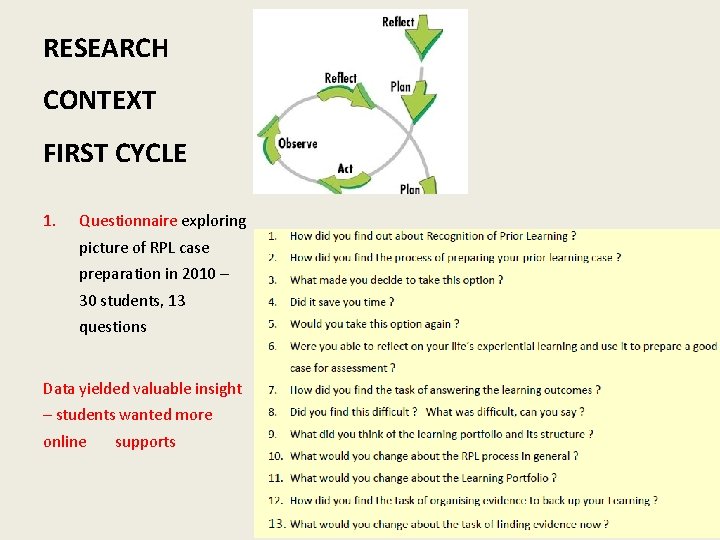
RESEARCH CONTEXT FIRST CYCLE 1. Questionnaire exploring picture of RPL case preparation in 2010 – 30 students, 13 questions Data yielded valuable insight – students wanted more online supports
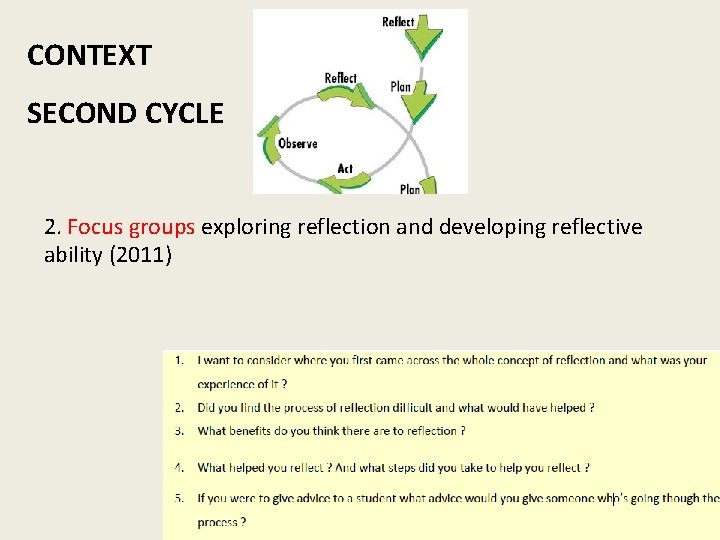
CONTEXT SECOND CYCLE 2. Focus groups exploring reflection and developing reflective ability (2011)
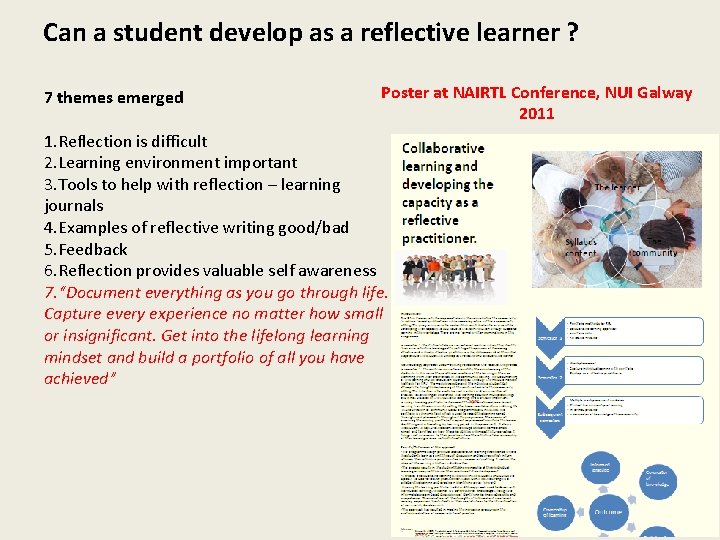
Can a student develop as a reflective learner ? 7 themes emerged Poster at NAIRTL Conference, NUI Galway 2011 1. Reflection is difficult 2. Learning environment important 3. Tools to help with reflection – learning journals 4. Examples of reflective writing good/bad 5. Feedback 6. Reflection provides valuable self awareness 7. “Document everything as you go through life. Capture every experience no matter how small or insignificant. Get into the lifelong learning mindset and build a portfolio of all you have achieved”
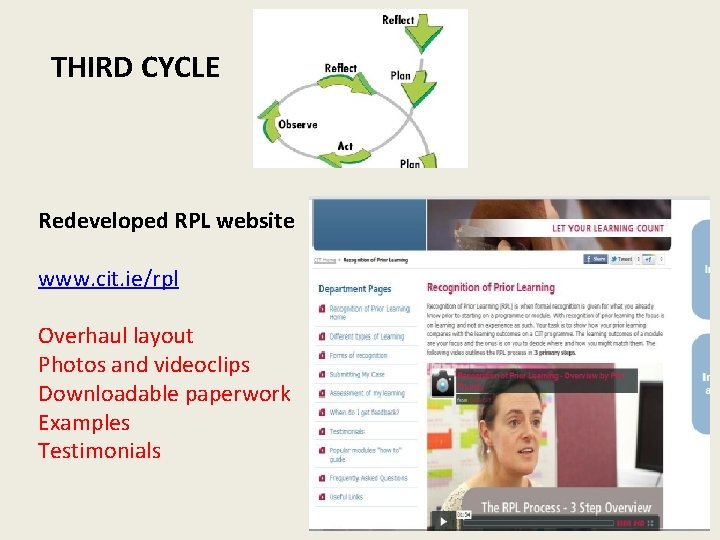
THIRD CYCLE Redeveloped RPL website www. cit. ie/rpl Overhaul layout Photos and videoclips Downloadable paperwork Examples Testimonials
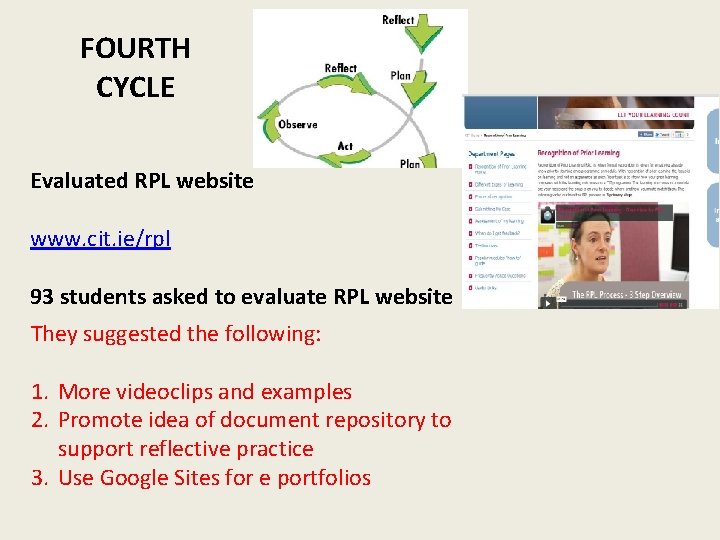
FOURTH CYCLE Evaluated RPL website www. cit. ie/rpl 93 students asked to evaluate RPL website They suggested the following: 1. More videoclips and examples 2. Promote idea of document repository to support reflective practice 3. Use Google Sites for e portfolios
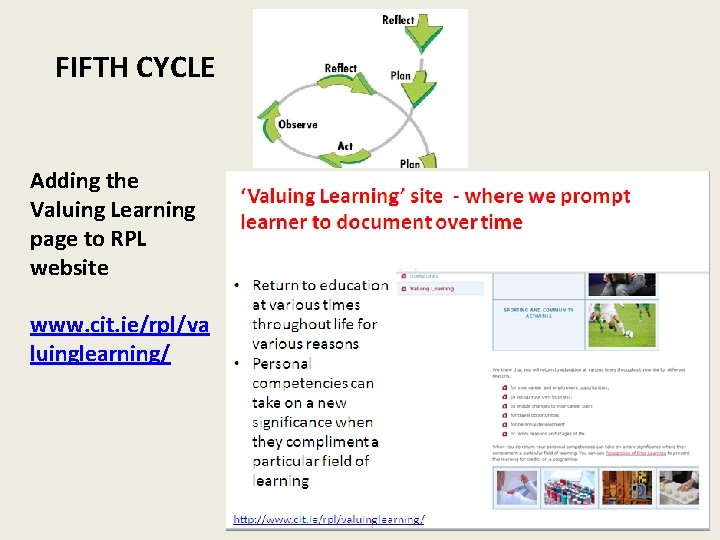
FIFTH CYCLE Adding the Valuing Learning page to RPL website www. cit. ie/rpl/va luinglearning/
6 th CYCLE Trial of e portfolios using Google Sites https: //sites. google. com/
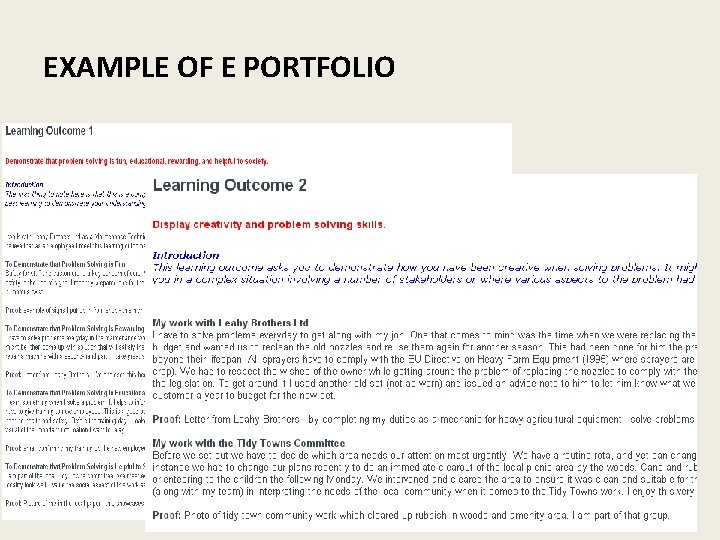
EXAMPLE OF E PORTFOLIO
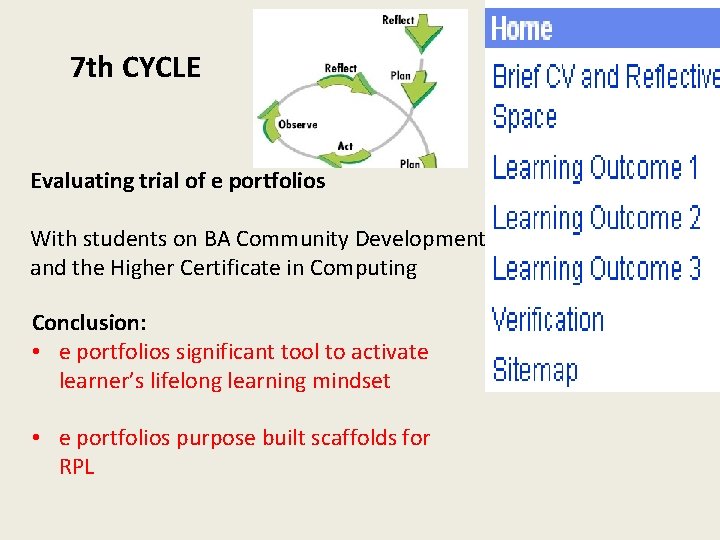
7 th CYCLE Evaluating trial of e portfolios With students on BA Community Development and the Higher Certificate in Computing Conclusion: • e portfolios significant tool to activate learner’s lifelong learning mindset • e portfolios purpose built scaffolds for RPL
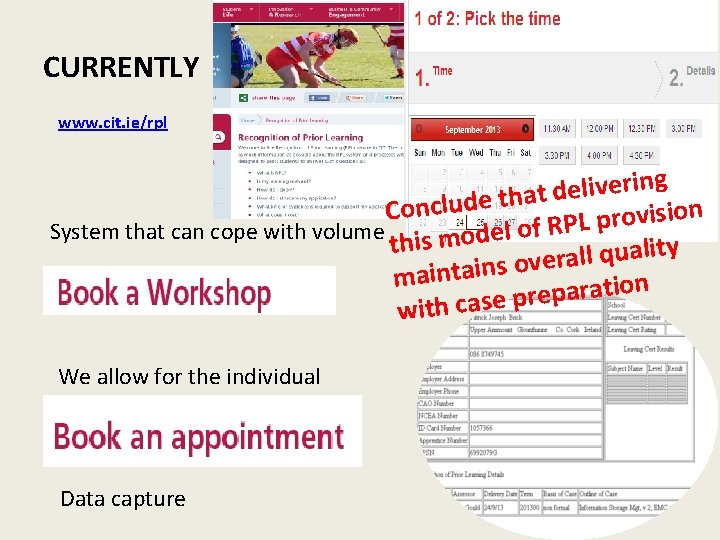
CURRENTLY www. cit. ie/rpl ing r e v i l e d t a h n o Conclude t i s i v o r p L System that can cope with volume is model of RP th y t i l a u q l l a r e v o s n i a t n i ma ion t a r a p e r p with case We allow for the individual Data capture
ISSUES ARISING 1. 2. 3. 4. Uncertainty on behalf of candidate Submitted incomplete Paperwork not organised Not registered for module
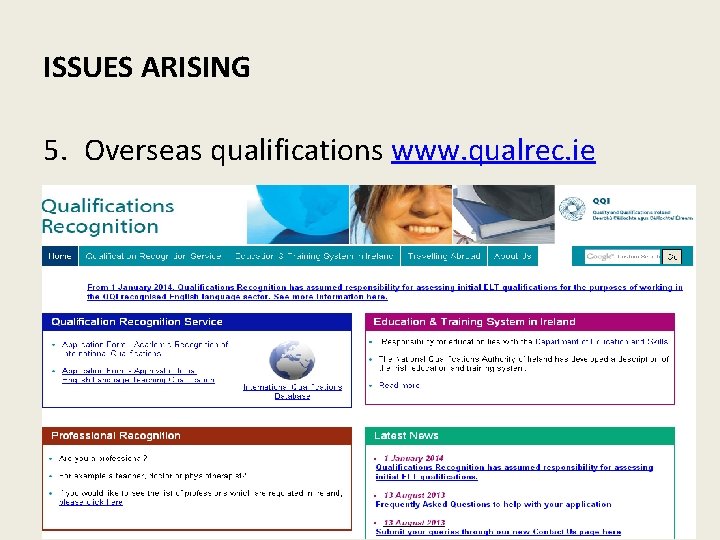
ISSUES ARISING 5. Overseas qualifications www. qualrec. ie
ISSUES ARISING 6. 7. 8. 9. Submitted Late Paperwork needs to be translated Not sure who assessor is Outcome not what candidate wants
THANK YOU phil. oleary@cit. ie REFERENCES 1. BARRETT, H. 2011. Balancing the two faces of e Portfolios. Education for a Digital World: Advice, Guidelines and Effective Practice from Around the Globe [Online]. Available: electronicportfolio. org/balance/balancingarticle 2. pdf. 2. BARRETT, H. & GARRETT, N. 2009. Online Personal Learning Environments. On the Horizon, 17, 142 -152. 3. BROWN, J. 2009. Experiential Learning E-Portfolios: Promoting Connections Between Academic and Workplace Learning Utilizing Information and Communication Technologies. American Educational Research Association Conference. Miami, Florida. 4. COHEN, E. & HIBBITTS, B. 2004. Beyond the Electronic Portfolio: A Lifetime Personal Web Space. Educause Quarterly, 4. 5. DUVEKOT, R. 2010. The age of APL, activating APL in a diversity of perspectives. NVR seminar on Kvalitekskodeks for realkompetence. Aarhus, Denmark. 6. Hager, L. (2012). Wading into the Technology Pool: Learning e-Portfolios in Higher Education. International Conference on Information Communications Technologies in Education, Rhodes, Greece, University Or Oregon. 7. JAFARI, A. 2004. The 'Sticky' Eportfolio System: Tackling challenges and identifying attributes. EDUCAUSE Review. EDUCAUSE. 8. LATHROP, C. 2011. Electronic, Portable and Green: Imperatives for Creating Today's e-Portfolio. Americal Medical Writers Association Journal, 26, 165 -166. 9. Leiste, S. M. and K. Jensen (2011). "Creating a Positive Prior Learning Assessment (PLA) Experience: A Step-by. Step Look at University PLA. " The International Review of Research in Open and Distance Education 12(1). 10. LOUREIRO, A. , MESSIAS, I. & BARBAS, M. 2012. Embracing Web 2. 0 & 3. 0 tools to support lifelong learning - Let learners connect. Procedia; Social and behavioural Sciences, 46, 532 -537. 11. O'LEARY, P. & O'SULLIVAN, S. 2013. e Portfolios can support students with Recognition of Prior Learning case preparation. International Technology, Education & Development Conference. Valencia. 12. Werquin, P. (2010). Recognising Non-Formal and Informal Learning; Outcomes, Policies and Practices. Paris, OECD.