
Recognition and Mechanical Significance of BuckleFold vs Classic
Recognition and Mechanical Significance of Buckle-Fold vs. Classic Detachment-Fold Styles Richard H. Groshong, Jr. Consultant and University of Alabama, Emeritus
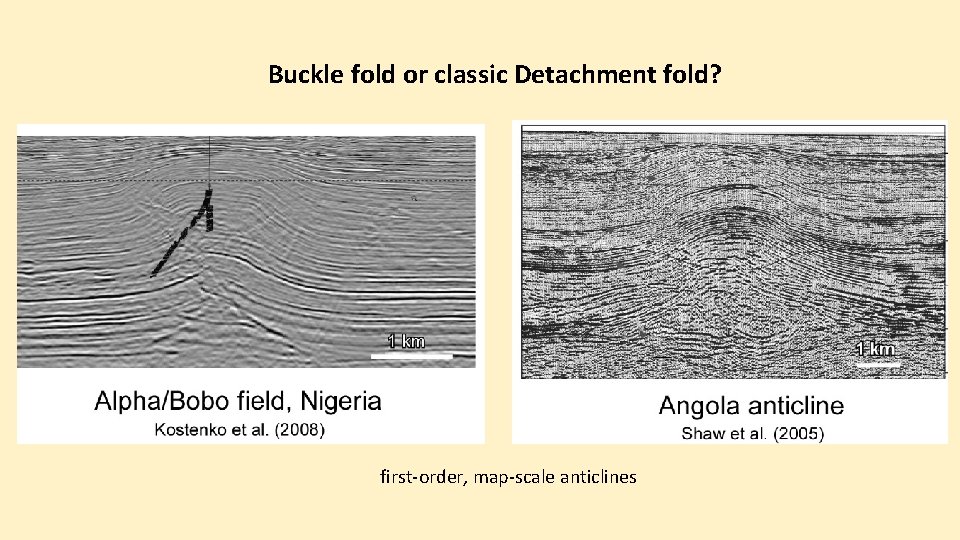
Buckle fold or classic Detachment fold? first-order, map-scale anticlines
Outline • Geometric differences between the 2 major fold styles • Area-depth-strain relationships for the 2 styles • Application to Alpha/Bobo field and Angola anticline • Conclusions • Questions for future work
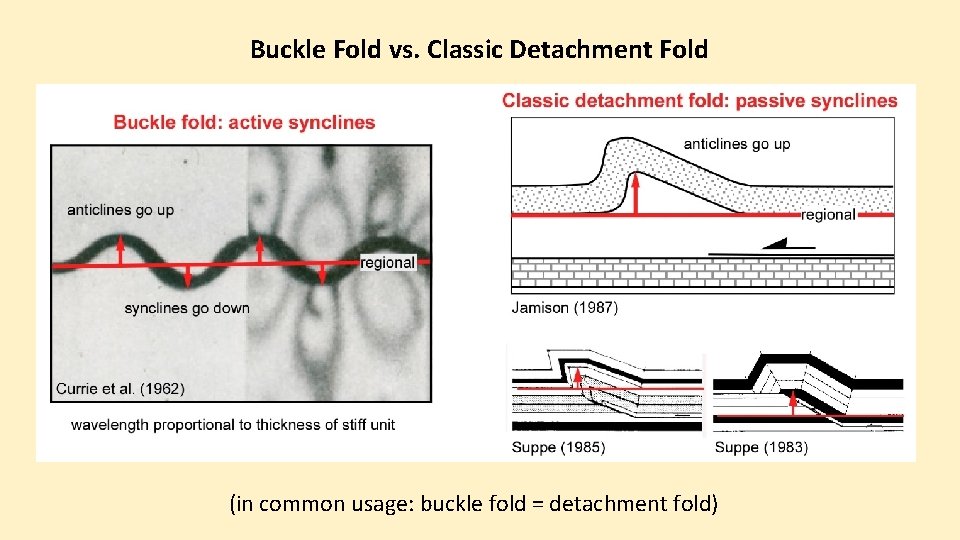
Buckle Fold vs. Classic Detachment Fold (in common usage: buckle fold = detachment fold)

Apparent regionals in buckle fold
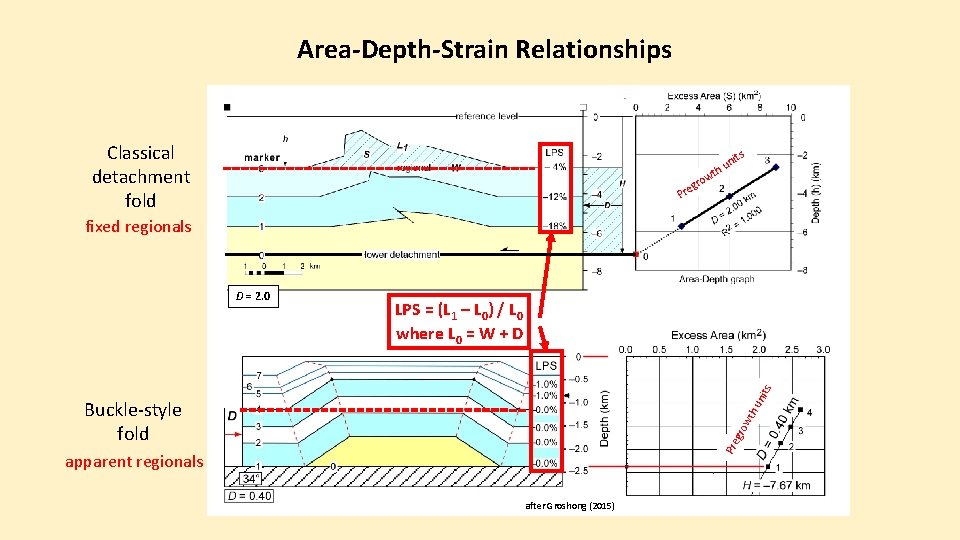
Area-Depth-Strain Relationships Classical detachment fold its n hu t w gro Pre fixed regionals LPS = (L 1 – L 0) /DL 0= 2. 0 where L 0 = W + D nit s D = 2. 0 Pre gro wt hu Buckle-style fold apparent regionals after Groshong (2015)
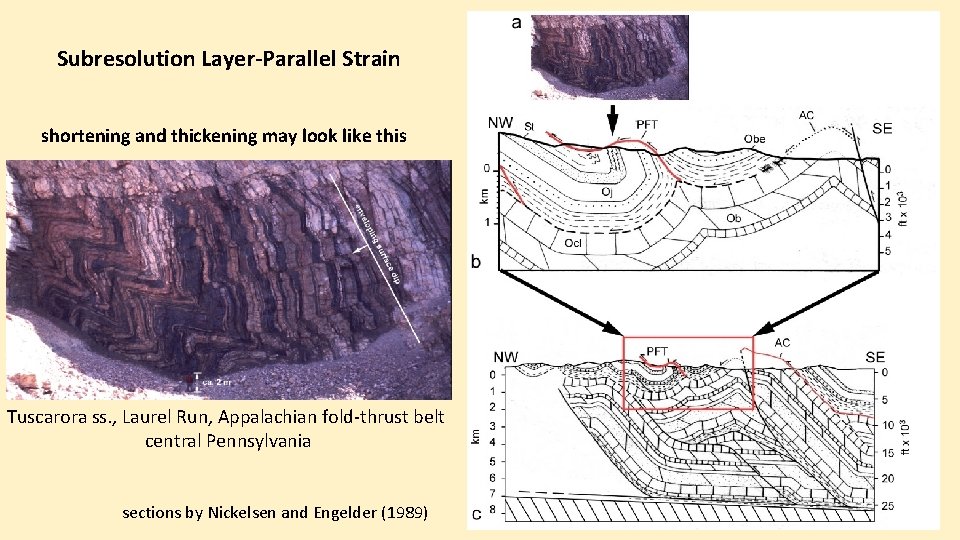
Subresolution Layer-Parallel Strain shortening and thickening may look like this Tuscarora ss. , Laurel Run, Appalachian fold-thrust belt central Pennsylvania sections by Nickelsen and Engelder (1989)
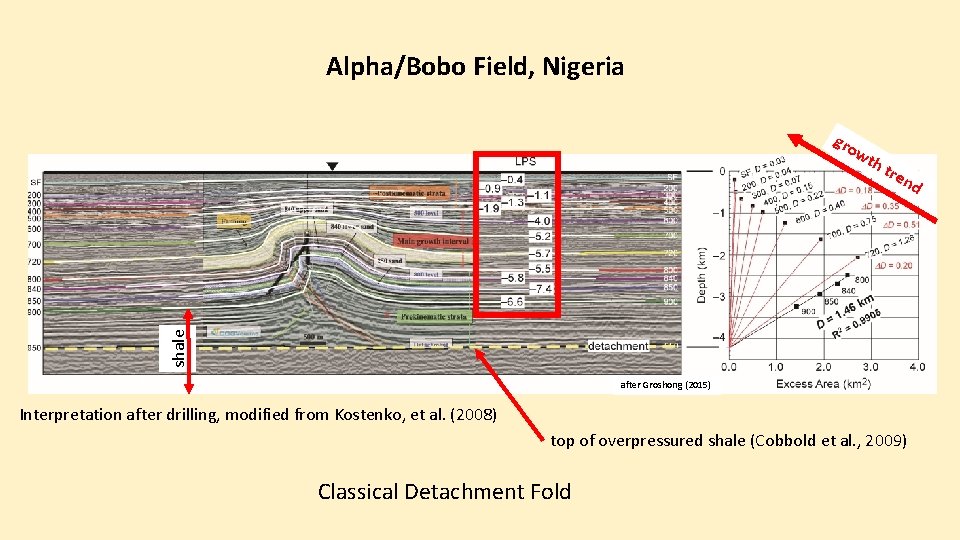
Alpha/Bobo Field, Nigeria th t ren shale gro w after Groshong (2015) Interpretation after drilling, modified from Kostenko, et al. (2008) top of overpressured shale (Cobbold et al. , 2009) Classical Detachment Fold d
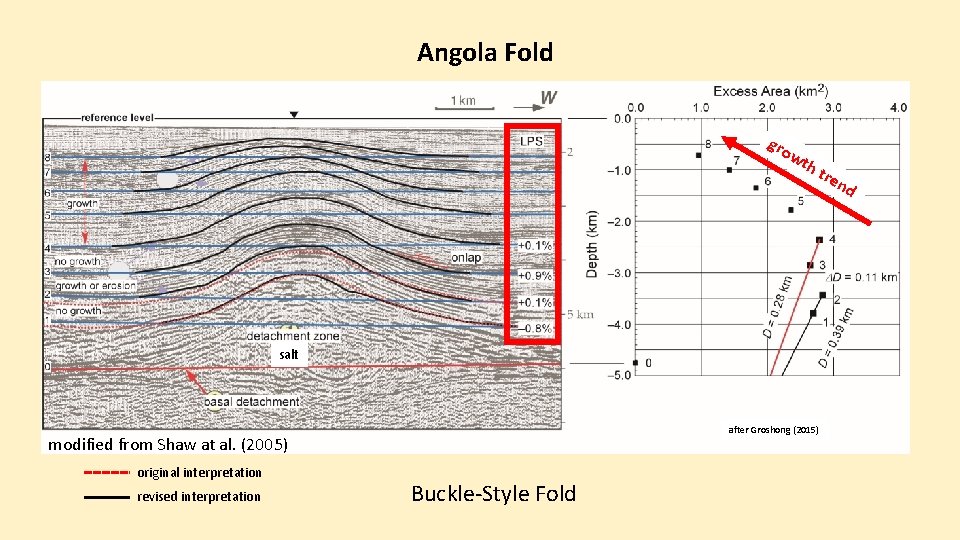
Angola Fold gro w th t salt after Groshong (2015) modified from Shaw at al. (2005) original interpretation revised interpretation Buckle-Style Fold ren d
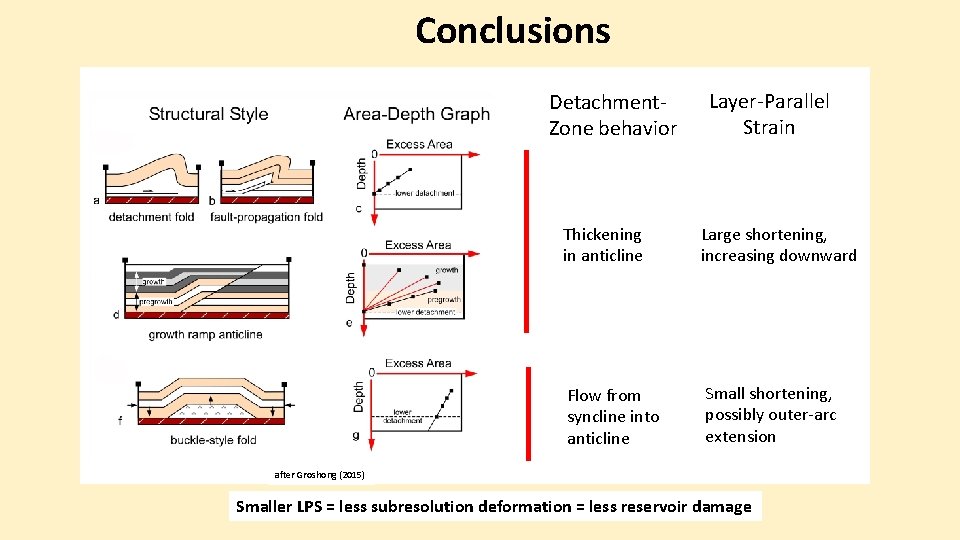
Conclusions Detachment. Zone behavior Layer-Parallel Strain Thickening in anticline Large shortening, increasing downward Flow from syncline into anticline Small shortening, possibly outer-arc extension after Groshong (2015) Smaller LPS = less subresolution deformation = less reservoir damage
Questions for Future Work • Does a salt detachment zone always flow from the syncline? • Does a shale detachment zone never flow from the syncline? • Do buckle-style folds always have low strain?
- Slides: 11