
RECOGNITION AND ESTIMATION OF BLOOD LOSS EBL Radha

RECOGNITION AND ESTIMATION OF BLOOD LOSS (EBL) Radha Malapati M. D, F. A. C. O. G Medical Director of Obstetrics John H. Stroger, Jr. Hospital of Cook County Assistant Professor Department of OBGYN Feinberg School of Medicine Northwestern University These slides belong to the Illinois Department of Public Health. They have been shared with the permission of Dr. Malapati.
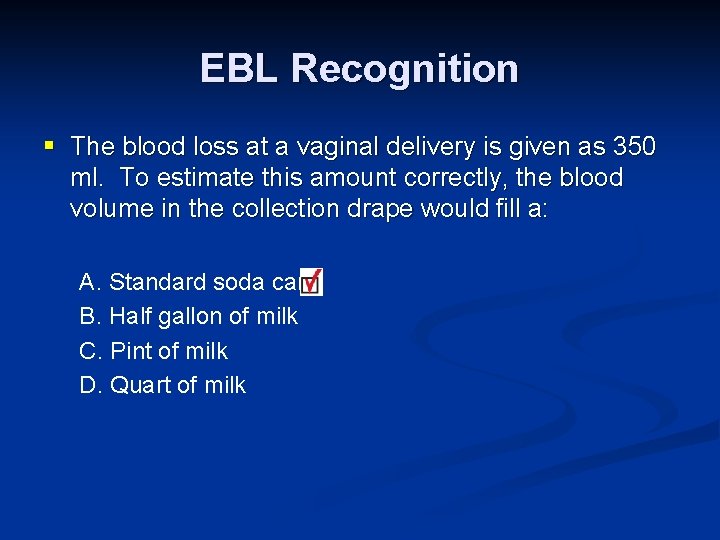
EBL Recognition § The blood loss at a vaginal delivery is given as 350 ml. To estimate this amount correctly, the blood volume in the collection drape would fill a: A. Standard soda can B. Half gallon of milk C. Pint of milk D. Quart of milk
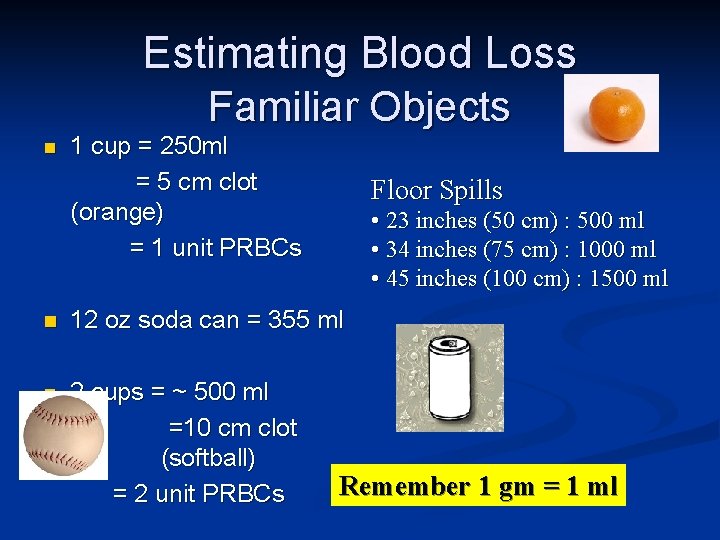
Estimating Blood Loss Familiar Objects n 1 cup = 250 ml = 5 cm clot (orange) = 1 unit PRBCs Floor Spills • 23 inches (50 cm) : 500 ml • 34 inches (75 cm) : 1000 ml • 45 inches (100 cm) : 1500 ml n 12 oz soda can = 355 ml n 2 cups = ~ 500 ml =10 cm clot (softball) = 2 unit PRBCs Remember 1 gm = 1 ml
CASE #2 – Cont’d 3 hrs postpartum in the Recovery Room § 3 orange size clots passed § 500 ml fluid bolus given § Post infusion BP 108/70; HR 115 5. The first fluid bolus ordered at this time was 500 ml. This amount is: A. Adequate B. Adequate if vitals checked q 5 minutes & bleeding slows C. Adequate if blood replacement is ordered D. Inadequate
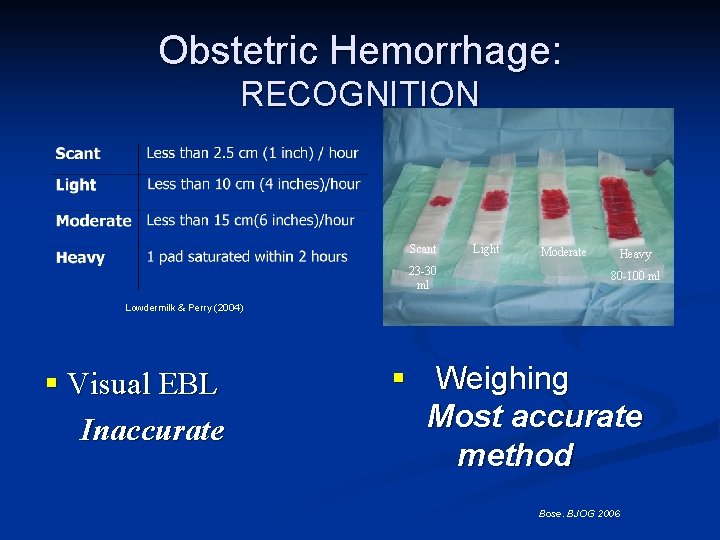
Obstetric Hemorrhage: RECOGNITION Scant 23 -30 ml Light Moderate Heavy 80 -100 ml Lowdermilk & Perry (2004) § Visual EBL Inaccurate § Weighing Most accurate method Bose. BJOG 2006
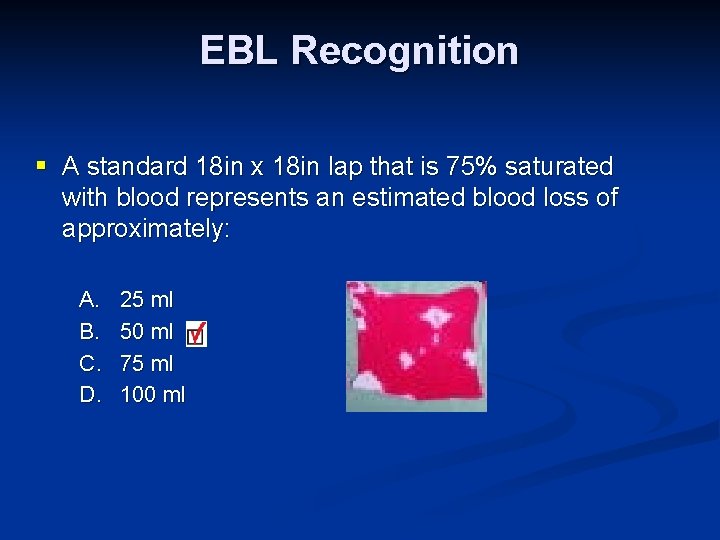
EBL Recognition § A standard 18 in x 18 in lap that is 75% saturated with blood represents an estimated blood loss of approximately: A. B. C. D. 25 ml 50 ml 75 ml 100 ml
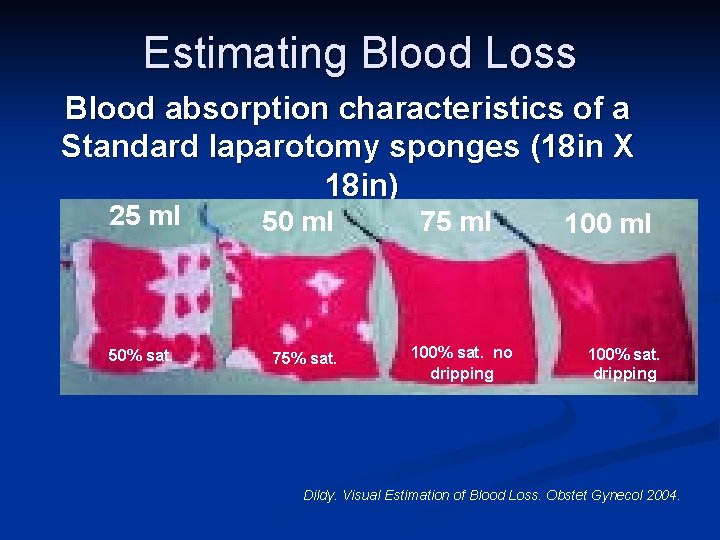
Estimating Blood Loss Blood absorption characteristics of a Standard laparotomy sponges (18 in X 18 in) 25 ml 50% sat. 50 ml 75% sat. 75 ml 100% sat. no dripping 100 ml 100% sat. dripping Dildy. Visual Estimation of Blood Loss. Obstet Gynecol 2004.
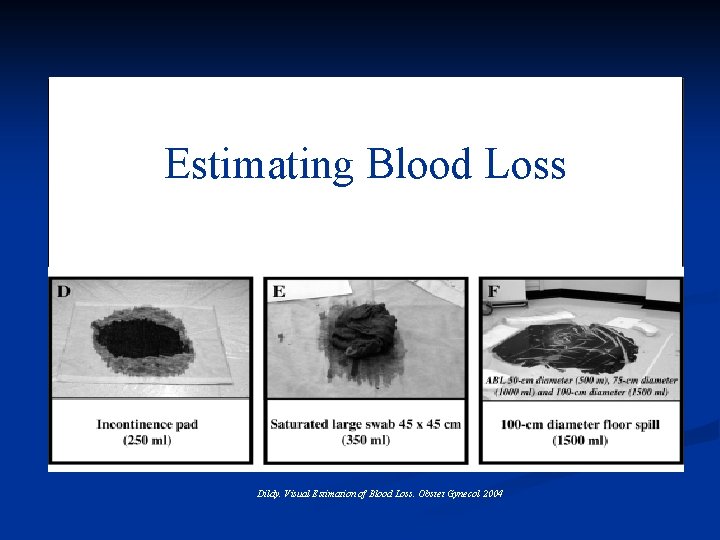
Estimating Blood Loss Dildy. Visual Estimation of Blood Loss. Obstet Gynecol 2004
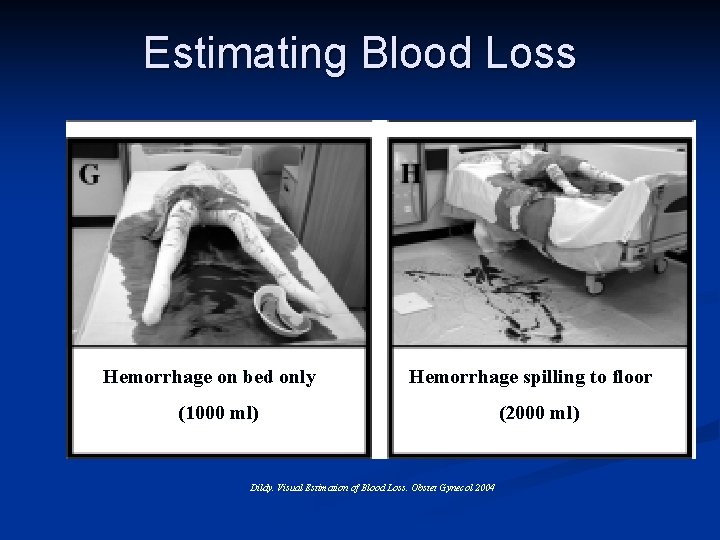
Estimating Blood Loss Hemorrhage on bed only Hemorrhage spilling to floor (1000 ml) Dildy. Visual Estimation of Blood Loss. Obstet Gynecol 2004 (2000 ml)
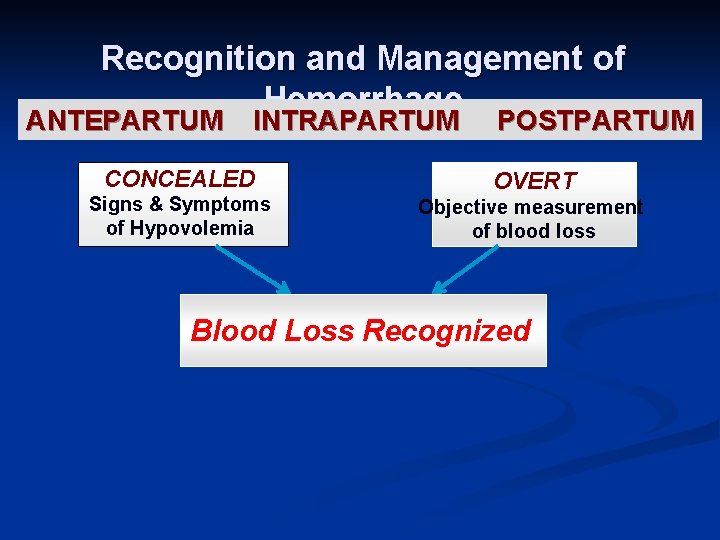
Recognition and Management of Hemorrhage ANTEPARTUM INTRAPARTUM CONCEALED Signs & Symptoms of Hypovolemia POSTPARTUM OVERT Objective measurement of blood loss Blood Loss Recognized
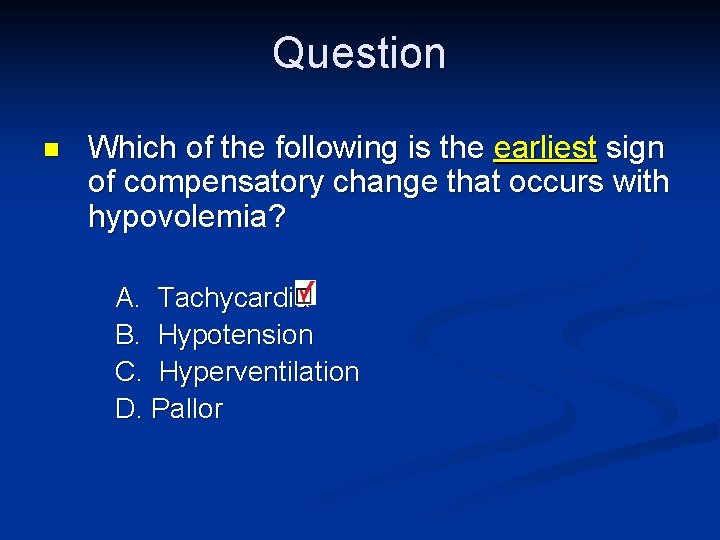
Question n Which of the following is the earliest sign of compensatory change that occurs with hypovolemia? A. Tachycardia B. Hypotension C. Hyperventilation D. Pallor
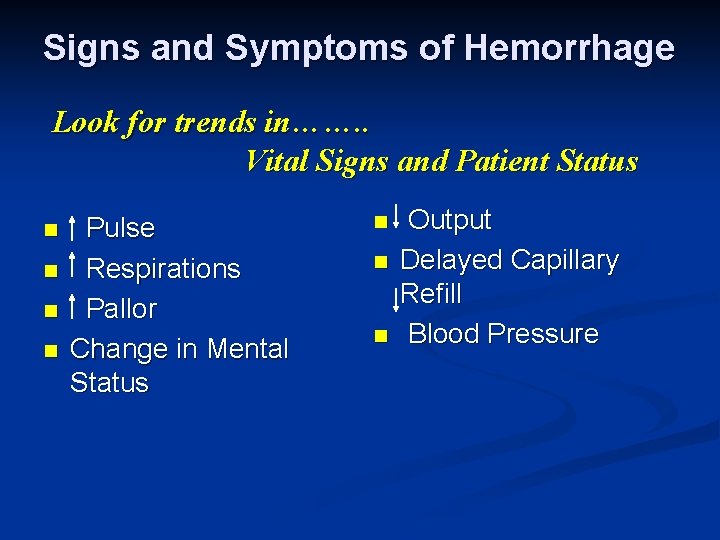
Signs and Symptoms of Hemorrhage Look for trends in……. . Vital Signs and Patient Status n n Pulse Respirations Pallor Change in Mental Status n n n Output Delayed Capillary Refill Blood Pressure
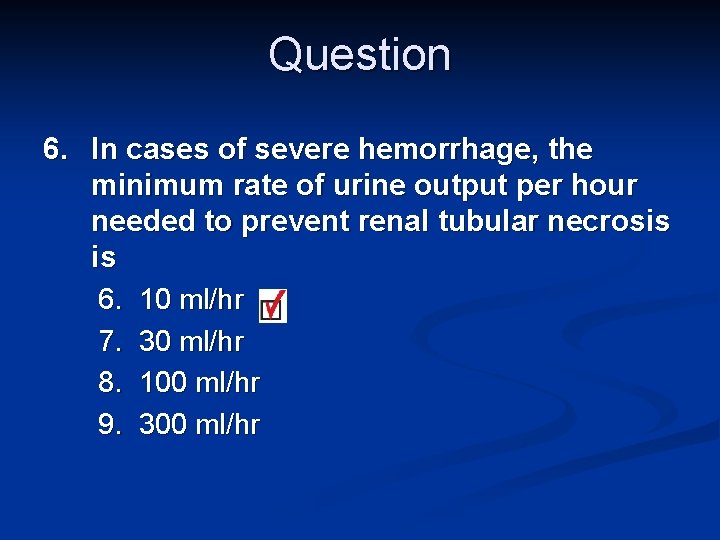
Question 6. In cases of severe hemorrhage, the minimum rate of urine output per hour needed to prevent renal tubular necrosis is 6. 10 ml/hr 7. 30 ml/hr 8. 100 ml/hr 9. 300 ml/hr
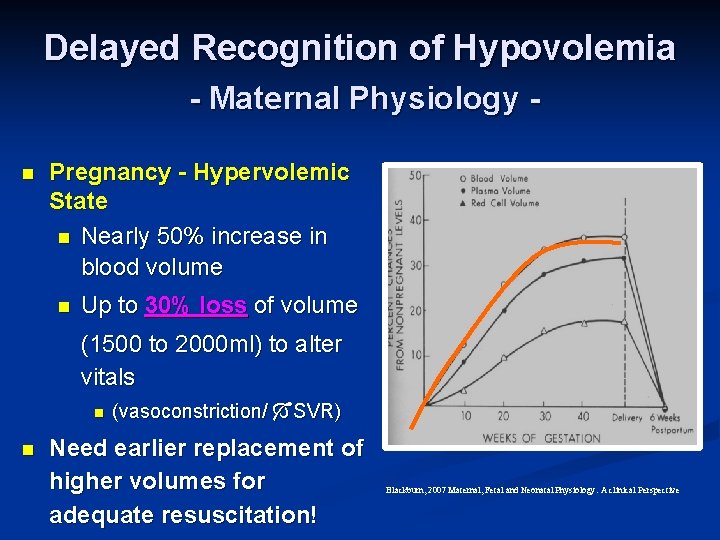
Delayed Recognition of Hypovolemia - Maternal Physiology - n Pregnancy - Hypervolemic State n Nearly 50% increase in blood volume n Up to 30% loss of volume (1500 to 2000 ml) to alter vitals n n (vasoconstriction/ SVR) Need earlier replacement of higher volumes for adequate resuscitation! Blackburn, 2007 Maternal, Fetal and Neonatal Physiology: A clinical Perspective
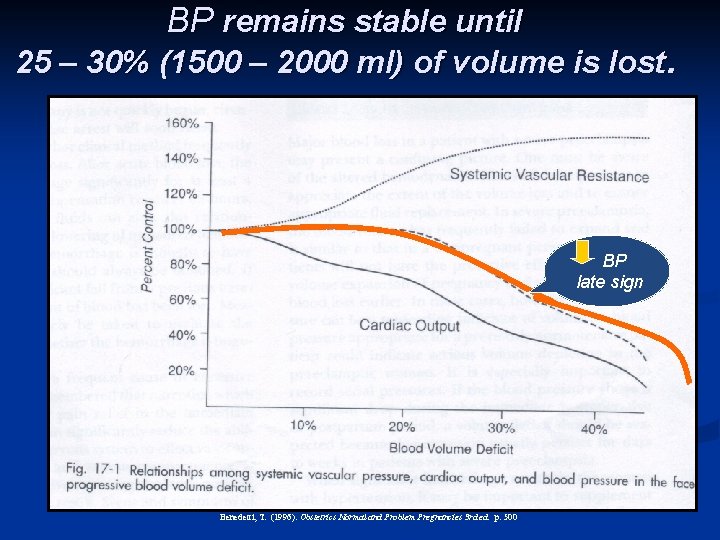
BP remains stable until 25 – 30% (1500 – 2000 ml) of volume is lost. BP late sign Benedetti, T. (1996). Obstetrics Normal and Problem Pregnancies 3 rd. ed. p. 500
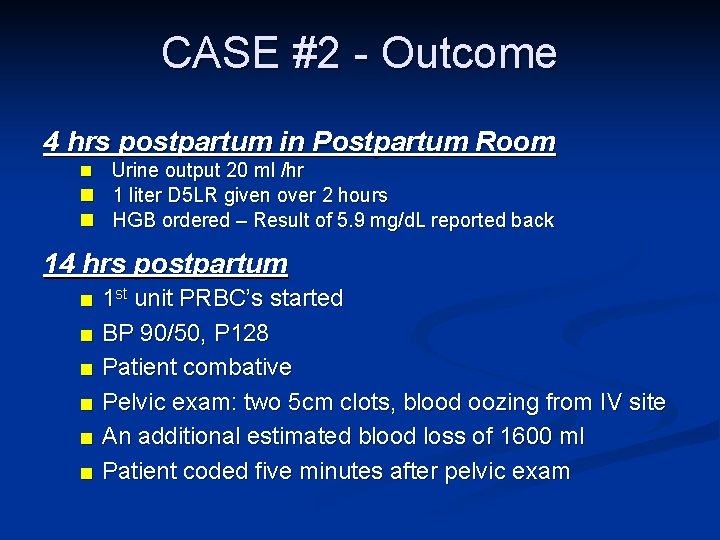
CASE #2 - Outcome 4 hrs postpartum in Postpartum Room n Urine output 20 ml /hr n 1 liter D 5 LR given over 2 hours n HGB ordered – Result of 5. 9 mg/d. L reported back 14 hrs postpartum ■ 1 st unit PRBC’s started ■ BP 90/50, P 128 ■ Patient combative ■ Pelvic exam: two 5 cm clots, blood oozing from IV site ■ An additional estimated blood loss of 1600 ml ■ Patient coded five minutes after pelvic exam
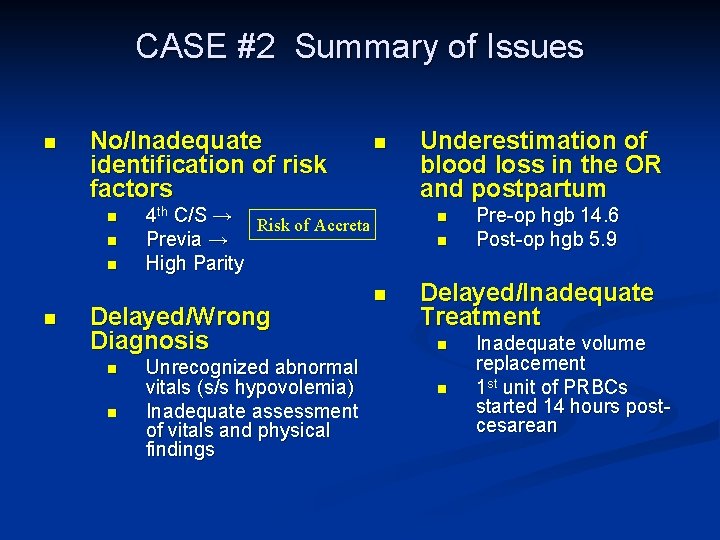
CASE #2 Summary of Issues No/Inadequate identification of risk factors n n 4 th C/S → Risk of Accreta Previa → High Parity n Delayed/Wrong Diagnosis n n n Unrecognized abnormal vitals (s/s hypovolemia) Inadequate assessment of vitals and physical findings Underestimation of blood loss in the OR and postpartum n n n Pre-op hgb 14. 6 Post-op hgb 5. 9 Delayed/Inadequate Treatment n n Inadequate volume replacement 1 st unit of PRBCs started 14 hours postcesarean
Documentation Lack of documentation has been identified by the MMRC as a major problem! n Documentation must include: n n n Date/time, name of provider for each entry Ongoing vital signs Signs of blood loss/hypovolemia Estimated blood loss (visual and objective) Interventions Patient response
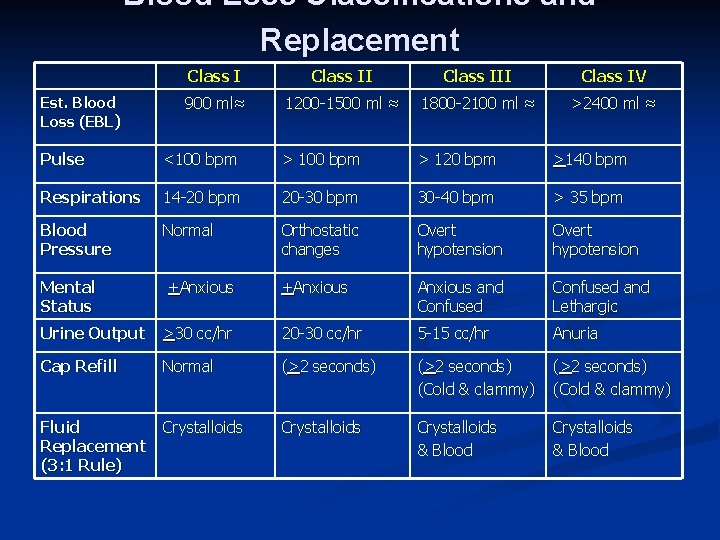
Blood Loss Classifications and Replacement Est. Blood Loss (EBL) Class III Class IV 900 ml≈ 1200 -1500 ml ≈ 1800 -2100 ml ≈ >2400 ml ≈ Pulse <100 bpm > 120 bpm >140 bpm Respirations 14 -20 bpm 20 -30 bpm 30 -40 bpm > 35 bpm Blood Pressure Normal Orthostatic changes Overt hypotension +Anxious and Confused and Lethargic Mental Status +Anxious Urine Output >30 cc/hr 20 -30 cc/hr 5 -15 cc/hr Anuria Cap Refill Normal (>2 seconds) (Cold & clammy) Fluid Replacement (3: 1 Rule) Crystalloids & Blood

- Slides: 20