
Recognising and addressing mental health problems YSJ Mentor
Recognising and addressing mental health problems YSJ Mentor Leadership Programme Day 2, November 22 nd 2019
Discussion in pairs What’s your interest in this topic? What experiences have you had of encountering mental health issues as a coach, or at work, or in life more generally? 5 minutes each way
Cavanagh’s Criteria HOW LONG HAS THE DISTRESS OR DYSFUNCTION BEEN GOING ON? HOW EXTREME ARE THE CLIENT’S THOUGHTS, FEELINGS AND BEHAVIOURS? HOW PERVASIVE ARE THE ISSUES? HOW DEFENSIVE IS THE PERSON? HOW RESISTANT TO CHANGE ARE THE DYSFUNCTIONAL THOUGHTS, FEELINGS AND BEHAVIOURS? SOURCE: CAVANAGH & BUCKLEY 2014
From the EMCC / AC Global Code of Ethics 4. 1: Members will have the qualifications, skills and experience appropriate to meet the needs of the client and will operate within the limits of their competence. Members should refer the client to a more experienced or suitably qualified practising member where appropriate. 4. 5: Members will discuss any ethical dilemmas and potential, or actual, breaches of this Code with their supervisor or peer supervision group for support and guidance.
The Functions of Supervision • Normative • Formative • Restorative • Inskipp & Proctor 1995
Catherine Sandler’s Emotional Profiles Triangle “A model that defines three emotional profiles, each of which underpins a specific set of closely linked functional and dysfunctional leadership or interpersonal behaviours. “[The EPT] puts forward the idea that all individuals move back and forth along the spectrum between their functional and dysfunctional forms of leadership. ” Sandler 2011
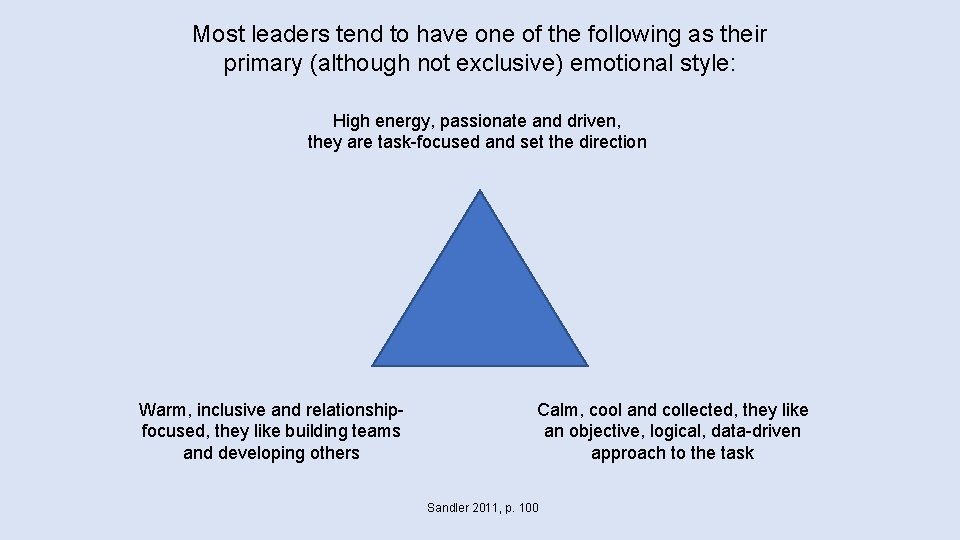
Most leaders tend to have one of the following as their primary (although not exclusive) emotional style: High energy, passionate and driven, they are task-focused and set the direction Warm, inclusive and relationshipfocused, they like building teams and developing others Calm, cool and collected, they like an objective, logical, data-driven approach to the task Sandler 2011, p. 100
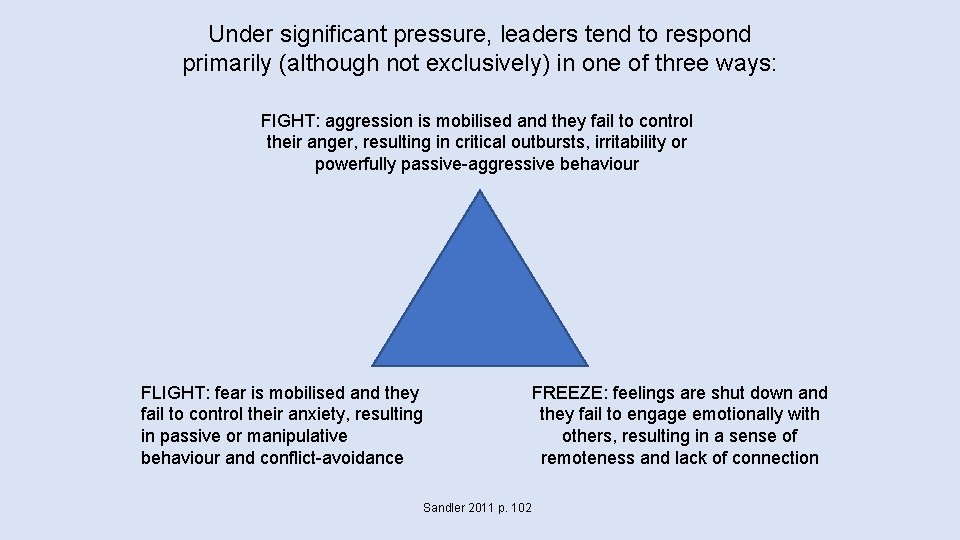
Under significant pressure, leaders tend to respond primarily (although not exclusively) in one of three ways: FIGHT: aggression is mobilised and they fail to control their anger, resulting in critical outbursts, irritability or powerfully passive-aggressive behaviour FLIGHT: fear is mobilised and they fail to control their anxiety, resulting in passive or manipulative behaviour and conflict-avoidance FREEZE: feelings are shut down and they fail to engage emotionally with others, resulting in a sense of remoteness and lack of connection Sandler 2011 p. 102
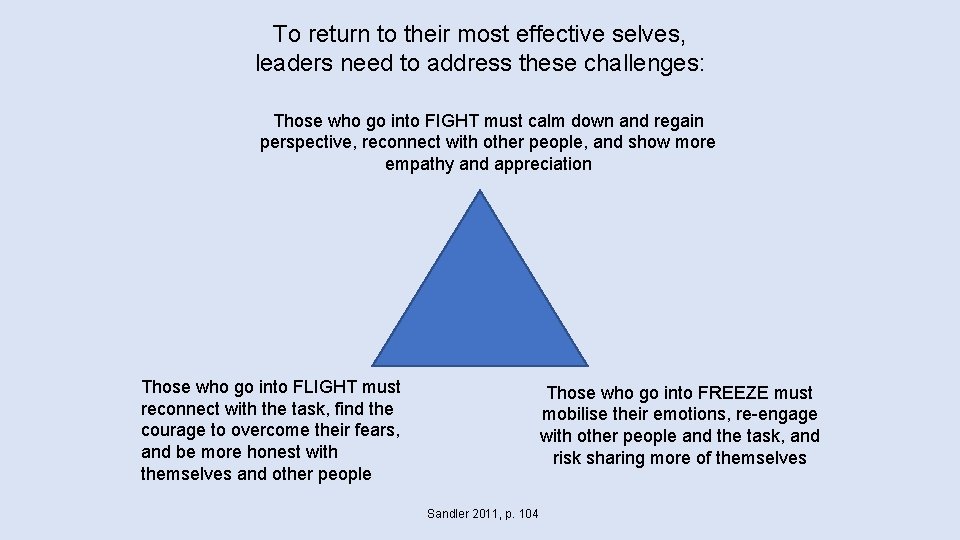
To return to their most effective selves, leaders need to address these challenges: Those who go into FIGHT must calm down and regain perspective, reconnect with other people, and show more empathy and appreciation Those who go into FLIGHT must reconnect with the task, find the courage to overcome their fears, and be more honest with themselves and other people Those who go into FREEZE must mobilise their emotions, re-engage with other people and the task, and risk sharing more of themselves Sandler 2011, p. 104
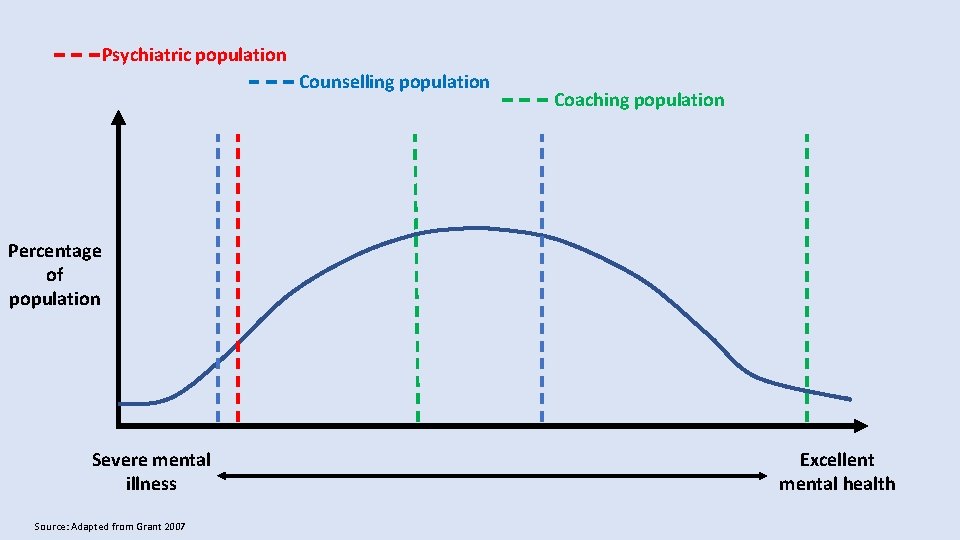
Psychiatric population Counselling population Coaching population Percentage of population Severe mental illness Source: Adapted from Grant 2007 Excellent mental health
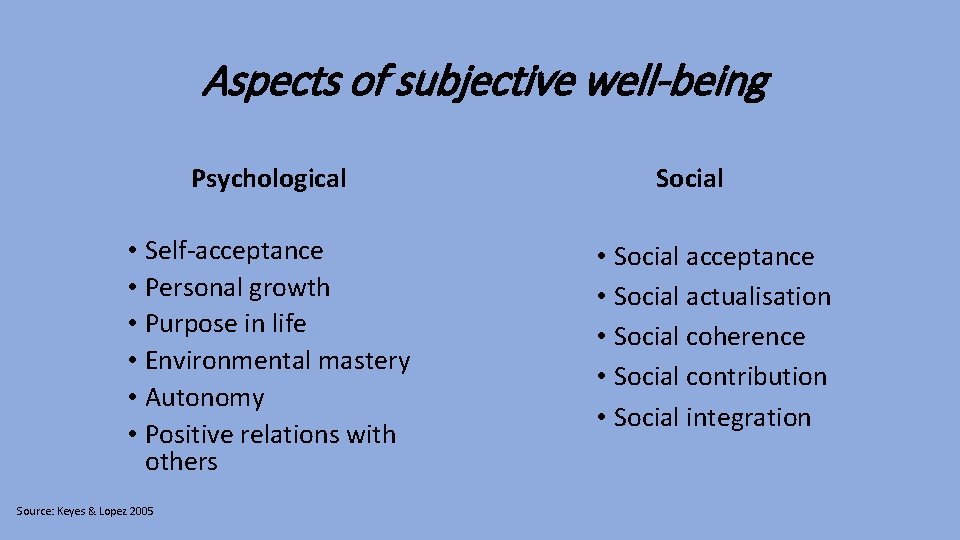
Aspects of subjective well-being Psychological • Self-acceptance • Personal growth • Purpose in life • Environmental mastery • Autonomy • Positive relations with others Source: Keyes & Lopez 2005 Social • Social acceptance • Social actualisation • Social coherence • Social contribution • Social integration
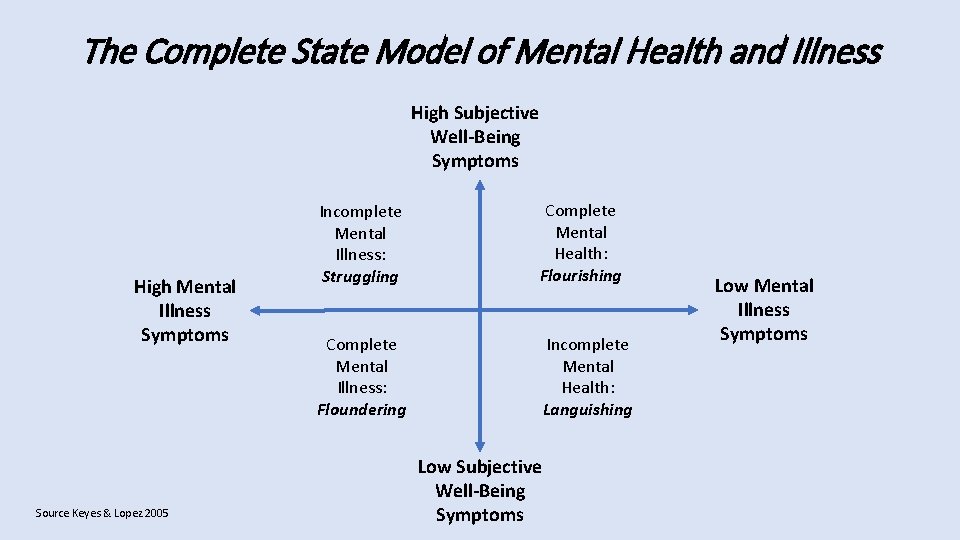
The Complete State Model of Mental Health and Illness High Subjective Well-Being Symptoms High Mental Illness Symptoms Source Keyes & Lopez 2005 Incomplete Mental Illness: Struggling Complete Mental Health: Flourishing Complete Mental Illness: Floundering Incomplete Mental Health: Languishing Low Subjective Well-Being Symptoms Low Mental Illness Symptoms
From the EMCC / AC Global Code of Ethics 4. 6 Members will develop their level of coaching and/or mentoring competence by participating in relevant and appropriate training and/or continuing professional development (CPD). What’s next for you?
References Cavanagh, M. & Buckley, A. (2014). ‘Coaching and Mental Health. ’ In: Bachkirova, T. , Cox, E. & Clutterbuck, D. (Eds. ). The complete handbook of coaching. Thousand Oaks, CA; London: Sage Grant, A. M. (2007). A languishing-flourishing model of goal-striving and mental health for coaching populations. International Coaching Psychology Review, 2 (3), pp. 250 -64 Inskipp, F. & Proctor, B. (1995). The art, craft and tasks of counselling supervision, part 1: making the most of supervision. Middlesex, ON: Cascade Keyes, C. L. M. & Lopez, S. J. (2005). ‘Toward a science of mental health. Positive directions in diagnosis and interventions. ’ In: Snyder, C. R. & Lopez, S. J. (eds. ) Handbook of positive psychology. Oxford: Oxford University Press, pp. 45 -59 Sandler, C. (2011). Executive coaching: a psychodynamic approach. Maidenhead: Mc. Graw-Hill / Open University Press
- Slides: 14