
RECLASSIFICATION 2018 2019 What is ELPAC The English
- Slides: 10
RECLASSIFICATION 2018 -2019
What is ELPAC? The English Language Proficiency Assessments for California (ELPAC) is California’s assessment system that is used to determine the English language proficiency of students whose primary language is not English. The ELPAC is aligned with the 2012 California English Language Development Standards and assesses four domains: ● ● Listening, Speaking, Reading, and Writing.
Purpose of Summative ELPAC ● ● ● The purpose of the Summative ELPAC is to measure progress toward English proficiency, to help inform proper educational placements, and to help determine if a student is ready to be reclassified. This is important when ensuring that students continue to receive the supports they need to do well in school. The Summative Assessment is given only to students in grades K– 12 who have been identified as English learners. These students will take the assessment every year until they are reclassified as fluent English proficient. Students with disabilities who cannot take one or more domains of the ELPAC with allowed universal tools, designated supports, or accommodations will take an alternate assessment(s), as noted in their individualized education program.
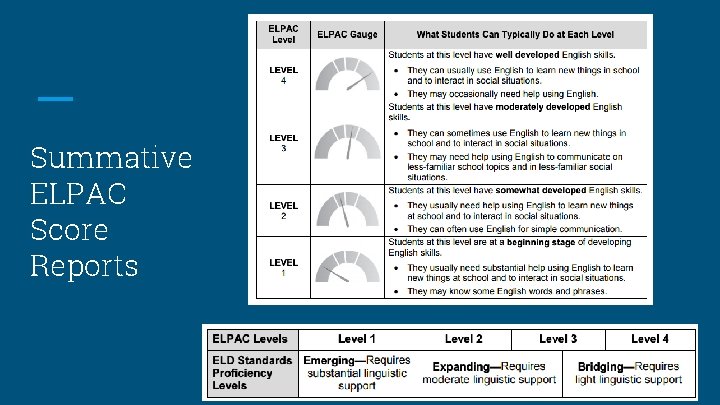
Summative ELPAC Score Reports
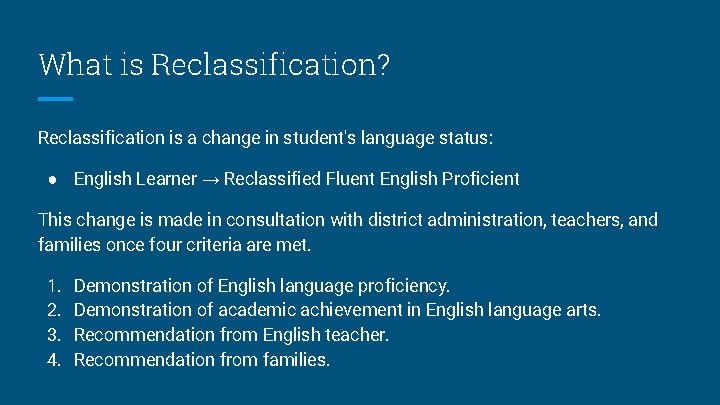
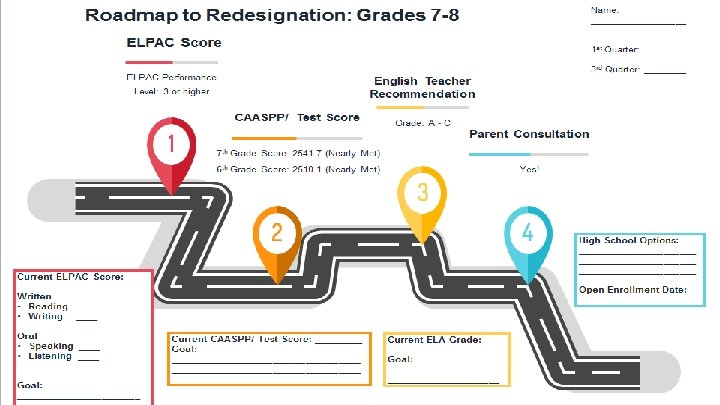
What is Reclassification? Reclassification is a change in student's language status: ● English Learner → Reclassified Fluent English Proficient This change is made in consultation with district administration, teachers, and families once four criteria are met. 1. 2. 3. 4. Demonstration of English language proficiency. Demonstration of academic achievement in English language arts. Recommendation from English teacher. Recommendation from families.
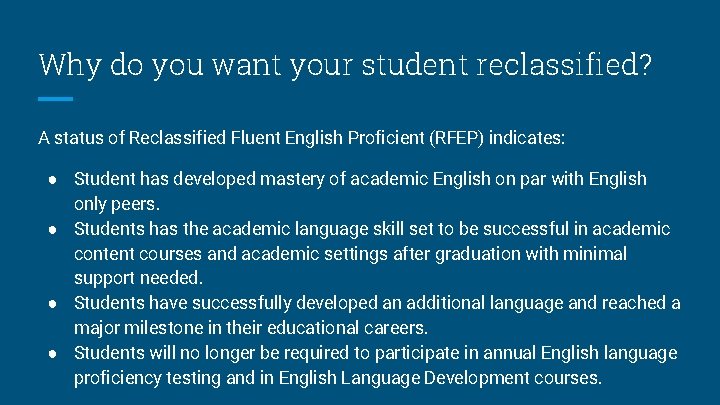
Why do you want your student reclassified? A status of Reclassified Fluent English Proficient (RFEP) indicates: ● Student has developed mastery of academic English on par with English only peers. ● Students has the academic language skill set to be successful in academic content courses and academic settings after graduation with minimal support needed. ● Students have successfully developed an additional language and reached a major milestone in their educational careers. ● Students will no longer be required to participate in annual English language proficiency testing and in English Language Development courses.
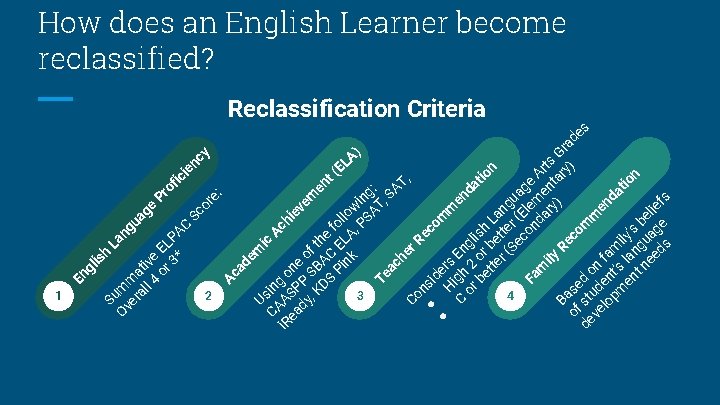
1 is h Su La Ov m ng er ma ua al ti ge l 4 ve Pr or EL of 3* PA ic C ie Sc nc y or e: Ac ad em Us ic CA in Ac g i. R A o hi ea SP ne ev dy P o em , K SB f t en DS AC he t( Pi EL foll EL nk A ow A) , P in SA g: T, Te SA ac he T, Co r. R n ec ● sid om ● H ers m en C igh En or 2 gl da tio be or ish tte be La n r ( tte ng Se r ( u co El age Fa nd em A m ar en rts ily y) ta G Ba Re ry ra ) of se co de m s de st d o m ve ud n en lo en fa da pm t's m i tio l y l en an 's n tn g b u e ee ag lie ds e fs gl En How does an English Learner become reclassified? Reclassification Criteria 2 3 4
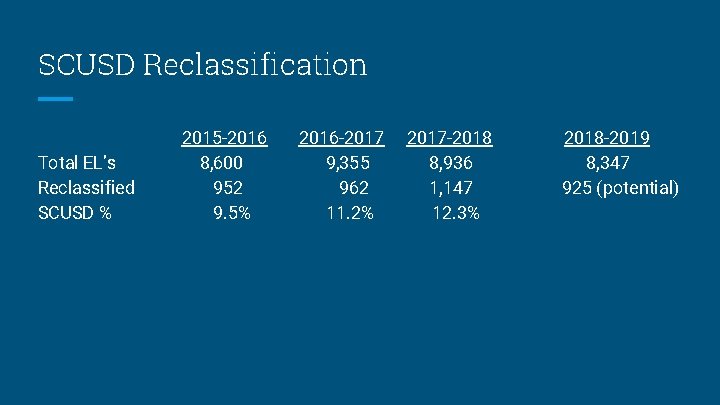
SCUSD Reclassification Total EL’s Reclassified SCUSD % 2015 -2016 8, 600 952 9. 5% 2016 -2017 9, 355 962 11. 2% 2017 -2018 8, 936 1, 147 12. 3% 2018 -2019 8, 347 925 (potential)
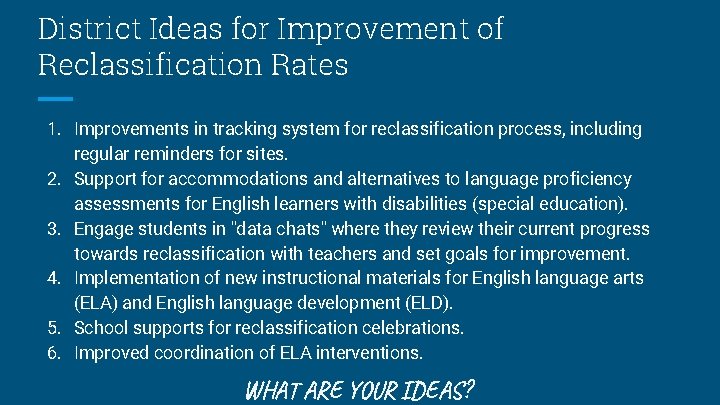
District Ideas for Improvement of Reclassification Rates 1. Improvements in tracking system for reclassification process, including regular reminders for sites. 2. Support for accommodations and alternatives to language proficiency assessments for English learners with disabilities (special education). 3. Engage students in "data chats" where they review their current progress towards reclassification with teachers and set goals for improvement. 4. Implementation of new instructional materials for English language arts (ELA) and English language development (ELD). 5. School supports for reclassification celebrations. 6. Improved coordination of ELA interventions. WHAT ARE YOUR IDEAS?