
RECIPROCATING PUMP BY Er R P Ojha R
RECIPROCATING PUMP BY Er. R. P. Ojha R. P. Sir 1
Reciprocating Pumps • Positive displacement pumps • Suitable for low volume flow at high pressure
Components • • Suction pipe Suction valve delivery pipe Delivery valve Cylinder Piston and Piston rod Crank and connecting rod Strainer
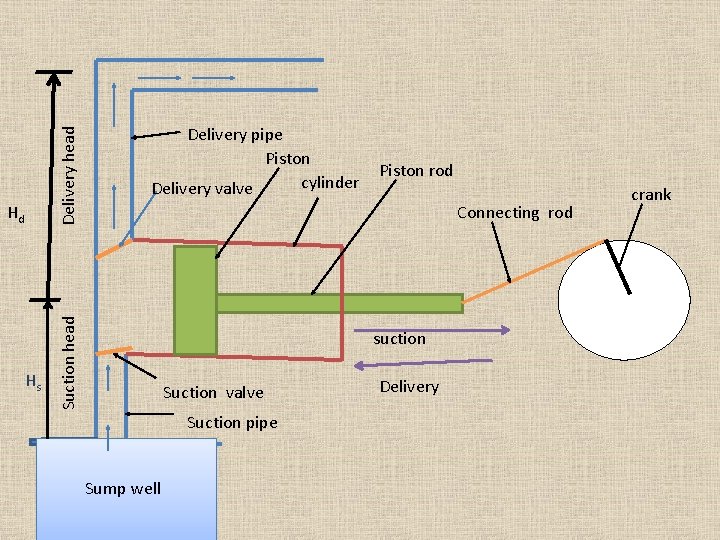
Delivery head Hs Piston rod Connecting rod Suction head Hd Delivery pipe Piston cylinder Delivery valve suction Suction valve Suction pipe Sump well Delivery crank
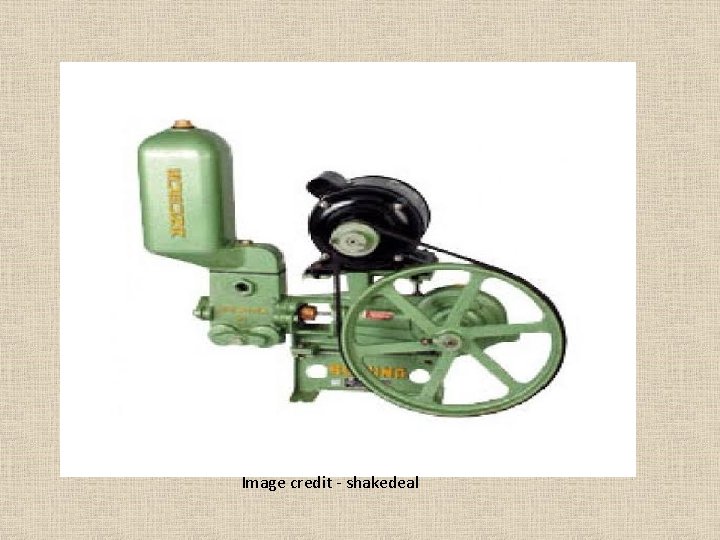
Image credit - shakedeal
Working of reciprocating pump • Power source Crank (rotate) connecting rod (oscillates) Piston rod and piston(reciprocates) • During suction (movement TDC to BDC or IDC to ODC), water enters • Piston moves (BDC to TDC), liquid delivered

Types of reciprocating Pumps • Single acting reciprocating pumps • Double acting reciprocating pumps
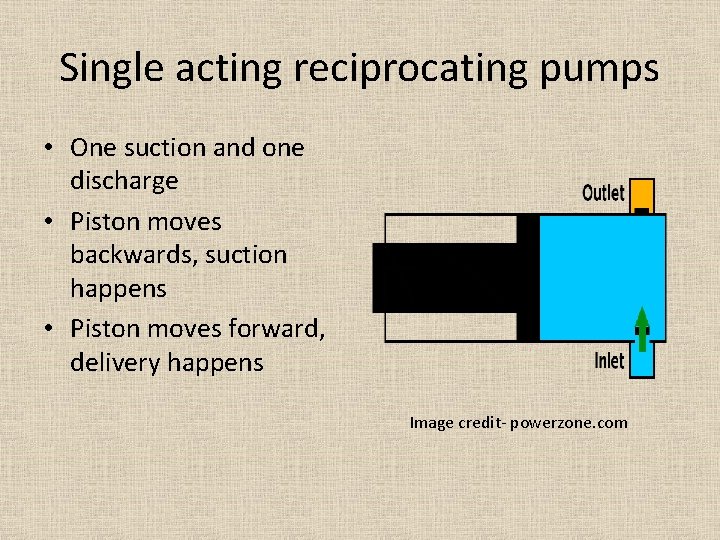
Single acting reciprocating pumps • One suction and one discharge • Piston moves backwards, suction happens • Piston moves forward, delivery happens Image credit- powerzone. com
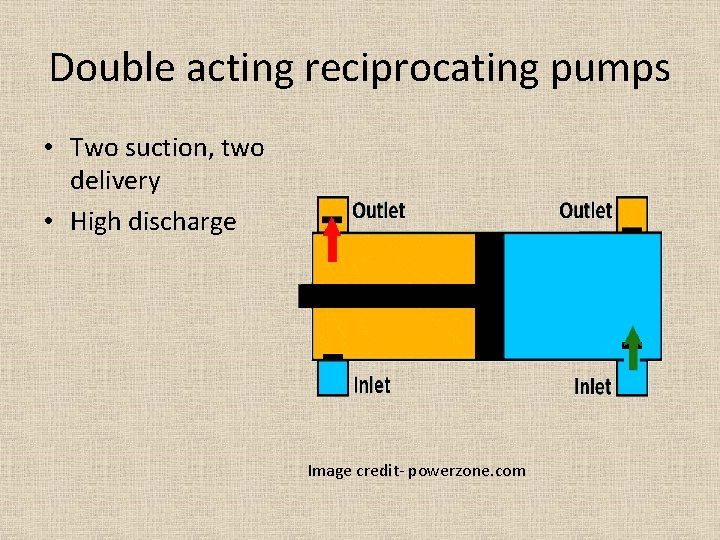
Double acting reciprocating pumps • Two suction, two delivery • High discharge Image credit- powerzone. com
Advantages and disadvantages Advantages • Give high pressure at outlet • Gives high suction lift • Priming not required Disadvantages • High wear and tear • Require a lot of maintenance • Pulsating flow • Less flow • High initial cost
Applications • Used in petrochemical, refinery, pharmaceuticals, cosmetic and water treatment
Slip and slip percentage • • Slip = Theoretical discharge – Actual discharge Slip = Qth – Qact Qth=calculated by formula Qth=measured discharge
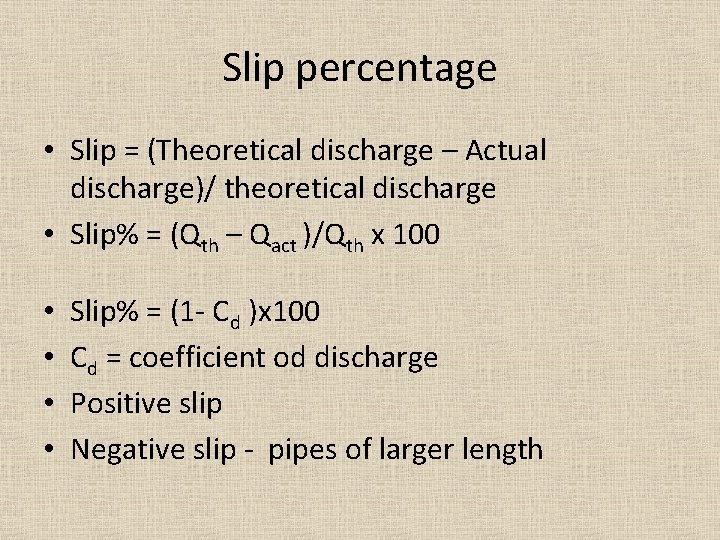
Slip percentage • Slip = (Theoretical discharge – Actual discharge)/ theoretical discharge • Slip% = (Qth – Qact )/Qth x 100 • • Slip% = (1 - Cd )x 100 Cd = coefficient od discharge Positive slip Negative slip - pipes of larger length
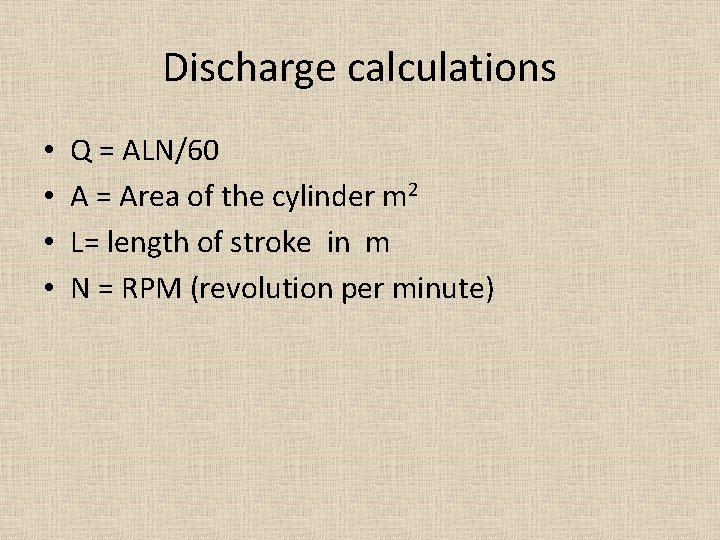
Discharge calculations • • Q = ALN/60 A = Area of the cylinder m 2 L= length of stroke in m N = RPM (revolution per minute)
- Slides: 15