
RECEPTOR FAMILIES ilos By the end of this
RECEPTOR FAMILIES
ilos By the end of this lecture you will be able to : ØClassify receptors into their main superfamilies ØRecognize their different transduction mechanism Ø Identify the nature & time frame of their response
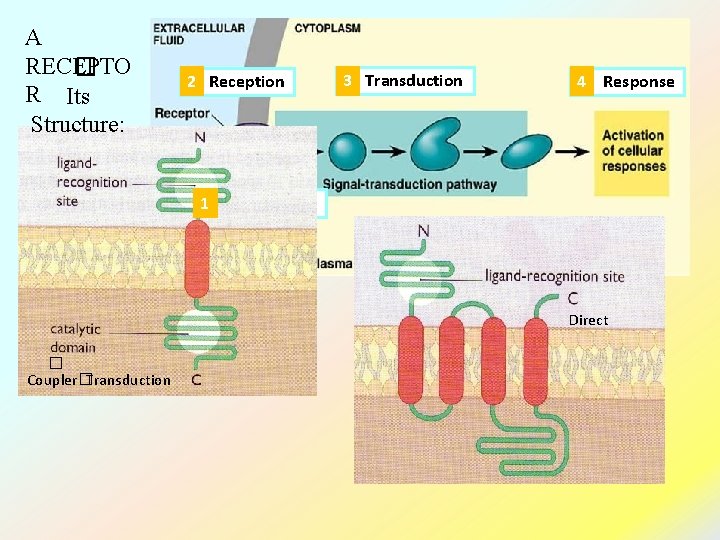
A RECEPTO � R Its Structure: 2 2. Reception 3. Transduction 3 4 4. Response 1 Recognition 1. Direct � Coupler�Transduction
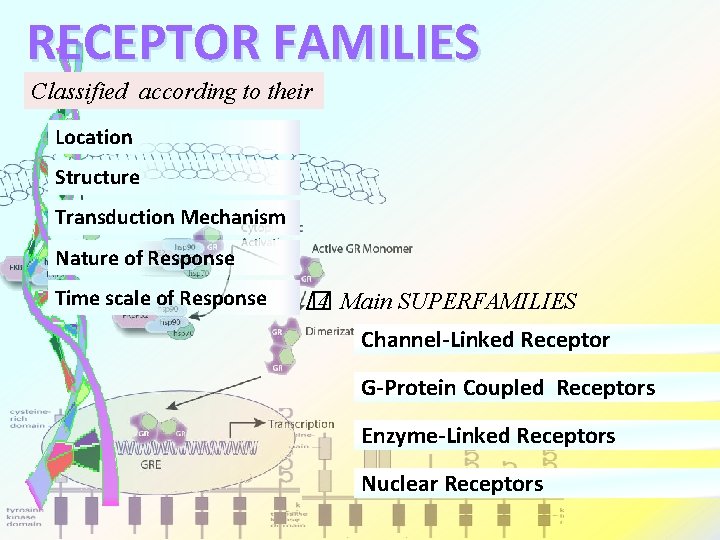
RECEPTOR FAMILIES Classified according to their Location Structure Transduction Mechanism Nature of Response Time scale of Response � � 4 Main SUPERFAMILIES Channel-Linked Receptor G-Protein Coupled Receptors Enzyme-Linked Receptors Nuclear Receptors
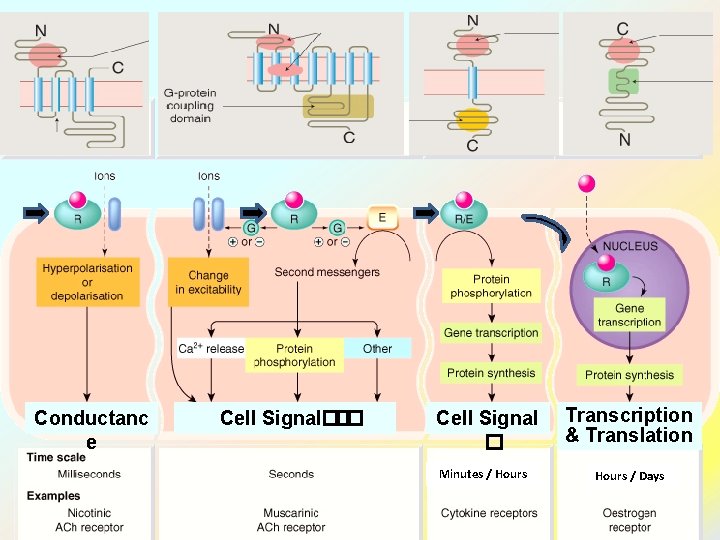
1 Conductanc e 2 3 4 Cell Signal��� Cell Signal � Transcription & Translation Minutes / Hours / Days
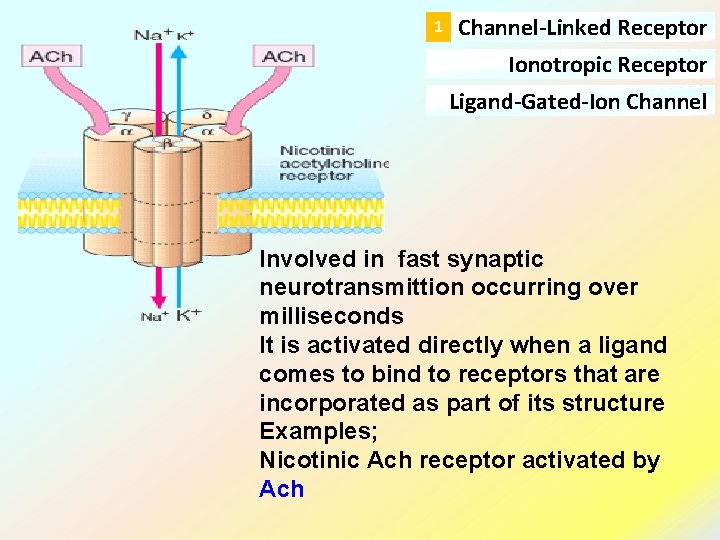
1 Channel-Linked Receptor Ionotropic Receptor Ligand-Gated-Ion Channel Involved in fast synaptic neurotransmittion occurring over milliseconds It is activated directly when a ligand comes to bind to receptors that are incorporated as part of its structure Examples; Nicotinic Ach receptor activated by Ach
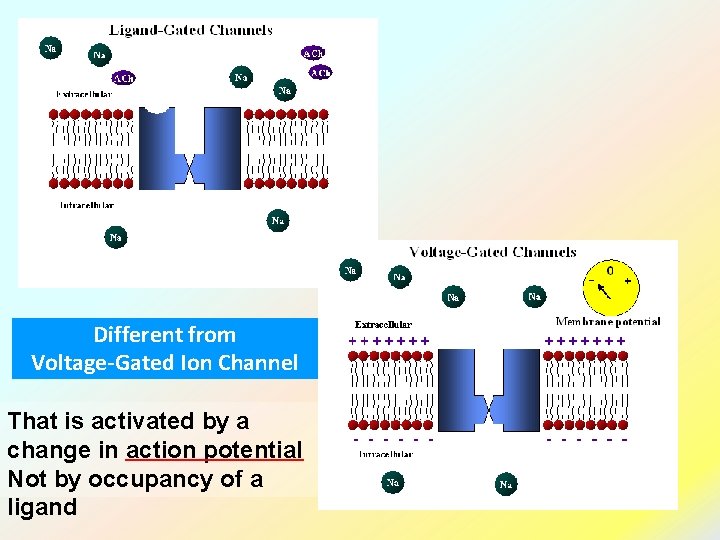
Different from Voltage-Gated Ion Channel That is activated by a change in action potential Not by occupancy of a ligand
![G-Protein Agonist ? ? Composed of 3 2 G-Protein-Coupled Receptor subunits [ g] &](http://slidetodoc.com/presentation_image_h2/758836a43baf963c0dfc3c3a6177a105/image-8.jpg "G-Protein Agonist ? ? Composed of 3 2 G-Protein-Coupled Receptor subunits [ g] &")
G-Protein Agonist ? ? Composed of 3 2 G-Protein-Coupled Receptor subunits [ g] & Metabotropic Receptor GDP � Involved in less rapid transmission Go-between proteins of Coupler Transmitters: Adrenaline at Adr R Ach at m. Ach R …etc Hormones; Glucagon 1. Agonist occupancy GOthers; Peptides, Purines, …etc Protein dissociates [ ], replaces GDP by GTP, activates effector 2. Agonist loss cleaves GTP by GTPase binds [ g] again and An enzyme coupled GDP to a � 2 nd messenger �� � 1. Adenyl cyclase (AC) � c. AMP �PKA 2. Phospholipase C (PLC) � IP 3 � Ca++ intacellular Ca 2+/Ca. M� CAMPK � DAG �PKC RESPONSE ��� PHOSPHORYLATION OF TARGET
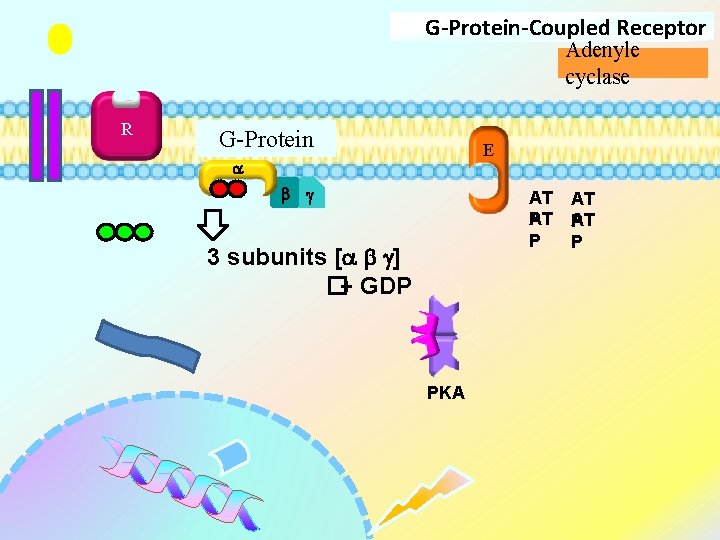
G-Protein-Coupled Receptor Adenyle cyclase R G-Protein E g AT AT P P 3 subunits [ g] �+ GDP PKA AT AT P P
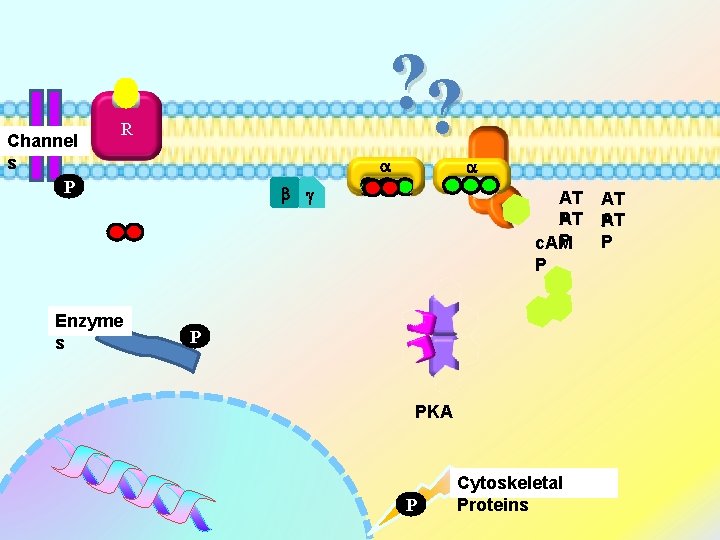
Channel s P ? ? R Enzyme s g E AT AT P P c. AM P P PKA P Cytoskeletal Proteins AT AT P P
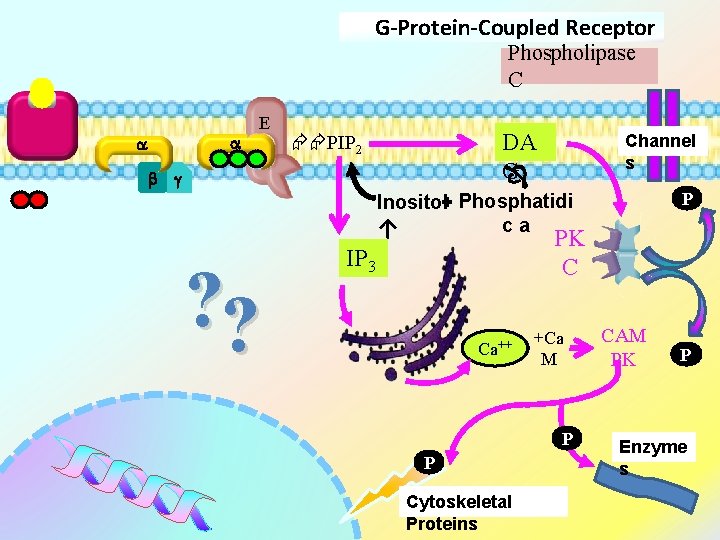
G-Protein-Coupled Receptor Phospholipase C E DA G PIP 2 g Channel s P Inositol Phosphatidi ca ↑ ? ? PK C IP 3 Ca++ +Ca M P P Cytoskeletal Proteins CAM PK P Enzyme s
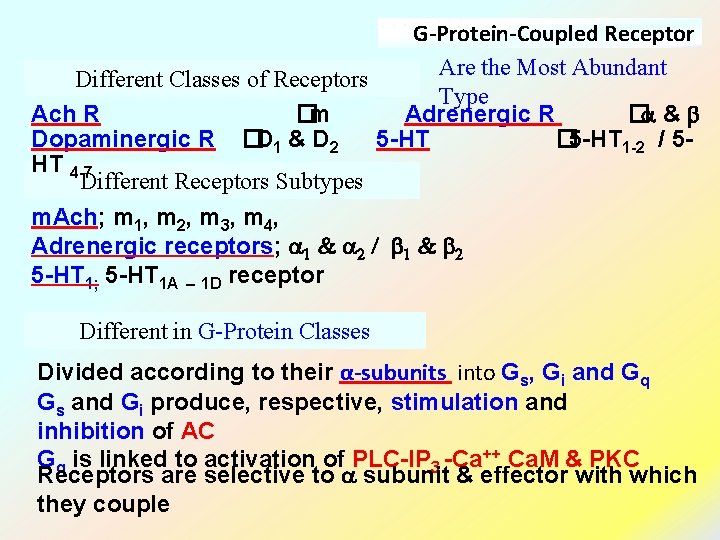
G-Protein-Coupled Receptor Are the Most Abundant Different Classes of Receptors Type Ach R �m Adrenergic R � & Dopaminergic R �D 1 & D 2 5 -HT � 5 -HT 1 -2 / 5 HT 4 -7 Different Receptors Subtypes m. Ach; m 1, m 2, m 3, m 4, Adrenergic receptors; 1 & 2 / 1 & 2 5 -HT 1; 5 -HT 1 A – 1 D receptor Different in G-Protein Classes Divided according to their α-subunits into Gs, Gi and Gq Gs and Gi produce, respective, stimulation and inhibition of AC Gq is linked to activation of PLC-IP 3 -Ca++ Ca. M & PKC Receptors are selective to subunit & effector with which they couple
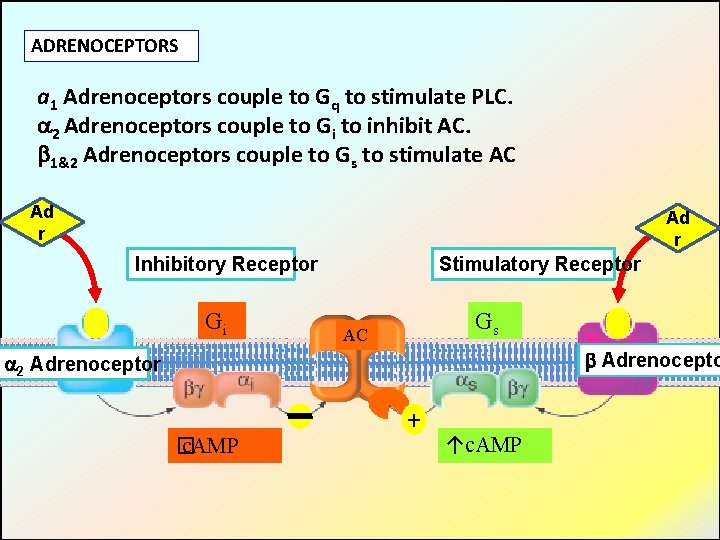
ADRENOCEPTORS a 1 Adrenoceptors couple to Gq to stimulate PLC. 2 Adrenoceptors couple to Gi to inhibit AC. 1&2 Adrenoceptors couple to Gs to stimulate AC Ad r Inhibitory Receptor Gi Stimulatory Receptor Gs AC Adrenocepto 2 Adrenoceptor � c. AMP + ↑c. AMP
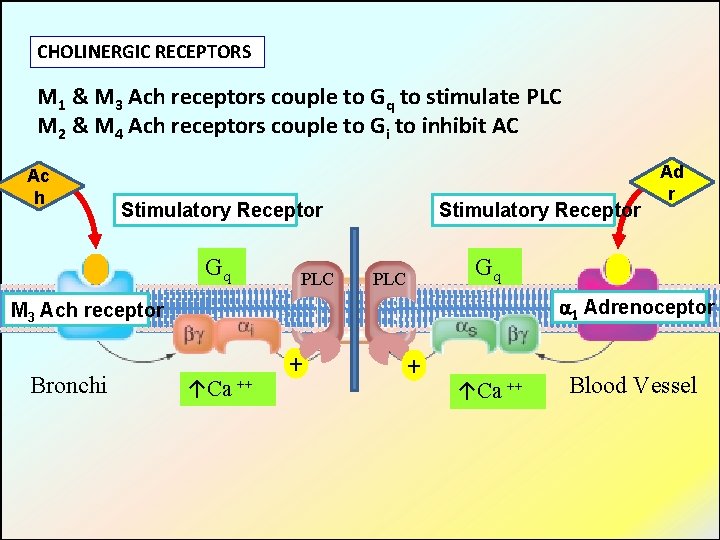
CHOLINERGIC RECEPTORS M 1 & M 3 Ach receptors couple to Gq to stimulate PLC M 2 & M 4 Ach receptors couple to Gi to inhibit AC Ac h Stimulatory Receptor Gq PLC 1 Adrenoceptor M 3 Ach receptor Bronchi Ad r ↑Ca ++ + + ↑Ca ++ Blood Vessel
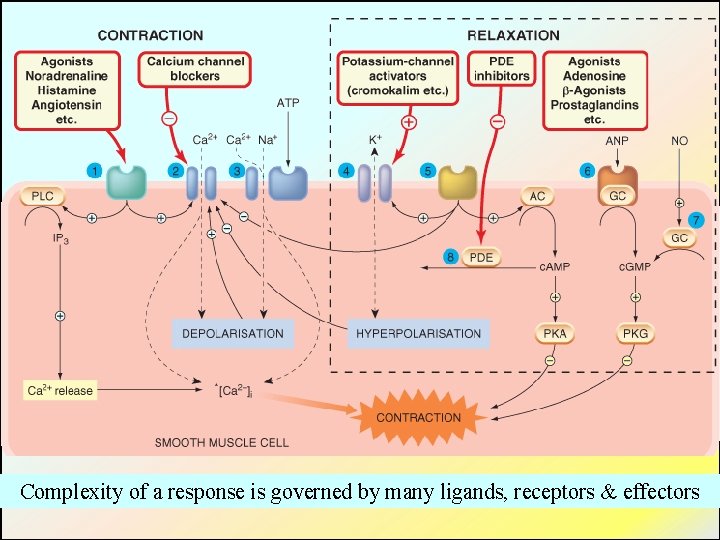
Complexity of a response is governed by many ligands, receptors & effectors
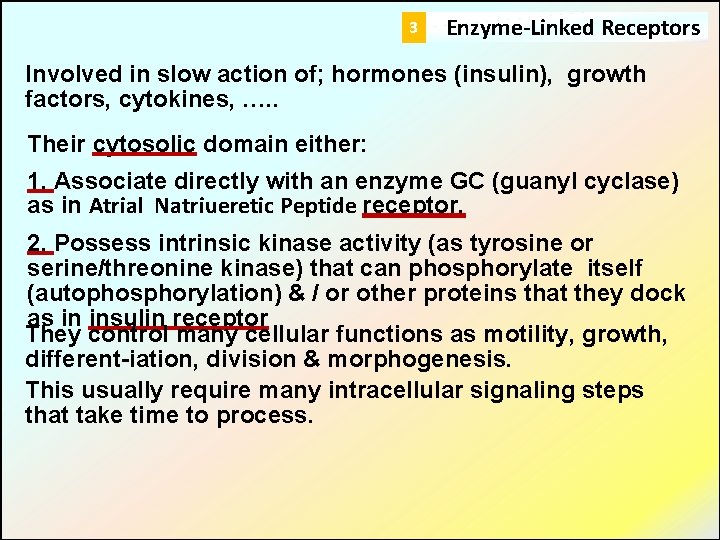
3 Enzyme-Linked Receptors Involved in slow action of; hormones (insulin), growth factors, cytokines, …. . Their cytosolic domain either: 1. Associate directly with an enzyme GC (guanyl cyclase) as in Atrial Natriueretic Peptide receptor. 2. Possess intrinsic kinase activity (as tyrosine or serine/threonine kinase) that can phosphorylate itself (autophosphorylation) & / or other proteins that they dock as in insulin receptor They control many cellular functions as motility, growth, different-iation, division & morphogenesis. This usually require many intracellular signaling steps that take time to process.
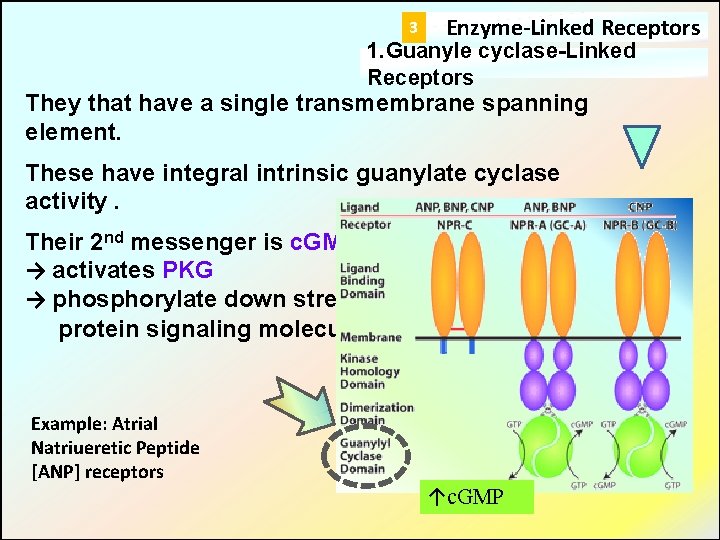
3 Enzyme-Linked Receptors 1. Guanyle cyclase-Linked Receptors They that have a single transmembrane spanning element. These have integral intrinsic guanylate cyclase activity. Their 2 nd messenger is c. GMP → activates PKG → phosphorylate down stream protein signaling molecules. Example: Atrial Natriueretic Peptide [ANP] receptors ↑c. GMP
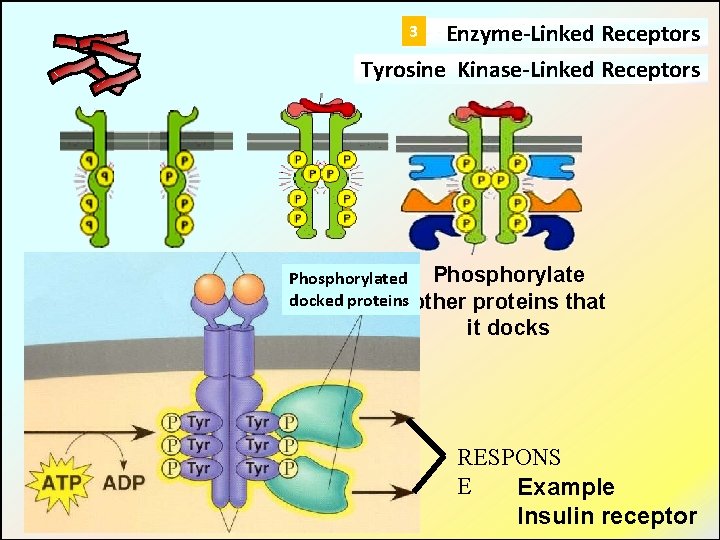
3 Enzyme-Linked Receptors Tyrosine Kinase-Linked Receptors Ligands dimerize receptors Activated Phosphorylate docked proteins other proteins that Receptor autophosphoryl it docks ates RESPONS E Example Insulin receptor
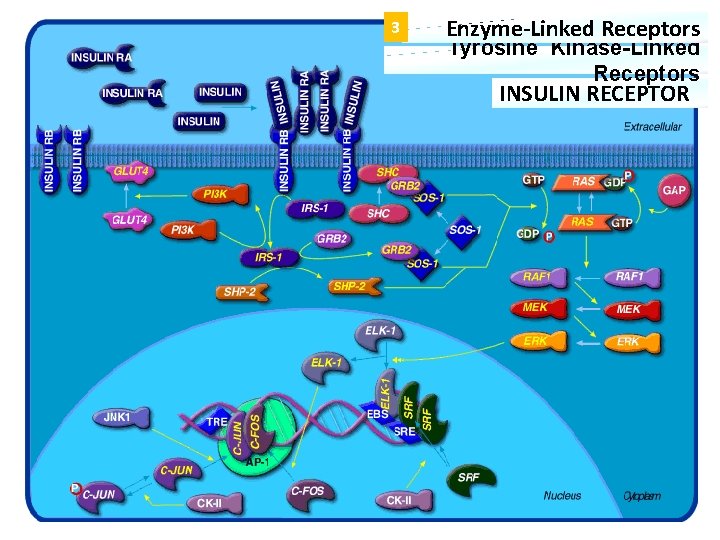
Non activated Insulin Receptor 3 Activated Insulin Receptor Enzyme-Linked Receptors Tyrosine Kinase-Linked Receptors INSULIN RECEPTOR Insulin
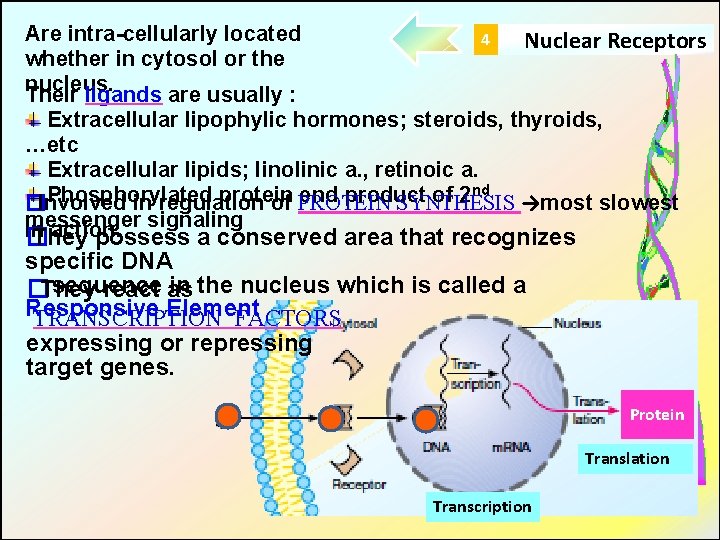
Are intra-cellularly located 4 Nuclear Receptors whether in cytosol or the nucleus. Their ligands are usually : Extracellular lipophylic hormones; steroids, thyroids, …etc Extracellular lipids; linolinic a. , retinoic a. nd Phosphorylated protein end product of 2 �Involved in regulation of PROTEIN SYNTHESIS →most slowest messenger in action. signaling � They possess a conserved area that recognizes specific DNA sequence in the nucleus which is called a �They react as Responsive Element TRANSCRIPTION FACTORS expressing or repressing target genes. Protein Translation Transcription
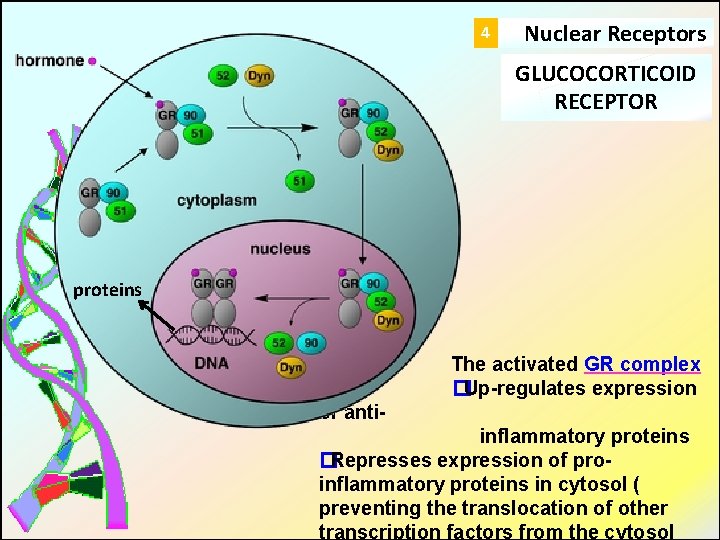
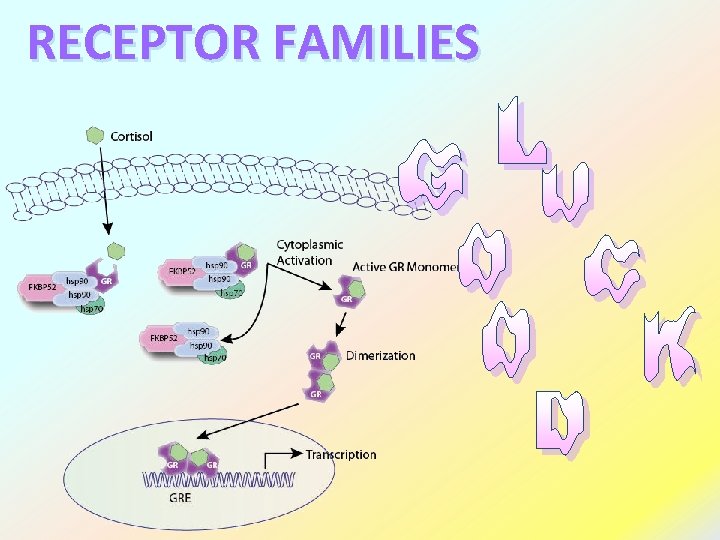
4 Nuclear Receptors GLUCOCORTICOID RECEPTOR proteins The activated GR complex �Up-regulates expression of antiinflammatory proteins �Represses expression of proinflammatory proteins in cytosol ( preventing the translocation of other transcription factors from the cytosol
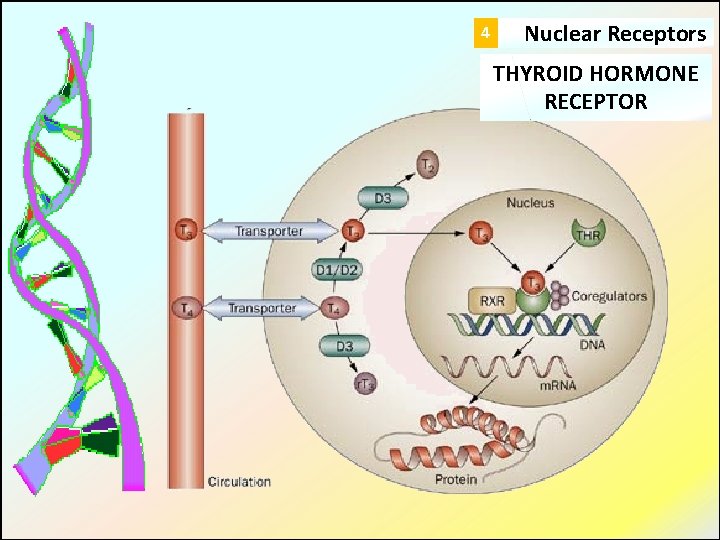
4 Nuclear Receptors THYROID HORMONE RECEPTOR
RECEPTOR FAMILIES
- Slides: 23