
Reception Overview Grace and Hope Class EYFS Team




- Slides: 25
Reception Overview Grace and Hope Class
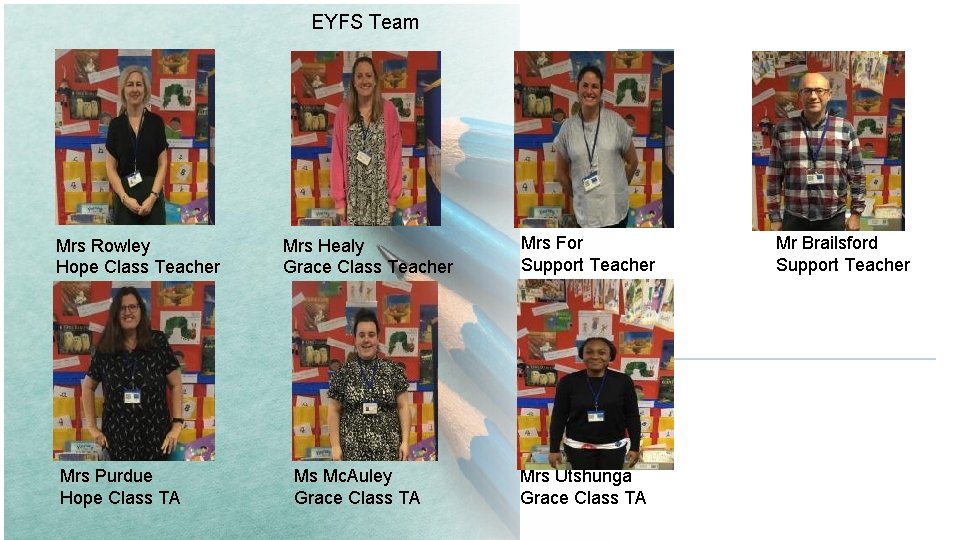
EYFS Team Mrs Rowley Hope Class Teacher Mrs Purdue Hope Class TA Mrs Healy Grace Class Teacher Ms Mc. Auley Grace Class TA Mrs For Support Teacher Mrs Utshunga Grace Class TA Mr Brailsford Support Teacher
Foundation Stage Profile In Reception we focus on 7 areas of learning • Communication and Language • Physical Development • Personal, Social and Emotional Development • Literacy (Reading and Writing) • Mathematical Development • Knowledge and Understanding • Expressive Art and Design
What does a day in Reception look like?
A Day in Reception • 8. 45 -9. 00: Wash hands, find name cards, choose lunch options, practice names, words and numbers. • 9. 00: Morning Register. • 9. 05 -9. 25: Whole Class teaching of Phonics/Maths/RE/Literacy. • 9. 25 -11. 30: Teacher led focused activities and child-initiated learning, using both the indoor and outdoor learning environments. • 11. 30 -11. 45: Tidy up time, wash hands and get ready for lunchtime. • 11. 45 -12. 45: Lunch. • 12. 45 -12. 55: Wash hands. • 12. 55 -1. 00: Afternoon Register. • 1. 00 -1. 20: Whole Class teaching of Phonics/Maths/RE/Literacy. • 1. 20 -2. 20: Teacher led focused activities and child-initiated learning, using both the indoor and outdoor learning environments. • 2. 20 -2. 25: Tidy up time. • 2. 25 -2. 35: Storytime. • 2. 35 -2. 45: Getting ready for home time.
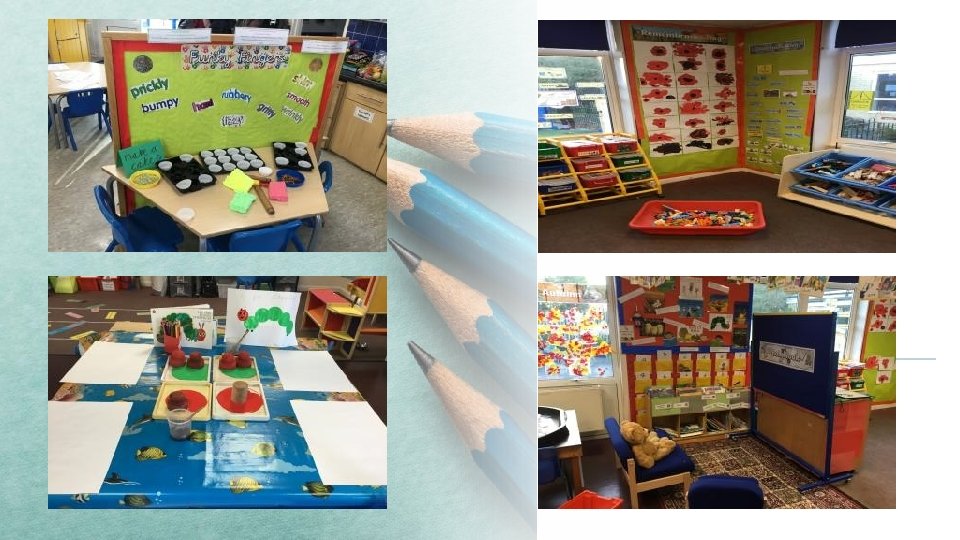
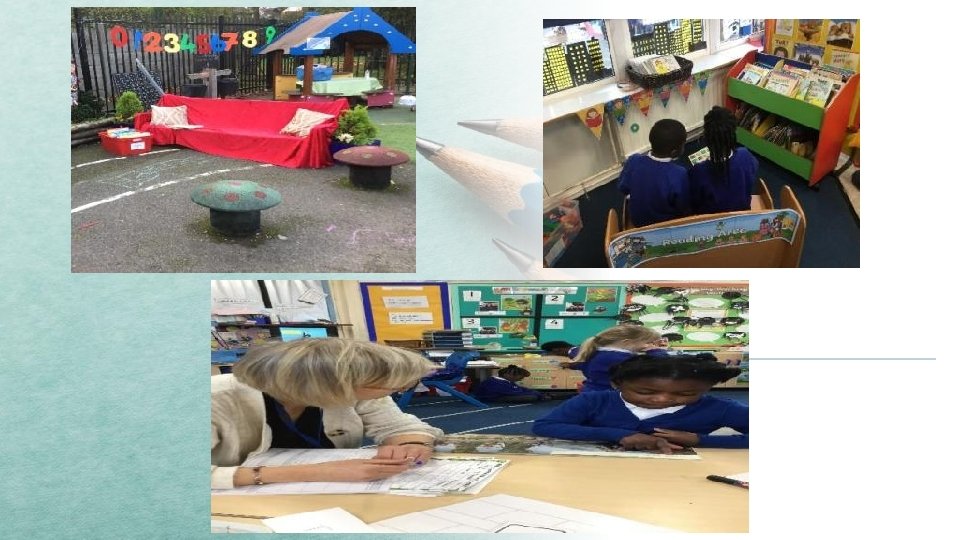
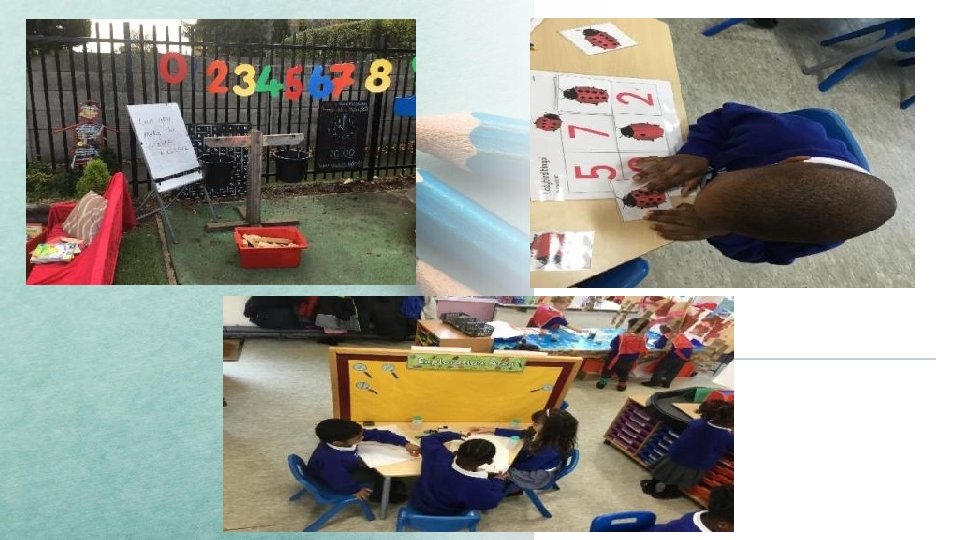
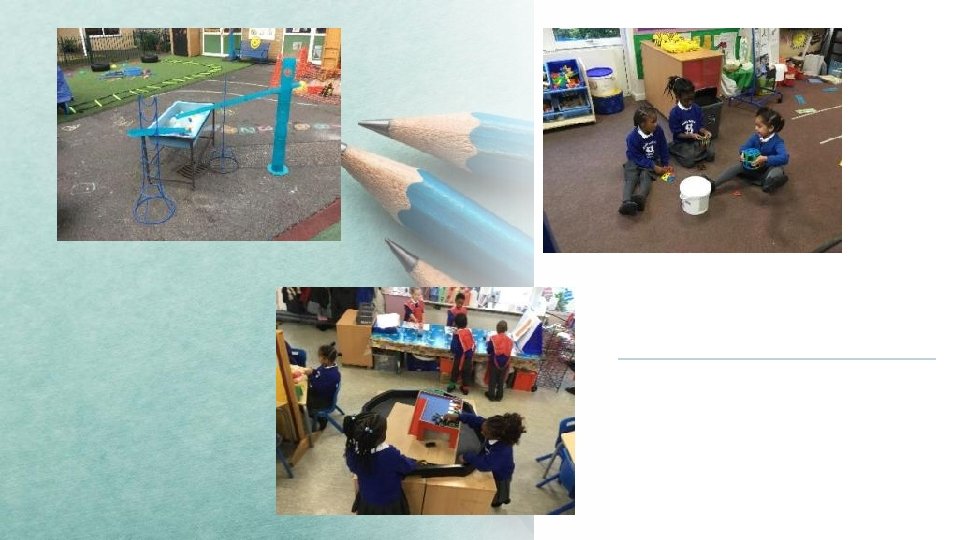
Our Learning Environment • Both Reception classes have a range of designated areas which are designed to encourage independence and child-initiated learning. • Our outdoor area also encourages independent learning through play.
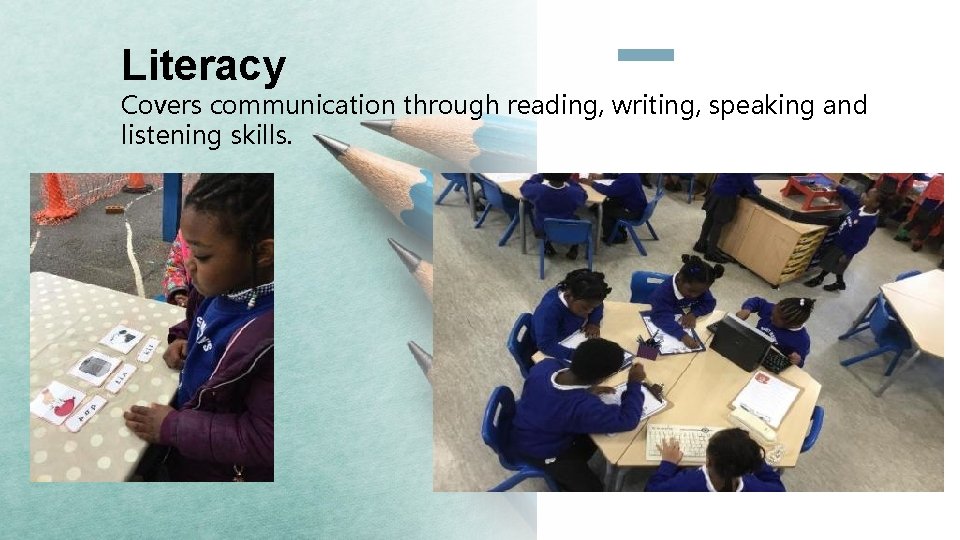
Literacy Covers communication through reading, writing, speaking and listening skills.
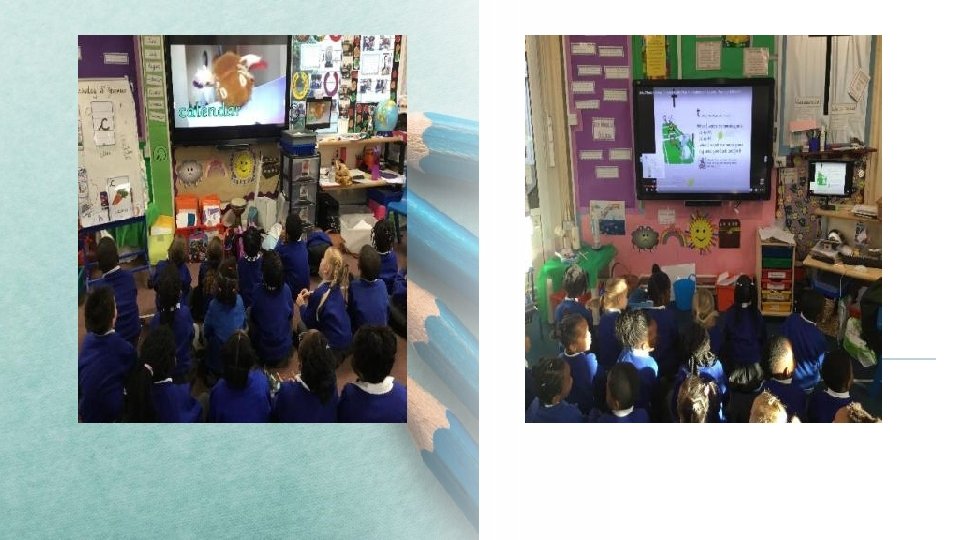
Reading • Emphasis on learning through a range of strategies with strong emphasis on phonics. • Use Letters and Sounds and Jolly Phonics as basis. • Jolly Phonics, a combination of stories, pictures and actions for each sound. • Emphasis initially on Sounds rather than letter names. • 4 per week. • Sheets for each letter brought home to reinforce learning. • Includes letter formation, sound and letter name. • Learn to recognise series of High Frequency Words, many of which cannot be sounded out phonetically. • Also look at context and other clues to assist in understanding text.
Reading in School • Begin by looking at books without text, telling own stories from pictures. • We use a range of reading schemes to cater for individual learning styles. • Children work through books at their own pace. • Books supplemented by others at same level as required.
Reading at Home • Children bring home scheme books each week, from Autumn 2. • Please share these with your child, reading to them and encouraging them to read to you as they gain confidence. • Repetition is the key! • Will also bring home words to learn, these are the High Frequency words mentioned earlier. What you can do to help! • Ensure children read books when brought home. • Look at phonics sheets and practise actions for each. • Read bedtime stories! • Look at and talk about printed language in their environment, on food packets, road signs, labels and leaflets.
Writing • Children begin with “wiggles and squiggles”. • They begin to ascribe meaning to these marks. • Increasingly use phonic knowledge and letter formation in their writing. • Write simple “CVC” words as knowledge increases.
What you can do to help! • Encourage children to draw, paint etc • Show children your writing, shopping lists, things to do, birthday cards. • Make scrap books, write postcards, party invitations. • Develop fine motor skills by cutting, sewing, dot-todots etc.
Mathematical Development • Covers counting, sorting, matching, patterns and connections. • Children work with numbers, shape, space and measures. • Children follow the Power Maths scheme of work, which provides a foundation in mathematical knowledge.
What you can do to help! • Point out numbers around you, on houses, cars, television channels, cookers and microwaves. • Say number names in order as you climb the stairs, count teddies on a bed, plates on the table. • Compare quantities, who has the most sweets, which shopping bag is heavier?
In the Classroom • The learning environment is set up to provide stimulating, cross-curricular exploration. • All children will have opportunities through the day for teacher and child led activities. • Ensure indoor and outdoor activities.
Adult Led Activities • Adults work with the children to develop and strengthen their understanding of the seven areas of the Foundation Stage Curriculum, with a particular focus on Phonics, Maths and RE. • Our weekly PE lessons are led by specialist coaches from Non-Stop Action.
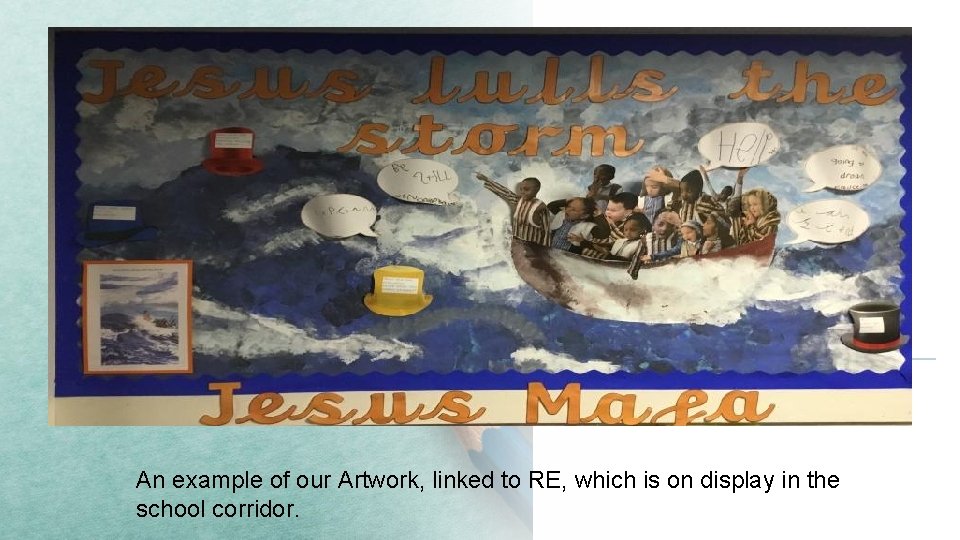
An example of our Artwork, linked to RE, which is on display in the school corridor.
Child-initiated Learning • Children’s independent play is an important part of their development. This is where they can apply the skills they have been taught in a range of play-based activities. • Staff observe the children as they are engaged in these independent activities and use this information as part of their ongoing assessment. • Some examples of this independent learning is recorded in their individual Learning Journals.
Practical Details • Please ensure all uniform is labelled with child’s name, especially PE uniform. • Children need to have a coat in school. • Packed lunches in named lunch box. • No chocolate, sweets, fizzy drinks. • We provide fruit from the snack bar which can be accessed daily. • Children have “accidents”. If these are regular, can you please provide a set of spare clothes. • We currently finish at 2. 45 pm, please be punctual. • Children will be brought out to you, please be patient with social distancing measures. • If, for some reason, someone different is picking your child up, please contact the school office or inform a member of the reception staff.