
Recent Findings of Endothelial Function Tests from FMDJ

- Slides: 26
Recent Findings of Endothelial Function Tests from FMDJ study Hirofumi Tomiyama MD Professor of Cardiology, Tokyo Medical University
Why we need to assess endothelial function?
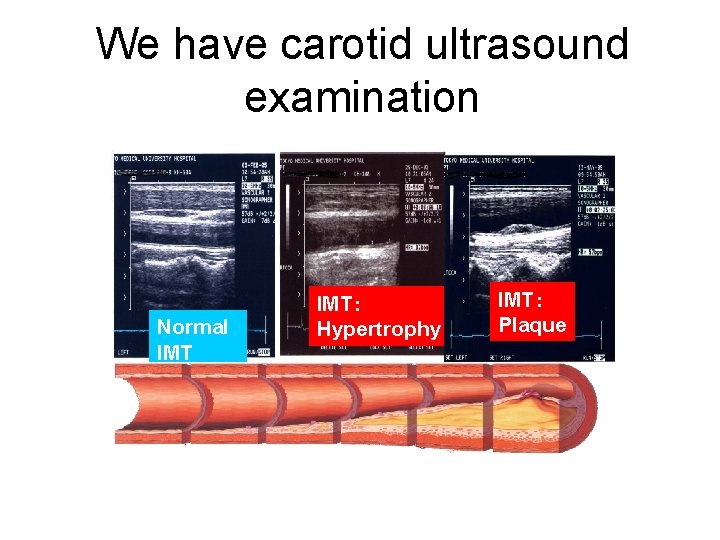
We have carotid ultrasound examination Norma. I IMT: Hypertrophy IMT: Plaque
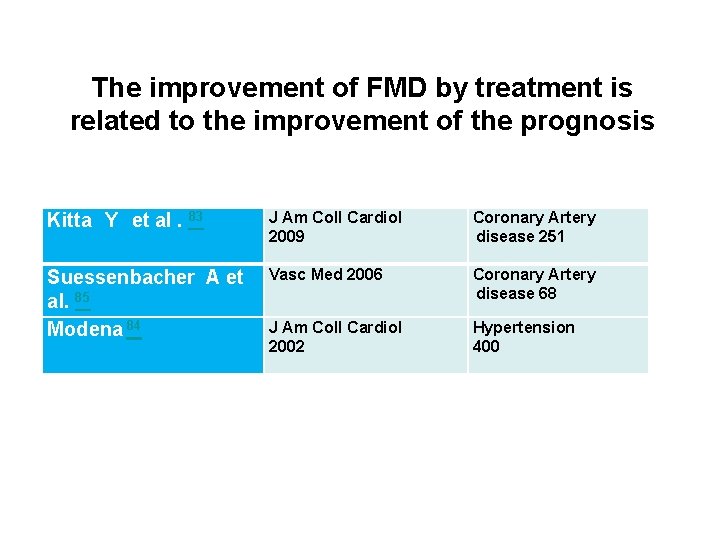
The improvement of FMD by treatment is related to the improvement of the prognosis Kitta Y et al. 83 J Am Coll Cardiol 2009 Coronary Artery disease 251 Suessenbacher A et al. 85 Modena 84 Vasc Med 2006 Coronary Artery disease 68 J Am Coll Cardiol 2002 Hypertension 400
Endothelial function test has a potential to be a marker for the managements (not only diagnosis) of cardiovascular disease/its risk factors
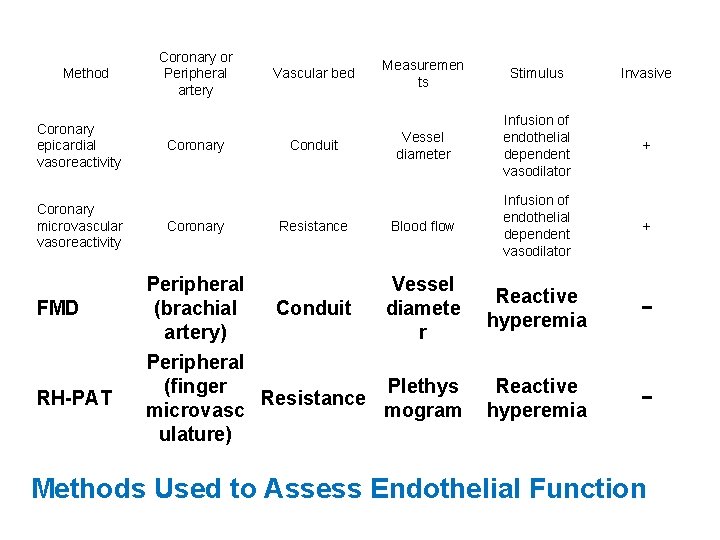
Method Coronary epicardial vasoreactivity Coronary microvascular vasoreactivity FMD RH-PAT Coronary or Peripheral artery Coronary Vascular bed Conduit Resistance Measuremen ts Stimulus Invasive Vessel diameter Infusion of endothelial dependent vasodilator + Blood flow Infusion of endothelial dependent vasodilator + Reactive hyperemia − Peripheral Vessel (brachial Conduit diamete artery) r Peripheral (finger Plethys Resistance microvasc mogram ulature) Methods Used to Assess Endothelial Function
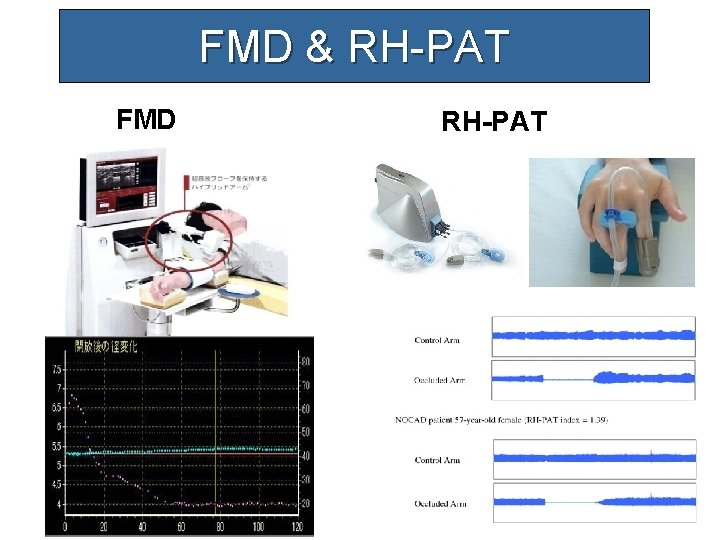
FMD & RH-PAT FMD RH-PAT
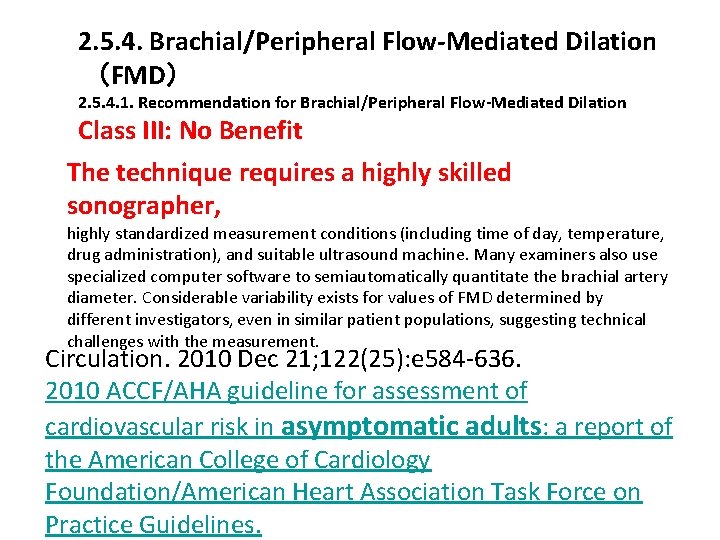
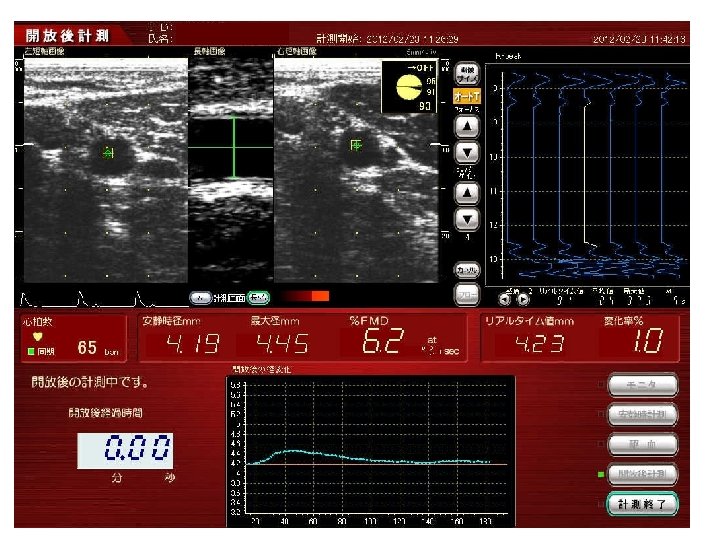
2. 5. 4. Brachial/Peripheral Flow-Mediated Dilation (FMD) 2. 5. 4. 1. Recommendation for Brachial/Peripheral Flow-Mediated Dilation Class III: No Benefit The technique requires a highly skilled sonographer, highly standardized measurement conditions (including time of day, temperature, drug administration), and suitable ultrasound machine. Many examiners also use specialized computer software to semiautomatically quantitate the brachial artery diameter. Considerable variability exists for values of FMD determined by different investigators, even in similar patient populations, suggesting technical challenges with the measurement. Circulation. 2010 Dec 21; 122(25): e 584 -636. 2010 ACCF/AHA guideline for assessment of cardiovascular risk in asymptomatic adults: a report of the American College of Cardiology Foundation/American Heart Association Task Force on Practice Guidelines.
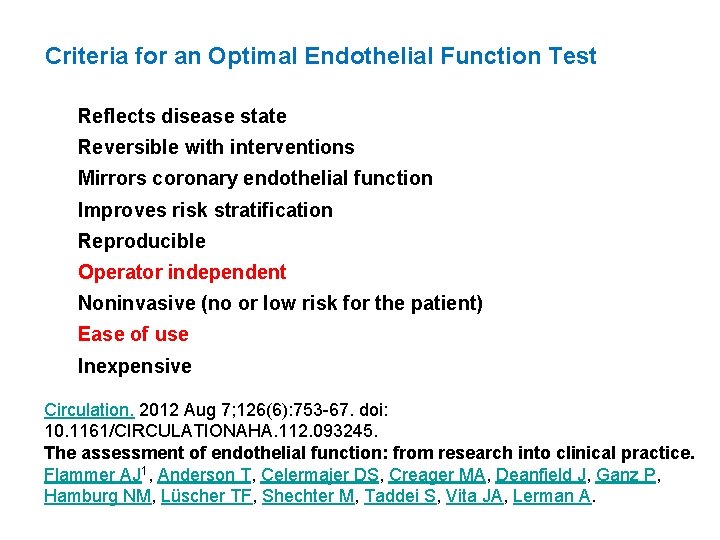
Criteria for an Optimal Endothelial Function Test Reflects disease state Reversible with interventions Mirrors coronary endothelial function Improves risk stratification Reproducible Operator independent Noninvasive (no or low risk for the patient) Ease of use Inexpensive Circulation. 2012 Aug 7; 126(6): 753 -67. doi: 10. 1161/CIRCULATIONAHA. 112. 093245. The assessment of endothelial function: from research into clinical practice. Flammer AJ 1, Anderson T, Celermajer DS, Creager MA, Deanfield J, Ganz P, Hamburg NM, Lüscher TF, Shechter M, Taddei S, Vita JA, Lerman A.
Is data of FMD reliable ?
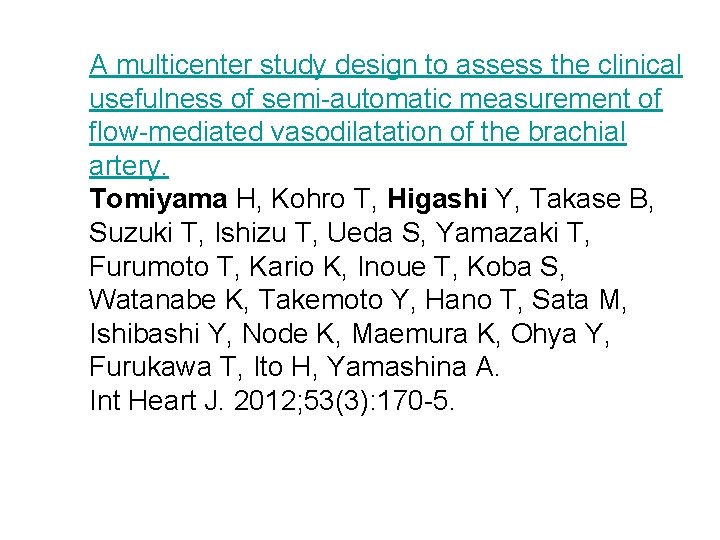
A multicenter study design to assess the clinical usefulness of semi-automatic measurement of flow-mediated vasodilatation of the brachial artery. Tomiyama H, Kohro T, Higashi Y, Takase B, Suzuki T, Ishizu T, Ueda S, Yamazaki T, Furumoto T, Kario K, Inoue T, Koba S, Watanabe K, Takemoto Y, Hano T, Sata M, Ishibashi Y, Node K, Maemura K, Ohya Y, Furukawa T, Ito H, Yamashina A. Int Heart J. 2012; 53(3): 170 -5.
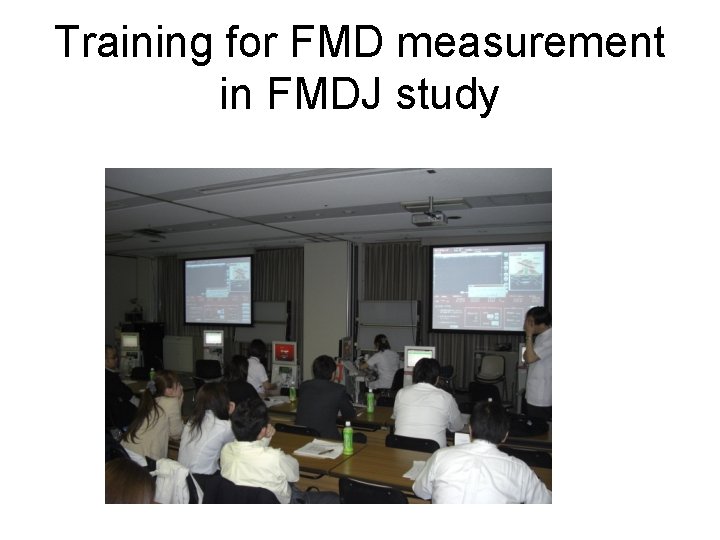
Training for FMD measurement in FMDJ study
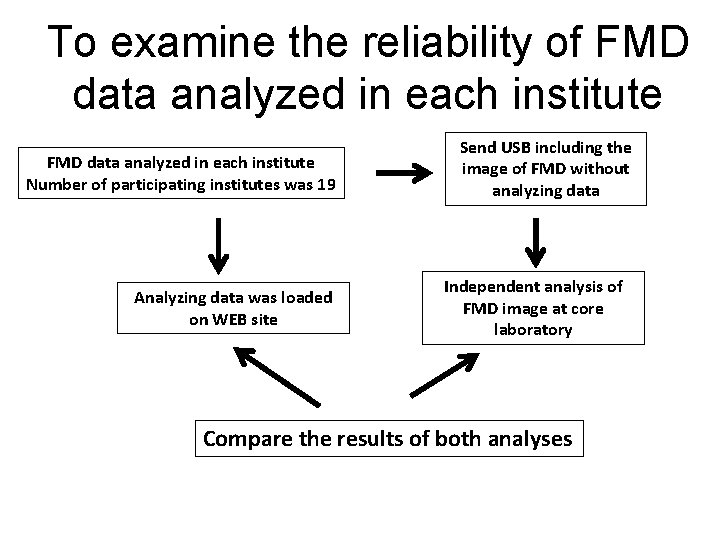
To examine the reliability of FMD data analyzed in each institute Number of participating institutes was 19 Analyzing data was loaded on WEB site Send USB including the image of FMD without analyzing data Independent analysis of FMD image at core laboratory Compare the results of both analyses
Are FMD and RH-PAT interchangeable?
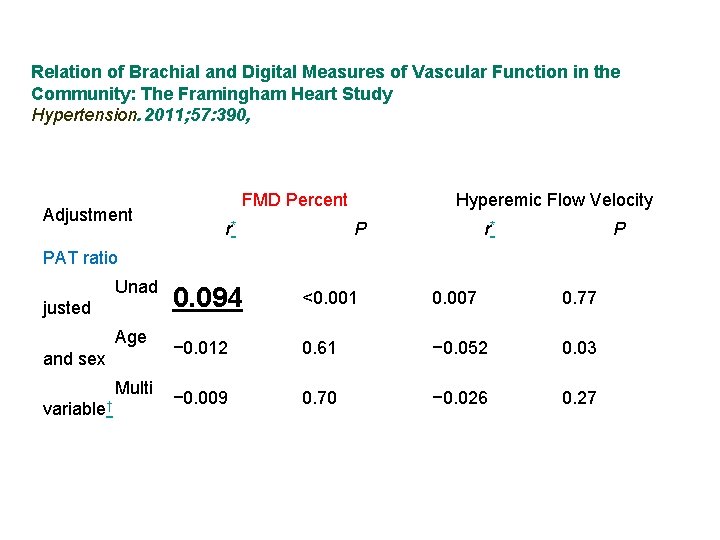
Relation of Brachial and Digital Measures of Vascular Function in the Community: The Framingham Heart Study Hypertension. 2011; 57: 390, Adjustment FMD Percent r* Hyperemic Flow Velocity P r* P PAT ratio Unad justed 0. 094 <0. 001 0. 007 0. 77 Age and sex − 0. 012 0. 61 − 0. 052 0. 03 Multi variable† − 0. 009 0. 70 − 0. 026 0. 27
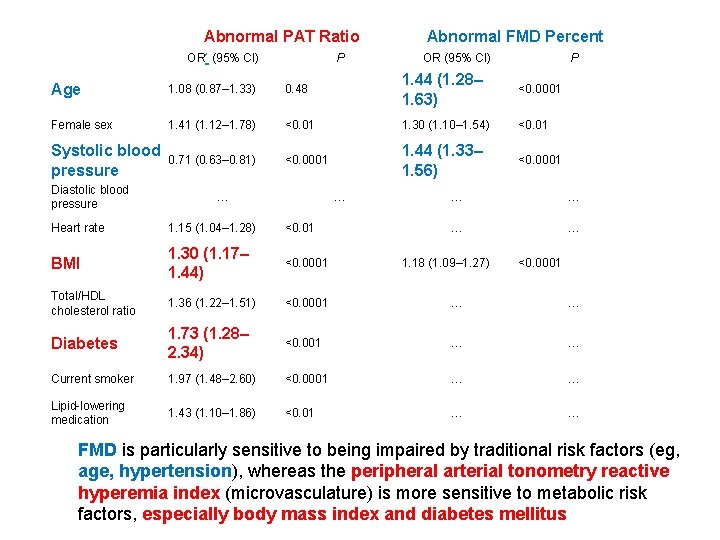
Abnormal PAT Ratio OR* (95% CI) P Abnormal FMD Percent OR (95% CI) P Age 1. 08 (0. 87– 1. 33) 0. 48 1. 44 (1. 28– 1. 63) <0. 0001 Female sex 1. 41 (1. 12– 1. 78) <0. 01 1. 30 (1. 10– 1. 54) <0. 01 Systolic blood pressure 0. 71 (0. 63– 0. 81) <0. 0001 1. 44 (1. 33– 1. 56) <0. 0001 Diastolic blood pressure … … … Heart rate 1. 15 (1. 04– 1. 28) <0. 01 BMI 1. 30 (1. 17– 1. 44) <0. 0001 Total/HDL cholesterol ratio 1. 36 (1. 22– 1. 51) <0. 0001 … … Diabetes 1. 73 (1. 28– 2. 34) <0. 001 … … Current smoker 1. 97 (1. 48– 2. 60) <0. 0001 … … Lipid-lowering medication 1. 43 (1. 10– 1. 86) <0. 01 … … 1. 18 (1. 09– 1. 27) <0. 0001 FMD is particularly sensitive to being impaired by traditional risk factors (eg, age, hypertension), whereas the peripheral arterial tonometry reactive hyperemia index (microvasculature) is more sensitive to metabolic risk factors, especially body mass index and diabetes mellitus
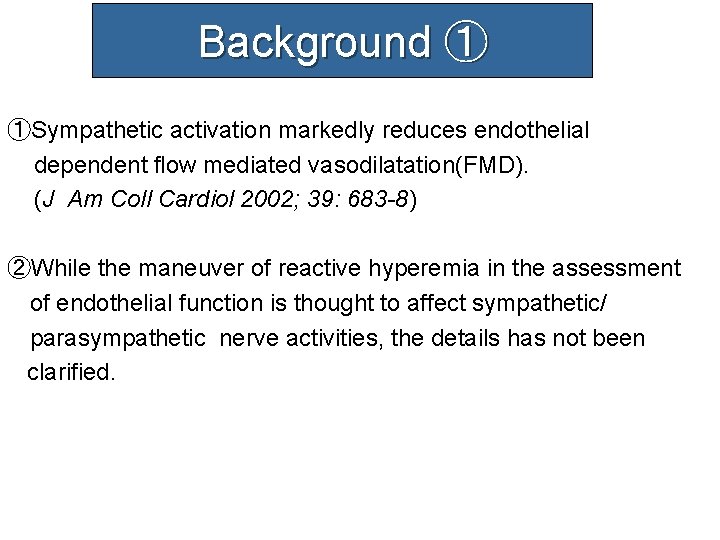
Background ① ①Sympathetic activation markedly reduces endothelial dependent flow mediated vasodilatation(FMD). (J Am Coll Cardiol 2002; 39: 683 -8) ②While the maneuver of reactive hyperemia in the assessment of endothelial function is thought to affect sympathetic/ parasympathetic nerve activities, the details has not been clarified.
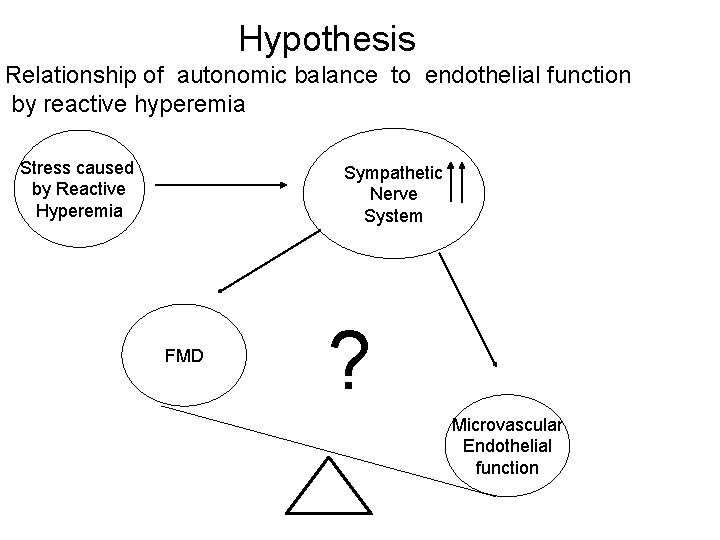
Hypothesis Relationship of autonomic balance to endothelial function by reactive hyperemia Stress caused by Reactive Hyperemia Sympathetic Nerve System FMD ? Microvascular Endothelial function
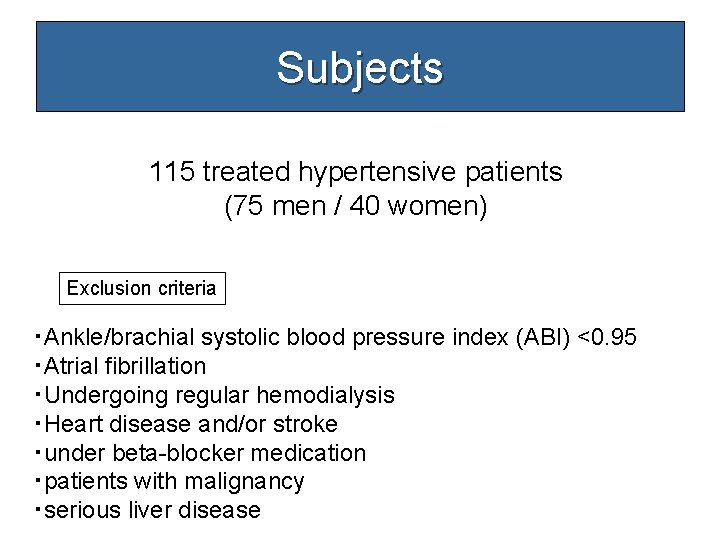
Subjects 115 treated hypertensive patients (75 men / 40 women) Exclusion criteria ・Ankle/brachial systolic blood pressure index (ABI) <0. 95 ・Atrial fibrillation ・Undergoing regular hemodialysis ・Heart disease and/or stroke ・under beta-blocker medication ・patients with malignancy ・serious liver disease
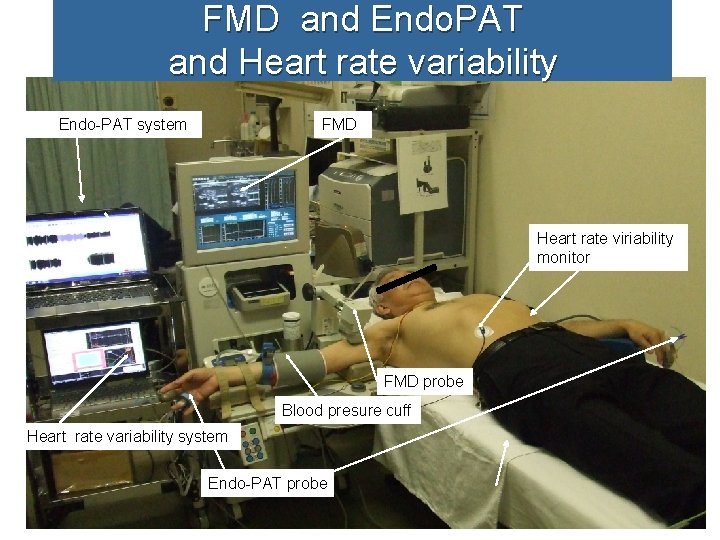
FMD and Endo. PAT and Heart rate variability Endo-PAT system FMD Heart rate viriability monitor FMD probe Blood presure cuff Heart rate variability system Endo-PAT probe
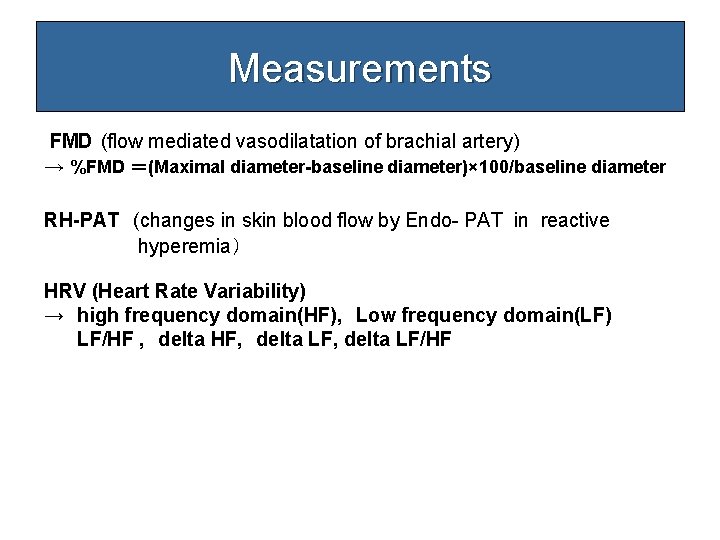
Measurements FMD (flow mediated vasodilatation of brachial artery) → %FMD =(Maximal diameter-baseline diameter)× 100/baseline diameter RH-PAT (changes in skin blood flow by Endo- PAT in reactive hyperemia) HRV (Heart Rate Variability) → high frequency domain(HF), Low frequency domain(LF) LF/HF , delta HF, delta LF, delta LF/HF
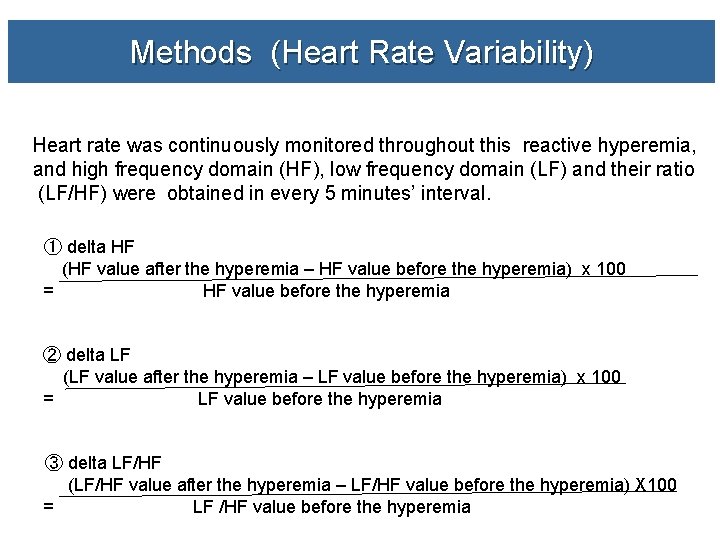
Methods (Heart Rate Variability) Heart rate was continuously monitored throughout this reactive hyperemia, and high frequency domain (HF), low frequency domain (LF) and their ratio (LF/HF) were obtained in every 5 minutes’ interval. ① delta HF (HF value after the hyperemia – HF value before the hyperemia) x 100 = HF value before the hyperemia ② delta LF (LF value after the hyperemia – LF value before the hyperemia) x 100 = LF value before the hyperemia ③ delta LF/HF (LF/HF value after the hyperemia – LF/HF value before the hyperemia) X 100 = LF /HF value before the hyperemia
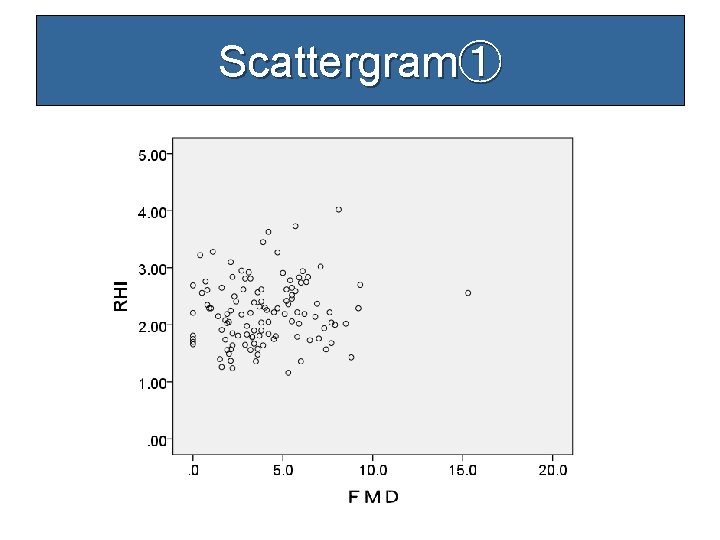
Scattergram①
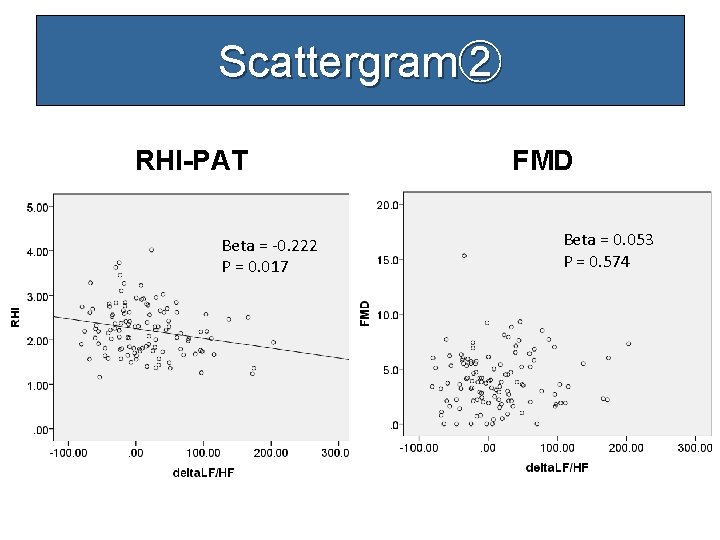
Scattergram② RHI-PAT Beta = -0. 222 P = 0. 017 FMD Beta = 0. 053 P = 0. 574
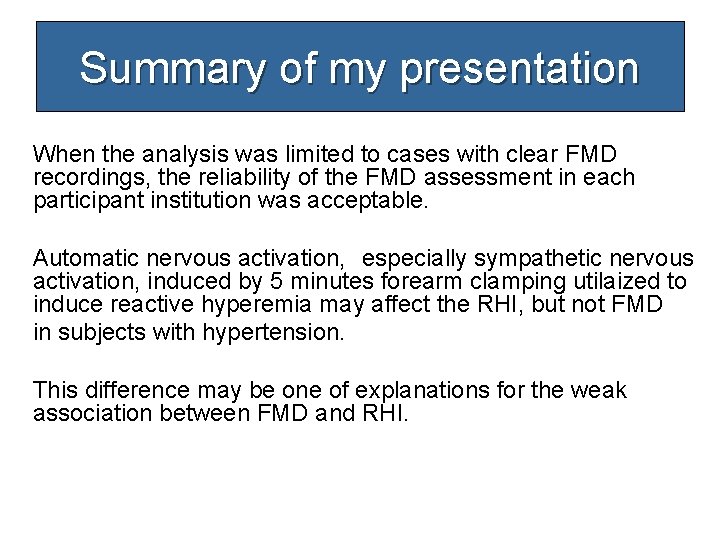
Summary of my presentation When the analysis was limited to cases with clear FMD recordings, the reliability of the FMD assessment in each participant institution was acceptable. Automatic nervous activation, especially sympathetic nervous activation, induced by 5 minutes forearm clamping utilaized to induce reactive hyperemia may affect the RHI, but not FMD in subjects with hypertension. This difference may be one of explanations for the weak association between FMD and RHI.