
Recent applications of NGS sequencing in cancer studies

- Slides: 39
Recent applications of NGS sequencing in cancer studies Andrew Gentles CCSB NGS workshop September 2012
You’ve slogged through QC, trimming, alignment, realignment, variant calling What next ?
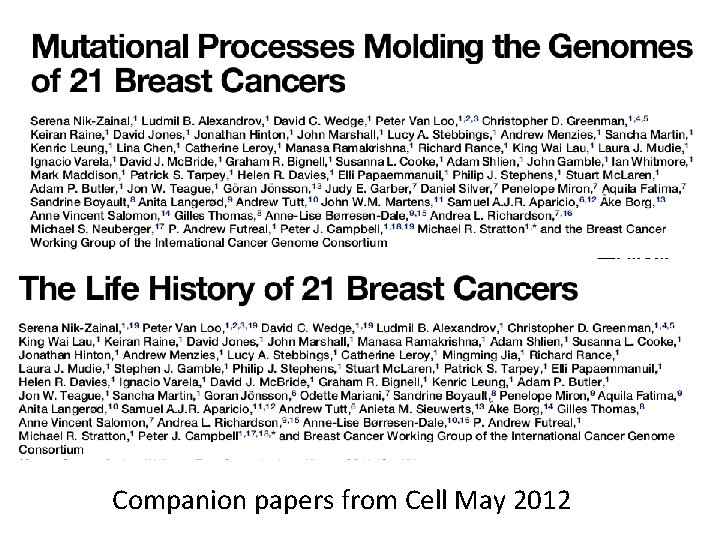
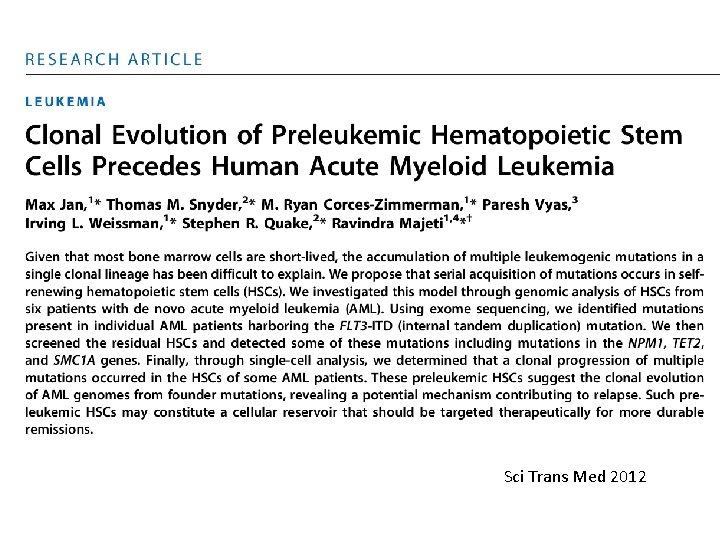
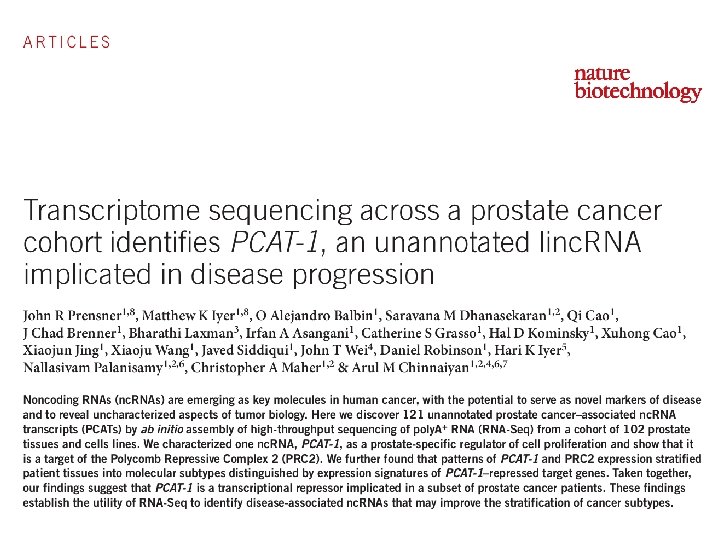
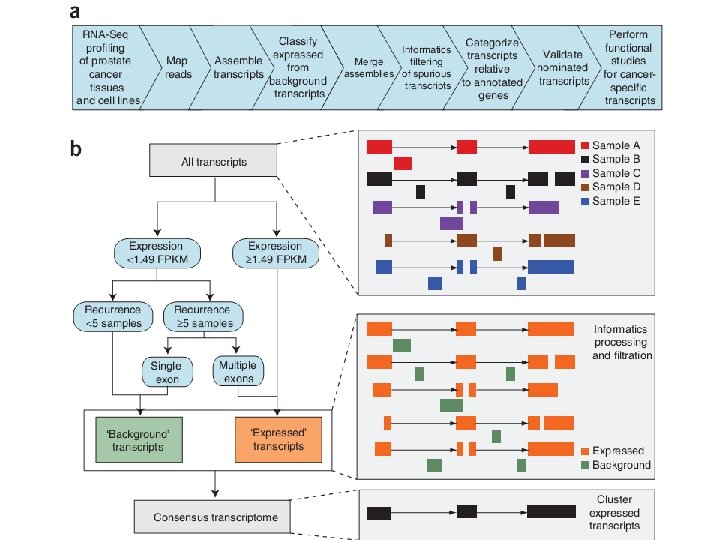
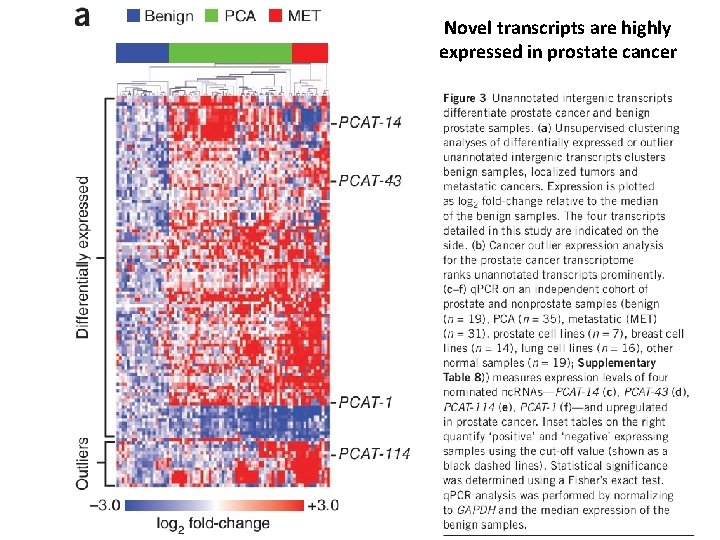
• Mutational processes molding the genomes of 21 breast cancers/The life history of 21 breast cancers – Nik-Zainal et al. (2012) Cell 149(5): 994 -1007 • Clonal evolution of preleukemic hematopoietic stem cells precedes human acute myeloid leukemia – Jan et al. (2012) Sci Trans Med 4, 149 ra 118 • Transcriptome sequencing across a prostate cancer cohort identifies PCAT-1, an unannotated linc. RNA implicated in disease progression – Prensner et al. (2011) Nat Biotech 29: 742 -9
Companion papers from Cell May 2012
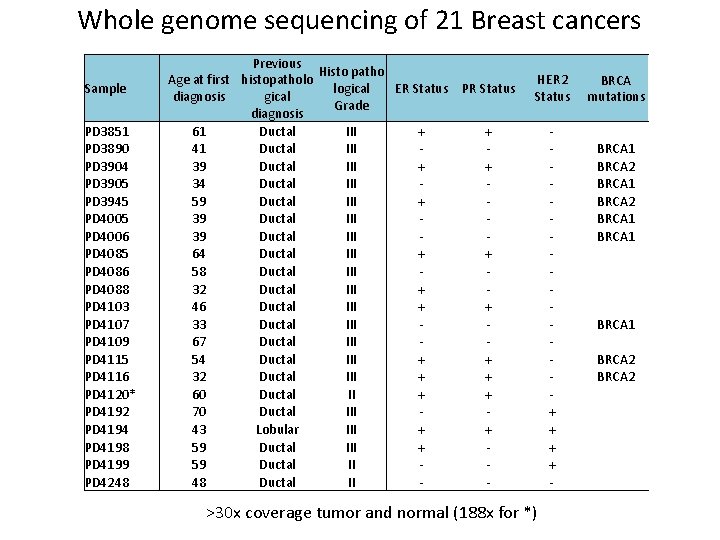
Whole genome sequencing of 21 Breast cancers Sample PD 3851 PD 3890 PD 3904 PD 3905 PD 3945 PD 4006 PD 4085 PD 4086 PD 4088 PD 4103 PD 4107 PD 4109 PD 4115 PD 4116 PD 4120* PD 4192 PD 4194 PD 4198 PD 4199 PD 4248 Previous Histo patho Age at first histopatholo ER Status PR Status logical diagnosis gical Grade diagnosis 61 Ductal III + + 41 Ductal III 39 Ductal III + + 34 Ductal III 59 Ductal III + 39 Ductal III 64 Ductal III + + 58 Ductal III 32 Ductal III + 46 Ductal III + + 33 Ductal III 67 Ductal III 54 Ductal III + + 32 Ductal III + + 60 Ductal II + + 70 Ductal III 43 Lobular III + + 59 Ductal III + 59 Ductal II 48 Ductal II - HER 2 Status >30 x coverage tumor and normal (188 x for *) + + - BRCA mutations BRCA 1 BRCA 2 BRCA 1 BRCA 2
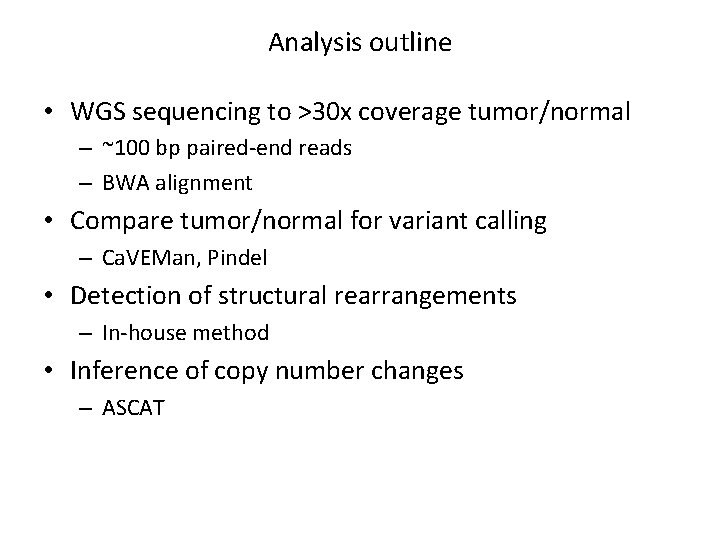
Analysis outline • WGS sequencing to >30 x coverage tumor/normal – ~100 bp paired-end reads – BWA alignment • Compare tumor/normal for variant calling – Ca. VEMan, Pindel • Detection of structural rearrangements – In-house method • Inference of copy number changes – ASCAT
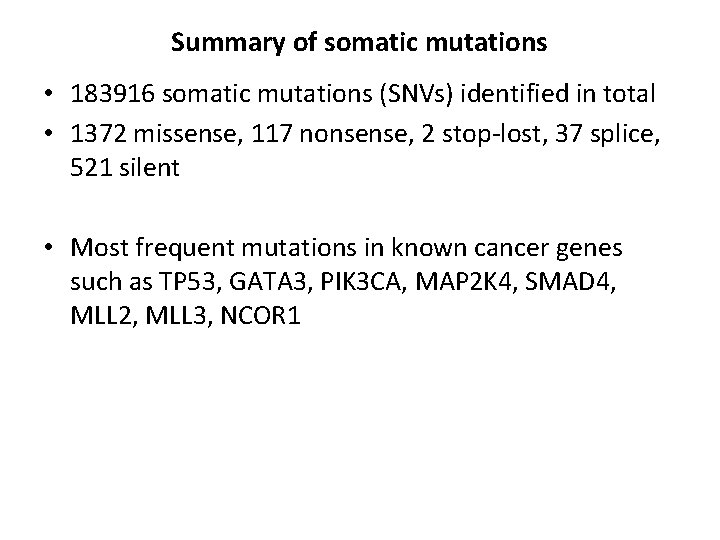
Summary of somatic mutations • 183916 somatic mutations (SNVs) identified in total • 1372 missense, 117 nonsense, 2 stop-lost, 37 splice, 521 silent • Most frequent mutations in known cancer genes such as TP 53, GATA 3, PIK 3 CA, MAP 2 K 4, SMAD 4, MLL 2, MLL 3, NCOR 1
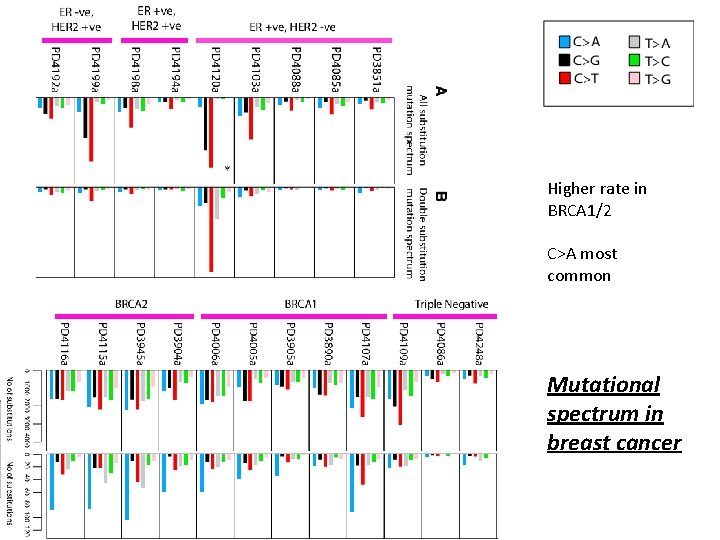
Higher rate in BRCA 1/2 C>A most common Mutational spectrum in breast cancer
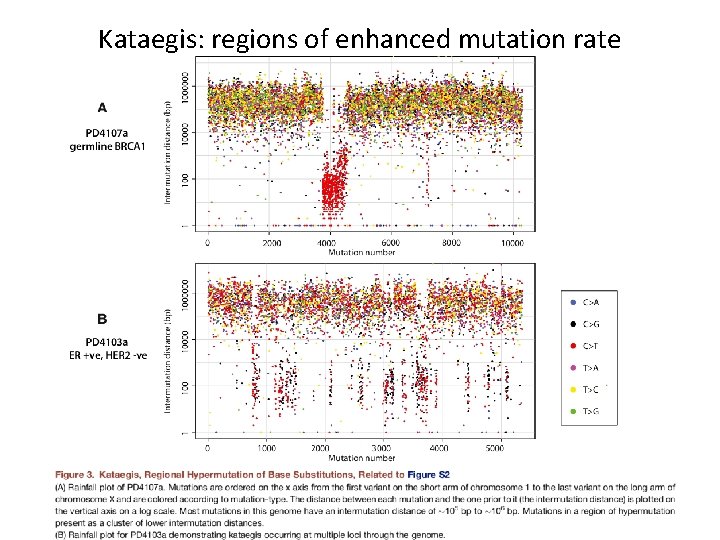
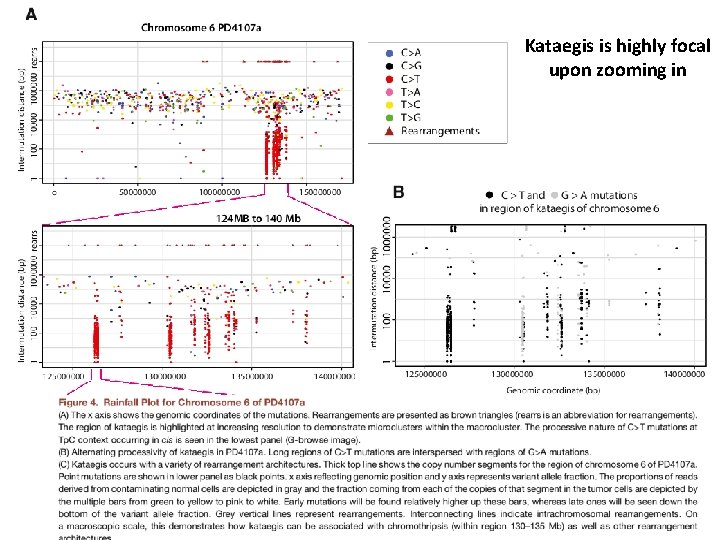
Kataegis: regions of enhanced mutation rate
Kataegis is highly focal upon zooming in
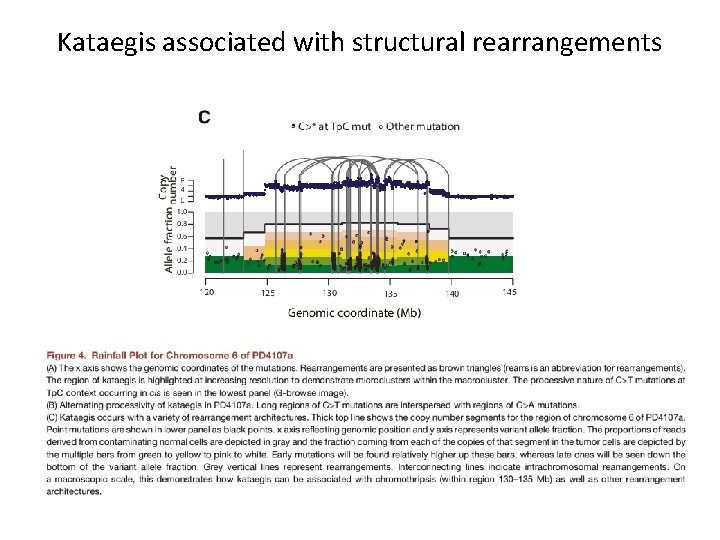
Kataegis associated with structural rearrangements
A very deep look into mutation frequencies to reconstruct tumor evolution
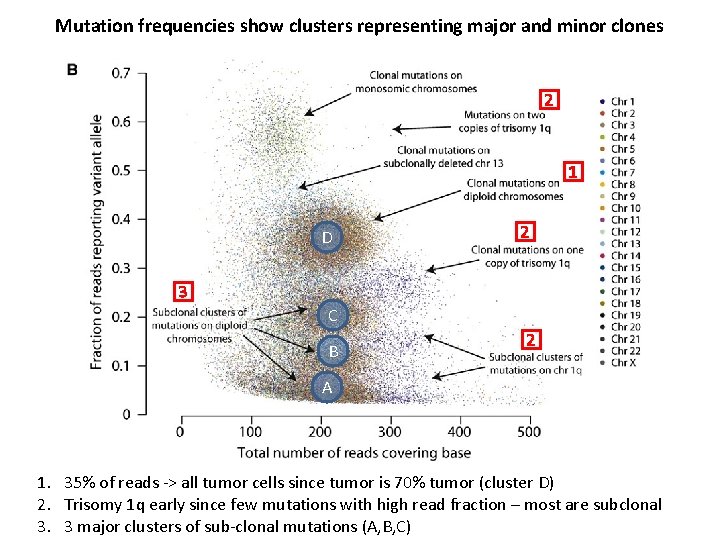
PD 4120 a • 188 x coverage – enables deep look at mutation frequencies • 70690 somatic substitutions – Some in <5% of reads – Mainly C>* in Tp. C context – High rate of validation
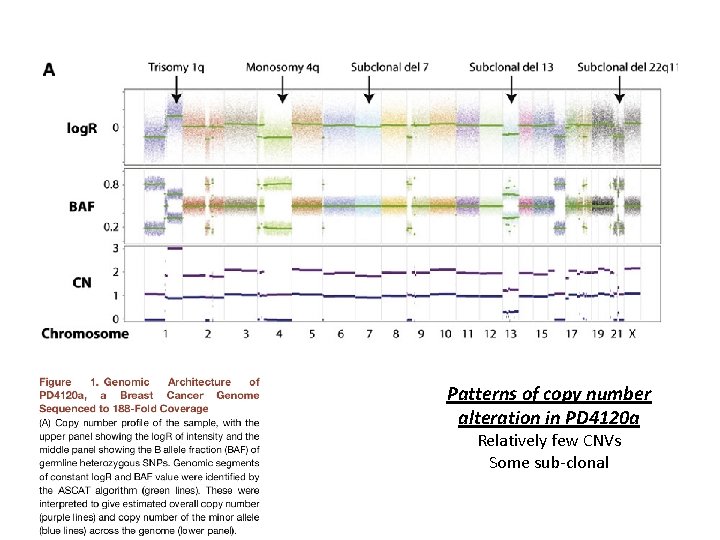
Patterns of copy number alteration in PD 4120 a Relatively few CNVs Some sub-clonal
Mutation frequencies show clusters representing major and minor clones 2 1 D 2 3 C B 2 A 1. 35% of reads -> all tumor cells since tumor is 70% tumor (cluster D) 2. Trisomy 1 q early since few mutations with high read fraction – most are subclonal 3. 3 major clusters of sub-clonal mutations (A, B, C)
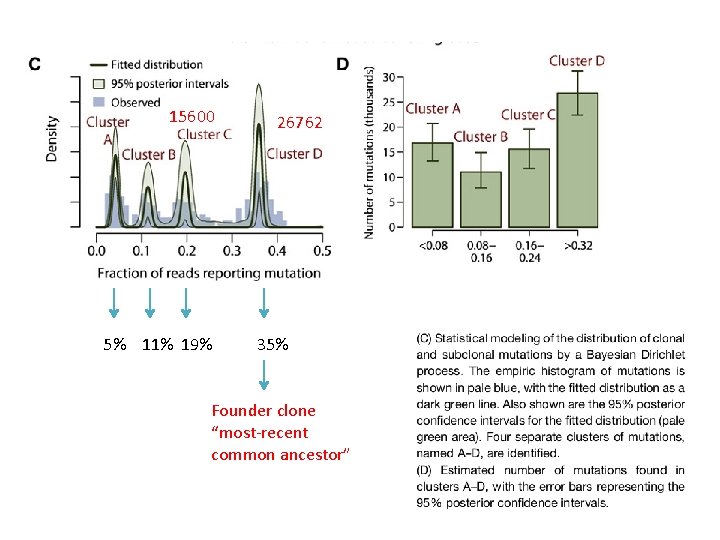
15600 5% 11% 19% 26762 35% Founder clone “most-recent common ancestor”
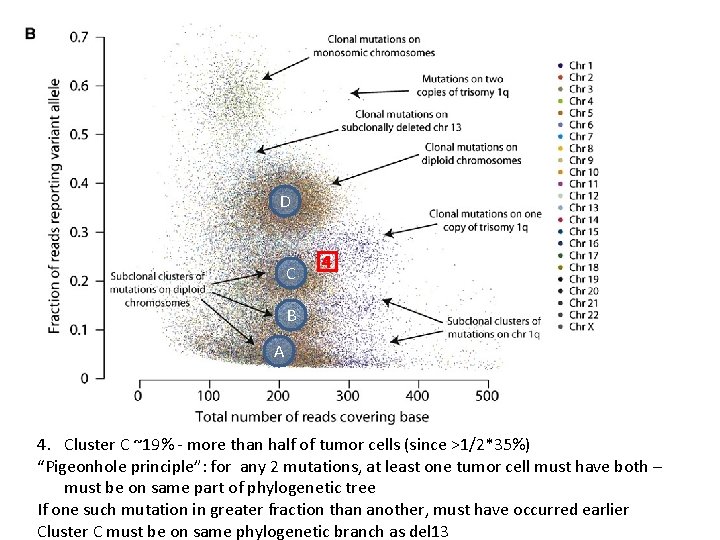
D C 4 B A 4. Cluster C ~19% - more than half of tumor cells (since >1/2*35%) “Pigeonhole principle”: for any 2 mutations, at least one tumor cell must have both – must be on same part of phylogenetic tree If one such mutation in greater fraction than another, must have occurred earlier Cluster C must be on same phylogenetic branch as del 13
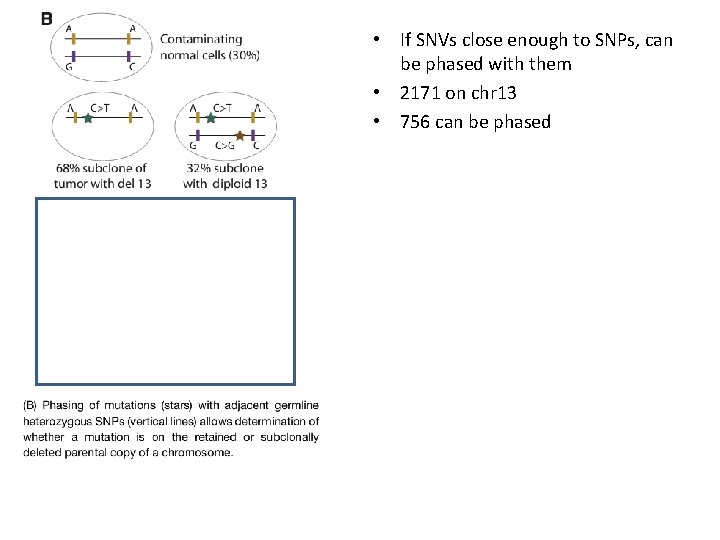
• If SNVs close enough to SNPs, can be phased with them • 2171 on chr 13 • 756 can be phased
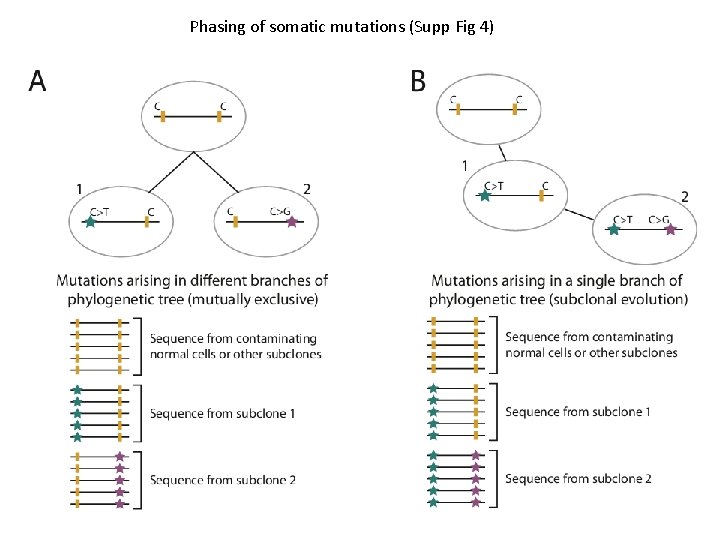
Phasing of somatic mutations (Supp Fig 4)
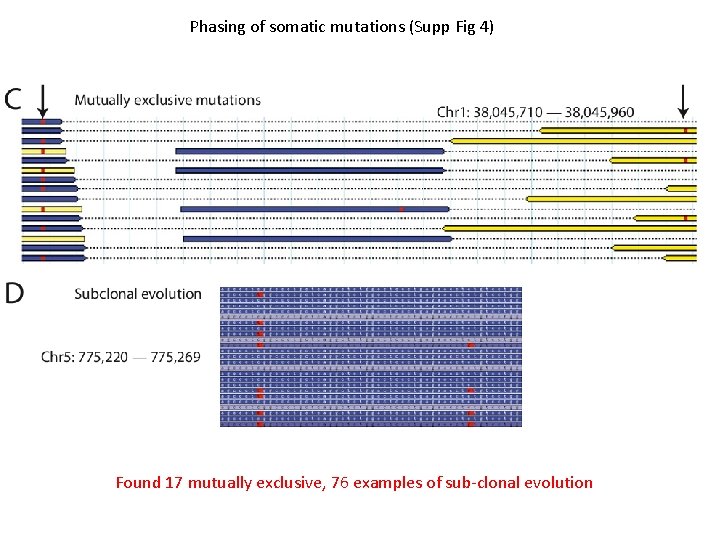
Phasing of somatic mutations (Supp Fig 4) Found 17 mutually exclusive, 76 examples of sub-clonal evolution
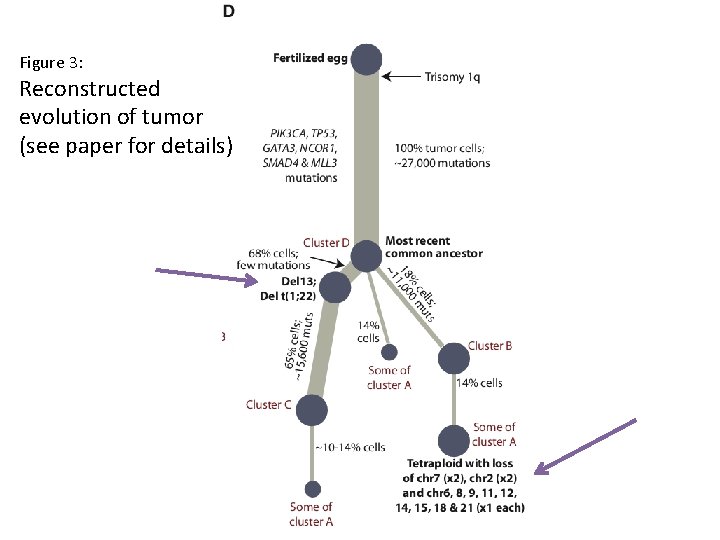
Figure 3: Reconstructed evolution of tumor (see paper for details)
Sci Trans Med 2012
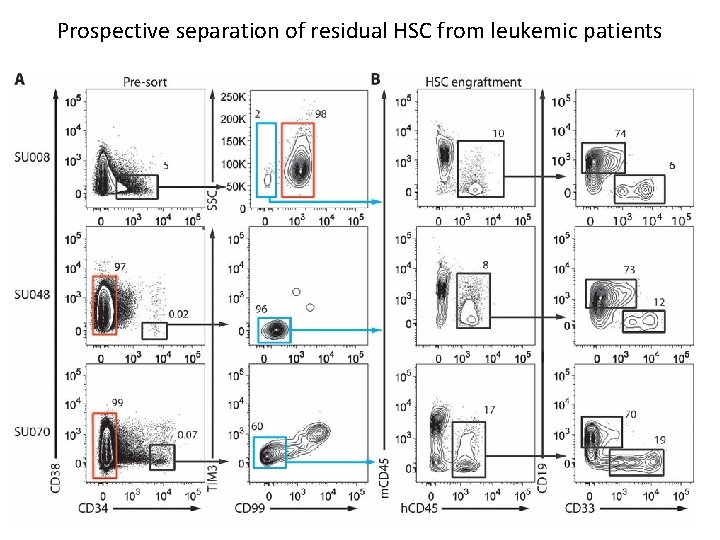
Prospective separation of residual HSC from leukemic patients
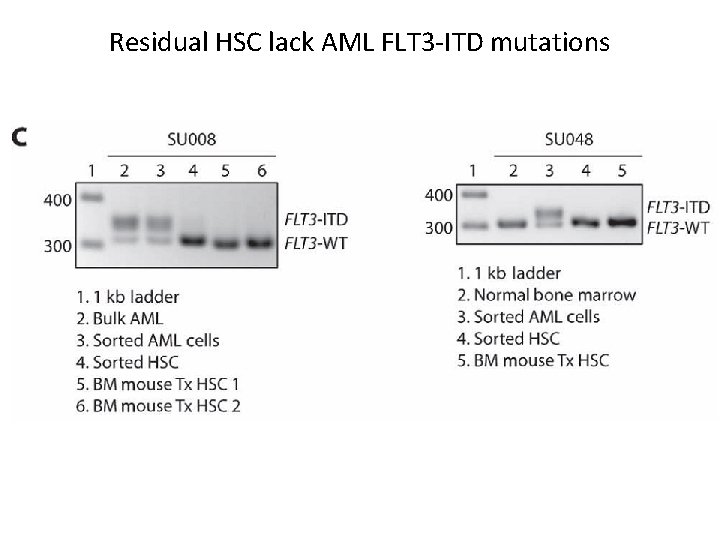
Residual HSC lack AML FLT 3 -ITD mutations
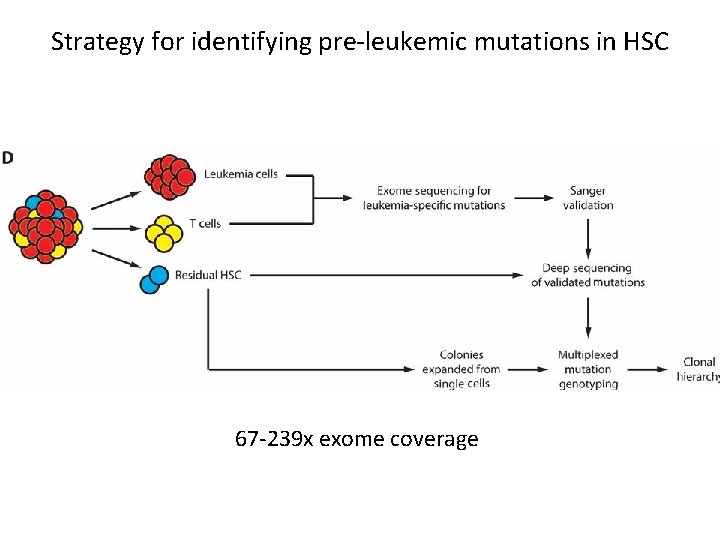
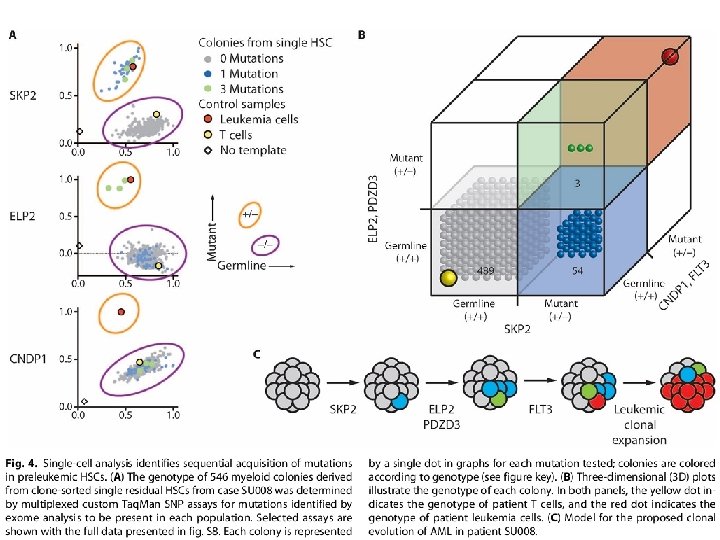
Strategy for identifying pre-leukemic mutations in HSC 67 -239 x exome coverage
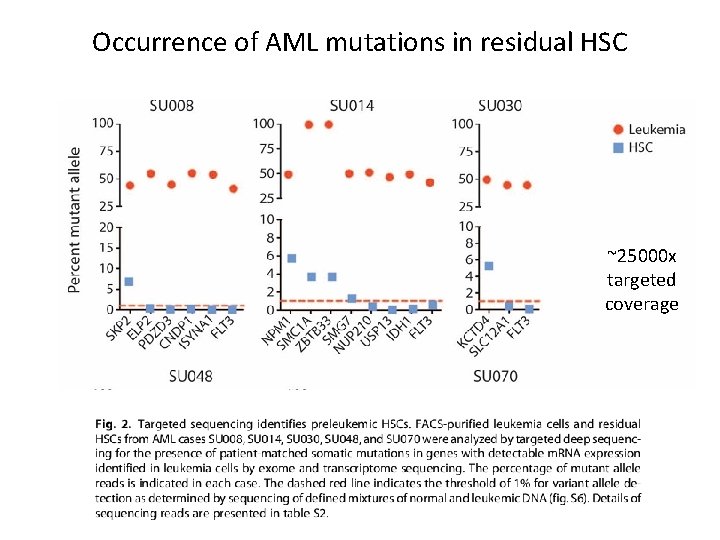
Occurrence of AML mutations in residual HSC ~25000 x targeted coverage
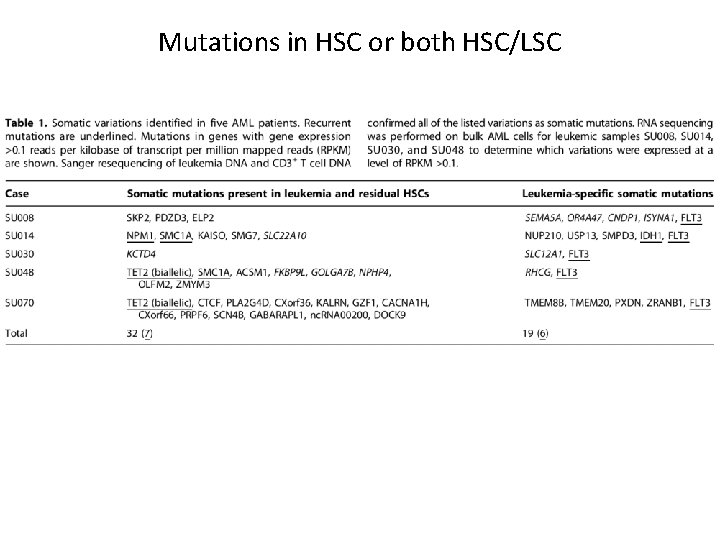
Mutations in HSC or both HSC/LSC
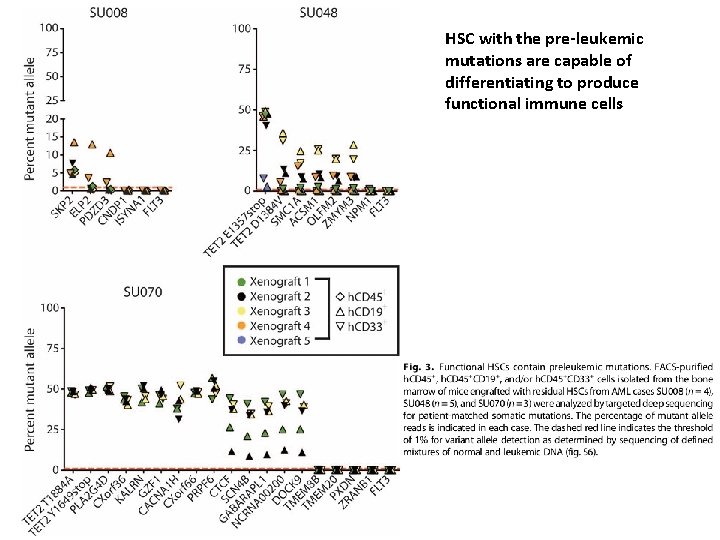
HSC with the pre-leukemic mutations are capable of differentiating to produce functional immune cells
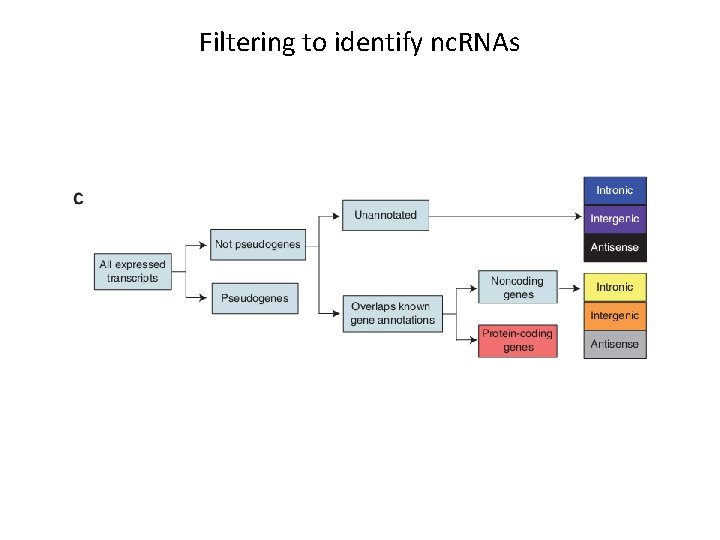
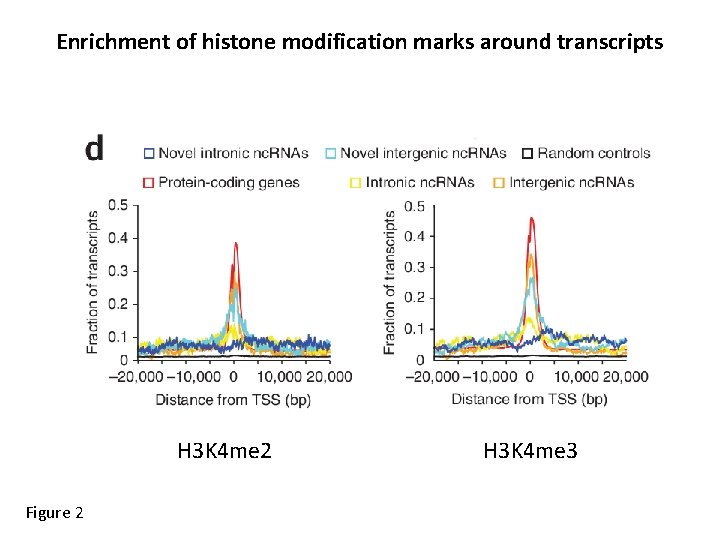
Filtering to identify nc. RNAs
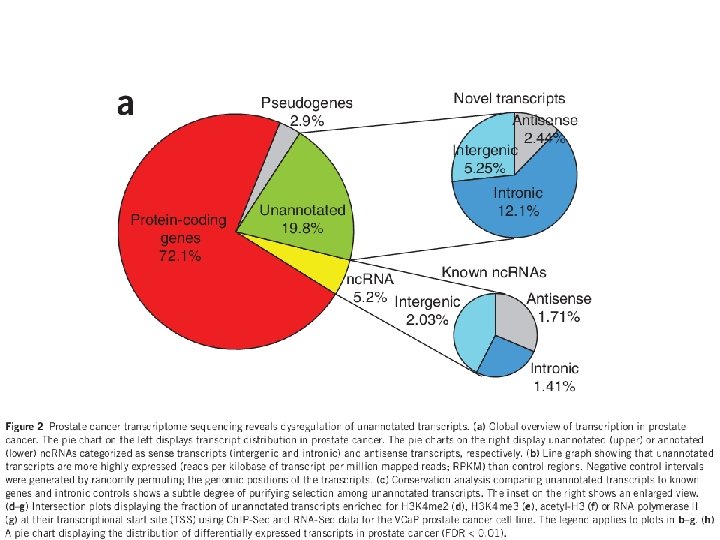
Enrichment of histone modification marks around transcripts H 3 K 4 me 2 Figure 2 H 3 K 4 me 3
Novel transcripts are highly expressed in prostate cancer
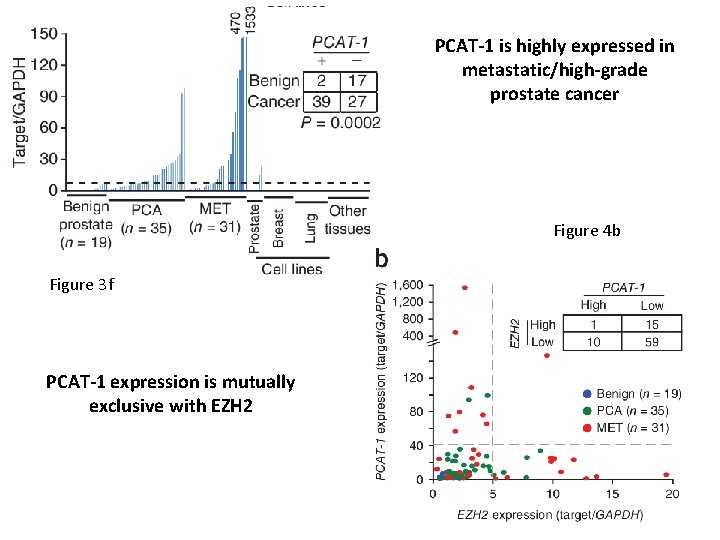
PCAT-1 is highly expressed in metastatic/high-grade prostate cancer Figure 4 b Figure 3 f PCAT-1 expression is mutually exclusive with EZH 2
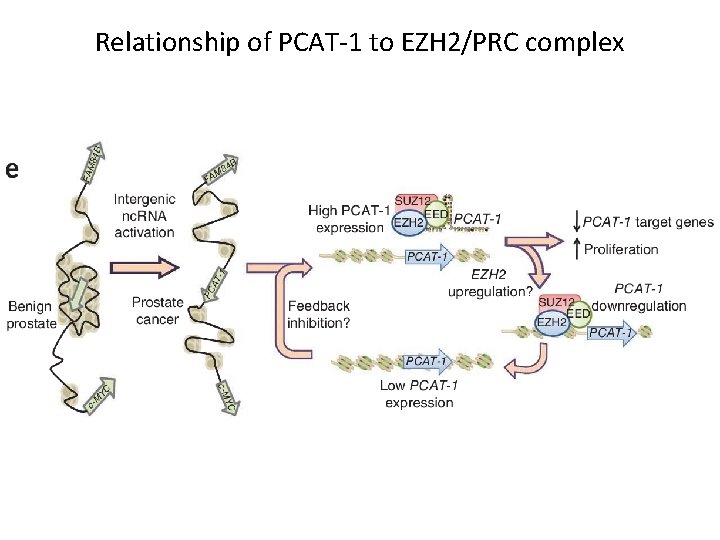
Relationship of PCAT-1 to EZH 2/PRC complex
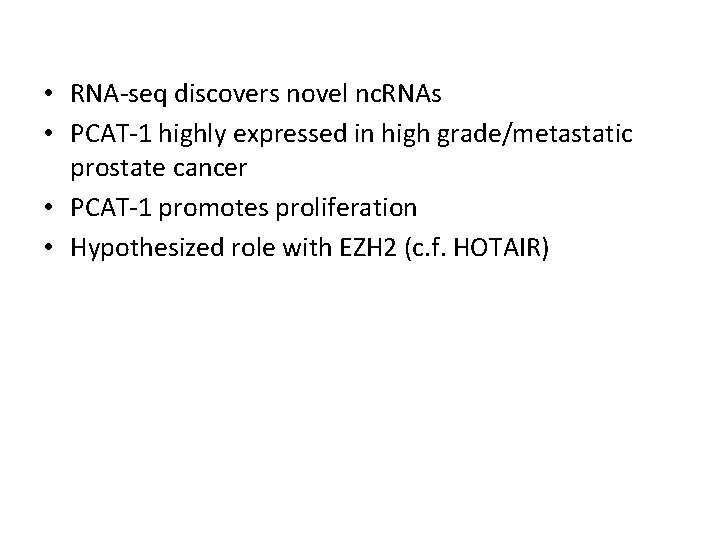
• RNA-seq discovers novel nc. RNAs • PCAT-1 highly expressed in high grade/metastatic prostate cancer • PCAT-1 promotes proliferation • Hypothesized role with EZH 2 (c. f. HOTAIR)
Final items • Please fill out evaluation form! • Slides: – Available soon from http: //ccsb. stanford. edu • Sequence answers forum: – http: //seqanswers. com • Stanford discussion group • https: //mailman. stanford. edu/mailman/listinfo/wgs_clu b_stanford