
Recapitulation I q Methodological Aspects Prediction diagnosis and
- Slides: 20
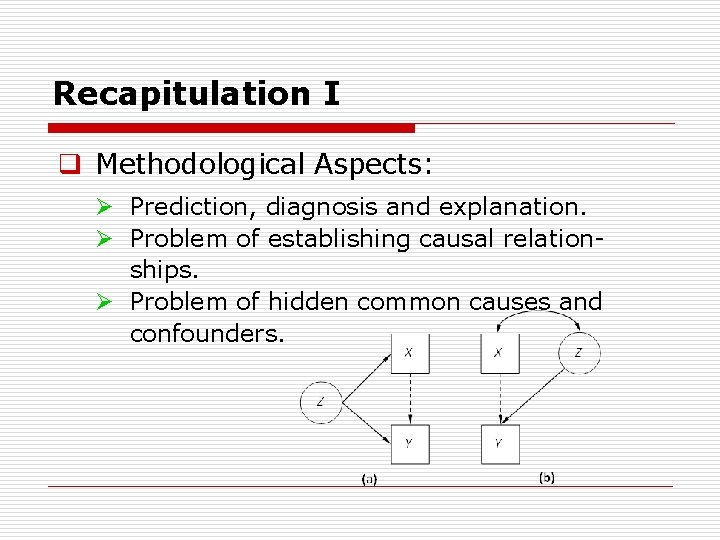
Recapitulation I q Methodological Aspects: Ø Prediction, diagnosis and explanation. Ø Problem of establishing causal relationships. Ø Problem of hidden common causes and confounders.
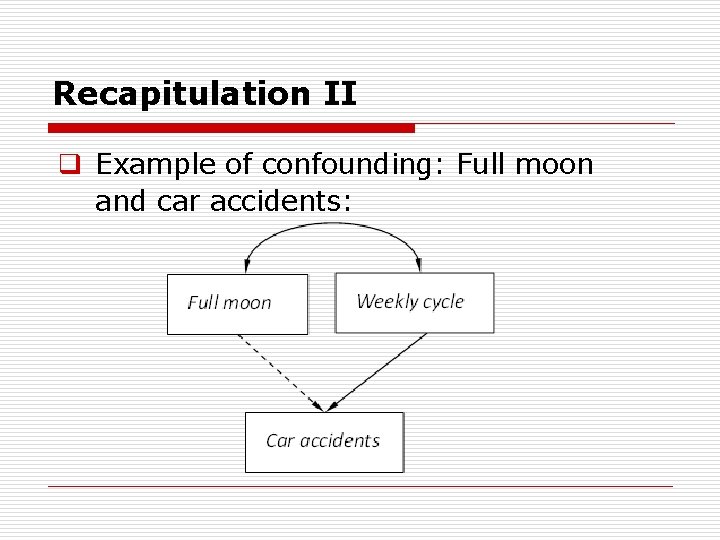
Recapitulation II q Example of confounding: Full moon and car accidents:
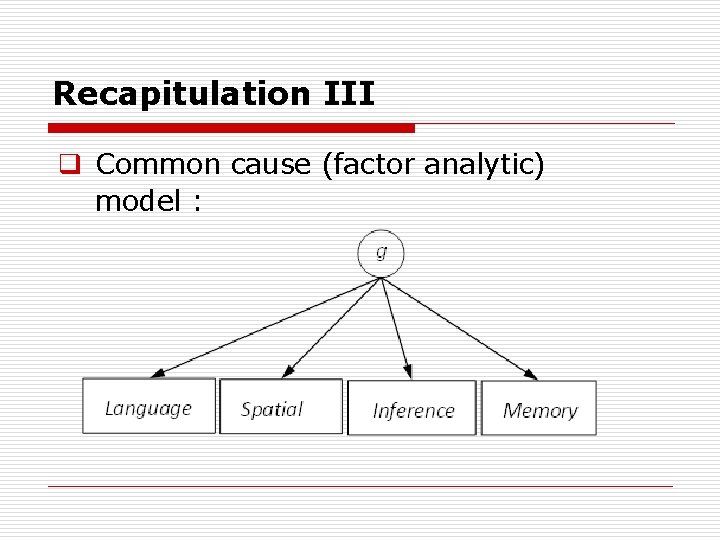
Recapitulation III q Common cause (factor analytic) model :
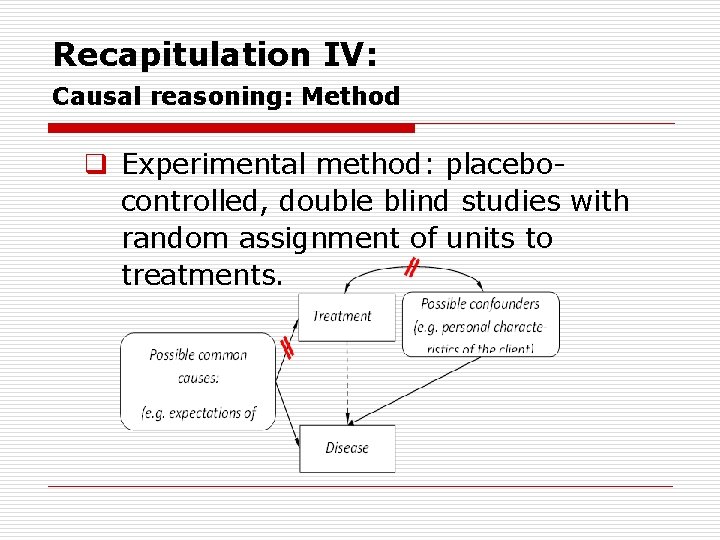
Recapitulation IV: Causal reasoning: Method q Experimental method: placebocontrolled, double blind studies with random assignment of units to treatments.
Recapitulation V: Causal reasoning: Method q Popper’s Approach: Ø Causal theories and assumptions can be tested, since causal models imply specific patterns of associations (correlations). Ø Problem of statistically equivalent causal models
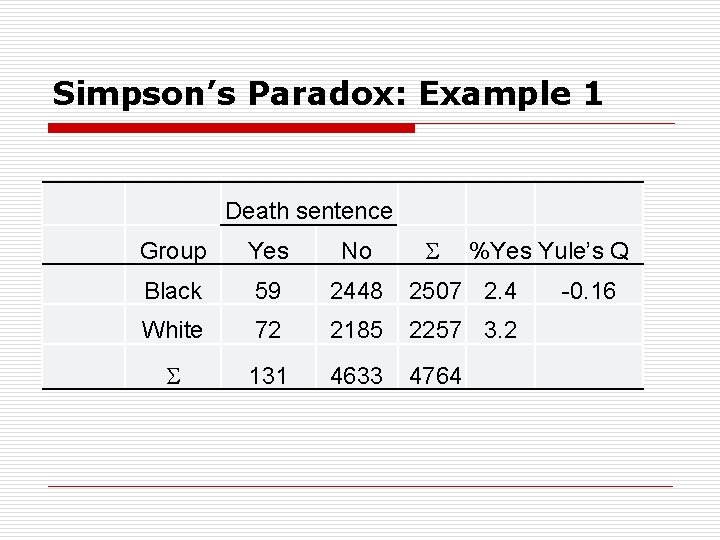
Simpson’s Paradox: Example 1 Death sentence Group Yes No %Yes Yule’s Q Black 59 2448 2507 2. 4 -0. 16 White 72 2185 2257 3. 2 131 4633 4764
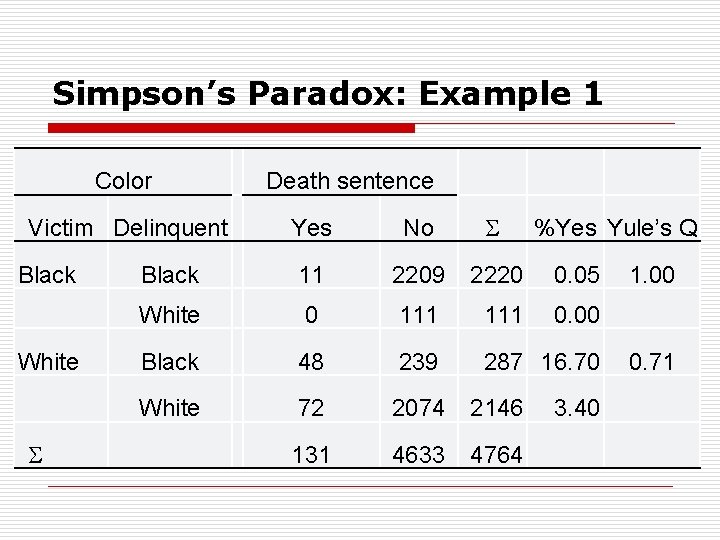
Simpson’s Paradox: Example 1 Color Victim Delinquent Black White Death sentence Yes No 11 2209 2220 0. 05 1. 00 0 111 0. 00 48 239 287 16. 70 72 2074 2146 131 4633 4764 %Yes Yule’s Q 3. 40 0. 71
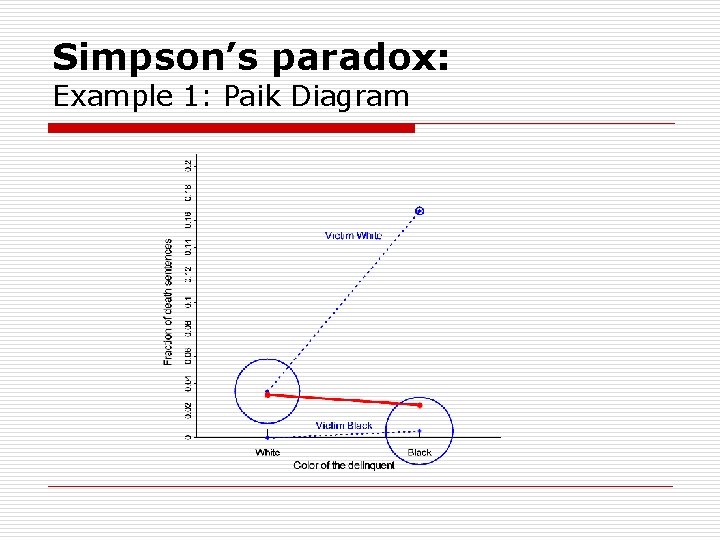
Simpson’s paradox: Example 1: Paik Diagram
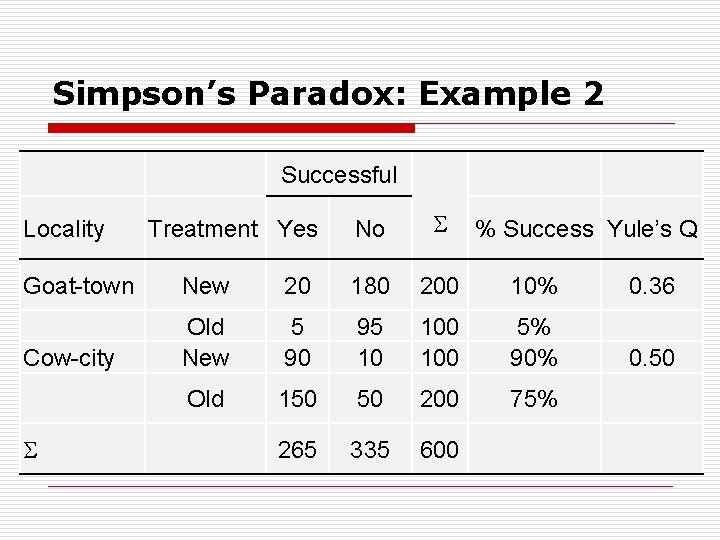
Simpson’s Paradox: Example 2 Successful Locality Treatment Yes No % Success Yule’s Q Goat-town New 20 180 200 10% 0. 36 Cow-city Old New 5 90 95 10 100 5% 90% 0. 50 Old 150 50 200 75% 265 335 600
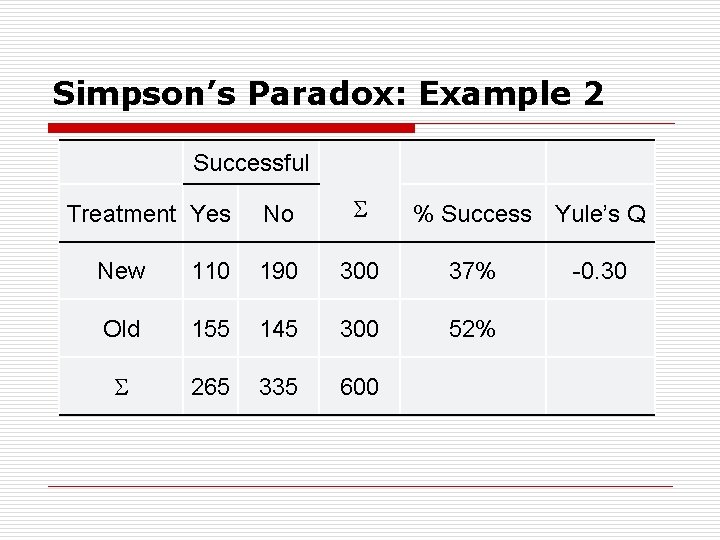
Simpson’s Paradox: Example 2 Successful Treatment Yes No % Success Yule’s Q New 110 190 300 37% -0. 30 Old 155 145 300 52% 265 335 600
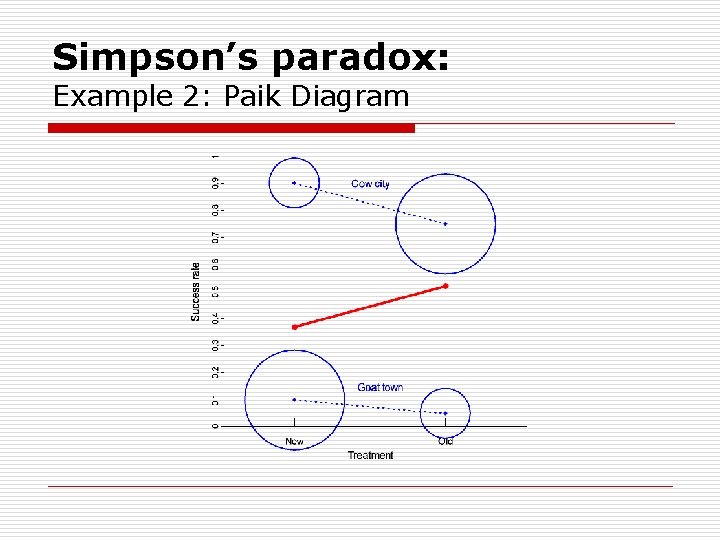
Simpson’s paradox: Example 2: Paik Diagram
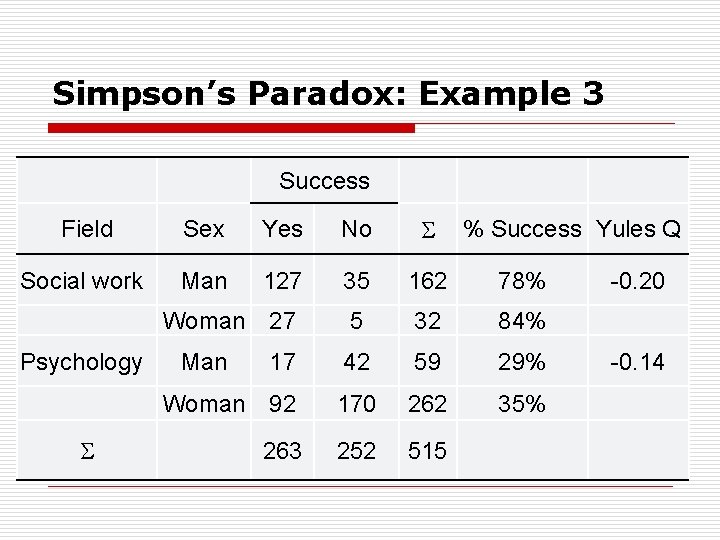
Simpson’s Paradox: Example 3 Success Field Sex Yes No Social work Man 127 35 162 78% -0. 20 Woman 27 5 32 84% 17 42 59 29% -0. 14 Woman 92 170 262 35% 252 515 Psychology Man 263 % Success Yules Q
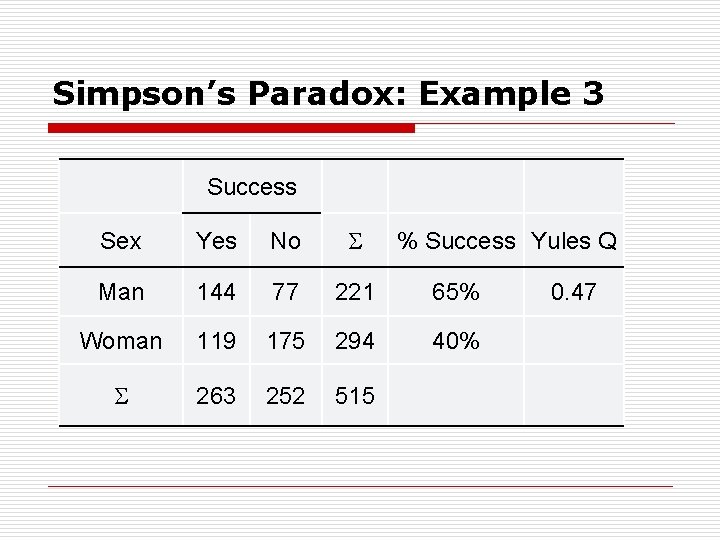
Simpson’s Paradox: Example 3 Success Sex Yes No Man 144 77 221 65% 0. 47 Woman 119 175 294 40% 263 252 515 % Success Yules Q
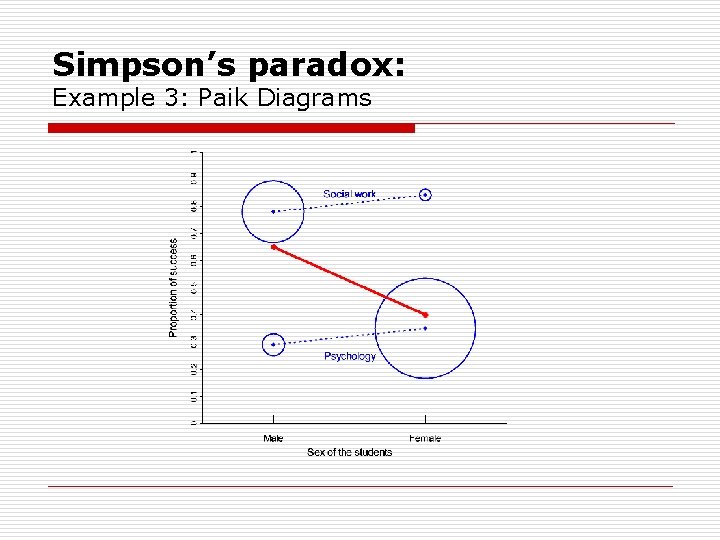
Simpson’s paradox: Example 3: Paik Diagrams
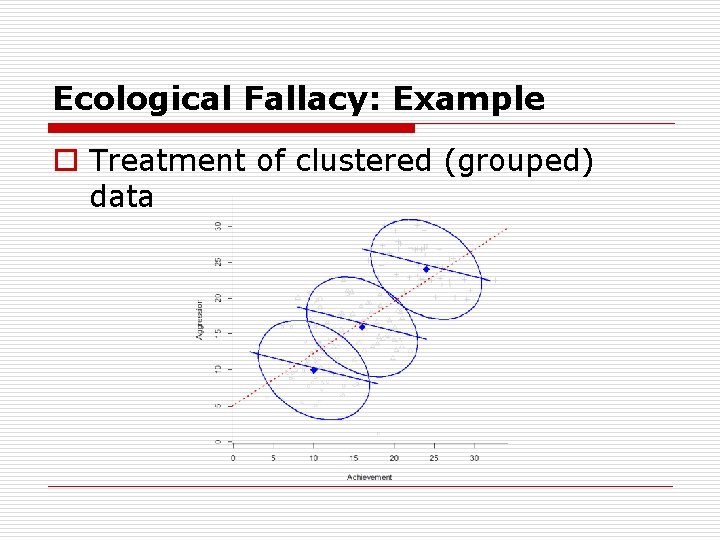
Ecological Fallacy: Example o Treatment of clustered (grouped) data
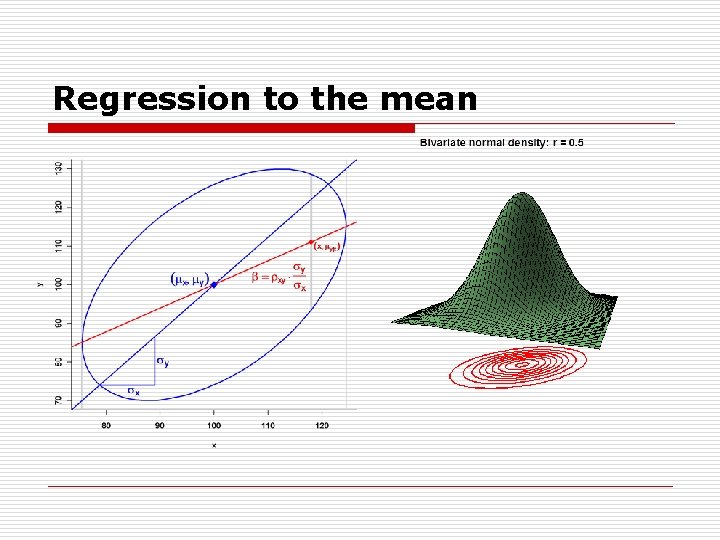
Regression to the mean
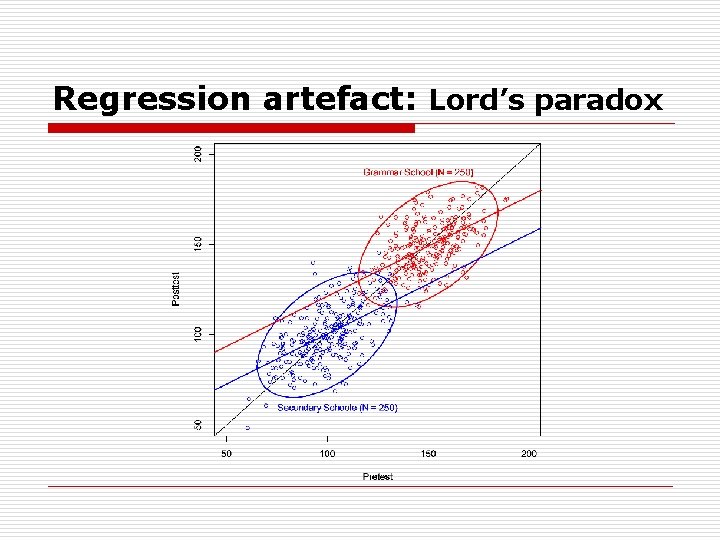
Regression artefact: Lord’s paradox
Memory Judgments Cognitive Mechanism: Encoding, retrieval, and forgetting of memory information q Misleading information (Loftus) q Misinformation: realistic examples Ø Piaget Ø Ingram
Memory Judgments Cognitive Mechanism: Reality monitoring Cognitive Mechanism: Source monitoring
Exercises: o Exercise 2 -2: o Simpson’s Paradox: Ø Exercise 2 -4 Ø Exercise 2 -5