
Recap Random Oracle Model Pros Easier ProofsMore Efficient

- Slides: 85
Recap • Random Oracle Model • Pros (Easier Proofs/More Efficient Protocols/Solid Evidence for Security in Practice) • Cons (Strong Assumption) • • Hashing Applications Block Ciphers, SPNs, Feistel Networks, DES Meet in the Middle, 3 DES Building Stream Ciphers • Linear Feedback Shift Registers (+ Attacks) • RC 4 (+ Attacks) • Trivium 1
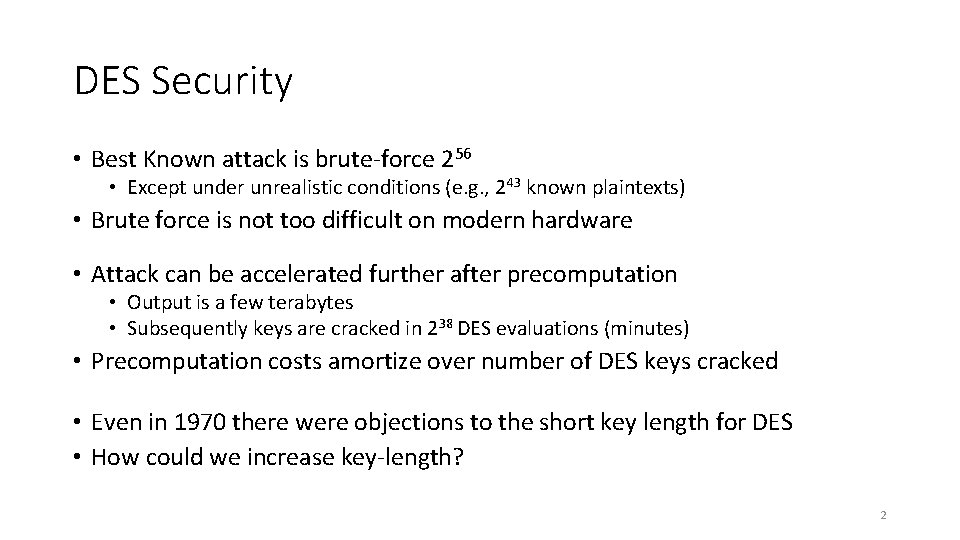
DES Security • Best Known attack is brute-force 256 • Except under unrealistic conditions (e. g. , 243 known plaintexts) • Brute force is not too difficult on modern hardware • Attack can be accelerated further after precomputation • Output is a few terabytes • Subsequently keys are cracked in 238 DES evaluations (minutes) • Precomputation costs amortize over number of DES keys cracked • Even in 1970 there were objections to the short key length for DES • How could we increase key-length? 2
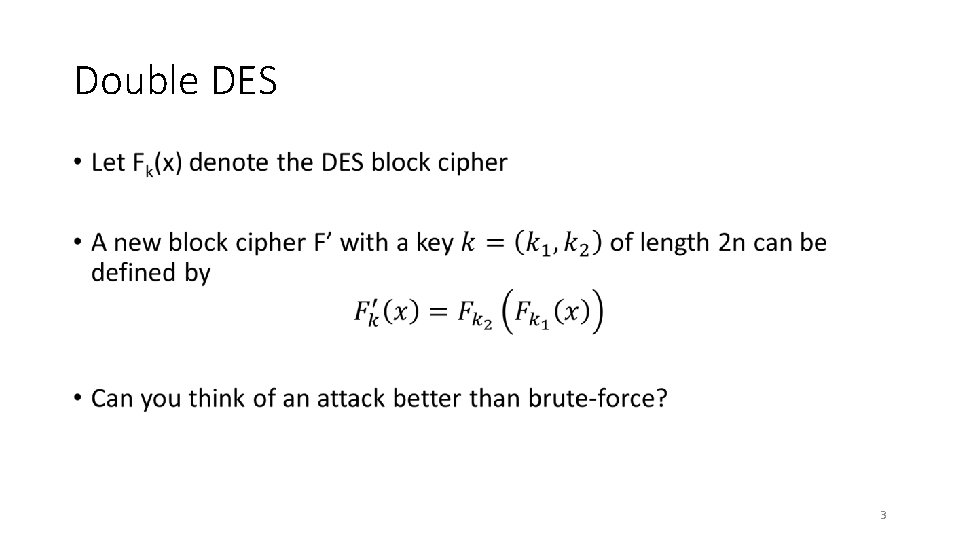
Double DES • 3
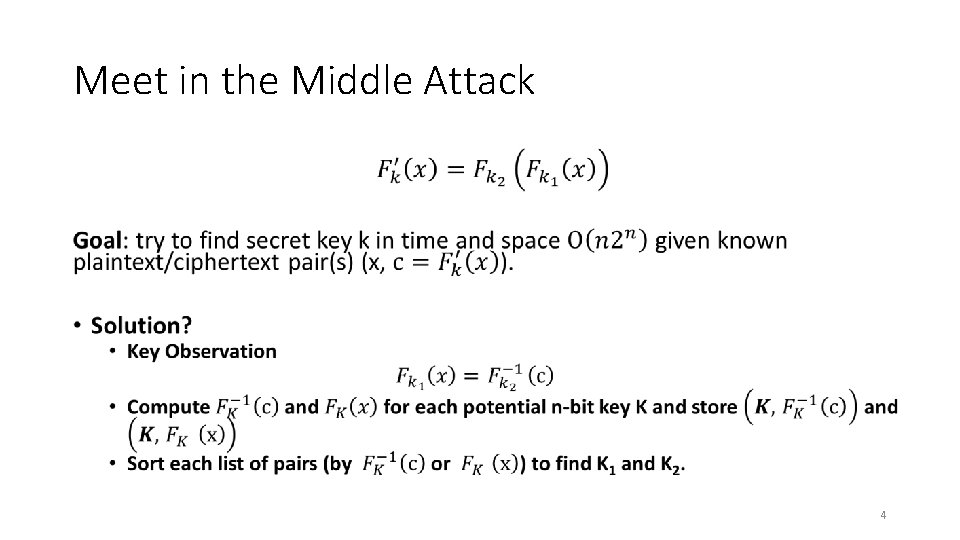
Meet in the Middle Attack • 4
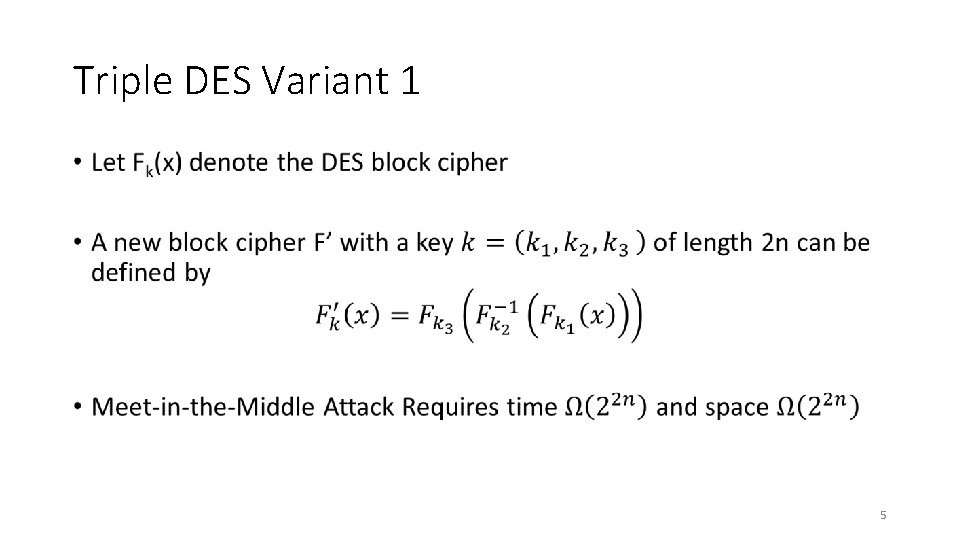
Triple DES Variant 1 • 5
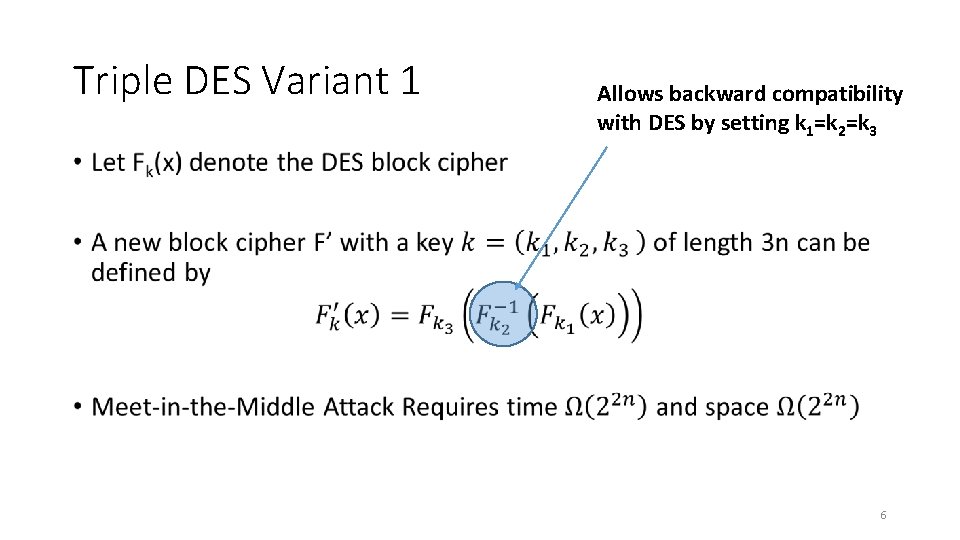
Triple DES Variant 1 Allows backward compatibility with DES by setting k 1=k 2=k 3 • 6
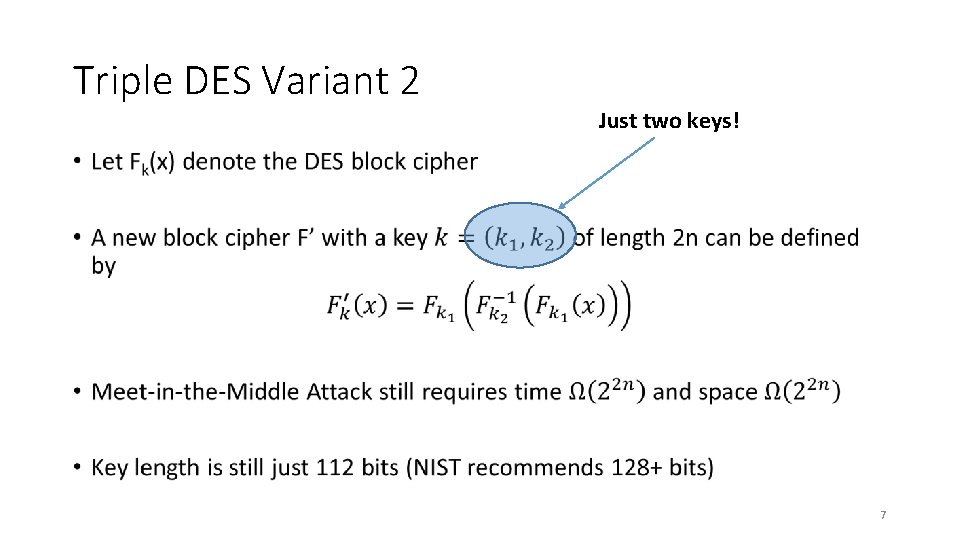
Triple DES Variant 2 Just two keys! • 7
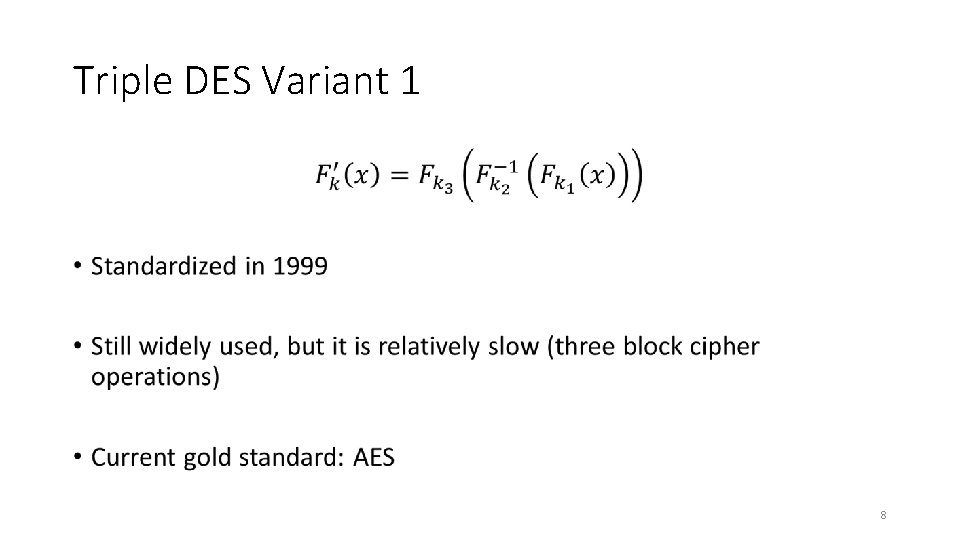
Triple DES Variant 1 • 8
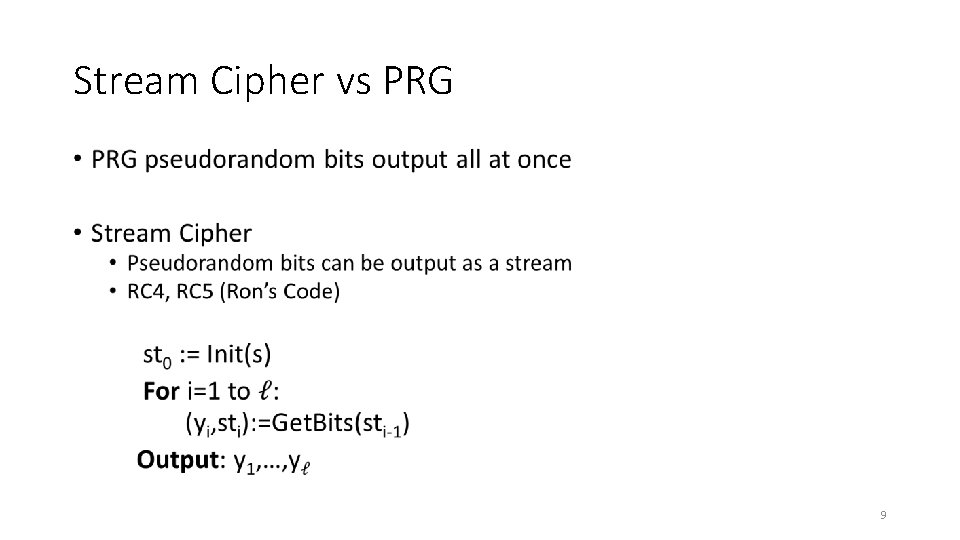
Stream Cipher vs PRG • 9
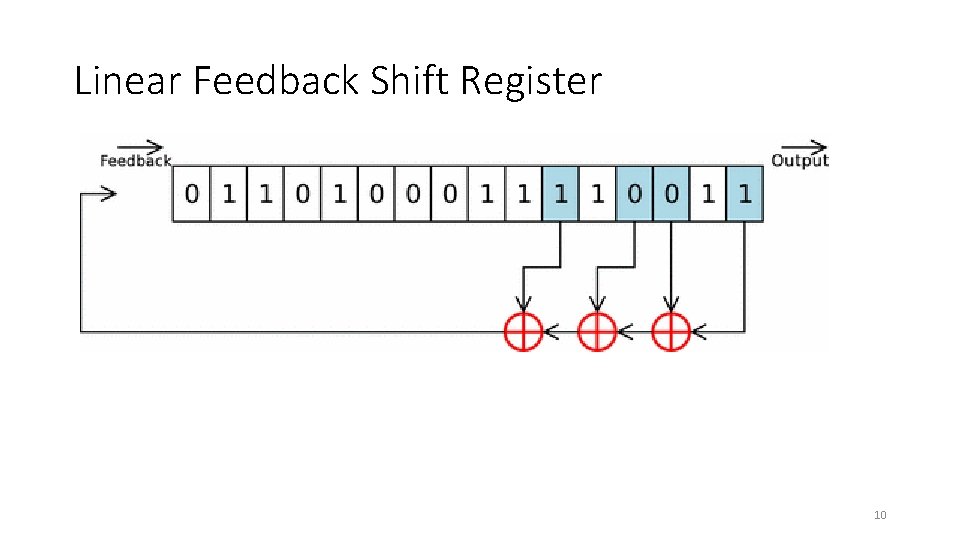
Linear Feedback Shift Register 10
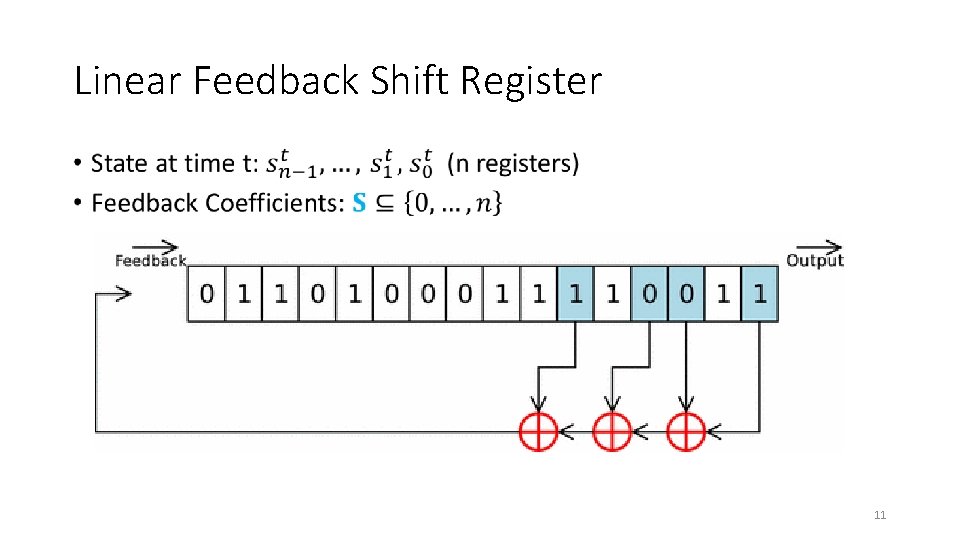
Linear Feedback Shift Register • 11
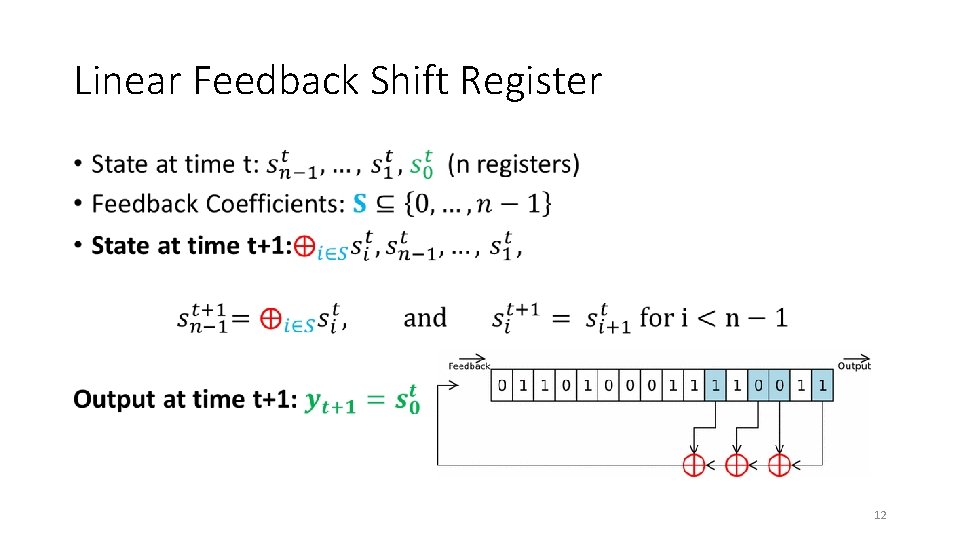
Linear Feedback Shift Register • 12
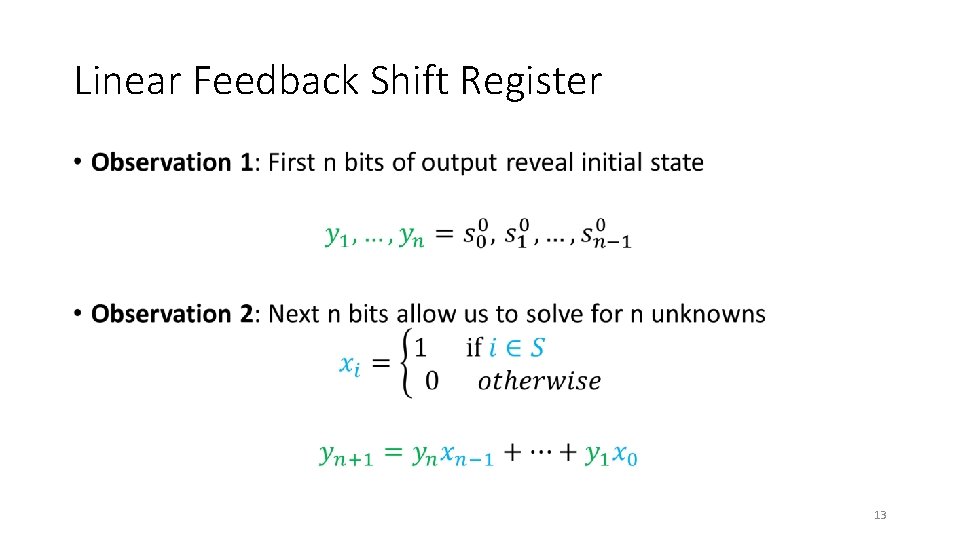
Linear Feedback Shift Register • 13
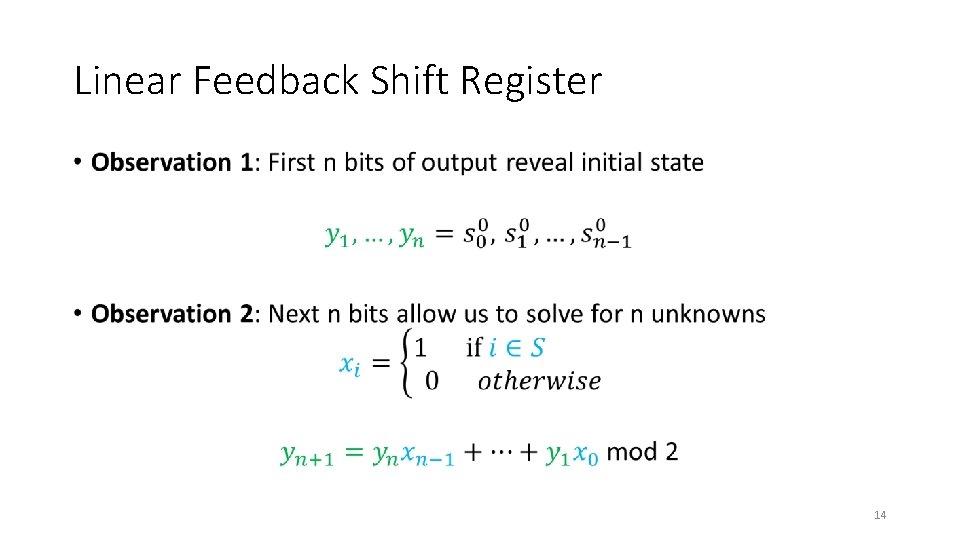
Linear Feedback Shift Register • 14
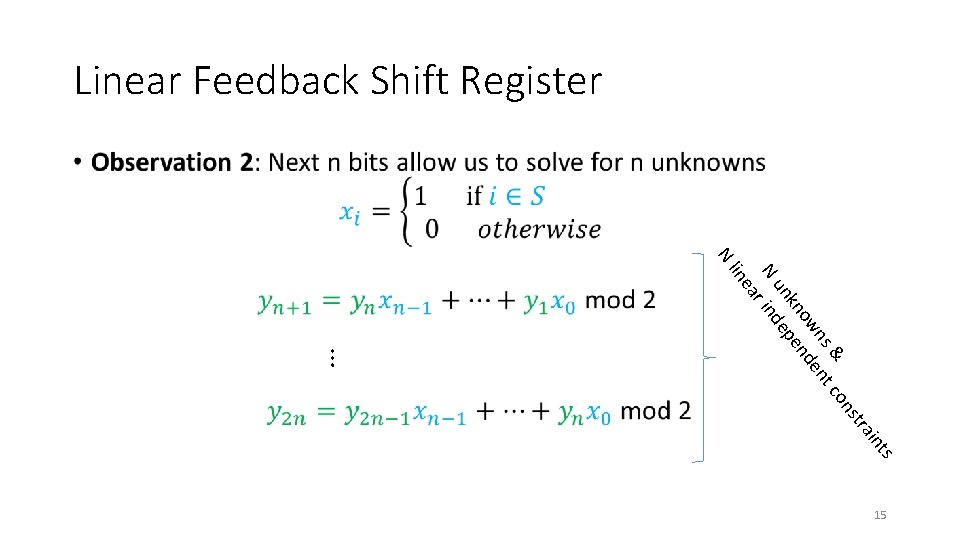
Linear Feedback Shift Register • tra ns & co ns ent ow d kn pen un de N in ar line N … int s 15
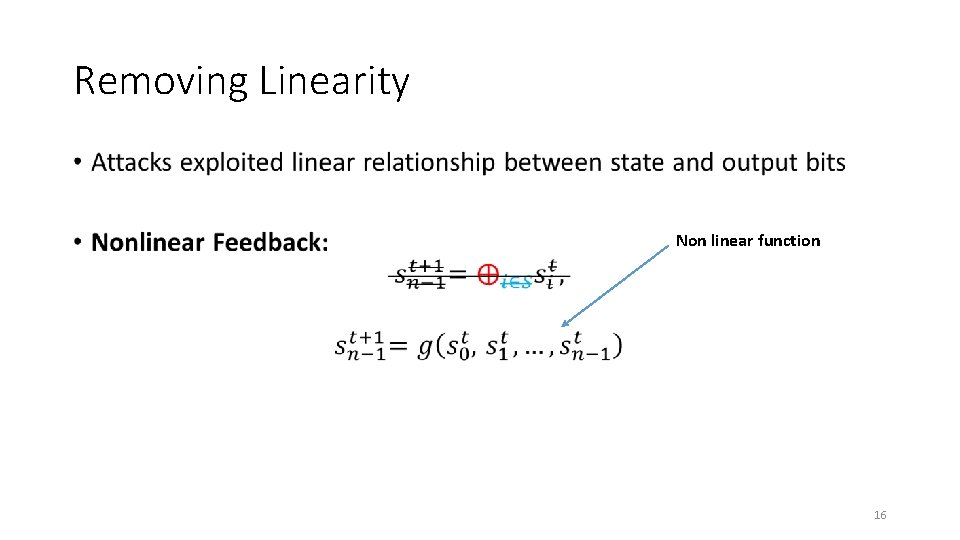
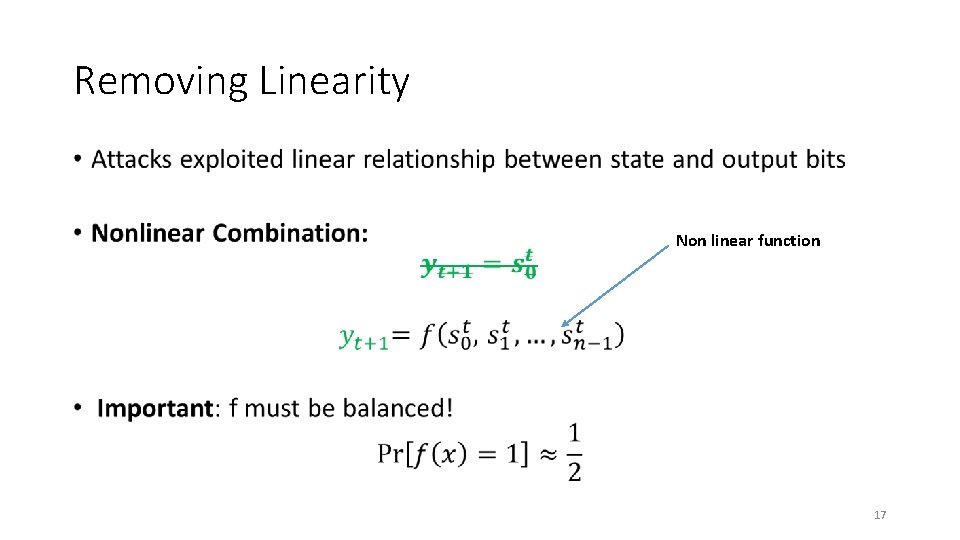
Removing Linearity • Non linear function 16
Removing Linearity • Non linear function 17
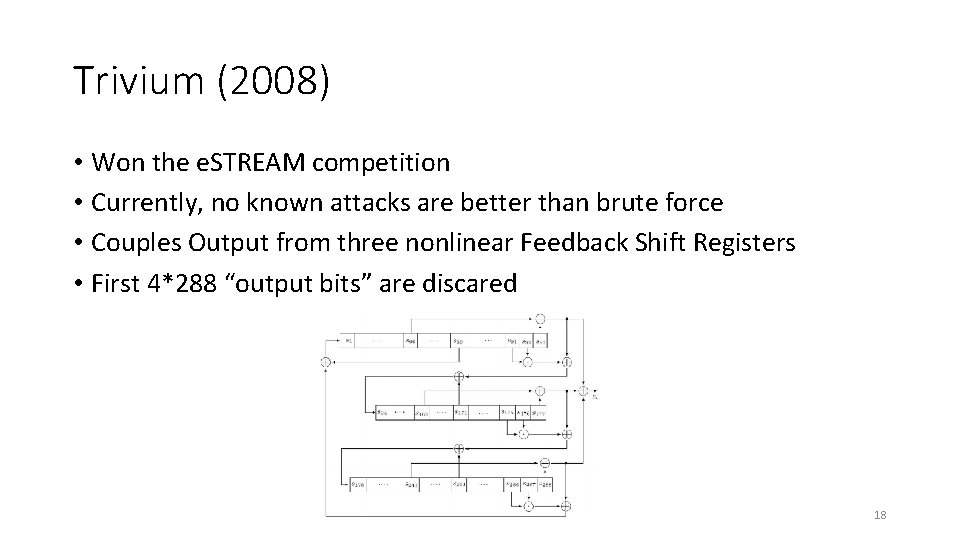
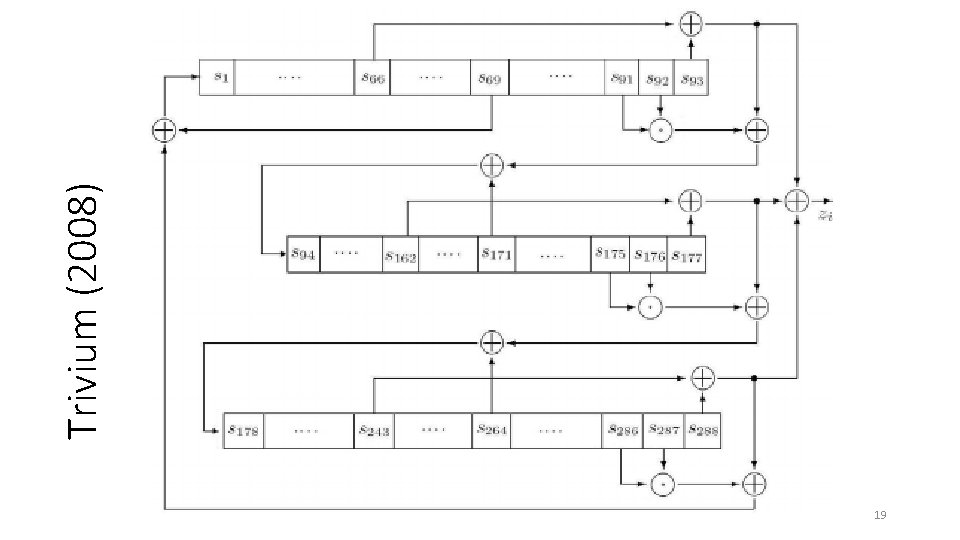
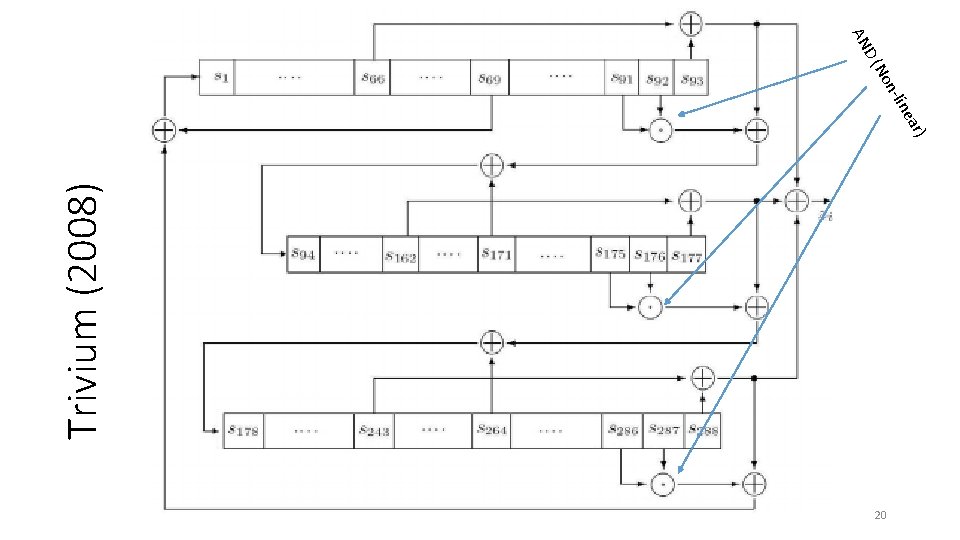
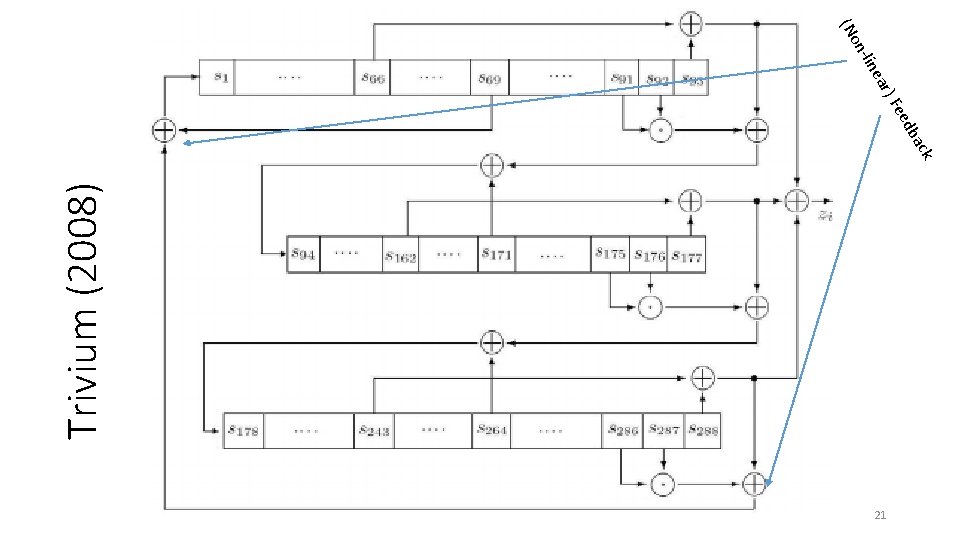
Trivium (2008) • Won the e. STREAM competition • Currently, no known attacks are better than brute force • Couples Output from three nonlinear Feedback Shift Registers • First 4*288 “output bits” are discared 18
19 Trivium (2008)
Trivium (2008) ar) ine n-l No D ( AN 20
Trivium (2008) ack db ee r) F ea -lin on (N 21
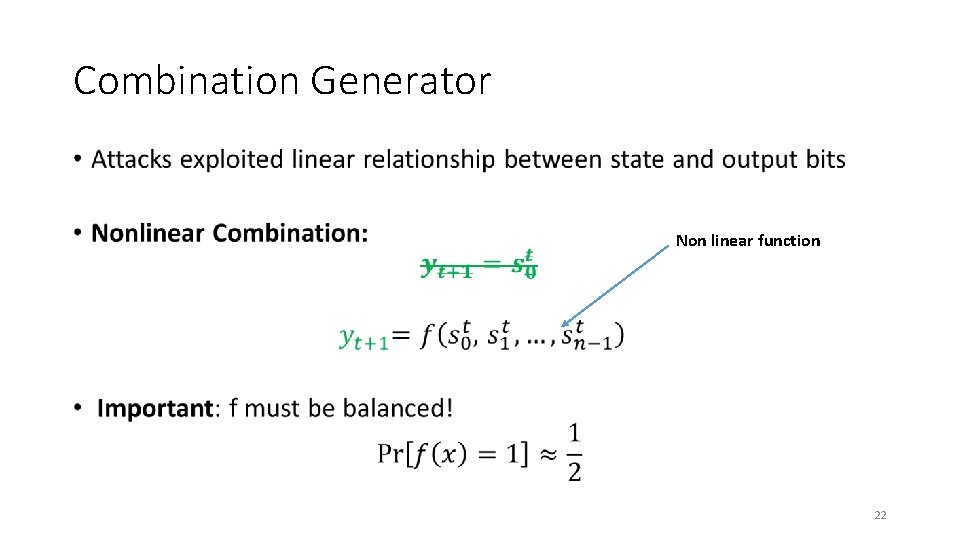
Combination Generator • Non linear function 22
Feedback Shift Registers • Good performance in hardware • Performance is less ideal for software 23
Cryptography CS 555 Week 7: • Hash Functions from Block Ciphers • Block Ciphers, AES • Stream Ciphers • One Way Functions • Readings: Katz and Lindell Chapter 6. 2. 5, 6. 3, 7. 1 -7. 4 Fall 2018 24
CS 555: Week 7: Topic 1 Block Ciphers (Continued) 25
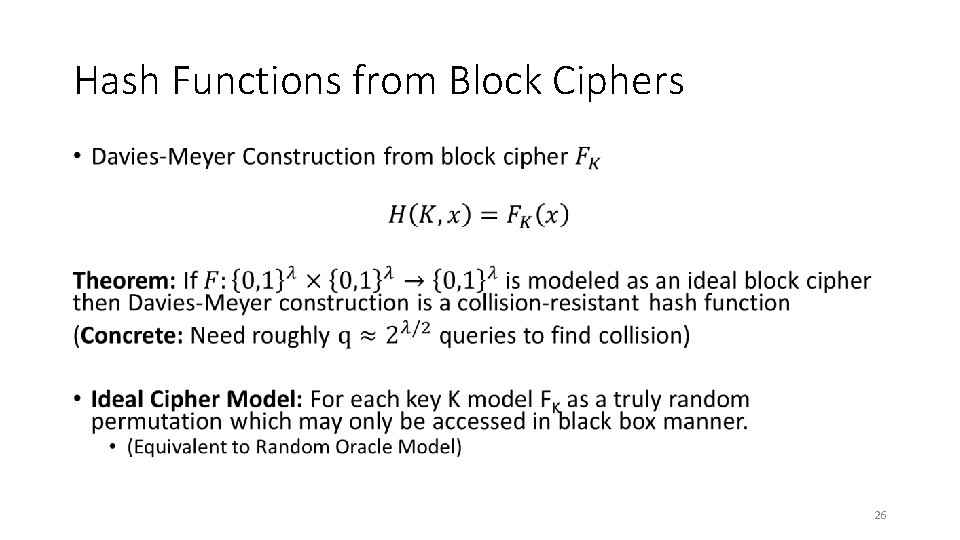
Hash Functions from Block Ciphers • 26
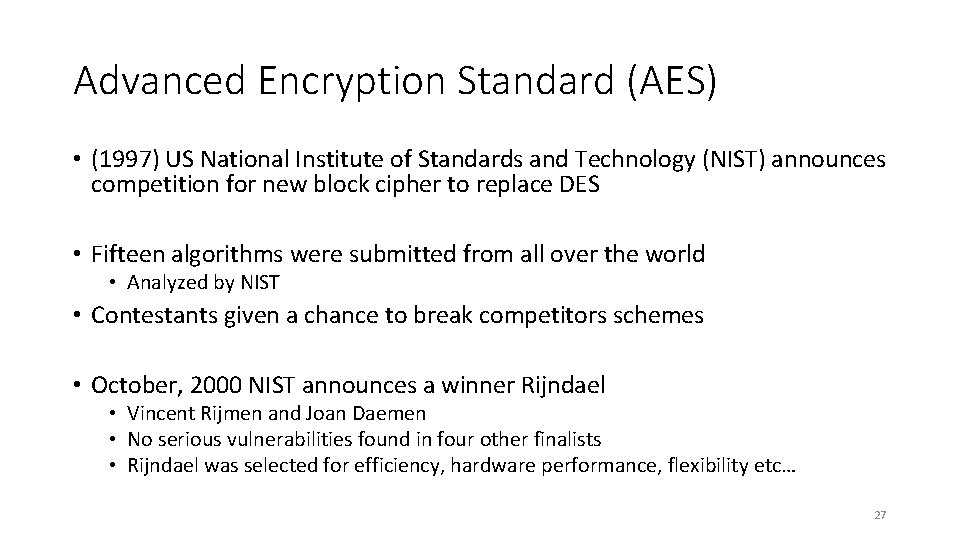
Advanced Encryption Standard (AES) • (1997) US National Institute of Standards and Technology (NIST) announces competition for new block cipher to replace DES • Fifteen algorithms were submitted from all over the world • Analyzed by NIST • Contestants given a chance to break competitors schemes • October, 2000 NIST announces a winner Rijndael • Vincent Rijmen and Joan Daemen • No serious vulnerabilities found in four other finalists • Rijndael was selected for efficiency, hardware performance, flexibility etc… 27
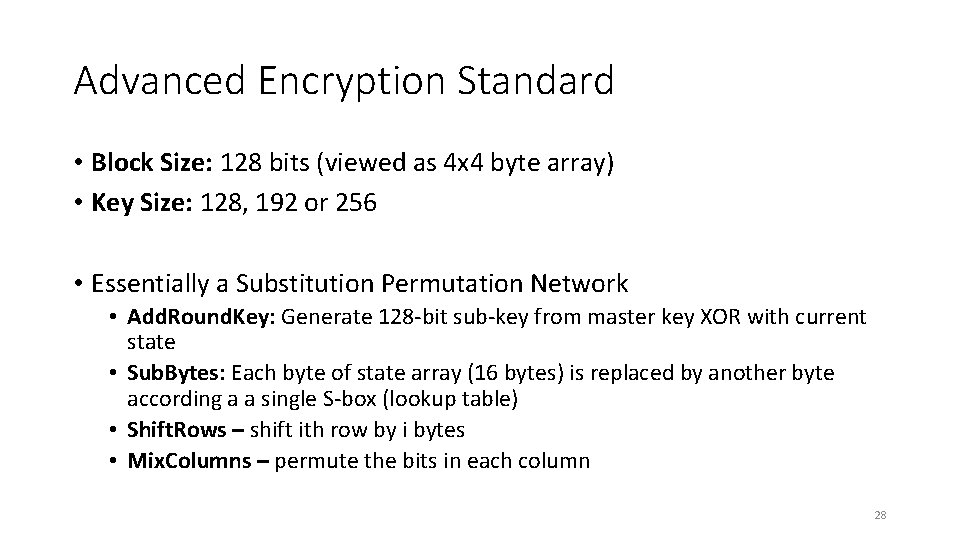
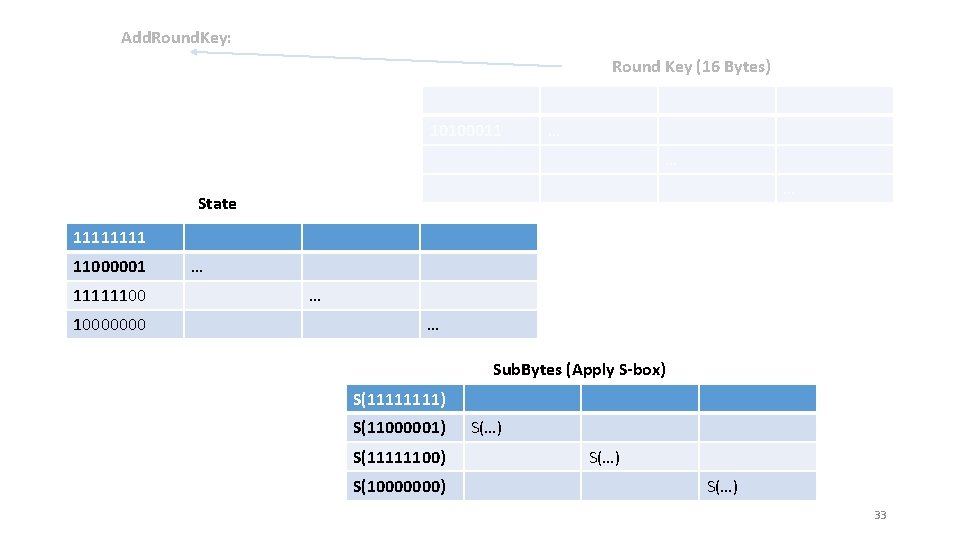
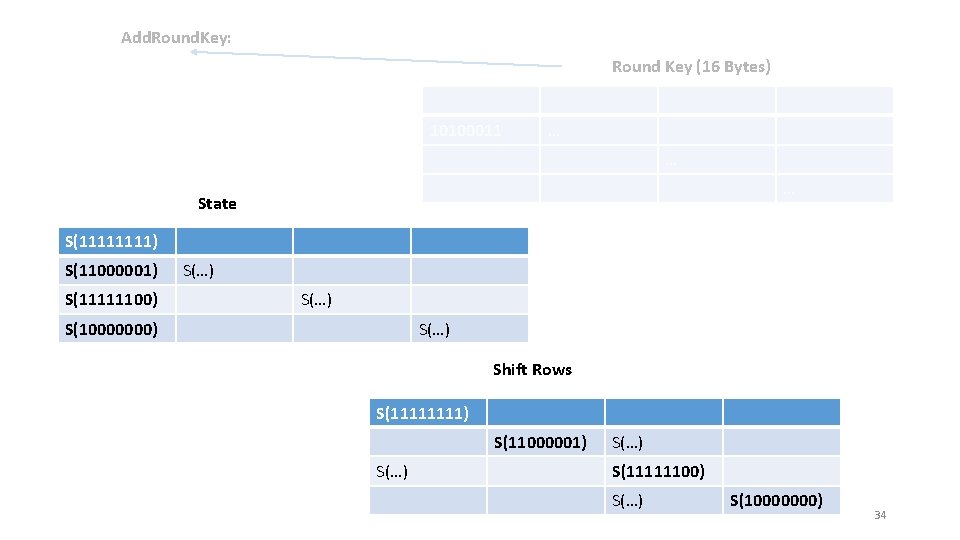
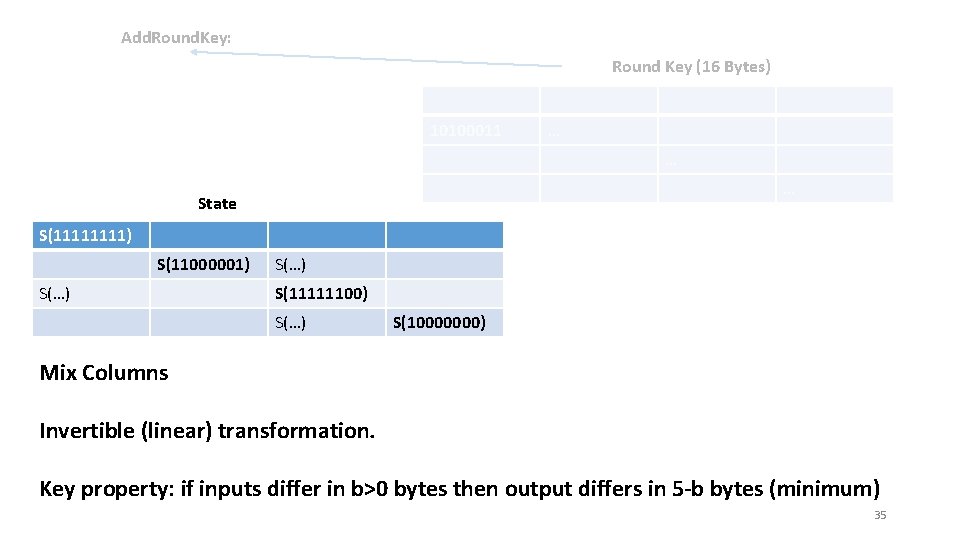
Advanced Encryption Standard • Block Size: 128 bits (viewed as 4 x 4 byte array) • Key Size: 128, 192 or 256 • Essentially a Substitution Permutation Network • Add. Round. Key: Generate 128 -bit sub-key from master key XOR with current state • Sub. Bytes: Each byte of state array (16 bytes) is replaced by another byte according a a single S-box (lookup table) • Shift. Rows – shift ith row by i bytes • Mix. Columns – permute the bits in each column 28
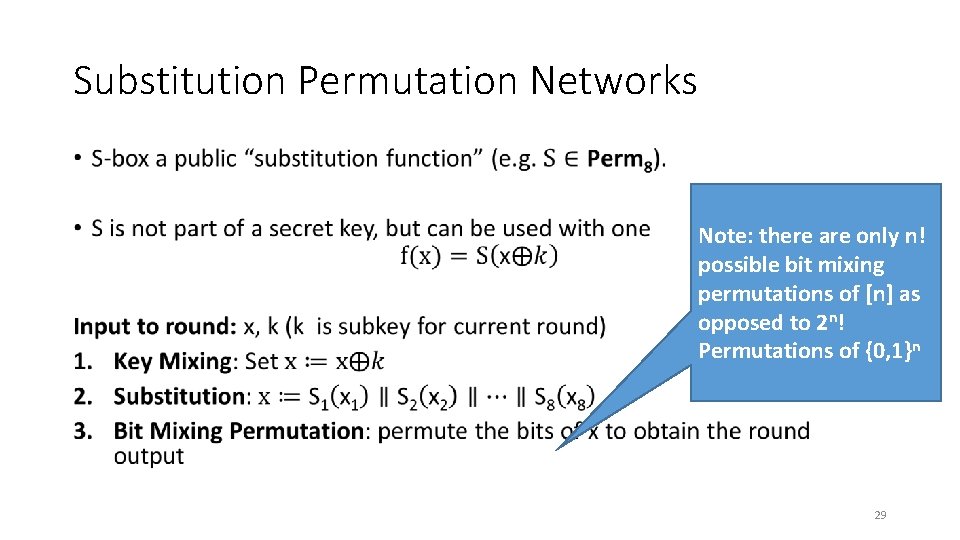
Substitution Permutation Networks • Note: there are only n! possible bit mixing permutations of [n] as opposed to 2 n! Permutations of {0, 1}n 29
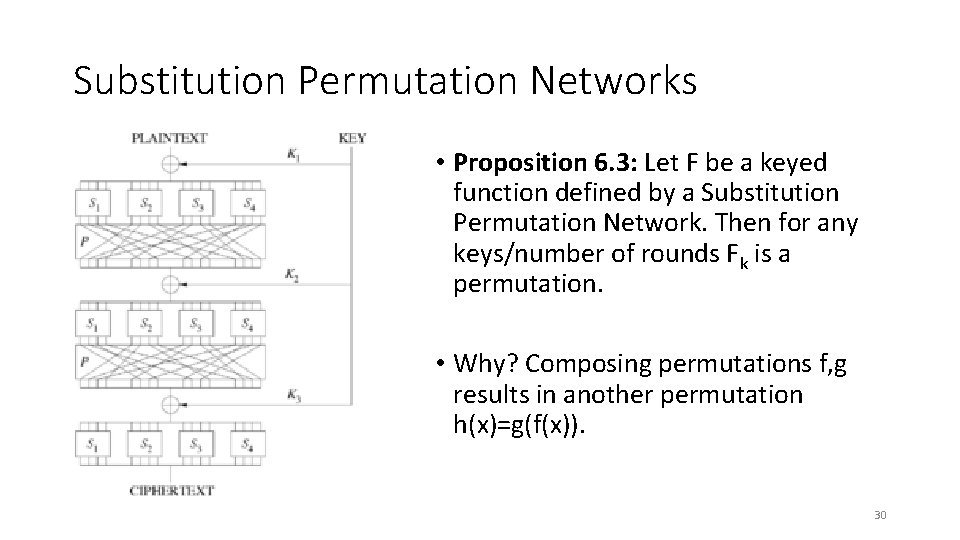
Substitution Permutation Networks • Proposition 6. 3: Let F be a keyed function defined by a Substitution Permutation Network. Then for any keys/number of rounds Fk is a permutation. • Why? Composing permutations f, g results in another permutation h(x)=g(f(x)). 30
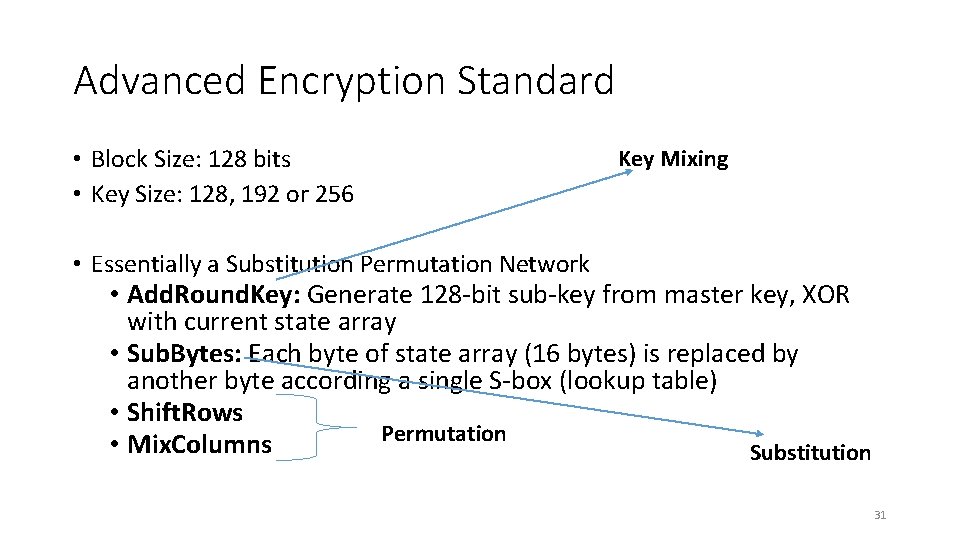
Advanced Encryption Standard • Block Size: 128 bits • Key Size: 128, 192 or 256 Key Mixing • Essentially a Substitution Permutation Network • Add. Round. Key: Generate 128 -bit sub-key from master key, XOR with current state array • Sub. Bytes: Each byte of state array (16 bytes) is replaced by another byte according a single S-box (lookup table) • Shift. Rows Permutation • Mix. Columns Substitution 31
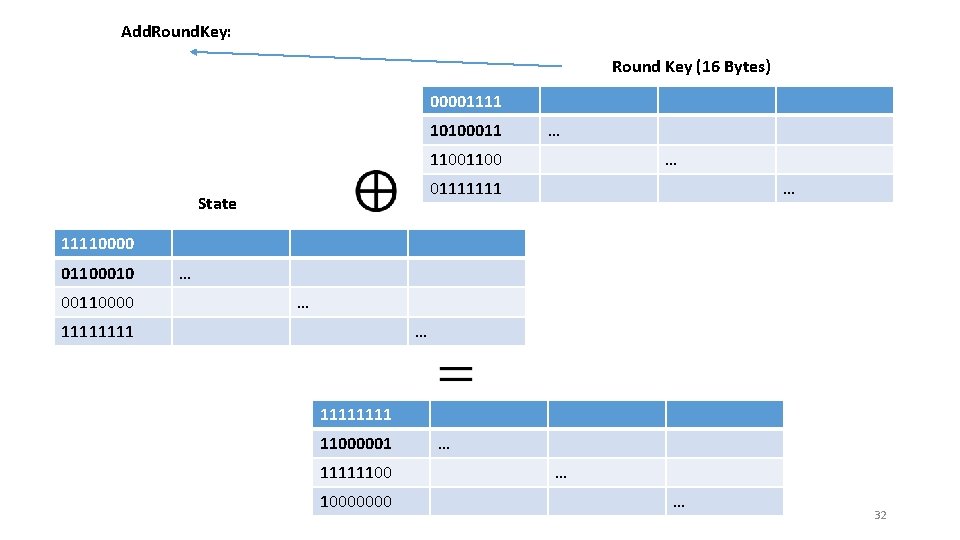
Add. Round. Key: Round Key (16 Bytes) 00001111 10100011 … 1100 … 01111111 State … 11110000 01100010 00110000 … … 11111111 11000001 11111100 10000000 … … … 32
Add. Round. Key: Round Key (16 Bytes) 10100011 … … … State 1111 11000001 11111100 10000000 … … … Sub. Bytes (Apply S-box) S(1111) S(11000001) S(11111100) S(10000000) S(…) 33
Add. Round. Key: Round Key (16 Bytes) 10100011 … … … State S(1111) S(11000001) S(11111100) S(…) S(10000000) S(…) Shift Rows S(1111) S(11000001) S(…) S(11111100) S(…) S(10000000) 34
Add. Round. Key: Round Key (16 Bytes) 10100011 … … … State S(1111) S(11000001) S(…) S(11111100) S(…) S(10000000) Mix Columns Invertible (linear) transformation. Key property: if inputs differ in b>0 bytes then output differs in 5 -b bytes (minimum) 35
AES • We just described one round of the SPN • AES uses • 10 rounds (with 128 bit key) • 12 rounds (with 192 bit key) • 14 rounds (with 256 bit key) 36
Announcements • Homework 2 Solutions Posted (See Piazza). • Please read through carefully and make sure you understand the solutions to each problem. • Grading in progress • No Class on Tuesday (October Break) • Look for Practice Midterm Next Week 37
Recap • 2 DES, Meet in the Middle Attack • 3 DES • Stream Ciphers • Breaking Linear Feedback Shift Registers • Trivium • AES 38
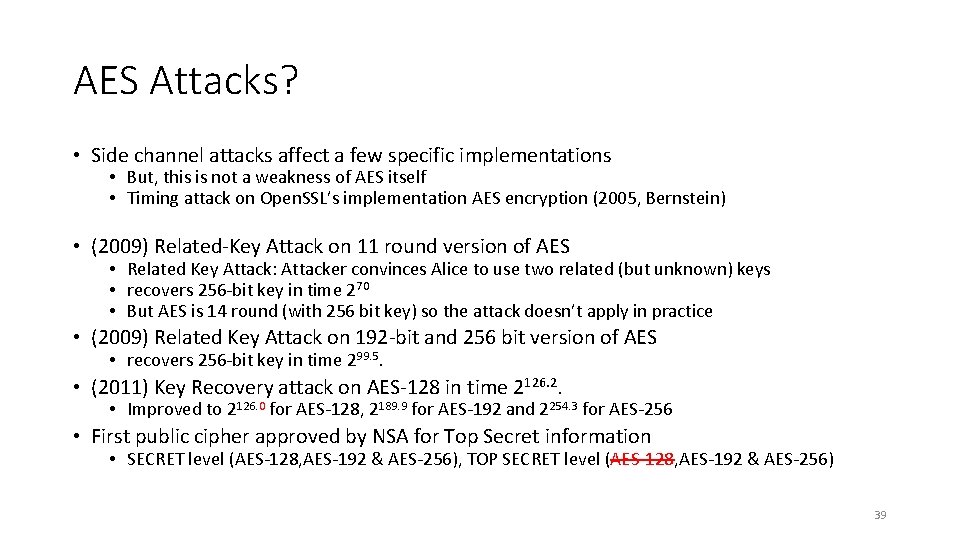
AES Attacks? • Side channel attacks affect a few specific implementations • But, this is not a weakness of AES itself • Timing attack on Open. SSL’s implementation AES encryption (2005, Bernstein) • (2009) Related-Key Attack on 11 round version of AES • Related Key Attack: Attacker convinces Alice to use two related (but unknown) keys • recovers 256 -bit key in time 270 • But AES is 14 round (with 256 bit key) so the attack doesn’t apply in practice • (2009) Related Key Attack on 192 -bit and 256 bit version of AES • recovers 256 -bit key in time 299. 5. • (2011) Key Recovery attack on AES-128 in time 2126. 2. • Improved to 2126. 0 for AES-128, 2189. 9 for AES-192 and 2254. 3 for AES-256 • First public cipher approved by NSA for Top Secret information • SECRET level (AES-128, AES-192 & AES-256), TOP SECRET level (AES-128, AES-192 & AES-256) 39
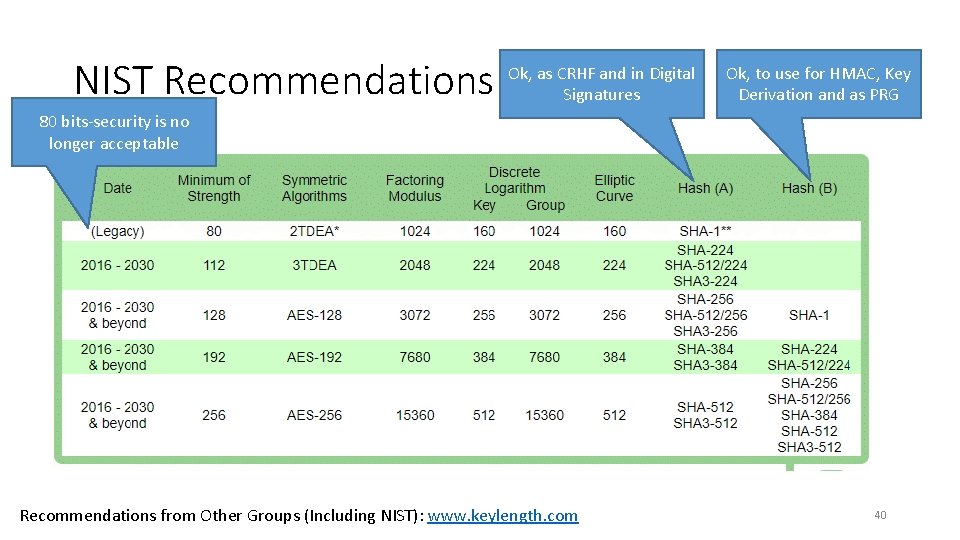
NIST Recommendations Ok, as CRHF and in Digital Signatures Ok, to use for HMAC, Key Derivation and as PRG 80 bits-security is no longer acceptable Recommendations from Other Groups (Including NIST): www. keylength. com 40
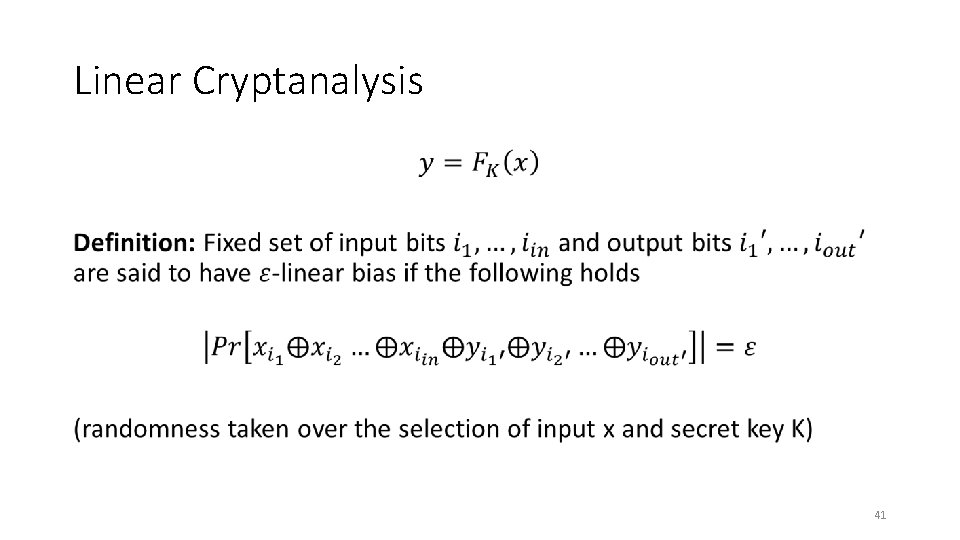
Linear Cryptanalysis • 41
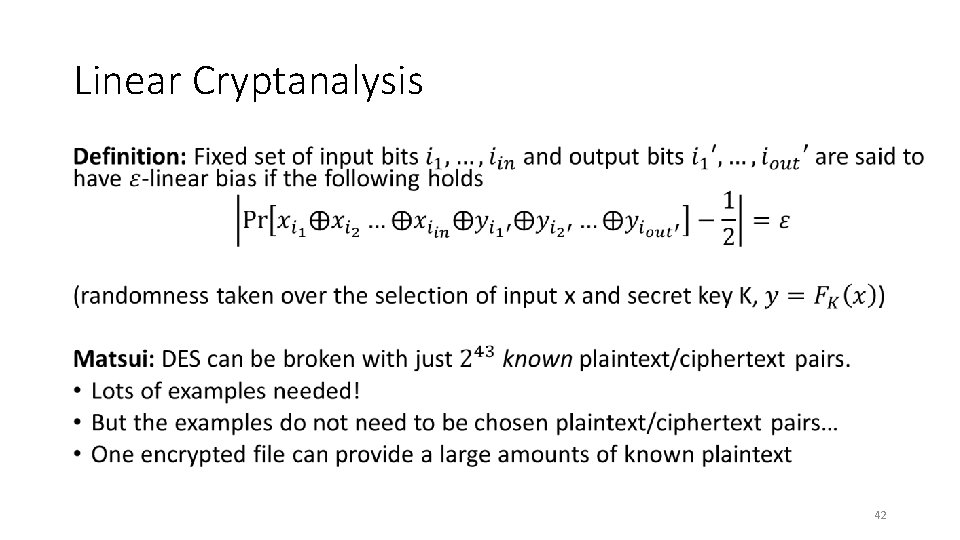
Linear Cryptanalysis • 42
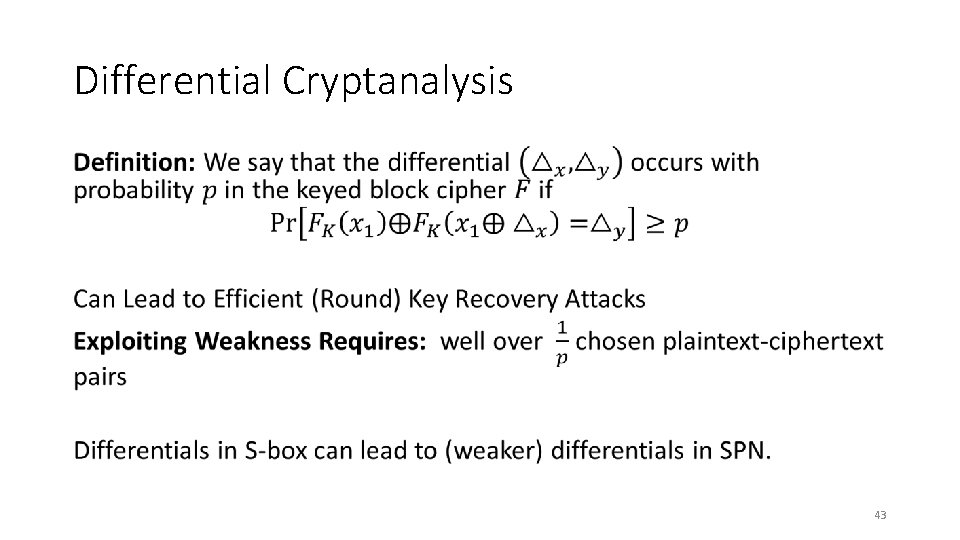
Differential Cryptanalysis • 43
CS 555: Week 8: Topic 1: One Way Functions What are the minimal assumptions necessary for symmetric keycryptography? 44
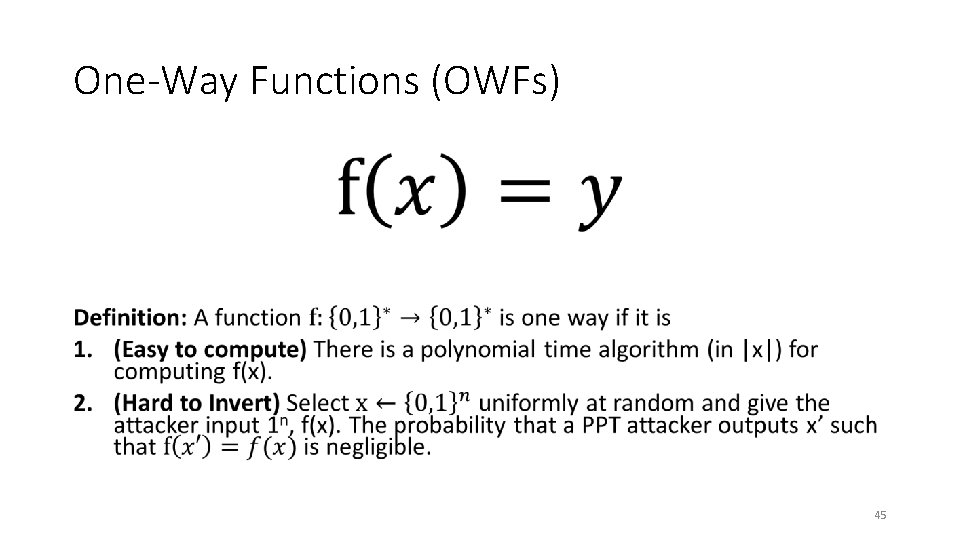
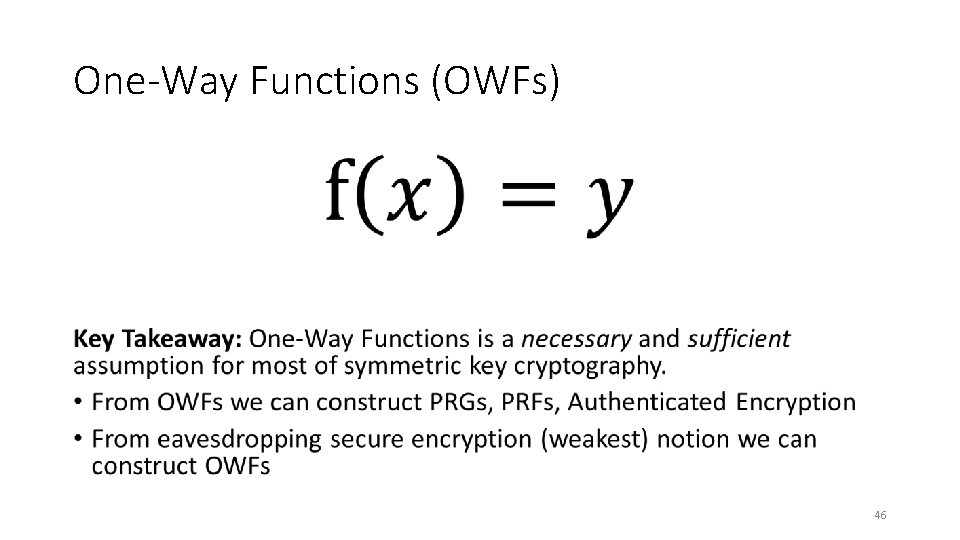
One-Way Functions (OWFs) • 45
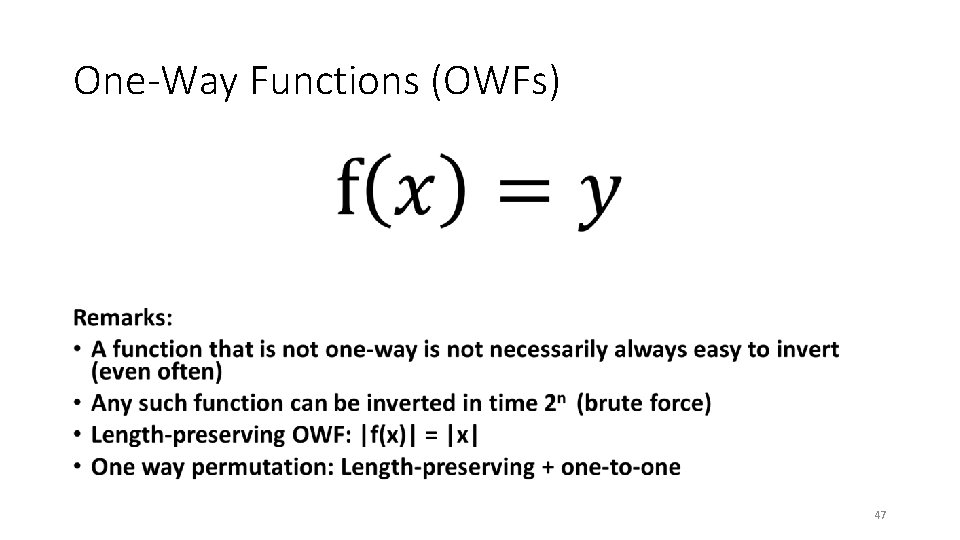
One-Way Functions (OWFs) • 46
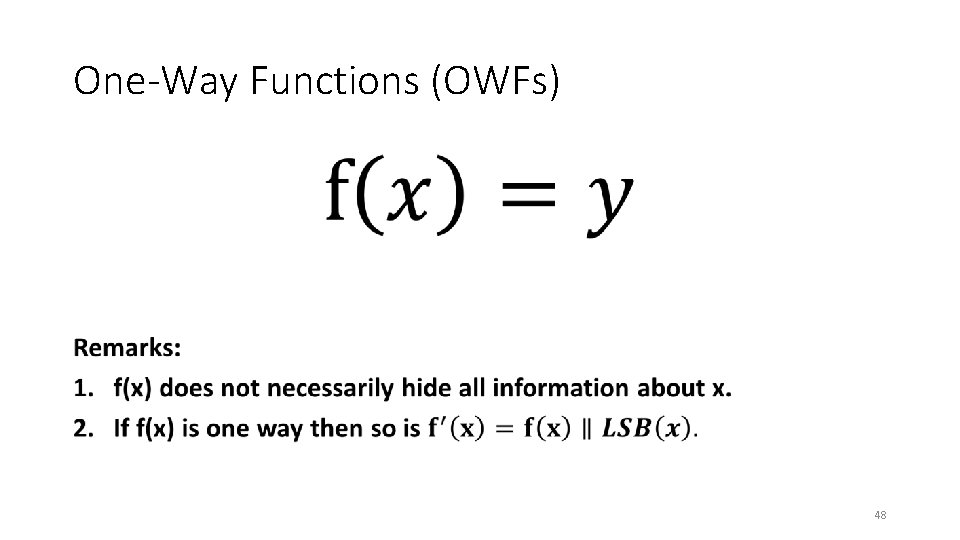
One-Way Functions (OWFs) • 47
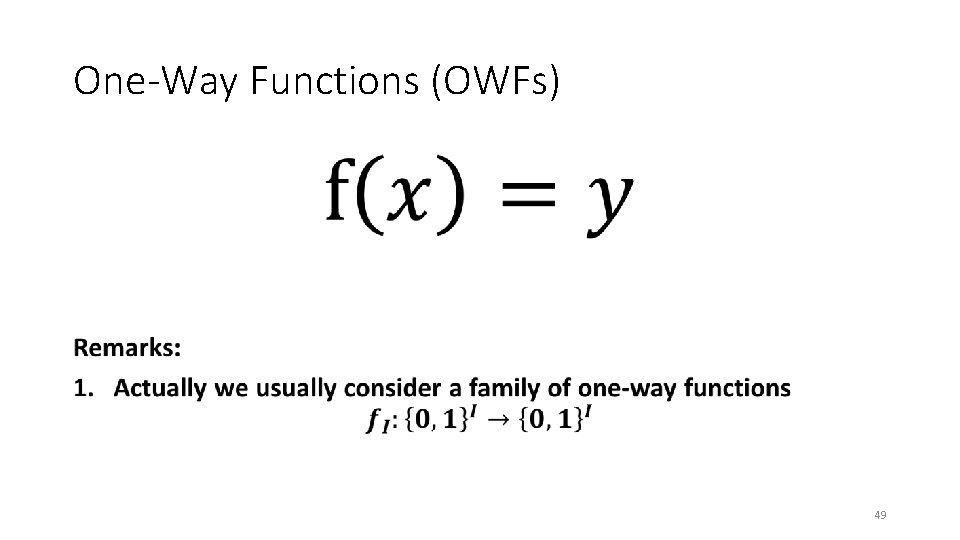
One-Way Functions (OWFs) • 48
One-Way Functions (OWFs) • 49
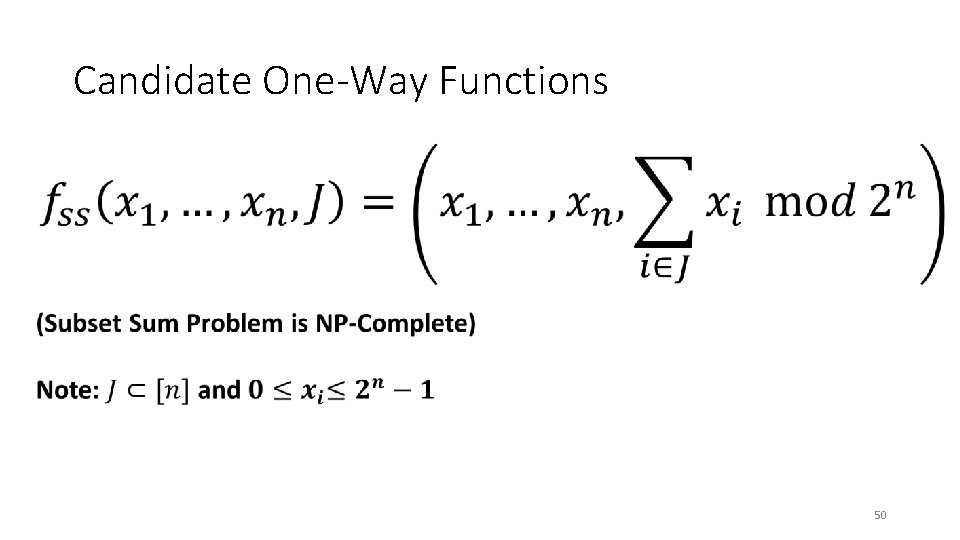
Candidate One-Way Functions • 50
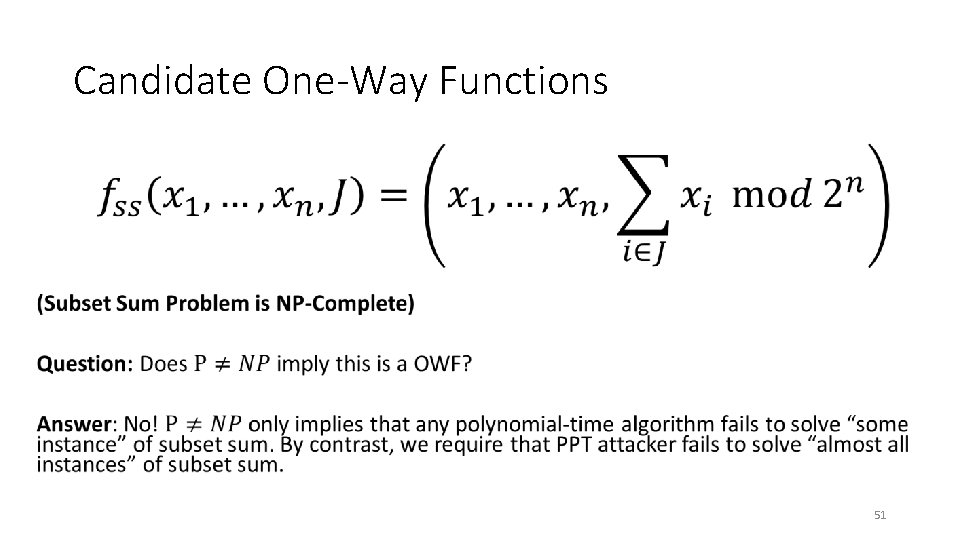
Candidate One-Way Functions • 51
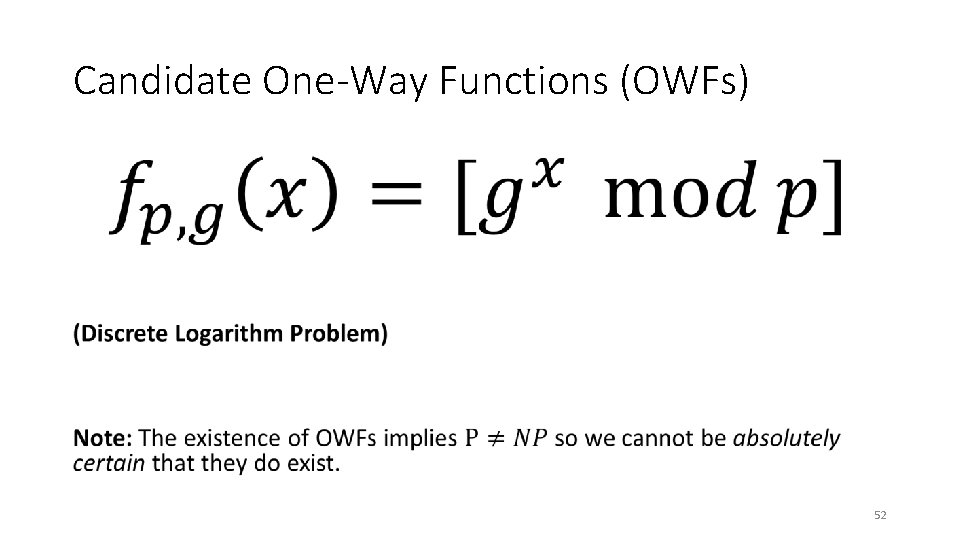
Candidate One-Way Functions (OWFs) • 52
How to Build a PRG with One. Way Functions? 53
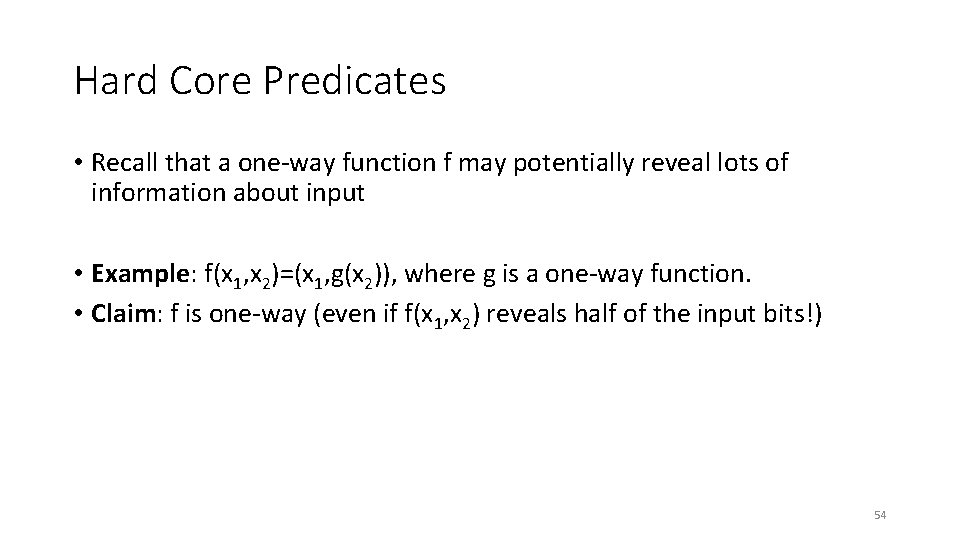
Hard Core Predicates • Recall that a one-way function f may potentially reveal lots of information about input • Example: f(x 1, x 2)=(x 1, g(x 2)), where g is a one-way function. • Claim: f is one-way (even if f(x 1, x 2) reveals half of the input bits!) 54
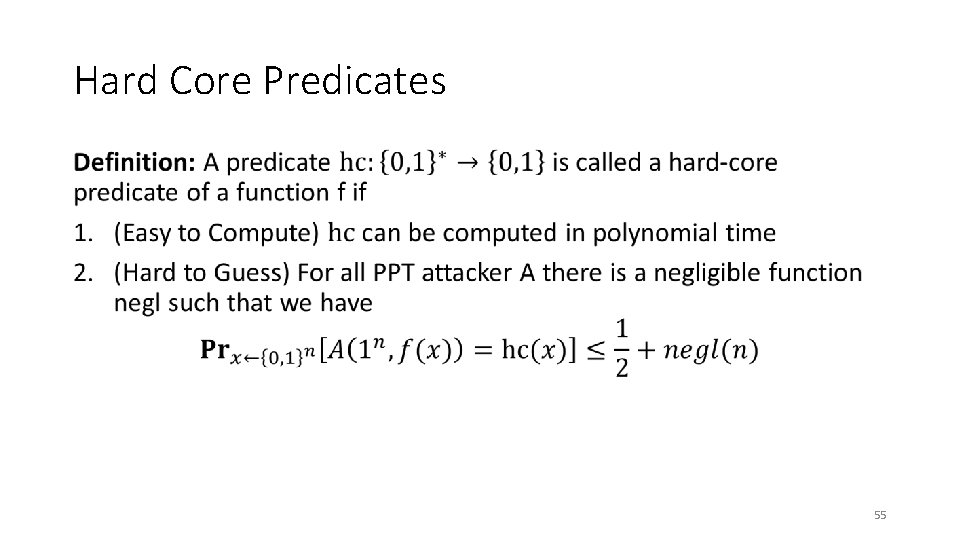
Hard Core Predicates • 55
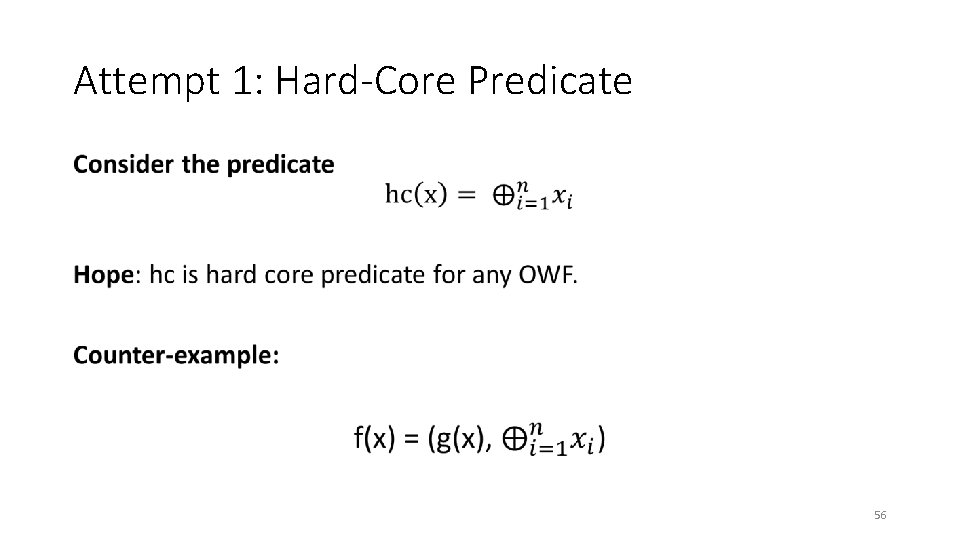
Attempt 1: Hard-Core Predicate • 56
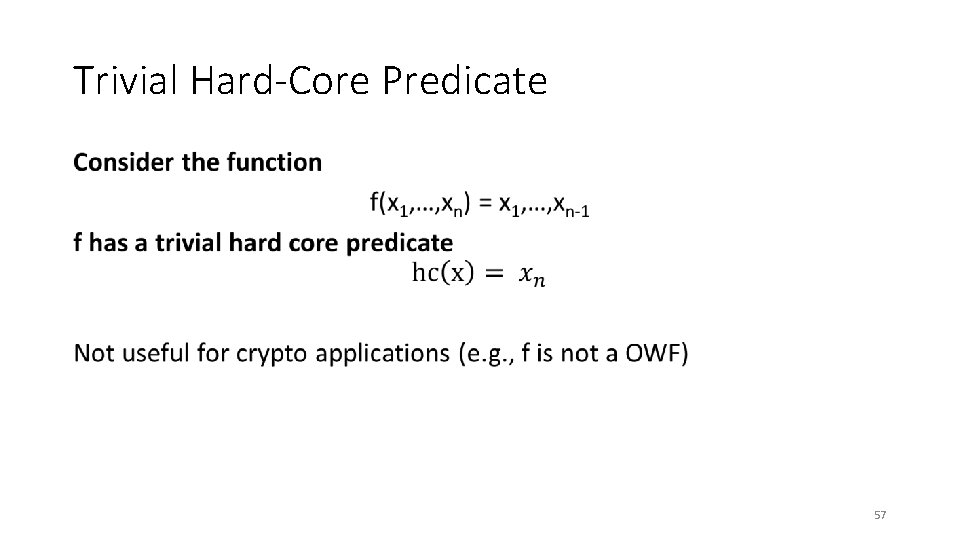
Trivial Hard-Core Predicate • 57
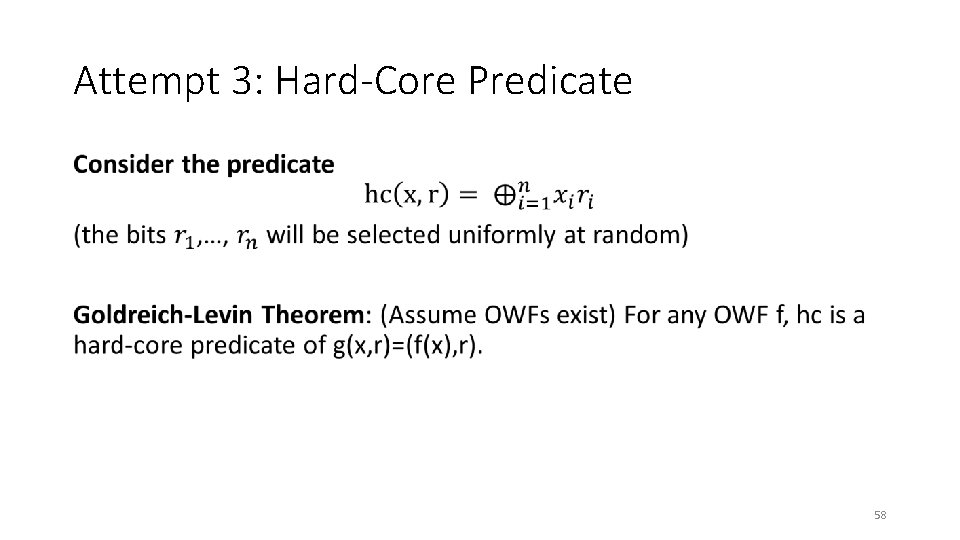
Attempt 3: Hard-Core Predicate • 58
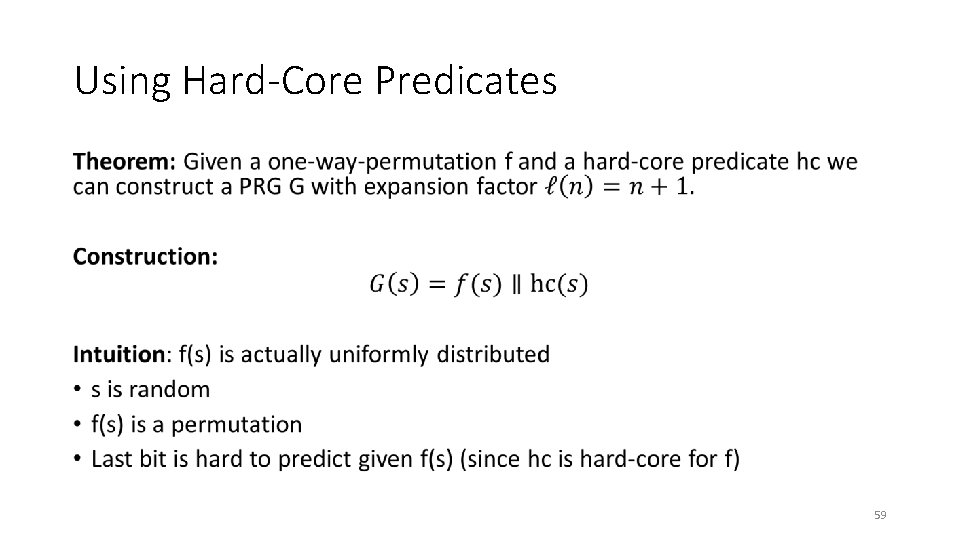
Using Hard-Core Predicates • 59
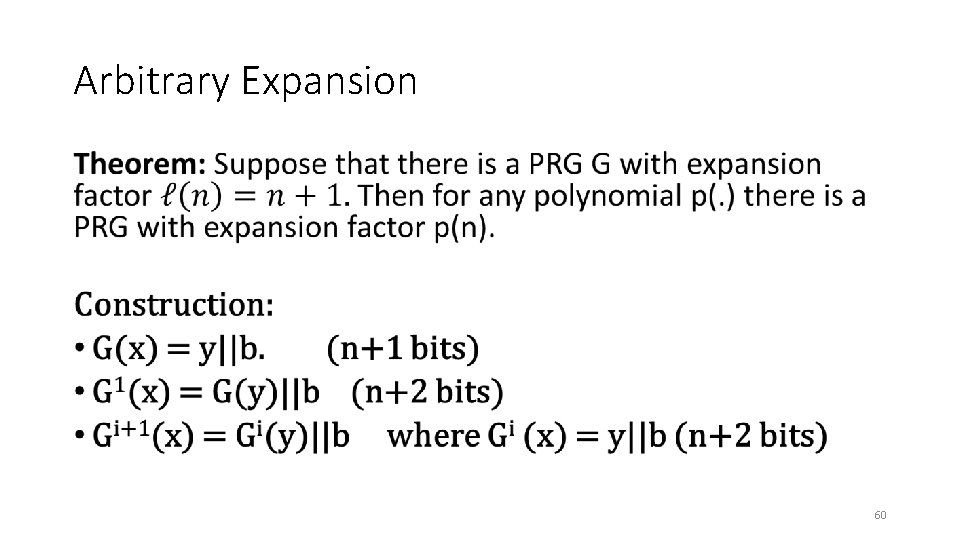
Arbitrary Expansion • 60
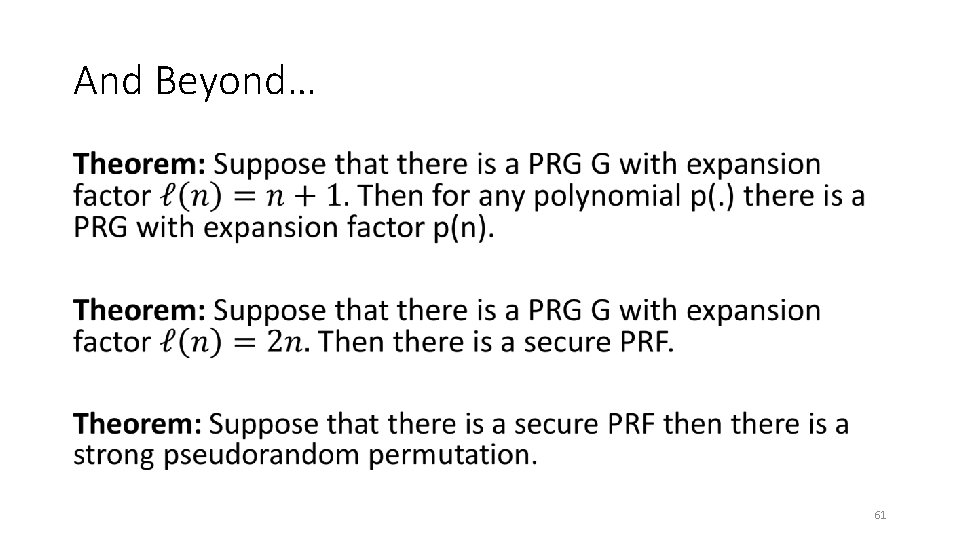
And Beyond… • 61
And Beyond… Corollary: If one-way functions exist then PRGs, PRFs and strong PRPs all exist. Corollary: If one-way functions exist then there exist CCAsecure encryption schemes and secure MACs. 62
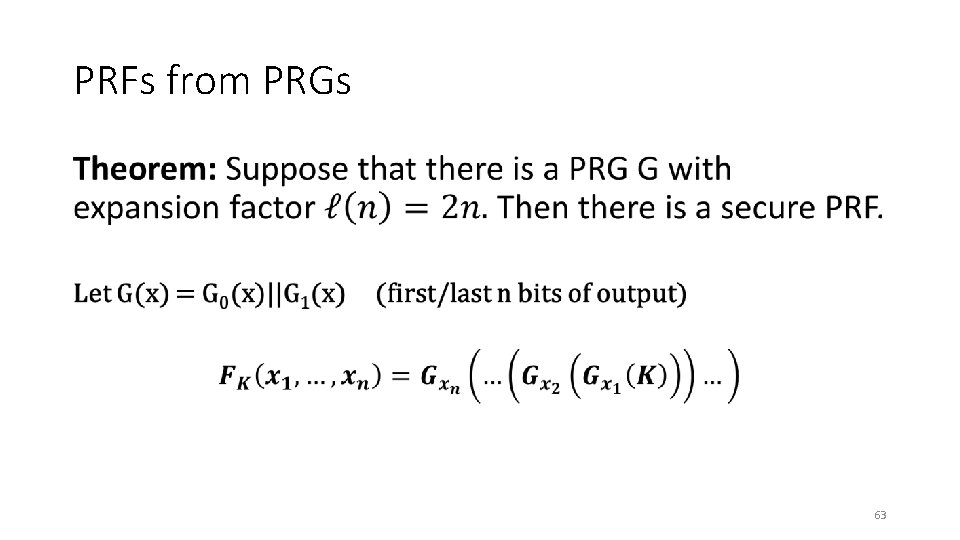
PRFs from PRGs • 63
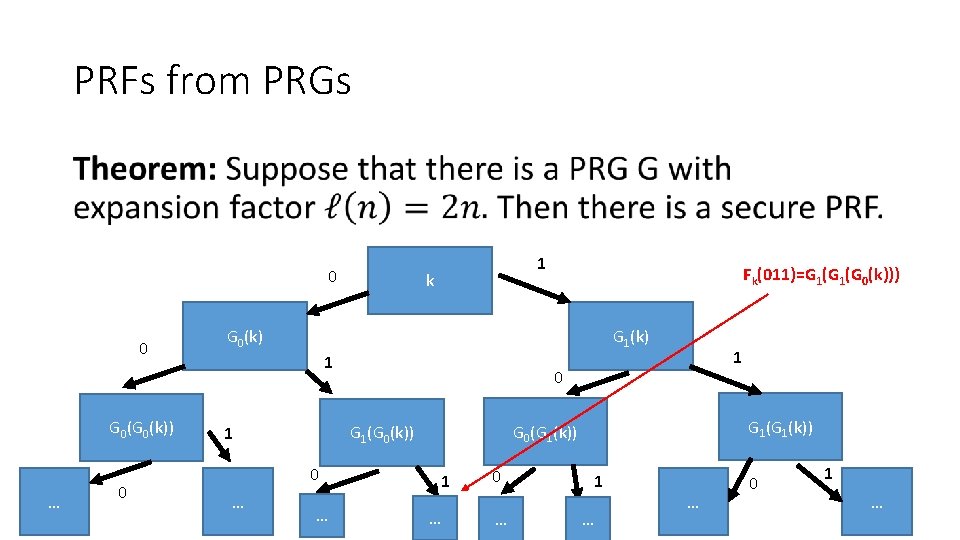
PRFs from PRGs • 0 0 G 0(k)) … 0 1 k Fk(011)=G 1(G 0(k))) G 0(k) G 1(k) 1 0 … G 1(k)) G 0(G 1(k)) G 1(G 0(k)) 1 1 1 … 0 … 1 … … 0 1 … 64
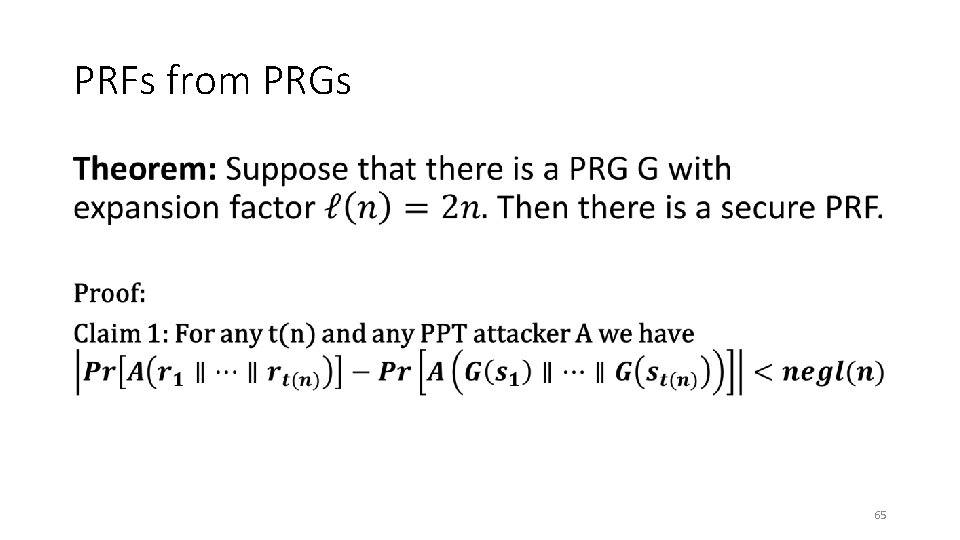
PRFs from PRGs • 65
PRFs from PRGs • 66
PRFs from PRGs • 67
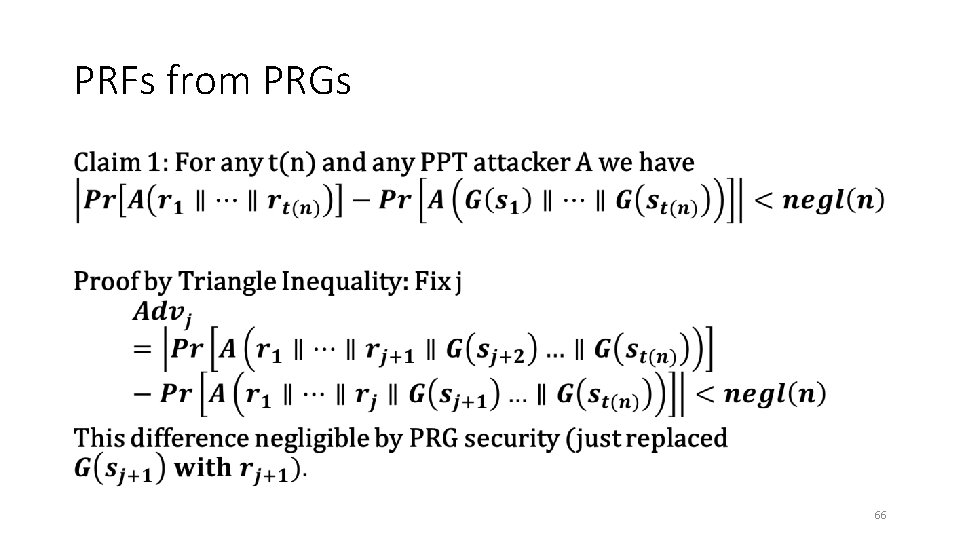
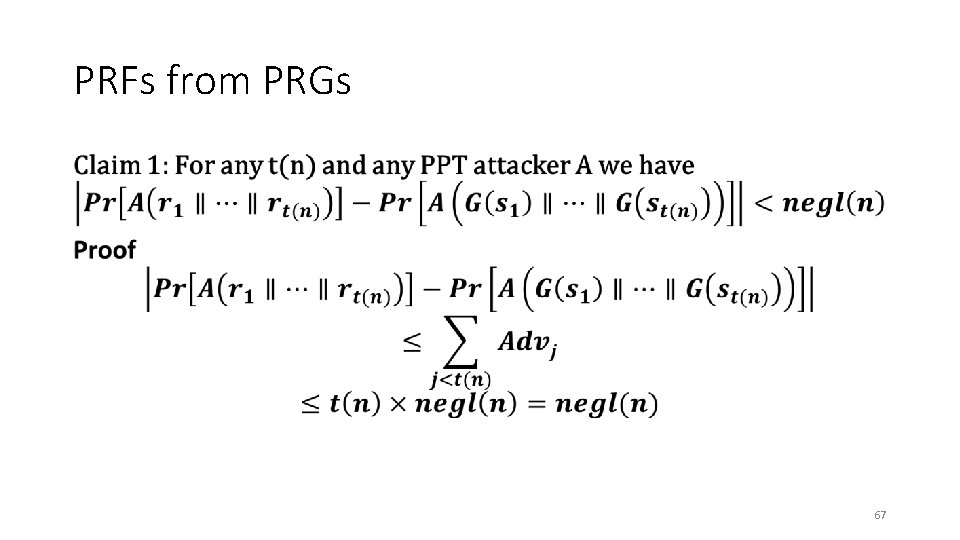
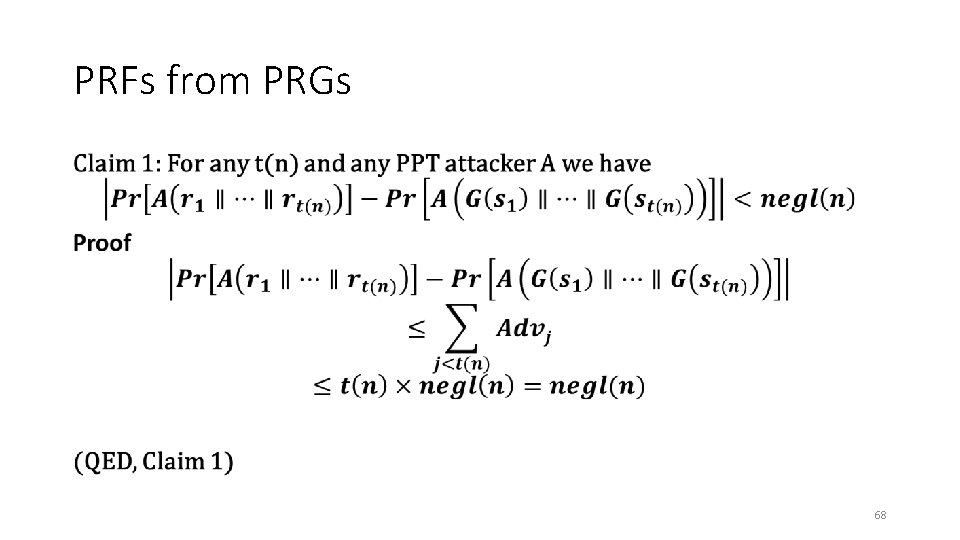
PRFs from PRGs • 68
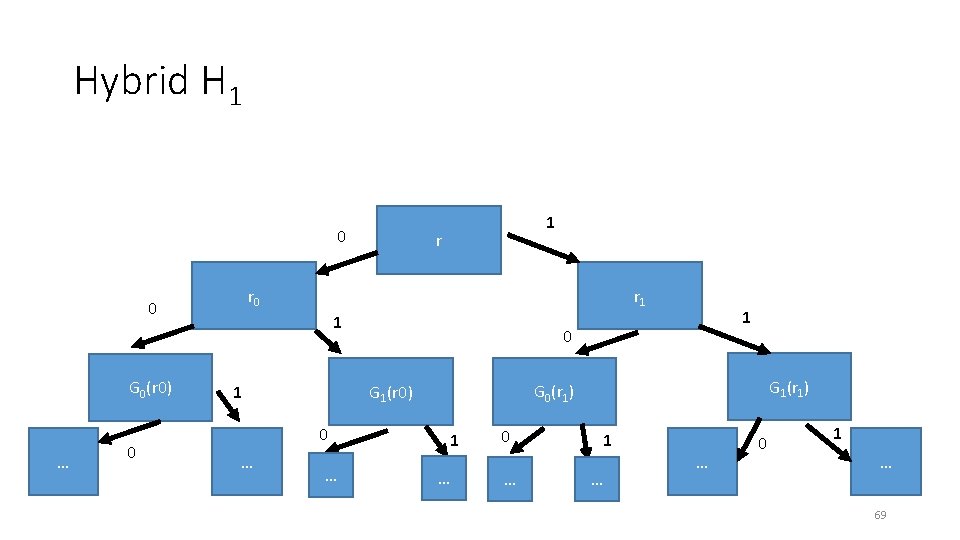
Hybrid H 1 0 … 0 r r 0 0 G 0(r 0) 1 r 1 1 0 … G 1(r 1) G 0(r 1) G 1(r 0) 1 1 1 … 0 … 1 … … 0 1 … 69 69
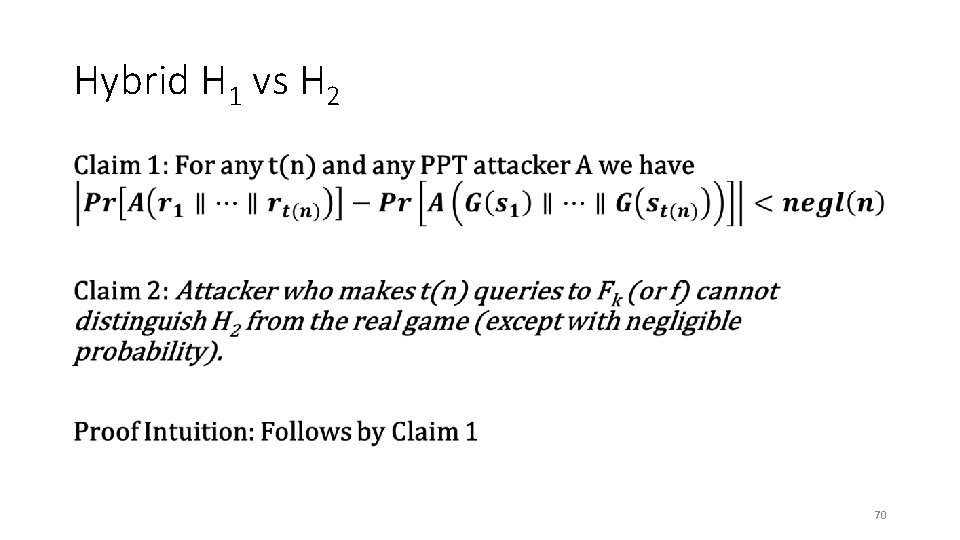
Hybrid H 1 vs H 2 • 70
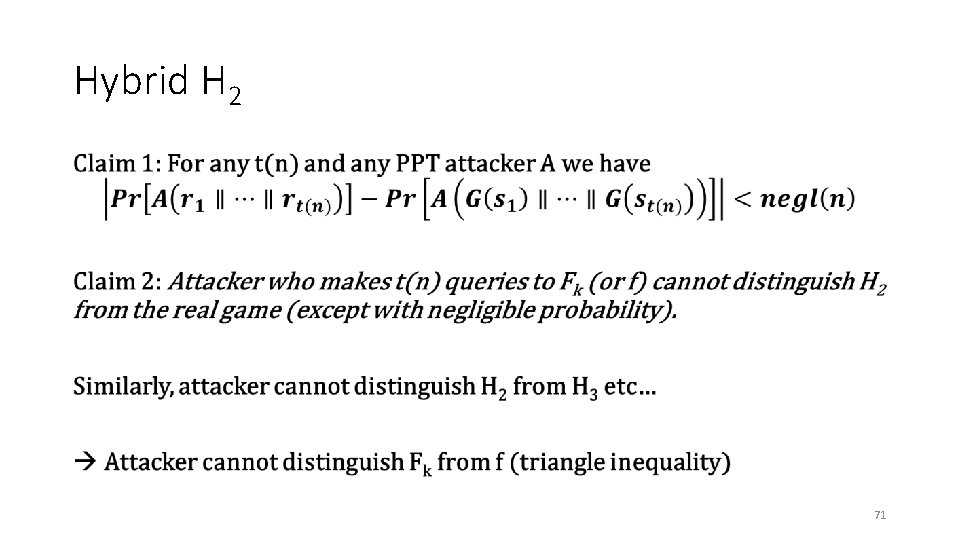
Hybrid H 2 • 71
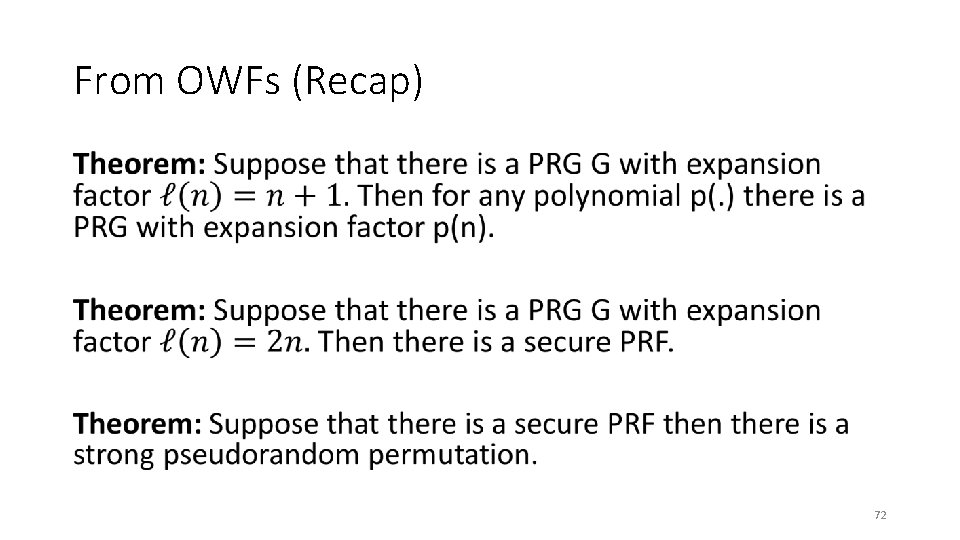
From OWFs (Recap) • 72
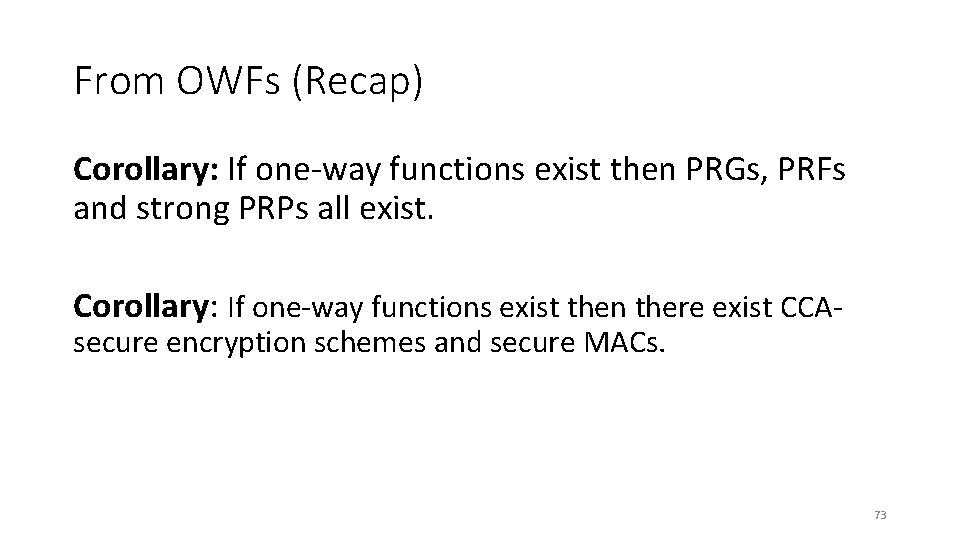
From OWFs (Recap) Corollary: If one-way functions exist then PRGs, PRFs and strong PRPs all exist. Corollary: If one-way functions exist then there exist CCAsecure encryption schemes and secure MACs. 73
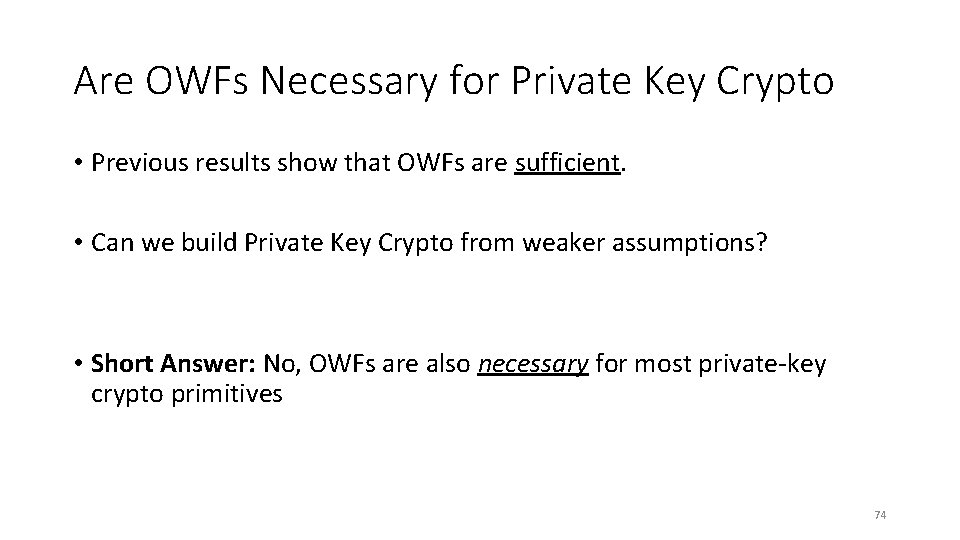
Are OWFs Necessary for Private Key Crypto • Previous results show that OWFs are sufficient. • Can we build Private Key Crypto from weaker assumptions? • Short Answer: No, OWFs are also necessary for most private-key crypto primitives 74
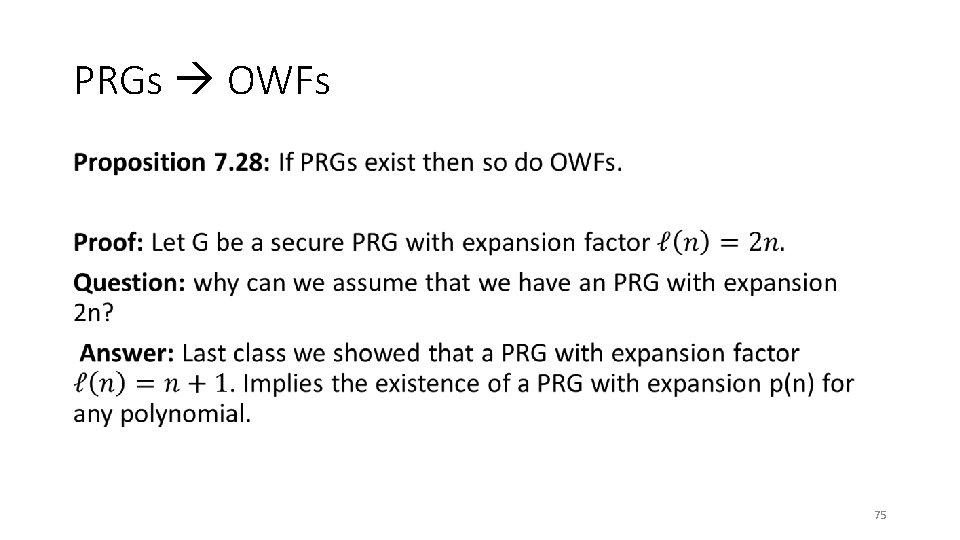
PRGs OWFs • 75
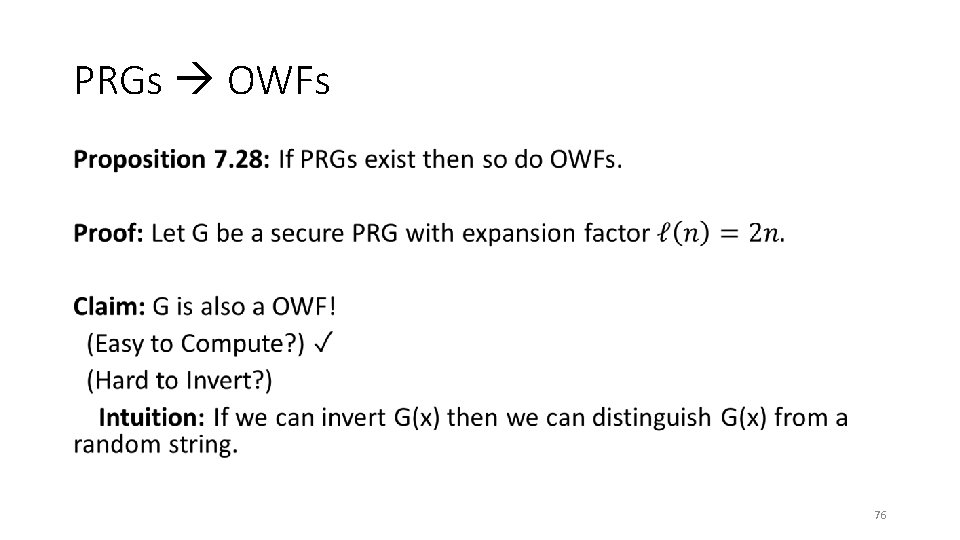
PRGs OWFs • 76
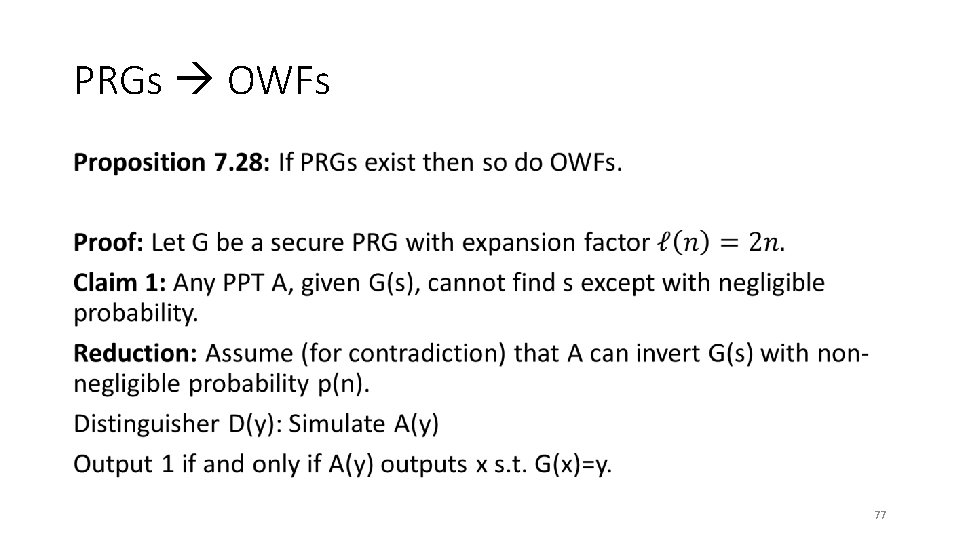
PRGs OWFs • 77
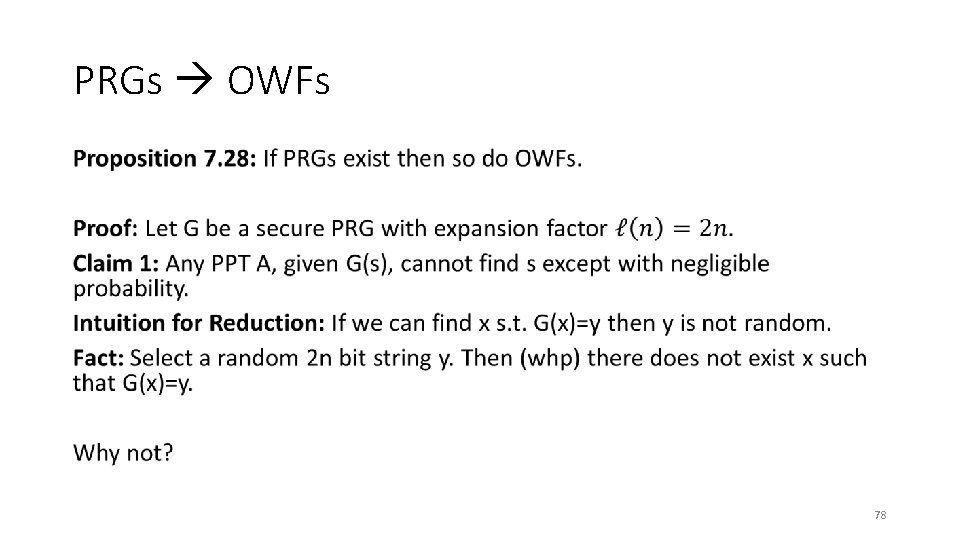
PRGs OWFs • 78
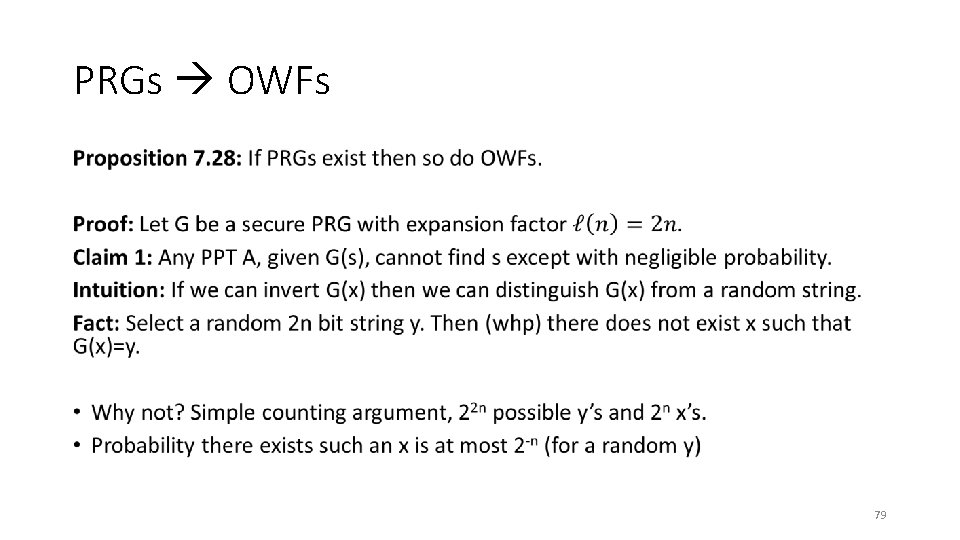
PRGs OWFs • 79
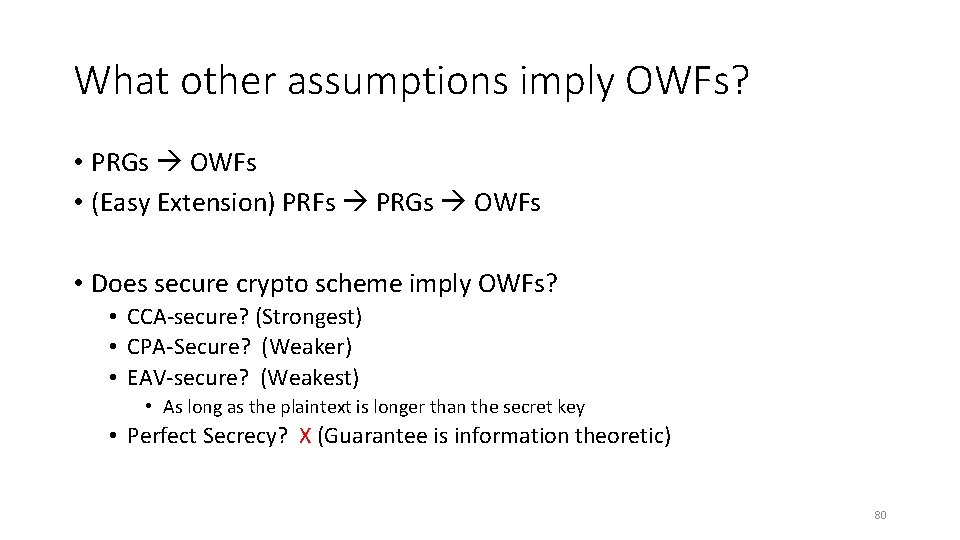
What other assumptions imply OWFs? • PRGs OWFs • (Easy Extension) PRFs PRGs OWFs • Does secure crypto scheme imply OWFs? • CCA-secure? (Strongest) • CPA-Secure? (Weaker) • EAV-secure? (Weakest) • As long as the plaintext is longer than the secret key • Perfect Secrecy? X (Guarantee is information theoretic) 80
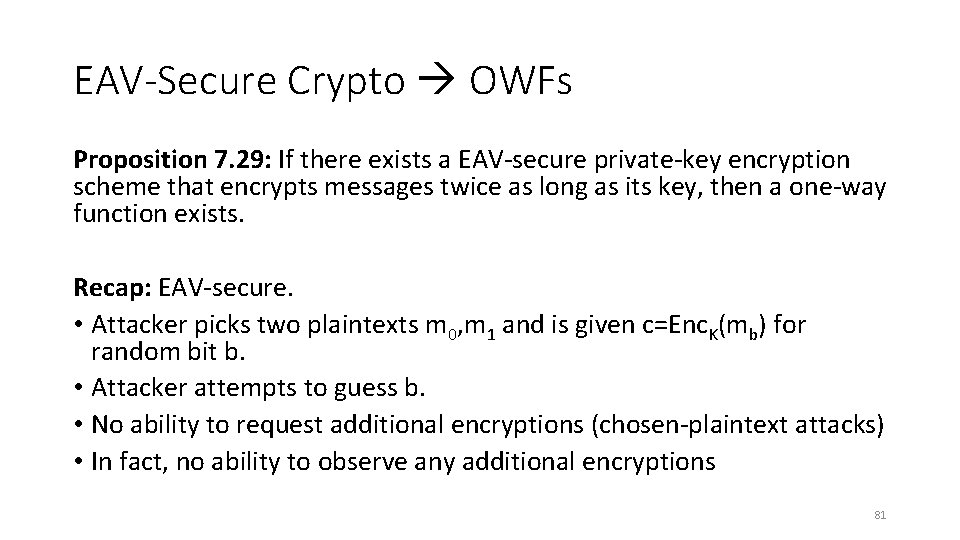
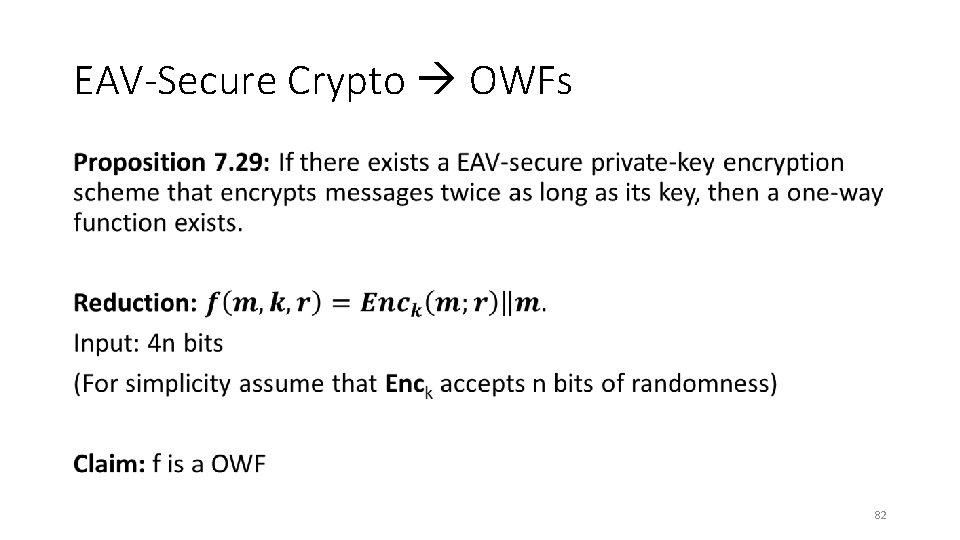
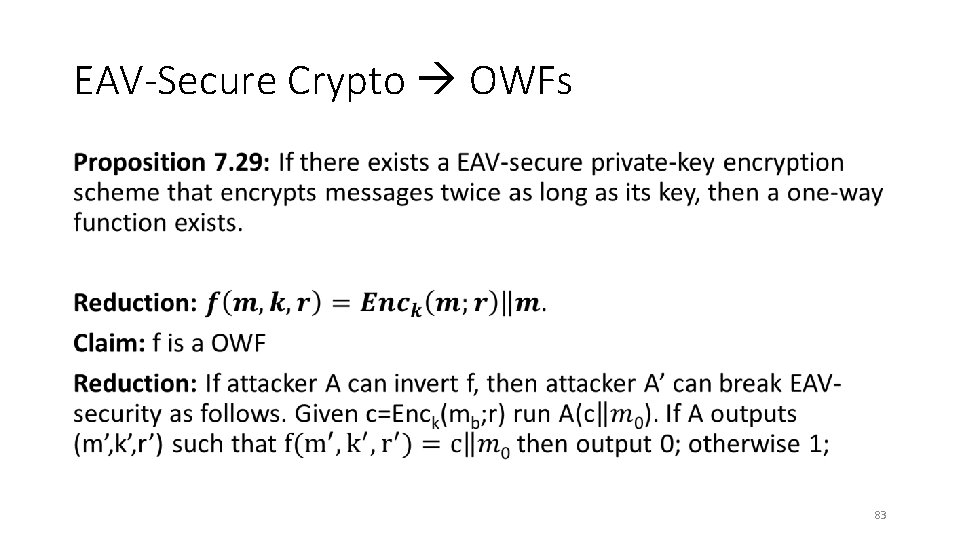
EAV-Secure Crypto OWFs Proposition 7. 29: If there exists a EAV-secure private-key encryption scheme that encrypts messages twice as long as its key, then a one-way function exists. Recap: EAV-secure. • Attacker picks two plaintexts m 0, m 1 and is given c=Enc. K(mb) for random bit b. • Attacker attempts to guess b. • No ability to request additional encryptions (chosen-plaintext attacks) • In fact, no ability to observe any additional encryptions 81
EAV-Secure Crypto OWFs • 82
EAV-Secure Crypto OWFs • 83
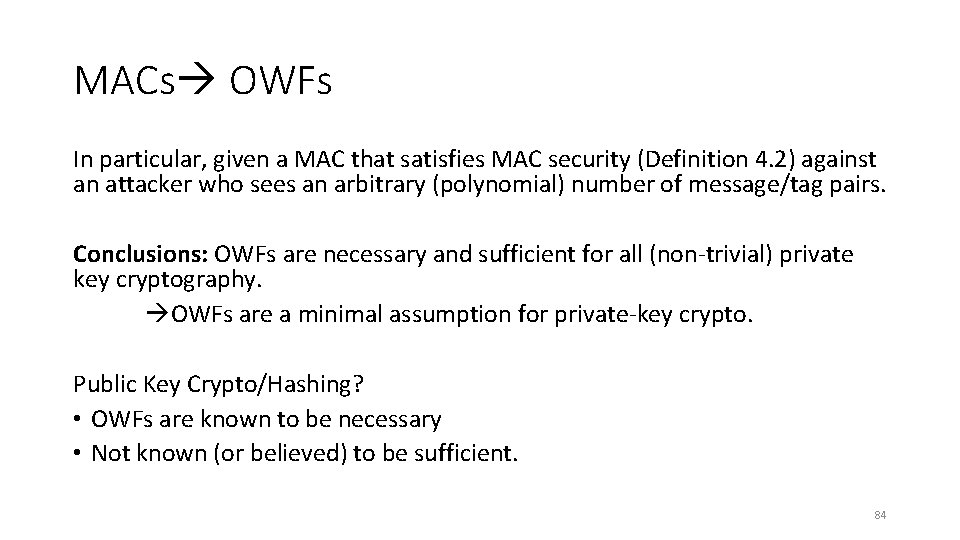
MACs OWFs In particular, given a MAC that satisfies MAC security (Definition 4. 2) against an attacker who sees an arbitrary (polynomial) number of message/tag pairs. Conclusions: OWFs are necessary and sufficient for all (non-trivial) private key cryptography. OWFs are a minimal assumption for private-key crypto. Public Key Crypto/Hashing? • OWFs are known to be necessary • Not known (or believed) to be sufficient. 84
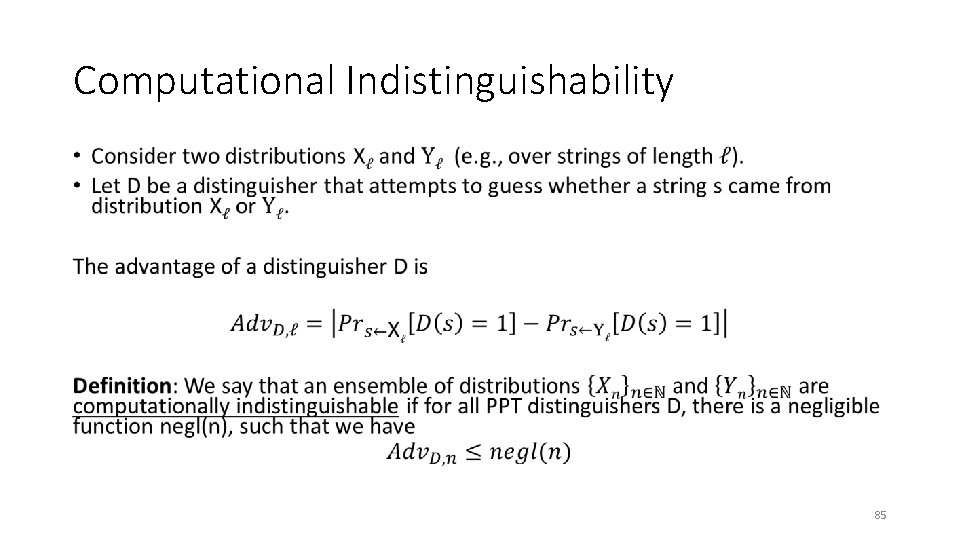
Computational Indistinguishability • 85