
Recap on Solution Requirements and Constraints Stage One
- Slides: 6
Recap on Solution Requirements and Constraints Stage One: Analysis
Solution Requirements There are two requirements you will need to cover: 1. Functional Requirements 2. Non-Functional Requirements
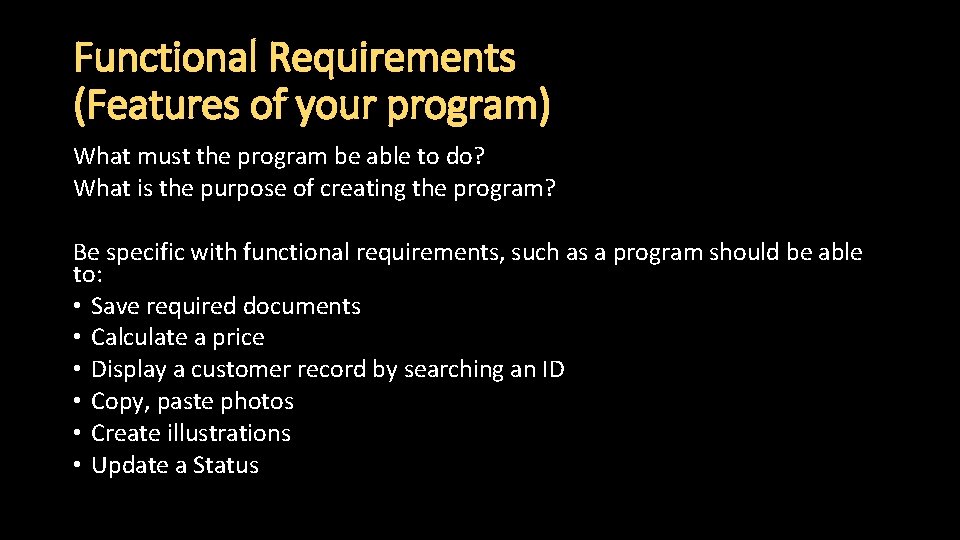
Functional Requirements (Features of your program) What must the program be able to do? What is the purpose of creating the program? Be specific with functional requirements, such as a program should be able to: • Save required documents • Calculate a price • Display a customer record by searching an ID • Copy, paste photos • Create illustrations • Update a Status
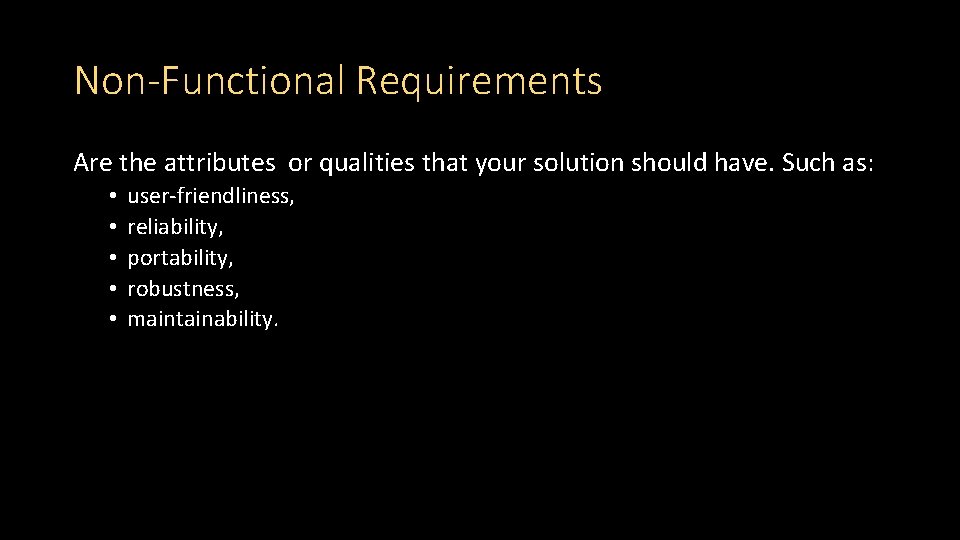
Non-Functional Requirements Are the attributes or qualities that your solution should have. Such as: • • • user-friendliness, reliability, portability, robustness, maintainability.
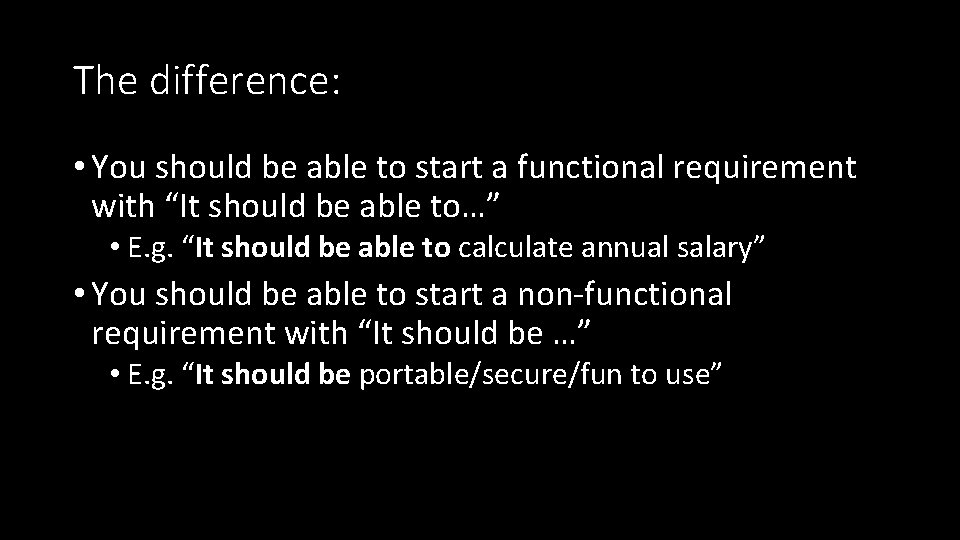
The difference: • You should be able to start a functional requirement with “It should be able to…” • E. g. “It should be able to calculate annual salary” • You should be able to start a non-functional requirement with “It should be …” • E. g. “It should be portable/secure/fun to use”
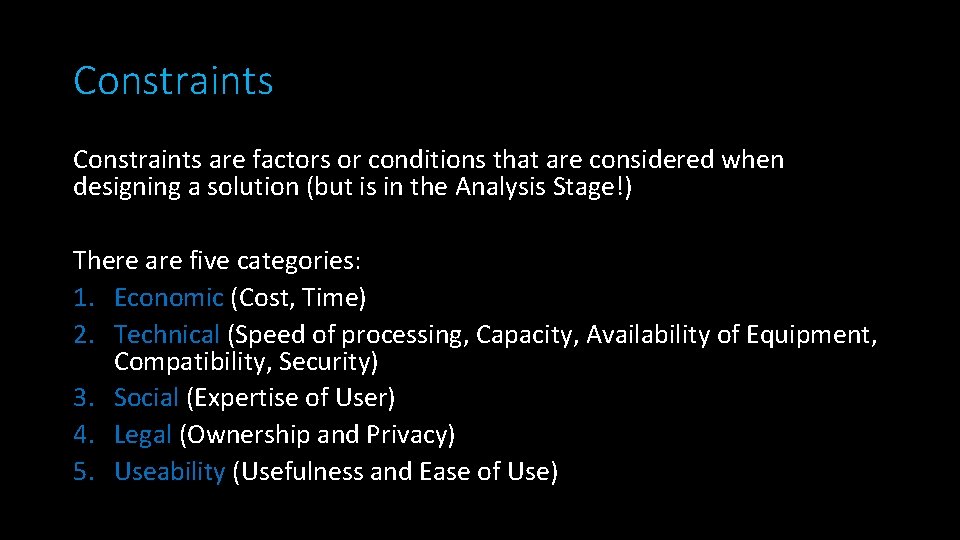
Constraints are factors or conditions that are considered when designing a solution (but is in the Analysis Stage!) There are five categories: 1. Economic (Cost, Time) 2. Technical (Speed of processing, Capacity, Availability of Equipment, Compatibility, Security) 3. Social (Expertise of User) 4. Legal (Ownership and Privacy) 5. Useability (Usefulness and Ease of Use)