
Recap and Space Weather In the Magnetosphere II

- Slides: 51
Recap and Space Weather In the Magnetosphere (II) Yihua Zheng SW REDI June 5, 2013
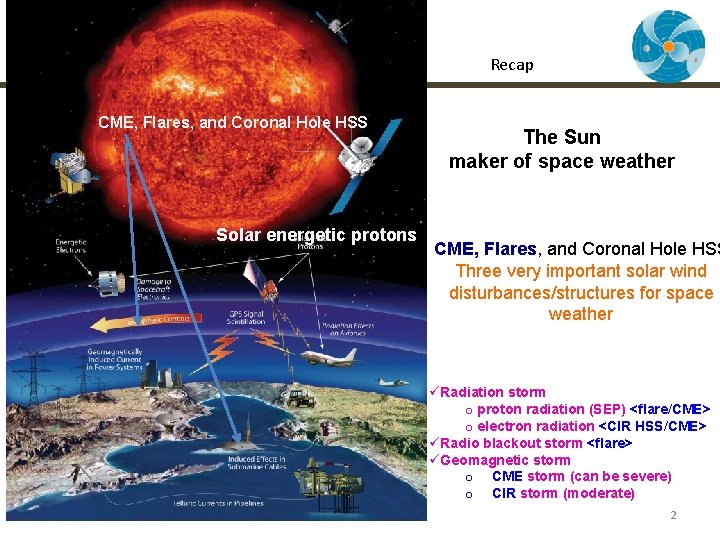
Recap CME, Flares, and Coronal Hole HSS Solar energetic protons The Sun maker of space weather CME, Flares, and Coronal Hole HSS Three very important solar wind disturbances/structures for space weather üRadiation storm o proton radiation (SEP) <flare/CME> o electron radiation <CIR HSS/CME> üRadio blackout storm <flare> üGeomagnetic storm o CME storm (can be severe) o CIR storm (moderate) 2
Outline • Solar wind +magnetosphere interactions • CIR/HSS and CME impacts on Earth • Importance of magnetosphere in space weather Geomagnetic storm o CME storm (can be severe) o CIR storm (moderate) 3
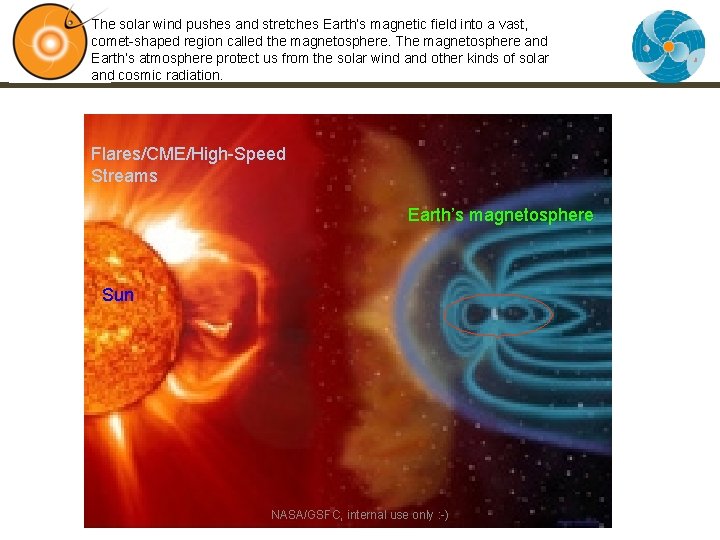
The solar wind pushes and stretches Earth’s magnetic field into a vast, comet-shaped region called the magnetosphere. The magnetosphere and Earth’s atmosphere protect us from the solar wind and other kinds of solar and cosmic radiation. Flares/CME/High-Speed Streams Earth’s magnetosphere Sun NASA/GSFC, internal use only : -)
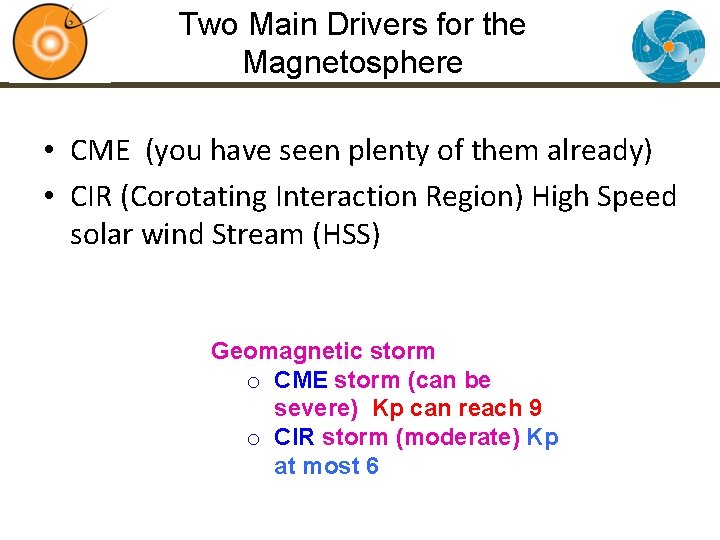
Two Main Drivers for the Magnetosphere • CME (you have seen plenty of them already) • CIR (Corotating Interaction Region) High Speed solar wind Stream (HSS) Geomagnetic storm o CME storm (can be severe) Kp can reach 9 o CIR storm (moderate) Kp at most 6
CME Example • March 7, 2012 CMEs associated with two x-class flares i. SWA layout Associated with an Active Region
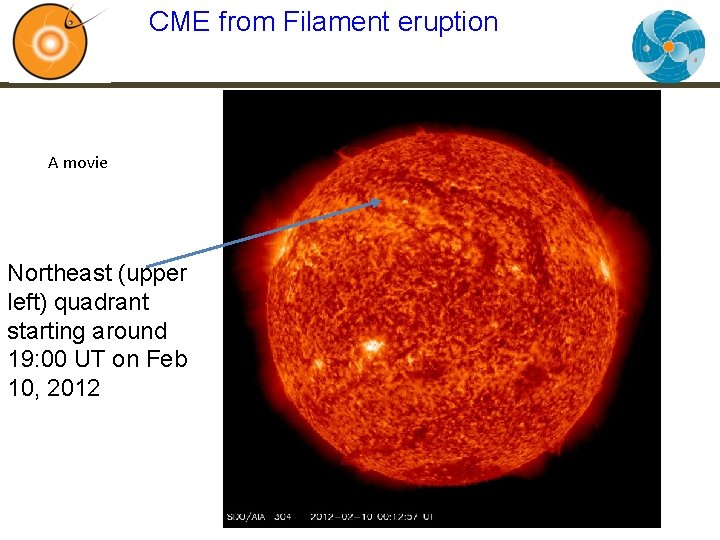
CME from Filament eruption A movie Northeast (upper left) quadrant starting around 19: 00 UT on Feb 10, 2012
The associated CME STEREO B SOHO Heart-shaped STEREO A
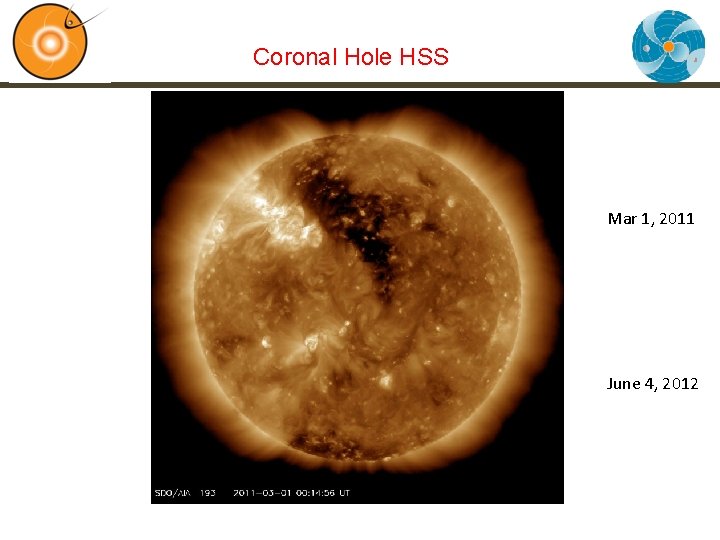
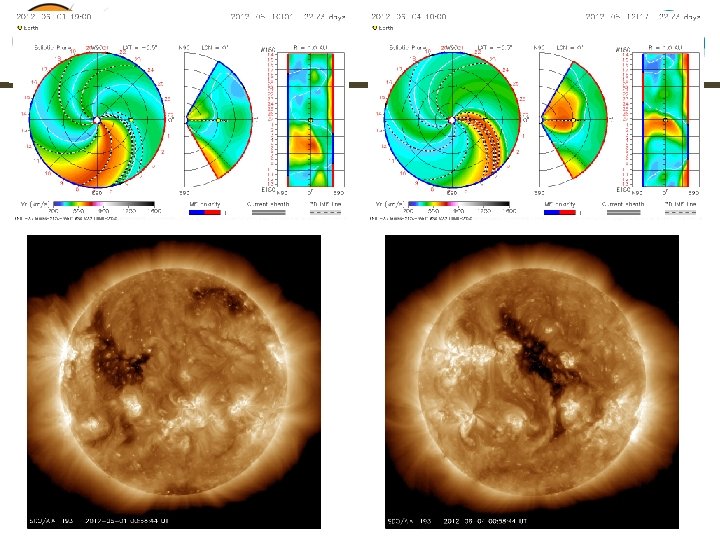
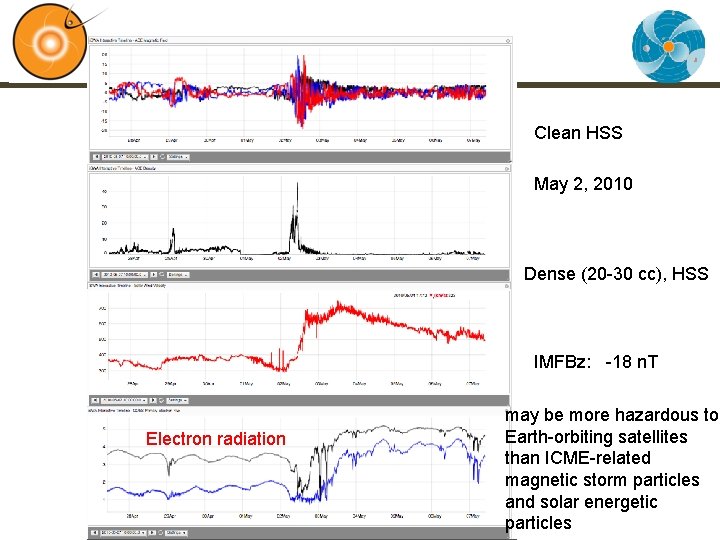
Coronal Hole HSS Is one important space weather contributor too! Particularly for its role in enhancing electron radiation levels near GEO orbit and for substantial energy input into the Earth’s upper atmosphere May be more hazardous to Earth-orbiting satellites than CME-related magnetic storm particles and solar energetic particles (SEP)
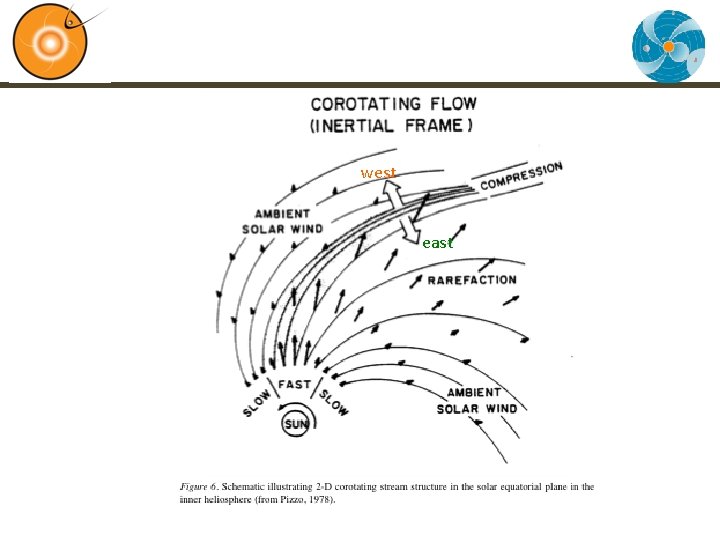
CIR and HSS Co-rotating Interactive Regions (CIRs) are regions within the solar wind where streams of material moving at different speeds collide and interact with each other. The speed of the solar wind varies from less than 300 km/s (about half a million miles per hour) to over 800 km/s depending upon the conditions in the corona where the solar wind has its source. Low speed winds come from the regions above helmet streamers while high speed winds come from coronal holes. As the Sun rotates these various streams rotate as well (co-rotation) and produce a pattern in the solar wind much like that of a rotating lawn sprinkler. However, if a slow moving stream is followed by a fast moving stream the faster moving material will catch-up to the slower material and plow into it. This interaction produces shock waves that can accelerate particles to very high speeds (energies).
west east
Coronal Hole HSS Mar 1, 2011 June 4, 2012
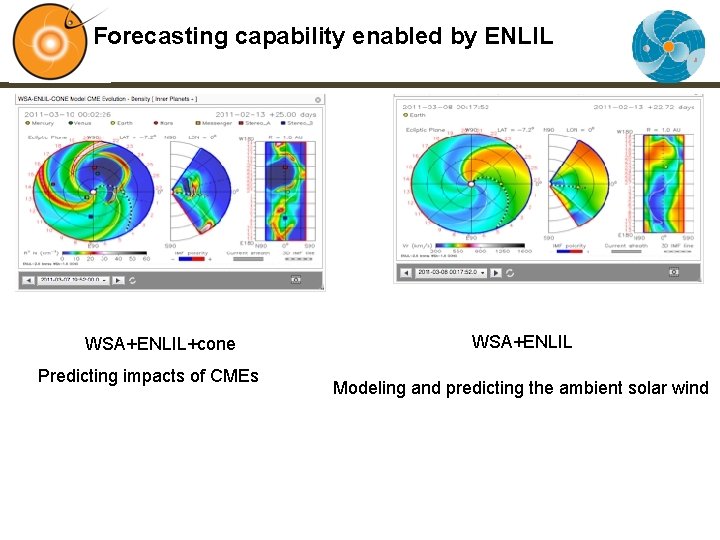
Forecasting capability enabled by ENLIL WSA+ENLIL+cone Predicting impacts of CMEs WSA+ENLIL Modeling and predicting the ambient solar wind
In-situ signatures of CME and CIR HSS at L 1 ACE and WIND
Clean HSS May 2, 2010 Dense (20 -30 cc), HSS IMFBz: -18 n. T Electron radiation may be more hazardous to Earth-orbiting satellites than ICME-related magnetic storm particles and solar energetic particles
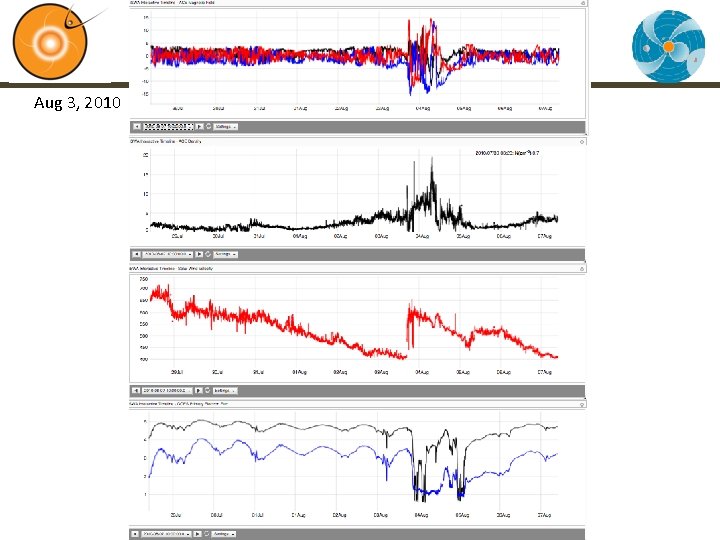
Aug 3, 2010
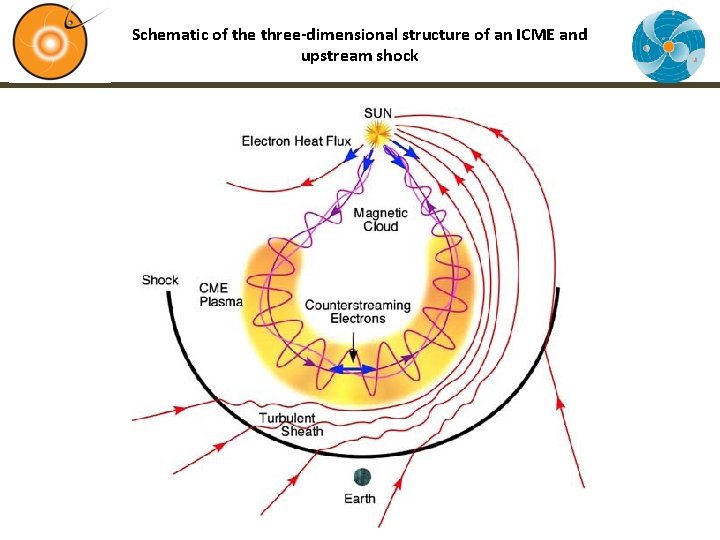
Schematic of the three-dimensional structure of an ICME and upstream shock
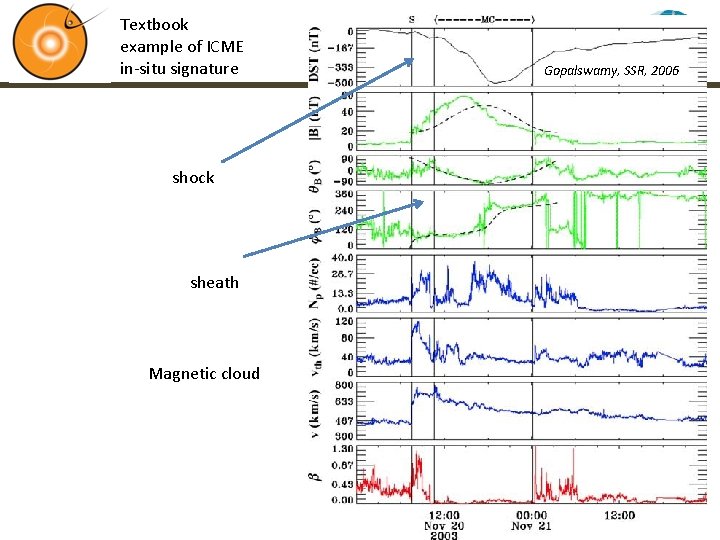
Textbook example of ICME in-situ signature shock sheath Magnetic cloud Gopalswamy, SSR, 2006
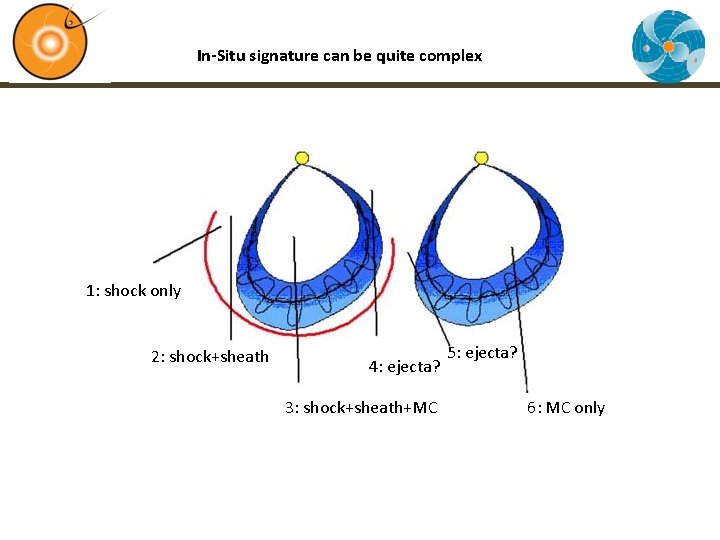
In-Situ signature can be quite complex 1: shock only 2: shock+sheath 4: ejecta? 3: shock+sheath+MC 5: ejecta? 6: MC only
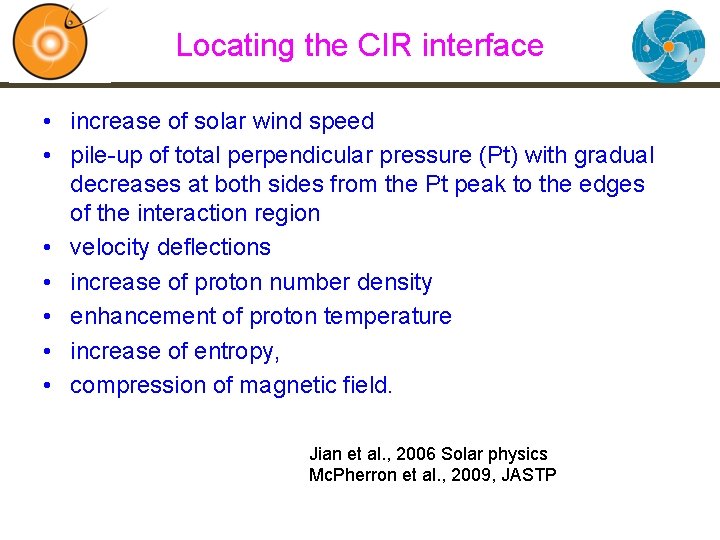
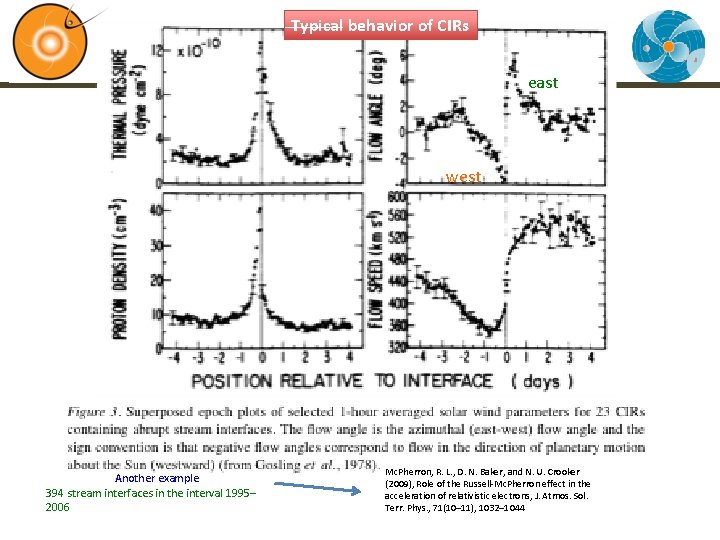
Locating the CIR interface • increase of solar wind speed • pile-up of total perpendicular pressure (Pt) with gradual decreases at both sides from the Pt peak to the edges of the interaction region • velocity deflections • increase of proton number density • enhancement of proton temperature • increase of entropy, • compression of magnetic field. Jian et al. , 2006 Solar physics Mc. Pherron et al. , 2009, JASTP
Typical behavior of CIRs east west Another example 394 stream interfaces in the interval 1995– 2006 Mc. Pherron, R. L. , D. N. Baker, and N. U. Crooker (2009), Role of the Russell-Mc. Pherron effect in the acceleration of relativistic electrons, J. Atmos. Sol. Terr. Phys. , 71(10– 11), 1032– 1044
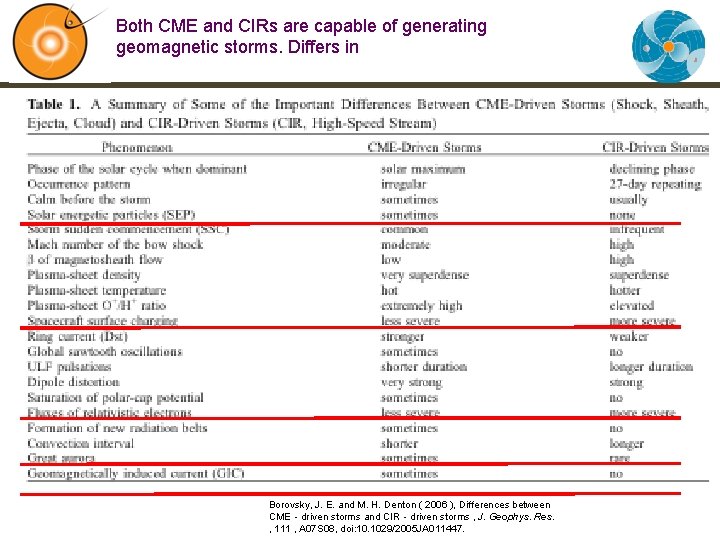
Both CME and CIRs are capable of generating geomagnetic storms. Differs in Borovsky, J. E. and M. H. Denton ( 2006 ), Differences between CME‐driven storms and CIR‐driven storms , J. Geophys. Res. , 111 , A 07 S 08, doi: 10. 1029/2005 JA 011447.
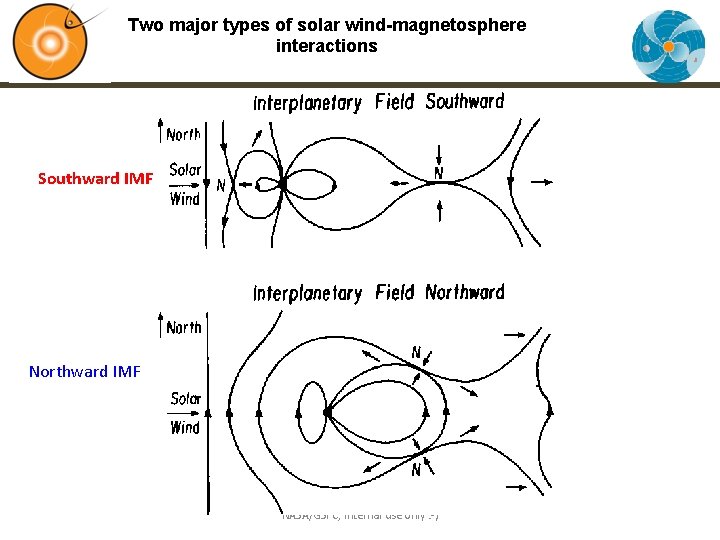
Two major types of solar wind-magnetosphere interactions Southward IMF Northward IMF NASA/GSFC, internal use only : -)
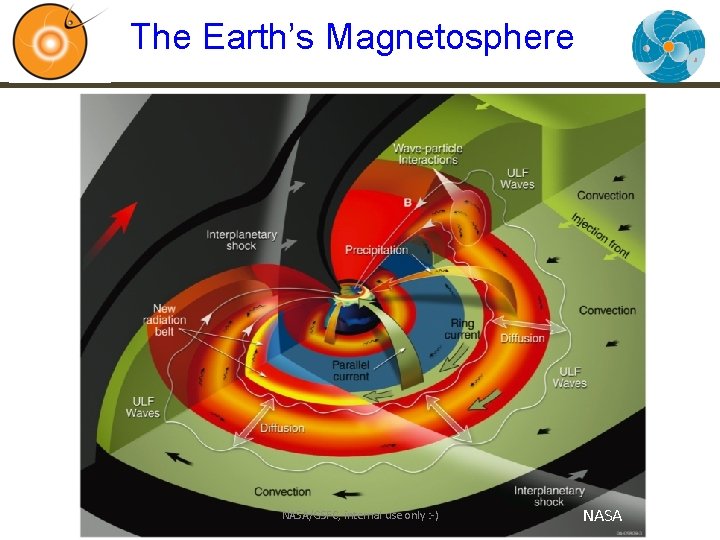
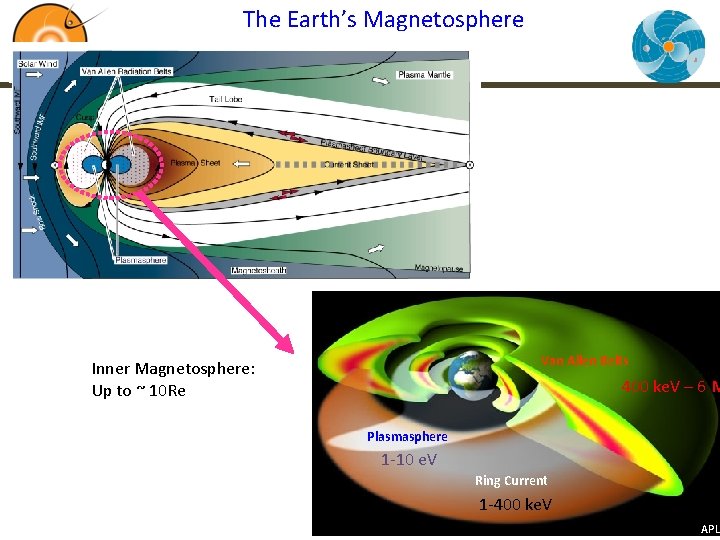
The Earth’s Magnetosphere NASA/GSFC, internal use only : -) NASA
The Earth’s Magnetosphere Van Allen Belts Inner Magnetosphere: Up to ~ 10 Re 400 ke. V – 6 M Plasmasphere 1 -10 e. V Ring Current 1 -400 ke. V APL
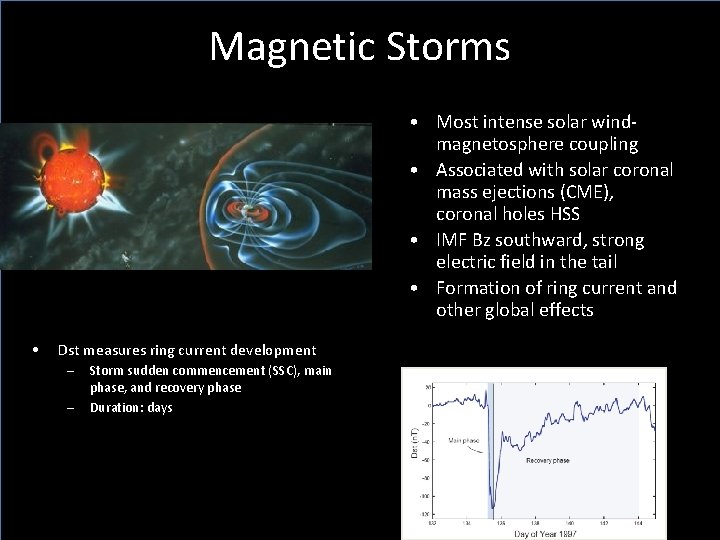
Magnetic Storms • Most intense solar windmagnetosphere coupling • Associated with solar coronal mass ejections (CME), coronal holes HSS • IMF Bz southward, strong electric field in the tail • Formation of ring current and other global effects • Dst measures ring current development – – Storm sudden commencement (SSC), main phase, and recovery phase Duration: days
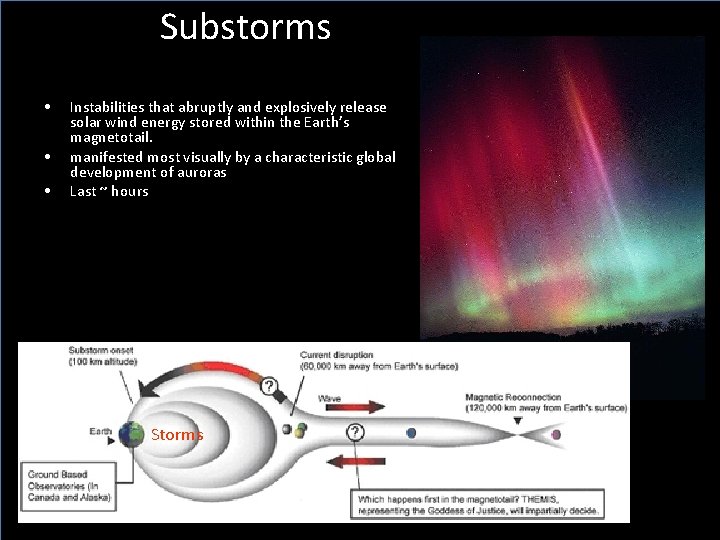
Substorms • • • Instabilities that abruptly and explosively release solar wind energy stored within the Earth’s magnetotail. manifested most visually by a characteristic global development of auroras Last ~ hours Storms
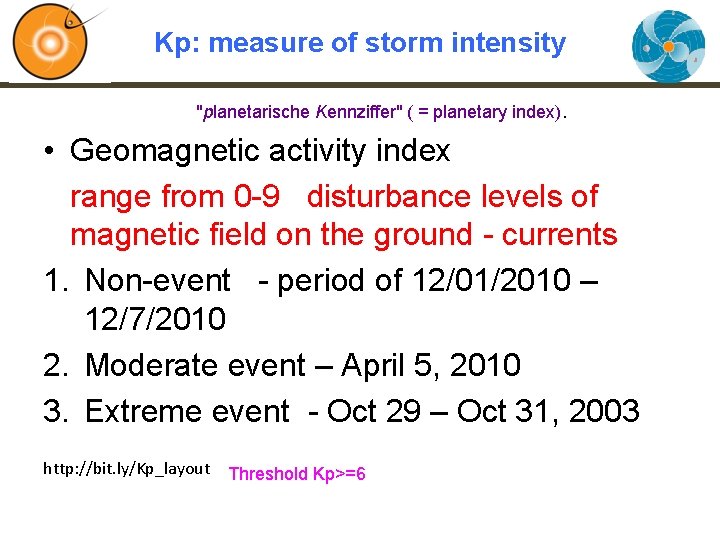
Kp: measure of storm intensity "planetarische Kennziffer" ( = planetary index). • Geomagnetic activity index range from 0 -9 disturbance levels of magnetic field on the ground - currents 1. Non-event - period of 12/01/2010 – 12/7/2010 2. Moderate event – April 5, 2010 3. Extreme event - Oct 29 – Oct 31, 2003 http: //bit. ly/Kp_layout Threshold Kp>=6
Geomagnetic Storm classification • http: //www. swpc. noaa. gov/NOAAscales/inde x. html#Geomagnetic. Storms • Operational world
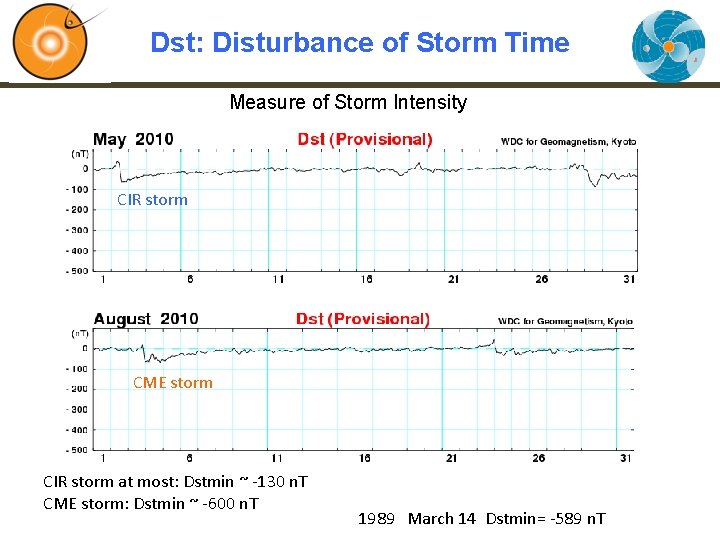
Dst: Disturbance of Storm Time Measure of Storm Intensity CIR storm CME storm CIR storm at most: Dstmin ~ -130 n. T CME storm: Dstmin ~ -600 n. T 1989 March 14 Dstmin= -589 n. T
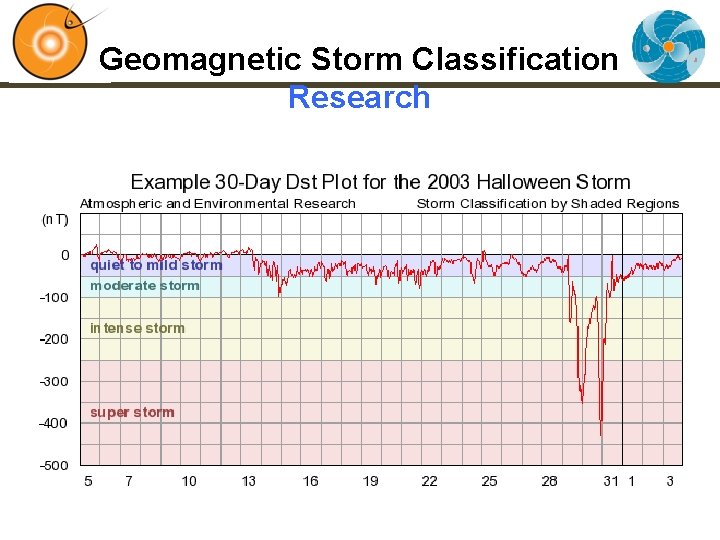
Geomagnetic Storm Classification Research
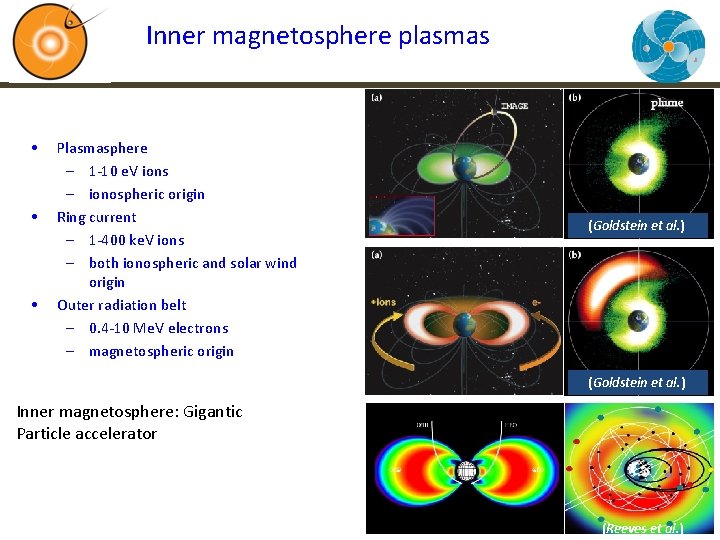
Inner magnetosphere plasmas • • • Plasmasphere – 1 -10 e. V ions – ionospheric origin Ring current – 1 -400 ke. V ions – both ionospheric and solar wind origin Outer radiation belt – 0. 4 -10 Me. V electrons – magnetospheric origin (Goldstein et al. ) Inner magnetosphere: Gigantic Particle accelerator (Reeves et al. )
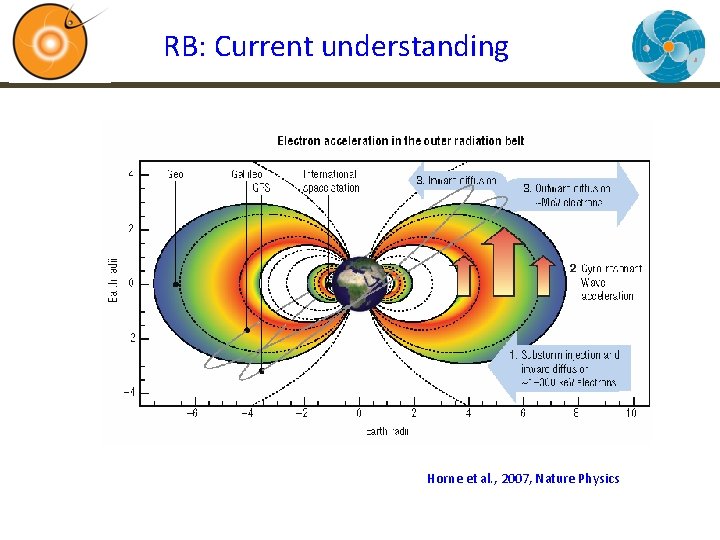
RB: Current understanding Horne et al. , 2007, Nature Physics
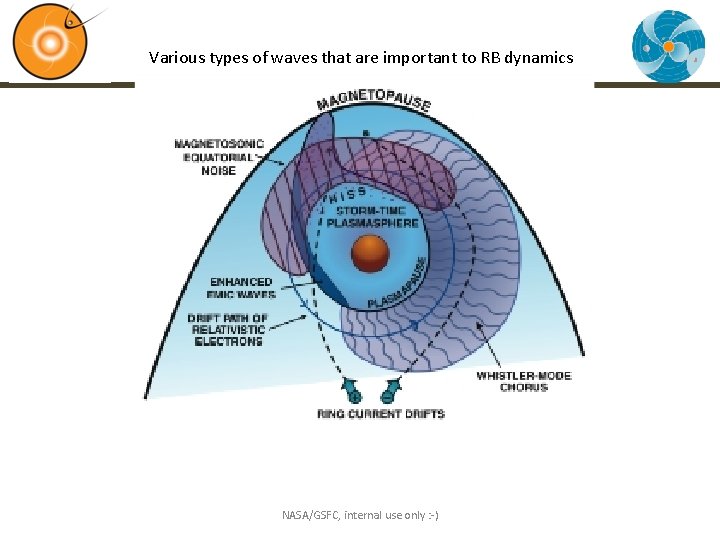
Various types of waves that are important to RB dynamics NASA/GSFC, internal use only : -)
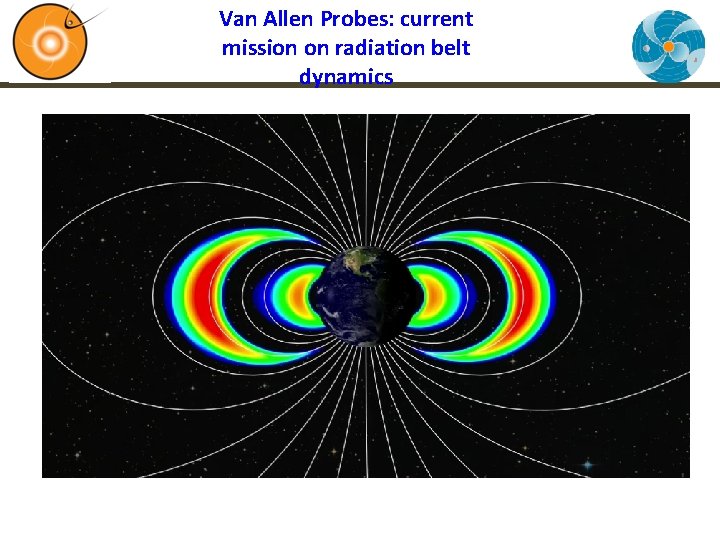
Van Allen Probes: current mission on radiation belt dynamics Courtesy: Baker et al.
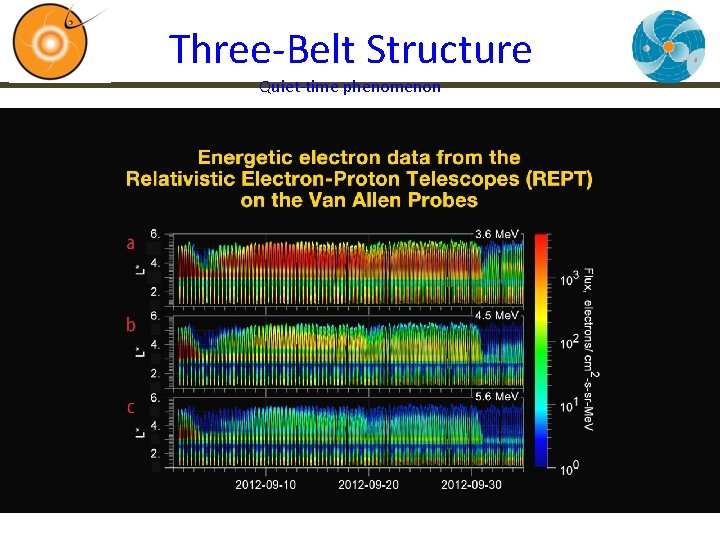
Three-Belt Structure Quiet-time phenomenon
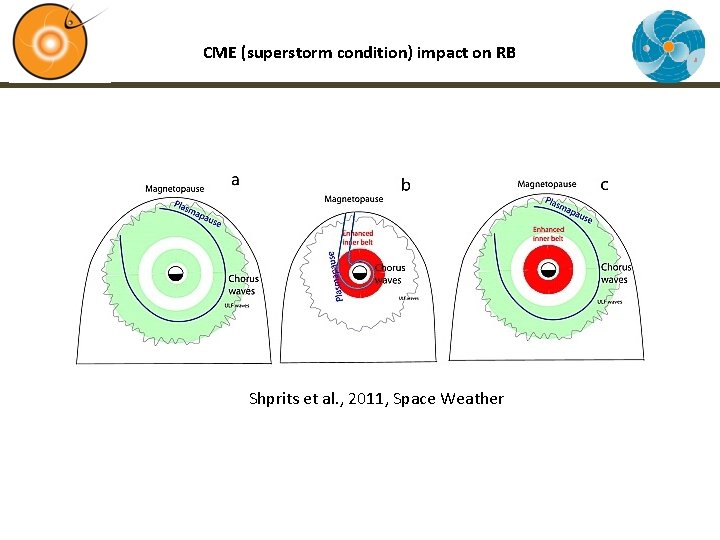
Different impacts on RB CME vs CIR storms • CME geomagnetic storms: RB flux peak inside geosynchronous orbit. The peak locations moves inward as storm intensity increases • CIR geomagnetic storms: More responsible for the electron radiation level enhancement at GEO orbit
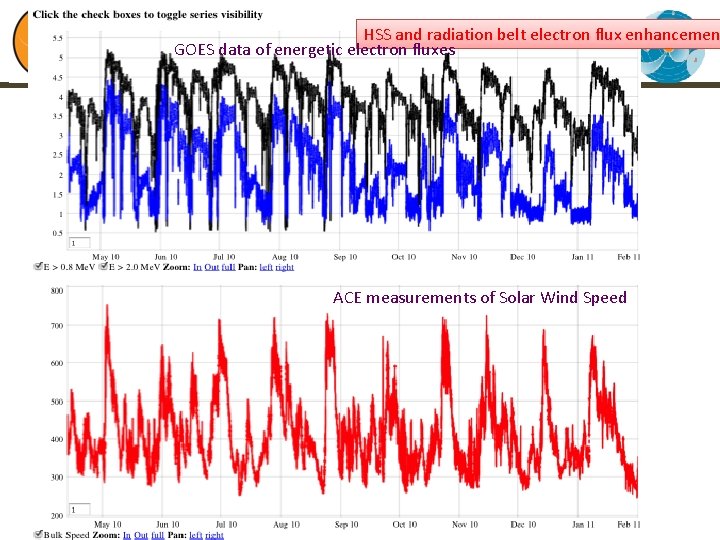
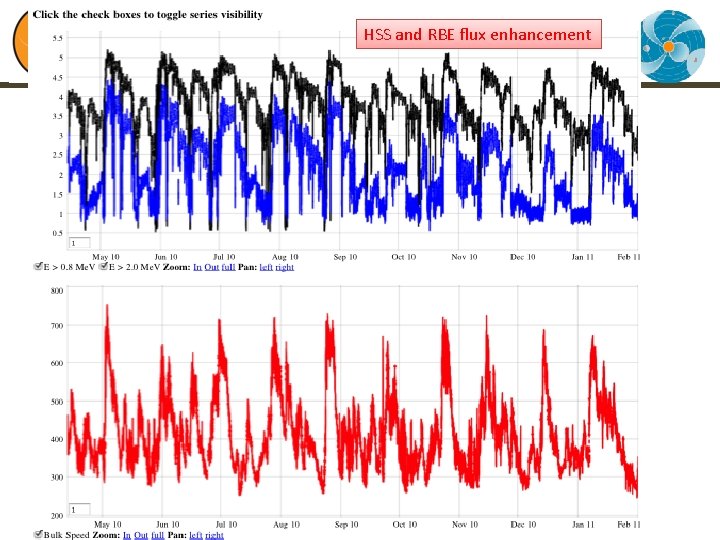
HSS and radiation belt electron flux enhancemen GOES data of energetic electron fluxes ACE measurements of Solar Wind Speed NASA/GSFC, internal use only : -)
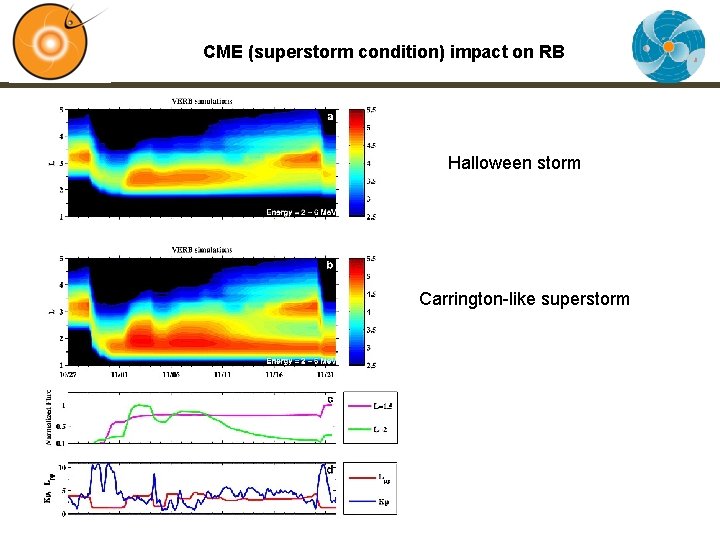
CME (superstorm condition) impact on RB Halloween storm Carrington-like superstorm
CME (superstorm condition) impact on RB Shprits et al. , 2011, Space Weather
SWx consequences of CIR HSS: usually long-duration (3 -4 days) Radiation belt electron flux enhancement Surface charging Geomagnetic disturbances (moderate at most) heating of upper atmosphere: satellite drag Energetic electron radiation: ( the >0. 8 Me. V electron flux exceeding 10^5 pfu alert threshold): takes 2 -3 days from the CIR interface Although geomagnetic activity (due to CIR HSS) during the declining and minimum phases of the solar cycle appears to be relatively benign (especially in comparison to the dramatic and very intense magnetic storms caused by interplanetary coronal mass ejections (ICMEs) that predominate during solar maximum), this is misleading. Research has shown that the time-averaged, accumulated energy input into the magnetosphere and ionosphere due to high speed streams can be greater during these solar phases than due to ICMEs during solar maximum!
Homework March 1, 2011 high speed streams, find out the time of arrival and examine its behavior in terms of speed and density profile, IMF characteristics, when the >0. 8 Me. V energetic electron flux at GOES started to exceed 10^5 pfu? Do the same for the June 4, 2012 HSS You can do the homework using this i. SWA layout for HSS http: //bit. ly/HSS_layout_20110301
Homework Find all Kp >=6 times for the year 2013 (Challenging one -optional: and the potential cause of Kp>=6 – CME, CIR HSS or combination, or others) Has the magnetopause stand-off distance been smaller than 6. 6 Re (Re: Earth radii), i. e. , magnetopause been pushed inside geosynchronous orbit? when? (year 2013) The periods when GOES >0. 8 Me. V electron flux exceeding 10^5 pfu (year 2013) Iswa layout for homework http: //1. usa. gov/191 s 6 AU
Homework on SEP radiation storms 1. Find when GOES > 10 Me. V proton flux exceeding 10 pfu in 2013 Those who like challenges 2. Find when 13 -100 Me. V proton flux at STEREO A exceeding 0. 1 pfu/Me. V in 2013 3. Do the same for STEREO B Iswa layout to help you with the homework questions http: //1. usa. gov/15 Eov 7 s
magnetospsheric products NASA/GSFC, internal use only : -)
Kp "planetarische Kennziffer" ( = planetary index). • Geomagnetic activity index range from 0 -9 disturbance levels of magnetic field on the ground - currents 1. Non-event - period of 12/01/2010 – 12/7/2010 2. Moderate event – April 5, 2010 3. Extreme event - Oct 29 – Oct 31, 2003 http: //bit. ly/Kp_layout Threshold Kp>=6 NASA/GSFC, internal use only : -)
HSS and RBE flux enhancement NASA/GSFC, internal use only : -)
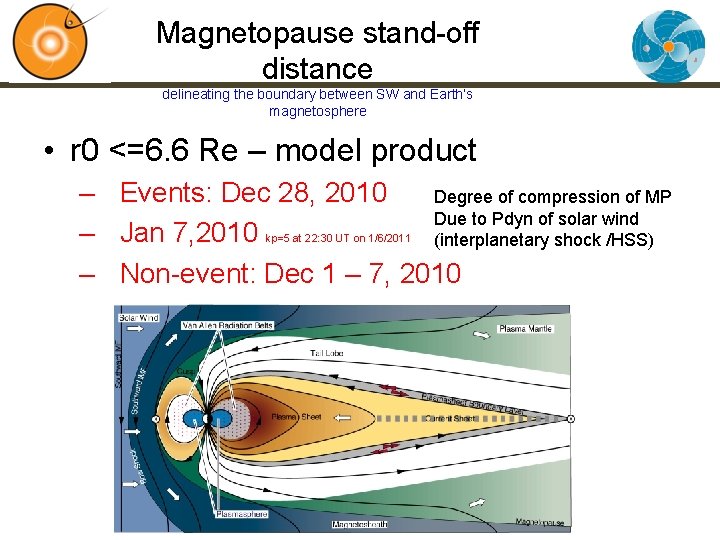
Magnetopause stand-off distance delineating the boundary between SW and Earth’s magnetosphere • r 0 <=6. 6 Re – model product – Events: Dec 28, 2010 Degree of compression of MP Due to Pdyn of solar wind – Jan 7, 2010 (interplanetary shock /HSS) – Non-event: Dec 1 – 7, 2010 kp=5 at 22: 30 UT on 1/6/2011 NASA/GSFC, internal use only : -)
An i. SWA layout for magnetospheric products http: //bit. ly/iswa_mag