
Reboot training Date and Time Module 5 Portfolio
Reboot training Date and Time Module 5 – Portfolio Creation Name of the presenter, Name of the organisation
Agenda of the Session • Introduction to the session • Revision of homework for Module 4 – Career and Skills Flexibility • Presentation of Module 5 – Portfolio Creation • Presentation of Portfolios and why they are important • Illustrating different things with portfolios • Break • Moodboards of the self • Developing a portfolio • Conclusions and the end of the session, Portfolio mentoring session booking, certificates
Reflection on Homework of Module 4 – Career and Skills Flexibility • How did it feel? • How were the exercises? • What was difficult and what was easy? • Did you learn something new about yourself? • Was something empowering? • How do you feel about soft skills? Discussion about homework
Module 5 Portfolio Creation Module 5 –Portfolio Creation focuses on how to create portfolios. In addition, the module provides tools and tips for this. Portfolios are essential when showcasing your work and results. It opens up the real content and nature of the work done for a potential employer. • How did the Open Educational Resources (OER) feel? Did you learn something new? • How do you feel about the topic? • Have you used portfolios? Where and how? • Do have any other examples of it? • How could you benefit from it? • Other thoughts?
Module 5 Portfolio Creation • Module 5 – Portfolio Creation focuses on how to create portfolios. In addition, the module provides tools and tips for this. Portfolios are an essential when showcasing your work and results. It opens up the real content and nature of the work done for a potential employer. • Objectives: • To develop understanding of a portfolio and how it can be used for showcasing skills and experiences to a potential employer • To obtain practical skills to independently develop portfolios for different jobs, contexts, sectors and professions • To become aware of online tools for portfolio creation
What is a Portfolio? • Portfolio is a marketing tool of your skills and capacities • Portfolios can provide a holistic idea to the employer of the experiences and skills of a candidate, including hard skills and soft skills and their context • Portfolio presents and documents work samples, skills, competences, contexts, education, characteristics and elements which are important to demonstrate career potential and the quality of your work • It can also contain awards, feedback, showcase written samples, etc. and castorspecific elements, e. g. samples of handmade textiles • It can be electronic or tangible • It can tell about your personality, soft skills (e. g. creativity) and suitability onto a sector more than a CV, hence it can be an addition to a CV, or added to a CV as a link
The Difference Between a Portfolio and a CV/Resume Portfolio… CV… • A showcase collection of samples of your work, delivery of work, outcomes, skills and/or activities. • A demonstration of the quality of your work. • Consists of text and visual elements, vectors, infographics and other pictures, also audiovisual material. • A tool for branding the work and skills. • Can be long, e. g. many pages. • A compact listing of a person’s work and educational history, academic qualifications, and other elemental information such as language skills, IT skills, driving licence, and any other elements which might be essential for the job, such as exhibitions, and publications. • A listing of the events, grades, and additional information. • Mainly text with some infographics. Some, depending on the aim, can be more visual and personalised. • Generally short.
Examples of Portfolios 1/2 • www. pinterest. com/rebootproject 2020 • A magazine style resume that gave a job without an interview: https: //digitalsynopsis. com/buzz/gq-magazine-cover-design-sumukh-mehtaresume/ • 17 Winning Teaching Portfolio Examples That will Inspire You: https: //mytechclassroom. com/teaching-portfolio-examples/ • Psychology Portfolio by Hannah Marie on Prezi: https: //prezi. com/yu 7 ax 9 vh 1 vqt/psychology-portfolio/ • Paralegal Portfolio by Stephanie Bowman: https: //www. slideshare. net/Stephanie. Bowman/paralegal-portfolio-56383430
Examples of Portfolios 2/2 • Industrial Design Portfolio by Gokhan Keman: https: //www. coroflot. com/gokhankeman/Industrial-Design-Portfolio • Professor Anna Cramer: http: //annecramer. weebly. com/you-are-a-brand-socialmedia-portfolio-project. html • Christopher doyle™ identity guidelines 2008 https: //www. slideshare. net/hasantayyar/christopher-doyle-identity-guidelines-2008 • My Personal Brand Book: https: //www. slideshare. net/danmgray/my-personal-brandbook-7193493 • Personal Brand Consultant Brand Book: https: //www. slideshare. net/kmhelmin/personalbrand-consultant-brand-book • BEST VIDEO CV EVER by MARK LERUSTE: https: //youtu. be/c_PZTAW 5 pi. Q
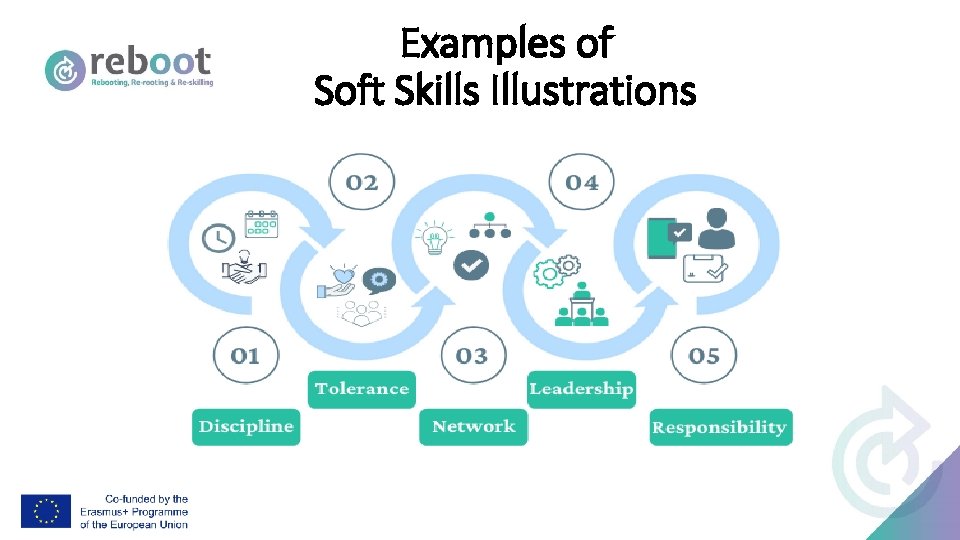
Examples of Soft Skills Illustrations
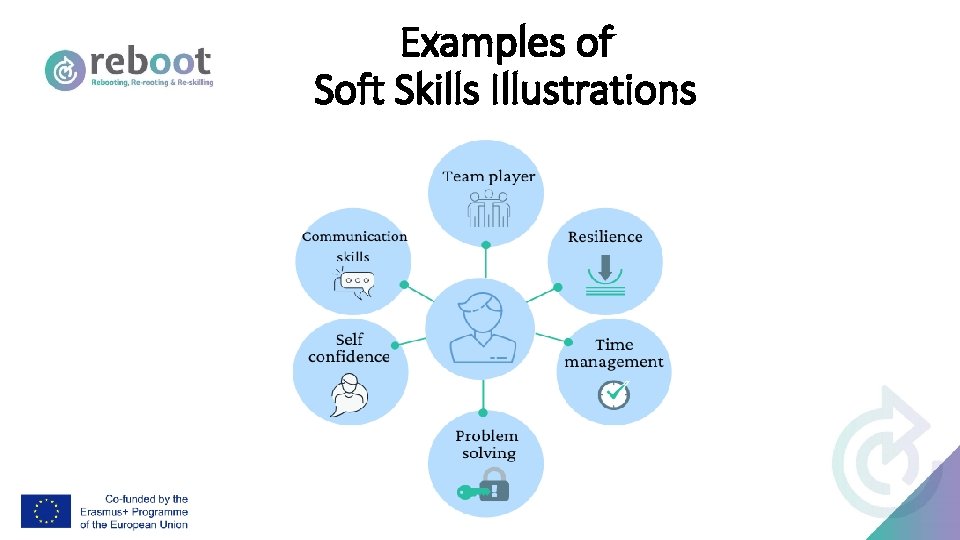
Examples of Soft Skills Illustrations
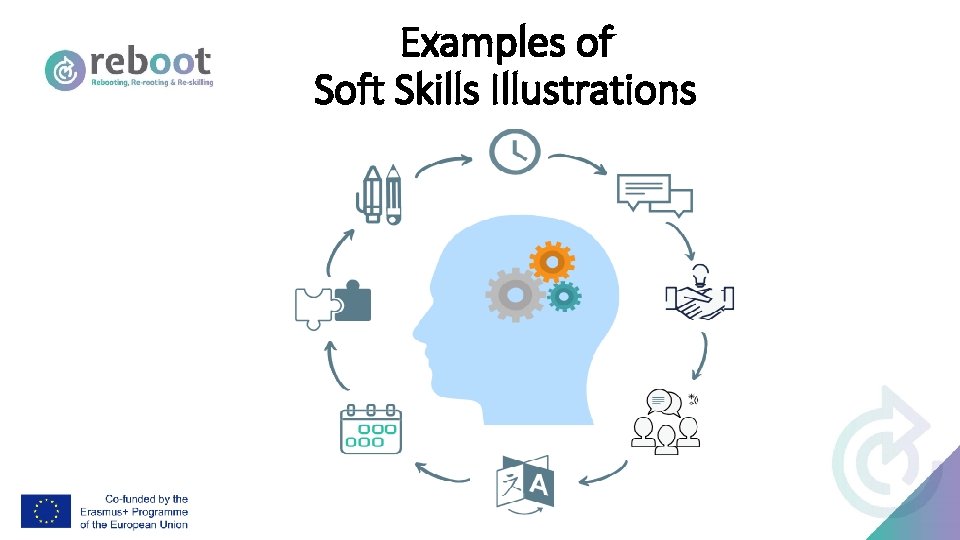
Examples of Soft Skills Illustrations
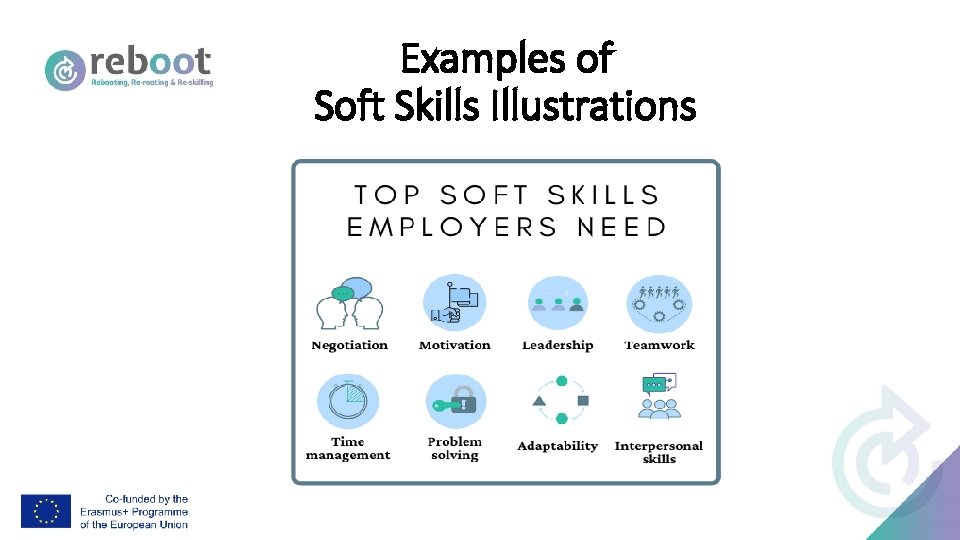
Examples of Soft Skills Illustrations
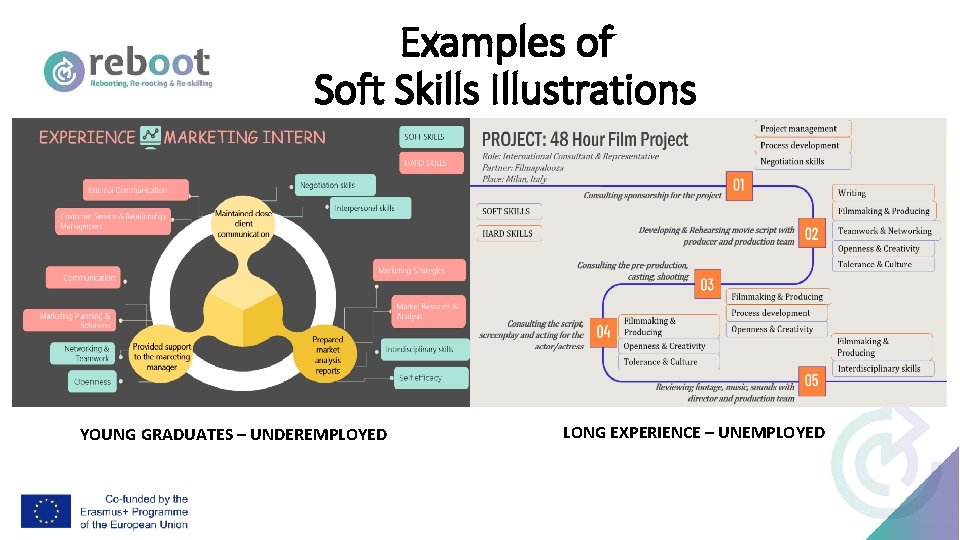
Examples of Soft Skills Illustrations YOUNG GRADUATES – UNDEREMPLOYED LONG EXPERIENCE – UNEMPLOYED
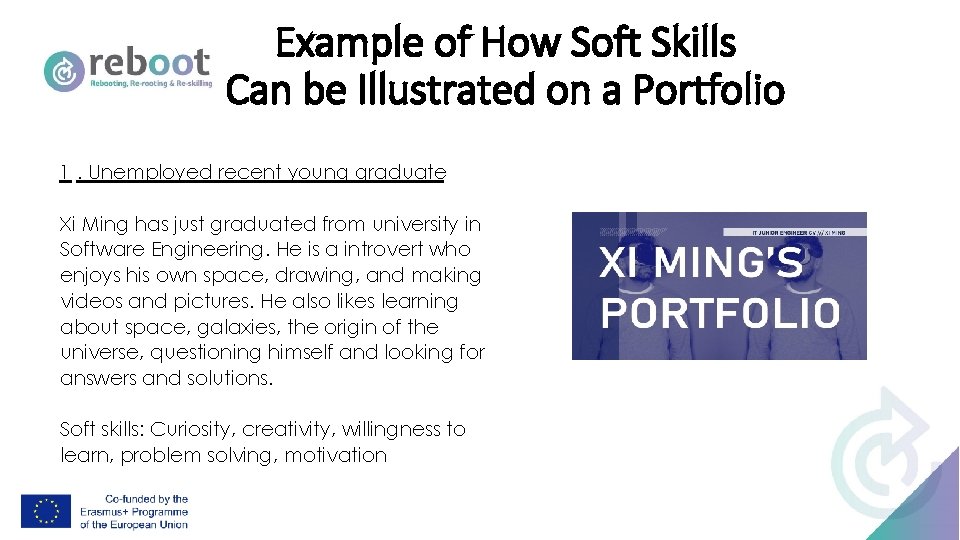
Example of How Soft Skills Can be Illustrated on a Portfolio 1. Unemployed recent young graduate Xi Ming has just graduated from university in Software Engineering. He is a introvert who enjoys his own space, drawing, and making videos and pictures. He also likes learning about space, galaxies, the origin of the universe, questioning himself and looking for answers and solutions. Soft skills: Curiosity, creativity, willingness to learn, problem solving, motivation
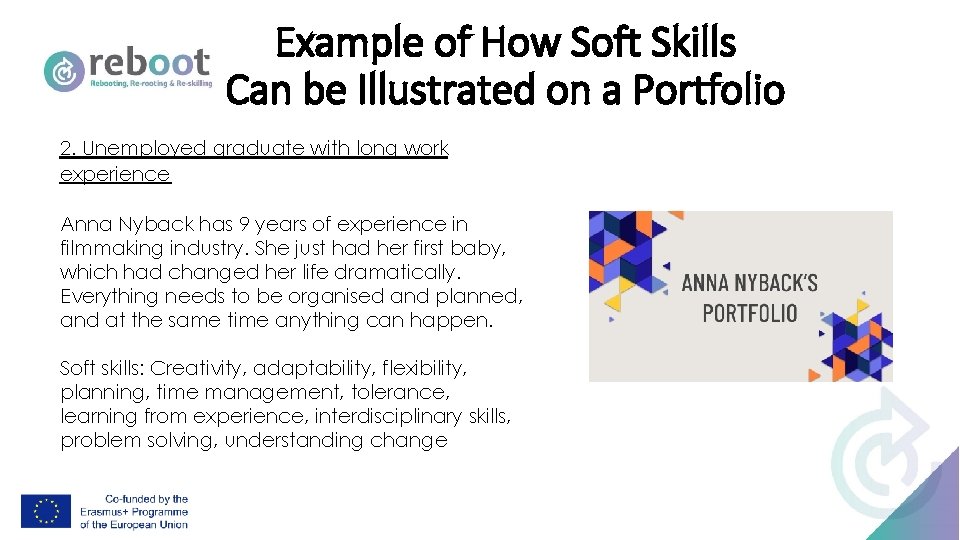
Example of How Soft Skills Can be Illustrated on a Portfolio 2. Unemployed graduate with long work experience Anna Nyback has 9 years of experience in filmmaking industry. She just had her first baby, which had changed her life dramatically. Everything needs to be organised and planned, and at the same time anything can happen. Soft skills: Creativity, adaptability, flexibility, planning, time management, tolerance, learning from experience, interdisciplinary skills, problem solving, understanding change
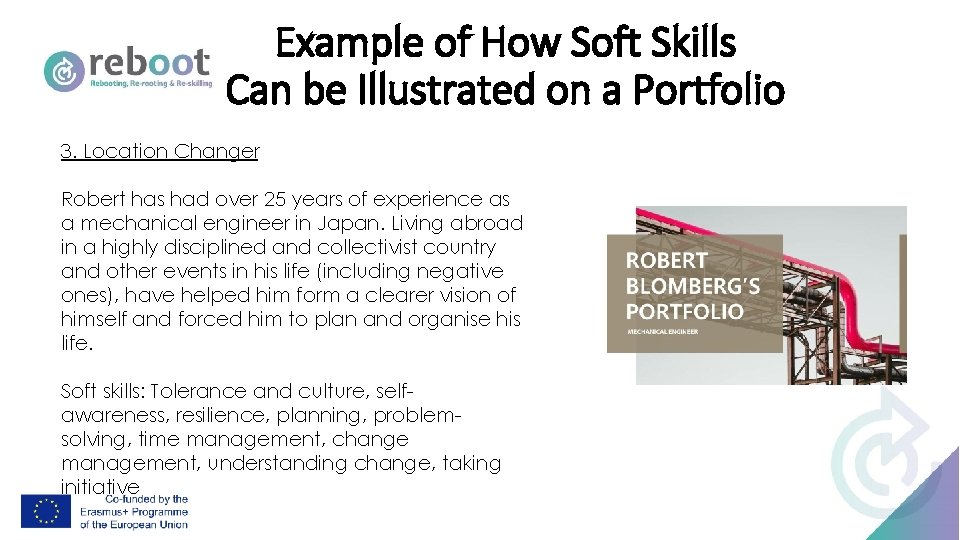
Example of How Soft Skills Can be Illustrated on a Portfolio 3. Location Changer Robert has had over 25 years of experience as a mechanical engineer in Japan. Living abroad in a highly disciplined and collectivist country and other events in his life (including negative ones), have helped him form a clearer vision of himself and forced him to plan and organise his life. Soft skills: Tolerance and culture, selfawareness, resilience, planning, problemsolving, time management, change management, understanding change, taking initiative
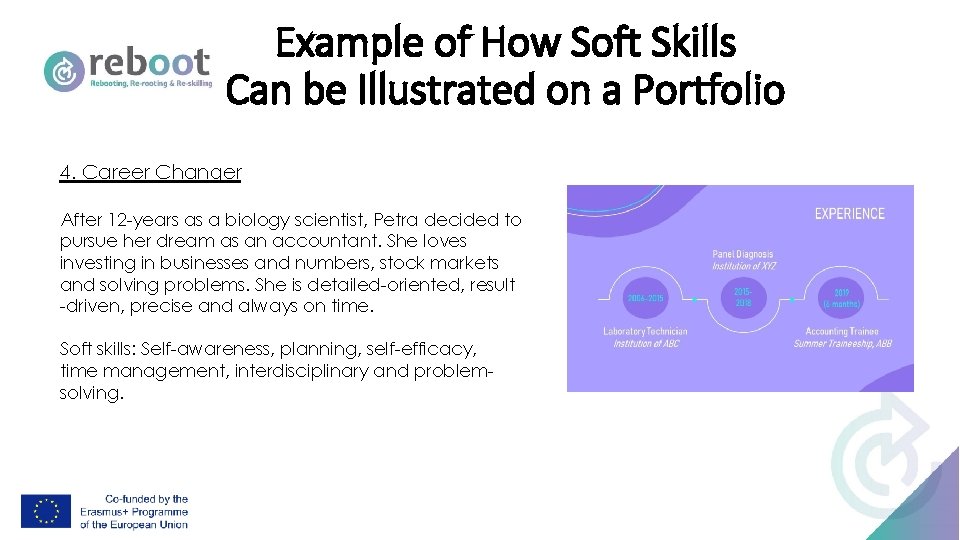
Example of How Soft Skills Can be Illustrated on a Portfolio 4. Career Changer After 12 -years as a biology scientist, Petra decided to pursue her dream as an accountant. She loves investing in businesses and numbers, stock markets and solving problems. She is detailed-oriented, result -driven, precise and always on time. Soft skills: Self-awareness, planning, self-efficacy, time management, interdisciplinary and problemsolving.
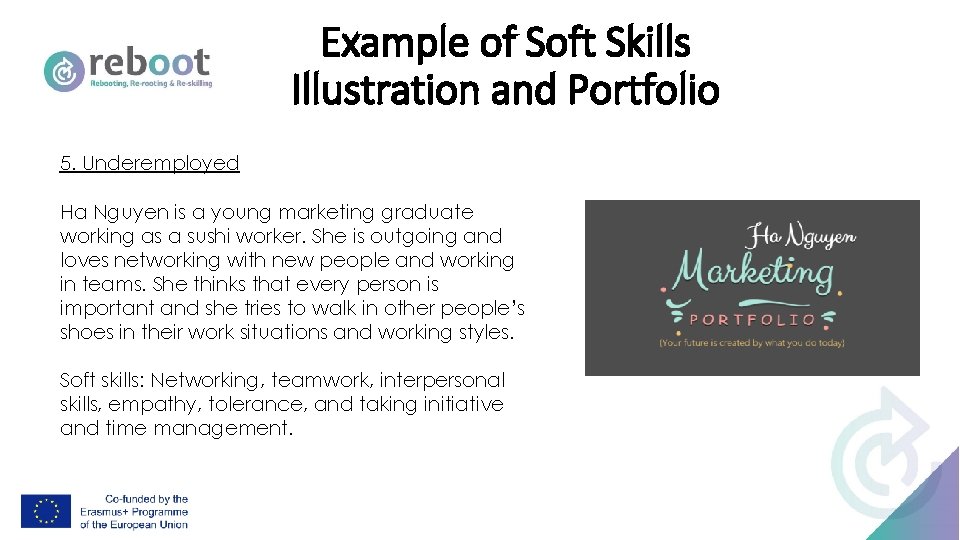
Example of Soft Skills Illustration and Portfolio 5. Underemployed Ha Nguyen is a young marketing graduate working as a sushi worker. She is outgoing and loves networking with new people and working in teams. She thinks that every person is important and she tries to walk in other people’s shoes in their work situations and working styles. Soft skills: Networking, teamwork, interpersonal skills, empathy, tolerance, and taking initiative and time management.
Break
Warming up with Moodboards • A moodboard is a visual collage to present the essence and the idea of something, for example, of a perfect summer day, a dream to reach or a person. • A moodboard can use images, text, materials, objects or other things. Hence it can also be of a visual collage to represent the self and professional aspects including soft skills.
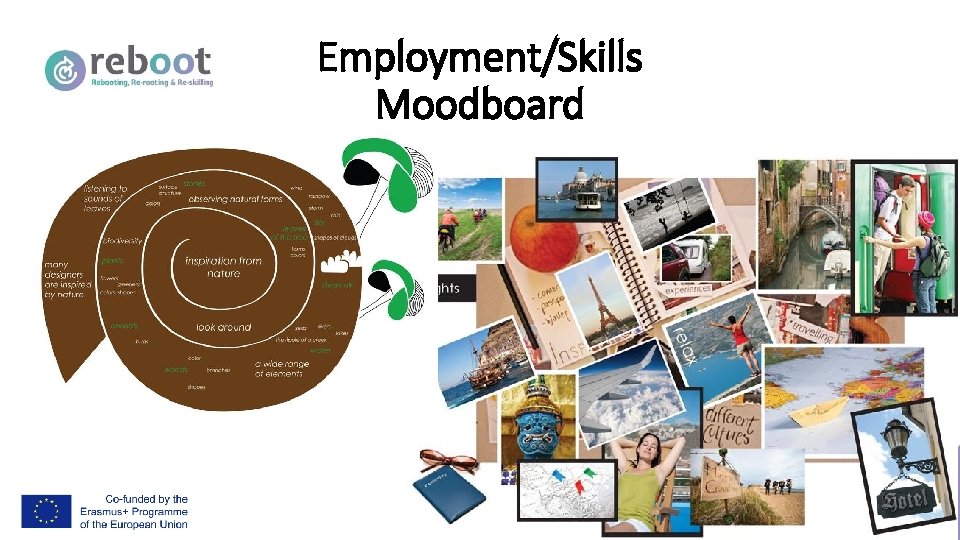
Employment/Skills Moodboard
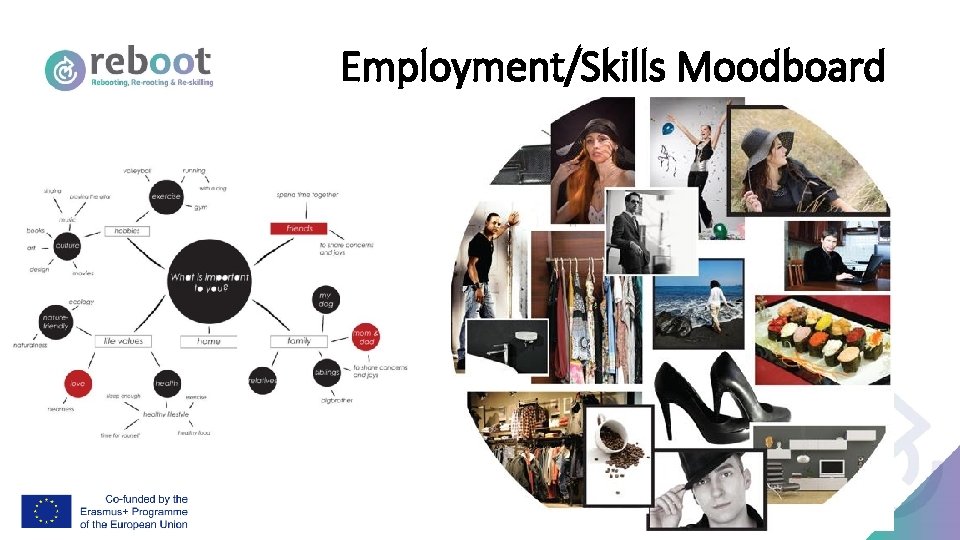
Employment/Skills Moodboard
Moodboard Exercise • The aim of this exercise is to learn to express concepts visually in a communicative way and to learn about the power of visuality. 1. Create a moodboard of your career aim, strengths or any other elements related to work. 2. Share, show and discuss the moodboards in groups. Let others guess what the idea that transmits from the moodboard is and let the maker explain it. Discuss these. 3. Keep the moodboards and use them as dream-boards to remind you about your goals.
Let’s Get Started with Portfolios • In portfolio development, one should observe work experiences, different jobs and singular projects but also life experiences and hobbies, and what can be drawn from them. Drawing from experiences helps to understand which soft skills and hard skills one masters, and how these are connected. • Different techniques can be used for portfolios, for instance a collage, an enhanced infographic or another image, a visual process description, a comic strip, a slideshow (e. g. on Prezi or in a video format), or a video, whichever is the best tool for yourself and one that is suitable for the sector or organisation you are applying for. • Examples and visuality help to understand what has really happened more than just a few rows of text • Portfolios should be clear, interesting and suit the sector and the company/job • What could suit your sector? What would you have in it?
Tips for Portfolio Content 1/2 • Work samples • Moments of success at work • Overcoming challenging situations • Analysing general work process and what is linked to them • Life experiences, e. g. motherhood, tenacity of searching for a job, migration stories… • Examples of study projects and works • Examples of positive feedback • Hobbies, interests, achievements…
Tips for Portfolio Content 1/2 • Jobs while studying, student activities at the university or during free time, etc. • Create solutions for cases you detect, or for your own projects • Analyse your underemployed positions and their importance as this does not only reveal soft skills, but it can be linked to your own substance field, and this can also show you can analyse and organise work • You may also use the reason for the break as a strength, for instance, motherhood or having learnt something new • Show that you have kept yourself updated with your sector if you have been away from your sector, or if you want to change the sector
Key Elements for Creating a Portfolio 1/3 1. The starting point • Knowing yourself, detecting your own soft and hard skills, work experiences, other experiences and hobbies. • Customising the portfolio for different purposes and employers. 2. Things to express on a portfolio • Your work and its outcomes, samples, processes, projects, work phases, quality of your work, contexts, competences, soft skills and hard skills and their context of use, your characteristics, but also other experiences, interests and hobbies, and personality. This includes experiences form underemployed positions. • You can also use awards, feedback, exhibitions or even handmade samples or images of them, volunteer activity, networks, or big achievements, even climbing on a mountain, as these can tell about your soft skills and personality.
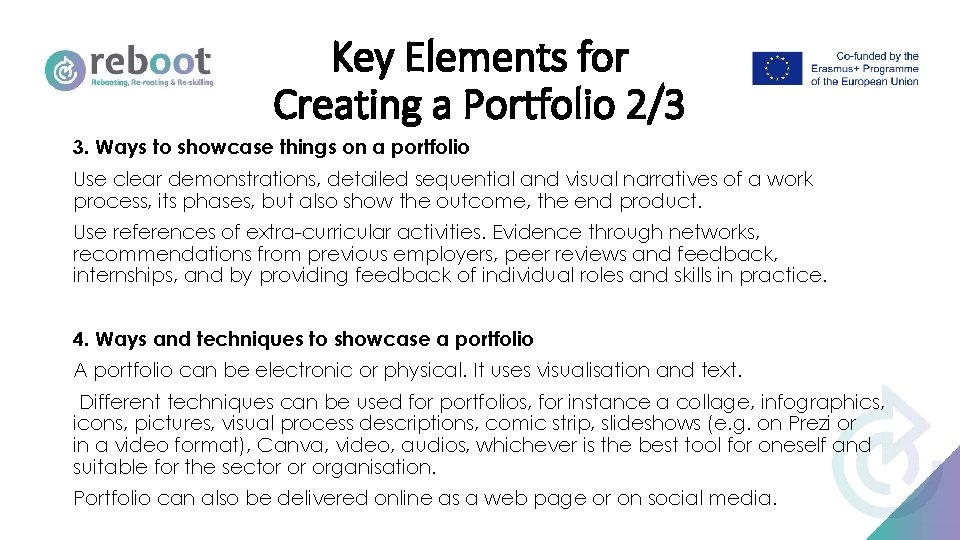
Key Elements for Creating a Portfolio 2/3 3. Ways to showcase things on a portfolio Use clear demonstrations, detailed sequential and visual narratives of a work process, its phases, but also show the outcome, the end product. Use references of extra-curricular activities. Evidence through networks, recommendations from previous employers, peer reviews and feedback, internships, and by providing feedback of individual roles and skills in practice. 4. Ways and techniques to showcase a portfolio A portfolio can be electronic or physical. It uses visualisation and text. Different techniques can be used for portfolios, for instance a collage, infographics, icons, pictures, visual process descriptions, comic strip, slideshows (e. g. on Prezi or in a video format), Canva, video, audios, whichever is the best tool for oneself and suitable for the sector or organisation. Portfolio can also be delivered online as a web page or on social media.
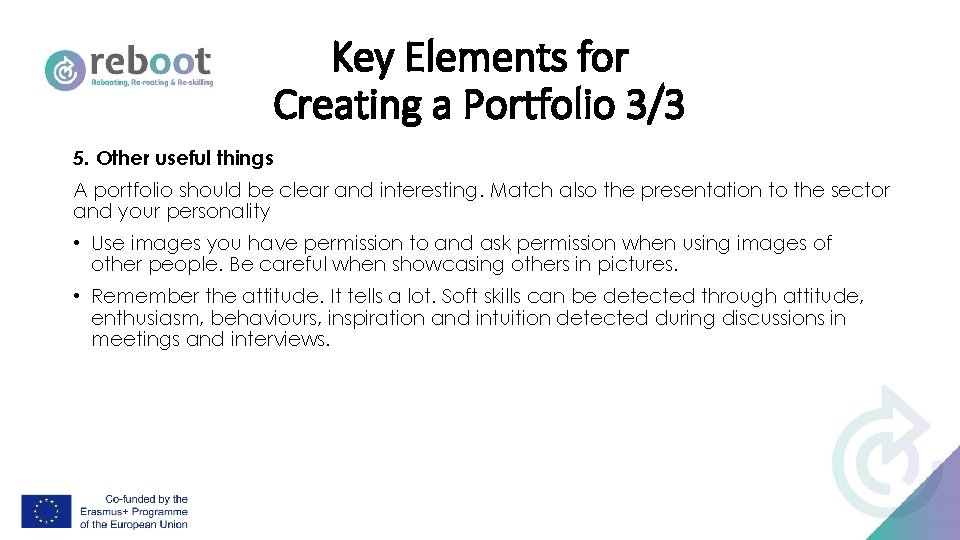
Key Elements for Creating a Portfolio 3/3 5. Other useful things A portfolio should be clear and interesting. Match also the presentation to the sector and your personality • Use images you have permission to and ask permission when using images of other people. Be careful when showcasing others in pictures. • Remember the attitude. It tells a lot. Soft skills can be detected through attitude, enthusiasm, behaviours, inspiration and intuition detected during discussions in meetings and interviews.
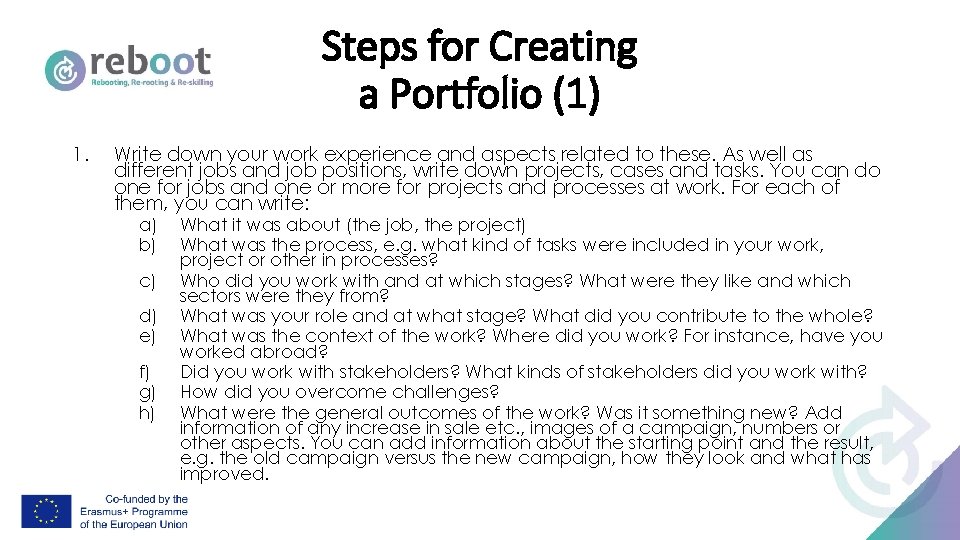
Steps for Creating a Portfolio (1) 1. Write down your work experience and aspects related to these. As well as different jobs and job positions, write down projects, cases and tasks. You can do one for jobs and one or more for projects and processes at work. For each of them, you can write: a) b) c) d) e) f) g) h) What it was about (the job, the project) What was the process, e. g. what kind of tasks were included in your work, project or other in processes? Who did you work with and at which stages? What were they like and which sectors were they from? What was your role and at what stage? What did you contribute to the whole? What was the context of the work? Where did you work? For instance, have you worked abroad? Did you work with stakeholders? What kinds of stakeholders did you work with? How did you overcome challenges? What were the general outcomes of the work? Was it something new? Add information of any increase in sale etc. , images of a campaign, numbers or other aspects. You can add information about the starting point and the result, e. g. the old campaign versus the new campaign, how they look and what has improved.
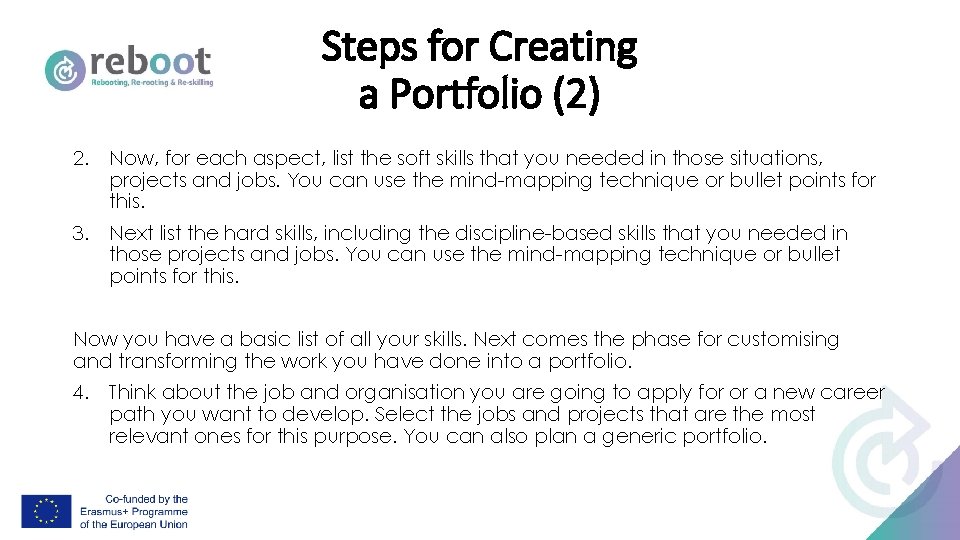
Steps for Creating a Portfolio (2) 2. Now, for each aspect, list the soft skills that you needed in those situations, projects and jobs. You can use the mind-mapping technique or bullet points for this. 3. Next list the hard skills, including the discipline-based skills that you needed in those projects and jobs. You can use the mind-mapping technique or bullet points for this. Now you have a basic list of all your skills. Next comes the phase for customising and transforming the work you have done into a portfolio. 4. Think about the job and organisation you are going to apply for or a new career path you want to develop. Select the jobs and projects that are the most relevant ones for this purpose. You can also plan a generic portfolio.
Steps for Creating a Portfolio (3) 4. Make a visual or audio presentation of your portfolio with the selected jobs, cases and projects. Choose the technique that best suits you and this purpose. You can use videos, comic strips, graphic programmes, Power. Points etc. to work on it. Remember only to use images you have a permission for or those that are copyright free. 5. Writing a script and planning what you need in different work phases can assist this process. Use infographics and other visual cues and representations as they help to make your portfolio clearer and easier to read. 6. Have someone review your portfolio and do not forget your contact information. 7. Besides work and projects, you can also use hobbies, volunteer work, life experiences and other areas which can provide valuable skills. Voilà! Done! Great Job!
When Working on Portfolios, Keep in Mind: • When working on the portfolios, keep a few things on mind: • Portfolio is a showcase of your work. It should include examples of what you have done and also in some cases, how you did it • You can express many things in a portfolio including your personality and philosophy • One picture can tell more than 1000 words, do not forget how powerful and explanatory images are • Portfolios are for any sector • Be clear in your portfolio • Update it regularly
Tools and Website to Help You to Create a Portfolio (1) Different techniques to use in portfolios, for instance: - Print screened images - Feedback - A collage - An enhanced infographic or another image - A visual process description - A comic strip - A PPT or slideshow (e. g. on Prezi or in a video format) - Videos and film clips of real testing situations (please ask the permission), etc. - Text - Handwriting, drawing, photos… - …whichever is the best tool for oneself and suitable for the sector or organisation.
Tools and Website to Help You to Create a Portfolio (1) There is no need to master specific ICT programmes Examples of existing online tools and platforms for creating portfolios - Prezi: www. prezi. com - 10+ Best Free Portfolio Website Tools & Templates in 2020: https: //designshack. net/articles/software/free-portfolio-website/ - 8 top tools for creating a portfolio: https: //www. creativebloq. com/features/8 -toptools-for-creating-a-portfolio - Squarespace: www. squarespace. com - Wix: www. wix. com/free-online-portfolio - Format: www. format. com
Tools and Website to Help You to Create a Portfolio (2) - Top 23 Free Online Portfolio Websites to Create Perfect UX/UI Design Portfolios: https: //www. mockplus. com/blog/post/free-online-portfolio-websites - 20 Tools to Showcase Your Portfolio – Mashable: https: //mashable. com/2013/09/17/online-portfolio/? europe=true - Create an Online Portfolio with Jimdo https: //www. jimdo. com/website/portfolio/ - 10 Tools to Create Online Student Portfolios: https: //www. gettingsmart. com/2016/01/10 -tools-to-create-online-studentportfolios/ - 9 Best Portfolio Website Builders: https: //www. websitebuilderexpert. com/websitebuilders/best/portfolio/ And many more
Tips for Unemployed and Underemployed Graduates Recent/young graduates - Examples of study projects and works - Examples of positive feedback - Hobbies, interests - Jobs while studying, volunteering activities at university or during free time, etc. Underemployed graduates Experienced graduates - Success moments at work - Overcoming challenging situations - Life experiences, e. g. motherhood, tenacity of searching for a job, migration stories… - Work samples - Motivation - Using tips from the unemployed groups - Pointing out what soft skills for in the underemployed position - Make connection between the underemployed position and your own field or what you aim towards All - Hobbies, life experiences where respective soft skills have been applied…
Conclusions and Mentoring • Reflections about today’s session: • Did you gain any new insights and ideas? What did you learn? • What did you understand about your own soft skills? • Any other thoughts? • Reflections from training • Certificates • Individual portfolio mentoring sessions
http: //reboot-project. eu/ #Reboot. Project. EU Facebook: Reboot Project Pinterest: www. pinterest. com/rebootproject 2020 The European Commission support for the production of this publication does not constitute an endorsement of the contents which reflects the views only of the authors and the Commission cannot be held responsible for any use which may be made of the information contained therein. The Finnish National Agency for Education is hosting the national agency for the European Union’s education and youth programmes. This work is licenced under Copyright Creative Commons Attribution Share. Alike CC BY-SA 4. 0 International license.
- Slides: 40