
Reasons businesses exist 1 of 16 ECBY 05U
Reasons businesses exist 1 of 16 ECB_Y 05_U 2_SS_Reas. Bus. Exist
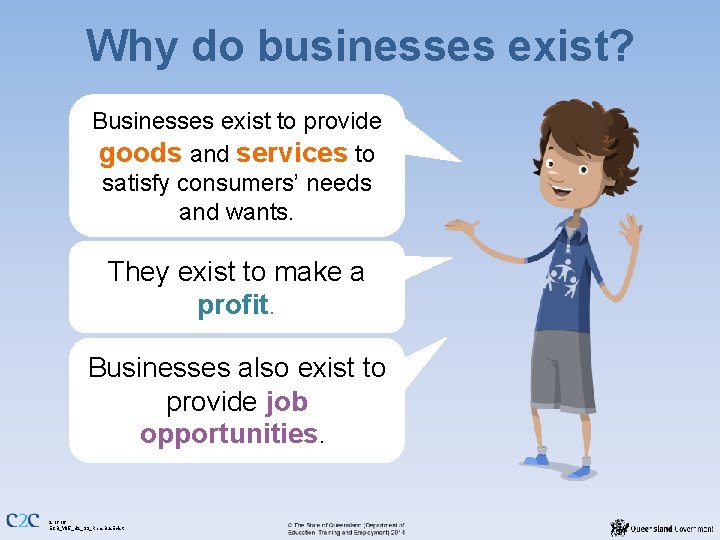
Why do businesses exist? Businesses exist to provide goods and services to satisfy consumers’ needs and wants. They exist to make a profit. Businesses also exist to provide job opportunities. . 2 of 16 ECB_Y 05_U 2_SS_Reas. Bus. Exist

Differences between goods and services Goods are tangible Goods are things you can see and touch = tangible 3 of 16 ECB_Y 05_U 2_SS_Reas. Bus. Exist
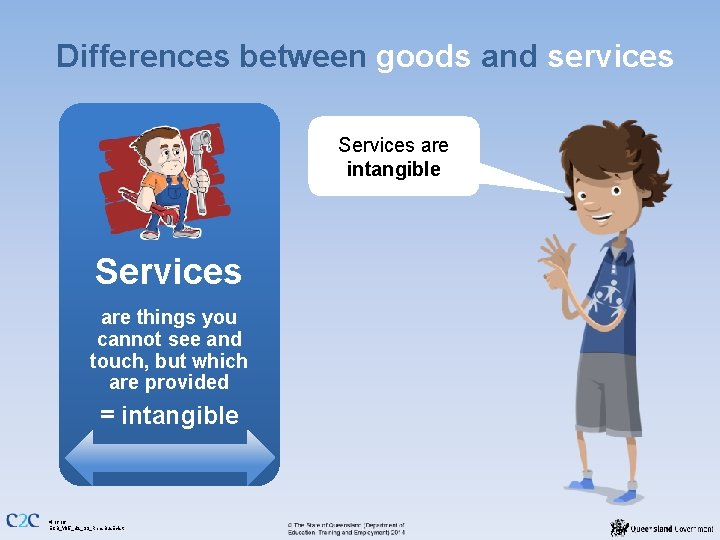
Differences between goods and services Services are intangible Services are things you cannot see and touch, but which are provided = intangible 4 of 16 ECB_Y 05_U 2_SS_Reas. Bus. Exist
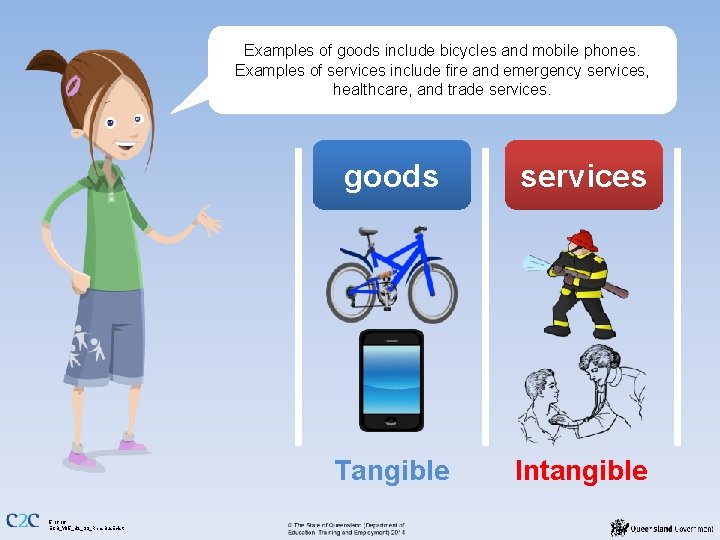
Examples of goods include bicycles and mobile phones. Examples of services include fire and emergency services, healthcare, and trade services. 5 of 16 ECB_Y 05_U 2_SS_Reas. Bus. Exist goods services Tangible Intangible
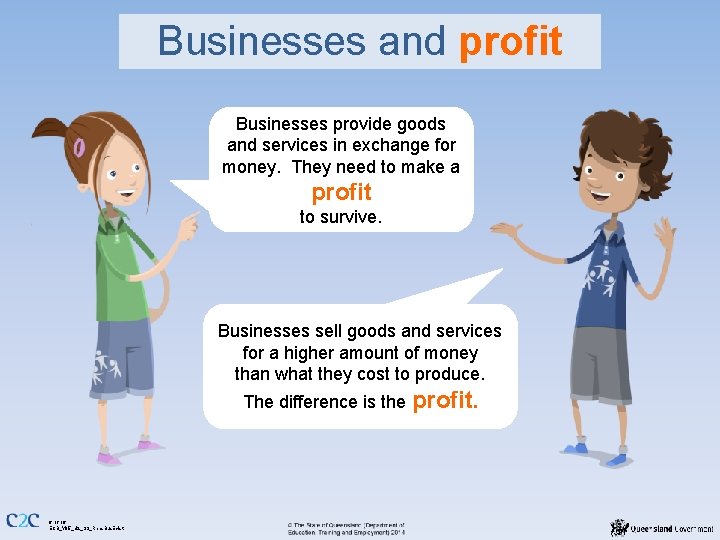
Businesses and profit Businesses provide goods and services in exchange for money. They need to make a profit to survive. Businesses sell goods and services for a higher amount of money than what they cost to produce. The difference is the profit. 6 of 16 ECB_Y 05_U 2_SS_Reas. Bus. Exist
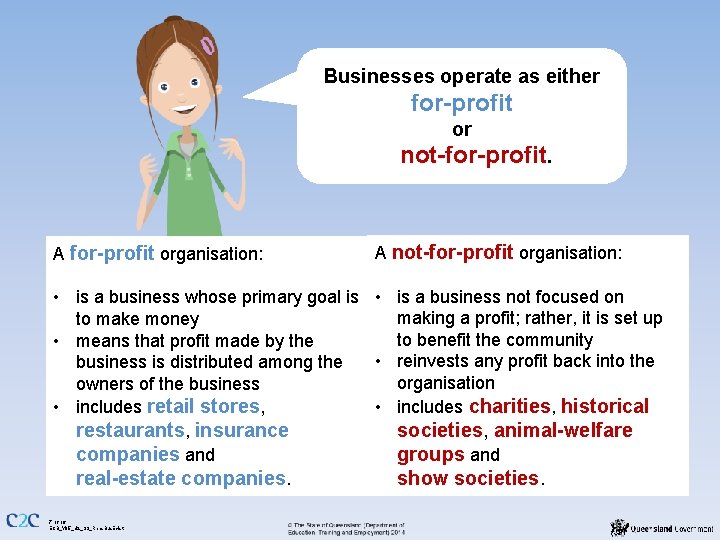
Businesses operate as either for-profit or A not-for-profit. A for-profit organisation: A not-for-profit organisation: • is a business whose primary goal is • is a business not focused on making a profit; rather, it is set up to make money to benefit the community • means that profit made by the • reinvests any profit back into the business is distributed among the organisation owners of the business • includes charities, historical • includes retail stores, societies, animal-welfare restaurants, insurance groups and companies and show societies. real-estate companies. 7 of 16 ECB_Y 05_U 2_SS_Reas. Bus. Exist
Businesses from different industry sectors provide different types of goods and services. Industry refers to a field involved in the production of goods or services, or the extraction of natural resources. Businesses are categorised into industry sectors, according to the goods or services they produce. 8 of 16 ECB_Y 05_U 2_SS_Reas. Bus. Exist
The industry sectors are: • primary • secondary • tertiary. 9 of 16 ECB_Y 05_U 2_SS_Reas. Bus. Exist
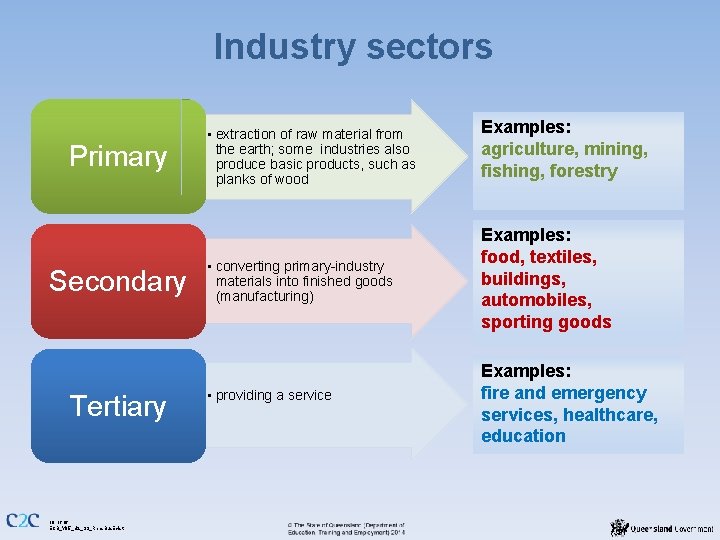
Industry sectors Primary Secondary Tertiary 10 of 16 ECB_Y 05_U 2_SS_Reas. Bus. Exist • extraction of raw material from the earth; some industries also produce basic products, such as planks of wood • converting primary-industry materials into finished goods (manufacturing) • providing a service Examples: agriculture, mining, fishing, forestry Examples: food, textiles, buildings, automobiles, sporting goods Examples: fire and emergency services, healthcare, education
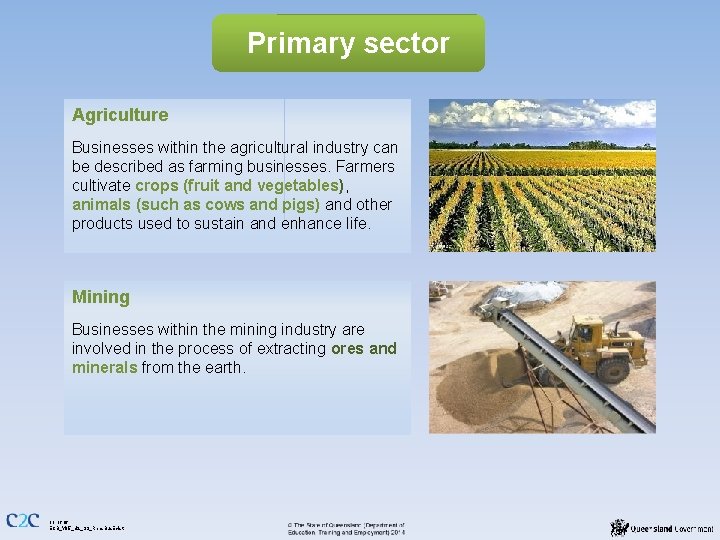
Primary sector Agriculture Businesses within the agricultural industry can be described as farming businesses. Farmers cultivate crops (fruit and vegetables), animals (such as cows and pigs) and other products used to sustain and enhance life. Mining Businesses within the mining industry are involved in the process of extracting ores and minerals from the earth. 11 of 16 ECB_Y 05_U 2_SS_Reas. Bus. Exist
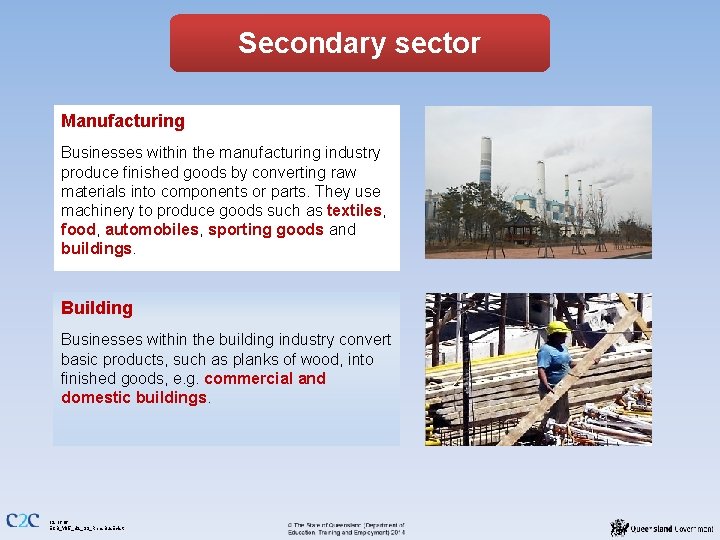
Secondary sector Manufacturing Businesses within the manufacturing industry produce finished goods by converting raw materials into components or parts. They use machinery to produce goods such as textiles, food, automobiles, sporting goods and buildings. Building Businesses within the building industry convert basic products, such as planks of wood, into finished goods, e. g. commercial and domestic buildings. 12 of 16 ECB_Y 05_U 2_SS_Reas. Bus. Exist
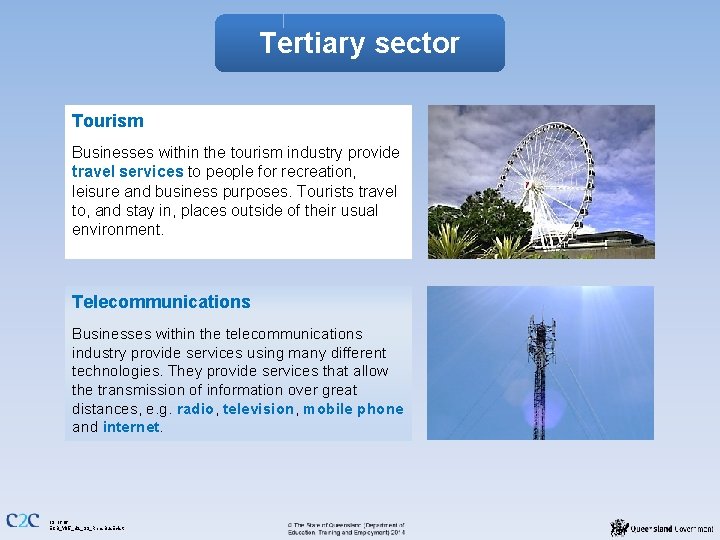
Tertiary sector Tourism Businesses within the tourism industry provide travel services to people for recreation, leisure and business purposes. Tourists travel to, and stay in, places outside of their usual environment. Telecommunications Businesses within the telecommunications industry provide services using many different technologies. They provide services that allow the transmission of information over great distances, e. g. radio, television, mobile phone and internet. 13 of 16 ECB_Y 05_U 2_SS_Reas. Bus. Exist
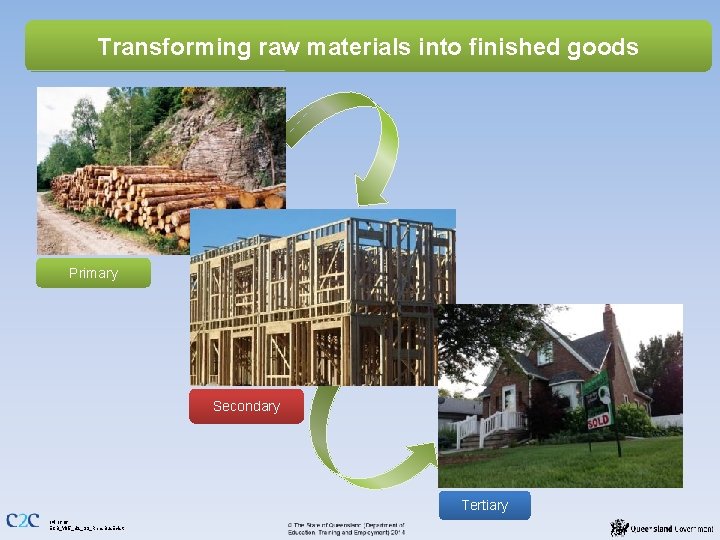
Transforming raw materials into finished goods Primary Secondary Tertiary 14 of 16 ECB_Y 05_U 2_SS_Reas. Bus. Exist
Businesses from different industry sectors require people to help produce the goods and services. All businesses require people to work to produce the goods and services. Businesses also create job opportunities for people within our community. 15 of 16 ECB_Y 05_U 2_SS_Reas. Bus. Exist
Image attributions Slide 3: Milk carton http: //www. clker. com/clipart-3922. html Slide 4 : Plumber https: //openclipart. org/detail/161221/plumber-by-tzunghaor Slide 5: • Bicycle http: //www. clker. com/clipart-6882. html • Fireman http: //www. clker. com/clipart-fire-fighter. html • Mobile phone http: //www. clker. com/clipart-24409. html • Doctor/patient http: //www. clker. com/clipart-26354. html Slide 11: • Launder, Gaye The crop https: //www. flickr. com/photos/28912254@N 04/4628122400/ CC BY 2. 0 https: //creativecommons. org/licenses/by/2. 0/deed. en • Mining http: //www. morguefile. com/archive/display/145145 Slide 12: • Manufacturing http: //www. morguefile. com/archive/display/853774 • Building construction http: //www. morguefile. com/archive/display/730702 Slide 13: • Launder, Gaye Wheel of Brisbane 1 https: //www. flickr. com/photos/28912254@N 04/8838364183/in/photolistdeq. DA 8 -et 59 r. S-et 595 y-et 1 VKn-et 1 Vkr CC BY 2. 0 https: //creativecommons. org/licenses/by/2. 0/deed. en • Telecommunications http: //www. morguefile. com/archive/display/534936 Slide 14: • Page, B. Felled timber ready to loading along a logging road in Scotland http: //pics. tech 4 learning. com/details. php? img=05060003 scotlandlumber. jpg • House frame http: //www. morguefile. com/archive/display/105289 • House sold http: //pixabay. com/en/house-home-sold-brick-for-sale-435618/ All other images © DETE. 16 of 16 ECB_Y 05_U 2_SS_Reas. Bus. Exist
- Slides: 16