
Realtime System Definition n A realtime system is
- Slides: 13
Real-time System Definition n A real-time system is a software system where the correct functioning of the system depends on the results produced by the system and the time at which these results are produced. A soft real-time system is a system whose operation is degraded if results are not produced according to the specified timing requirements. A hard real-time system is a system whose operation is incorrect if results are not produced according to the timing specification.
Stimulus/Response Systems n n n Given a stimulus, the system must produce a response within a specified time. Periodic stimuli. Stimuli which occur at predictable time intervals n For example, a temperature sensor may be polled 10 times per second. Aperiodic stimuli. Stimuli which occur at unpredictable times n For example, a system power failure may trigger an interrupt which must be processed by the system.
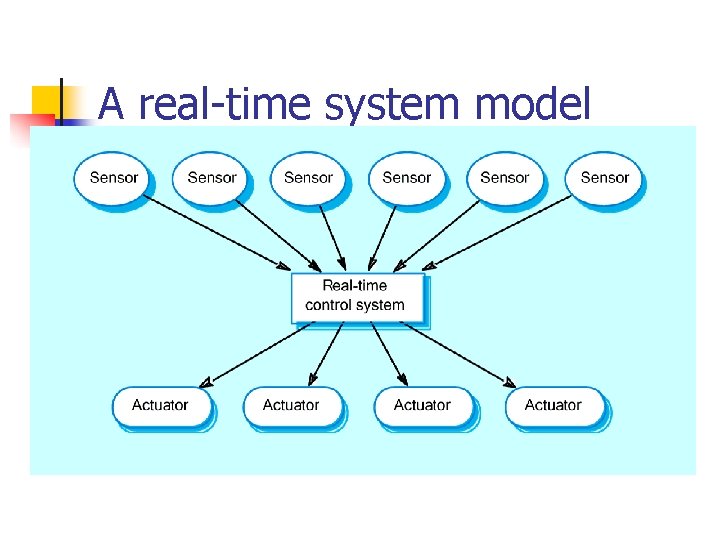
A real-time system model
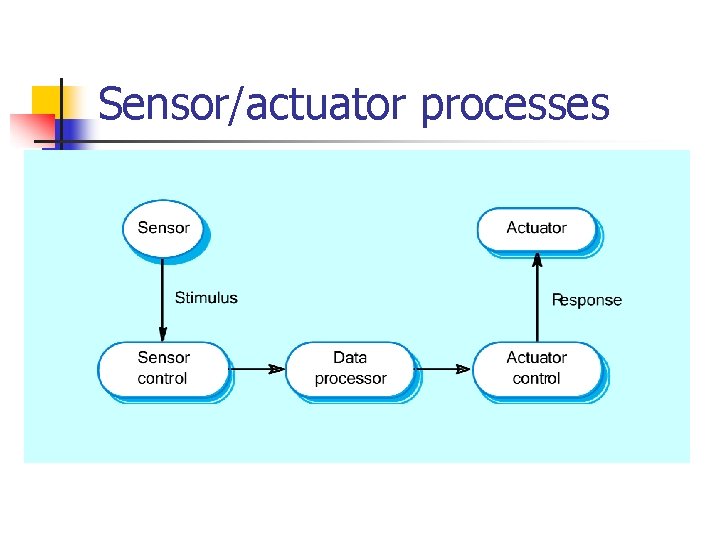
Sensor/actuator processes
System elements n n n Sensor control processes n Collect information from sensors. May buffer information collected in response to a sensor stimulus. Data processor n Carries out processing of collected information and computes the system response. Actuator control processes n Generates control signals for the actuators.
Real-time programming n n Hard-real time systems may have to programmed in assembly language to ensure that deadlines are met. Languages such as C allow efficient programs to be written but do not have constructs to support concurrency or shared resource management.
Java as a real-time language n n Java supports lightweight concurrency (threads and synchronized methods) and can be used for some soft real-time systems. Java 2. 0 is not suitable for hard RT programming but real-time versions of Java are now available that address problems such as n Not possible to specify thread execution time; n Different timing in different virtual machines; n Uncontrollable garbage collection; n Not possible to discover queue sizes for shared resources; n Not possible to access system hardware; n Not possible to do space or timing analysis.
The user interface n n User interfaces should be designed to match the skills, experience and expectations of its anticipated users. System users often judge a system by its interface rather than its functionality. A poorly designed interface can cause a user to make catastrophic errors. Poor user interface design is the reason why so many software systems are never used.
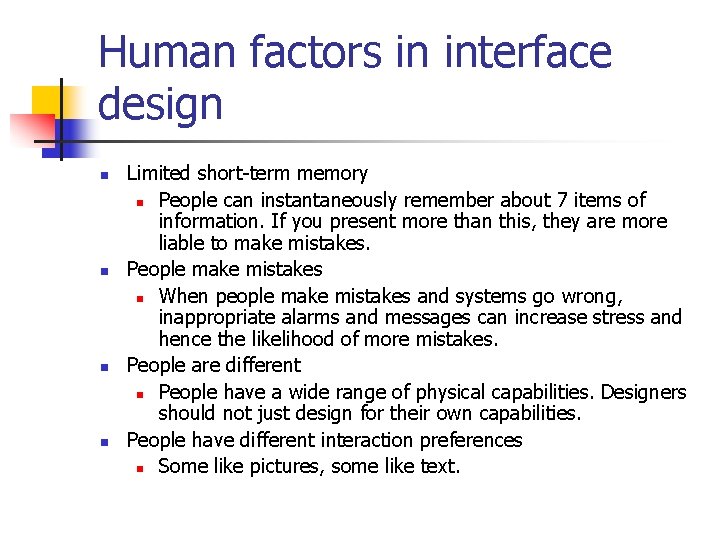
Human factors in interface design n n Limited short-term memory n People can instantaneously remember about 7 items of information. If you present more than this, they are more liable to make mistakes. People make mistakes n When people make mistakes and systems go wrong, inappropriate alarms and messages can increase stress and hence the likelihood of more mistakes. People are different n People have a wide range of physical capabilities. Designers should not just design for their own capabilities. People have different interaction preferences n Some like pictures, some like text.
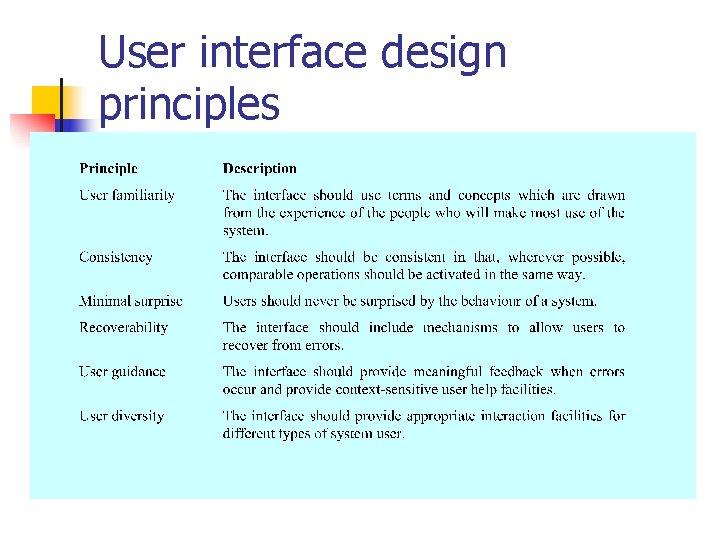
User interface design principles
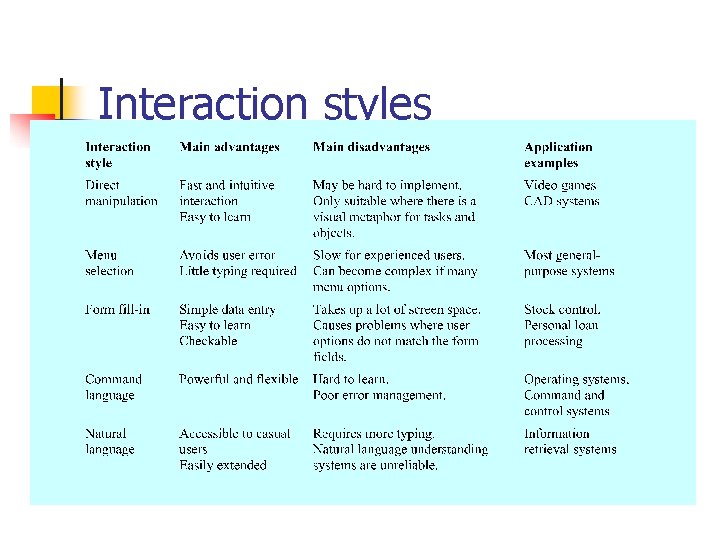
Interaction styles
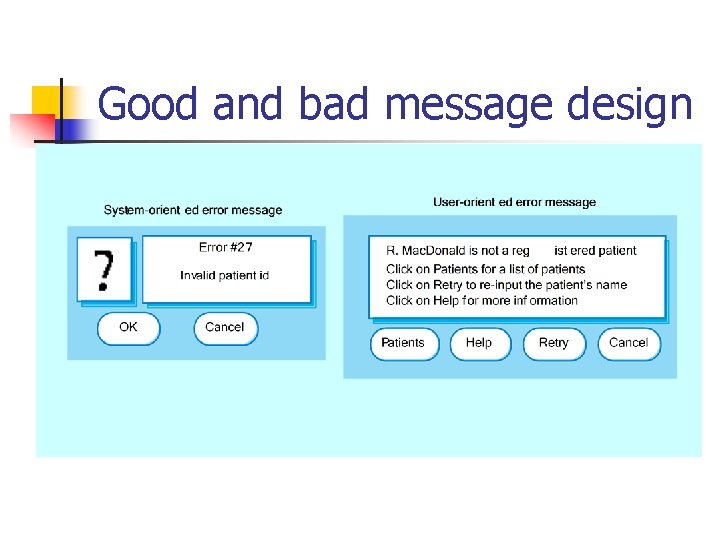
Good and bad message design
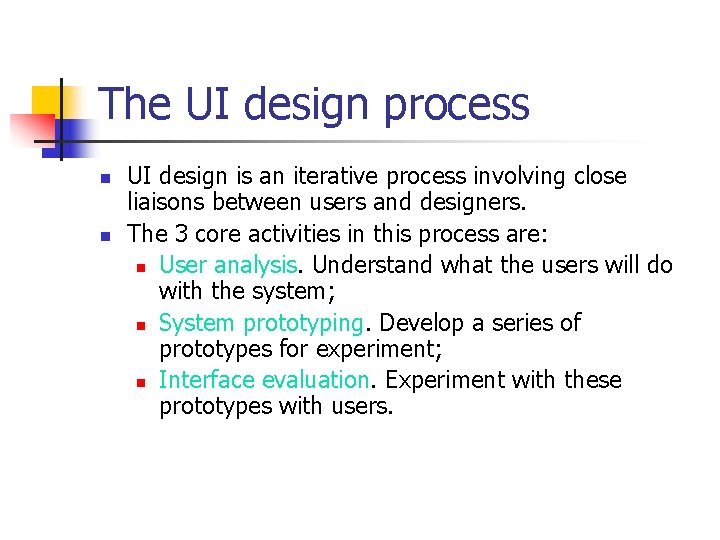
The UI design process n n UI design is an iterative process involving close liaisons between users and designers. The 3 core activities in this process are: n User analysis. Understand what the users will do with the system; n System prototyping. Develop a series of prototypes for experiment; n Interface evaluation. Experiment with these prototypes with users.