
Realidades 2 Reciprocal Actions Reciprocity Study guide Worksheet



- Slides: 26
Realidades 2 Reciprocal Actions / Reciprocity Study guide / Worksheet / Powerpoint Capítulo 4 B
To practice on line, go to www. phschool. com/foreign_languages/ and use web code jdd-0414.
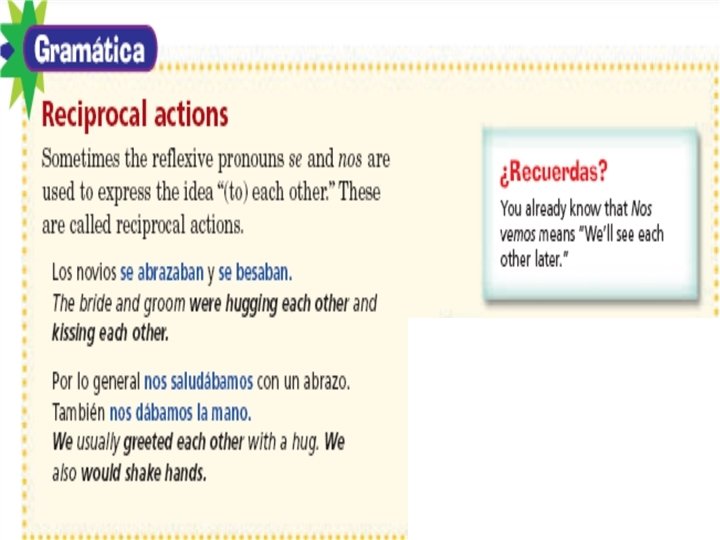
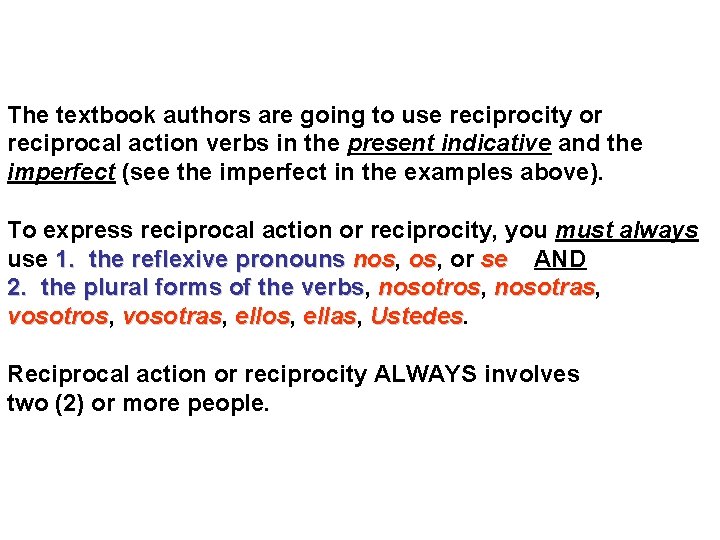
The textbook authors are going to use reciprocity or reciprocal action verbs in the present indicative and the imperfect (see the imperfect in the examples above). To express reciprocal action or reciprocity, you must always use 1. the reflexive pronouns nos, nos os, os or se AND 2. the plural forms of the verbs, verbs nosotros, nosotros nosotras, nosotras vosotros, vosotros vosotras, vosotras ellos, ellos ellas, ellas Ustedes Reciprocal action or reciprocity ALWAYS involves two (2) or more people.
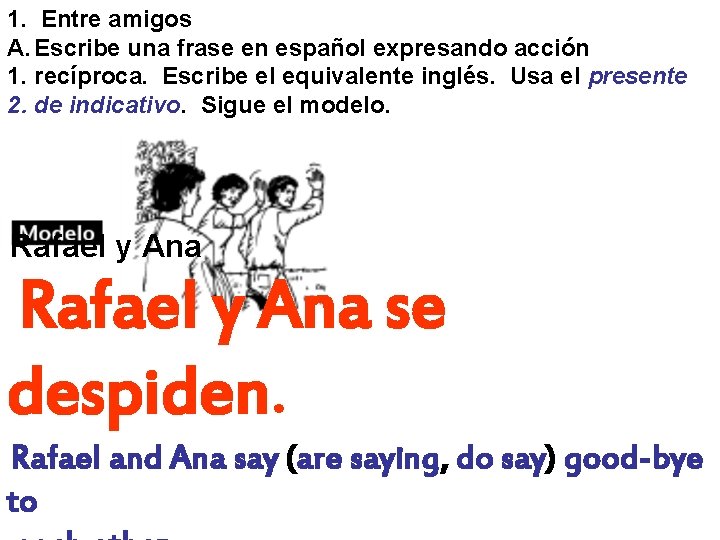
1. Entre amigos A. Escribe una frase en español expresando acción 1. recíproca. Escribe el equivalente inglés. Usa el presente 2. de indicativo. Sigue el modelo. Rafael y Ana se despiden. Rafael and Ana say (are saying, do say) good-bye to
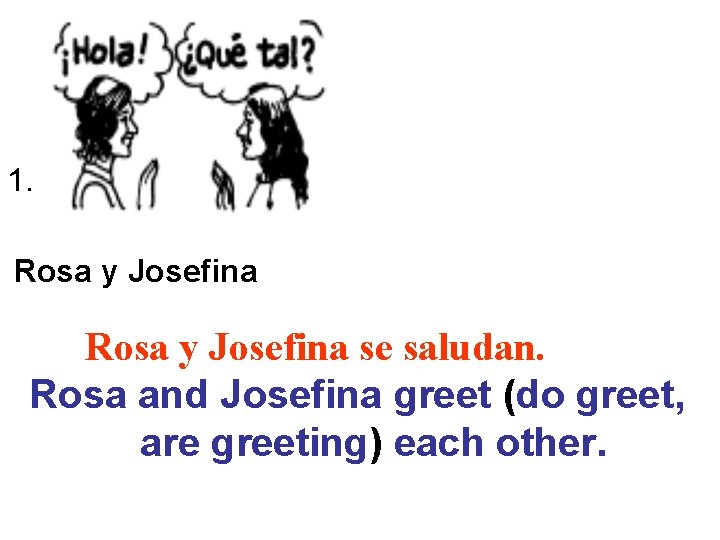
1. Rosa y Josefina se saludan. Rosa and Josefina greet (do greet, are greeting) each other.
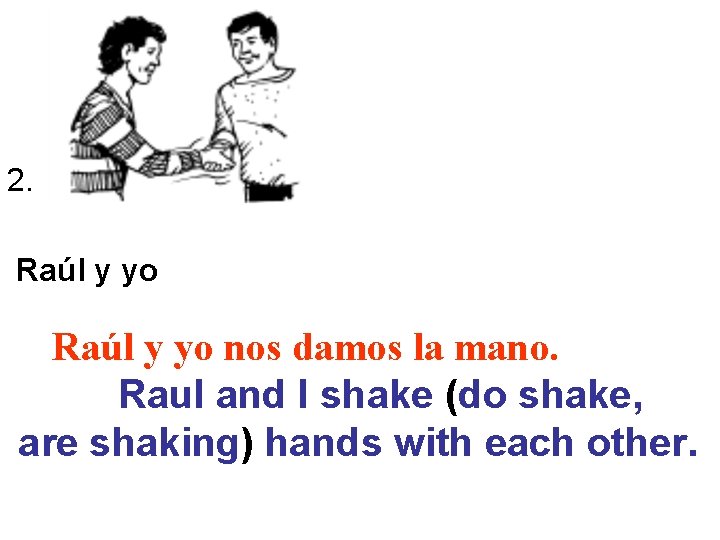
2. Raúl y yo nos damos la mano. Raul and I shake (do shake, are shaking) hands with each other.
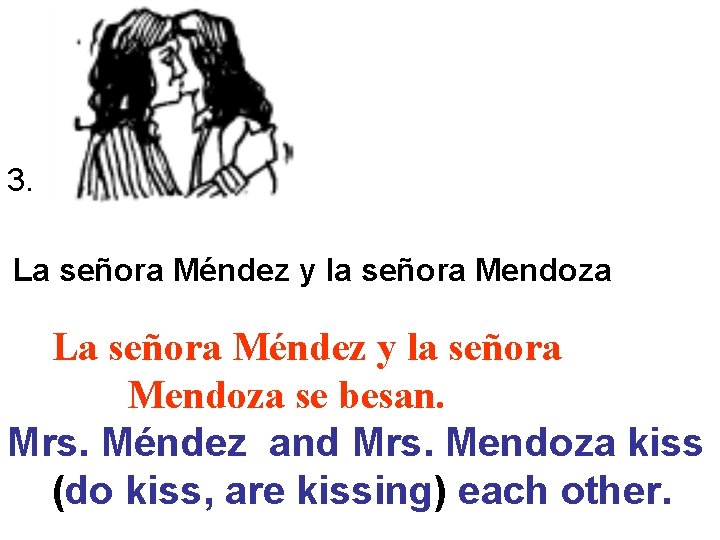
3. La señora Méndez y la señora Mendoza se besan. Mrs. Méndez and Mrs. Mendoza kiss (do kiss, are kissing) each other.
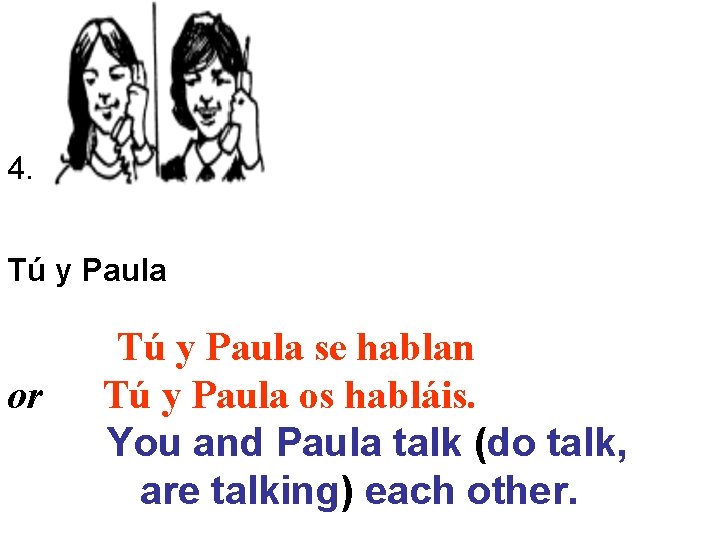
4. Tú y Paula or Tú y Paula se hablan Tú y Paula os habláis. You and Paula talk (do talk, are talking) each other.
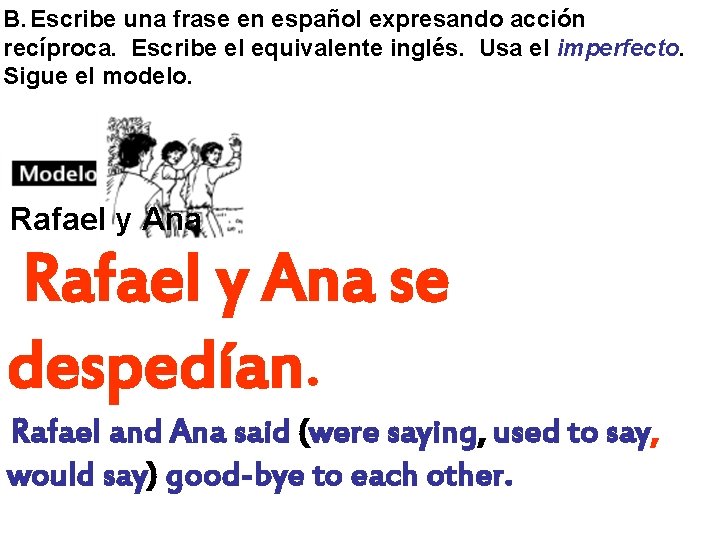
B. Escribe una frase en español expresando acción recíproca. Escribe el equivalente inglés. Usa el imperfecto. Sigue el modelo. Rafael y Ana se despedían. Rafael and Ana said (were saying, used to say, would say) good-bye to each other.
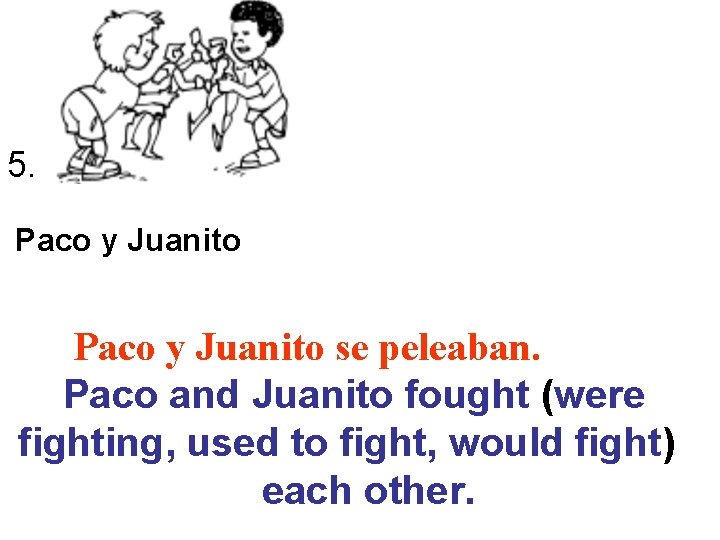
5. Paco y Juanito se peleaban. Paco and Juanito fought (were fighting, used to fight, would fight) each other.
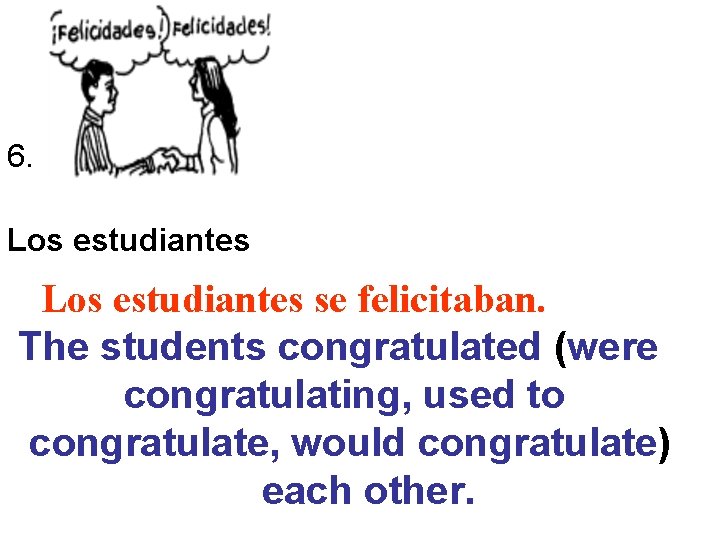
6. Los estudiantes se felicitaban. The students congratulated (were congratulating, used to congratulate, would congratulate) each other.
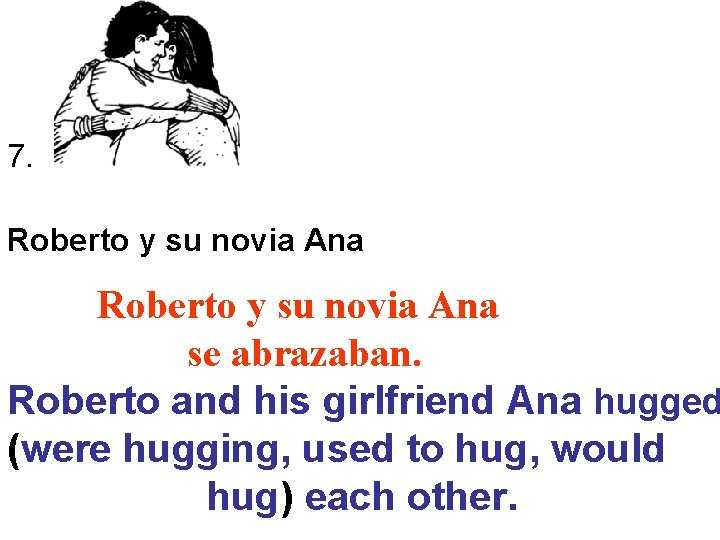
7. Roberto y su novia Ana se abrazaban. Roberto and his girlfriend Ana hugged (were hugging, used to hug, would hug) each other.
2. Acción recíproca A. Escribe una frase completa en español expresando B. acción recíproca con los elementos que se ven. Usa el 1. presente de indicativo. Luego, escribe su equivalente 2. en inglés. Sigue el modelo. María y yo / hablarse María y yo nos hablamos. Maria and I speak (are speaking, do speak) to each other.
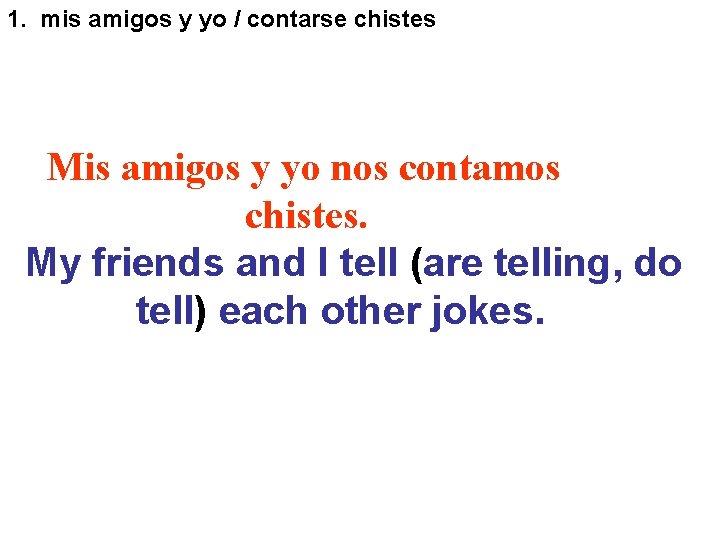
1. mis amigos y yo / contarse chistes Mis amigos y yo nos contamos chistes. My friends and I tell (are telling, do tell) each other jokes.
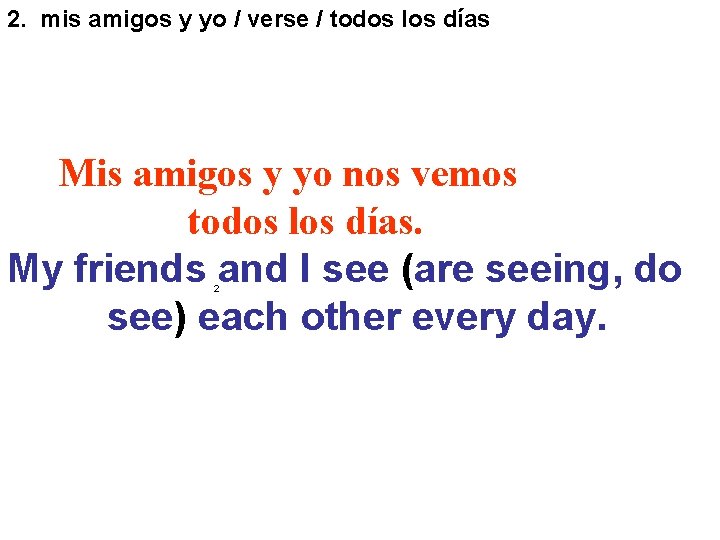
2. mis amigos y yo / verse / todos los días Mis amigos y yo nos vemos todos los días. My friends and I see (are seeing, do see) each other every day. 2
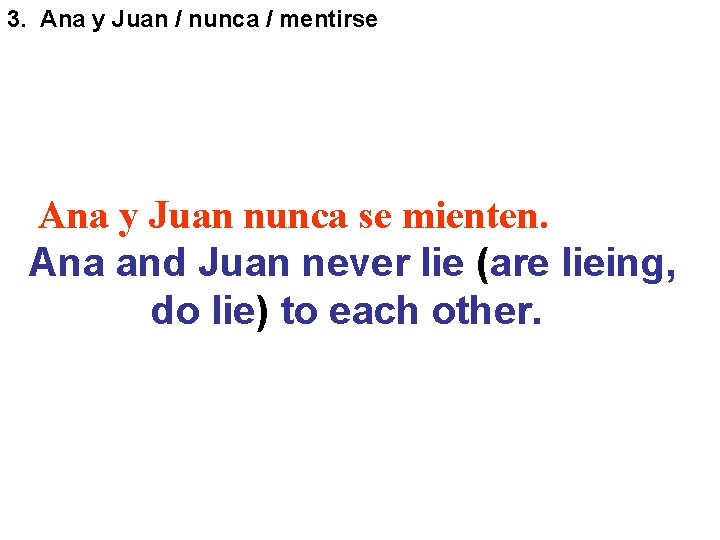
3. Ana y Juan / nunca / mentirse Ana y Juan nunca se mienten. Ana and Juan never lie (are lieing, do lie) to each other.
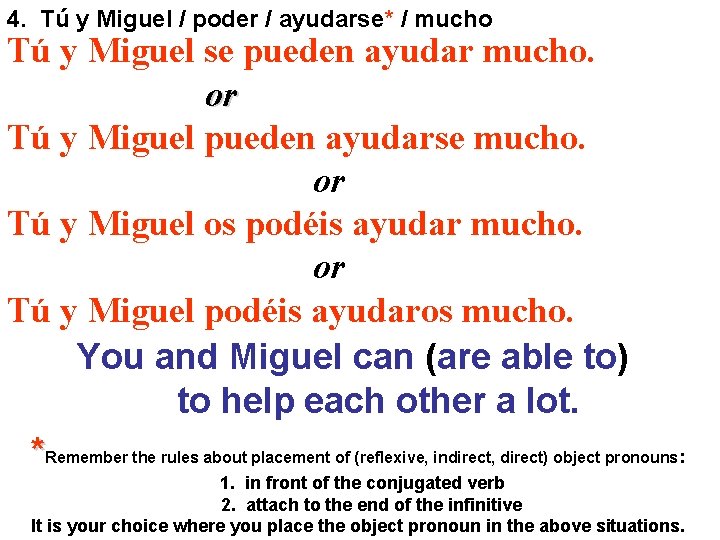
4. Tú y Miguel / poder / ayudarse* / mucho Tú y Miguel se pueden ayudar mucho. or Tú y Miguel pueden ayudarse mucho. or Tú y Miguel os podéis ayudar mucho. or Tú y Miguel podéis ayudaros mucho. You and Miguel can (are able to) to help each other a lot. *Remember the rules about placement of (reflexive, indirect, direct) object pronouns: 1. in front of the conjugated verb 2. attach to the end of the infinitive It is your choice where you place the object pronoun in the above situations.
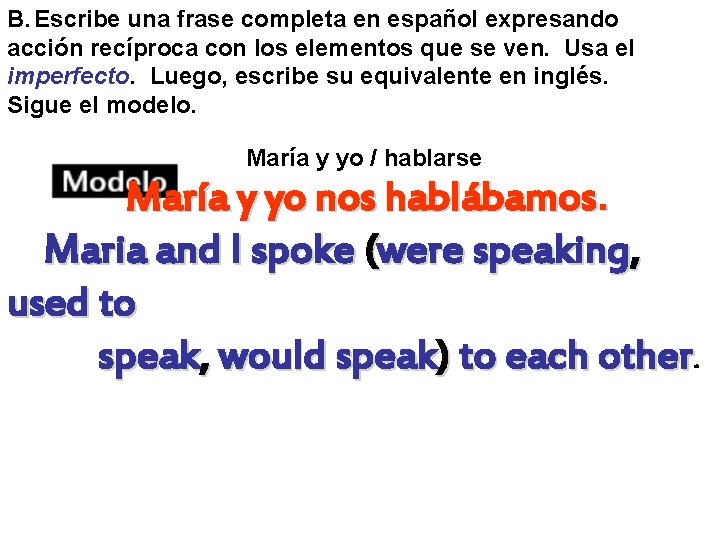
B. Escribe una frase completa en español expresando acción recíproca con los elementos que se ven. Usa el imperfecto. Luego, escribe su equivalente en inglés. Sigue el modelo. María y yo / hablarse María y yo nos hablábamos. Maria and I spoke (were speaking, used to speak, would speak) to each other.
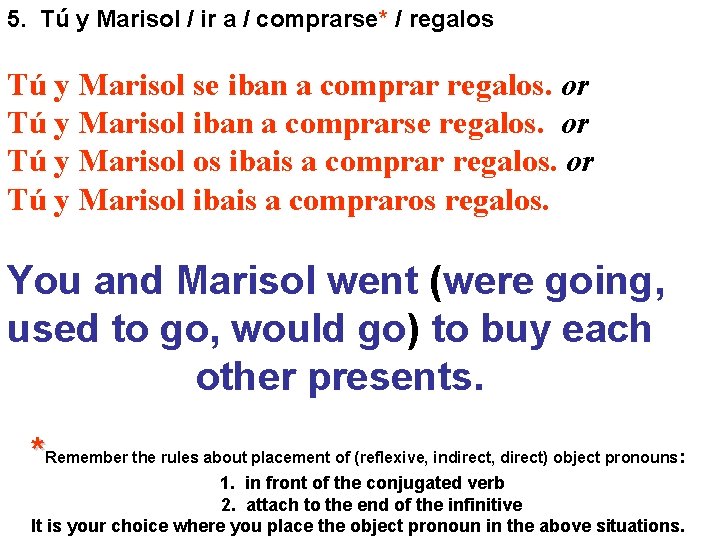
5. Tú y Marisol / ir a / comprarse* / regalos Tú y Marisol se iban a comprar regalos. or Tú y Marisol iban a comprarse regalos. or Tú y Marisol os ibais a comprar regalos. or Tú y Marisol ibais a compraros regalos. You and Marisol went (were going, used to go, would go) to buy each other presents. *Remember the rules about placement of (reflexive, indirect, direct) object pronouns: 1. in front of the conjugated verb 2. attach to the end of the infinitive It is your choice where you place the object pronoun in the above situations.
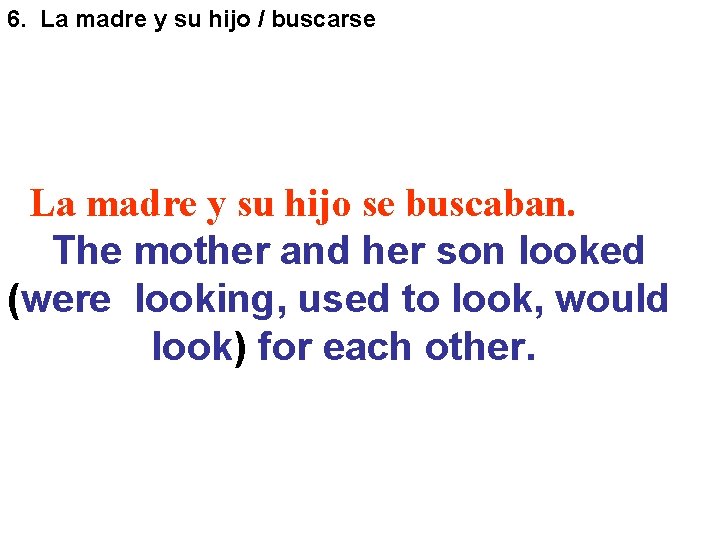
6. La madre y su hijo / buscarse La madre y su hijo se buscaban. The mother and her son looked (were looking, used to look, would look) for each other.
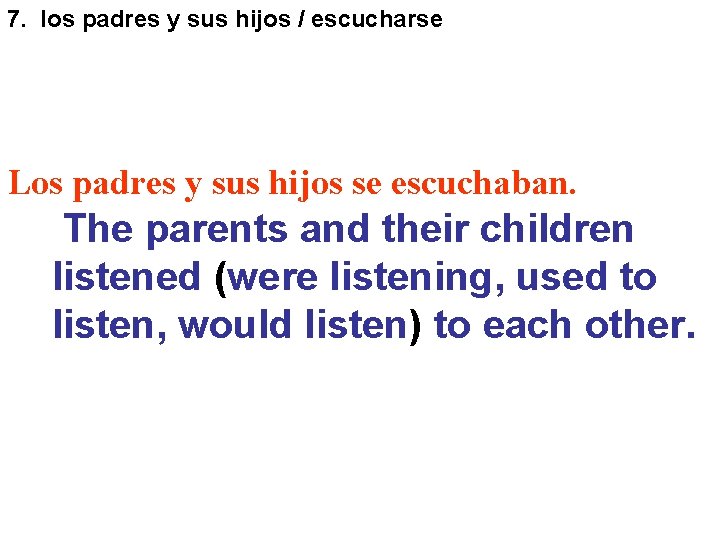
7. los padres y sus hijos / escucharse Los padres y sus hijos se escuchaban. The parents and their children listened (were listening, used to listen, would listen) to each other.
8. Uds. / entenderse Uds. se entendían. You understood (were understanding, used to understand, would understand) each other.
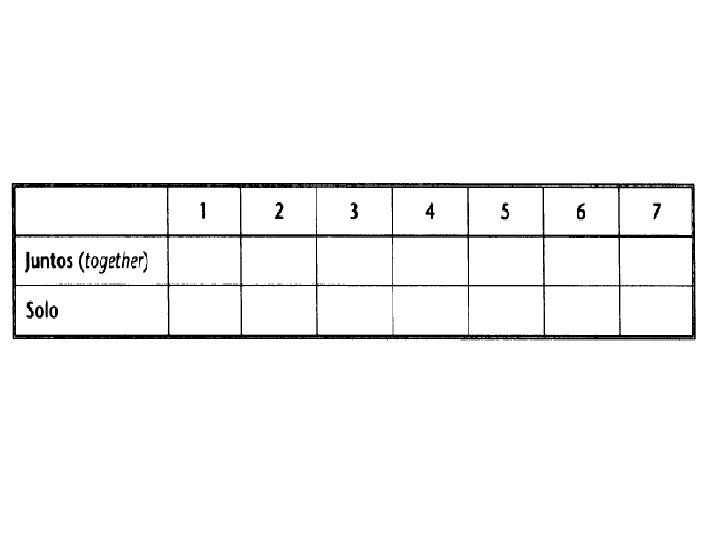
3. Para Escuchar Some best friends like to do everything together, while others prefer to spend some time apart. Listen as some teenagers talk about whether they prefer to do certain things separately or together. Then, put an X in the appropriate box in the grid. You will hear each set of statements twice.
To practice on line, go to www. phschool. com/foreign_languages/ and use web code jdd-0414.