
Real Time Transient Detection with RAPTOR Exploring the
- Slides: 19
Real Time Transient Detection with RAPTOR: Exploring the Path Toward a “Thinking” Telescope Tom Vestrand on behalf of the RAPTOR Team Los Alamos National Laboratory First Zwicky Workshop---Pasadena, 17 January 2004 Vestrand
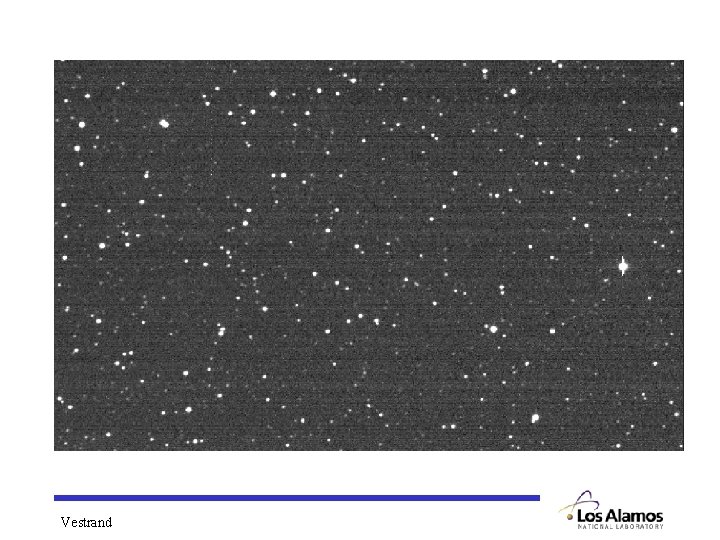
Scientific Motivation: Searching for Optical Transients in Real Time • The optical sky, even for relatively bright transient objects, is largely unmonitored. • There are spectacular Explosive Optical Transients that have been found because of High Energy Satellite real-time alerts. • But fast Optical Transients may exist that cannot be found by high-energy satellite monitoring, either because they are precursors of or are unrelated to high-energy transients. Vestrand
Vestrand
• Mining in real time is the ability to recognize, gather, and analyze observations as a “transient event” is in progress--thereby enabling more detailed follow-up observations while the “event” is on-going. Vestrand
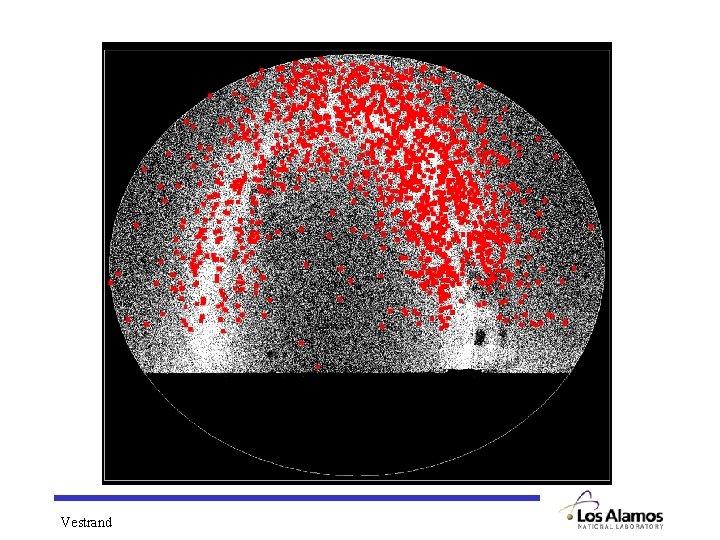
Why is the Problem Hard? • Need a Fast Pipeline that makes photometric measurements of more than 100, 000 sources and identifies transients in less than 30 seconds. (10 times faster than the fastest realtime pipeline. ) • Must move the more sensitive narrow-field telescopes into the transient in seconds for spectroscopy and light curve measurement. (mounts must move 10 times faster than typical astronomical mounts) • Must correctly identify, in real time, the celestial transient in the “forest” of non-celestial transients. ( more than 1000 false positives for every real event) Vestrand
False Positives • Hot Pixels • Satellites • Airplanes • Cosmic Rays • Glints from Space Junk • Image Defects False positives killed the efforts by the MIT/GODDARD team with the ETC (Explosive Transient Camera) in the early 1990’s. Vestrand
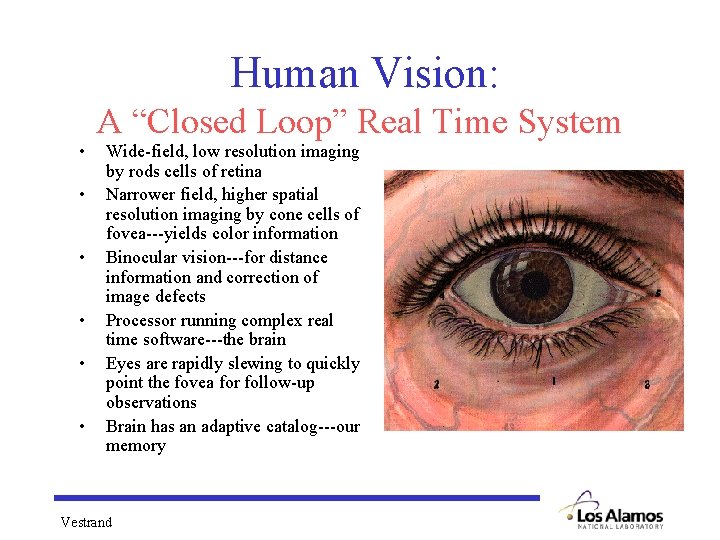
Human Vision: A “Closed Loop” Real Time System • • • Wide-field, low resolution imaging by rods cells of retina Narrower field, higher spatial resolution imaging by cone cells of fovea---yields color information Binocular vision---for distance information and correction of image defects Processor running complex real time software---the brain Eyes are rapidly slewing to quickly point the fovea for follow-up observations Brain has an adaptive catalog---our memory Vestrand
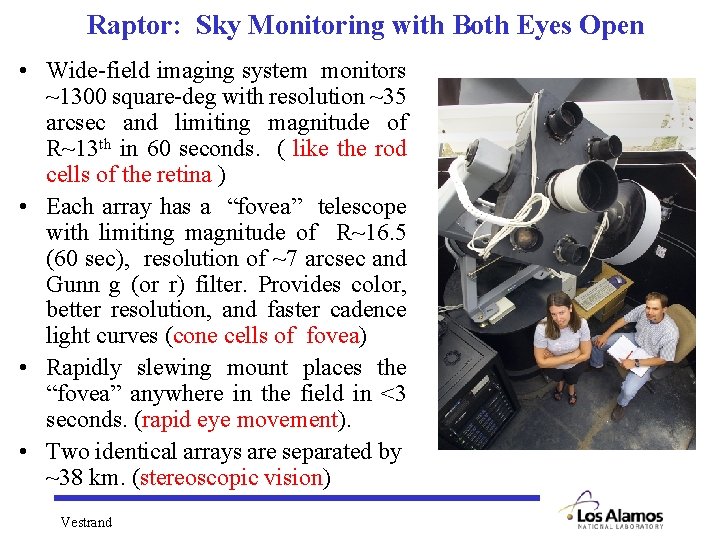
Raptor: Sky Monitoring with Both Eyes Open • Wide-field imaging system monitors ~1300 square-deg with resolution ~35 arcsec and limiting magnitude of R~13 th in 60 seconds. ( like the rod cells of the retina ) • Each array has a “fovea” telescope with limiting magnitude of R~16. 5 (60 sec), resolution of ~7 arcsec and Gunn g (or r) filter. Provides color, better resolution, and faster cadence light curves (cone cells of fovea) • Rapidly slewing mount places the “fovea” anywhere in the field in <3 seconds. (rapid eye movement). • Two identical arrays are separated by ~38 km. (stereoscopic vision) Vestrand
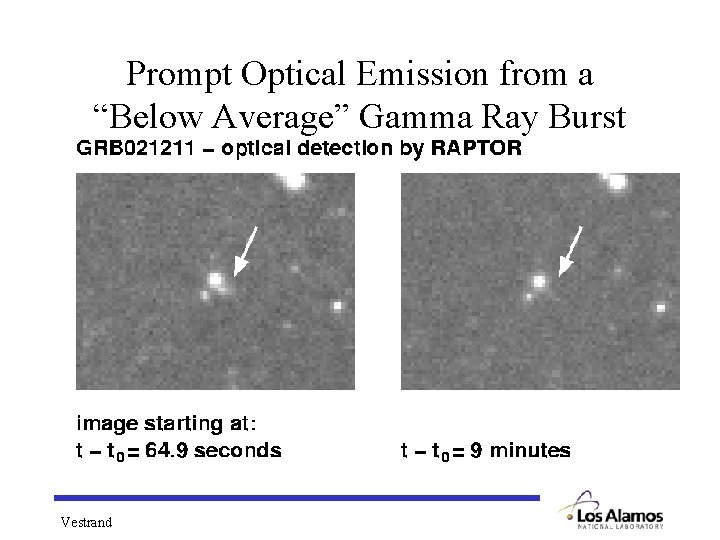
Prompt Optical Emission from a “Below Average” Gamma Ray Burst Vestrand
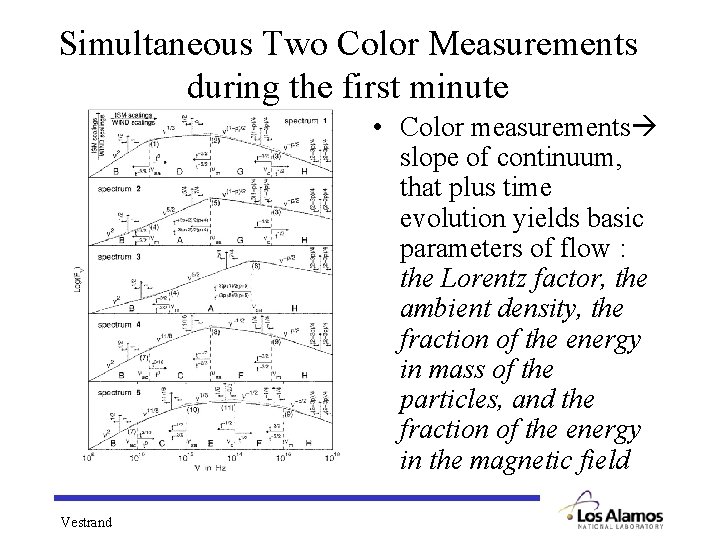
Simultaneous Two Color Measurements during the first minute • Color measurements slope of continuum, that plus time evolution yields basic parameters of flow : the Lorentz factor, the ambient density, the fraction of the energy in mass of the particles, and the fraction of the energy in the magnetic field Vestrand
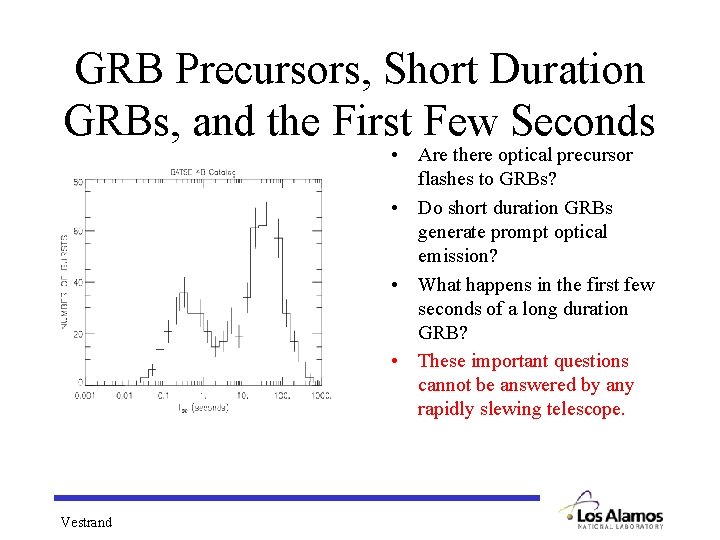
GRB Precursors, Short Duration GRBs, and the First Few Seconds • Are there optical precursor flashes to GRBs? • Do short duration GRBs generate prompt optical emission? • What happens in the first few seconds of a long duration GRB? • These important questions cannot be answered by any rapidly slewing telescope. Vestrand
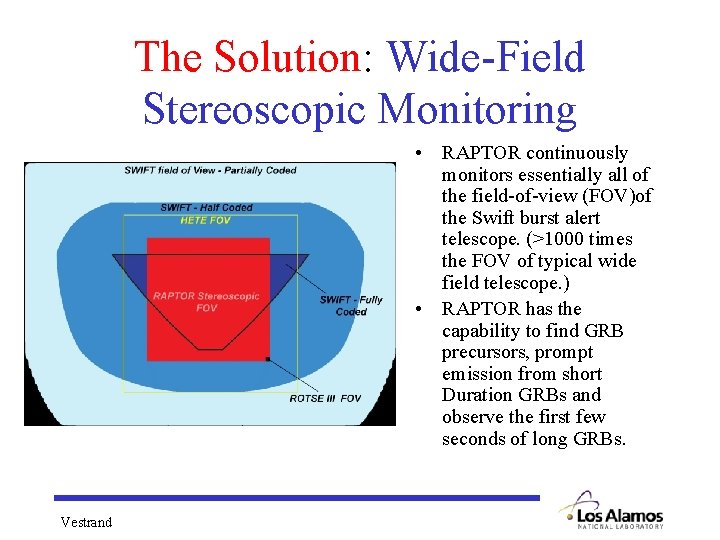
The Solution: Wide-Field Stereoscopic Monitoring • RAPTOR continuously monitors essentially all of the field-of-view (FOV)of the Swift burst alert telescope. (>1000 times the FOV of typical wide field telescope. ) • RAPTOR has the capability to find GRB precursors, prompt emission from short Duration GRBs and observe the first few seconds of long GRBs. Vestrand
Current Status • Full stereoscopic “closed loop” operation is now operating. • Stereoscopic viewing reduces the number of false positives from more than a thousand per night to less than a few per night. Vestrand
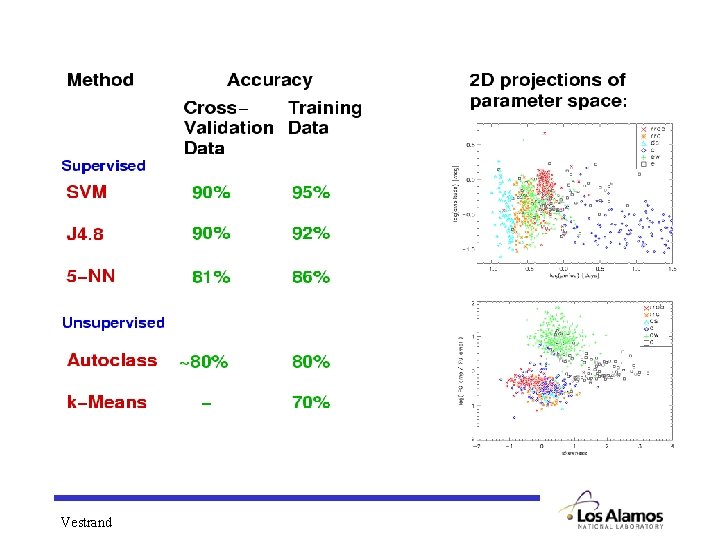
Moving Toward a “Thinking” System • Goal is to build a system that not only recognizes transients, but also recognizes “important” anomalies in persistent objects and performs prompt follow-up observations in real time. To do this, we need- • A record of the variability of sky that is continuously updated to place the observed variation in context. • Machine Learning and Data Mining tools able to find and recognize the “important” variations in the flood of incoming measurements. Vestrand
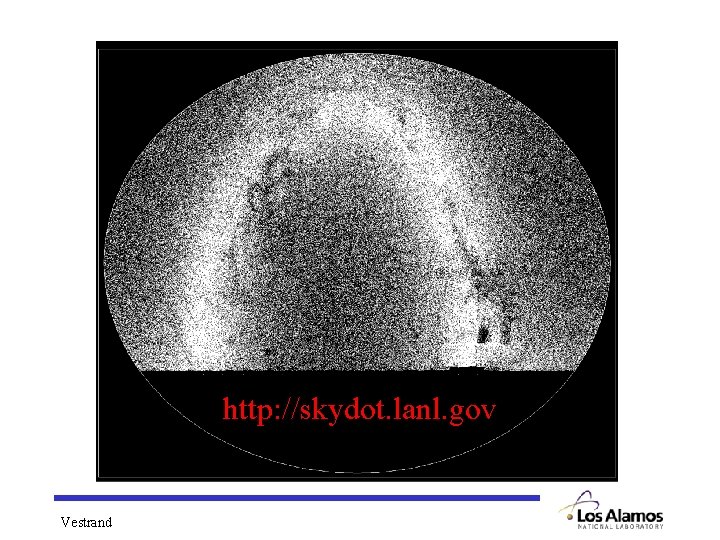
http: //skydot. lanl. gov Vestrand
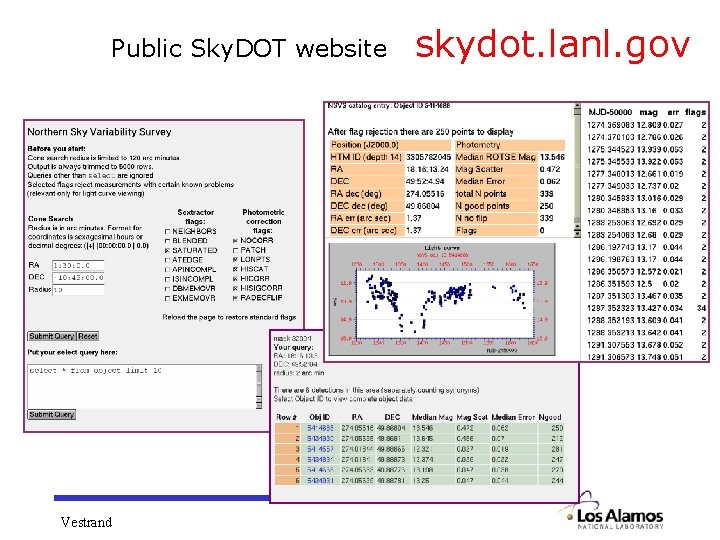
Public Sky. DOT website Vestrand skydot. lanl. gov
Vestrand
Vestrand
Conclusions Time Domain Astronomy is too important to be left to the Astronomers. To be effective it requires real-time followup observations. We do not have the attention span, response time, or memory required to monitor the huge volume of data, recognize important variations, and respond. Autonomous Robotic Telescopes with “smarts” and the ability to learn will be essential for exploring the Time Domain in astronomy. Vestrand