
Real time analysis of gene expression in living


- Slides: 13
Real time analysis of gene expression in living yeast cells: Novel approach for accurate cell damage detection Amparo Pascual-Ahuir Giner Instituto de Biología Molecular y Celular de Plantas (IBMCP) Universidad Politécnica de Valencia
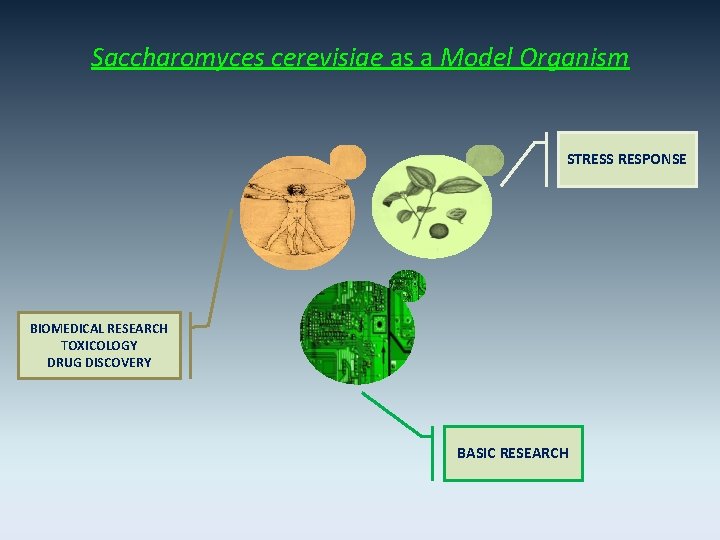
Saccharomyces cerevisiae as a Model Organism STRESS RESPONSE BIOMEDICAL RESEARCH TOXICOLOGY DRUG DISCOVERY BASIC RESEARCH
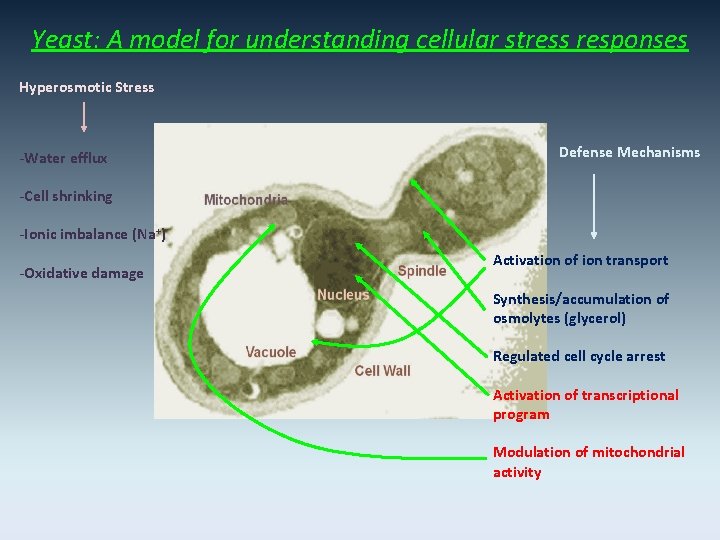
Yeast: A model for understanding cellular stress responses Hyperosmotic Stress -Water efflux Defense Mechanisms -Cell shrinking -Ionic imbalance (Na+) -Oxidative damage Activation of ion transport Synthesis/accumulation of osmolytes (glycerol) Regulated cell cycle arrest Activation of transcriptional program Modulation of mitochondrial activity
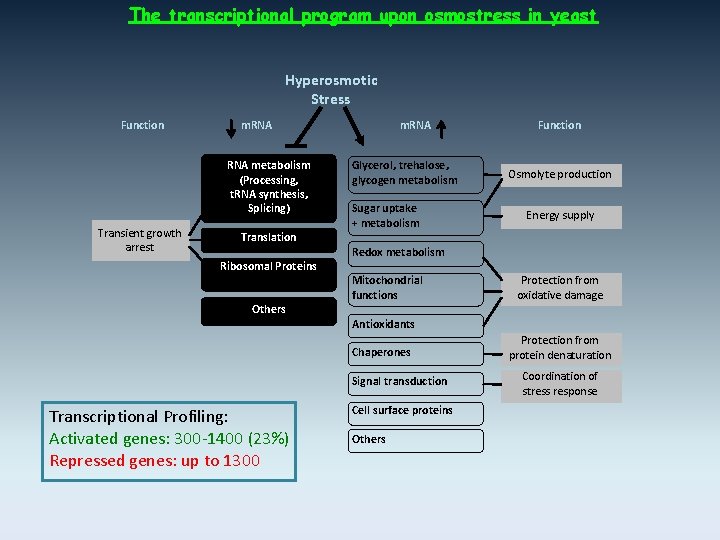
The transcriptional program upon osmostress in yeast Hyperosmotic Stress Function m. RNA metabolism (Processing, t. RNA synthesis, Splicing) Transient growth arrest Translation Ribosomal Proteins Others m. RNA Glycerol, trehalose, glycogen metabolism Sugar uptake + metabolism Osmolyte production Energy supply Redox metabolism Mitochondrial functions Protection from oxidative damage Antioxidants Chaperones Signal transduction Transcriptional Profiling: Activated genes: 300 -1400 (23%) Repressed genes: up to 1300 Function Cell surface proteins Others Protection from protein denaturation Coordination of stress response
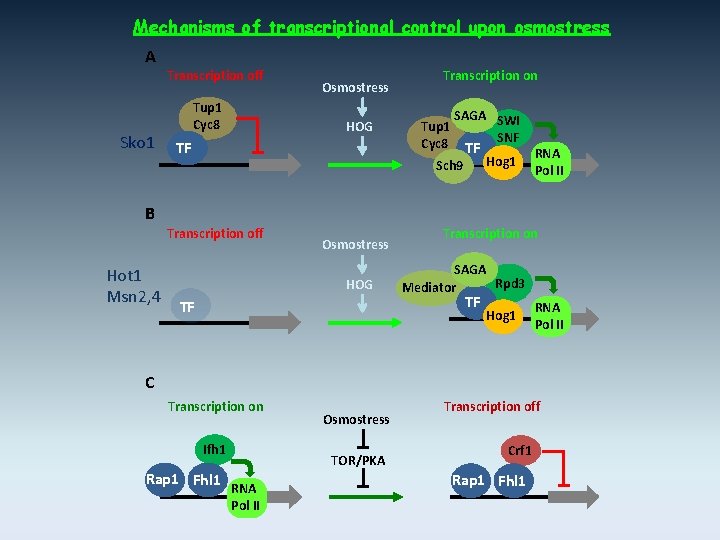
Mechanisms of transcriptional control upon osmostress A Transcription off Sko 1 Tup 1 Cyc 8 Osmostress HOG TF Transcription on Tup 1 Cyc 8 SAGA SWI SNF Sch 9 TF Hog 1 RNA Pol II B Transcription off Hot 1 Msn 2, 4 Osmostress HOG TF Transcription on SAGA Rpd 3 Mediator TF Hog 1 RNA Pol II C Transcription on Ifh 1 Osmostress TOR/PKA Rap 1 Fhl 1 RNA Pol II Transcription off Crf 1 Rap 1 Fhl 1
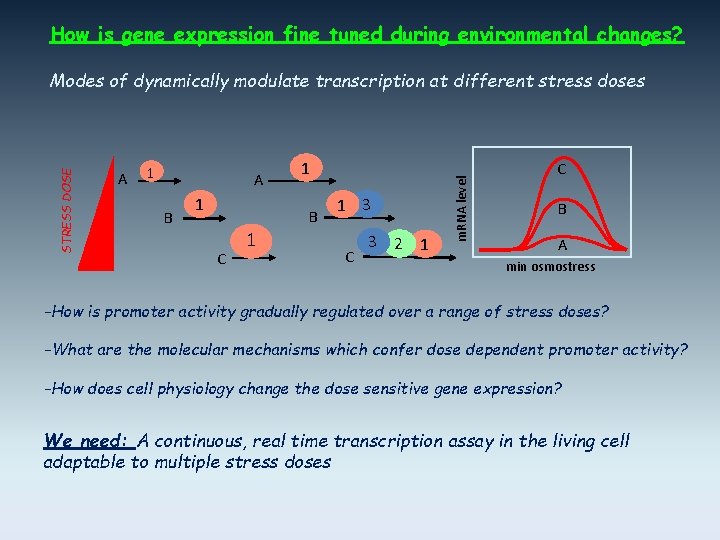
How is gene expression fine tuned during environmental changes? A 1 A B 1 1 B C 1 1 3 C 3 2 1 m. RNA level STRESS DOSE Modes of dynamically modulate transcription at different stress doses C B A min osmostress -How is promoter activity gradually regulated over a range of stress doses? -What are the molecular mechanisms which confer dose dependent promoter activity? -How does cell physiology change the dose sensitive gene expression? We need: A continuous, real time transcription assay in the living cell adaptable to multiple stress doses
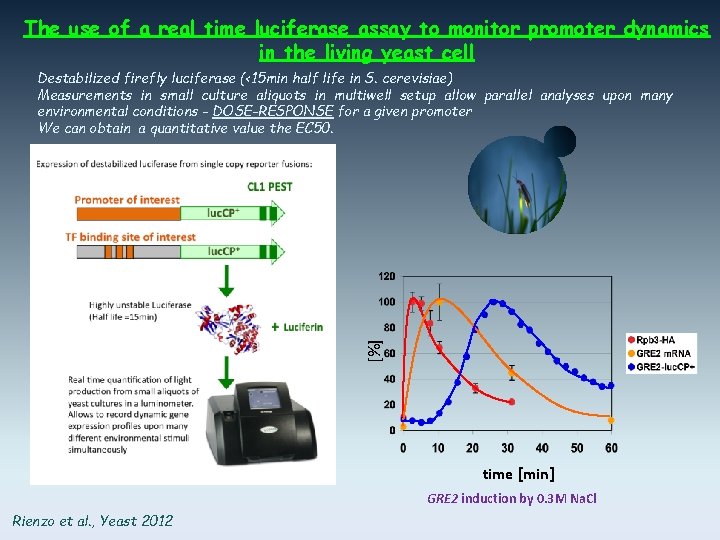
The use of a real time luciferase assay to monitor promoter dynamics in the living yeast cell [%] Destabilized firefly luciferase (<15 min half life in S. cerevisiae) Measurements in small culture aliquots in multiwell setup allow parallel analyses upon many environmental conditions - DOSE-RESPONSE for a given promoter We can obtain a quantitative value the EC 50. time [min] GRE 2 induction by 0. 3 M Na. Cl Rienzo et al. , Yeast 2012
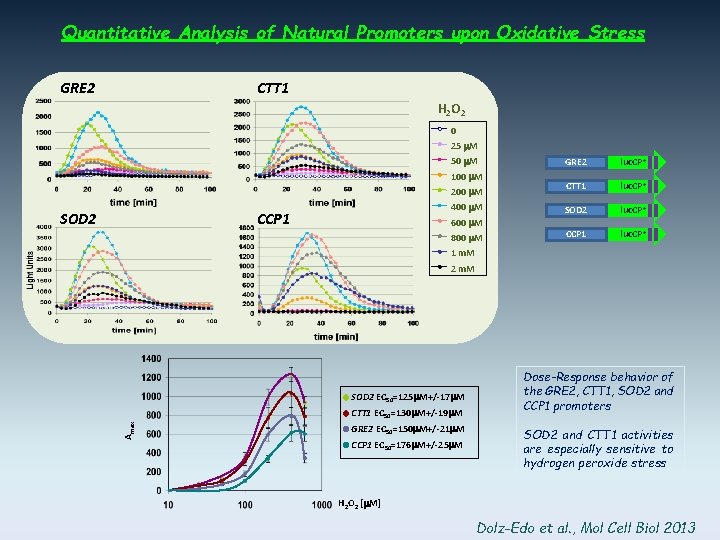
Quantitative Analysis of Natural Promoters upon Oxidative Stress GRE 2 CTT 1 H 2 O 2 0 25 M 50 M 100 M 200 M SOD 2 400 M CCP 1 600 M 800 M GRE 2 luc. CP+ CTT 1 luc. CP+ SOD 2 luc. CP+ CCP 1 luc. CP+ 1 m. M 2 m. M SOD 2 EC 50=125 M+/-17 M Amax CTT 1 EC 50=130 M+/-19 M GRE 2 EC 50=150 M+/-21 M CCP 1 EC 50=176 M+/-25 M Dose-Response behavior of the GRE 2, CTT 1, SOD 2 and CCP 1 promoters SOD 2 and CTT 1 activities are especially sensitive to hydrogen peroxide stress H 2 O 2 [ M] Dolz-Edo et al. , Mol Cell Biol 2013
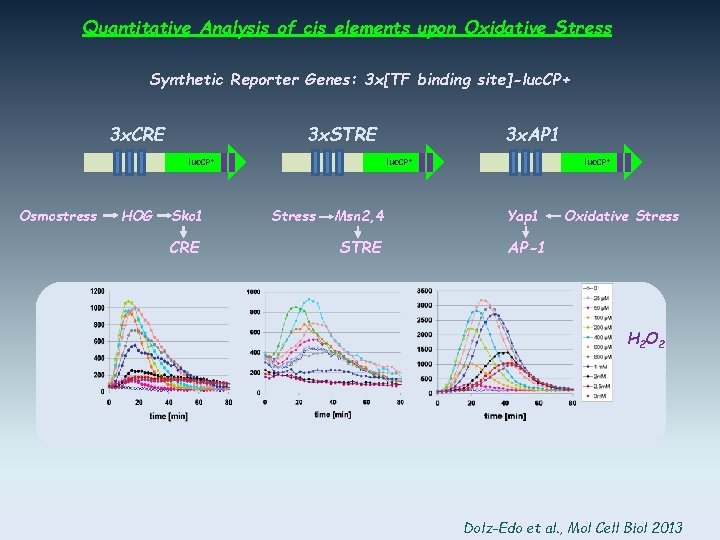
Quantitative Analysis of cis elements upon Oxidative Stress Synthetic Reporter Genes: 3 x[TF binding site]-luc. CP+ 3 x. CRE 3 x. STRE luc. CP+ Osmostress HOG Sko 1 CRE 3 x. AP 1 luc. CP+ Stress luc. CP+ Msn 2, 4 Yap 1 STRE AP-1 Oxidative Stress H 2 O 2 Dolz-Edo et al. , Mol Cell Biol 2013
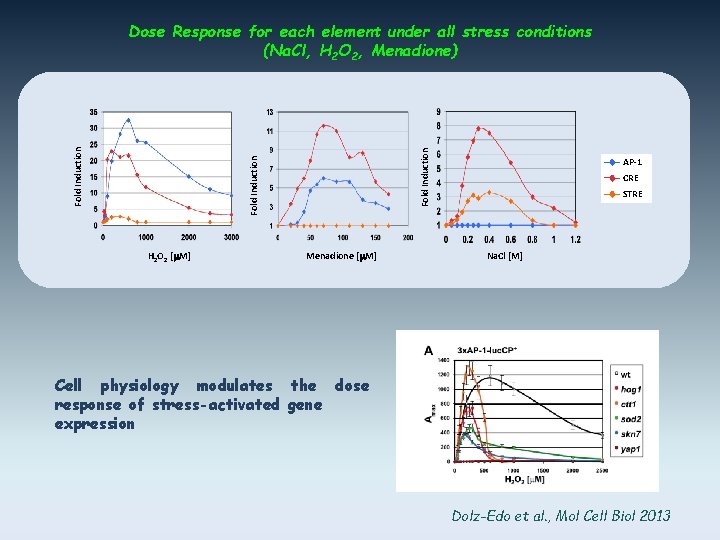
Fold Induction Dose Response for each element under all stress conditions (Na. Cl, H 2 O 2, Menadione) H 2 O 2 [ M] Menadione [ M] AP-1 CRE STRE Na. Cl [M] Cell physiology modulates the dose response of stress-activated gene expression Dolz-Edo et al. , Mol Cell Biol 2013
Application of quantitative yeast model to study mycotoxins Toxicological study of citrinin. Citrinin triggers an immediate response to oxidative stress characterized by a strong and dose-dependent induction of natural genes. GRE 2 luc. CP+ 3 x. CRE 3 x. AP 1 luc. CP+ 3 x. STRE luc. CP+ At present we are using the “dose-response assays” to study the transcriptional behavior of other stress response promoters (Oxidative , DNA Damage, Mitochondrial dysfunction, cell cycle) Pascual-Ahuir et al. , Nutrients 2014
Current projects: -Generate artificial promoters, with optimized sensitivity and specificity to one particular mycotoxin. DETECT Mycotoxin CURE -Identify the molecular target of toxicity of citrinin. Expand the dose-response assays to study the toxicological effect of Ochratoxin A. DEGRADE -Identify new enzymes for biodegradation.
Amparo Pascual-Ahuir Giner (UPV) Markus Proft (CSIC) Alessandro Rienzo Alba Timón Gomez Sara Manzanares Estreder Elena Vanacloig Pedros Daniel Poveda Huertes Carolina Bets Plasencia Sandra Saiz Balbastre Sonia Squeo