
Readout scheme for the Baby MIND detector E
Readout scheme for the Baby. MIND detector E. Noah 1, A. Blondel 1, Y. Favre 1, Y. Kudenko 2, O. Mineev 2, R. Tsenov 2 1 University of Geneva, Switzerland Russia 2 INR, PD 15: Moscow: Troitsk: 6 -9 July 2015
Outline • • • The Baby-MIND detector Detector module characteristics Choice of photosensors Module light yield with CITIROC Baby MIND Front End Board 2
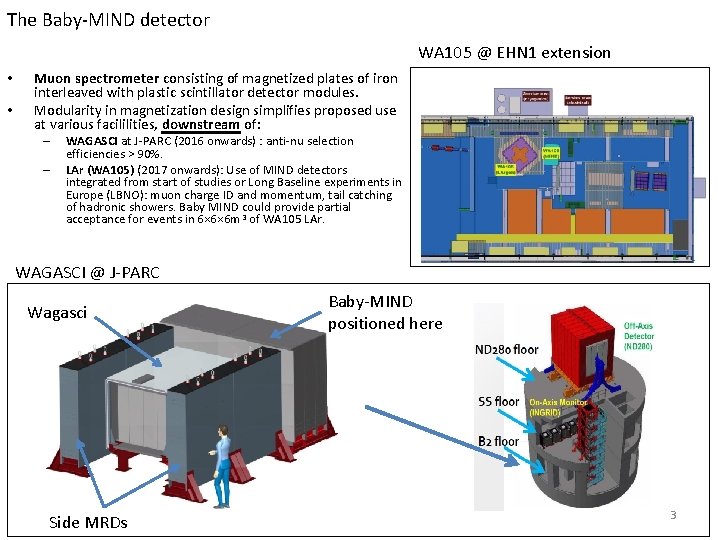
The Baby-MIND detector WA 105 @ EHN 1 extension • • Muon spectrometer consisting of magnetized plates of iron interleaved with plastic scintillator detector modules. Modularity in magnetization design simplifies proposed use at various facililities, downstream of: – – WAGASCI at J-PARC (2016 onwards) : anti-nu selection efficiencies > 90%. LAr (WA 105) (2017 onwards): Use of MIND detectors integrated from start of studies or Long Baseline experiments in Europe (LBNO): muon charge ID and momentum, tail catching of hadronic showers. Baby MIND could provide partial acceptance for events in 6× 6× 6 m 3 of WA 105 LAr. WAGASCI @ J-PARC Wagasci Side MRDs Baby-MIND positioned here 3
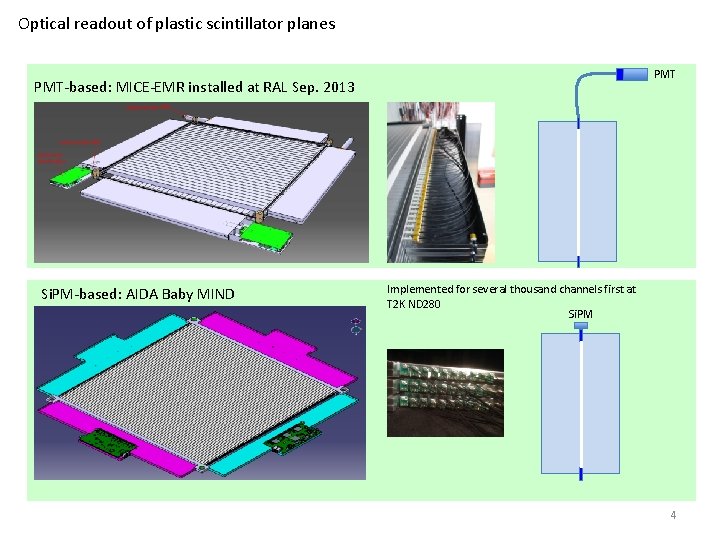
Optical readout of plastic scintillator planes PMT-based: MICE-EMR installed at RAL Sep. 2013 Si. PM-based: AIDA Baby MIND Implemented for several thousand channels first at T 2 K ND 280 Si. PM 4

Detector modules Poster: The design, construction and testing of TASD: A. Mefodiev et al. § Plastic scintillator bars: • Extruded scintillator slabs produced at Uniplast company, Vladimir, RU: • • • polysterene-based, 1. 5% paraterphenyl (PTP) and 0. 01% POPOP. Slabs etched with chemical agent (Uniplast) to create a 30 -100 mm layer that acts as a diffusive layer Custom optical connectors (INR design for AIDA) Kuraray Y 11 WLS fiber in 2 mm deep groove Dimensions: 900 x 10 x 7 mm 3 Photosensor connector: INR design § Module characteristics : • 2 planes, X/Y • • Each plane: 84 plastic scintillator bars 1 st prototype Nov. 2014 Optical cement light transmission WLS fiber: St. Gobain & Kuraray Y 11 Light yield measured for > 9000 bars 5
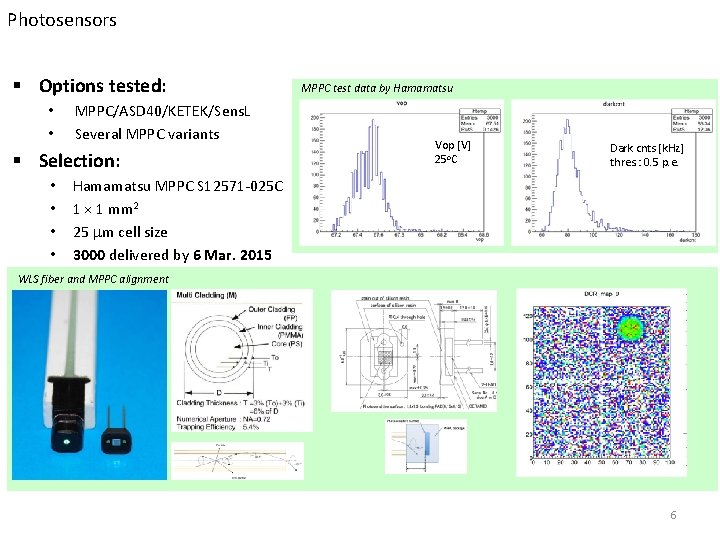
Photosensors § Options tested: • • MPPC/ASD 40/KETEK/Sens. L Several MPPC variants § Selection: • • MPPC test data by Hamamatsu Vop [V] 25 o. C Dark cnts [k. Hz] thres. : 0. 5 p. e. Hamamatsu MPPC S 12571 -025 C 1 × 1 mm 2 25 mm cell size 3000 delivered by 6 Mar. 2015 WLS fiber and MPPC alignment 6
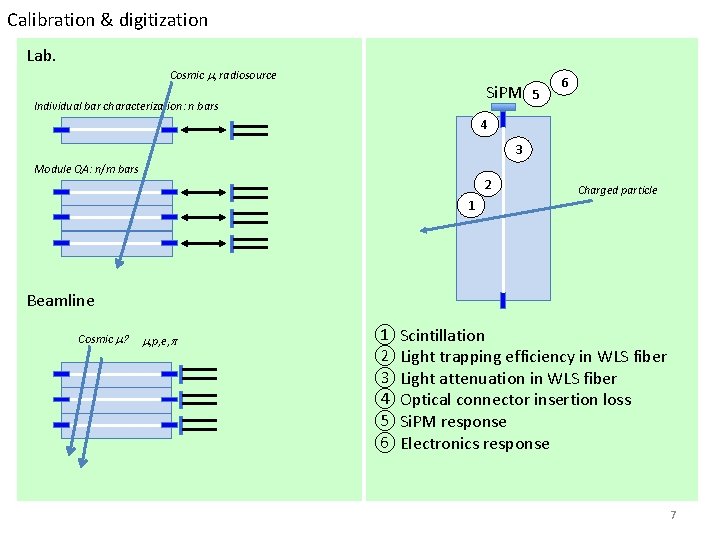
Calibration & digitization Lab. Cosmic m, radiosource Si. PM Individual bar characterization: n bars 5 6 4 3 Module QA: n/m bars 2 1 Charged particle Beamline Cosmic m? m, p, e, p ① Scintillation ② Light trapping efficiency in WLS fiber ③ Light attenuation in WLS fiber ④ Optical connector insertion loss ⑤ Si. PM response ⑥ Electronics response 7
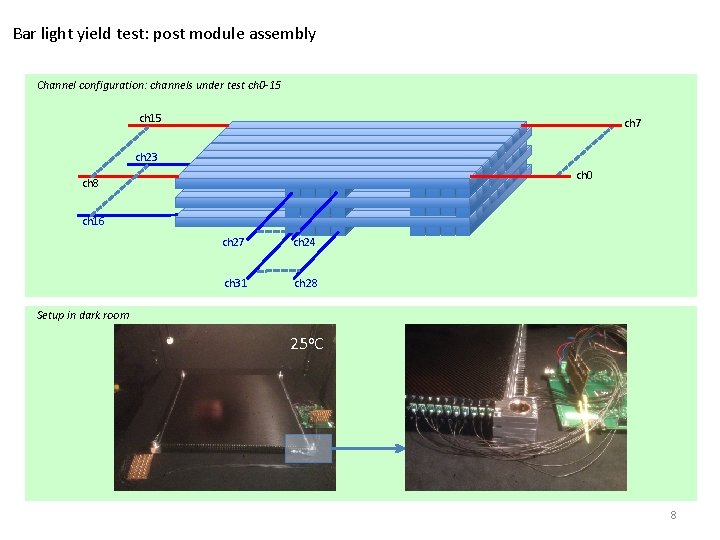
Bar light yield test: post module assembly Channel configuration: channels under test ch 0 -15 ch 7 ch 23 ch 0 ch 8 ch 16 ch 27 ch 24 ch 31 ch 28 Setup in dark room 25 o. C 8
![Module characterisation with CITIROC evaluation board ADC [12 -bit] FPGA MPPC x 32 Delay](http://slidetodoc.com/presentation_image_h2/a5d015977dadf307fd39fb8a73b739ef/image-9.jpg "Module characterisation with CITIROC evaluation board ADC [12 -bit] FPGA MPPC x 32 Delay")
Module characterisation with CITIROC evaluation board ADC [12 -bit] FPGA MPPC x 32 Delay Plastic Scint. bars x 32 usb Lab. VIEW 9
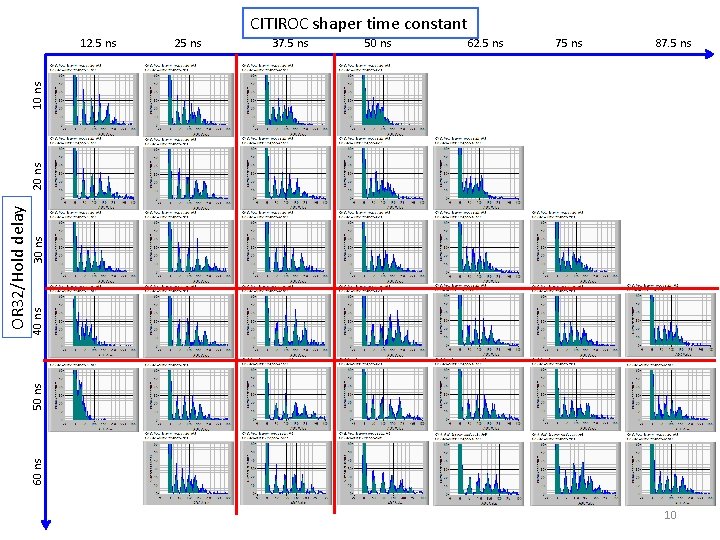
CITIROC shaper time constant 25 ns 37. 5 ns 50 ns 62. 5 ns 75 ns 87. 5 ns 30 ns 40 ns 50 ns 60 ns OR 32/Hold delay 20 ns 12. 5 ns 10
![Varying Pre-amp Feedback capacitance • Regime: Feedback capa. = 1 [arb. ] 48. 2](http://slidetodoc.com/presentation_image_h2/a5d015977dadf307fd39fb8a73b739ef/image-11.jpg "Varying Pre-amp Feedback capacitance • Regime: Feedback capa. = 1 [arb. ] 48. 2")
Varying Pre-amp Feedback capacitance • Regime: Feedback capa. = 1 [arb. ] 48. 2 ADC/p. e. – high enough gain to resolve indivual p. e. peaks whilst avoiding saturation • Dynamic range (HG): – – 12 -bit ADC Baseline ~950 19. 3 ADC/p. e. 160 p. e. • > 1600 p. e. with LG. Feedback capa. = 4 [arb. ] 32. 2 ADC/p. e. Feedback capa. = 6 [arb. ] 25. 6 ADC/p. e. Feedback capa. = 8 [arb. ] 19. 3 ADC/p. e. 11
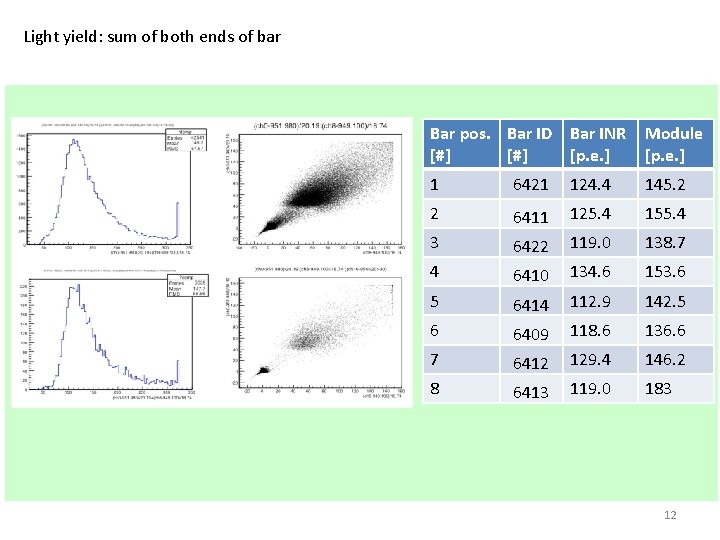
Light yield: sum of both ends of bar Bar pos. Bar ID Bar INR [#] [p. e. ] Module [p. e. ] 1 6421 124. 4 145. 2 2 6411 125. 4 155. 4 3 6422 119. 0 138. 7 4 6410 134. 6 153. 6 5 6414 112. 9 142. 5 6 6409 118. 6 136. 6 7 6412 129. 4 146. 2 8 6413 119. 0 183 12
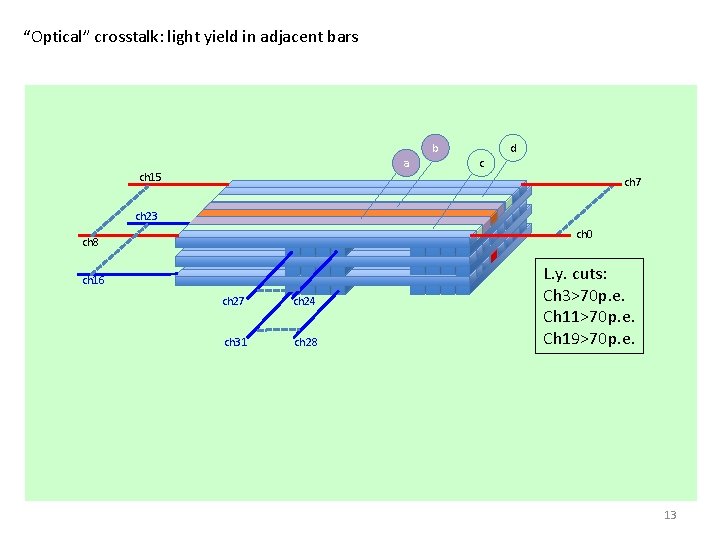
“Optical” crosstalk: light yield in adjacent bars b a ch 15 d c ch 7 ch 23 ch 0 ch 8 ch 16 ch 27 ch 24 ch 31 ch 28 L. y. cuts: Ch 3>70 p. e. Ch 11>70 p. e. Ch 19>70 p. e. 13
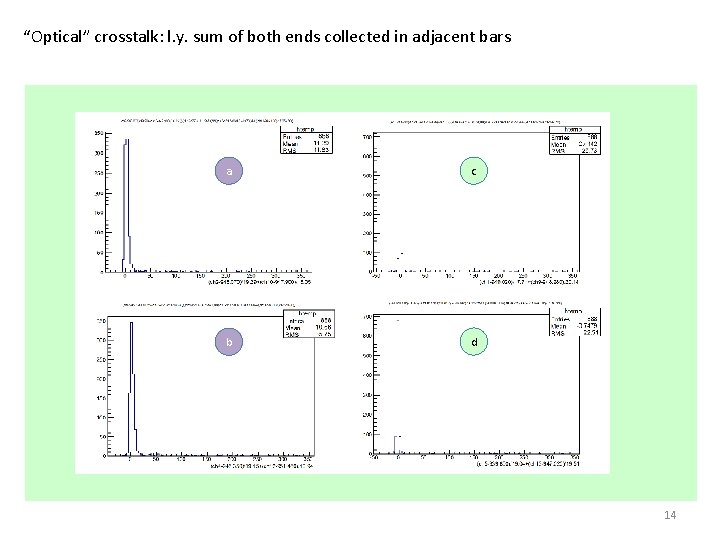
“Optical” crosstalk: l. y. sum of both ends collected in adjacent bars a c b d 14
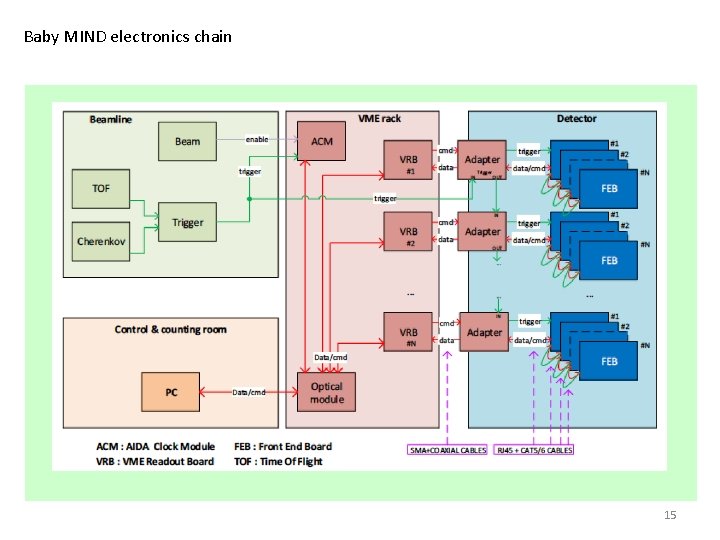
Baby MIND electronics chain 15
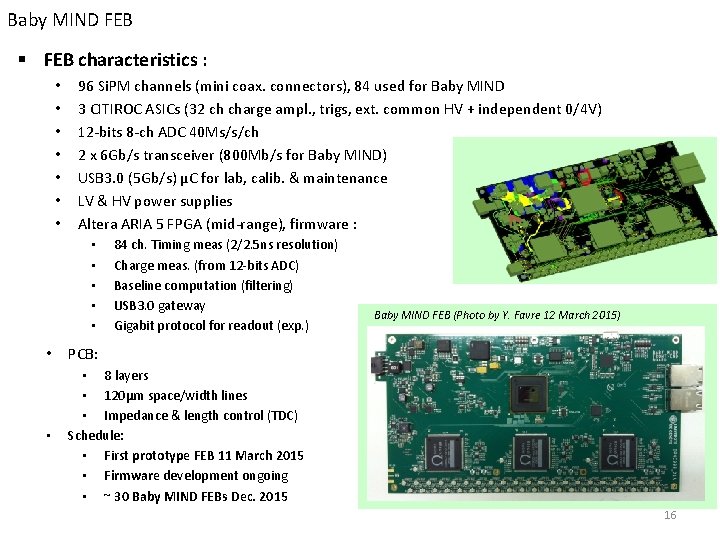
Baby MIND FEB § FEB characteristics : • • 96 Si. PM channels (mini coax. connectors), 84 used for Baby MIND 3 CITIROC ASICs (32 ch charge ampl. , trigs, ext. common HV + independent 0/4 V) 12 -bits 8 -ch ADC 40 Ms/s/ch 2 x 6 Gb/s transceiver (800 Mb/s for Baby MIND) USB 3. 0 (5 Gb/s) µC for lab, calib. & maintenance LV & HV power supplies Altera ARIA 5 FPGA (mid-range), firmware : • • • 84 ch. Timing meas (2/2. 5 ns resolution) Charge meas. (from 12 -bits ADC) Baseline computation (filtering) USB 3. 0 gateway Gigabit protocol for readout (exp. ) • PCB: • • 8 layers • 120µm space/width lines • Impedance & length control (TDC) Schedule: • First prototype FEB 11 March 2015 • Firmware development ongoing • ~ 30 Baby MIND FEBs Dec. 2015 Baby MIND FEB (Photo by Y. Favre 12 March 2015) 16
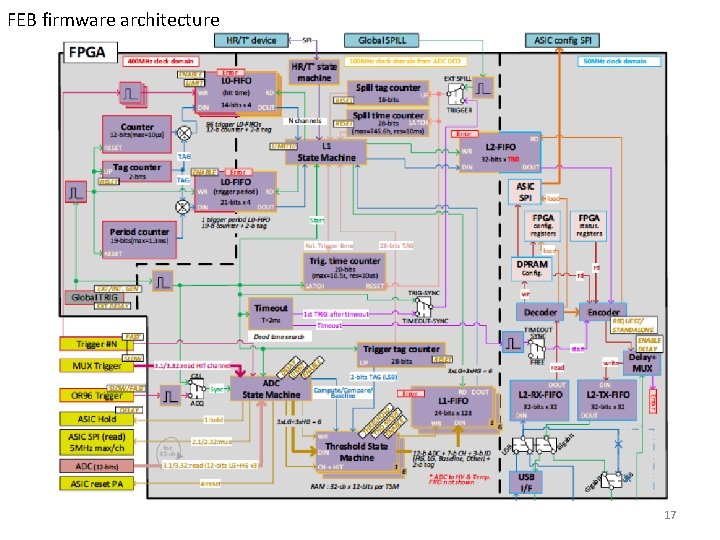
FEB firmware architecture 17
Summary • Baby MIND spectrometer modules: – all 9400 bars measured for light yield at INR before assembly into modules at Uni. Ge – choice of photosensor made, 3000 MPPC S 12571 -025 C delivered by March 2015 with good QA data – Test procedure for module characterization • Electronics: – CITIROC tested with evaluation board from Omega Microelectronics (8 -bit DAC for Vop, Pre-amp gain, shaper, discriminator, Or 32 Mask) – FEB produced (3 CITIROC/FEB) – Firmware architecture done (documented) – Firmware implementation ongoing 18

thanks to F. Cadoux, M. Dementjoz, S. Fedotov, A. Khotyantsev, A. Kleimenova, A. Mefodiev, L. Nicola, T. Ovsiannikova, N. Yershov. . . to you for your attention 19

Back-up 20
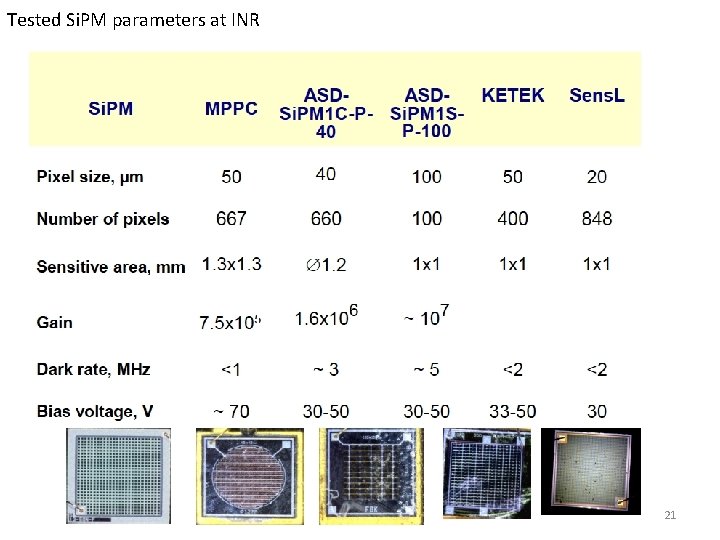
Tested Si. PM parameters at INR 21
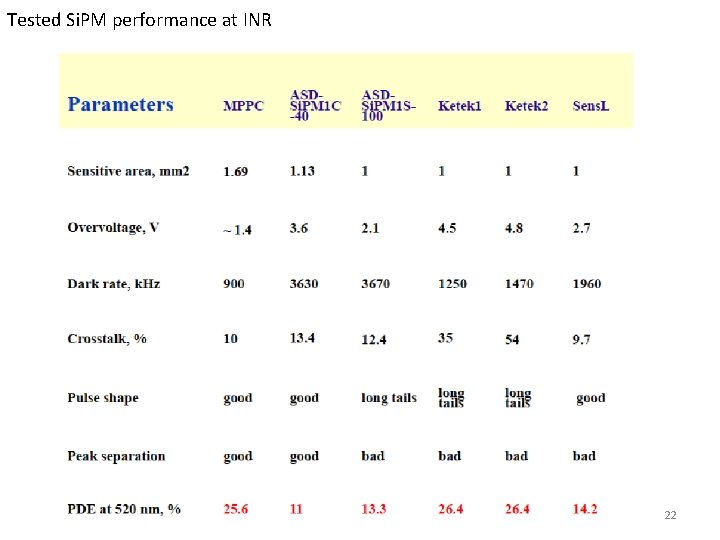
Tested Si. PM performance at INR 22
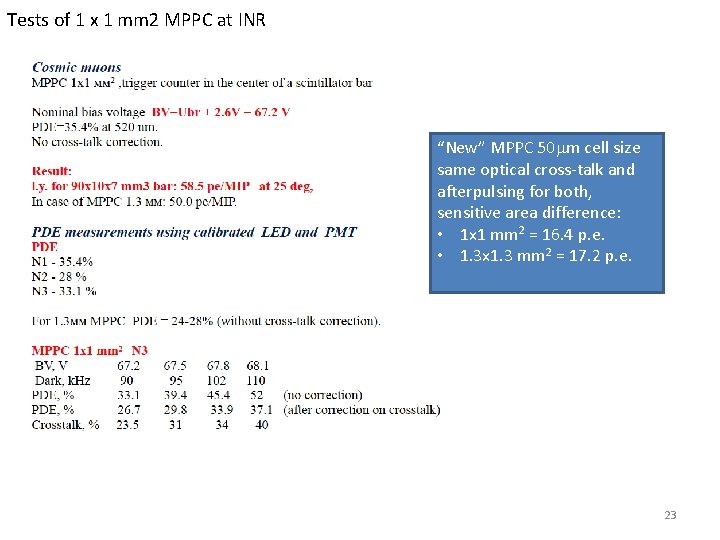
Tests of 1 x 1 mm 2 MPPC at INR “New” MPPC 50 mm cell size same optical cross-talk and afterpulsing for both, sensitive area difference: • 1 x 1 mm 2 = 16. 4 p. e. • 1. 3 x 1. 3 mm 2 = 17. 2 p. e. 23
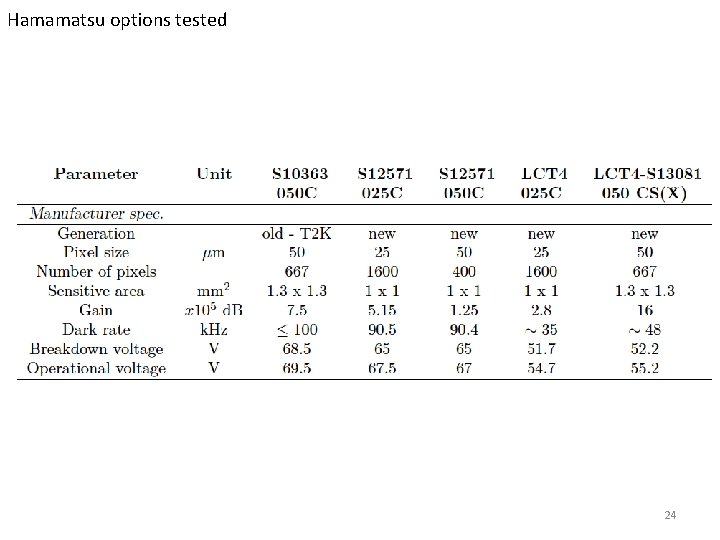
Hamamatsu options tested 24

Hamamatsu options vs readout 25
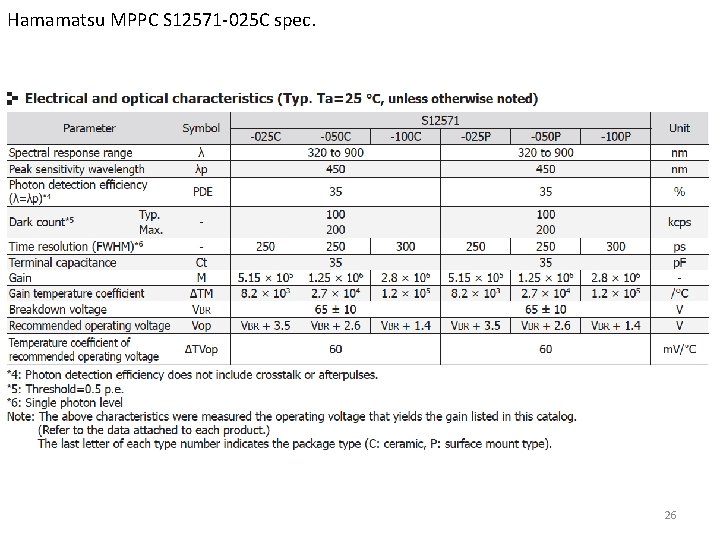
Hamamatsu MPPC S 12571 -025 C spec. 26
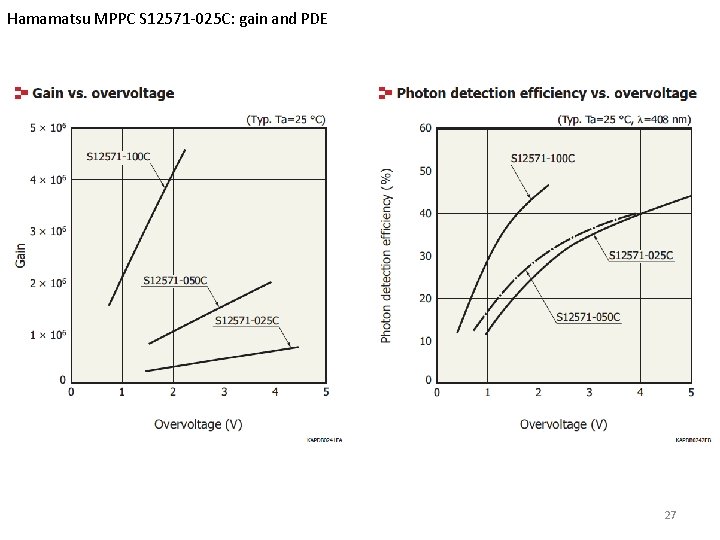
Hamamatsu MPPC S 12571 -025 C: gain and PDE 27
- Slides: 27