
ReadingVocabulary Connection Amount of Reading Per Day of

Reading-Vocabulary Connection Amount of Reading Per Day # of Days # of Words # of Annual Reading Encountered Unfamiliar Gain Per Year Words Encountered 25 minutes 200 1, 000 15, 00030, 000 7501500 words
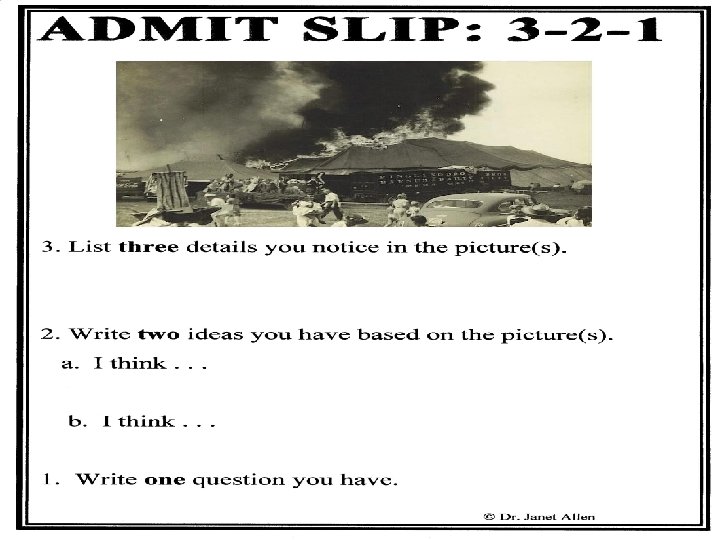
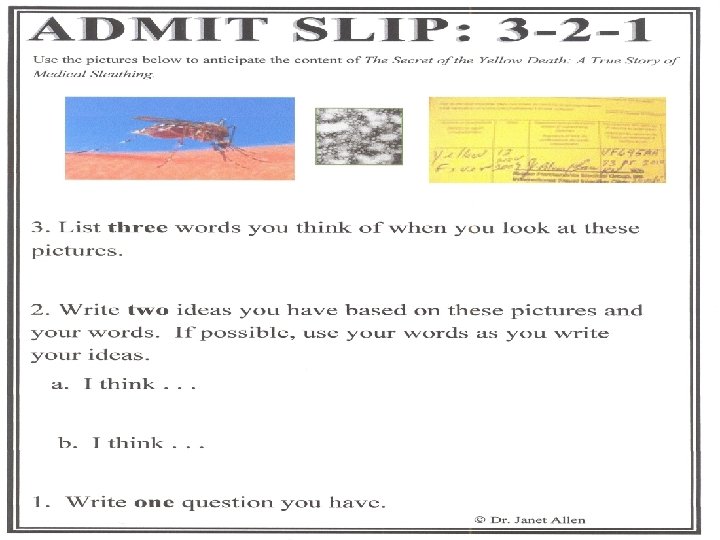
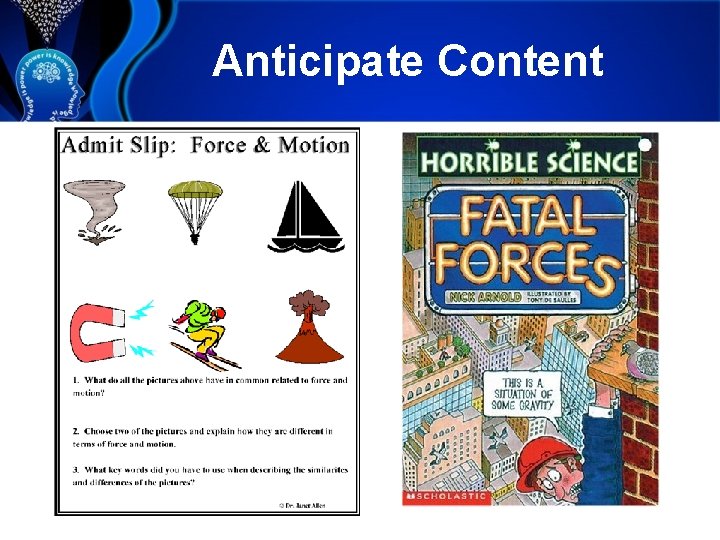
Anticipate Content
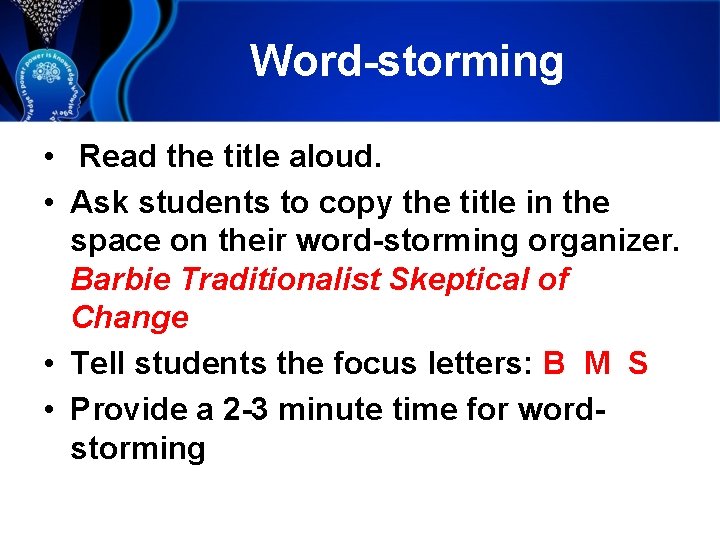
Word-storming • Read the title aloud. • Ask students to copy the title in the space on their word-storming organizer. Barbie Traditionalist Skeptical of Change • Tell students the focus letters: B M S • Provide a 2 -3 minute time for wordstorming
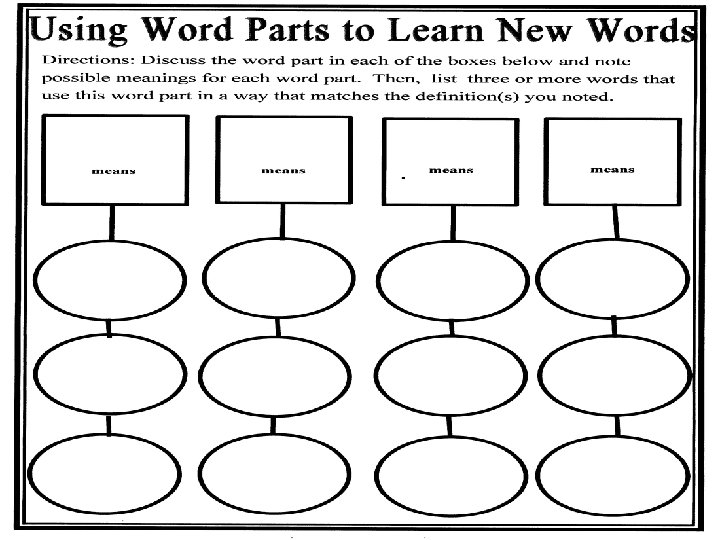
Claudia's bout with triskaidekaphobia prevented her from ever staying on the thirteenth floor of a hotel. What are the word parts you recognize? (Structural Analysis)
Word-storming • Read the title aloud. • Ask students to copy the title in the space on their word-storming organizer: “Deliberations to Resume in ‘ 64 Miss Killings” • Tell students the focus letters: C J K M • Provide a 2 -3 minute time for wordstorming
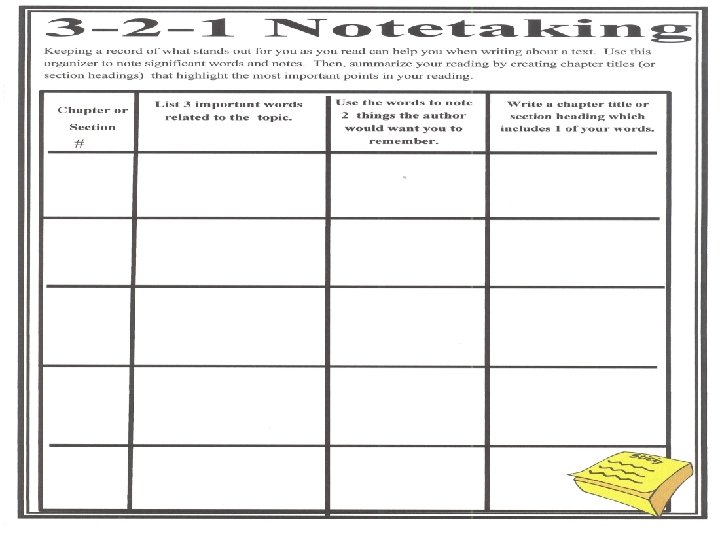
Teach students how to take notes.
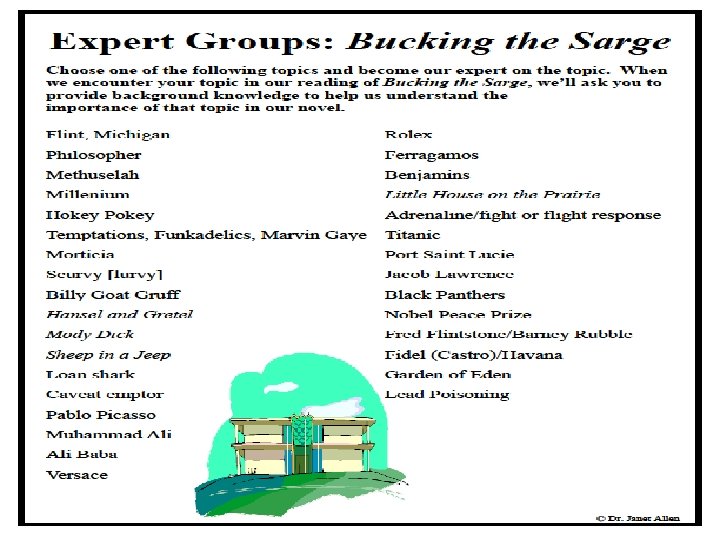
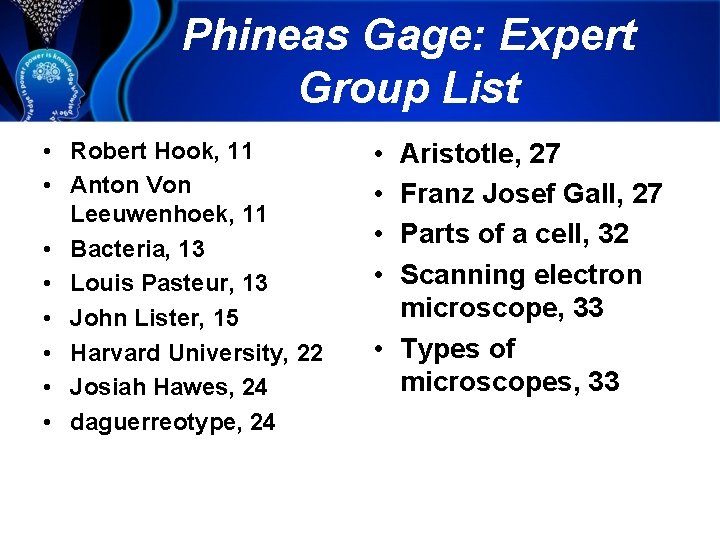
Phineas Gage: Expert Group List • Robert Hook, 11 • Anton Von Leeuwenhoek, 11 • Bacteria, 13 • Louis Pasteur, 13 • John Lister, 15 • Harvard University, 22 • Josiah Hawes, 24 • daguerreotype, 24 • • Aristotle, 27 Franz Josef Gall, 27 Parts of a cell, 32 Scanning electron microscope, 33 • Types of microscopes, 33
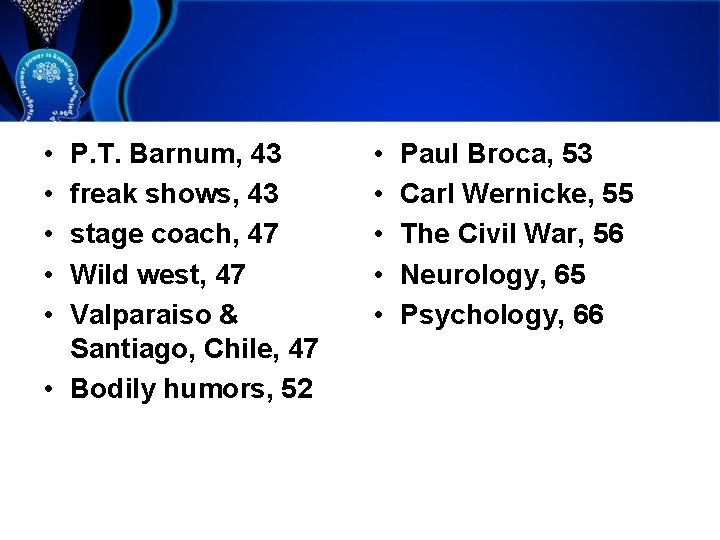
• • • P. T. Barnum, 43 freak shows, 43 stage coach, 47 Wild west, 47 Valparaiso & Santiago, Chile, 47 • Bodily humors, 52 • • • Paul Broca, 53 Carl Wernicke, 55 The Civil War, 56 Neurology, 65 Psychology, 66
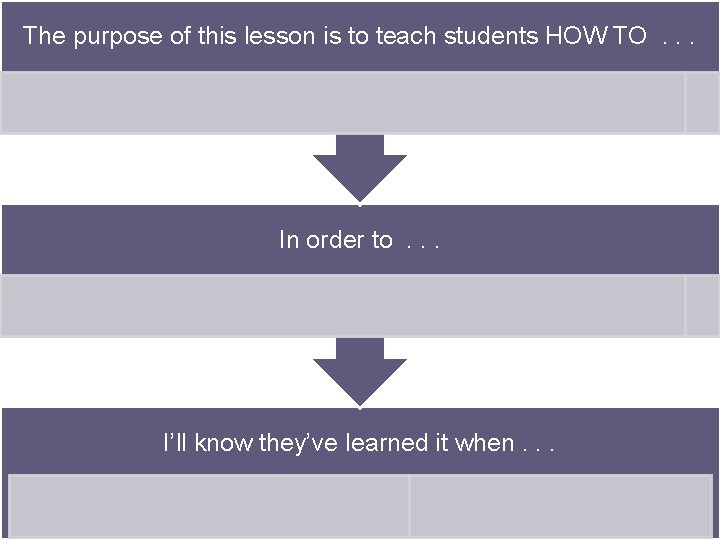
The purpose of this lesson is to teach students HOW TO. . . In order to. . . I’ll know they’ve learned it when. . .
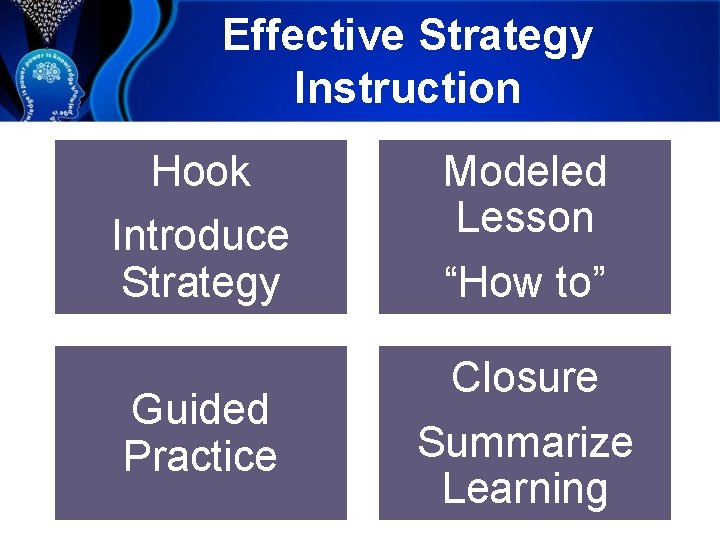
Effective Strategy Instruction Hook Introduce Strategy Modeled Lesson “How to” Guided Practice Closure Summarize Learning
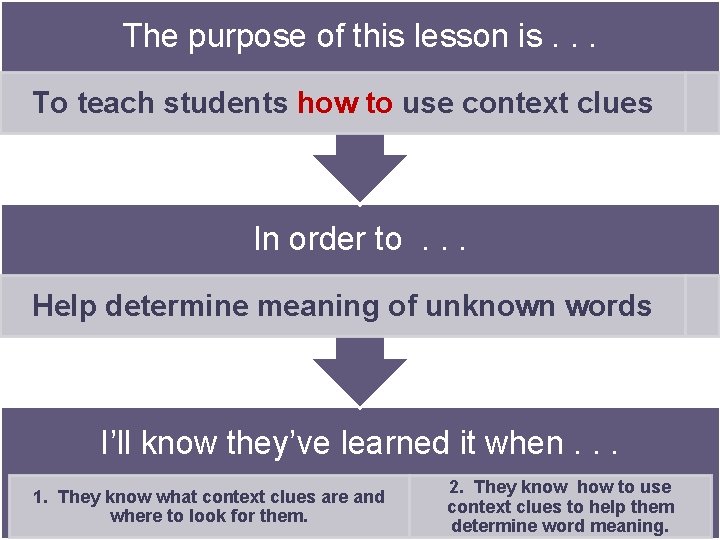
The purpose of this lesson is. . . To teach students how to use context clues In order to. . . Help determine meaning of unknown words I’ll know they’ve learned it when. . . 1. They know what context clues are and where to look for them. 2. They know how to use context clues to help them determine word meaning.
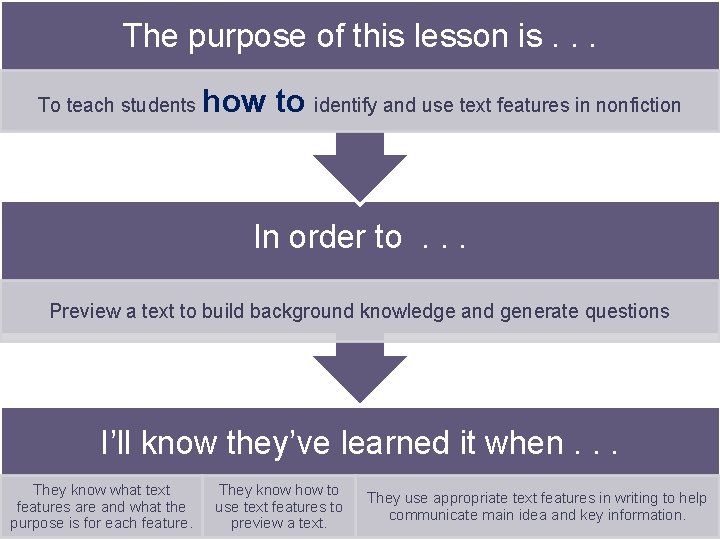
The purpose of this lesson is. . . To teach students how to identify and use text features in nonfiction In order to. . . Preview a text to build background knowledge and generate questions I’ll know they’ve learned it when. . . They know what text features are and what the purpose is for each feature. They know how to use text features to preview a text. They use appropriate text features in writing to help communicate main idea and key information.
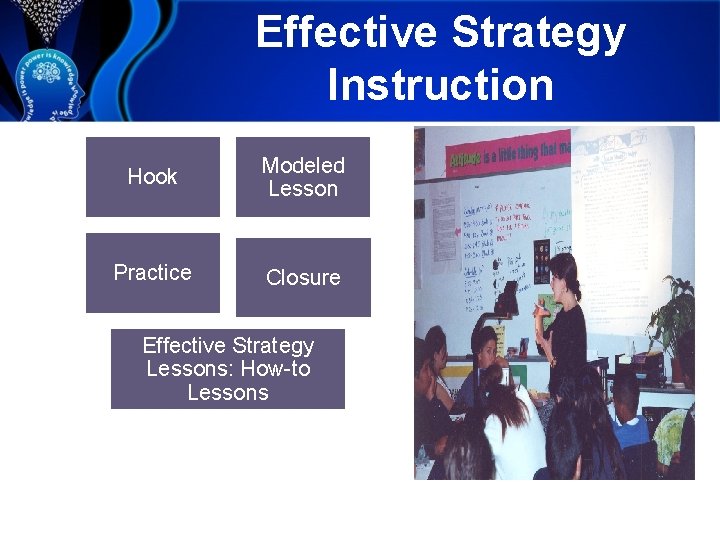
Effective Strategy Instruction Hook Modeled Lesson Practice Closure Effective Strategy Lessons: How-to Lessons

Preview by looking at the cover and making predictions.

Review the Table of Contents.
Information in TOC other than chapter titles?
What did you discover? List 3 things you think you will learn based on your reading the Table of Contents. 1. 2. 3.
E: Examine the visuals. Gather fast facts.
Vocabulary How hard will it be?
I: Index Use the entries to discover specific topics. Generate 3 questions you have about the contents of the book based on information from the index. 1. 2. 3.
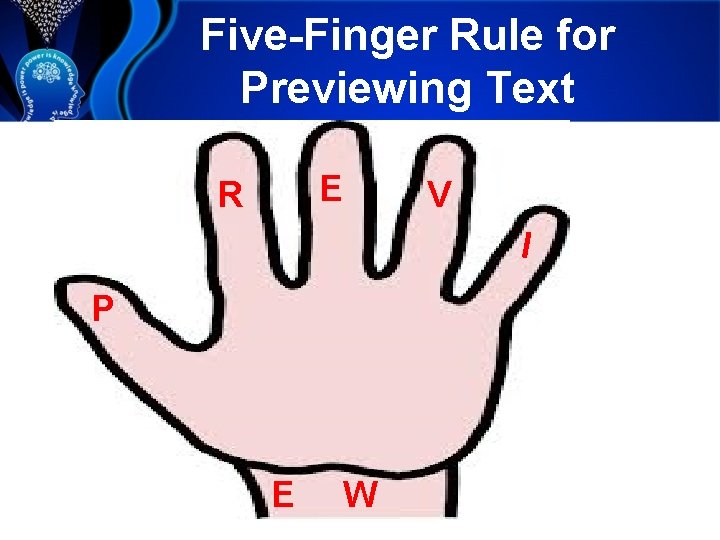
Five-Finger Rule for Previewing Text E R V I P E W
Explain what you know. What do I know about the key ideas or information in the book? What do I know about the organization of the book?
What’s my connection? Fears of Ebola spread in West Africa as 2 nd American infected with virus http: //www. foxnews. com/health/2014/07/29/fears-ebolaspread-in-west-africa-as-2 nd-american-infected-withvirus/
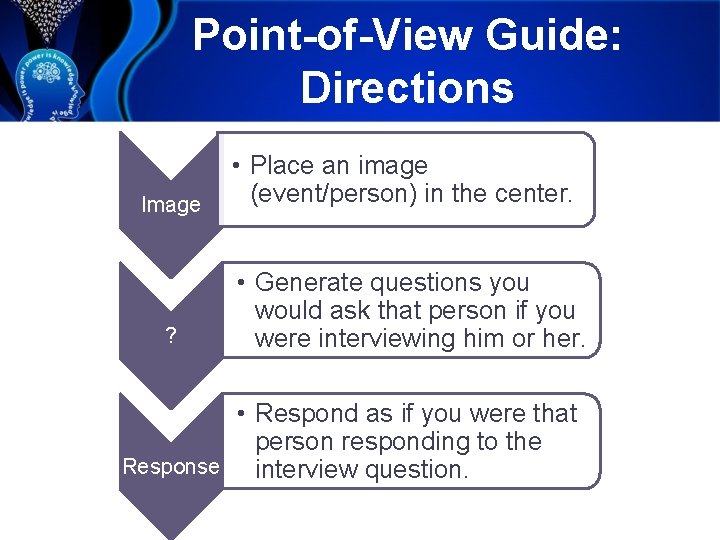
Point-of-View Guide: Directions Image ? • Place an image (event/person) in the center. • Generate questions you would ask that person if you were interviewing him or her. • Respond as if you were that person responding to the Response interview question.
• Eyes When you arrived in Luanda, what were the first things you saw. What struck you the most about what you saw? • Head What was your thought process when you were deciding to go to Luanda? What did you have to consider?
• Ears • Mouth What impact did As you lived and others’ words have worked in Luanda, on your decision to what did you want go to Luanda? What to tell Americans impact did their who were home in words have on you? the United States?
• Heart • Hands What part of your heart was left in Luanda? Now that you have spent this time in Luanda, what work will you continue to do in terms of awareness of deadly diseases?
SPAWN S--special powers: What if you had special powers to eradicate the deadly diseases in Luanda? How would their lives be different? P--problem solving: How could the problems they face be solved? A--alternative viewpoints: How might others (environmentalists, politicians, futurists, etc. ) view the spread of these deadly diseases? W--what if: What if Denise Grady had not gone to Luanda or written Deadly Invaders? Would anything be different? N—next: Now that you have read Deadly Invaders, what will you do to help make a difference?
- Slides: 35