
Reading Well for mental health Reading Well for
![[Local contact details] www. reading-well. org. uk](https://slidetodoc.com/presentation_image/53e68723d86ac7ecead1a7af822f7a50/image-14.jpg "[Local contact details] www. reading-well. org. uk")
- Slides: 14
Reading Well for mental health
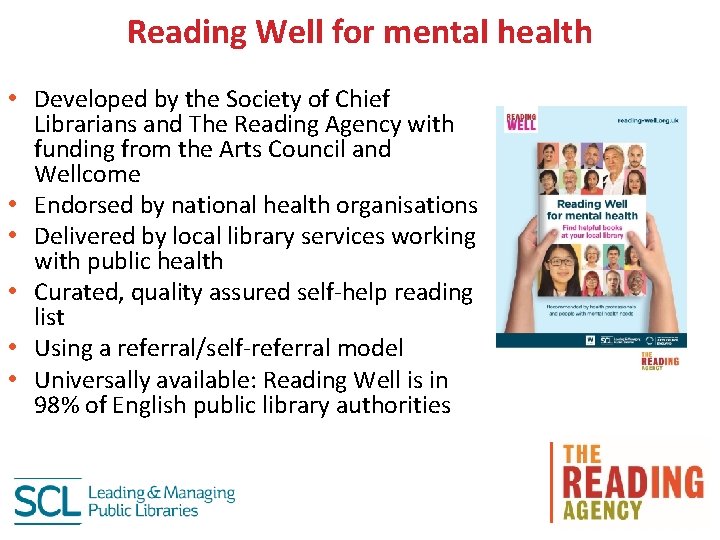
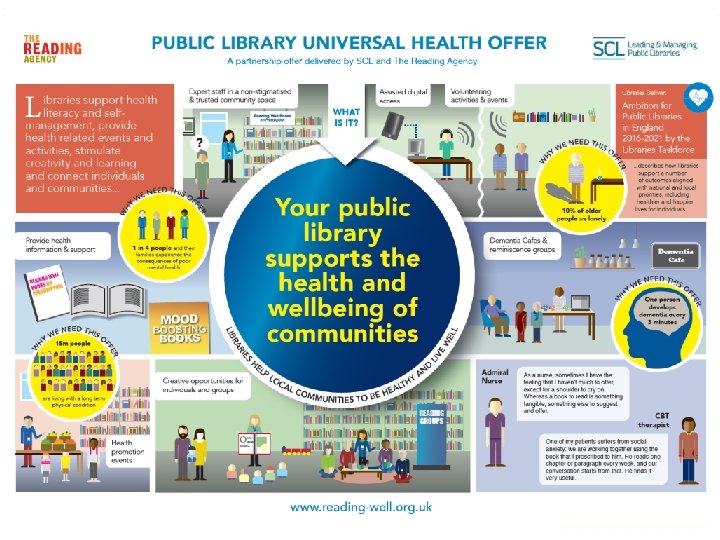
Reading Well for mental health • Developed by the Society of Chief Librarians and The Reading Agency with funding from the Arts Council and Wellcome • Endorsed by national health organisations • Delivered by local library services working with public health • Curated, quality assured self-help reading list • Using a referral/self-referral model • Universally available: Reading Well is in 98% of English public library authorities
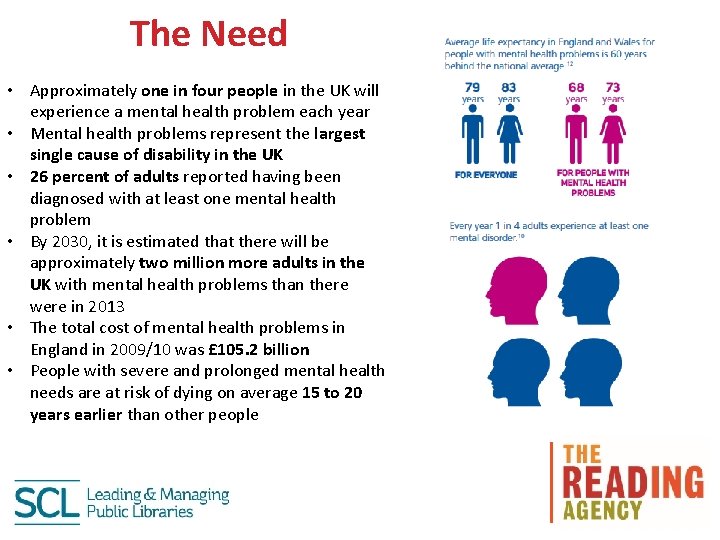
The Need • Approximately one in four people in the UK will experience a mental health problem each year • Mental health problems represent the largest single cause of disability in the UK • 26 percent of adults reported having been diagnosed with at least one mental health problem • By 2030, it is estimated that there will be approximately two million more adults in the UK with mental health problems than there were in 2013 • The total cost of mental health problems in England in 2009/10 was £ 105. 2 billion • People with severe and prolonged mental health needs are at risk of dying on average 15 to 20 years earlier than other people
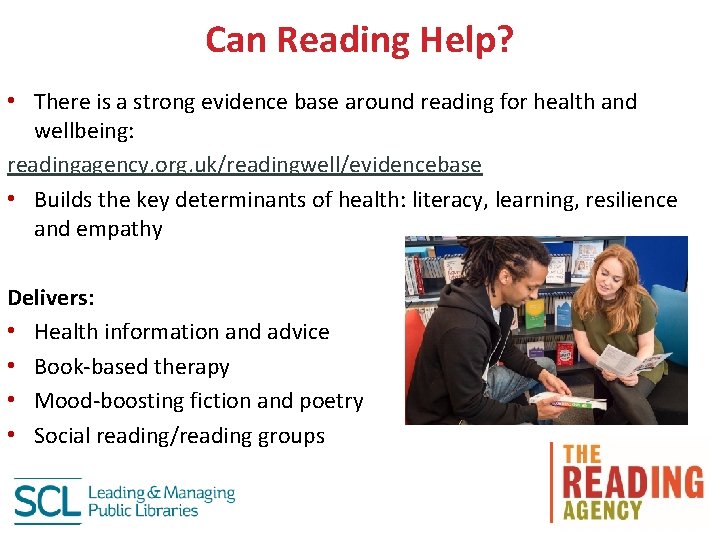
Can Reading Help? • There is a strong evidence base around reading for health and wellbeing: readingagency. org. uk/readingwell/evidencebase • Builds the key determinants of health: literacy, learning, resilience and empathy Delivers: • Health information and advice • Book-based therapy • Mood-boosting fiction and poetry • Social reading/reading groups
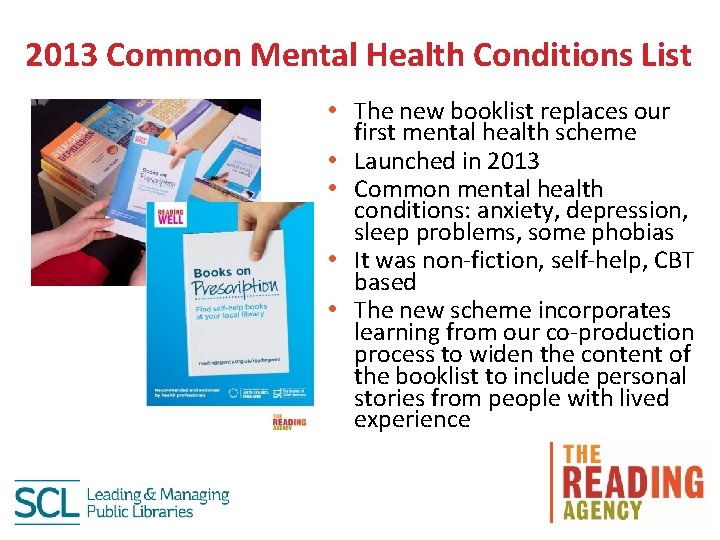
2013 Common Mental Health Conditions List • The new booklist replaces our first mental health scheme • Launched in 2013 • Common mental health conditions: anxiety, depression, sleep problems, some phobias • It was non-fiction, self-help, CBT based • The new scheme incorporates learning from our co-production process to widen the content of the booklist to include personal stories from people with lived experience
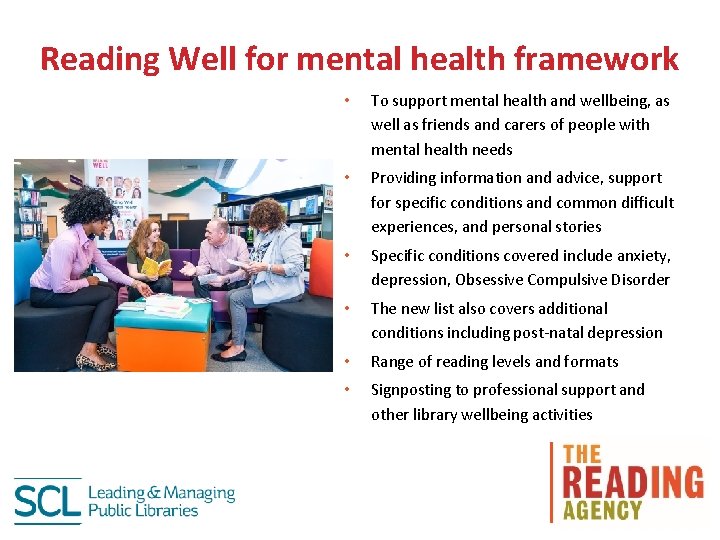
Reading Well for mental health framework • To support mental health and wellbeing, as well as friends and carers of people with mental health needs • Providing information and advice, support for specific conditions and common difficult experiences, and personal stories • Specific conditions covered include anxiety, depression, Obsessive Compulsive Disorder • The new list also covers additional conditions including post-natal depression • Range of reading levels and formats • Signposting to professional support and other library wellbeing activities
Quality Assured Process • Responding to need • Delivering public health policy priorities • Evidence based and working within clinical guidelines • Developed with expert support • Co-creation with people with lived experience • Recognised by the Royal Society for Public Health as a Public Mental Health and Wellbeing Award finalist
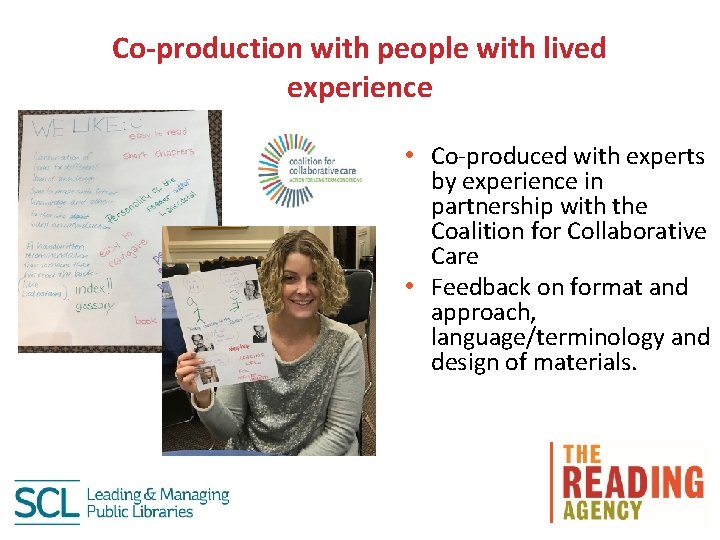
Co-production with people with lived experience • Co-produced with experts by experience in partnership with the Coalition for Collaborative Care • Feedback on format and approach, language/terminology and design of materials.
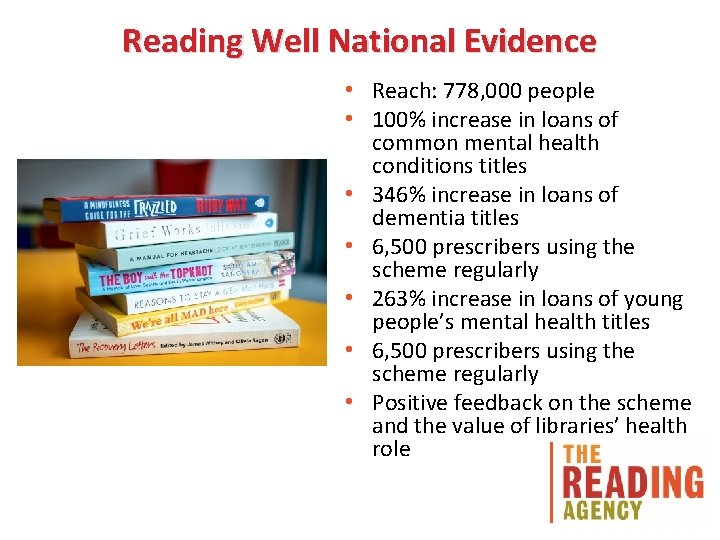
Reading Well National Evidence • Reach: 778, 000 people • 100% increase in loans of common mental health conditions titles • 346% increase in loans of dementia titles • 6, 500 prescribers using the scheme regularly • 263% increase in loans of young people’s mental health titles • 6, 500 prescribers using the scheme regularly • Positive feedback on the scheme and the value of libraries’ health role
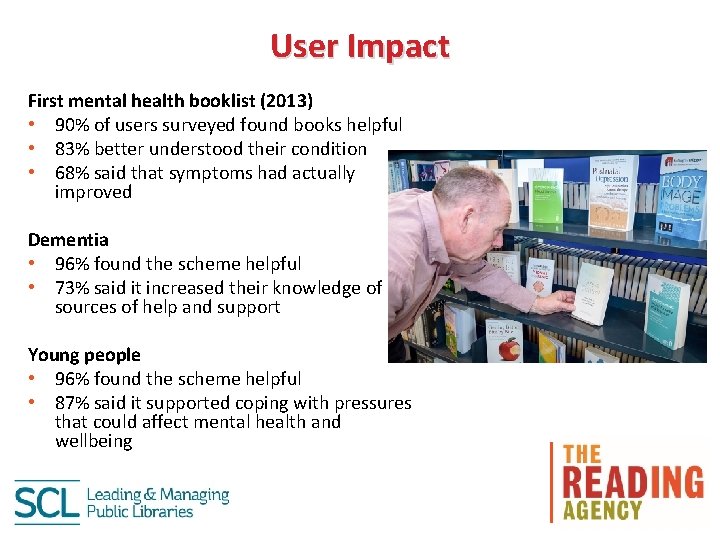
User Impact First mental health booklist (2013) • 90% of users surveyed found books helpful • 83% better understood their condition • 68% said that symptoms had actually improved Dementia • 96% found the scheme helpful • 73% said it increased their knowledge of sources of help and support Young people • 96% found the scheme helpful • 87% said it supported coping with pressures that could affect mental health and wellbeing
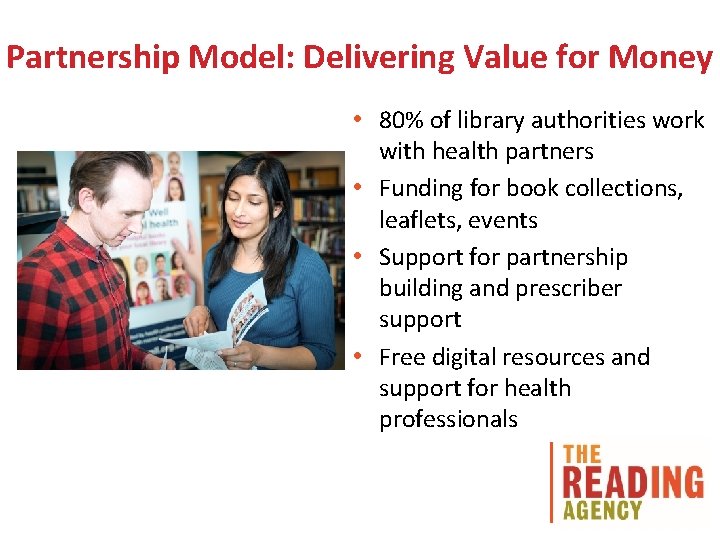
Partnership Model: Delivering Value for Money • 80% of library authorities work with health partners • Funding for book collections, leaflets, events • Support for partnership building and prescriber support • Free digital resources and support for health professionals
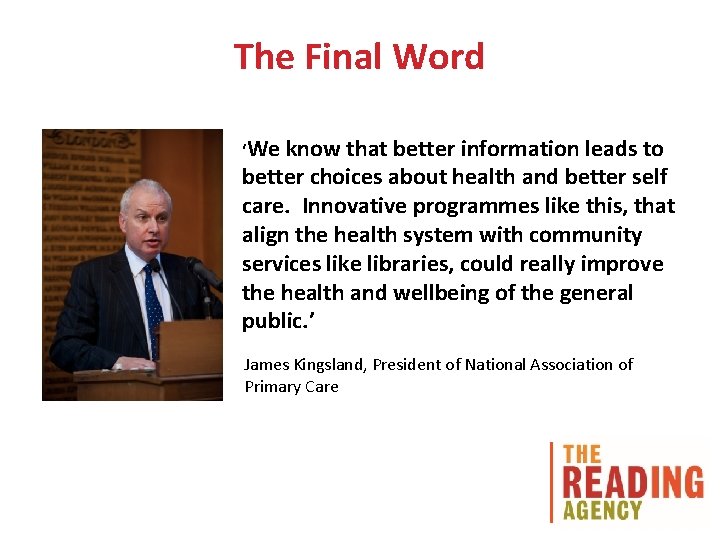
The Final Word ‘We know that better information leads to better choices about health and better self care. Innovative programmes like this, that align the health system with community services like libraries, could really improve the health and wellbeing of the general public. ’ James Kingsland, President of National Association of Primary Care
[Local contact details] www. reading-well. org. uk