
Reading Weather Maps Review 1 What instrument do
- Slides: 13
Reading Weather Maps
Review 1. What instrument do we use to tell temperature? 2. What instrument do we use to tell pressure?
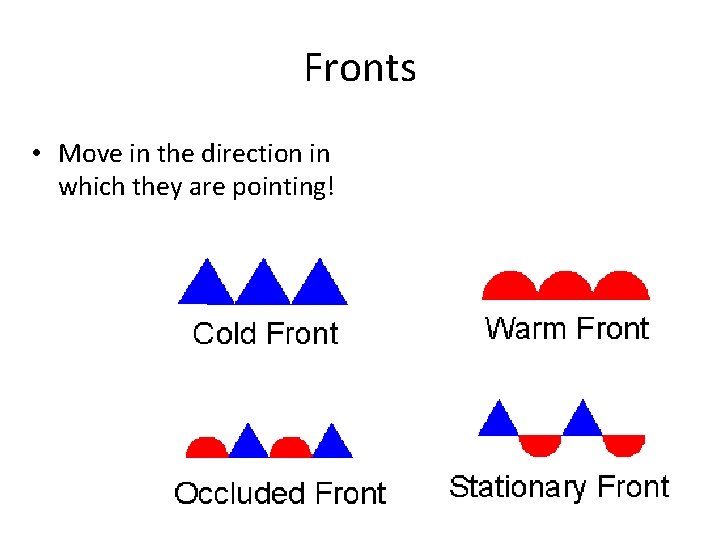
3) Which has greater air pressure, cold or warm air? 4) What are the four types of fronts? 5) Which type of front brings thunderstorms?
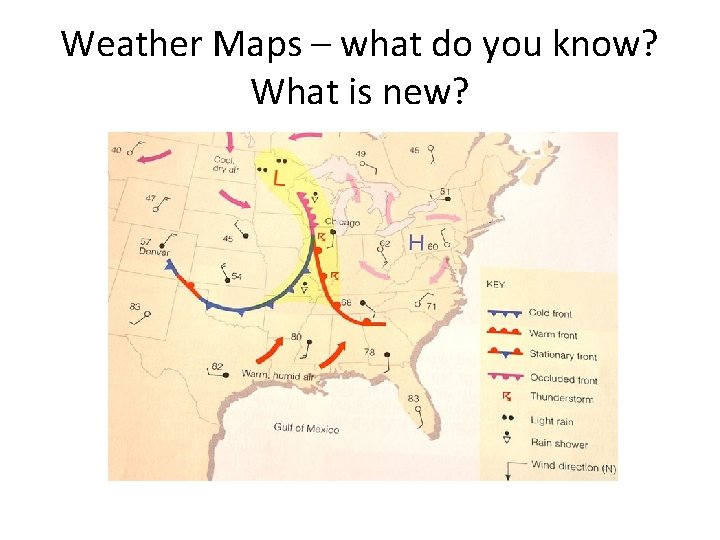
Weather Maps – what do you know? What is new?
Air Masses • Air masses are masses of air that have the same characteristics of the surface over which it develops • Pressure Systems descending (going down)=H pressure ascending (going up)=L pressure
Air Pressure • Warm air= expanding or rising air= leaves behind L pressure • Cold Air=sinking air= leaves an area of H pressure
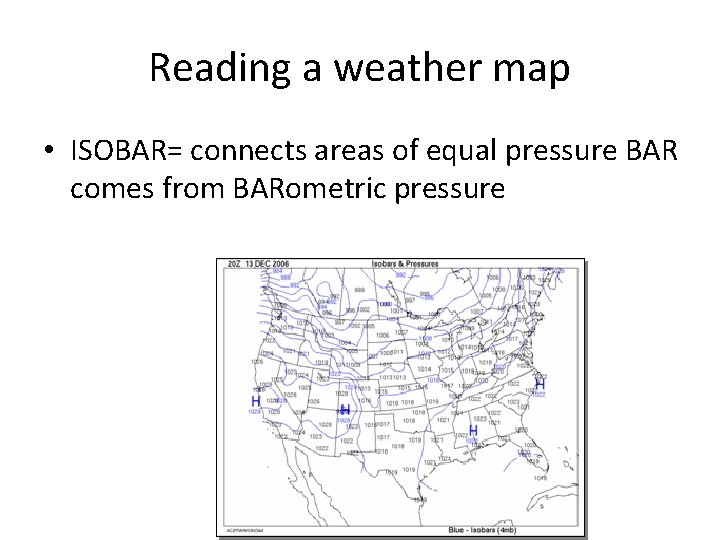
Reading a weather map • ISOBAR= connects areas of equal pressure BAR comes from BARometric pressure
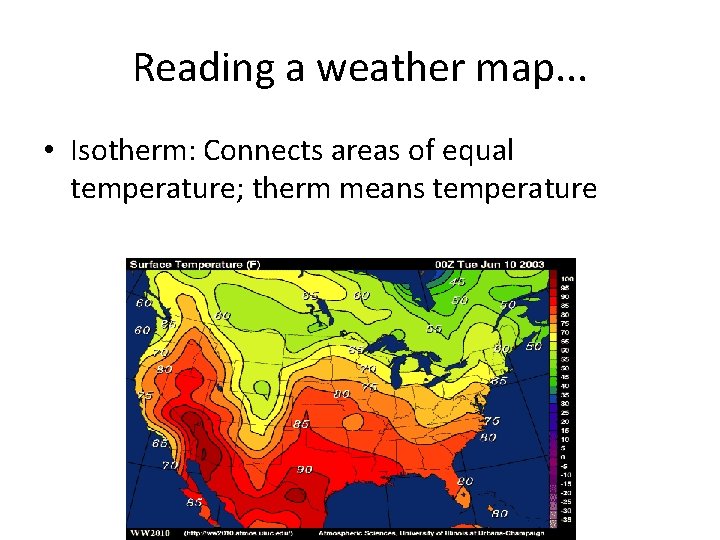
Reading a weather map. . . • Isotherm: Connects areas of equal temperature; therm means temperature
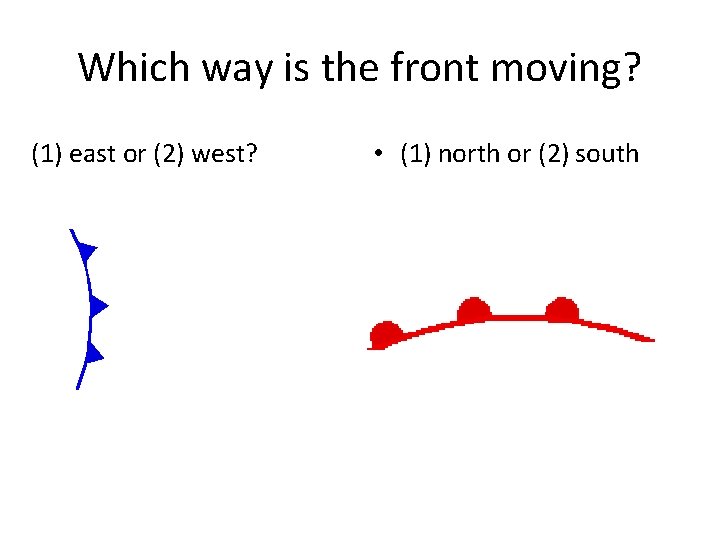
Fronts • Move in the direction in which they are pointing!
Which way is the front moving? (1) east or (2) west? • (1) north or (2) south
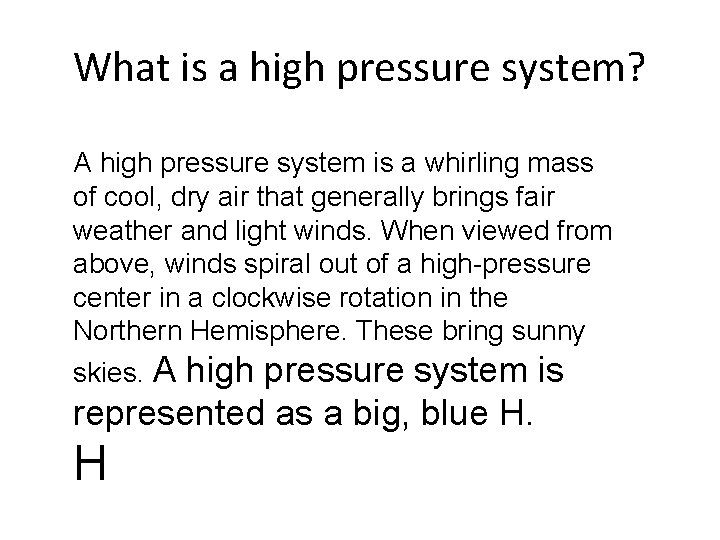
What is a high pressure system? A high pressure system is a whirling mass of cool, dry air that generally brings fair weather and light winds. When viewed from above, winds spiral out of a high-pressure center in a clockwise rotation in the Northern Hemisphere. These bring sunny skies. A high pressure system is represented as a big, blue H. H
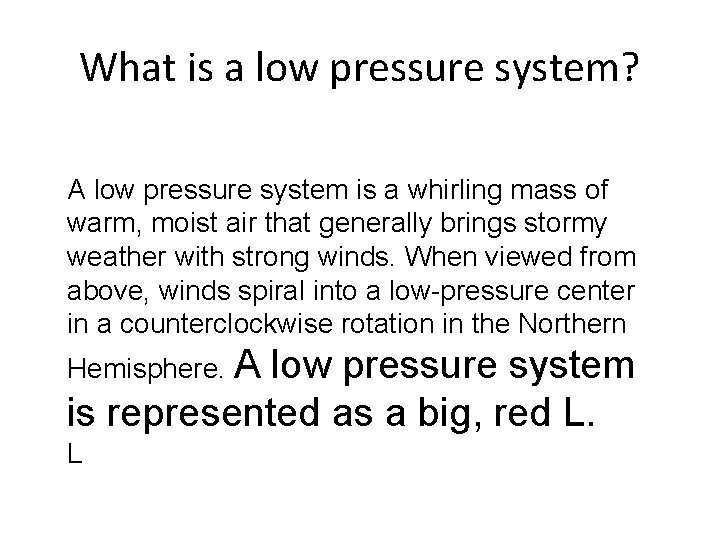
What is a low pressure system? A low pressure system is a whirling mass of warm, moist air that generally brings stormy weather with strong winds. When viewed from above, winds spiral into a low-pressure center in a counterclockwise rotation in the Northern Hemisphere. A low pressure system is represented as a big, red L. L
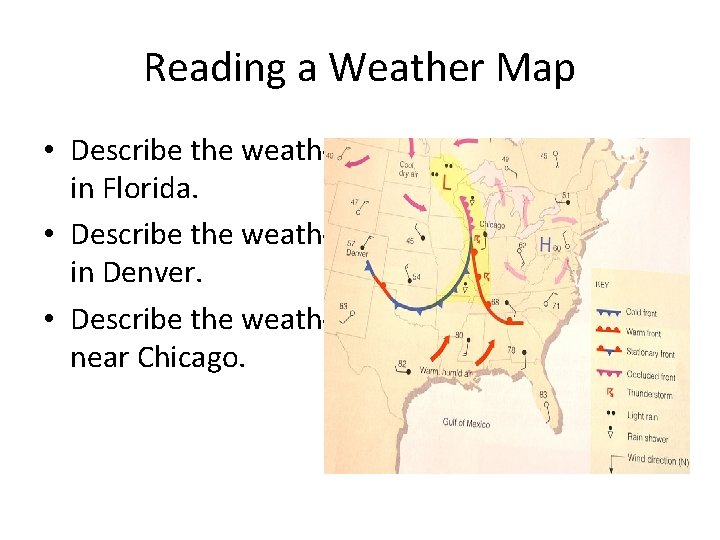
Reading a Weather Map • Describe the weather in Florida. • Describe the weather in Denver. • Describe the weather near Chicago.