
Reading Strategy Annotating Text Why Annotate Text Reading
- Slides: 11
Reading Strategy: Annotating Text
Why Annotate Text? • Reading and constructing meaning from a text is a complex and active process; one way to help readers slow down and develop their critical analysis skills is to teach them to annotate the text as they read.
How to Annotate Text. . . • Annotating is an important skill to employ if you want to read critically. Successful critical readers read with a pencil in their hand, making notes in the text as they read. Instead of reading passively, they create an active relationship with what they are reading by "talking back" to the text in its margins. You may want to make the following annotations as you read:
Strategies for Annotating • Mark the Thesis, Main Points, and Supporting Evidence of the Piece • Mark Key Terms and Unfamiliar Words • Underline Important Ideas and Memorable Images • Write Your Questions and/or Comments in the Margins of the Piece • Write any Personal Experience Related to the Piece • Mark Confusing Parts of the Piece, or Sections that Warrant a Reread • Underline the Sources, if any, the Author has Used
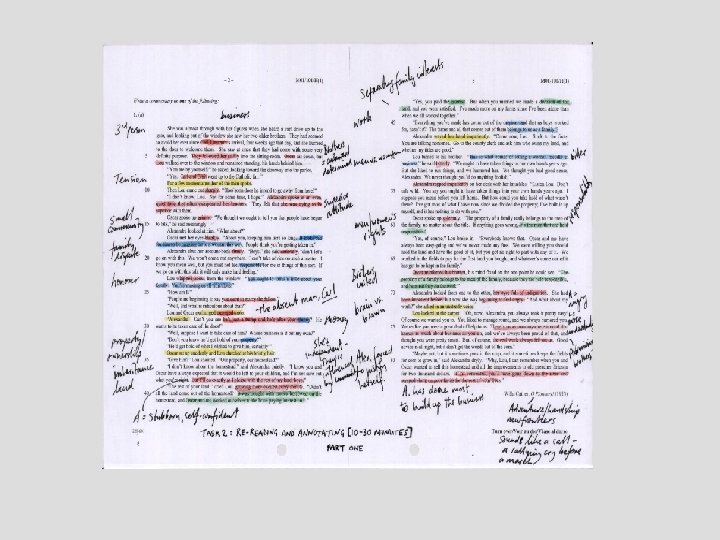
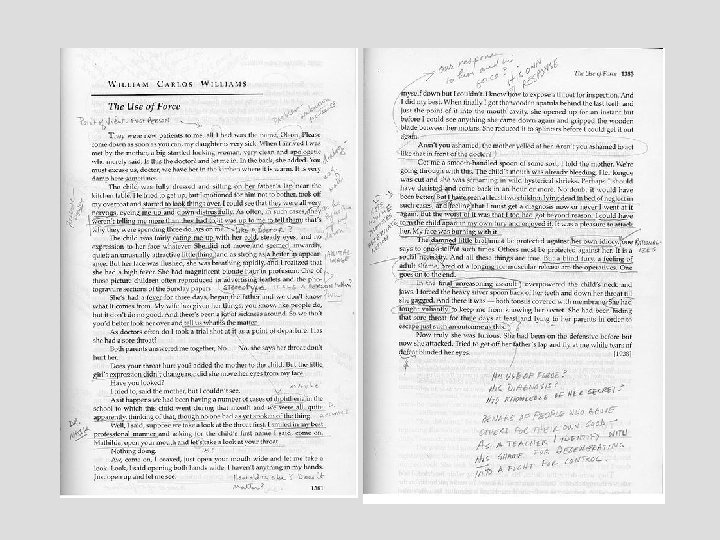
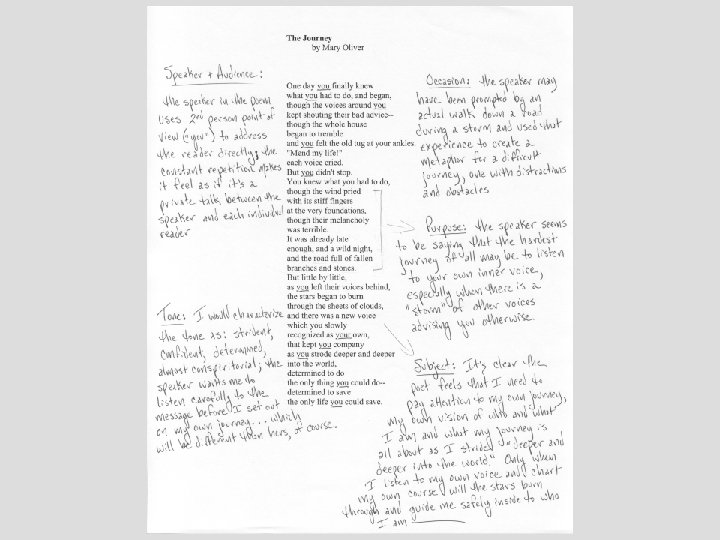
What does it look like?
Your task for this assignment • Read the first piece – “What is Creative Nonfiction? ” • Make notes in the margins, underline, circle, highlight information that you think gets at the heart of what creative nonfiction is.
Then. . . • As you read tonight’s homework and tomorrow’s CNF pieces, annotate on how it reflects or aligns with your understanding of creative nonfiction (highlight examples of language, details, etc. that illustrate the tenets, techniques, components of the genre and label or explain them).
Finally. . . • Review your annotations before class. • Be ready to share and discuss your thoughts on each piece.