
Reading Smoke the Sequel Courtesy of Battalion Chief
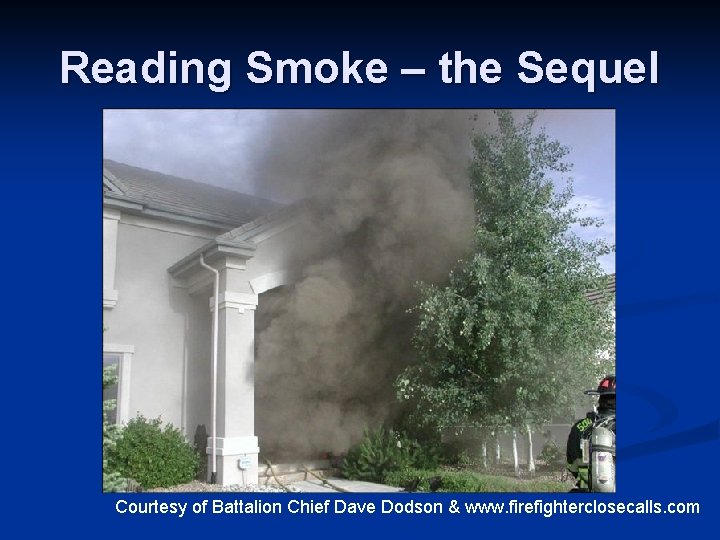
Reading Smoke – the Sequel Courtesy of Battalion Chief Dave Dodson & www. firefighterclosecalls. com
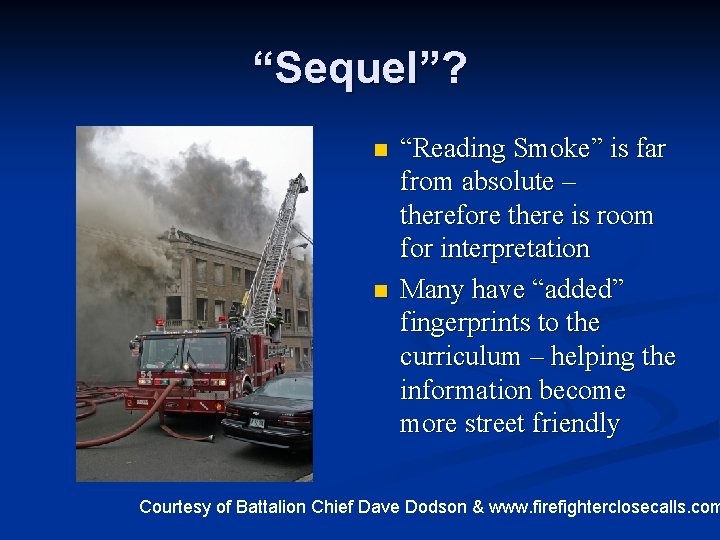
“Sequel”? n n “Reading Smoke” is far from absolute – therefore there is room for interpretation Many have “added” fingerprints to the curriculum – helping the information become more street friendly Courtesy of Battalion Chief Dave Dodson & www. firefighterclosecalls. com
Noted thanks to…. . n n John Tanaka, Captain, Everett, WA Peter Mc. Bride, Ottawa Duty Safety Officer Dave Ross, Chief of Safety for Toronto Billy Goldfeder, Chief of Global F/F Safety! n n n NIST: the National Institute of Science and Technology Bobby Halton, Ted Nee, Mike West, Brian Kazmierzak, Ed Hadfield, and Gerald Tracy (and many more) You – and your emails, videos, and pictures! Courtesy of Battalion Chief Dave Dodson & www. firefighterclosecalls. com
Power. Point NOTE This Power. Point can serve as a good teaching tool – but is best presented with video examples. Those are NOT included here – you must find your own examples. www. youtube. com has many examples: search under “flashover” or “house fires. ” Courtesy of Battalion Chief Dave Dodson & www. firefighterclosecalls. com
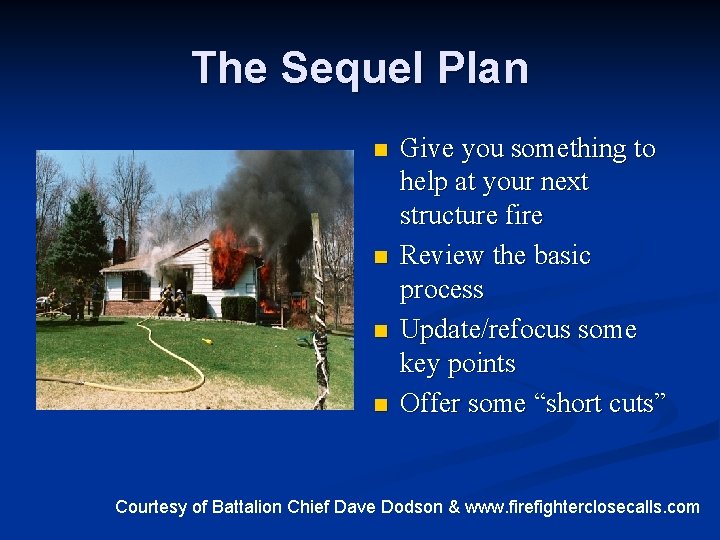
The Sequel Plan n n Give you something to help at your next structure fire Review the basic process Update/refocus some key points Offer some “short cuts” Courtesy of Battalion Chief Dave Dodson & www. firefighterclosecalls. com
The Basic Process Reading Smoke can help you answer 3 questions: 1. Where, specifically, is the fire? 2. How big or intense is the fire? 3. How fast is it changing? (rate and severity of fire spread) Courtesy of Battalion Chief Dave Dodson & www. firefighterclosecalls. com
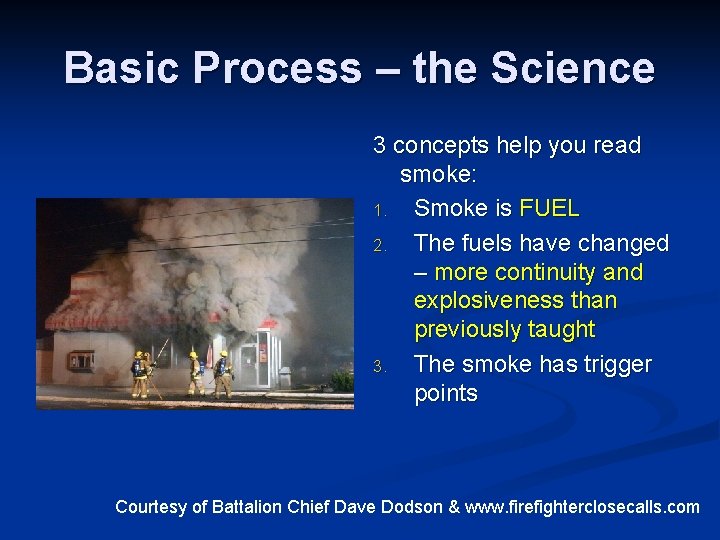
Basic Process – the Science 3 concepts help you read smoke: 1. Smoke is FUEL 2. The fuels have changed – more continuity and explosiveness than previously taught 3. The smoke has trigger points Courtesy of Battalion Chief Dave Dodson & www. firefighterclosecalls. com
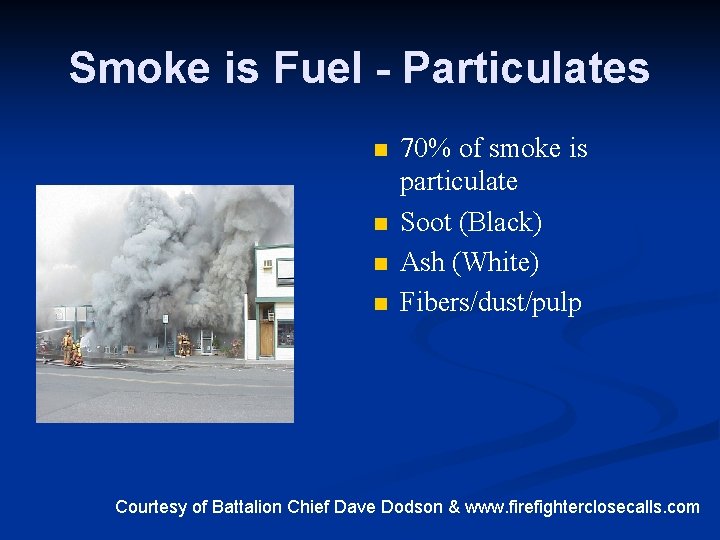
Smoke is Fuel - Particulates n n 70% of smoke is particulate Soot (Black) Ash (White) Fibers/dust/pulp Courtesy of Battalion Chief Dave Dodson & www. firefighterclosecalls. com
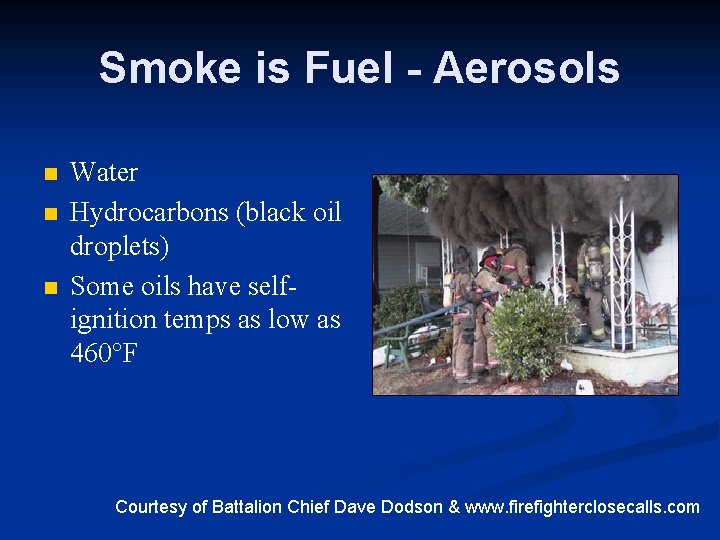
Smoke is Fuel - Aerosols n n n Water Hydrocarbons (black oil droplets) Some oils have selfignition temps as low as 460°F Courtesy of Battalion Chief Dave Dodson & www. firefighterclosecalls. com
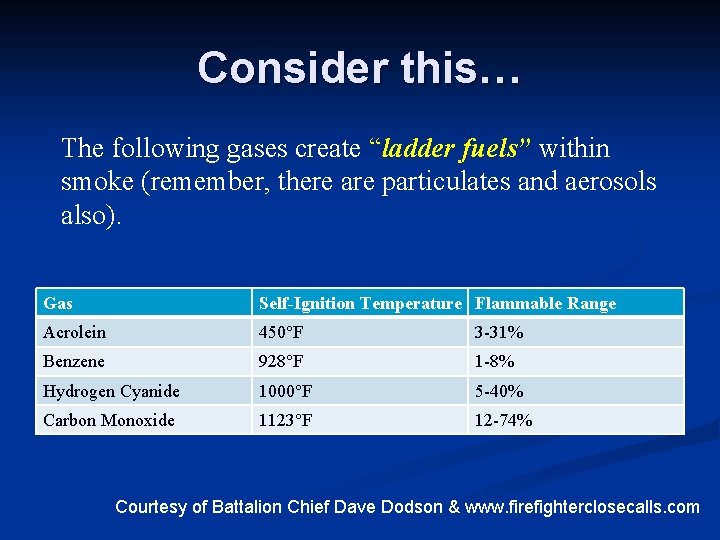
Consider this… The following gases create “ladder fuels” within smoke (remember, there are particulates and aerosols also). Gas Self-Ignition Temperature Flammable Range Acrolein 450°F 3 -31% Benzene 928°F 1 -8% Hydrogen Cyanide 1000°F 5 -40% Carbon Monoxide 1123°F 12 -74% Courtesy of Battalion Chief Dave Dodson & www. firefighterclosecalls. com
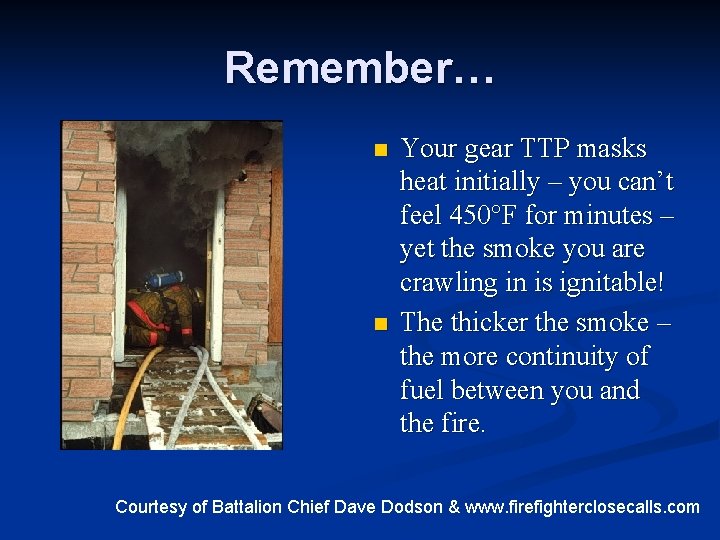
Remember… n n Your gear TTP masks heat initially – you can’t feel 450°F for minutes – yet the smoke you are crawling in is ignitable! The thicker the smoke – the more continuity of fuel between you and the fire. Courtesy of Battalion Chief Dave Dodson & www. firefighterclosecalls. com
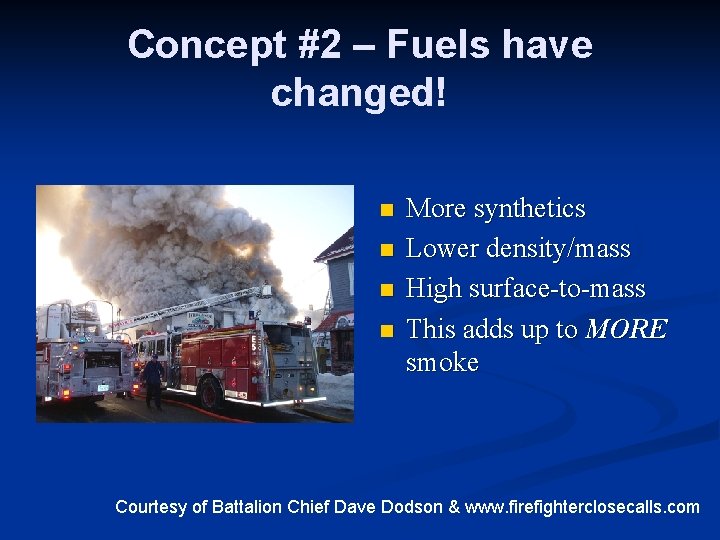
Concept #2 – Fuels have changed! n n More synthetics Lower density/mass High surface-to-mass This adds up to MORE smoke Courtesy of Battalion Chief Dave Dodson & www. firefighterclosecalls. com
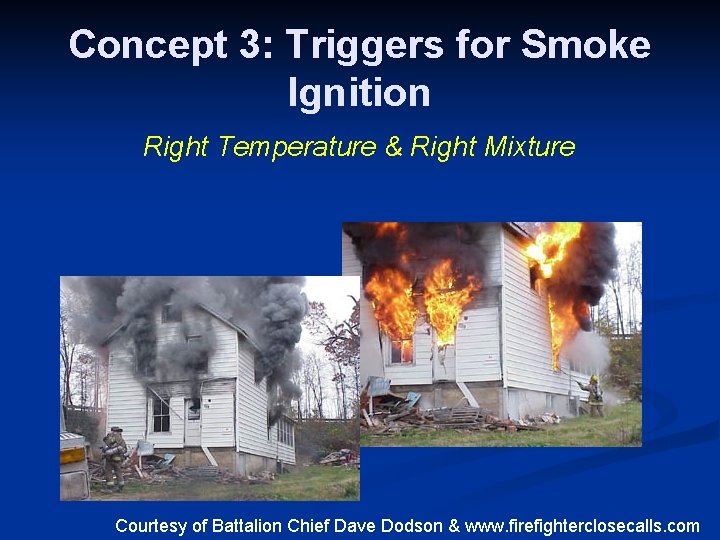
Concept 3: Triggers for Smoke Ignition Right Temperature & Right Mixture Courtesy of Battalion Chief Dave Dodson & www. firefighterclosecalls. com
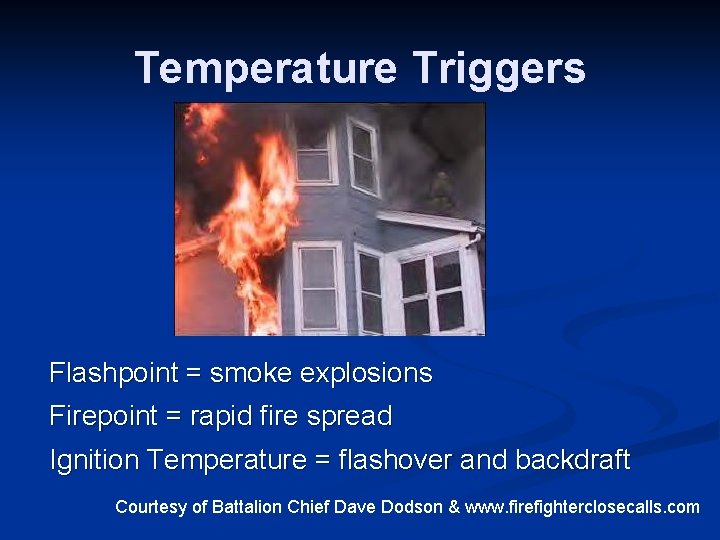
Temperature Triggers Flashpoint = smoke explosions Firepoint = rapid fire spread Ignition Temperature = flashover and backdraft Courtesy of Battalion Chief Dave Dodson & www. firefighterclosecalls. com
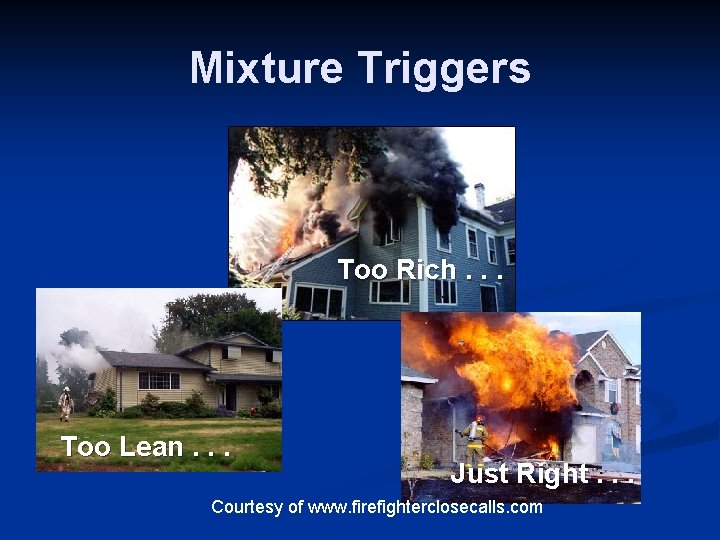
Mixture Triggers Too Rich. . . Too Lean. . . Just Right. . . Courtesy of www. firefighterclosecalls. com
Other Prerequisites to Reading Smoke You must be able to determine. . . n The Rate of Change – getting better or worse in seconds or minutes. n Is the “box” absorbing heat? Laminar vs. TURBULENT flow Courtesy of Battalion Chief Dave Dodson & www. firefighterclosecalls. com
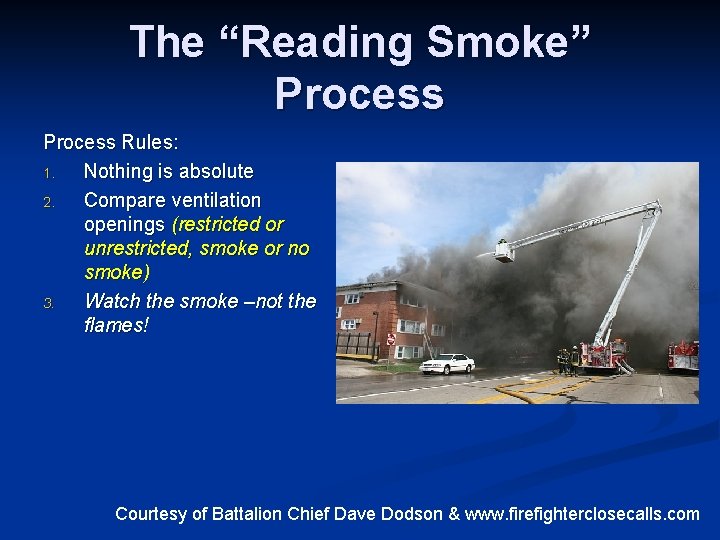
The “Reading Smoke” Process Rules: 1. Nothing is absolute 2. Compare ventilation openings (restricted or unrestricted, smoke or no smoke) 3. Watch the smoke –not the flames! Courtesy of Battalion Chief Dave Dodson & www. firefighterclosecalls. com

The “Reading Smoke” Process Don’t Forget: • Turbulent vs. Laminar • Measure Rate of Change • Smoke is FUEL! Courtesy of Battalion Chief Dave Dodson & www. firefighterclosecalls. com
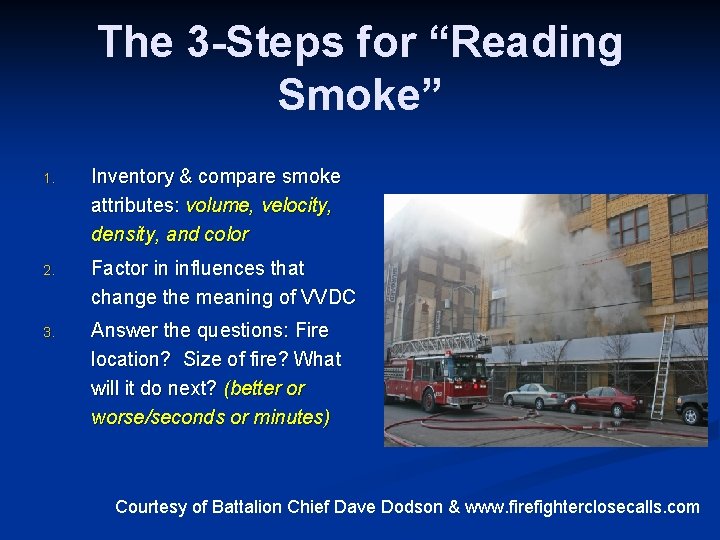
The 3 -Steps for “Reading Smoke” 1. Inventory & compare smoke attributes: volume, velocity, density, and color 2. Factor in influences that change the meaning of VVDC 3. Answer the questions: Fire location? Size of fire? What will it do next? (better or worse/seconds or minutes) Courtesy of Battalion Chief Dave Dodson & www. firefighterclosecalls. com
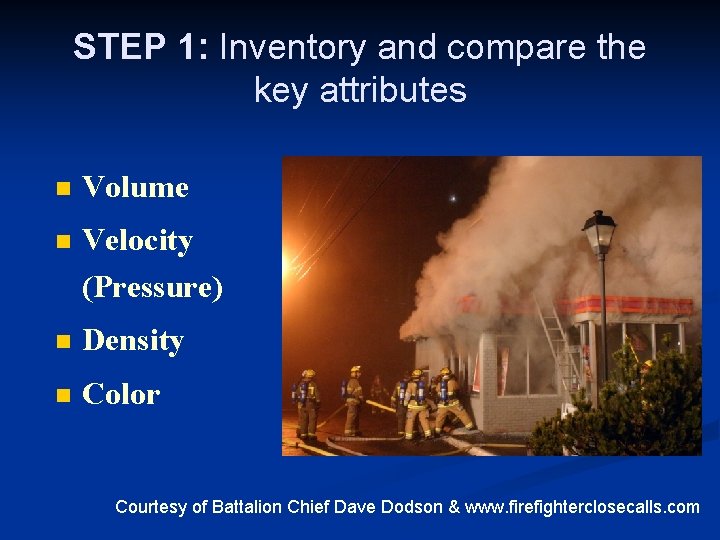
STEP 1: Inventory and compare the key attributes n Volume n Velocity (Pressure) n Density n Color Courtesy of Battalion Chief Dave Dodson & www. firefighterclosecalls. com
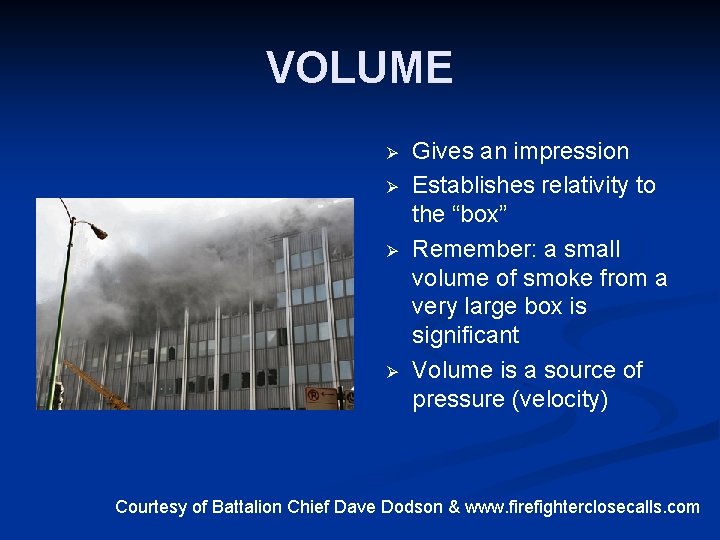
VOLUME Ø Ø Gives an impression Establishes relativity to the “box” Remember: a small volume of smoke from a very large box is significant Volume is a source of pressure (velocity) Courtesy of Battalion Chief Dave Dodson & www. firefighterclosecalls. com
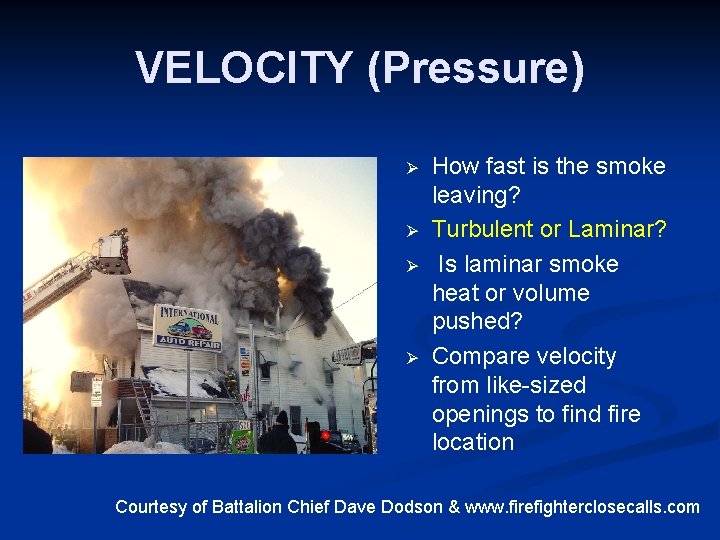
VELOCITY (Pressure) Ø Ø How fast is the smoke leaving? Turbulent or Laminar? Is laminar smoke heat or volume pushed? Compare velocity from like-sized openings to find fire location Courtesy of Battalion Chief Dave Dodson & www. firefighterclosecalls. com
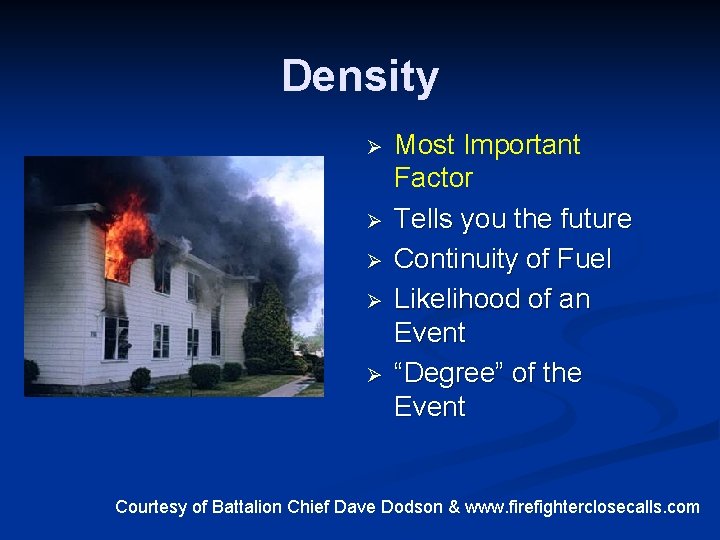
Density Ø Ø Ø Most Important Factor Tells you the future Continuity of Fuel Likelihood of an Event “Degree” of the Event Courtesy of Battalion Chief Dave Dodson & www. firefighterclosecalls. com
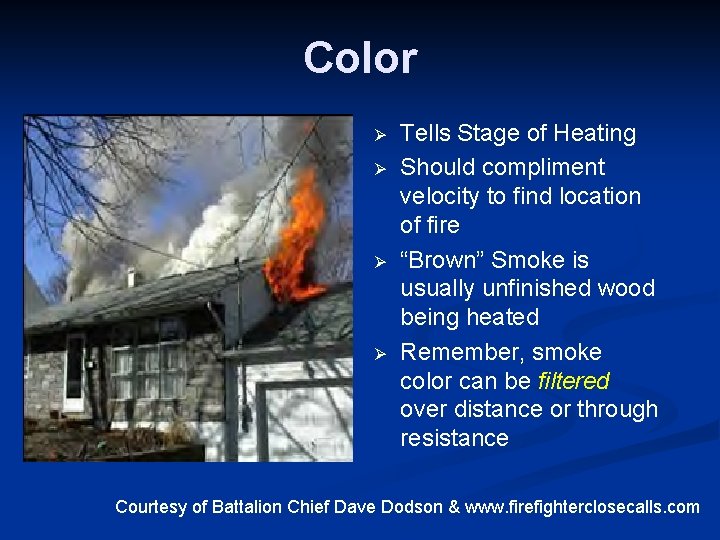
Color Ø Ø Tells Stage of Heating Should compliment velocity to find location of fire “Brown” Smoke is usually unfinished wood being heated Remember, smoke color can be filtered over distance or through resistance Courtesy of Battalion Chief Dave Dodson & www. firefighterclosecalls. com
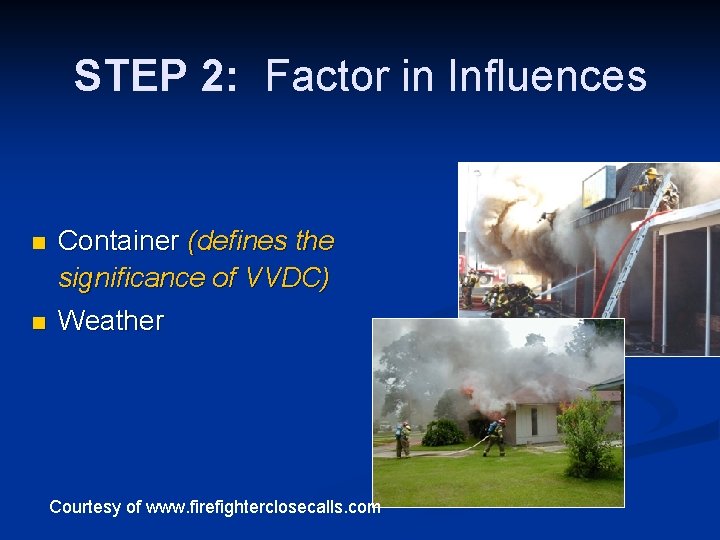
STEP 2: Factor in Influences n Container (defines the significance of VVDC) n Weather Courtesy of www. firefighterclosecalls. com
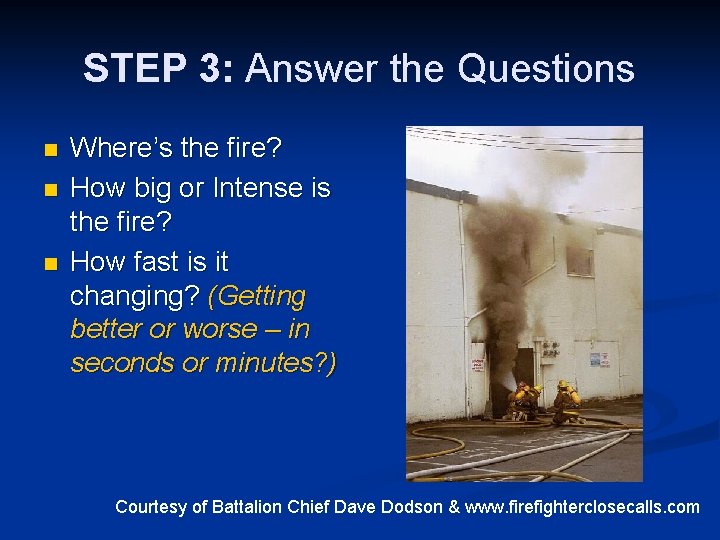
STEP 3: Answer the Questions n n n Where’s the fire? How big or Intense is the fire? How fast is it changing? (Getting better or worse – in seconds or minutes? ) Courtesy of Battalion Chief Dave Dodson & www. firefighterclosecalls. com
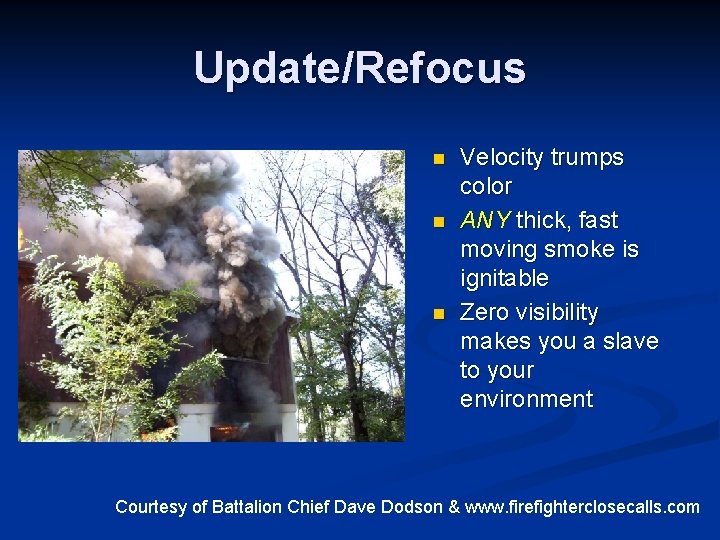
Update/Refocus n n n Velocity trumps color ANY thick, fast moving smoke is ignitable Zero visibility makes you a slave to your environment Courtesy of Battalion Chief Dave Dodson & www. firefighterclosecalls. com
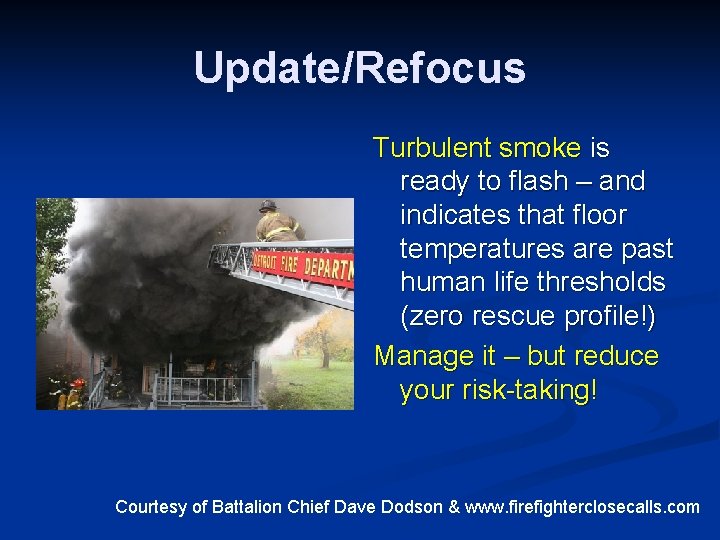
Update/Refocus Turbulent smoke is ready to flash – and indicates that floor temperatures are past human life thresholds (zero rescue profile!) Manage it – but reduce your risk-taking! Courtesy of Battalion Chief Dave Dodson & www. firefighterclosecalls. com
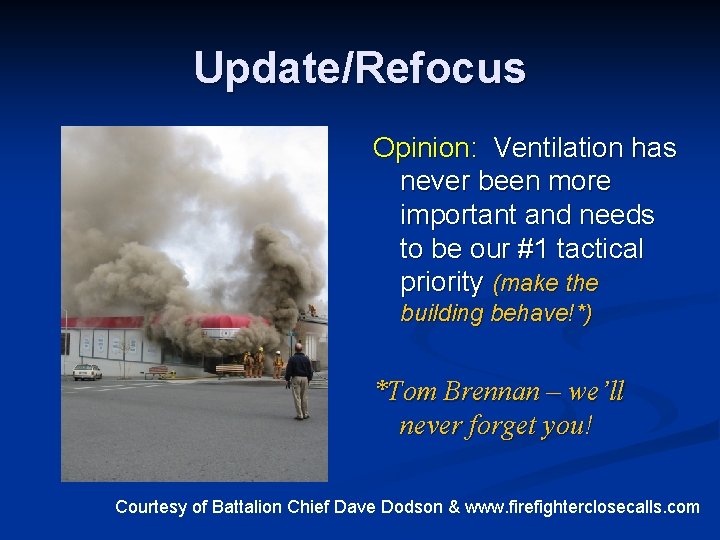
Update/Refocus Opinion: Ventilation has never been more important and needs to be our #1 tactical priority (make the building behave!*) *Tom Brennan – we’ll never forget you! Courtesy of Battalion Chief Dave Dodson & www. firefighterclosecalls. com
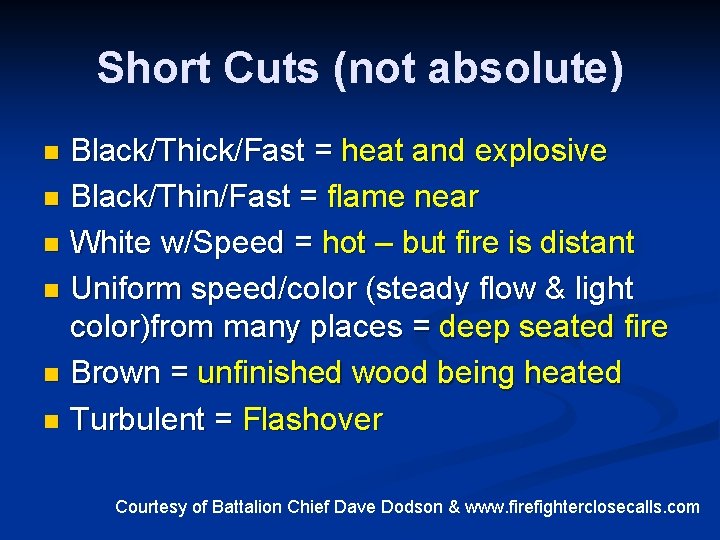
Short Cuts (not absolute) Black/Thick/Fast = heat and explosive n Black/Thin/Fast = flame near n White w/Speed = hot – but fire is distant n Uniform speed/color (steady flow & light color)from many places = deep seated fire n Brown = unfinished wood being heated n Turbulent = Flashover n Courtesy of Battalion Chief Dave Dodson & www. firefighterclosecalls. com
Practice Time! Courtesy of Battalion Chief Dave Dodson & www. firefighterclosecalls. com
Don’t Just Be Safe – Make it Safe! Courtesy of Battalion Chief Dave Dodson & www. firefighterclosecalls. com
- Slides: 32