
Reading and Note Making www kent ac uklearning


- Slides: 19
Reading and Note Making www. kent. ac. uk/learning
Reading and note making Introduction • Reading is an essential part of independent study • Learning to use the most appropriate methods of reading and making notes will help you to manage and use information effectively for: • understanding and knowledge development • developing responses to assignment tasks • exam preparation
Reading and note making By the end of this tutorial you will: • be able to identify some of the key methods used to source reading materials • understand the importance of identifying a purpose before reading • be able to identify different approaches to reading and when best to use each approach • be able to identify and adopt a system of note taking that works for you
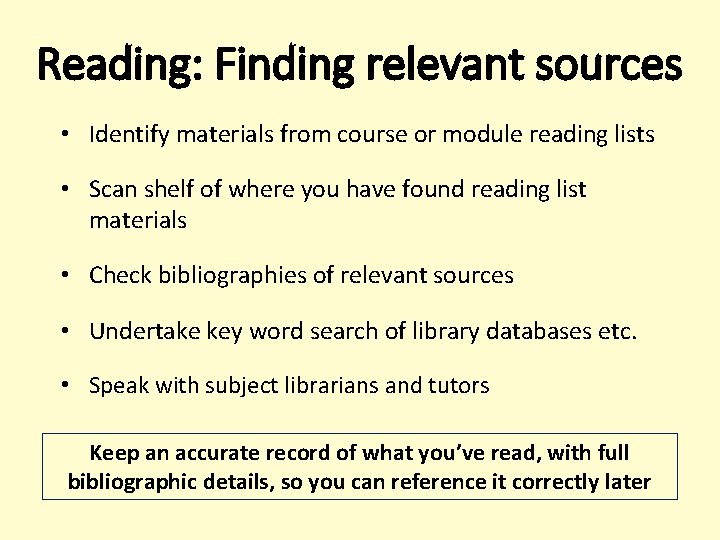
Reading: Finding relevant sources • Identify materials from course or module reading lists • Scan shelf of where you have found reading list materials • Check bibliographies of relevant sources • Undertake key word search of library databases etc. • Speak with subject librarians and tutors Keep an accurate record of what you’ve read, with full bibliographic details, so you can reference it correctly later
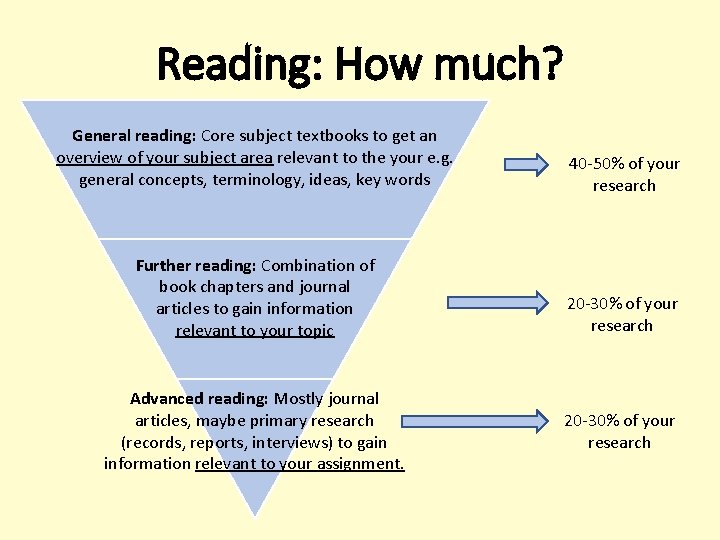
Reading: How much? General reading: Core subject textbooks to get an overview of your subject area relevant to the your e. g. general concepts, terminology, ideas, key words 40 -50% of your research Further reading: Combination of book chapters and journal articles to gain information relevant to your topic 20 -30% of your research Advanced reading: Mostly journal articles, maybe primary research (records, reports, interviews) to gain information relevant to your assignment. 20 -30% of your research
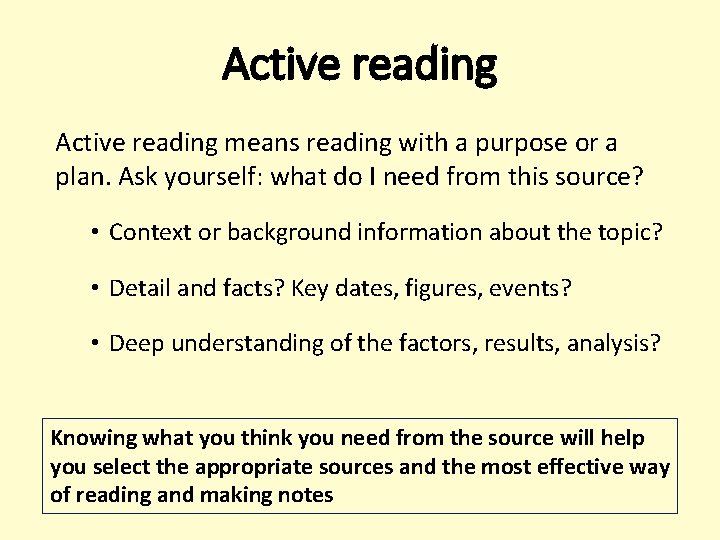
Active reading means reading with a purpose or a plan. Ask yourself: what do I need from this source? • Context or background information about the topic? • Detail and facts? Key dates, figures, events? • Deep understanding of the factors, results, analysis? Knowing what you think you need from the source will help you select the appropriate sources and the most effective way of reading and making notes
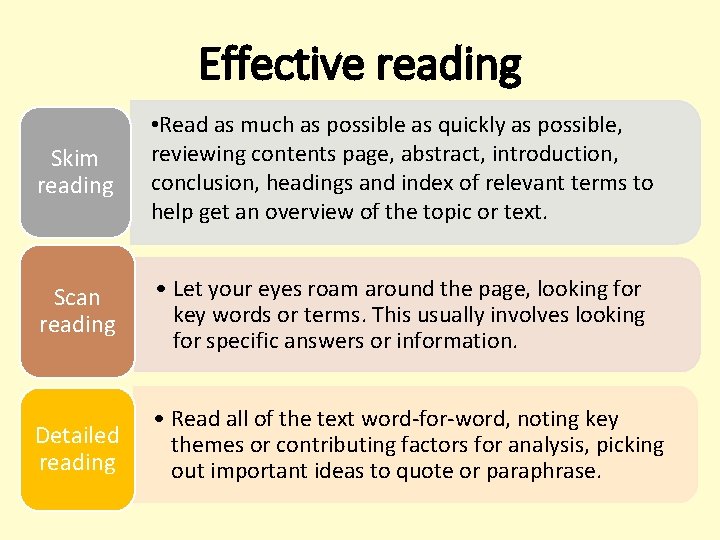
Effective reading Skim reading • Read as much as possible as quickly as possible, reviewing contents page, abstract, introduction, conclusion, headings and index of relevant terms to help get an overview of the topic or text. Scan reading • Let your eyes roam around the page, looking for key words or terms. This usually involves looking for specific answers or information. Detailed reading • Read all of the text word-for-word, noting key themes or contributing factors for analysis, picking out important ideas to quote or paraphrase.
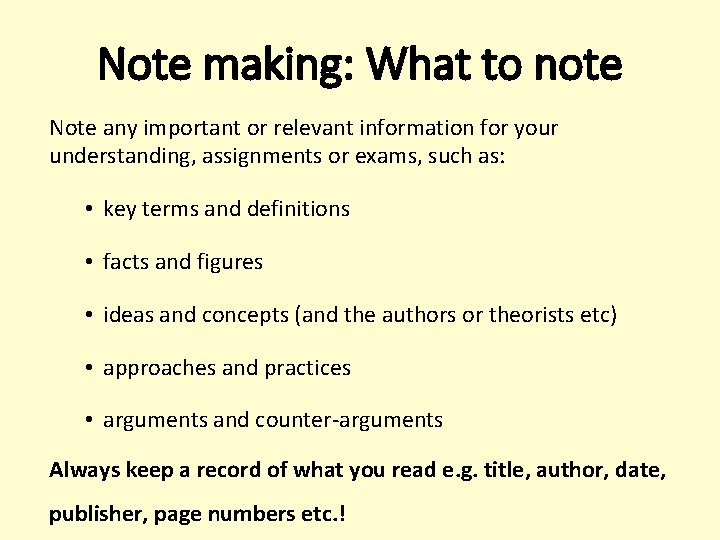
Note making: What to note Note any important or relevant information for your understanding, assignments or exams, such as: • key terms and definitions • facts and figures • ideas and concepts (and the authors or theorists etc) • approaches and practices • arguments and counter-arguments Always keep a record of what you read e. g. title, author, date, publisher, page numbers etc. !
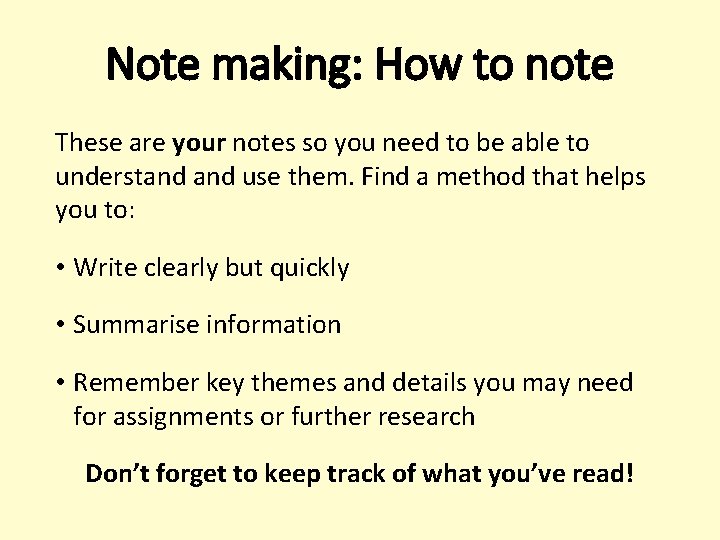
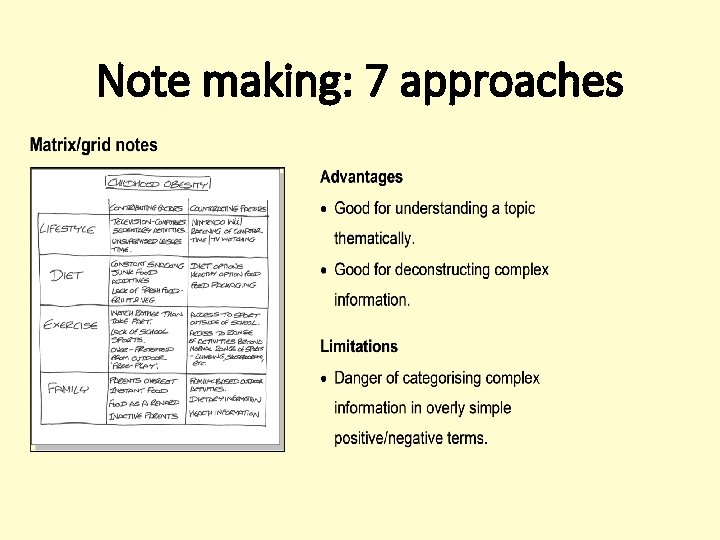
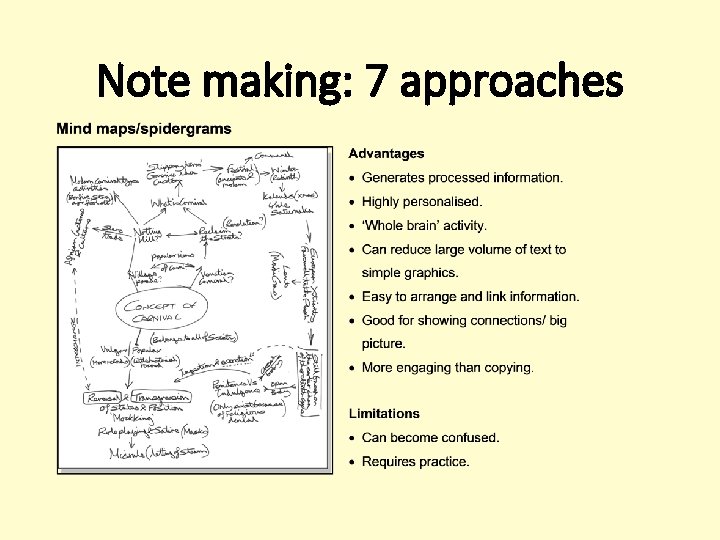
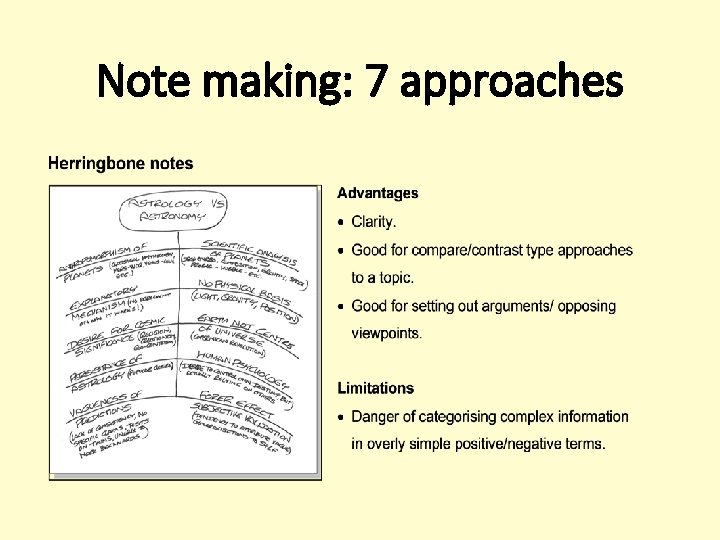
Note making: How to note These are your notes so you need to be able to understand use them. Find a method that helps you to: • Write clearly but quickly • Summarise information • Remember key themes and details you may need for assignments or further research Don’t forget to keep track of what you’ve read!
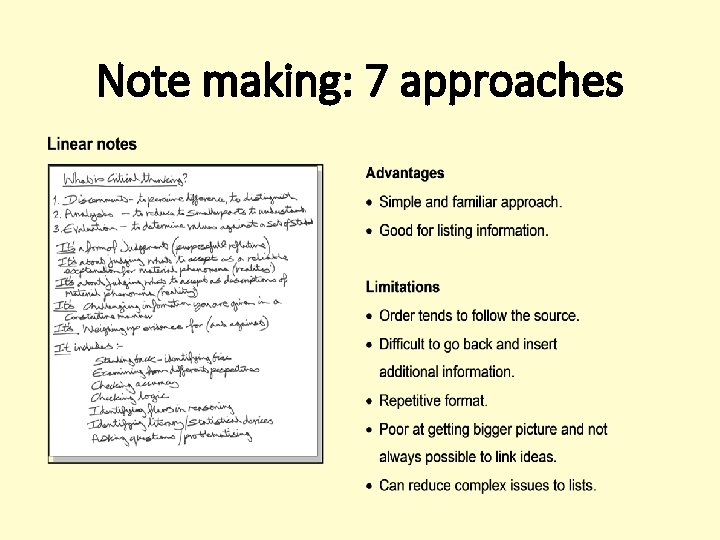
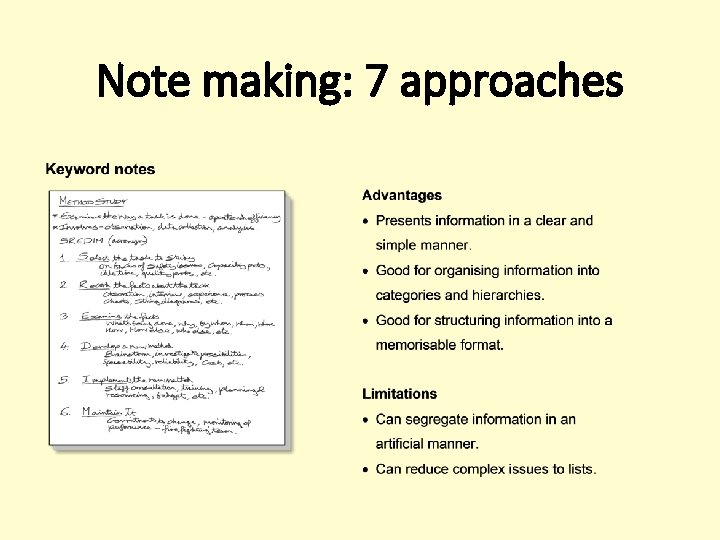
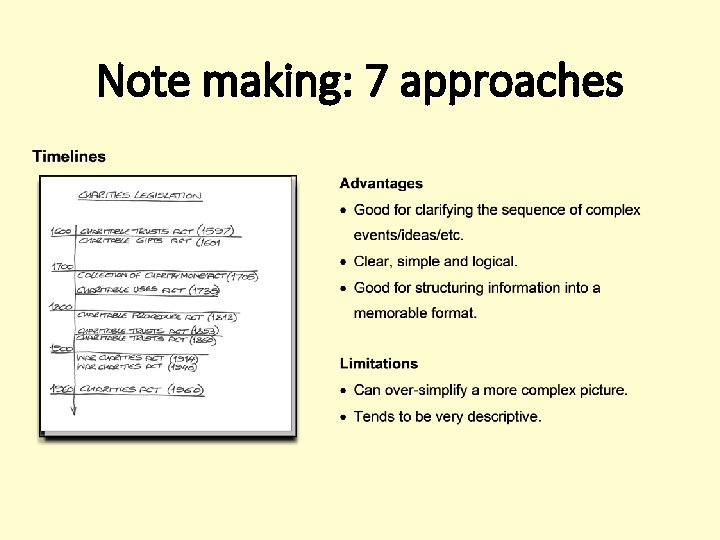
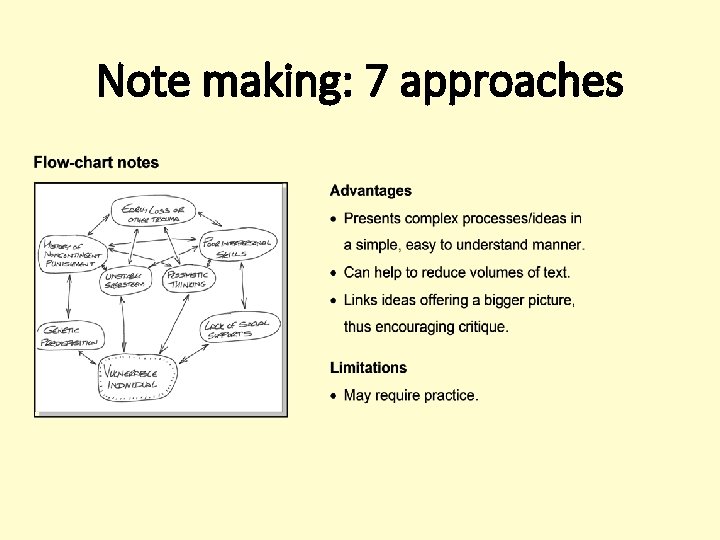
Note making: 7 approaches
Note making: 7 approaches
Note making: 7 approaches
Note making: 7 approaches
Note making: 7 approaches
Note making: 7 approaches
Note making: 7 approaches
Note making: quotations and paraphrases When taking notes you may decide to quote or paraphrase an idea from a source to use directly in your assignment: • Quotation - short section of text that you copy exactly. Add to your notes ‘quotation marks’ with full source details and page number • Paraphrase – short section of text in your own words. Add to your notes with full source details
Reading, research and note making You should now: • Have a better idea of how to find reading material • Know how to utilise different reading techniques • Devise a system of note taking that works for you If there’s anything you don’t understand please book an appointment, or contact us at learning@kent. ac. uk
Get in touch… SLAS CONNECT To book an appointment: www. kent. ac. uk/learning@kent. ac. uk SLASkent Kent. Uni. SLASkent