
Reading a scatterplot Examples Mars rocks sulfate is
- Slides: 13
Reading a scatterplot • Examples: – Mars rocks (sulfate is measured as a percentage & redness is measured as a ratio of red to blue in light spectra) – American Association of University Professors (cases are different academic disciplines)
– SAT score versus length of essay – GPA versus SAT
Correlation coefficient 1. Point of averages: (average of variable 1, average of variable 2) 2. SD’s of both variables • These describe the center and spread of the data.
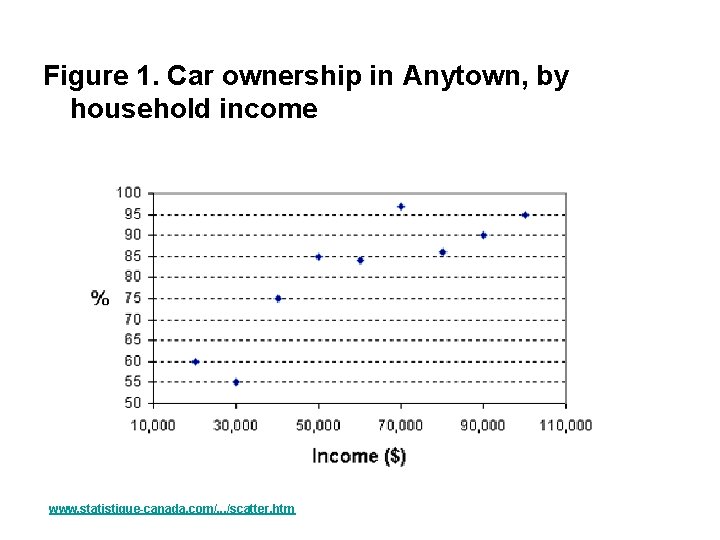
Figure 1. Car ownership in Anytown, by household income www. statistique-canada. com/. . . /scatter. htm
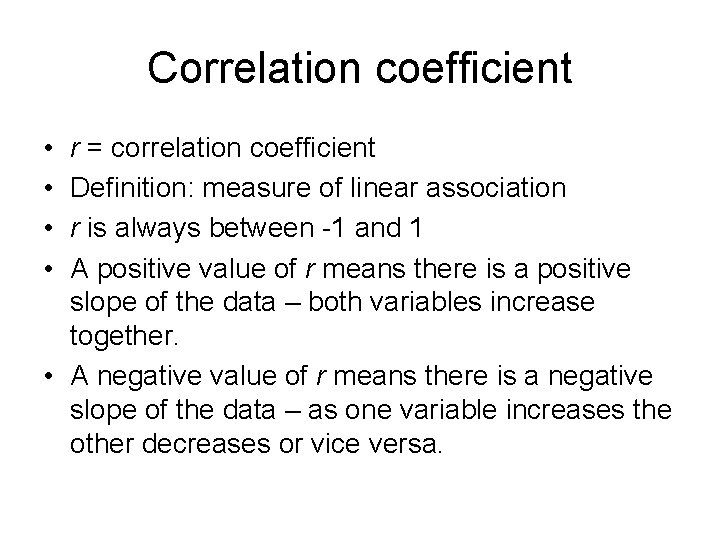
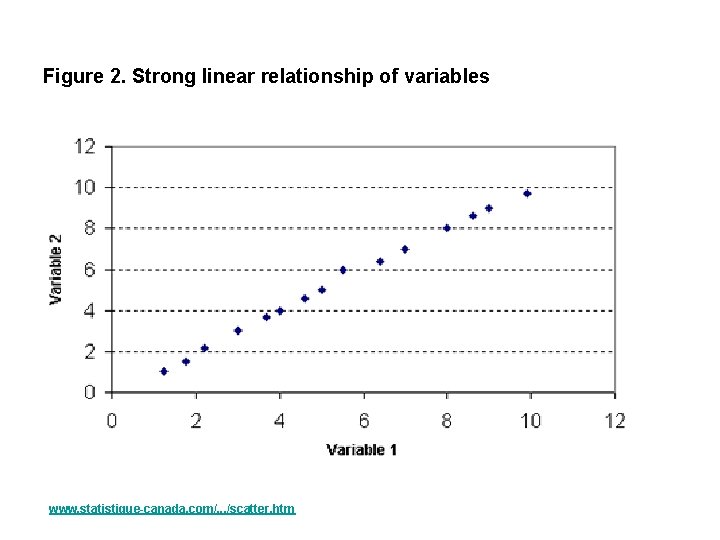
Correlation coefficient • • r = correlation coefficient Definition: measure of linear association r is always between -1 and 1 A positive value of r means there is a positive slope of the data – both variables increase together. • A negative value of r means there is a negative slope of the data – as one variable increases the other decreases or vice versa.
Figure 2. Strong linear relationship of variables www. statistique-canada. com/. . . /scatter. htm
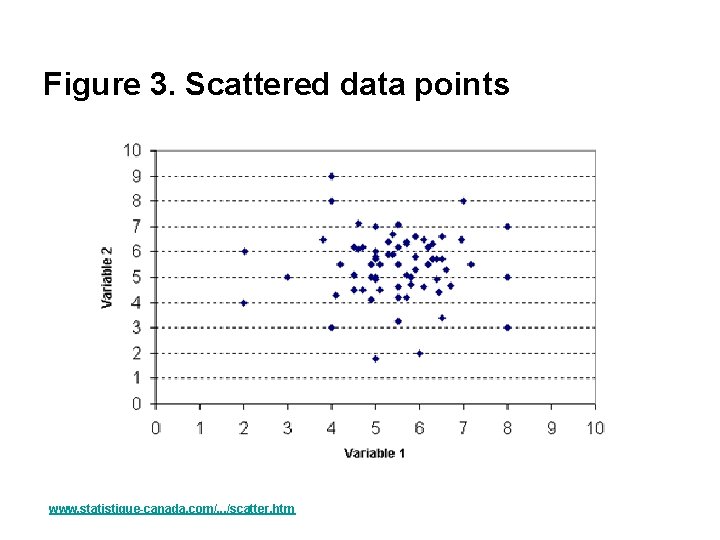
Figure 3. Scattered data points www. statistique-canada. com/. . . /scatter. htm
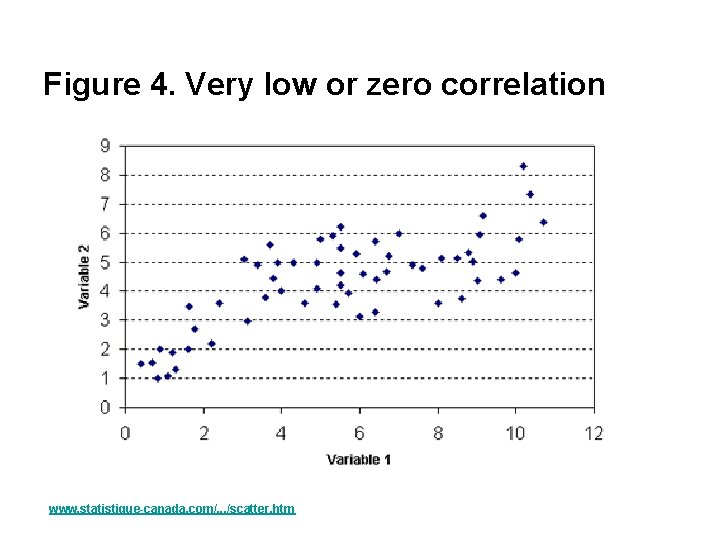
Figure 4. Very low or zero correlation www. statistique-canada. com/. . . /scatter. htm
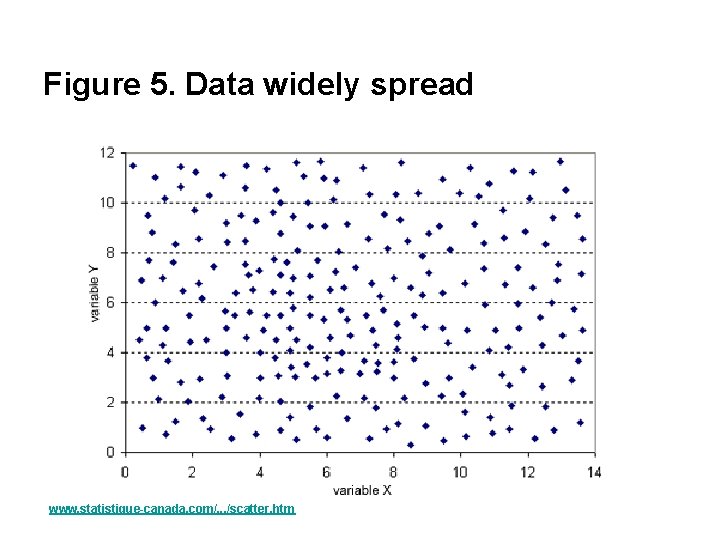
Figure 5. Data widely spread www. statistique-canada. com/. . . /scatter. htm
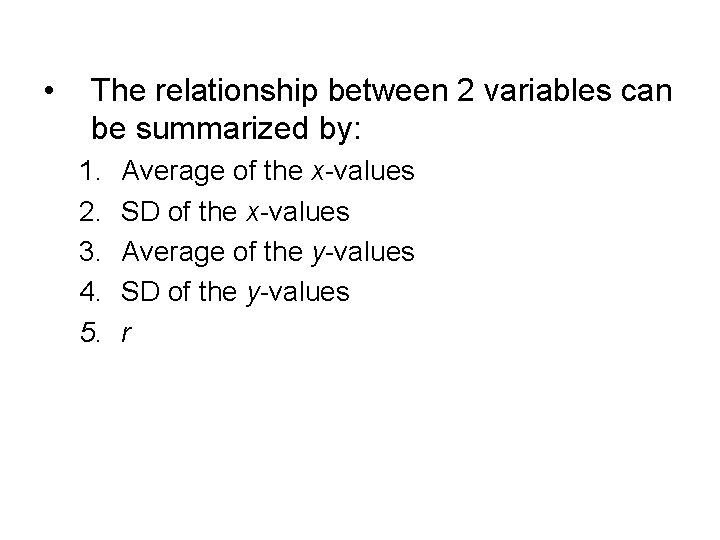
• The relationship between 2 variables can be summarized by: 1. 2. 3. 4. 5. Average of the x-values SD of the x-values Average of the y-values SD of the y-values r
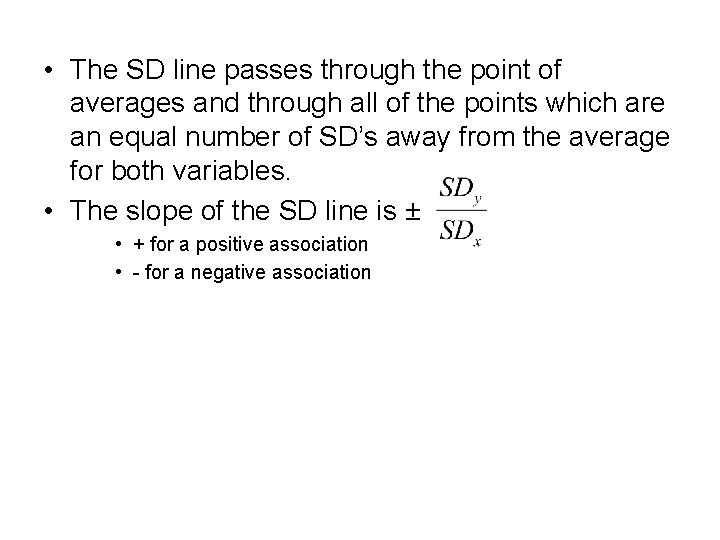
• The SD line passes through the point of averages and through all of the points which are an equal number of SD’s away from the average for both variables. • The slope of the SD line is ± • + for a positive association • - for a negative association
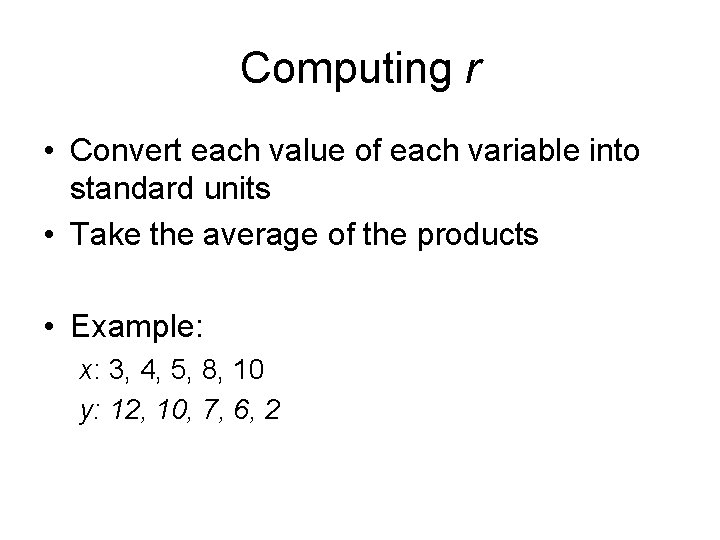
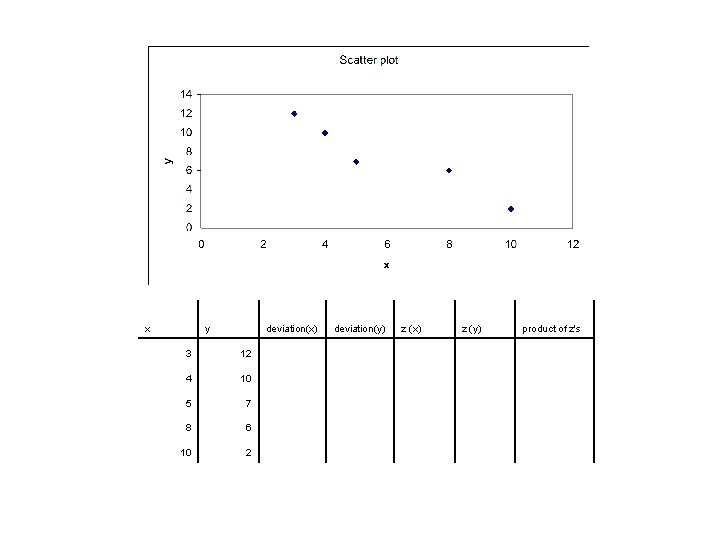
Computing r • Convert each value of each variable into standard units • Take the average of the products • Example: x: 3, 4, 5, 8, 10 y: 12, 10, 7, 6, 2
x y deviation(x) 3 12 4 10 5 7 8 6 10 2 deviation(y) z (x) z (y) product of z's